
Louisiana
Louisiana Window Tint Laws (2026): Legal VLT Limits
Independently fact-checked against primary sources (last audited August 18, 2026). · Reviewed by the RecordingLaw editorial team. · Law checked current as of August 18, 2026. · 1 primary source cited on this page. How we verify our legal content
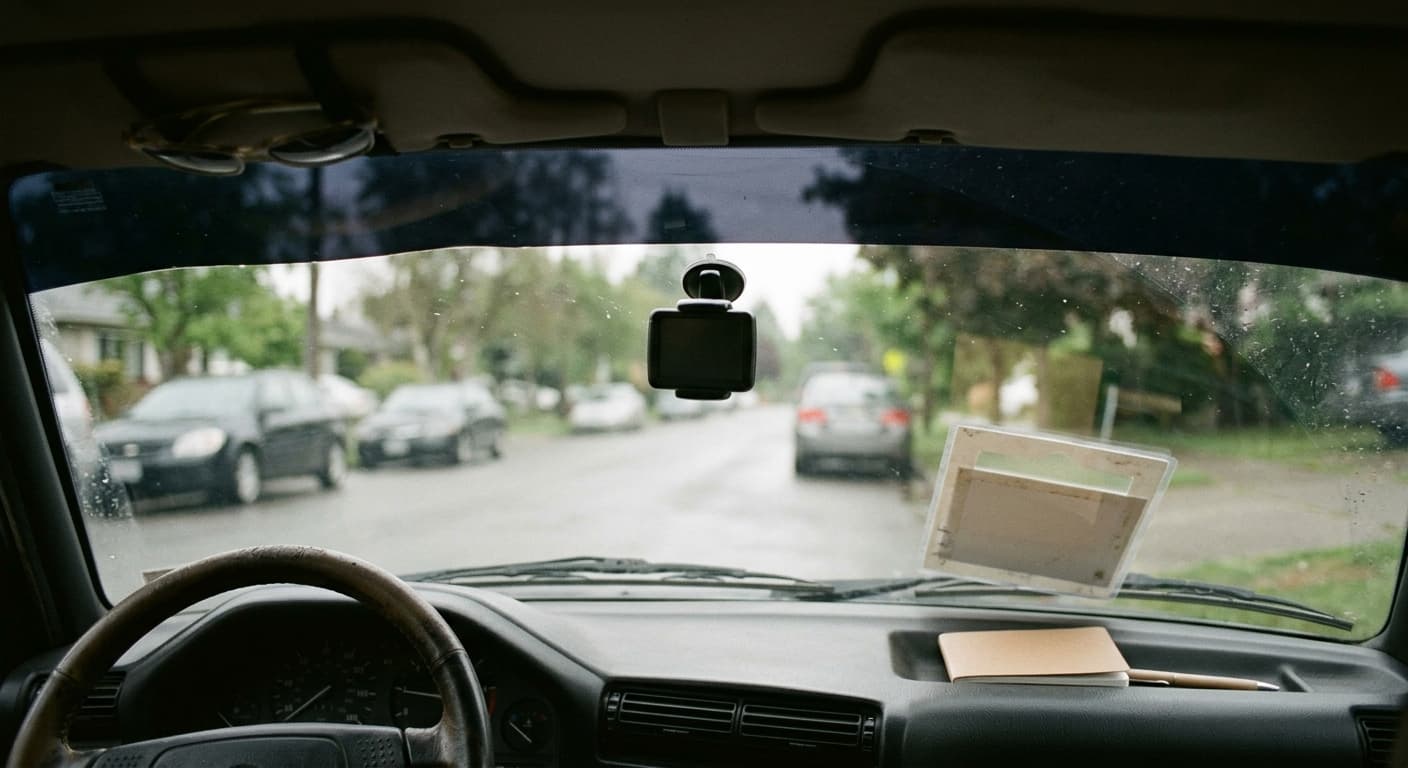
Louisiana law requires front side windows on all vehicles, and back side windows on cars, to allow at least 25% of visible light through. The front side window minimum was lowered from 40% to 25% by 2025 Act 143 (effective August 1, 2025); the back side window minimum was already 25% before that change and was not affected by it. Rear windows on cars must allow at least 12% VLT; trucks, buses, trailers, motor homes, and multipurpose passenger vehicles such as SUVs and vans have no VLT floor on windows behind the driver under R.S. 32:361.1(D)(4).
What is the legal tint limit in Louisiana?
Louisiana's window tint rules are governed by La. R.S. 32:361.1. Before the details, one key concept: a higher VLT percentage means lighter tint, and a lower VLT percentage means darker tint. So 25% is fairly dark, and anything below that number on the front would be illegal.
As of August 1, 2025, the front side window minimum is 25% VLT on all vehicles. This was a significant relaxation from the prior 40% limit, which had been among the stricter standards in the South. On cars, the back side windows must also meet 25% VLT and the rear window at least 12% VLT; trucks, buses, trailers, motor homes, and multipurpose vehicles such as SUVs and vans have no VLT floor behind the driver under R.S. 32:361.1(D)(4).
| Window | Cars | Trucks, Buses, Trailers, Motor Homes, SUVs, Vans |
|---|---|---|
| Front side windows | 25% VLT minimum (eff. Aug 1, 2025) | 25% VLT minimum (eff. Aug 1, 2025) |
| Back side windows | 25% VLT minimum (unchanged by 2025 Act 143) | No VLT floor |
| Rear window | 12% VLT minimum | No VLT floor |
Louisiana's front side window minimum applies to all vehicle types. For windows behind the driver, R.S. 32:361.1(D)(4) exempts trucks, buses, trailers, motor homes, and multipurpose passenger vehicles such as SUVs and vans from any VLT floor; only cars remain bound to the 25% back-side and 12% rear-window minimums.
2025 law change: what changed and when
Prior to August 1, 2025, Louisiana required front side windows to allow at least 40% of visible light through, while back side windows were already held to a 25% minimum and the rear window to a 12% minimum. That 40% front-side standard was one of the stricter front-window limits in the region.
2025 Act 143 (House Bill 119), which became law without the governor's signature and took effect August 1, 2025, lowered only the front side window minimum, from 40% to 25%, amending R.S. 32:361.1(C)(1). The back side window minimum (25%) and the rear window minimum (12%) were not changed by the new law. If your vehicle has front side tint applied before that date that measured between 25% and 39%, it is now fully legal under the updated standard. Tint at or below 24% on the front side windows remains non-compliant.
Windshield tint rules in Louisiana
Louisiana permits a tint strip on the top 5 inches of the windshield only. No tint of any kind is permitted in the main driving area below that strip. R.S. 32:361.1(C)(2) describes that strip as "a transparent material, not red or amber in color," so the color restriction is written into the windshield rule itself.
Luminous reflectance is capped at 20% on all windows. This bans mirrored or metallic-finish films that could reflect light toward other drivers or law enforcement. The reflectivity limit applies to every window, including the rear, not just the front.
The red and amber restriction reaches the windshield strip only. R.S. 32:361.1(C)(1), which governs the front side windows, the side windows behind the driver, and the rearmost windows, sets light transmission and luminous reflectance limits and states no color restriction at all. Film on those windows is judged on how much light it lets through and how much it reflects, not on its hue.
Medical and security exemptions
Louisiana has two separate statutory routes to tint darker than the standard limits: a medical exemption under R.S. 32:361.2 and a security exemption under R.S. 32:361.3. Neither one reaches the area below the top six inches of the windshield.
Medical exemption
Louisiana does allow a medical exemption for tint darker than the standard limits, but the process is more involved than a simple physician's letter. The authority is La. R.S. 32:361.2. The applicant needs an affidavit prepared by the office of state police (not a generic doctor's note), signed by a Louisiana-licensed optometrist or physician certifying a qualifying condition, such as lupus, photosensitivity, or another condition on the state's recognized list. The applicant must also sign a notarized release for relevant medical records and submit fingerprints for a state and federal criminal history check; a conviction for a violent crime or drug offense disqualifies the applicant.
If the exemption is granted, the Department of Public Safety and Corrections issues a decal for the vehicle, and R.S. 32:361.2(E) requires that decal be prominently displayed on the vehicle at all times, in addition to carrying a copy of the affidavit. Most exemptions are subject to review every three years, except an exemption for diagnosed light-sensitive porphyria, which is valid for as long as the person owns the vehicle.
If you cannot produce the affidavit or the decal is missing during a stop, you may receive a citation. Keep a copy of the affidavit in the vehicle at all times, and remember the exemption does not automatically transfer if the vehicle is sold; the new owner must remove the tint or obtain their own exemption.
Security exemption
The second route has nothing to do with a medical condition. Under La. R.S. 32:361.3(A), R.S. 32:361.1 does not apply to a vehicle registered in this state when the operator possesses an affidavit on a form issued by the Department of Public Safety and Corrections stating that valid security reasons make the darker material necessary. The affidavit must describe the vehicle and be kept inside it.
The screening mirrors the medical route: an applicant must give written consent on a form approved by the Louisiana Bureau of Criminal Identification and Information so the office of state police can verify that the applicant has not been convicted of a violent crime or a drug offense. R.S. 32:361.3(B) qualifies any vehicle owned, leased, operated, or otherwise controlled by a governmental or law enforcement agency to conduct official business automatically, with no application and no criminal history consent required. As with the medical exemption, R.S. 32:361.3(C) provides that a security exemption does not reach the area below the top six inches of the windshield.
How tint is measured and certified
Louisiana law enforcement uses a VLT meter to measure light transmission during traffic stops. The statute does not specify a published tolerance range, so installers generally recommend staying a few percentage points above the legal minimum as a buffer.
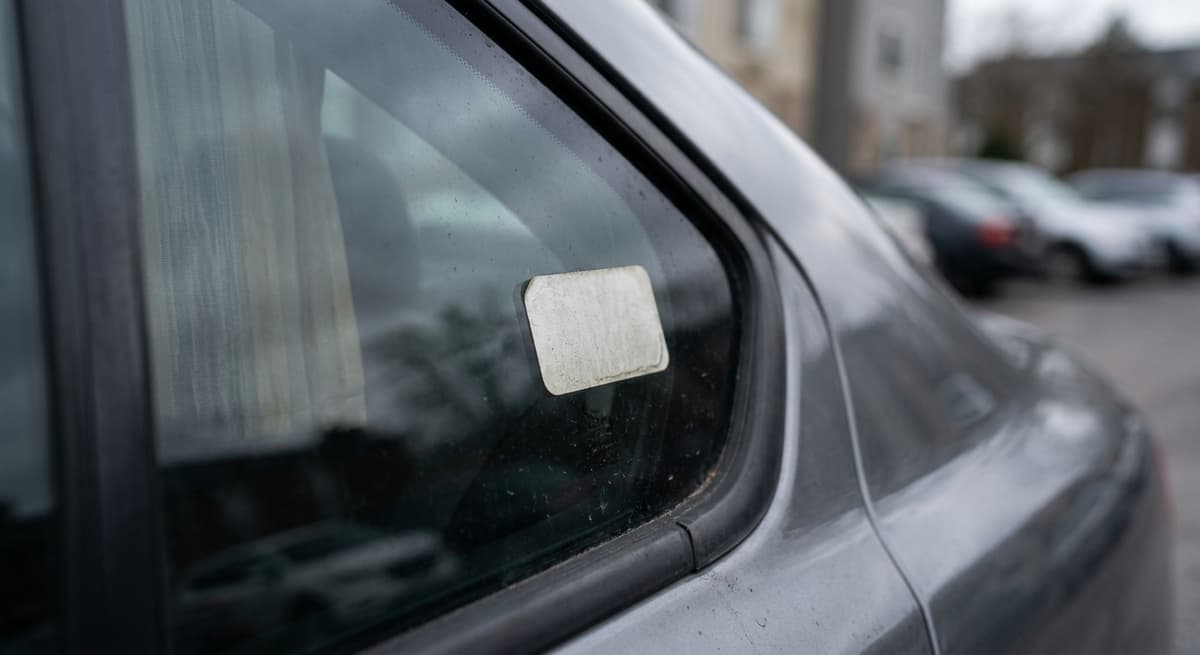
Louisiana requires an installer label of no more than 1.5 square inches, placed in the lower-right corner of the driver's window. The label identifies the installing dealer and confirms the film meets state requirements. Keep the label in place; its removal can raise questions about whether the film is compliant.
Ask your installer for a written receipt identifying the specific VLT of the film applied to each window. That documentation, kept in your glove box alongside the installer sticker, gives you a clear record if your tint is ever questioned.
Penalties for illegal tint in Louisiana
The penalty structure in Louisiana applies separately to operators and installers. For a vehicle operator, the fines are tiered: up to $150 for a first offense, up to $250 for a second, and up to $350 for a third or subsequent offense.
The commercial side faces considerably higher exposure, and it is a fixed schedule rather than a range a court sets case by case. Under R.S. 32:361.1(G), a seller, installer, manufacturer, or distributor who violates the section "shall be fined one thousand dollars for a first offense, two thousand dollars for a second offense, and shall be prohibited from conducting any business specified in this Section upon conviction for a third or subsequent offense."
That third-offense bar is the most serious consequence anywhere in the statute. It does not fine the shop, it ends the shop's ability to sell, install, manufacture, or distribute sun screening devices in Louisiana. The escalating structure reflects the legislature's intent to hold the tint industry accountable, not just drivers who may not have known their film was out of spec.
These fines apply to the darkness and color violations governed by La. R.S. 32:361.1. Medical exemption violations under La. R.S. 32:361.2 may be treated differently. If you have an exemption, producing that documentation can resolve a stop without a citation.
If you want to tint your windows in Louisiana
Under the current law (post August 1, 2025), you have meaningful flexibility. If you drive a car, any film at 25% VLT or lighter is compliant on the front side and back side windows, and 12% VLT is the floor on the rear window. If you drive a truck, bus, trailer, motor home, or multipurpose vehicle such as an SUV or van, R.S. 32:361.1(D)(4) removes the VLT floor entirely on windows behind the driver, so any darkness is compliant there. Many drivers choose 20% on the rear for maximum privacy while staying clearly within the law.

Choose a licensed Louisiana tint installer who will place the required compliance label in the lower-right corner of the driver's window. Ask for a written receipt listing the VLT on each window and store it in your vehicle.
Keep red and amber out of the windshield strip. That is the one place Louisiana restricts film color, and the restriction holds no matter how much light the material transmits. If you have a qualifying medical condition, see your physician before installation so you have the La. R.S. 32:361.2 exemption documentation in hand before you drive. If your need is security rather than medical, the R.S. 32:361.3 affidavit is the corresponding route.
If you have existing tint that was installed before August 1, 2025, check whether it was between 25% and 39% on the front side windows specifically. If so, it is now legal under the updated standard and no action is required. Back side window tint at 25% or higher was already compliant before the change.
This article is general legal information, not legal advice. Window tint limits vary by state and change, and enforcement depends on local practice and your specific vehicle. For a definitive answer, check your state DMV or consult a local attorney.
For the full national picture, see our Window Tint Laws by State hub. Louisiana drivers may also want to review Louisiana Windshield Mounting Restrictions for related vehicle equipment rules.
More Louisiana Laws
Frequently Asked Questions
What is the legal tint in Louisiana?
As of August 1, 2025, Louisiana requires front side windows on all vehicles, and back side windows on cars, to allow at least 25% VLT. The rear window must allow at least 12% VLT on cars; trucks, buses, trailers, motor homes, and multipurpose vehicles such as SUVs and vans have no VLT floor on windows behind the driver. The previous front side window limit was 40% before 2025 Act 143 lowered it to 25%; the back side window minimum was already 25% and was not changed.
How dark can my front windows be in Louisiana?
Your front side windows must transmit at least 25% of visible light under the law in effect since August 1, 2025. Film darker than 25% on the front side windows is not legal. Louisiana does not publish a specific meter tolerance, so staying at 25% or lighter is the safe standard.
Is 35% tint legal in Louisiana?
Yes. A 35% VLT is lighter than the 25% minimum required for front and back side windows, so it is fully compliant under current Louisiana law. It is also well above the 12% minimum for the rear window.
Can I get a medical exemption for window tint in Louisiana?
Yes, but it is a more involved process than a physician's note. Louisiana requires an affidavit prepared by the office of state police, signed by a licensed optometrist or physician, a notarized medical-records release, and a fingerprint-based criminal history check (violent crime or drug convictions disqualify the applicant). If approved, the Department of Public Safety and Corrections issues a decal that must be prominently displayed on the vehicle at all times under R.S. 32:361.2(E), in addition to keeping a copy of the affidavit in the vehicle. Most exemptions are reviewed every three years.
What is the penalty for illegal tint in Louisiana?
Operators face fines of up to $150 for a first offense, $250 for a second, and $350 for a third or subsequent offense. Sellers, installers, manufacturers, and distributors face a fixed schedule under La. R.S. 32:361.1(G): $1,000 for a first offense, $2,000 for a second, and a prohibition on conducting the business at all upon conviction for a third or subsequent offense.
Is windshield tint legal in Louisiana?
Only a non-reflective tint strip on the top 5 inches of the windshield is permitted in Louisiana. Red and amber tints are prohibited on the windshield strip. No tint is allowed in the main driving area of the windshield below the 5-inch strip.
Did Louisiana change its tint law in 2025?
Yes. 2025 Act 143 (HB 119) lowered the front side window minimum from 40% VLT to 25% VLT, effective August 1, 2025, amending R.S. 32:361.1(C)(1). The back side window minimum (25% VLT) and the rear window minimum (12% VLT) were not changed by the new law. Vehicles with front side tint between 25% and 39% that were previously non-compliant are now fully legal.
Updates
Corrected the red and amber tint restriction, which applies to the windshield strip only and not to every window; restated the seller and installer penalty as the statute's fixed schedule of $1,000 for a first offense and $2,000 for a second, with a bar on conducting the business after a third conviction; and added Louisiana's separate security exemption under R.S. 32:361.3.
Corrected the Louisiana window tint page: 2025 Act 143 lowered only the front side window VLT minimum from 40% to 25%; the back side window minimum was already 25% and was not changed, contrary to the page's prior claim that both changed together. Also expanded the medical exemption section to include the required state-police affidavit form, background check, and vehicle decal that R.S. 32:361.2 requires beyond a physician's letter.
Independently fact-checked against the cited primary sources; governing law re-checked for recent changes
Corrected the claim that Louisiana's window-tint VLT limits apply uniformly to all vehicles: R.S. 32:361.1(D)(4) exempts trucks, buses, trailers, motor homes, and multipurpose vehicles like SUVs and vans from any VLT floor on windows behind the driver.
Scoped the back side and rear window minimums to cars, noting the statutory exemption behind the driver for trucks, buses, trailers, motor homes, and multipurpose vehicles.
Governing law re-checked for recent changes
Reviewed and approved by an editor
The Law Behind This Article
This article rests on the statutory provisions below, held in our own legal record and retrieved from the official source. Tap a section to read the operative text.
Louisiana Revised Statutes
§ 32:361.1View outward or inward through windshield or windows; obscuring prohibitedIn forcecited in 5 of our articles
A. As used in this Section and regulations applicable thereto, the following terms shall have the following meanings, unless the context of use clearly indicates otherwise: (1) "Distributor" means any person or company who markets, delivers, or distributes any sun screening device for motor vehicles in Louisiana. (2) "Installer" means any person or company who affixes, places, fastens, or secures any sun screening device to any windshield or window of a motor vehicle in Louisiana. (3) "Light transmission" means the ratio of the amount of total light to pass through the product or material, including any glazing material, to the amount of total light falling on the product or material and the glazing. (4) "Luminous reflectance" means the ratio of the amount of total light that is reflected outward by the product or material to the amount of total light falling on the product or material. (5) "Manufacturer" means a person who engages in the manufacture or assembly of a vehicle sun screening device, or who fabricates, laminates, or tempers a safety glazing material, incorporating, during the manufacturing process, the capacity to reflect or reduce the transmission of light.
Official text (excerpt) · last checked 2026-09-07 · Read the full text in our law library · Verify at legis.la.gov
Cited in 11 court opinions in our collectionLatest citing opinion in our collection: 2025
In the courts (editorial summary, independently checked):State v. Dillon (1996) rejected commerce clause and privacy challenges to section 32:361.1 and held the observed tint violation gave reasonable cause to stop. State v. Hunt (2009) held an officer had reasonable suspicion at the stop inception from tint so dark he could not see the driver's silhouette, measured only afterward.
Opinions citing this section in our collection:
- State v. Dillon (Louisiana Court of Appeal 1996, 670 So. 2d 278)“…hey noted the vehicle's windows were tinted in violation of La.R.S. 32:361.1. After stopping the vehicle, the office…”
- Regis v. Department of Police (Louisiana Court of Appeal 2013, 115 So. 3d 638)“…isciplinary letter to Sgt. Regis, finding that she violated La. R.S. 32:361.1(B) 1 by operating her personal vehicle…”
- State v. Hunt (Supreme Court of Louisiana 2009, 25 So. 3d 746)✓An officer stopped a car whose side windows were so dark he could not see the driver's silhouette, later measuring 5 percent light transmission; the court held he had reasonable suspicion of a tint violation under the statute and vacated the suppression order.
Identified automatically from the court opinions citing this section — not a ranking of which case controls.
Also relied on in: Louisiana Windshield Mounting Laws (2026 Guide), Window Tint Laws by State (2026): Legal VLT Limits
§ 32:361.2Medical exemptionIn forcecited in 4 of our articles
A.(1) The provisions of R.S. 32:361.1 do not apply to a motor vehicle registered in this state where the registered owner, spouse or family member operating or authorized to operate the motor vehicle has an affidavit signed by an optometrist or physician, including but not limited to an ophthalmologist or dermatologist licensed to practice in this state stating that such person has a physical or medical condition involving the effects of the sun that makes it necessary to equip the motor vehicle with sun screening material which would be of a light transmission or luminous reflectance in violation of R.S. 32:361.1. A copy of the affidavit shall be kept in the motor vehicle at all times. (2) The affidavit, prepared by the office of state police, shall list the World Health Organization International Classification of Disease ICD-9-CM recognized conditions that would qualify an individual for a medical exemption under this Section.
Official text (excerpt) · last checked 2026-07-29 · Read the full text in our law library · Verify at legis.la.gov
Cross-referenced in the statute itself: § 32:361.1
§ 32:361.3Security exemptionIn forcecited in 2 of our articles
A. The provisions of R.S. 32:361.1 shall not apply to any motor vehicle registered in this state when the operator of the vehicle possesses an affidavit on a form issued by the Department of Public Safety and Corrections stating that valid security reasons exist which make it necessary to equip the motor vehicle with sun screening material which would be of a light transmission or luminous reflectance in violation of R.S. 32:361.1. The affidavit shall include a description of the vehicle and be kept within the described vehicle. Additionally, at the time of applying for the exemption, the applicant shall provide written consent on a form approved by the Louisiana Bureau of Criminal Identification and Information authorizing the bureau to release any information contained in the applicant's criminal history record and identification files to the office of state police for verification that the applicant has not been convicted of a violent crime or drug offense. The department shall adopt rules and regulations in accordance with the Administrative Procedure Act to implement the provisions of this Section. B.
Official text (excerpt) · last checked 2026-07-29 · Read the full text in our law library · Verify at legis.la.gov
Cited in 1 court opinions in our collectionLatest citing opinion in our collection: 2013
Opinions citing this section in our collection:
- Regis v. Department of Police (Louisiana Court of Appeal 2013, 115 So. 3d 638)“…that she had applied for the security exemption provided in La. R.S. 32:361.3, and identified a blank security exempt…”
Identified automatically from the court opinions citing this section — not a ranking of which case controls.
Search our full record of US law — 2.1 million sections, every state + federal →
Sources and References
- La. R.S. 32:361.1 and 32:361.2 - Window tinting restrictions, Louisiana State Legislature(legis.la.gov).gov
- La. R.S. 32:361.3 - Security exemption, Louisiana State Legislature(legis.la.gov)
- 2025 Act 143 (HB 119) - front side window light transmission, effective August 1, 2025, Louisiana State Legislature(legis.la.gov)