
Georgia
Georgia Window Tint Laws (2026): Legal VLT Limits
Independently fact-checked against primary sources (last audited August 18, 2026). · Reviewed by the RecordingLaw editorial team. · Law checked current as of August 18, 2026. How we verify our legal content

Georgia requires front side windows to allow at least 28% visible light through (VLT). Back side windows on sedans must meet a separate 15% minimum, while multipurpose vehicles (SUVs, vans, pickups, and minibuses) may have any darkness on those same windows. A sedan's rear windshield is the one unsettled case: the 2026 amendment left it listed in both the 28% paragraph and the 15% paragraph of the statute.
What is the legal tint limit in Georgia?
Georgia's window tint rules are set out in O.C.G.A. 40-8-73.1. VLT stands for Visible Light Transmission: a higher percentage means the window lets in more light (lighter tint), and a lower percentage means less light gets through (darker tint). The 28% front side limit is the same for every passenger vehicle, but Georgia treats multipurpose vehicles more generously for the windows behind the driver, which need only meet a 15% minimum on sedans and no minimum at all on multipurpose vehicles. Both figures took effect July 1, 2026, when 2026 House Bill 1161 lowered the prior 32% uniform standard and split it into this two-tier front/rear structure.
| Window | Sedans and Coupes | Multipurpose Vehicles (SUVs, Vans, Pickups, Limos) |
|---|---|---|
| Front side windows | 28% minimum | 28% minimum |
| Back side windows | 15% minimum | Any darkness |
| Rear window (back glass) | 15% minimum (see the overlap note below) | Any darkness |
Georgia's tolerance is plus or minus 3%, so a film that meters at 25% on a front side window would still pass. The back-window freedom for SUVs and trucks is a meaningful advantage: owners of those vehicles can install very dark privacy tint on the cargo area windows without a legal issue.
One drafting overlap is worth knowing before you tint a sedan's back glass. HB 1161 inserted the word "front" into the 28% paragraph but left "the rear windshield" sitting in it, so O.C.G.A. 40-8-73.1(b)(2) still reaches "the rear windshield or the front side or door windows" at 28%, while the new subsection (b)(3) reaches "the rear windshield or the rear side or door windows" at 15%. The rear windshield is named in both. The 15% figure matches what the bill set out to do, and the multipurpose vehicle exemption in subsection (c)(6) is written the same way, but a sedan owner who tints back glass to 15% is relying on the intended reading of a statute that also literally says 28%. Until the General Assembly corrects the overlap or a court resolves it, staying at or above 28% on a sedan's rear windshield removes the argument entirely. Back side and door windows are not affected: 15% is unambiguous there.
Windshield tint rules in Georgia
Georgia prohibits aftermarket tint below the top 6 inches of the windshield. The top strip must be transparent and may not be red or amber. The statute does not use the AS-1 line language common in other states; it specifies a 6-inch measurement from the top edge of the windshield.

Reflectivity is capped at 20% on every window, including front and back sides and the rear. This cap blocks highly mirrored or metallic films that bounce light back toward oncoming drivers. Georgia does not enumerate a list of banned tint colors beyond the red and amber restriction on the windshield strip, but the 20% reflectance ceiling effectively eliminates any silver or chrome-mirrored look.
Compliance stickers are no longer required under Georgia law. Earlier versions of the statute required a label, but that requirement was removed, so you will not need to locate a sticker on a legally tinted vehicle.
Medical exemptions
Georgia allows medical exemptions under O.C.G.A. 40-8-73.1 for individuals whose documented medical condition requires reduced light exposure. The process involves obtaining written attestation from a Georgia-licensed physician or optometrist confirming the diagnosis.
The Georgia Department of Public Safety (DPS) reviews the application and issues a permit authorizing approximately 23% VLT on the windows covered by the exemption. The permit must be carried in the vehicle at all times. If a law enforcement officer stops you for tint, you must be able to produce the permit on the spot to avoid a citation.
The permit is specific to the vehicle and the owner. If you change vehicles, you will typically need a new permit for the replacement vehicle. Contact the Georgia DPS for current application forms and any renewal requirements.
How tint is measured and certified
Georgia uses a combined-VLT standard: the tint meter measures through both the aftermarket film and the factory glass together. The result must meet or exceed 28% for front side windows on all vehicles, and 15% for sedan back side windows, keeping the rear windshield overlap noted above in mind. The plus-or-minus 3% tolerance gives installers a small buffer for film degradation over time.
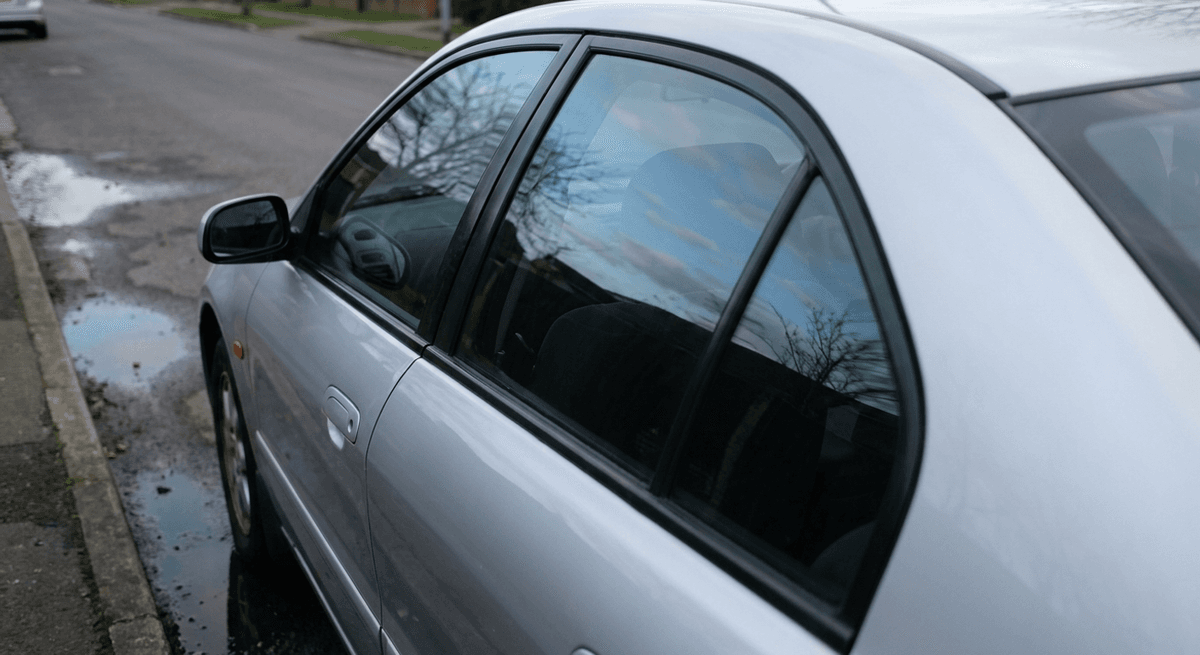
Law enforcement officers may use a portable tint meter during a traffic stop. Because no compliance sticker is required, the only way to verify legality at the roadside is a meter reading. If you are buying a used vehicle with existing tint, asking the seller for the installation records or having the tint metered before purchase is a sound practice.
Installers in Georgia have no state-mandated certification or sticker obligation under the current statute, but a professional shop will test the combined VLT with a meter before you leave. If the reading is borderline (close to 28% on front side windows or 15% on sedan back side windows), going slightly lighter is the safer choice given real-world variation in film manufacturing and meter calibration.
Penalties for illegal tint in Georgia
Violating O.C.G.A. 40-8-73.1 is classified as a misdemeanor in Georgia. The maximum penalty is a fine of up to $1,000, imprisonment for up to 12 months, or both, though first-time offenders in practice typically see much lower fines.
Georgia's misdemeanor classification is stricter than the traffic-infraction standard used by many other states. The charge can appear on a criminal background check. For that reason, correcting out-of-spec tint promptly after a stop is important. Georgia does not have a statutory "fix-it" or equipment-repair-order process for window tint in the way some states do, so the citation does not automatically dismiss if you remove the film.
Both drivers and installers can be cited. If you ask an installer to put illegal tint on your vehicle, the installer faces separate liability under the same statute.
If you want to tint your windows in Georgia
Georgia's 28% front-side rule gives you a moderate amount of heat and glare reduction while keeping the cabin visible from outside. Many drivers find that 30-35% tint still provides noticeable UV protection and comfort, especially in Georgia's hot summers.
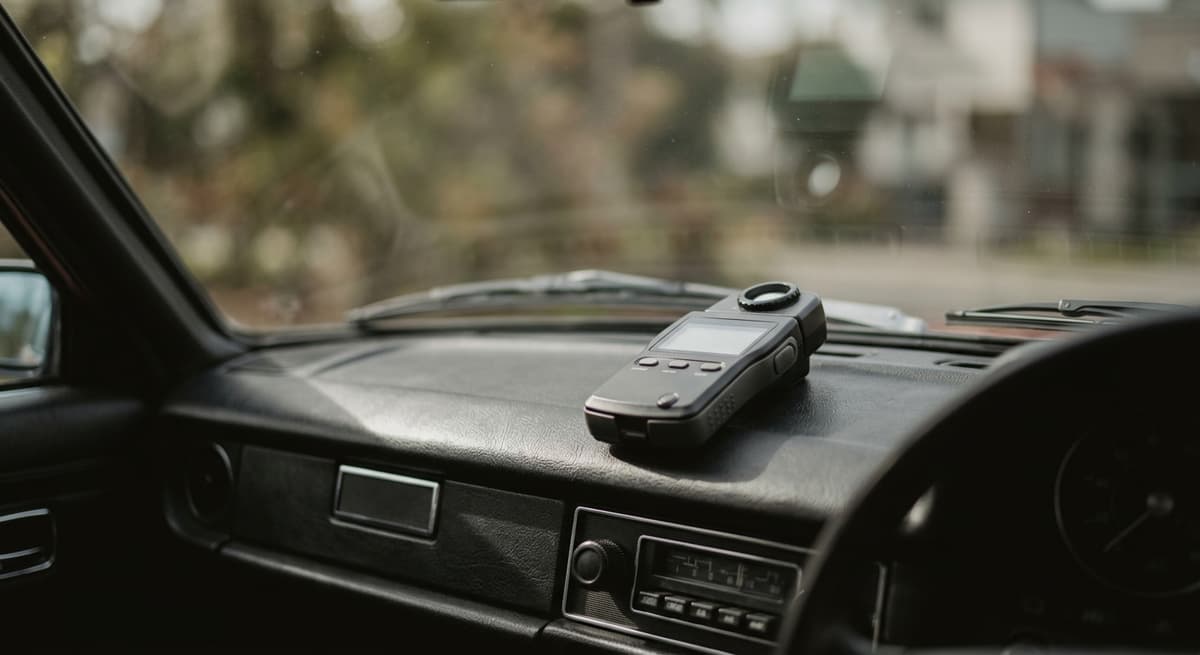
For an SUV, van, or pickup, the back half of the vehicle is open to any VLT you choose, which means very dark privacy tint in the cargo area is completely legal. The front side windows remain at 28%.
When choosing a shop, confirm that the installer tests the combined film-plus-glass VLT with a meter and that the reading at each front side window will comfortably clear 28% after the tolerance is applied. Films in the 35-40% VLT range provide a useful cushion against measurement variation.
If you have a qualifying medical condition, begin the Georgia DPS exemption process before having any sub-28% film installed on front side windows. The permit must be in hand before you drive with darker-than-legal tint. Carry the permit with your registration and insurance card so it is immediately accessible at a traffic stop.
Finally, even though Georgia no longer requires a compliance sticker, keeping your purchase receipt and the film's VLT specification sheet in the vehicle is useful if a dispute arises about whether your tint meets the legal threshold.
This article is general legal information, not legal advice. Window tint limits vary by state and change, and enforcement depends on local practice and your specific vehicle. For a definitive answer, check your state DMV or consult a local attorney.
More Georgia Laws
Frequently Asked Questions
What is the legal tint in Georgia?
Georgia requires all front side windows to allow at least 28% VLT. Sedan back side windows must meet a separate 15% minimum. Multipurpose vehicles (SUVs, vans, pickups) may have any darkness on windows behind the driver. A sedan rear windshield is the one unsettled case: the 2026 amendment left it in both the 28% and the 15% paragraph, so 28% is the conservative choice.
How dark can my front windows be in Georgia?
The darkest legal front side window tint in Georgia is 28% VLT (combined film plus factory glass), with a plus-or-minus 3% measurement tolerance. Film that meters at 25% or above will pass. Anything darker requires a DPS medical permit.
Is 20% tint legal on front windows in Georgia?
No. A 20% VLT reading on a front side window is below Georgia's 28% minimum and is not legal for standard vehicles. A DPS-issued medical permit authorizing approximately 23% VLT is required to run tint that dark on front windows.
Can I get a medical exemption for window tint in Georgia?
Yes. Georgia DPS issues permits for individuals whose physician or optometrist certifies a medical need for reduced light. The permit authorizes approximately 23% VLT and must be carried in the vehicle at all times.
What is the penalty for illegal tint in Georgia?
Illegal window tint in Georgia is a misdemeanor under O.C.G.A. 40-8-73.1. The maximum penalty is a fine up to $1,000 and/or up to 12 months. First-time offenders typically face lower fines, but the misdemeanor can appear on a background check.
Is windshield tint legal in Georgia?
Only a transparent, non-reflective strip on the top 6 inches of the windshield is permitted. Red and amber are prohibited. No aftermarket tint is allowed below that strip.
Do SUVs have different tint rules in Georgia?
Yes. Multipurpose vehicles (SUVs, vans, pickups, limos, minibuses) may have any darkness on back side and rear windows. Sedans must meet a 15% minimum on back side windows, a lower bar than the 28% minimum required on the front side windows. For a sedan rear windshield the statute is ambiguous after the 2026 amendment, which lists it at both 28% and 15%.
Updates
Disclosed that Georgia's 2026 tint amendment leaves the rear windshield listed in both the 28% and the 15% paragraph of O.C.G.A. 40-8-73.1, so 28% is the conservative choice for a sedan's back glass.
Added one sentence noting Georgia's tint figures reflect a 2026 law change (House Bill 1161, effective July 1, 2026) that split the state's prior uniform 32% standard into a 28% front-side / 15% rear-window structure, and replaced a generic, non-specific citation link with a direct link to the current statute.
Independently fact-checked against the cited primary sources; governing law re-checked for recent changes
Corrected the Georgia front-side-window VLT floor from a fabricated 32% to the statute's actual 28% (O.C.G.A. 40-8-73.1(b)(2)), and the rear/back-side floor for sedans from 32% to the statute's actual 15% (40-8-73.1(b)(3)), throughout the intro, KeyTakeaways, comparison table, measurement section, and every affected FAQ answer.
Governing law re-checked for recent changes
Reviewed and approved by an editor
The Law Behind This Article
This article rests on the statutory provisions below, held in our own legal record and retrieved from the official source. Tap a section to read the operative text.
Official Code of Georgia Annotated
§ 40-8-73.1Tinting of windows or windshields.In forcecited in 3 of our articles
(a) As used in this Code section, the term: (1) "Light reflectance" means the ratio of the amount of total light that is reflected outward by a product or material to the amount of total light falling on the product or material. (2) "Light transmission" means the ratio of the amount of total light
Official text (excerpt) · last checked 2026-09-01 · Read the full text in our law library · Verify at legis.ga.gov
Cited in 29 court opinions in our collectionLatest citing opinion in our collection: 2020
In the courts (editorial summary, independently checked):Ciak v. State (2004) struck the then-current OCGA 40-8-73.1 on equal protection grounds because it reached only Georgia residents, but held that unconstitutionality did not require suppressing evidence from the stop. Christy v. State (2012) applied that rule and upheld a stop based on an officer's view of dark tint.
Opinions citing this section in our collection:
- Ciak v. State (Supreme Court of Georgia 2004, 278 Ga. 27)✓An officer stopped Ciak solely for dark purple tint on a Georgia-registered car; the court held OCGA 40-8-73.1 denied equal protection because it reached only Georgia residents, but held that the statute's invalidity did not require suppressing the DUI evidence.
- Davis v. State (Court of Appeals of Georgia 2010, 303 Ga. App. 785)“…ehicle Davis was driving, based on a suspected violation of OCGA § 40-8-73.1 (b) (2), which limits the tint allowed…”
- Christy v. State (Court of Appeals of Georgia 2012, 315 Ga. App. 647)✓After the trial court declared OCGA 40-8-73.1 (b) unconstitutional, the court held the officer's observation of very dark tint still gave reasonable suspicion for the stop, and that the statute's invalidity did not require suppressing the DUI evidence.
Identified automatically from the court opinions citing this section — not a ranking of which case controls.
Also relied on in: Georgia Dashcam Laws: Windshield Mounting and Recording Rules (2026), Georgia Windshield Mounting Laws (2026 Guide)
Search our full record of US law — 2.1 million sections, every state + federal →
Sources and References
- O.C.G.A. 40-8-73.1 - Georgia Window Tinting Statute (current, as amended by 2026 HB 1161, eff. July 1, 2026)(law.justia.com)
- Georgia HB 1161 (2025-2026), as passed House and Senate, Section 3 (enrolled text amending O.C.G.A. 40-8-73.1)(legis.ga.gov)
- Georgia Office of Legislative Counsel, Summary of General Statutes Enacted at the 2026 Session (HB 1161 = Act 640; Sections 1, 2, 3, 4, 6, 7, 8, 9 effective July 1, 2026)(legis.ga.gov)