
California
California Window Tint Laws (2026): Legal VLT Limits
Independently fact-checked against primary sources (last audited August 18, 2026). · Reviewed by the RecordingLaw editorial team. · Law checked current as of August 18, 2026. · 1 primary source cited on this page. How we verify our legal content
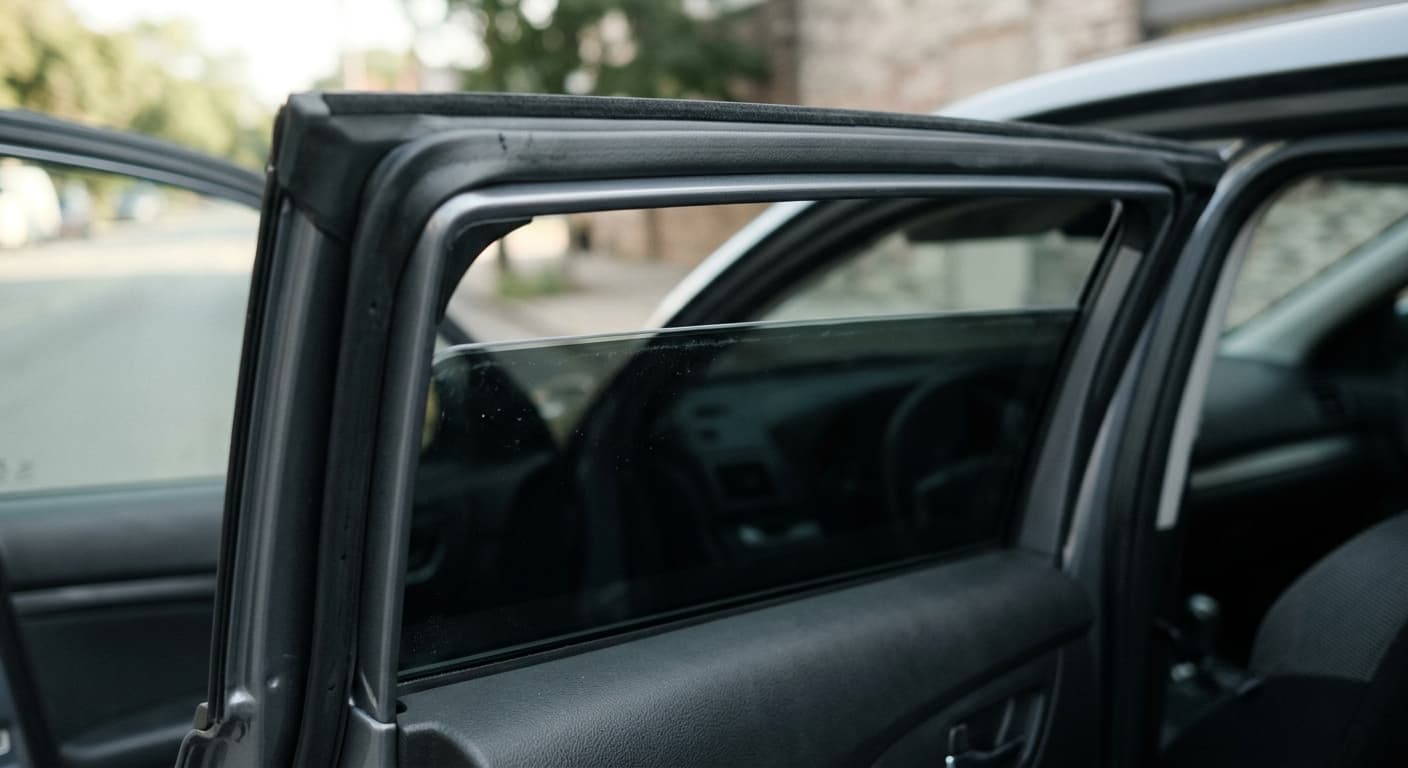
California requires front side windows to allow at least 70% visible light transmission (the aftermarket film itself must pass 88% VLT, since the underlying glass already provides the combined 70%). Back side windows may be any darkness with no other condition. The rear window may also be any darkness, but only if the vehicle has dual outside mirrors giving an adequate rear view.
What is the legal tint limit in California?
California window tint law is built around the concept of Visible Light Transmission (VLT), the percentage of visible light a window allows through. A higher VLT% means a lighter (less dark) tint; a lower VLT% means a darker tint. The front side windows are the most regulated, and the law works in two layers.
The factory glass in most vehicles already allows around 70% VLT under Federal Motor Vehicle Safety Standard 205. When you add aftermarket film to that glass, the combined result must still be at least 70%. Because the glass itself absorbs some light, California requires the film alone to allow at least 88% VLT so the combined glass-plus-film reading meets the 70% threshold.
The back side windows face a much simpler rule: any darkness is legal, with no dual-mirror condition attached. The rear window may also be any darkness, but only if the vehicle has dual outside mirrors providing an adequate view to the rear.
| Window | Sedan | SUV / Van / Truck |
|---|---|---|
| Front side | 70% VLT minimum (film: 88% minimum) | 70% VLT minimum (film: 88% minimum) |
| Back side | Any darkness (no condition) | Any darkness (no condition) |
| Rear window | Any darkness (dual mirrors required) | Any darkness (dual mirrors required) |
| Windshield | Transparent top strip only (bottom edge 29+ inches above the driver's seat) | Transparent top strip only (bottom edge 29+ inches above the driver's seat) |
California Vehicle Code Section 26708 is the controlling statute. The front side rule applies equally to sedans and multipurpose vehicles; there is no relaxed standard for SUVs or trucks on the front side windows.
Windshield tint rules in California
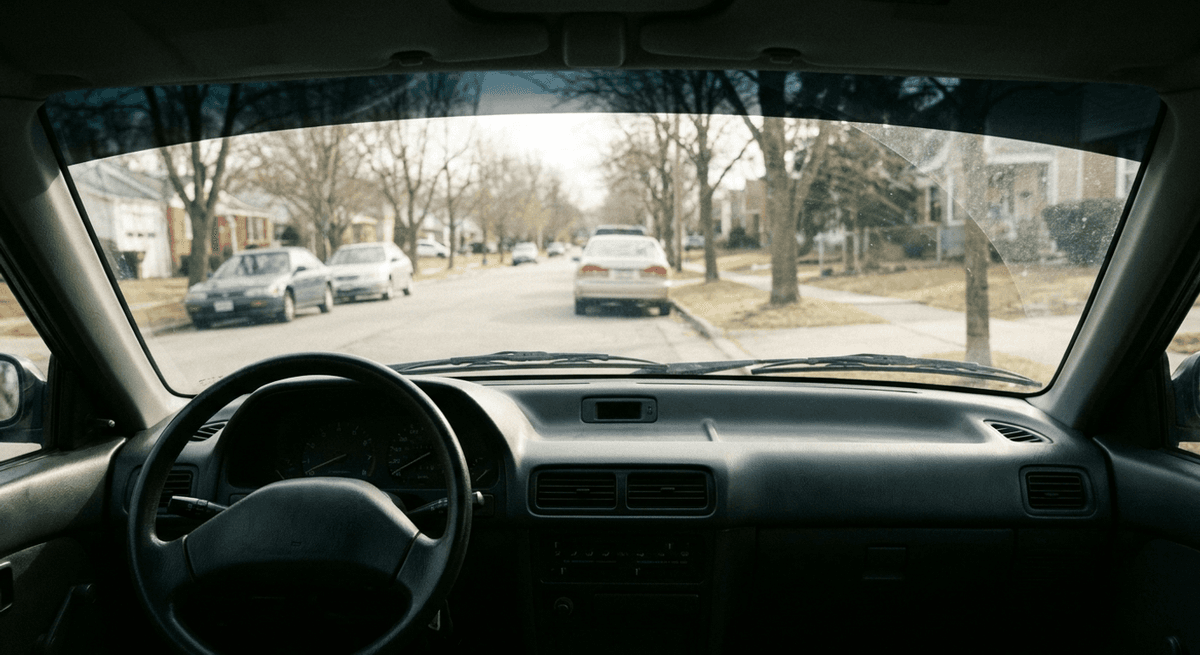
The windshield may only receive transparent material applied to its topmost portion. California does not define that area by the AS-1 line marked on the glass, which is the standard used in most other states. Under Vehicle Code 26708(c)(1), the bottom edge of the material must be at least 29 inches above the undepressed driver's seat, measured from a point five inches in front of the bottom of the backrest with the driver's seat in its rearmost and lowermost position and the vehicle on a level surface. The strip may not be red or amber, and no opaque lettering or graphics may appear on it. Back side windows are separately and unconditionally exempt from Vehicle Code 26708 entirely, so the statute does not restrict lettering or graphics there.
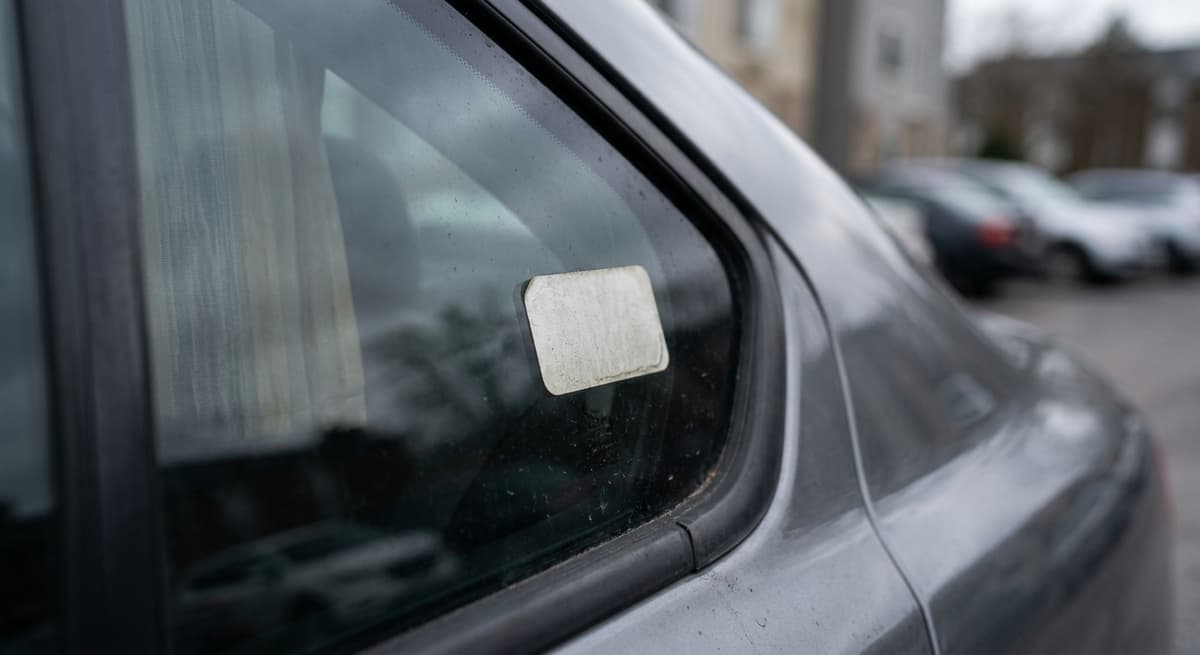
California does not set a specific reflectivity percentage for side windows. The rule that tinted material must not reflect more glare than uncoated glass applies specifically to the transparent strip permitted at the top of the windshield under CVC 26708(c)(4), not to side windows generally. Red and amber colors are banned only on the windshield's permitted top strip; back side windows are unconditionally exempt from Vehicle Code 26708 and carry no color restriction.
Medical exemptions
California does offer a medical exemption, but neither route authorizes dark permanent film on the front side windows.
The first route, under Vehicle Code 26708(e), is the only one that covers film, and it covers only clear, colorless, transparent material with a minimum visible light transmittance of 88 percent. It requires a certificate signed by a licensed dermatologist certifying that the person should not be exposed to ultraviolet rays because of a medical condition. This route does not permit darker film. It permits the same near-clear UV film, with a medical justification for applying it to the windshield and rear windows as well.
The second route, under 26708(b)(10), covers removable sun screening devices rather than film, on the front side windows, for a driver or front-seat passenger holding a letter or other document signed by a licensed physician and surgeon or an optometrist. These devices may not be used during darkness. Section 26708.2 sets their specifications: they must be held in place by means allowing ready removal, such as a frame, a rigid material with temporary fasteners, or a flexible roller shade; they must be green, gray, or a neutral smoke in color; they must have a luminous transmittance of not less than 35 percent; and they may not have a reflective quality exceeding 35 percent on either the inner or outer surface.
In both cases, the certificate must describe the medical condition and be kept inside the vehicle at all times. Law enforcement can request to see it during a traffic stop. There is no formal state agency application; the practitioner's signed letter or prescription form is the document. If you need a medical exemption, obtain the certificate or letter before the film or device is installed and carry a copy in each vehicle.
How tint is measured and certified
California does not use a state-operated VLT meter standard the way some states do. Instead, officers typically use a handheld tint meter during a stop. The standard being checked is the combined VLT of the glass and any film together, which must be at or above 70% on the front side windows.
The certificate requirement is narrower than it is usually described. It attaches only to the clear, colorless film allowed on the front side windows under Vehicle Code 26708(d). For that film, the driver must have in their possession or within the vehicle a certificate signed by the installing company certifying that the windows meet subdivision (d) and identifying the installing company and the film's manufacturer by full name and street address. If the owner installed the film, the certificate is signed by the manufacturer instead. Film on the back side windows or the rear window carries no certificate requirement at all. Ask your installer for the document at the time of installation if you are having the front side windows filmed.
There is no explicit measurement tolerance written into California Vehicle Code 26708, so the 70% number is treated as a hard floor. Choosing a film rated at 88% VLT or higher gives you a comfortable margin when combined transmission through the factory glass is calculated.
Penalties for illegal tint in California
A vehicle with non-compliant tint is subject to a correctable equipment violation, commonly called a fix-it ticket. The base fine is roughly $25, but court fees and assessments typically bring the total amount due to several hundred dollars before correction is verified.
To resolve a fix-it ticket, you must bring the vehicle into compliance (remove or replace the illegal film), have a law enforcement officer or authorized shop sign the correction certificate, and submit proof of correction to the court within the deadline on your citation. Once the court confirms compliance, the charge is dismissed. Repeat violations or refusal to correct can escalate, but first stops are routinely handled as correctable infractions.
California does not make illegal tint a criminal misdemeanor in most circumstances. The intent of the statute is compliance, not punishment, so the correction pathway is straightforward for most drivers.
If you want to tint your windows in California
The most practical approach for California drivers is to choose a clear or very light film for the front side windows. Any film intended for the front side windows should be rated at 88% VLT or higher by the manufacturer to ensure the combined reading with the factory glass stays at or above the required 70%.

For the back side windows, you have complete freedom to choose any darkness you prefer, from a light 50% film to a very dark 5% or 2% film, with no dual-mirror condition. For the rear window, that same freedom applies, but only if dual outside mirrors are already standard equipment on your vehicle or you add them.
Practical steps:
- Confirm the film's VLT rating before purchase. For front side windows, choose 88% VLT or higher.
- If you are filming the front side windows, use an installer who will issue the subdivision (d) certificate identifying the installing company and the film's manufacturer by full name and street address.
- Keep that certificate in the vehicle. It is required only for front side window film, not for tint on the back side windows or the rear window.
- If you have a medical condition requiring UV protection or additional shading, obtain the physician or dermatologist certificate before installation and keep it in the car.
- If you receive a fix-it ticket, act promptly: remove or replace the non-compliant film, get the correction signed, and file proof with the court.
For guidance on how California regulates devices mounted on the windshield, see our related page on California windshield mounting laws.
This article is general legal information, not legal advice. Window tint limits vary by state and change, and enforcement depends on local practice and your specific vehicle. For a definitive answer, check your state DMV or consult a local attorney.
More California Laws
Frequently Asked Questions
What is the legal tint in California?
Front side windows must allow at least 70% VLT combined (the aftermarket film alone must be 88% VLT or higher). Back side windows may be any darkness with no condition attached; the rear window may also be any darkness, but only with dual outside mirrors.
How dark can my front windows be in California?
Very limited. The combined VLT of the glass and film on the front side windows must be at least 70%. In practice, only near-clear film rated 88% VLT or higher is legal on the front side windows.
Is 35% tint legal in California on front windows?
No. A 35% VLT film on the front side windows would bring the combined reading well below California's 70% minimum. 35% tint is only legal on the back side windows and rear window.
Can I get a medical exemption for window tint in California?
Yes, but it does not allow dark tint. A dermatologist can certify clear, colorless film rated at 88% VLT. A physician or optometrist can certify removable sun screening devices, which must be green, gray, or neutral smoke, must let at least 35 percent of light through, and may not be used during darkness. The certificate must be kept in the vehicle.
What is the penalty for illegal tint in California?
A correctable equipment (fix-it) ticket with a base fine of about $25. Court fees and assessments can raise the total to several hundred dollars, but the charge is dismissed once you bring the vehicle into compliance.
Is windshield tint legal in California?
Only a transparent strip across the topmost portion of the windshield is permitted. Its bottom edge must be at least 29 inches above the undepressed driver's seat, measured five inches in front of the bottom of the backrest with the seat rearmost and lowermost. California does not use the AS-1 line standard that most other states apply. The strip may not be red or amber.
Do SUVs have different tint rules in California?
Not on the front side windows. SUVs, vans, and trucks face the same 70% VLT minimum on the front side as sedans. The any-darkness rule for windows behind the driver applies to all vehicle types.
Updates
Corrected the windshield rule, which wrongly described California as using the AS-1 line standard when Vehicle Code 26708(c)(1) instead requires the tint strip to stop at least 29 inches above the driver seat, and clarified that the compliance certificate applies only to front side window film and that the medical exemption does not authorize dark tint.
Narrowed an overstated claim about California's ban on opaque window lettering: it applies only to the windshield's permitted top strip, not to side or rear windows generally.
Independently fact-checked against the cited primary sources; governing law re-checked for recent changes
Corrected an invented dual-mirror condition on California back-side windows (the statute exempts them unconditionally, unlike the rear window) and clarified that California's no-greater-glare rule applies to the windshield's top strip, not side windows generally.
Scoped the glare rule in the key takeaways to the windshield strip, matching Vehicle Code 26708(c)(4).
Governing law re-checked for recent changes
Reviewed and approved by an editor
The Law Behind This Article
This article rests on the statutory provisions below, held in our own legal record and retrieved from the official source. Tap a section to read the operative text.
California Vehicle Code
§ 26708In forcecited in 7 of our articles
(a) (1) A person shall not drive any motor vehicle with any object or material placed, displayed, installed, affixed, or applied upon the windshield or side or rear windows. (2) A person shall not drive any motor vehicle with any object or material placed, displayed, installed, affixed, or applied in or upon the vehicle that obstructs or reduces the driver’s clear view through the windshield or side windows. (3) This subdivision applies to a person driving a motor vehicle with the driver’s clear vision through the windshield, or side or rear windows, obstructed by snow or ice. (b) This section does not apply to any of the following: (1) Rearview mirrors. (2) Adjustable nontransparent sunvisors that are mounted forward of the side windows and are not attached to the glass.
Official text (excerpt) · last checked 2026-09-07 · Read the full text in our law library · Verify at leginfo.legislature.ca.gov
Cited in 56 court opinions in our collectionLatest citing opinion in our collection: 2026
In the courts (editorial summary, independently checked):California courts read section 26708(a)(2) to require an objective basis that an object actually obstructed the driver's view. People v. White (2003) held an air freshener on a mirror did not justify a stop where the officer never said it blocked his view; People v. Colbert (2007) found such a basis on fuller testimony.
Opinions citing this section in our collection:
- People v. White (California Court of Appeal 2003, 132 Cal. Rptr. 2d 371)✓An officer stopped a car for a tree-shaped air freshener on the mirror; the court held section 26708(a)(1) does not reach an object not affixed on the windshield, and that with no testimony the view was obstructed there was no reasonable basis under subdivision (a)(2).
- People v. Colbert (California Court of Appeal 2007, 68 Cal. Rptr. 3d 912)✓An officer stopped a car for a 4.75-inch tree air freshener on the mirror and testified from his own experience how an object that size hides cars and pedestrians; the court held that testimony gave an objectively reasonable basis under section 26708(a)(2).
- Klarfeld v. State of California (California Court of Appeal 1983, 142 Cal. App. 3d 541)✓A tint installer and car owners challenged sections 26708 and 26708.5 as vague; the court held the terms are not unconstitutionally vague and declared applied tint may not go on the windshield or front side windows, but may go behind the driver if the car has required mirrors.
Identified automatically from the court opinions citing this section — not a ranking of which case controls.
Also relied on in: California Dashcam Laws: Mounting Rules, Audio Recording, and Evidence (2026), Window Tint Laws by State (2026): Legal VLT Limits, Windshield Mounting Restrictions by State (2026 Guide)
§ 26708.2In forcecited in 2 of our articles
Sun screening devices permitted by paragraph (10) of subdivision (b) of Section 26708 shall meet the following requirements: (a) The devices shall be held in place by means allowing ready removal from the window area, such as a frame, a rigid material with temporary fasteners, or a flexible roller shade. (b) Devices utilizing transparent material shall be green, gray, or a neutral smoke in color and shall have a luminous transmittance of not less than 35 percent. (c) Devices utilizing nontransparent louvers or other alternating patterns of opaque and open sections shall have an essentially uniform pattern over the entire surface, except for framing and supports. At least 35 percent of the device area shall be open and no individual louver or opaque section shall have a projected vertical dimension exceeding 3/16 inch. (d) The devices shall not have a reflective quality exceeding 35 percent on either the inner or outer surface.
Official text (excerpt) · last checked 2026-07-28 · Read the full text in our law library · Verify at leginfo.legislature.ca.gov
Also relied on in: California Windshield Mounting Laws (2026 Guide)
Search our full record of US law — 2.1 million sections, every state + federal →
Sources and References
- California Vehicle Code Section 26708 - Window tinting restrictions(leginfo.legislature.ca.gov).gov
- California Vehicle Code Section 26708.2 - Sun screening device requirements (removability, color, 35% luminous transmittance, 35% reflectivity)(leginfo.legislature.ca.gov)