
Arizona
Arizona Window Tint Laws (2026): Legal VLT Limits
Independently fact-checked against primary sources (last audited August 18, 2026). · Reviewed by the RecordingLaw editorial team. · Law checked current as of August 18, 2026. · 1 primary source cited on this page. How we verify our legal content
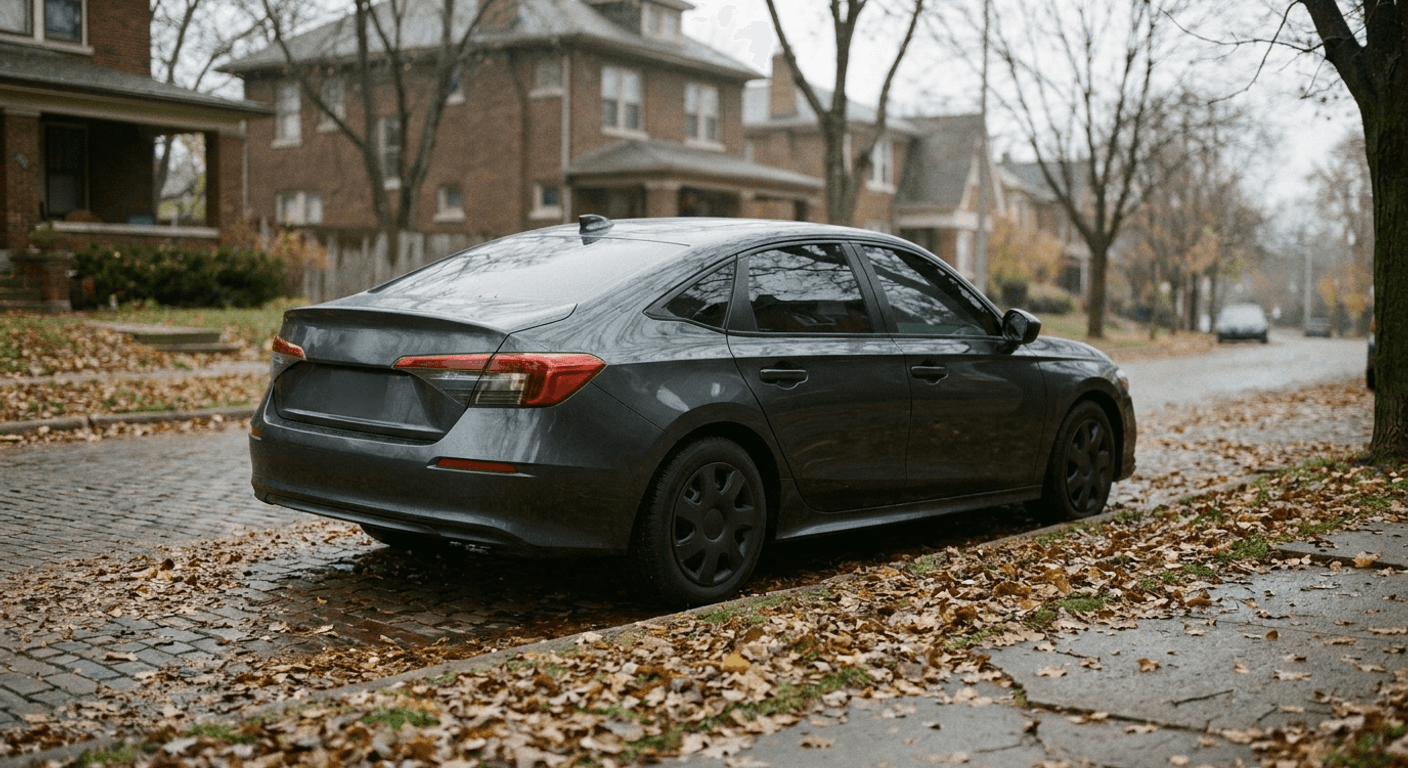
Arizona law requires front side windows to allow at least 33% of visible light through. Back side windows may be any darkness as long as the tint's luminous reflectance meets the statutory figure of 35% plus or minus 3%. The rear window gets that same reflectance option, or can be any darkness with no reflectance limit if the vehicle has dual outside mirrors giving a 200-foot rear view.
What is the legal tint limit in Arizona?
Arizona window tint law is set out in A.R.S. 28-959.01. The key rule is that front side windows (the two windows next to the driver and front passenger) must allow at least 33% VLT. Understanding VLT helps you pick the right film: a higher VLT percentage means lighter tint, and a lower VLT percentage means darker tint. So 33% is moderately dark, while 70% would appear nearly clear.
Back side windows (any windows behind the driver row) and the rear window have no VLT minimum in Arizona. Back side windows may be any darkness as long as the tint's luminous reflectance meets the statutory figure of 35% plus or minus 3%, with no mirror requirement. The rear window gets that same reflectance path, or can be any darkness with no reflectance limit at all if your vehicle has dual outside mirrors that give you a clear view at least 200 feet to the rear. There is no sedan-versus-SUV distinction in Arizona: these rules apply to all vehicle types equally.
| Window | VLT Minimum |
|---|---|
| Front side windows | 33% |
| Back side windows | Any (reflectance 35% plus or minus 3%) |
| Rear window | Any (reflectance 35% plus or minus 3%, or no limit with dual mirrors) |
| Windshield | Transparent strip only (see below) |
Windshield tint rules in Arizona
Arizona permits a transparent tint strip on the topmost portion of the windshield only. A.R.S. 28-959.01(A)(11)(a) fixes the measurement precisely: the bottom edge of the material must be at least 29 inches above the undepressed driver's seat, measured from a point 5 inches in front of the bottom of the backrest, with the driver's seat in its rearmost and lowermost position and the vehicle on a level surface. In practice this leaves a narrow band across the top of the glass. The statute does not reference the AS-1 line that manufacturers mark on many windshields, and the two do not necessarily coincide on every vehicle, so measure to the statutory 29 inches rather than treating the AS-1 mark as the legal boundary.
Red and amber tints are expressly banned on the windshield strip. The strip must also remain transparent, not opaque or reflective. Any tint below the permitted top strip violates A.R.S. 28-959.01 and is subject to a civil penalty.
For the front side windows and for the windows behind the driver, the statute sets luminous reflectance at 35% plus or minus 3%, which puts the practical ceiling at 38%. Highly mirrored or metallic films that reflect more than that are not permitted, even if their VLT reading would otherwise pass.
Medical exemptions
Arizona does allow medical exemptions for window tint under A.R.S. 28-959.01. Drivers with a medical condition requiring additional UV or light protection may apply for an exemption through the Arizona Department of Transportation Motor Vehicle Division (ADOT MVD). Under A.R.S. 28-959.01(G) the application must be supported by written attestation of the medical need from a physician licensed under title 32, chapter 13, 14 or 17.
The statute does not require you to carry the exemption paperwork in the vehicle, but keeping a copy with your registration is sensible: if you are stopped and the officer cannot verify your exemption, you may face a citation you then have to resolve with the court.
It is best to apply before you tint your windows rather than after. A.R.S. 28-959.01(G) does not set a tint level for exemption holders and puts no expiry or renewal term in the statute: it exempts the vehicle from the section and lets the exempt person alter the color or reduce the light transmitted through the side or rear windows under the exemption the director issues. Check with ADOT MVD for the current application form and any conditions it attaches.
How tint is measured and certified
Arizona law enforcement uses a VLT meter (also called a tint meter or photometer) to measure how much visible light passes through the combined glass-and-film stack. The measurement is taken at the window itself and reflects the total VLT of factory glass plus any aftermarket film.
Arizona recognizes a tolerance of plus or minus 3%, which means a window testing at 30% or above will generally be treated as compliant with the 33% minimum. However, you should aim for the stated 33% limit or above rather than relying on tolerance margin.
Arizona does not require a compliance sticker or installer label, unlike some other states. You are not obligated to display any certification on the window, though keeping a receipt from a reputable installer documenting the film's VLT rating is good practice.
Penalties for illegal tint in Arizona
Tint violations in Arizona are civil traffic violations, not criminal offenses. The fine for a first offense typically runs from approximately $164 to $245 when court fees and assessments are added to the base fine. Amounts can vary by court and by whether the ticket is resolved without a hearing.
Arizona tint violations are often correctable. If you remedy the non-compliant tint and get the correction verified, some courts will reduce or dismiss the fine. Check with the issuing court on the specific process in your county.
Officers may also note tint violations during a stop for another reason, so a dark front window that looks questionable can add a second violation to any traffic stop. Keeping your front windows at 33% or above eliminates that risk.
If you want to tint your windows in Arizona
Choosing legal tint in Arizona is straightforward once you know the numbers. For front side windows, select a film rated at 33% VLT or higher. For back side windows, any VLT is permissible as long as the film's luminous reflectance meets the statutory 35% plus or minus 3% figure, no mirrors required. The rear window gets that same reflectance option, or any VLT with no reflectance limit if you retain dual outside mirrors. Common darker choices for rear windows (such as 20%, 15%, or 5%) are fully legal.
Use a reputable installer who can show you independent lab ratings for the film you choose. Ask for documentation of the VLT rating for each film applied, and keep that paperwork with the vehicle. While Arizona does not require a compliance sticker, having a paper trail protects you if your tint is ever questioned.
If you have a medical condition that requires darker front windows than 33%, pursue the ADOT MVD exemption before installation, not after. Present your physician's letter to the installer so the correct film is applied from the start.
If you are relying on the no-reflectance-limit path for the rear window rather than the 35% plus or minus 3% reflectance limit, verify that your dual outside mirrors provide an unobstructed 200-foot rear view before driving.
This article is general legal information, not legal advice. Window tint limits vary by state and change, and enforcement depends on local practice and your specific vehicle. For a definitive answer, check your state DMV or consult a local attorney.
Related
For a full overview of tint limits in all 50 states, see the Window Tint Laws hub. Arizona drivers may also want to review Arizona Windshield Mounting Restrictions for rules on objects attached to or near the windshield.

- Arizona Car Accident Laws
- Arizona Car Seat Laws
- Arizona Child Custody Laws
- Arizona Child Support Laws
- Arizona Common Law Marriage Laws
- Arizona Dashcam Laws
- Arizona Data Privacy Laws
- Arizona Deepfake Laws
- Arizona Divorce Laws
- Arizona Dog Bite Laws
- Arizona Drone Laws
- Arizona Emancipation Laws
- Arizona Employee Monitoring Laws
More Arizona Laws
Frequently Asked Questions
What is the legal tint in Arizona?
Arizona requires front side windows to allow at least 33% VLT. Back side windows may be any darkness as long as the film's luminous reflectance meets the statutory 35% plus or minus 3% figure. The rear window gets that same option, or any darkness with no reflectance limit if you have dual outside mirrors providing a 200-foot rear view.
How dark can my front windows be in Arizona?
The darkest legal tint for front side windows in Arizona is 33% VLT. Films darker than 33% (lower VLT number) on the front side windows violate A.R.S. 28-959.01.
Is 20% tint legal in Arizona?
A 20% tint is not legal on front side windows in Arizona, which require at least 33% VLT. However, 20% is perfectly legal on back side windows and the rear window, where any darkness is permitted.
Can I get a medical exemption for window tint in Arizona?
Yes. Arizona allows medical exemptions through ADOT MVD. Under A.R.S. 28-959.01(G) you apply to the department with written attestation of the medical need from a physician licensed under title 32, chapter 13, 14 or 17. The statute does not set a tint level for exemption holders and does not require you to carry the paperwork in the vehicle, though keeping a copy on hand is sensible if you are stopped.
What is the penalty for illegal tint in Arizona?
Illegal tint in Arizona is a civil traffic violation. Fines typically range from about $164 to $245 including court fees and assessments. Violations are often correctable if you remove or replace the non-compliant film.
Is windshield tint legal in Arizona?
Only a transparent strip on the topmost portion of the windshield is permitted, with the bottom edge at least 29 inches above the undepressed driver's seat, measured from a point 5 inches in front of the bottom of the backrest with the seat in its rearmost and lowermost position. Red and amber colors are banned on the strip. No tint is allowed in the main viewing area of the windshield.
Do SUVs have different tint rules in Arizona?
No. Arizona applies the same front side window rule (33% VLT) to all vehicle types. The any-darkness rule for back side and rear windows (subject to the 35% plus or minus 3% reflectance limit, or no limit on the rear window with dual outside mirrors) also applies equally to sedans, SUVs, trucks, and vans.
Updates
Corrected the window tint details against the enacted text of A.R.S. 28-959.01: the luminous reflectance figure is 35% plus or minus 3% rather than a flat 35% cap, the windshield strip measurement is stated as the statute writes it instead of by reference to the AS-1 line, and medical exemption claims not found in the statute were removed.
Corrected the description of Arizona's tint rules for windows behind the driver: back side windows are limited only by a 35% reflectance cap (no mirrors required), while the dual-outside-mirror option is specific to the rear window and offers an alternative to that same reflectance cap, not an added requirement on back side windows.
Independently fact-checked against the cited primary sources; governing law re-checked for recent changes
Governing law re-checked for recent changes
Reviewed and approved by an editor
The Law Behind This Article
This article rests on the statutory provisions below, held in our own legal record and retrieved from the official source. Tap a section to read the operative text.
Arizona Revised Statutes, Title 28 (Transportation), Chapter 3 (TRAFFIC AND VEHICLE REGULATION), Article 16 (Equipment)
§ 28-959.01Materials on windows or windshield; exceptions; requirements; violation; definitionsIn forcecited in 5 of our articles
A. This section does not apply to: 1. Front side wing vents and windows that have a substance or material in conjunction with glazing material that has a light transmission of thirty-three percent plus or minus three percent and a luminous reflectance of thirty-five percent plus or minus three percent. 2. Front side wing vents and windows that have a substance or material not attached in conjunction with glazing material that is used by a vehicle operator on a moving vehicle during daylight hours as provided in section 28-922. 3. Rearview mirrors. 4. Adjustable nontransparent sun visors that are mounted forward of the side windows and that are not attached to the glass. 5. Signs, stickers or other materials that are either: (a) Displayed in a seven inch square in the lower corner of the windshield farthest removed from the driver. (b) Displayed in a five inch square in the lower corner of the windshield nearest the driver. 6. Side windows that are to the rear of the driver and rear windows that have a substance or material in conjunction with glazing material that has a luminous reflectance of thirty-five percent plus or minus three percent or less. 7.
Official text (excerpt) · last checked 2026-09-07 · Read the full text in our law library · Verify at azleg.gov
Cited in 2 court opinions in our collectionLatest citing opinion in our collection: 2016
Opinions citing this section in our collection:
- State of Arizona v. Jesus Ramiro Moreno (Court of Appeals of Arizona 2014, 236 Ariz. 347)“…vehicle based on mistaken view of the law). 4Under A.R.S. § 28-959.01(A)(1), window tint on the front-side wi…”
- State v. Meza-Contreras (Court of Appeals of Arizona 2016)“…er that obstructs or restricts the driver’s clear view. See A.R.S. § 28-959.01.B; see also A.R.S. § 28- 1594 (An offic…”
Identified automatically from the court opinions citing this section — not a ranking of which case controls.
Also relied on in: Arizona Dashcam Laws: Rules for Dashboard Cameras in Vehicles, Window Tint Laws by State (2026): Legal VLT Limits, Arizona Windshield Mounting Laws (2026 Guide)
Search our full record of US law — 2.1 million sections, every state + federal →