
Alabama
Alabama Window Tint Laws (2026): Legal VLT Limits
Independently fact-checked against primary sources (last audited August 18, 2026). · Reviewed by the RecordingLaw editorial team. · Law checked current as of August 18, 2026. · 1 primary source cited on this page. How we verify our legal content
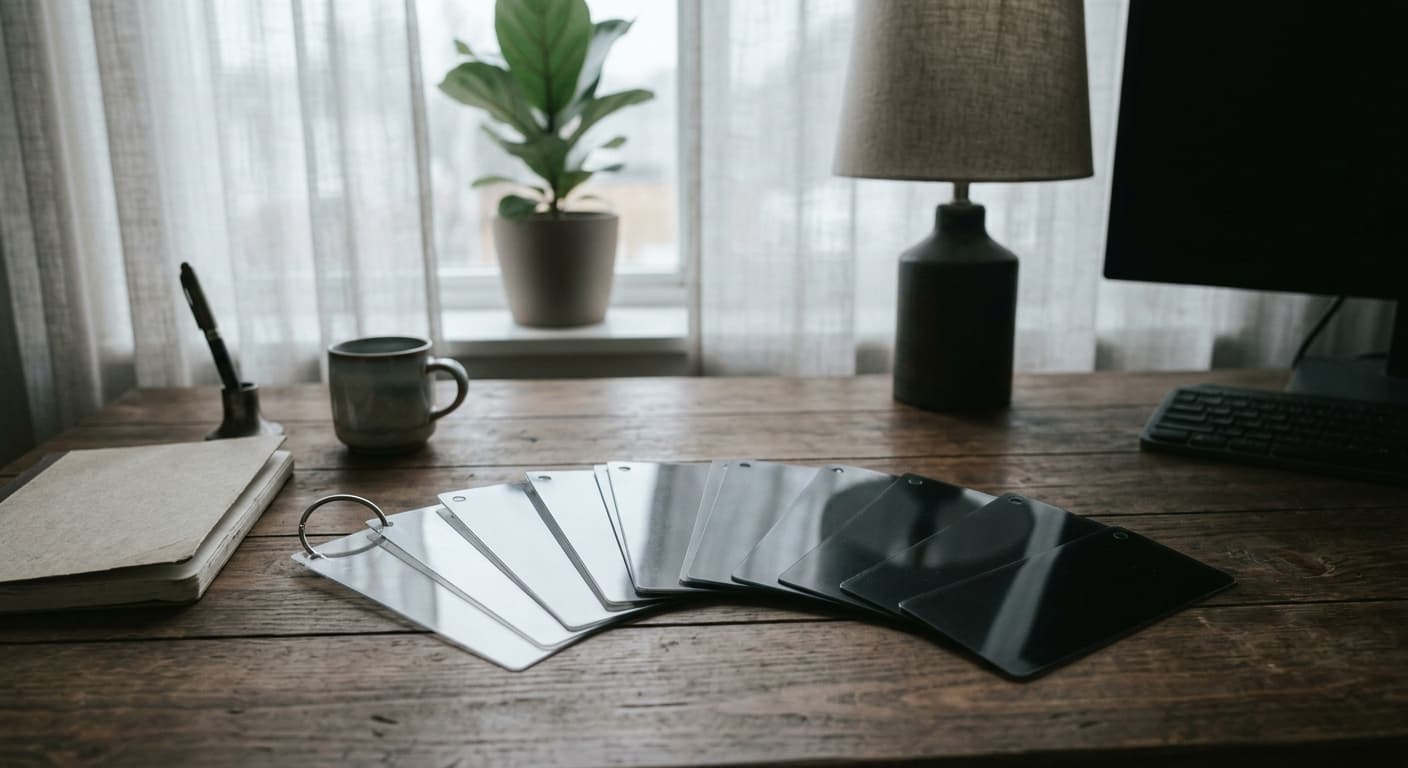
Alabama sets a single tint standard for every vehicle registered in the state. The rear windshield and all side and door windows, front and back alike, must allow at least 32% of visible light through and may not reflect more than 20%. The front windshield is treated separately, and glass darkened before factory delivery is a recognized exception.
What is the legal tint limit in Alabama?
Alabama's window tint law is governed by Ala. Code 32-5C-1 through 32-5C-7. Before you read further, one key concept: a higher VLT percentage means lighter tint, while a lower VLT percentage means darker tint. So 32% is moderately dark, and anything darker (a lower number) would be illegal.
Ala. Code 32-5C-2(a)(2) does not sort windows into front and back, and it does not sort vehicles into cars and SUVs. It groups the rear windshield together with "the side or door windows" and applies one threshold to all of them: light transmission may not fall below 32%, and light reflectance may not rise above 20%, with a measurement tolerance of at least 3%. The front windshield is handled by its own subsection, 32-5C-2(a)(1), which allows no light-reducing material on it at all.
| Window | Requirement under Ala. Code 32-5C-2 |
|---|---|
| Front windshield | No light-reducing material, except the six-inch strip described below |
| Front side and door windows | At least 32% VLT, no more than 20% reflectance |
| Back side and door windows | At least 32% VLT, no more than 20% reflectance |
| Rear windshield | At least 32% VLT, no more than 20% reflectance |
The statute also carries an enforcement condition that works in the driver's favor: the officer must be equipped with a light transmission meter before stopping the driver, and the reading must be taken before a person may be charged.
Factory-darkened glass behind the driver
The one place vehicle type enters the picture is not in 32-5C-2 but in the exceptions. Ala. Code 32-5C-3(6) exempts any vehicle "the windows or windshields of which have been tinted or darkened before factory delivery or permitted by federal law or regulation." The Alabama Law Enforcement Agency applies that exception to the windows behind the driver, stating that darker glass there is permitted as allowed by the vehicle manufacturer under federal law, and that an outside rearview mirror on each side of the vehicle is required when the darker glass is present. ALEA notes that the manufacturer determines the vehicle's classification.
Read that exception for what it actually says. It covers glass the manufacturer darkened, or darkening federal law permits for that vehicle. It is not a blanket permission to apply aftermarket film of any darkness behind the driver's row. If you are adding film to a vehicle that came with ordinary clear glass, the 32% floor in 32-5C-2 still governs those windows.
Windshield tint rules in Alabama
Alabama's windshield rule is a fixed measurement, not a reference to the AS-1 line that many other state statutes use. Ala. Code 32-5C-3(4) excepts "any transparent item which is not red or amber in color which is placed on the uppermost six inches of the windshield." The Alabama Code does not mention the AS-1 line anywhere.

Two conditions attach to that strip, and neither is about reflectivity. The item must be transparent, and it must not be red or amber in color. No tint of any kind is permitted on the main viewing area of the windshield below the six-inch strip.
Color does matter elsewhere in the chapter, so the red and amber ban on the windshield strip is the clearest color restriction in Alabama's tint law. On the rear windshield and the side and door windows, the operative limits are the 32% transmission floor and the 20% reflectance ceiling, which together rule out mirrored or metallic finishes that could dazzle oncoming drivers or law enforcement.
Medical exemptions
Alabama does allow a medical exemption for window tint darker than the standard legal limits. Under Ala. Code 32-5C-4(a), ALEA may issue an exemption to a person who must be shielded from the direct rays of the sun for medical reasons, covering any vehicle the person owns or in which the person is a habitual passenger. The application must be supported by a written statement from a physician licensed to practice medicine in Alabama, and ALEA may attach conditions and limitations.
Ala. Code 32-5C-4(b) singles out one condition for broader treatment. An exemption granted to a person with light-sensitive porphyria applies to all areas of the windshield and windows the physician prescribes in that written statement.
The verification mechanism is a decal, not glovebox paperwork. Ala. Code 32-5C-4(c) requires ALEA to design a decal carrying a unique identification number and to issue one to each person granted an exemption. The decal is placed on the windshield of each vehicle the exempt person operates, and ALEA may charge a reasonable fee for it. That decal is what answers an officer at the roadside, so the exemption is not fully in place until the decal is on the glass. ALEA routes medical waiver applications through the Driver License Division's Medical Records Unit.
How tint is measured and certified
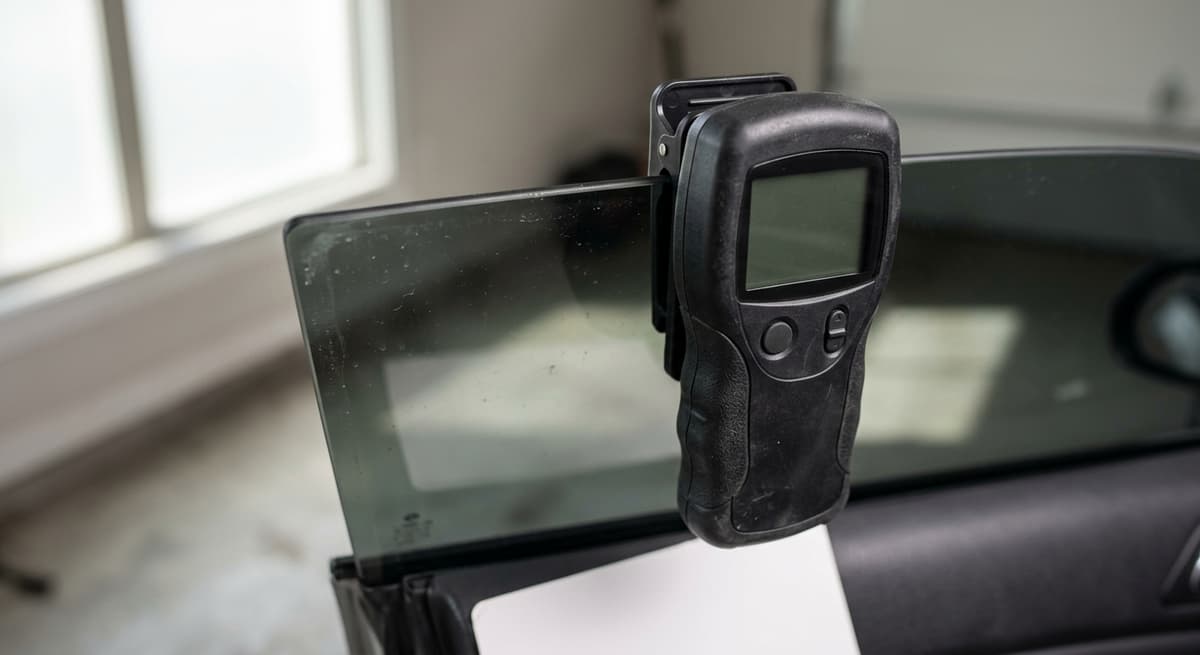
Alabama uses a VLT meter (also called a photometer or tint meter) to measure the percentage of light passing through a window. The statute sets a measurement tolerance of at least 3%, so film nominally at the 32% standard is not treated as a violation on a reading a few points below it.
Alabama's compliance label requirement attaches to the vehicle, not to a category of licensed installer. Chapter 32-5C creates no tint installer licensing scheme. Ala. Code 32-5C-6 provides that a vehicle with light-reducing material applied to its windows or rear windshield "shall display a label visible from the outside of the vehicle" indicating compliance with the 32-5C-2 limits. The duty runs to the vehicle and its operator, so keep the label in place once it is affixed.
The labels themselves come from the film manufacturer. Ala. Code 32-5C-5 requires each manufacturer of tinting material to apply to the director for approval and registration of the material and its label before shipping it into Alabama, and to supply approved labels, written placement instructions, and notice that improper installation or failure to display a label violates state law. Altering or reproducing an approved label is itself unlawful.
If you are purchasing a vehicle with existing tint, ask the seller or a tint shop to verify the VLT readings with a meter before assuming the tint is legal. Film can degrade over time and may shift in either direction.
Penalties for illegal tint in Alabama
Violating Alabama's window tint law is a misdemeanor. Ala. Code 32-5C-7 sets three tiers rather than a simple first-and-after split:
| Conviction | Maximum fine | Maximum jail |
|---|---|---|
| First | $100 | 10 days |
| Second | $200 | 30 days |
| Third or subsequent | $500 | 3 months |
Either penalty, or both together, may be imposed at each tier. The escalation is also time-limited in a way that matters: the second-tier and third-tier penalties apply only to an offense committed within one year after the date of the first offense. A citation years after an earlier one does not carry the escalated maximum.
In practice, law enforcement officers typically issue a citation and require you to bring the vehicle into compliance within a set period. However, because the violation is classified as a misdemeanor rather than a civil infraction, the potential consequences are more serious than in states that treat illegal tint as a simple fix-it ticket.
Liability is not limited to the driver. The second sentence of Ala. Code 32-5C-6 makes it unlawful for any person to install material that would put a window out of compliance with 32-5C-2, which reaches the shop that applied the film.
If you want to tint your windows in Alabama
The most important step is choosing a VLT that meets the 32% minimum, which applies to every side and door window and to the rear windshield. Many drivers opt for 35% film, which gives a meaningful reduction in heat and glare while staying comfortably above the legal floor after accounting for the measurement tolerance.

Choose a tint dealer familiar with the state code who will use approved material and affix the compliance label the vehicle must display under Ala. Code 32-5C-6. Ask for a written receipt or certificate showing the VLT of the film installed on each window. Store that documentation in your glove box.
If you have a medical condition that may qualify for an exemption, speak with your physician before installation. Getting the ALEA exemption and its decal first lets you choose a darker VLT without legal risk. If your vehicle came with factory-darkened glass behind the driver, confirm which windows that factory glass actually covers before assuming film may be added over or beside it.
This article is general legal information, not legal advice. Window tint limits vary by state and change, and enforcement depends on local practice and your specific vehicle. For a definitive answer, check your state DMV or consult a local attorney.
For the full national picture, see our Window Tint Laws by State hub. Alabama drivers may also want to review Alabama Windshield Mounting Restrictions for related vehicle equipment rules.
More Alabama Laws
Frequently Asked Questions
What is the legal tint in Alabama?
Alabama applies one standard to every vehicle registered in the state. Under Ala. Code 32-5C-2, the rear windshield and all side and door windows, front and back alike, must allow at least 32% visible light transmission and may not exceed 20% light reflectance, with a measurement tolerance of at least 3%. The front windshield may carry no light-reducing material apart from a transparent, non-red, non-amber strip on its uppermost six inches.
How dark can my front windows be in Alabama?
Your front side windows must transmit at least 32% of visible light. Film with a lower VLT number (darker film) is not legal on them. The statute sets a measurement tolerance of at least 3%, so a reading slightly below 32% is not automatically a violation, and the officer must take a meter reading before charging you.
Is 20% tint legal in Alabama?
Not as applied film. A 20% VLT sits well below the 32% minimum that Ala. Code 32-5C-2 applies to the rear windshield and to every side and door window, on every vehicle registered in the state, and the 3% tolerance does not close that gap. Factory glass darker than 32% can still be lawful, but only through the separate exception in 32-5C-3(6) for glass darkened before factory delivery or permitted by federal law, which is not a permission to add aftermarket film.
Can I get a medical exemption for window tint in Alabama?
Yes. Under Ala. Code 32-5C-4, ALEA may grant an exemption to a person who must be shielded from direct sunlight for medical reasons, supported by a written statement from an Alabama-licensed physician. ALEA then issues a decal with a unique identification number that goes on the windshield of each vehicle the exempt person drives, and it may charge a fee for it. An exemption for light-sensitive porphyria extends to all windshield and window areas the physician prescribes. ALEA handles these applications through the Driver License Division's Medical Records Unit.
What is the penalty for illegal tint in Alabama?
Illegal window tint is a misdemeanor with three tiers under Ala. Code 32-5C-7. A first conviction carries up to a $100 fine, up to 10 days in jail, or both. A second conviction carries up to $200 and up to 30 days. A third or subsequent conviction carries up to $500 and up to three months. The second and third tiers apply only to an offense committed within one year after the date of the first offense.
Is windshield tint legal in Alabama?
Only on the uppermost six inches. Ala. Code 32-5C-3(4) excepts a transparent item that is not red or amber in color placed on the top six inches of the windshield. Alabama measures a fixed six inches rather than referring to the AS-1 line, and the conditions are transparency and color, not reflectivity. No tint is permitted in the main viewing area below that strip.
Do SUVs have different tint rules in Alabama?
Not under the tint statute itself. Ala. Code 32-5C-2 draws no distinction between passenger cars and SUVs, vans, or trucks, and says nothing about mirrors. The difference comes from the exception in 32-5C-3(6) for glass darkened before factory delivery or permitted by federal law. ALEA applies it to windows behind the driver, allowing darker glass there as permitted for that vehicle by its manufacturer under federal law, and requiring an outside rearview mirror on each side. That covers factory glass rather than aftermarket film of any chosen darkness.
Updates
Corrected Alabama’s tint rules against the text of Ala. Code 32-5C-1 through 32-5C-7: the 32% limit applies to the rear windshield and all side and door windows of every vehicle rather than varying by vehicle type, the windshield allowance is a transparent, non-red, non-amber strip on the top six inches rather than an AS-1 line rule, the compliance label duty falls on the vehicle and film manufacturer rather than a licensed installer, medical exemptions are verified by an ALEA-issued windshield decal, and the penalty schedule has three tiers that escalate only within one year of the first offense.
Independently fact-checked against the cited primary sources; governing law re-checked for recent changes
Reviewed and approved by an editor
The Law Behind This Article
This article rests on the statutory provisions below, held in our own legal record and retrieved from the official source. Tap a section to read the operative text.
Code of Alabama 1975, Title 32: Motor Vehicles and Traffic.
§ 32-5C-2Prohibitions Against Operation of Motor Vehicle Under Conditions Which Reduce Light Transmission; Exceptions.In forcecited in 2 of our articles
(a) Except as provided in this chapter, a person shall not operate a motor vehicle registered in this state under either of the following conditions: (1) With material or glazing applied or affixed to the front windshield which reduces light transmission through the front windshield. (2) With material or glazing applied or affixed to the rear windshield or the side or door windows which reduce light transmission through the rear windshield or side windows to less than 32 percent or increase light reflectance to more than 20 percent, with a measurement tolerance of at least 3 percent. The light transmission shall be measured with a device or instrument capable of measuring light transmission before a person may be charged with a violation of this section, and the officer shall be equipped with such a meter before stopping the driver. (b) This section does not apply to any personal use vehicles belonging to, and occupied by, any active or retired state, local, or federal law enforcement officer.
Official text (excerpt) · last checked 2026-09-01 · Read the full text in our law library · Verify at alison.legislature.state.al.us
Cited in 1 court opinions in our collectionLatest citing opinion in our collection: 2023
Opinions citing this section in our collection:
- Esters v. Pettway (District Court, N.D. Alabama 2023)“…rcent, with a measurement tolerance of at least 3 percent.” Ala. Code § 32-5C-2(a). A limited exception to this prohibi…”
Identified automatically from the court opinions citing this section — not a ranking of which case controls.
Also relied on in: Alabama Windshield Mounting Laws (2026 Guide)
§ 32-5C-7Penalties.In force
A person who violates this chapter is guilty of a misdemeanor and for a first conviction thereof shall be punished by a fine of not more than one hundred dollars ($100), or by imprisonment for not more than 10 days, or by both fine and imprisonment; for a second conviction for an offense committed within one year after the date of the first offense, the person shall be punished by a fine of not more than two hundred dollars ($200), or by imprisonment for not more than 30 days, or by both fine and imprisonment; and for a third conviction for a third or subsequent offense committed within one year after the date of the first offense, the person shall be punished by a fine of not more than five hundred dollars ($500), or by imprisonment for not more than three months, or by both fine and imprisonment.
Official text (excerpt) · last checked 2026-07-29 · Read the full text in our law library · Verify at alison.legislature.state.al.us
§ 32-5C-4Medical Exemptions.In force
(a) The Alabama State Law Enforcement Agency (ALEA), upon application from a person required for medical reasons to be shielded from the direct rays of the sun, may issue an exemption from this chapter for any motor vehicle owned by the person or in which the person is a habitual passenger. The application shall be supported by written statement of that fact from a physician licensed to practice medicine in this state. Except as otherwise provided in subsection (b), the exemption may be issued with the conditions and limitations prescribed by ALEA. (b) An exemption granted pursuant to subsection (a) to persons with light-sensitive prophyria shall apply to all areas of the windshield and windows prescribed by the physician in the written statement submitted as part of the application. (c) ALEA shall design a decal with a unique identification number to be issued to each person granted an exemption pursuant to this section. The decal shall be placed on the windshield of each motor vehicle operated by the exempt person. The department may charge a reasonable fee for each decal issued.
Official text (excerpt) · last checked 2026-07-29 · Read the full text in our law library · Verify at alison.legislature.state.al.us
§ 32-5C-6Display of Labels Indicating Compliance; Prohibition Against Installation of Noncomplying Material.In force
Any motor vehicle which has material and glazing applied or affixed to the windows or rear windshield of a vehicle, which material and glazing have reduced the light transmission through the window or windshield or increased the light reflectance of the window or windshield, shall display a label visible from the outside of the vehicle indicating that the windows and windshield are in compliance with the light transmission and light reflectance requirements as provided in Section 32-5C-2. No person shall install any material upon the windshield or windows of any motor vehicle, the installation of which would result in a reduction of light transmission or an increase in light reflectance in violation of Section 32-5C-2.
Official text (excerpt) · last checked 2026-07-29 · Read the full text in our law library · Verify at alison.legislature.state.al.us
§ 32-5C-3Exceptions.In forcecited in 2 of our articles
The provisions of Section 32-5C-2 shall not apply to any of the following: (1) Adjustable sun visors which are mounted forward of the side windows and are not attached to the glass. (2) Signs, stickers, or other matter which is displayed in a seven-inch square in the lower corner of the front or rear windshield. (3) Direction, destination, or termination signs upon a passenger common carrier motor vehicle if the signs do not interfere with the driver’s clear view of approaching traffic. (4) Any transparent item which is not red or amber in color which is placed on the uppermost six inches of the windshield. (5) Any federal, state, or local sticker or certificate which is required by law to be placed on any windshield or window. (6) Any other vehicle, the windows or windshields of which have been tinted or darkened before factory delivery or permitted by federal law or regulation. (7) Any motor vehicle not registered in this state.
Official text (excerpt) · last checked 2026-07-29 · Read the full text in our law library · Verify at alison.legislature.state.al.us
§ 32-5C-5Approval of Materials Used for Window Tinting; Provision of Labels, Etc.In force
Each manufacturer of material designed to be affixed or applied to the windows or windshields of a motor vehicle for the purpose of window tinting shall apply to the director for approval and registration of the material and the label for identification and certification of compliance before shipping the material into the state. No material shall be approved by the director unless the manufacturer demonstrates that the material, when applied or affixed to a window, does not reduce light transmission or increase light reflectance in violation of Section 32-5C-2. The manufacturer of any material shipped into this state shall provide labels of a size and type approved by the director, written instructions for the placement of the labels, and a notice that the improper installation of material to a window or windshield or the failure to display a label as provided in this section is a violation of state law. It is unlawful for any person to alter or reproduce any label approved by the director or to knowingly use any approved label except as authorized by this section.
Official text (excerpt) · last checked 2026-07-29 · Read the full text in our law library · Verify at alison.legislature.state.al.us
§ 32-5C-1Definitions.In force
As used in this chapter, the following words shall have the following meanings: (1) LIGHT REFLECTANCE. The ratio of the amount of total light that is reflected outward by a product or material to the amount of total light falling on the product or material. (2) LIGHT TRANSMISSION. The ratio of the amount of total light, expressed in percentages, which is allowed to pass through a surface to the amount of light falling on the surface. (3) MANUFACTURER. A person who produces or assembles a vehicle glass-coating material or who fabricates, laminates, or tempers a safety-glazing material, which material reduces light transmission. (4) MATERIAL. Any transparent product or substance which reduces light transmission.
Official text (excerpt) · last checked 2026-07-29 · Read the full text in our law library · Verify at alison.legislature.state.al.us
Search our full record of US law — 2.1 million sections, every state + federal →
Sources and References
- Alabama Law Enforcement Agency (ALEA), Alabama Tinting Regulations(alea.gov).gov
- Ala. Code 32-5C-2, Prohibitions Against Operation of Motor Vehicle Under Conditions Which Reduce Light Transmission; Exceptions(alison.legislature.state.al.us)
- Ala. Code 32-5C-3, Exceptions (uppermost six inches of windshield; factory-darkened glass)(alison.legislature.state.al.us)
- Ala. Code 32-5C-4, Medical Exemptions (ALEA decal with unique identification number)(alison.legislature.state.al.us)
- Ala. Code 32-5C-5, Approval of Materials Used for Window Tinting; Provision of Labels(alison.legislature.state.al.us)
- Ala. Code 32-5C-6, Display of Labels Indicating Compliance; Prohibition Against Installation of Noncomplying Material(alison.legislature.state.al.us)
- Ala. Code 32-5C-7, Penalties (three-tier schedule, one-year recidivism window)(alison.legislature.state.al.us)