
Alabama
Alabama Unclaimed Property: How to Search & Claim Your Money (2026)

Alabama is currently holding more than $1 billion in unclaimed money and property that belongs to ordinary residents, from forgotten bank accounts to uncashed paychecks. If you have ever moved, closed an account, or lost touch with an old employer or insurer, there is a real chance some of it is yours. Checking is free, takes only a few minutes, and does not require hiring anyone.
Information last verified on 2026-07-15. This article has not yet been reviewed by a licensed lawyer.
How Alabama's Unclaimed Property Program Works
When a bank, employer, insurer, or other business loses touch with someone it owes money to, and enough time passes without any activity on the account, Alabama law requires that business to stop holding the money itself and turn it over to the state. This process is commonly called escheatment, though the term is a little misleading. Alabama does not take ownership of the money the way a landlord keeps an abandoned couch left at the curb. It acts as a custodian, holding the property in trust so the rightful owner, or their heirs, can come forward and claim it later, with no deadline attached to money and sale proceeds.
The agency responsible is the Alabama State Treasury's Unclaimed Property Division, part of the Office of the Alabama State Treasurer. It is a state government office, not a private company, and it does not charge a fee to search its records or to return money that already belongs to you.
Common types of unclaimed property in Alabama include dormant checking and savings accounts, uncashed payroll or vendor checks, forgotten utility or rental deposits, matured but unredeemed certificates of deposit, uncashed insurance payouts, unclaimed stock dividends, and even unredeemed U.S. savings bonds. Digital assets are now on that list too: Act 2026-285 added Ala. Code sec. 35-12-72(a)(18), which presumes property held in a digital asset account abandoned three years after the apparent owner's last activity when the owner's last known address is in Alabama. As of late 2025, oversight of unredeemed savings bonds shifted from the U.S. Treasury's old Treasury Hunt tool to state unclaimed property offices like Alabama's, so an old savings bond a relative bought decades ago may now turn up in an Alabama search rather than a separate federal one.
How to Search for Unclaimed Property in Alabama
The official place to search is unclaimed.alabama.gov, the Alabama State Treasury's own database. Enter your name and try variations, a maiden name, a nickname, or a business name you once used, since old records were sometimes typed by hand decades ago and small differences in spelling can hide a match.
Alabama also participates in MissingMoney.com, a free multistate search sponsored by the National Association of Unclaimed Property Administrators (NAUPA), the nonprofit association of state unclaimed property offices. Searching there can be a convenient way to check several states at once if you have lived in more than one, but Alabama's own site remains the authoritative source and the place you will ultimately file a claim.
Beyond a search, the Am I Owed Money? checker also lines up open class-action settlements and final-paycheck deadlines for Alabama in the same place.
Tip: Search under every name and address you have used in Alabama, including a former last name after marriage or divorce, and check for close relatives too. You can often file a claim on behalf of a deceased parent's or grandparent's estate.
How to File a Claim
If a search turns up a match, Alabama lets you start a claim online in most cases. You will typically need a government issued photo ID and proof of your Social Security number, such as a Social Security card or a recent tax document. Larger claims, or claims filed by an heir rather than the original owner, often require additional paperwork, such as a notarized signature, a death certificate, or estate documents like letters of administration.
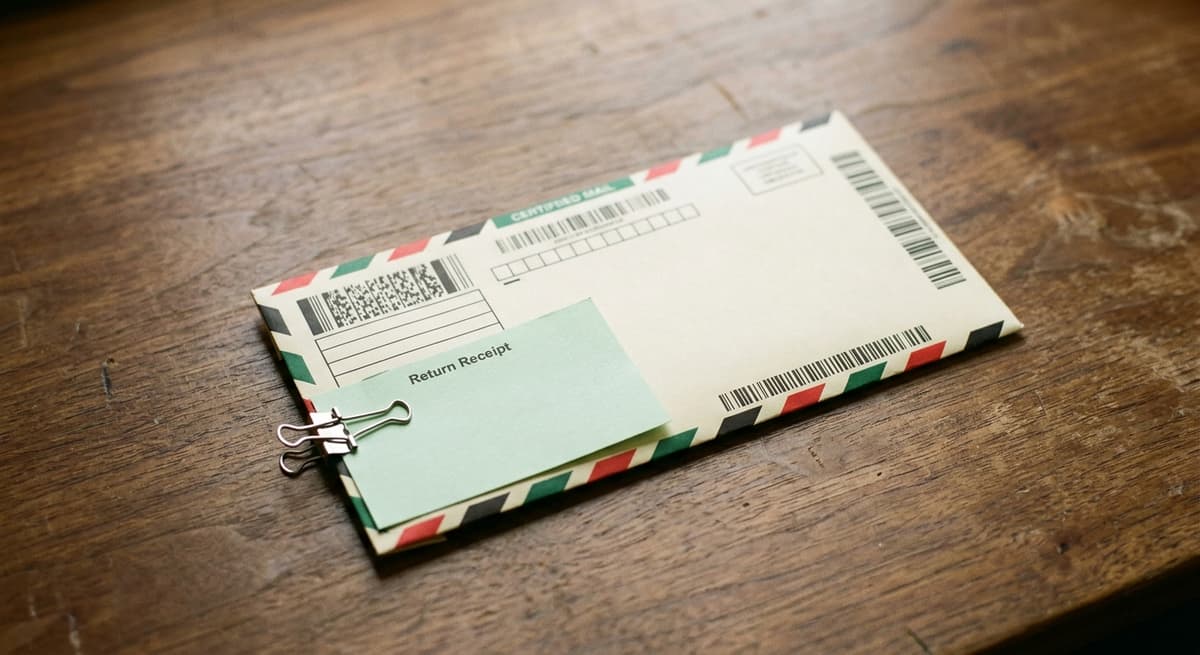
Filing a claim in Alabama is free. There is no fee to search and no fee to file, no matter how large the claim. The law sets the outer limits on timing rather than a typical turnaround: under Ala. Code sec. 35-12-83(b), the Treasurer has 120 days after a claim is filed to allow or deny it and to give the claimant written notice, and if the claim is denied the notice must explain why and say what further evidence is needed. Under subsection (c), the property or the net sale proceeds must be paid within 30 days after a claim is allowed. That puts the statutory ceiling at roughly five months, and claims involving securities, estates, or incomplete paperwork tend to use more of that window than simple ones.
One detail worth knowing before you file: once property has been paid or delivered to the Treasurer, sec. 35-12-83(c) says the owner is not entitled to receive interest for that period, though the owner is entitled to dividends and other increments that accrue.
How Long Before Money Becomes Unclaimed in Alabama
Most types of property in Alabama, including checking and savings accounts, are presumed abandoned after about three years of no activity from the owner, meaning no deposits, withdrawals, or even a phone call about the account. Some categories move faster; money or credits owed from retail transactions, such as store credit, can be reportable in as little as a year. The exact period depends on what kind of property is involved, so the timeline for an uncashed paycheck can differ from the timeline for a matured certificate of deposit. Property held in a digital asset account runs on the same three-year clock, measured from the apparent owner's last activity, and the statute spells out what counts as activity: logging into a password-protected account, responding to the holder's outreach, or making a transaction. An automated, recurring, or prescheduled debit or credit does not count.
Once the holder turns the property over to the state, the clock effectively stops working against you. Alabama holds unclaimed cash in the owner's name indefinitely, so there is no point at which the money simply disappears for good.
There is one carve-out readers should know about, and it applies to things rather than cash. Under Ala. Code sec. 35-12-87, if the Treasurer determines after investigation that property delivered to it has no substantial commercial value, the Treasurer may destroy or otherwise dispose of that property at any time, and the statute bars an action against the state, the Treasurer, or the holder over that decision except for intentional misconduct or malfeasance. So the no-deadline rule is solid for money and for the proceeds of a sale, but a low-value keepsake turned over from a safe deposit box is not guaranteed to still be there years later.
What Happens to an Unclaimed Safe Deposit Box
When a box goes unclaimed long enough, generally three years after its lease or rental period ends, the bank can drill it open and turn the contents over to the state. If the contents include cash, the state holds the cash directly. If they include jewelry, documents, or other tangible items, they go into the same disposition track as every other piece of abandoned tangible property the state receives.
Public sale is that track, and it is the general rule rather than a safe deposit box oddity. Ala. Code sec. 35-12-80(a) provides that, except as otherwise provided in that section, the State Treasurer, within three years after receiving abandoned property, shall sell it to the highest bidder at public sale. The Treasurer may refuse a bid it considers insufficient and reoffer the property, and need not offer property for sale at all if the probable cost of the sale would exceed the proceeds. A sale must be preceded by at least one published notice at least three weeks beforehand. Securities and digital assets have their own pricing rules under subsections (b) and (c), and a purchaser at a Treasurer's sale takes the property free of the former owner's claims.
That does not mean the owner loses the money. The proceeds from any such sale are recorded under the original owner's name and remain claimable, just like a bank account, less any costs of the sale itself. Anyone who believes a relative had a safe deposit box that went unclaimed should still search Alabama's database. There is a good chance the sale proceeds are sitting there waiting.
Watch Out for Scams and Unnecessary Finder Fees
Some private companies offer to search for unclaimed property and file a claim on your behalf in exchange for a cut of whatever they recover. Many of these businesses operate legally, but they are never necessary in Alabama, since the state's own search and claim process is free and does not require any special expertise to use.
Alabama law also limits what a finder can do and charge, and the limits are worth knowing before you sign anything. Under Ala. Code sec. 35-12-93(a), an agreement whose main purpose is to locate or recover property presumed abandoned is void and unenforceable if it was signed during the period running from the date the property was presumed abandoned until 24 months after the property is paid or delivered to the State Treasurer. That does not cover an agreement with an attorney to file a claim on identified property or to contest a denial. Subsection (e) sets a hard ceiling: total compensation under a covered agreement may not exceed 10 percent of the value of the amount claimed, and structuring the deal as a purchase or assignment of the property to get around that cap is prohibited.
An enforceable finder agreement also has to meet several written requirements under sec. 35-12-93(b). It must be in writing, describe the property and the services, state that the property is in the custody of the Alabama State Treasurer's Office and give contact information for recovering it, state that the property may be recovered from the State Treasurer without the payment of a fee, be signed by the apparent owner, and state the fee percentage or other compensation along with any other amounts to be deducted. If a pitch you receive is missing any of that, particularly the line telling you that you can recover the property yourself for free, treat it as a warning sign.
Watch out: The Federal Trade Commission has warned about a separate and more serious problem, outright scams. Scammers impersonate government agencies by phone, text, or email, claim you have unclaimed funds waiting, and then ask for a processing fee, your full Social Security number, or payment by gift card or wire transfer before they will "release" the money. The Alabama Treasury does not operate this way. It will never call or text asking you to pay a fee to get your own money back.
If you get a suspicious call or letter claiming to be about unclaimed Alabama property, do not provide payment or personal information. Verify everything yourself directly at treasury.alabama.gov, and report suspected scams to the Treasury or through the FTC's ReportFraud.ftc.gov site.
Related articles
- Unclaimed Money & Property by State
- Alabama Landlord-Tenant Laws
- Alabama Divorce Laws
- Alabama Power of Attorney Laws
Disclaimer
This article provides general information about Alabama's unclaimed property program as of the verification date above. It is not legal, financial, or tax advice, and it does not create any professional relationship between the reader and RecordingLaw.com. Unclaimed property rules, dormancy periods, and required documentation can change, and how they apply to a specific account or claim depends on the individual facts involved. For a complex claim, including one involving an estate or a business, consider consulting a licensed attorney or contacting the Alabama State Treasury directly.
Last updated: 2026-07-15.
More Alabama Laws
Frequently Asked Questions
Is Alabama's unclaimed property search really free?
Yes. Searching the state's database at unclaimed.alabama.gov and filing a claim with the Alabama State Treasury are both free. You should never have to pay a fee to claim money that already belongs to you.
How do I know if Alabama is holding money in my name?
Search your current and past names at unclaimed.alabama.gov, or use the free multistate portal MissingMoney.com. Try variations of your name and any past Alabama addresses, since old records sometimes list a maiden name or a different spelling.
What documents do I need to file a claim?
Most claims require a government issued photo ID and proof of your Social Security number, such as a Social Security card or a tax document. Larger or more complex claims, including those filed by an heir or an estate, may also require a notarized claim form, a death certificate, or estate paperwork.
How long does it take to get paid?
Ala. Code sec. 35-12-83 sets the legal timetable rather than a typical turnaround. The Treasurer has 120 days after a claim is filed to allow or deny it and to notify the claimant in writing, and payment must be made within 30 days after a claim is allowed. That is an outer bound of roughly five months, and complicated claims involving securities or estates tend to use more of it.
Is there a deadline to claim my property in Alabama?
There is no cutoff date for unclaimed cash or for the proceeds of a sale, so you can file a claim years or even decades later. The one carve-out is for things rather than money: under Ala. Code sec. 35-12-87, if the Treasurer determines after investigation that delivered property has no substantial commercial value, it may destroy or dispose of that property at any time.
What happens to items left in an unclaimed safe deposit box?
They follow the same rule as all abandoned tangible property Alabama receives. Under Ala. Code sec. 35-12-80(a) the Treasurer generally must sell it to the highest bidder at public sale within three years of receipt, after publishing notice at least three weeks in advance. The net proceeds are still recorded under your name and remain claimable, just like cash in an account.
Should I use a paid unclaimed money finder service?
You never have to, and Alabama law limits what one can charge. Under Ala. Code sec. 35-12-93, total finder compensation may not exceed 10 percent of the amount claimed, a locate agreement signed before 24 months have passed since the property reached the Treasurer is void and unenforceable, and an enforceable agreement must be in writing and must tell you that you can recover the property from the State Treasurer without paying a fee.
How do I know if a call or letter about unclaimed property is a scam?
Be suspicious of anyone who contacts you out of the blue asking for a fee, your full Social Security number, or payment by gift card or wire transfer to release funds. The Alabama Treasury does not operate that way. Verify any claim directly at treasury.alabama.gov.
Updates
Corrected the amount Alabama holds to more than $1 billion and added the governing statutes: the 120-day and 30-day claim deadlines, the 10 percent cap and 24-month void window on finder agreements, public sale as the general rule for abandoned tangible property, the no-substantial-commercial-value exception to indefinite custody, and the new digital asset category.
The Law Behind This Article
This article rests on the statutory provisions below, held in our own legal record and retrieved from the official source. Tap a section to read the operative text.
Code of Alabama 1975, Title 35: Property.
§ 35-12-72Presumption of Abandonment.In force
(a) Property is presumed abandoned if it is unclaimed by the apparent owner during the time set forth below for the following types of particular property: (1) Traveler’s checks, 15 years after issuance. (2) Money order, five years after issuance. (3) A demand, savings, or time deposit including a deposit that is automatically renewable, three years after the earlier of maturity, as extended from time to time, or the date of the last indication by the apparent owner of interest in the property. (4) Tangible and intangible property held in a safe deposit box or other safekeeping depository in this state in the ordinary course of the holder’s business and proceeds resulting from the sale of the property permitted by other law, three years after expiration of the lease or rental period on the box or other depository. (5) Money or credits owed to a customer as a result of a retail business transaction, one year after the obligation accrued.
Official text (excerpt) · last checked 2026-09-03 · Read the full text in our law library · Verify at alison.legislature.state.al.us
§ 35-12-80Public Sale of Abandoned Property.In force
(a) Except as otherwise provided in this section, the State Treasurer, within three years after the receipt of abandoned property, shall sell it to the highest bidder at public sale. The State Treasurer may decline the highest bid and reoffer the property for sale if the State Treasurer considers the bid to be insufficient. The State Treasurer need not offer the property for sale if the State Treasurer considers that the probable cost of sale will exceed the proceeds of the sale. A sale held under this section shall be preceded by a minimum of a single publication of notice at least three weeks before sale. (b) Securities listed on an established stock exchange must be sold at prices prevailing on the exchange at the time of sale. Other securities may be sold over the counter at prices prevailing at the time of sale or by any reasonable method selected by the State Treasurer. All securities delivered to the State Treasurer may be sold upon receipt. (c)(1) Digital assets listed on an established exchange must be sold at prices prevailing on the exchange at the time of sale.
Official text (excerpt) · last checked 2026-07-29 · Read the full text in our law library · Verify at alison.legislature.state.al.us
§ 35-12-93Agreement to Locate Property.In force
(a) An agreement by an owner, the primary purpose of which is to locate, recover, or assist in the recovery of property that is presumed abandoned, is void and unenforceable if it was entered into during the period commencing on the date the property was presumed abandoned and extending to a time that is 24 months after the date the property is paid or delivered to the State Treasurer. This subsection does not apply to an owner’s agreement with an attorney to file a claim as to identified property or contest the State Treasurer’s denial of a claim.
Official text (excerpt) · last checked 2026-07-29 · Read the full text in our law library · Verify at alison.legislature.state.al.us
§ 35-12-83Filing and Handling of Claims.In force
(a) A person, excluding another state, claiming property paid or delivered to the Treasurer may file a claim on a form prescribed by the Treasurer and verified by the claimant. (b) Within 120 days after a claim is filed, the Treasurer shall allow or deny the claim and give written notice of the decision to the claimant. If the claim is denied, the Treasurer shall inform the claimant of the reasons for the denial and specify what additional evidence is required before the claim will be allowed. The claimant may then file a new claim with the Treasurer or maintain an action under Section 35-12-85. (c) Within 30 days after a claim is allowed, the property or the net proceeds of a sale of the property must be delivered or paid by the Treasurer to the claimant. When property is paid or delivered to the Treasurer under this article, the owner is not entitled to receive interest, thereafter; however, the owner is entitled to receive dividends and other increments accruing thereafter. (d) The Treasurer is not civilly or criminally liable for any property or funds distributed pursuant to this article, provided such distribution is made in good faith.
Official text (excerpt) · last checked 2026-07-29 · Read the full text in our law library · Verify at alison.legislature.state.al.us
Cited in 1 court opinions in our collectionLatest citing opinion in our collection: 2024
Opinions citing this section in our collection:
- Edward L. Osborne, I v. PNC Bank (Court of Appeals for the Eleventh Circuit 2024)“…t in the interest accrued on the Otts’ property. See Ala. Code § 35-12-83(c) (“When property is paid or de…”
Identified automatically from the court opinions citing this section — not a ranking of which case controls.
§ 35-12-87Disposition of Property Having No Substantial Commercial Value.In force
If the Treasurer determines after investigation that property delivered under this article has no substantial commercial value, the Treasurer may destroy or otherwise dispose of the property at any time. An action or proceeding may not be maintained against the state, the Treasurer, or the holder for or on account of an act of the Treasurer under this section, except for intentional misconduct of malfeasance.
Official text (excerpt) · last checked 2026-07-29 · Read the full text in our law library · Verify at alison.legislature.state.al.us
Search our full record of US law — 2.1 million sections, every state + federal →
Sources and References
- Unclaimed Property - Office of the Alabama State Treasurer (official program overview)(treasury.alabama.gov).gov
- Alabama Unclaimed Property - Official State Search and Claim Database(unclaimed.alabama.gov).gov
- SEC Investor.gov, Escheatment (Financial Institutions) glossary entry(investor.gov).gov
- FTC Consumer Alert, How to Handle Unexpected Calls About Unclaimed Funds(consumer.ftc.gov).gov
- NAUPA, Alabama Unclaimed Property Reporting Profile(unclaimed.org)
- Ala. Code sec. 35-12-72, Presumption of Abandonment (dormancy periods, including digital asset accounts added by Act 2026-285)(alison.legislature.state.al.us)
- Ala. Code sec. 35-12-80, Public Sale of Abandoned Property(alison.legislature.state.al.us)
- Ala. Code sec. 35-12-83, Filing and Handling of Claims (120-day decision, 30-day payment)(alison.legislature.state.al.us)
- Ala. Code sec. 35-12-87, Disposition of Property Having No Substantial Commercial Value(alison.legislature.state.al.us)
- Ala. Code sec. 35-12-93, Agreement to Locate Property (10 percent cap, 24-month void window)(alison.legislature.state.al.us)
- Office of the Alabama State Treasurer, Alabama Unclaimed Property Returned $36 Million in 2020 (office holds more than $1 billion in unclaimed property)(treasury.alabama.gov)