
Ohio
Ohio Slip and Fall Laws: Proving Premises Liability

To win a slip and fall claim in Ohio, you must prove the property owner was negligent, that they knew or should have known about the hazard, and that the hazard caused your injury. Ohio applies modified comparative negligence under a 51% bar rule. Two doctrines can completely end an Ohio claim before it reaches the fault question: the open-and-obvious bar and the natural-accumulation no-duty rule for ice and snow.
Proving a slip and fall claim in Ohio
Every Ohio slip and fall claim rests on four elements: duty, breach, causation, and damages. To establish duty, a plaintiff must show they were a lawful entrant: an invitee (customer, guest) or licensee (social visitor), on the property. Ohio courts apply different standards depending on entry status, with invitees receiving the highest duty of care.
The breach element requires proof that the owner knew or should have known about the dangerous condition. Actual notice means the owner was directly told about or witnessed the hazard. Constructive notice means the hazard existed long enough that a reasonable inspection would have discovered it. Courts look at how long the condition existed and whether the owner had a regular inspection routine.
Causation links the owner's negligence to your specific injuries. You must show the fall caused your harm rather than a pre-existing condition worsening on its own. Ohio courts have addressed this in cases where defendants argue injuries predated the incident.
For the notice element, Ohio's leading cases require a plaintiff to introduce evidence about the duration of the hazard or show a pattern of similar conditions. Without evidence of notice, the claim typically fails at the summary-judgment stage regardless of how serious the injuries were.
The open-and-obvious doctrine in Ohio
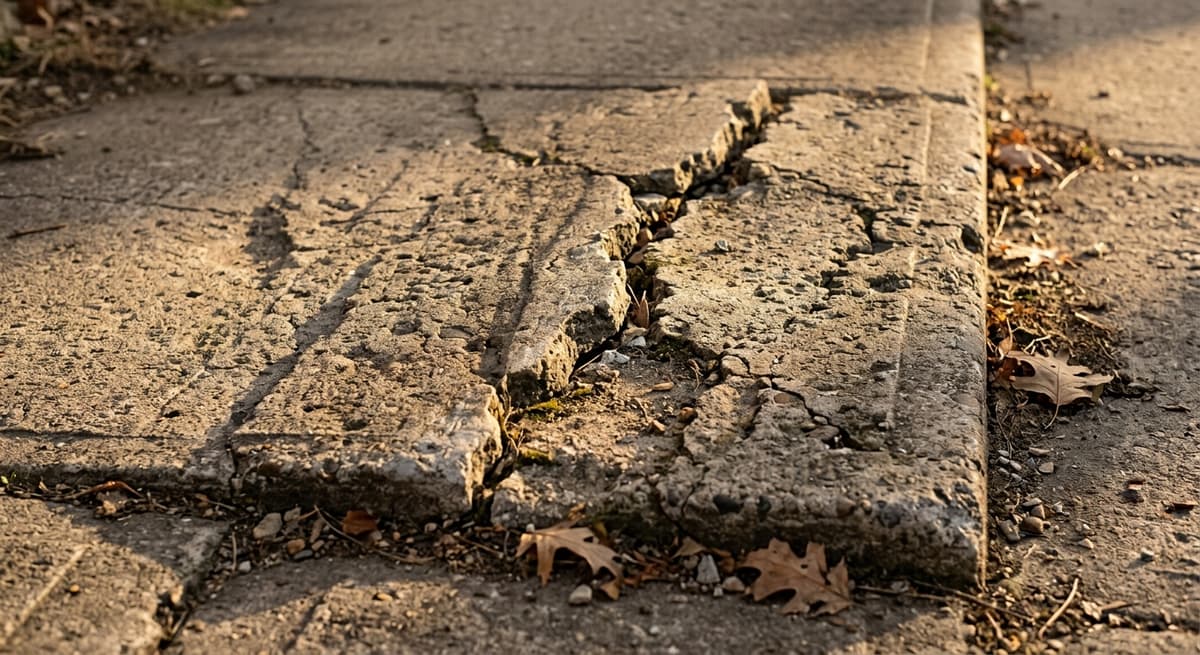
Ohio treats the open-and-obvious doctrine as a COMPLETE BAR to recovery, not merely a factor that reduces damages. In Armstrong v. Best Buy Co., 99 Ohio St.3d 79, 2003-Ohio-2573, 788 N.E.2d 1088, the Ohio Supreme Court held that when a hazard is open and obvious, the property owner owes no duty whatsoever to warn about or remedy it. Because the analysis goes to the duty element rather than comparative fault, Ohio's adoption of comparative negligence does not affect the doctrine. A successful open-and-obvious defense eliminates the entire claim.
This puts Ohio in the minority. Many states, including Michigan after its 2023 Kandil-Elsayed decision, have converted open-and-obvious into a comparative-fault factor. Ohio has not followed that trend as of 2025.
The key exception is "attendant circumstances." If something in the environment distracted you or otherwise made the hazard harder to notice: congestion, carrying packages, a narrow pathway that forced you toward the danger, inadequate lighting at night, a jury (not the judge) may decide whether the hazard was truly obvious under those specific conditions. This exception is litigated frequently and can be the difference between a dismissed claim and a jury trial.
The practical takeaway: if a hazard was visible and the property owner argues you should have seen it, your attorney will need to identify attendant circumstances to get past summary judgment in Ohio.
Ice, snow, and natural accumulation in Ohio
Ohio follows the natural-accumulation no-duty rule: a property owner generally owes NO duty to remove or make safer a natural accumulation of ice or snow, and no duty to warn of the risks it presents. This rule was firmly established in Brinkman v. Ross, 68 Ohio St.3d 82, 623 N.E.2d 1175 (1993), which extended the doctrine to social guests on residential property. Ohio courts reason that Ohioans appreciate winter hazards and that imposing liability for natural weather conditions would be unreasonably burdensome.
This means that if you slip on ice that formed naturally from snowfall or freezing rain on a parking lot, sidewalk, or walkway, you generally cannot recover, even if the owner never shoveled or salted.
There are three important exceptions. First, UNNATURAL accumulations can support liability. If a defective gutter, a drainage problem created by the owner's construction, or a design that funnels water onto a walkway where it refreezes created the ice, the condition is not "natural" and the no-duty rule does not apply. Second, if the owner knew about a hidden hazard beneath the snow (such as a drainage hole or a structural defect the snow was covering), and you had no way to know about it, liability may attach. Third, a municipal ordinance requiring snow and ice removal can alter the duty analysis in some jurisdictions.
If you fell on ice or snow in Ohio, the critical factual question is whether the accumulation was purely from weather or was aggravated by the property's design or the owner's own conduct.
How fault is shared: Ohio's negligence rule
Ohio applies modified comparative negligence with a 51% bar under R.C. 2315.33. You can recover damages only if your contributory fault is NOT GREATER THAN the combined fault of all defendants. In plain terms: if you are 50% at fault or less, you may recover, but your damages are reduced by your own percentage of fault. If you are 51% or more at fault, you are completely barred from recovery.

For example, if your total damages are $100,000 and you are found 30% at fault, you recover $70,000. If you are found 51% at fault, you recover nothing.
This rule (R.C. 2315.33 through 2315.35) applies to the damages available at trial, but it also shapes how insurers evaluate and settle claims. A defendant's insurer will argue that any contributing fault on your part reduces their exposure. Documenting the scene, obtaining witness statements, and establishing that the owner's negligence was the primary cause of the fall are all steps that protect your recovery percentage.
Ohio does not apply pure contributory negligence, so even significant partial fault on your part does not automatically end your claim. However, the 51% threshold is a hard cutoff, unlike pure comparative fault states where even a 90% at-fault plaintiff keeps 10% of damages.
Deadlines: statute of limitations and government claims
Ohio's personal injury statute of limitations is 2 years from the date of the fall (R.C. 2305.10). This is the hard deadline for filing a lawsuit in court. If you miss it, the claim is time-barred and defendants will move to dismiss. The two-year clock begins on the date of injury, not when you first consult an attorney or finish medical treatment.
A shorter deadline applies to claims involving the STATE of Ohio. Claims against the state must be filed in the Ohio Court of Claims under R.C. Chapter 2743, and R.C. 2743.16(A) sets a 2-year limitations period with no separate pre-suit notice requirement. Claims against a POLITICAL SUBDIVISION (city, county, township, school district) are governed by R.C. 2744.04(A), which also imposes a 2-year limit with no statewide notice-of-claim requirement.
Practical warning on city charters: While state law imposes no notice-of-claim requirement, many Ohio cities have home-rule charters that impose their own pre-suit notice deadlines, commonly around 6 months (180 days) and sometimes shorter. These charter deadlines are separate from the 2-year SOL and can be missed entirely while the SOL is still open. If you were injured on city-owned property (a sidewalk, park, city building), you should research that specific city's charter and send written notice promptly after the fall.
For more information on how Ohio's personal injury filing deadline works across claim types, see the Ohio statute of limitations guide.
What an Ohio slip and fall claim is worth
Ohio slip and fall settlements and verdicts compensate two categories of damages: economic and non-economic. Economic damages include medical bills (past and future), lost wages, loss of earning capacity, and out-of-pocket costs. These are calculated from bills, wage records, and expert projections and are not subject to a statutory cap.

Non-economic damages cover pain and suffering, emotional distress, loss of enjoyment of life, and similar intangible harms. Ohio caps these under R.C. 2315.18 at the greater of $250,000 or three times economic damages, with a maximum of $350,000 per plaintiff. The cap is lifted entirely for catastrophic injuries, specifically: permanent and substantial physical deformity, loss of a limb, or loss of an organ system. If your injuries cross that threshold, non-economic damages are uncapped.
Your final recovery is reduced by your percentage of fault under the modified comparative negligence rule described above. A plaintiff 20% at fault on a $200,000 case recovers $160,000. A plaintiff 51% at fault recovers nothing, regardless of the severity of injuries.
To get a quick estimate based on Ohio's rules, use the Ohio slip and fall settlement calculator.
This article is general legal information, not legal advice. Premises liability law varies by state and changes, and case values depend on the specific facts. For advice about a specific fall, consult a licensed attorney in Ohio.
Related: Slip and Fall Laws by State | Ohio Slip and Fall Settlement Calculator
More Ohio Laws
Frequently Asked Questions
How do I prove a slip and fall in Ohio?
You must prove four elements: (1) the owner owed you a duty of care as a lawful entrant; (2) the owner breached that duty by failing to fix or warn about a hazard they knew or should have known about; (3) the hazard caused your fall and injuries; and (4) you suffered actual damages. Actual or constructive notice of the hazard is critical; courts look at how long the condition existed and whether the owner inspected regularly.
Is Ohio an open-and-obvious state?
Yes, and Ohio applies it as a COMPLETE BAR, not just a damages reduction. Under Armstrong v. Best Buy Co. (Ohio 2003), an open and obvious hazard eliminates the owner's duty entirely, which defeats the whole claim. Ohio has not moved to the modern approach of treating open-and-obvious as a comparative-fault factor. The main exception is 'attendant circumstances': distractions in the environment that made the hazard harder to notice can allow the case to go to a jury.
Can I sue for falling on ice or snow in Ohio?
Generally no, if the ice or snow accumulated naturally from weather. Ohio's natural-accumulation rule (Brinkman v. Ross, 1993) means property owners owe no duty to remove or warn about natural ice and snow. However, you may have a claim if: (1) the accumulation was unnatural, caused by a defective gutter, drainage issue, or the property's design; (2) the owner knew about a hidden hazard beneath the snow that you could not see; or (3) a municipal ordinance required removal and the owner failed to comply.
How long do I have to file a slip and fall lawsuit in Ohio?
Two years from the date of injury under R.C. 2305.10. If you fell on government property (state, city, county), the same 2-year period applies under R.C. 2743.16(A) and 2744.04(A). However, if you were injured on city-owned property, check the specific city's charter; many Ohio cities require written notice within 6 months or less as a condition of suing. Missing a charter notice deadline can bar your claim even if the 2-year SOL has not run.
Can I recover if I was partly at fault for my fall in Ohio?
Yes, as long as your fault does not exceed 50%. Ohio uses modified comparative negligence under R.C. 2315.33: if you are 50% or less at fault, you recover damages reduced by your percentage. If you are 51% or more at fault, you are completely barred from recovery. For example, 30% at fault on $100,000 in damages yields a $70,000 recovery.
How much is an Ohio slip and fall claim worth?
It depends on your economic damages (medical bills, lost wages, future care costs) plus non-economic damages (pain and suffering). Ohio caps non-economic damages at the greater of $250,000 or 3x economic damages, up to $350,000 per plaintiff under R.C. 2315.18, but the cap is lifted for catastrophic injuries like permanent deformity or loss of a limb. Your recovery is also reduced by your percentage of fault. Use the Ohio slip and fall settlement calculator for a quick estimate.
What is the difference between a natural and unnatural accumulation in Ohio?
A natural accumulation is ice or snow that built up from normal weather with no contribution from the property owner: a standard snowfall or overnight freeze. An unnatural accumulation results from the property's design or the owner's conduct, such as a downspout that drains onto a walkway and refreezes, a grading problem that channels meltwater into a path, or a roof overhang that creates a concentrated drip zone. Only unnatural accumulations can support a slip and fall claim in Ohio.
Injured in Ohio? Get a free case review from a personal-injury attorney
If someone else's negligence caused your injury, you may be owed compensation for medical bills, lost wages, and pain and suffering. Get a free, no-obligation review from a Ohio personal-injury attorney. Most work on contingency, so there is no upfront cost.
Sources and References
- Ohio Rev. Code section 2315.33 — Modified Comparative Negligence (51% bar)(codes.ohio.gov).gov
- Ohio Rev. Code section 2305.10 — Personal Injury Statute of Limitations (2 years)(codes.ohio.gov).gov
- Ohio Rev. Code section 2744.04(A) — Political Subdivision Tort Liability, Limitations(codes.ohio.gov).gov
- Ohio Rev. Code section 2743.16(A) — Court of Claims, State Tort Limitations(codes.ohio.gov).gov
- Ohio Rev. Code section 2315.18 — Non-Economic Damages Cap(codes.ohio.gov).gov
- Armstrong v. Best Buy Co., 99 Ohio St.3d 79, 2003-Ohio-2573, 788 N.E.2d 1088 (Ohio Supreme Court — open-and-obvious as complete bar)(supremecourt.ohio.gov).gov
- Brinkman v. Ross, 68 Ohio St.3d 82, 623 N.E.2d 1175 (Ohio 1993) — natural-accumulation no-duty rule(codes.ohio.gov).gov