
New Mexico
New Mexico Slip and Fall Laws: Proving Premises Liability Under Pure Comparative Negligence
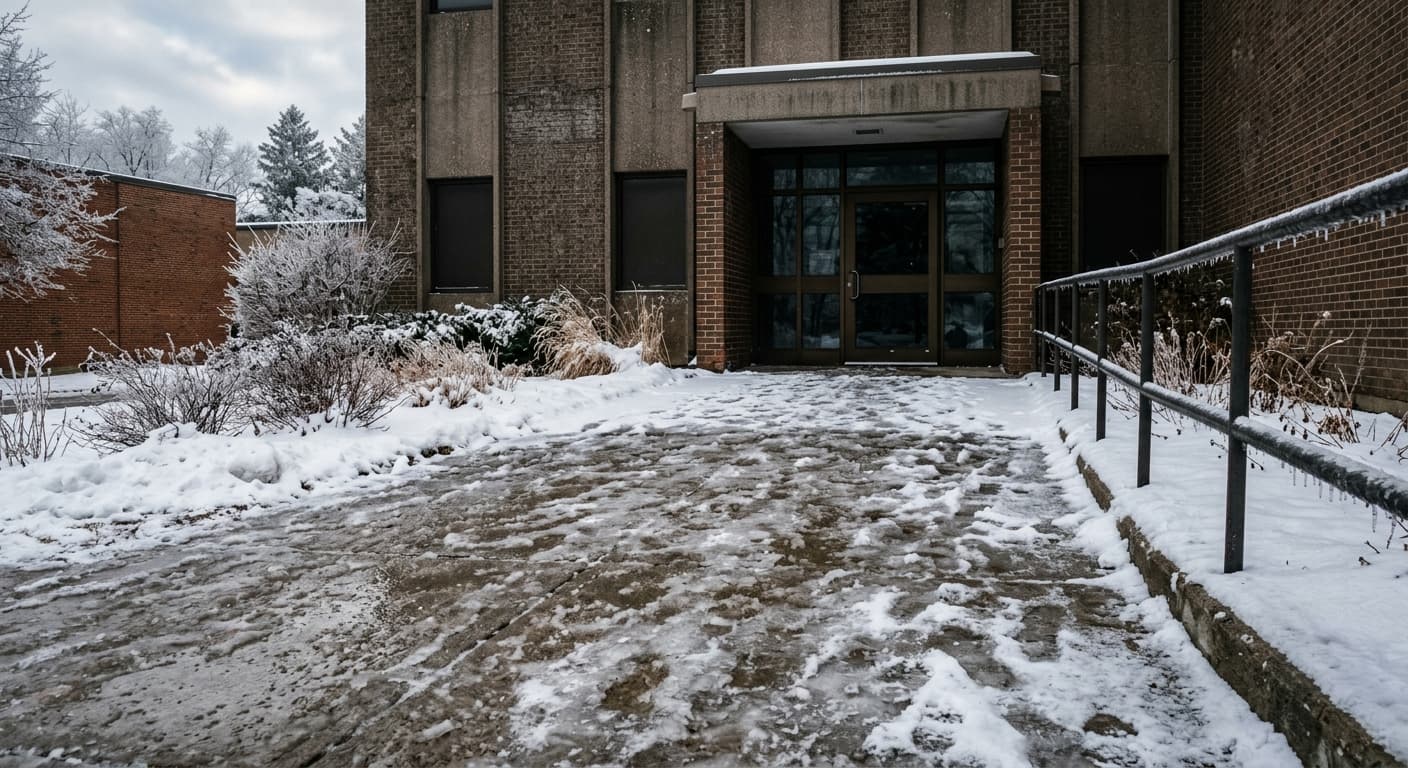
To win a slip and fall claim in New Mexico, you must prove that the property owner failed to use ordinary reasonable care to keep the premises safe and that this failure caused your injury. New Mexico applies pure comparative negligence, so partial fault reduces but does not bar your recovery.
Proving a slip and fall claim in New Mexico
New Mexico slip and fall claims are governed by the ordinary premises-liability standard of reasonable care. Unlike some states that have enacted a statutory premises-liability act, New Mexico applies a unified common-law framework rooted in the duty of reasonable care owed to entrants on the property, with the standard of care shaped by decades of case law including Klopp v. Wackenhut Corp., 113 N.M. 153, 824 P.2d 293 (1992).
A property owner or occupier must use ordinary care to keep the premises reasonably safe and to warn of or remedy dangerous conditions that pose an unreasonable risk of harm. The duty generally runs to invitees and licensees; trespassers receive a narrower duty. As an invitee (a customer, tenant, or visitor invited onto the property), the owner must exercise reasonable care both to discover dangerous conditions and to repair or warn about them.
Notice is the key battleground in most slip and fall cases. You must prove the owner had actual notice (an employee created the hazard or was told about it) or constructive notice (the condition existed long enough that a reasonable inspection would have found it). Courts look to evidence like store inspection logs, surveillance video, how long the hazard had been present, and whether prior complaints were made. The New Mexico Uniform Jury Instructions (NM UJI 13-1309 et seq.) guide juries through these questions. The leading case on the duty framework is Klopp v. Wackenhut Corp., which confirmed that an owner cannot escape liability by pointing to the obvious nature of the hazard.
The open-and-obvious doctrine in New Mexico
New Mexico does not allow the open-and-obvious nature of a hazard to serve as a complete bar to recovery. In Klopp v. Wackenhut Corp., 113 N.M. 153, 824 P.2d 293 (1992), the New Mexico Supreme Court abolished the former open-and-obvious danger rule (previously embodied in UJI 13-1310) because it was incompatible with the state's pure comparative-negligence system.

The court held that a landowner or occupier cannot escape liability merely because they made a hazard visible or obvious. If the owner could have remedied the risk by reasonable means, the existence of an obvious danger does not eliminate the duty of reasonable care. The key questions, whether a condition posed an unreasonable risk and whether the owner should have anticipated harm despite the obvious nature of the hazard, are jury questions.
In practice, the comparative treatment works like this: if you were aware of an obvious hazard and chose to proceed anyway, the jury may assign you a share of the fault for the accident. That share reduces your recovery proportionally. But it does not wipe out your claim at a threshold the way it would in states that treat open-and-obvious as a complete bar. This is a plaintiff-friendly rule that keeps even challenging cases alive and in front of a jury.
Ice, snow, and natural accumulation in New Mexico
New Mexico does not follow the "natural accumulation" rule that grants landowners immunity for ice or snow that fell naturally. In states with such a rule, an owner can argue the hazard was simply weather and bears no responsibility. New Mexico rejected that approach.
Because New Mexico applies its ordinary premises-liability standard of reasonable care to all entrants (other than trespassers), that duty extends to weather-related hazards including icy walkways, snow-covered steps, and slick entryways. There is no New Mexico statute or appellate decision that carves out an immunity for naturally accumulated ice or snow. The rejection of rigid no-duty bars in Klopp v. Wackenhut Corp. (1992) and the unitary reasonable-care framework reflected in NM UJI 13-1309 et seq. make clear that owners are expected to address all dangerous conditions on their property within the scope of reasonable care.
What this means in practice: if a commercial parking lot has a known ice patch that has persisted for several days, if a landlord's exterior stairs regularly freeze after storms and tenants have reported the issue, or if a building entryway collects water that freezes overnight, the owner cannot simply assert "the ice fell naturally" as a defense. Liability turns on what the owner knew or should have known and whether the response was reasonably prompt. The plaintiff's own awareness and care are handled through New Mexico's pure comparative-negligence apportionment rather than a categorical no-duty rule.
How fault is shared: New Mexico's negligence rule
New Mexico applies pure comparative negligence, adopted judicially in Scott v. Rizzo, 96 N.M. 682, 634 P.2d 1234 (1981), which abolished the old all-or-nothing contributory-negligence rule. Under pure comparative negligence, a plaintiff's damages are reduced by their own percentage of fault, with no bar threshold whatsoever.
A plaintiff who is 50% at fault recovers 50% of their damages. A plaintiff who is 90% at fault still recovers 10% of their damages. There is no cutoff point at which the plaintiff is barred from recovery entirely, unlike the modified comparative-negligence rules (50% or 51% bars) used by many neighboring states.
New Mexico also applies several liability (NMSA 1978, § 41-3A-1) rather than joint-and-several liability in most cases. This means that each defendant generally pays only its own proportionate share of the total fault, not the shares of co-defendants who cannot pay. In a slip and fall involving a building owner and a property-management company, for instance, each would pay only the percentage of fault the jury assigns to them.
The practical takeaway: do not assume that being partly responsible for your fall ends your case in New Mexico. An insurer's argument that "you should have watched where you were going" does not bar your recovery; it only affects the final damages percentage.
Deadlines: statute of limitations and government claims
New Mexico imposes two distinct deadlines that slip and fall victims must track, and missing either one can permanently end a valid claim.
Personal-injury statute of limitations: Under NMSA 1978, § 37-1-8, you have 3 years from the date of injury to file a personal-injury lawsuit in New Mexico court. The clock generally starts on the date of the fall. Minors receive tolling: a child under 7 has until age 9 to bring a claim; older minors generally have until approximately one year after reaching majority (age 19 under New Mexico's minority rules). For more on New Mexico's civil filing deadlines, see the New Mexico statute of limitations page.
Government notice of claim (90 days): If your fall occurred on government property, a much shorter and more unforgiving deadline applies. Under the New Mexico Tort Claims Act, NMSA 1978, § 41-4-16(A), you must present a written notice of claim within 90 days of the occurrence to the appropriate official. For state entities the notice goes to the Risk Management Division; for municipalities, to the mayor; for counties, to the county clerk; for school districts, to the superintendent; for other local bodies, to the administrative head.
The stakes are severe: NMSA 1978, § 41-4-16(B) provides that no suit may be maintained and no court has jurisdiction unless written notice was given OR the governmental entity had actual notice. Missing the 90-day deadline can result in dismissal for lack of jurisdiction, not merely a procedural misstep. Two limited extensions exist: wrongful-death claims have a 6-month notice window rather than 90 days, and the 90-day period is tolled (up to 90 additional days) while the injured person is incapacitated by the injury. The Tort Claims Act itself also sets a separate 2-year period to actually file suit against a government defendant, shorter than the general 3-year personal-injury period.
What a New Mexico slip and fall claim is worth
The value of a slip and fall settlement or verdict in New Mexico depends on the severity of your injuries, the strength of your liability evidence, and any fault assigned to you.
Economic damages cover your actual, measurable financial losses: emergency room and hospital bills, surgery and rehabilitation costs, projected future medical expenses, lost wages while you recovered, and any reduction in future earning capacity. Economic damages are not capped in New Mexico premises-liability cases.
Non-economic damages compensate for pain and suffering, emotional distress, disfigurement, loss of enjoyment of life, and similar intangible harms. New Mexico does not impose a statutory cap on non-economic damages in standard slip and fall cases, which means that for serious injuries, juries can award amounts that reflect the true impact of the harm.
Comparative-fault reduction: Whatever total damages a jury finds, they are reduced by your percentage of fault. At 20% fault, you receive 80% of the verdict. At 60% fault, you still receive 40%. New Mexico's no-cutoff pure comparative rule means that even a plaintiff bearing the majority of the fault can recover something, though the reduction can be significant.
Use the New Mexico Slip and Fall Settlement Calculator to get a rough sense of how these factors interact for your situation.
This article is general legal information, not legal advice. Premises liability law varies by state and changes, and case values depend on the specific facts. For advice about a specific fall, consult a licensed attorney in New Mexico.
Related:
- Slip and Fall Laws by State (full 50-state hub)
- New Mexico Slip and Fall Settlement Calculator
More New Mexico Laws
Frequently Asked Questions
How do I prove a slip and fall in New Mexico?
You must show that the property owner owed you a duty of reasonable care, that a dangerous condition existed on the premises, that the owner had actual or constructive notice of the hazard, that the owner failed to remedy or warn about it, and that the failure caused your injuries. Constructive notice is established by showing the condition existed long enough that a reasonable inspection would have found it. Evidence includes surveillance video, inspection logs, prior complaints, and witness testimony.
Is New Mexico an open-and-obvious state?
No. The New Mexico Supreme Court abolished the open-and-obvious rule as a complete defense in Klopp v. Wackenhut Corp., 113 N.M. 153 (1992). The visibility of a hazard does not eliminate a landowner's duty of reasonable care; it only factors into the comparative-fault apportionment. An obvious hazard may reduce your recovery if the jury finds you were partly at fault for not avoiding it, but it does not bar your claim entirely.
Can I sue for falling on ice in New Mexico?
Yes. New Mexico does not follow the natural-accumulation rule, so property owners are not automatically immune when someone falls on naturally occurring ice or snow. Landowners owe ordinary reasonable care to address all dangerous conditions on their property, including weather-related ones. Whether the owner acted reasonably given what they knew or should have known is a jury question, not a threshold bar.
How long do I have to file a slip and fall lawsuit in New Mexico?
Three years from the date of injury under NMSA 1978, § 37-1-8. If your fall occurred on government property (a public sidewalk, city park, state building, or school), you must also file a written notice of claim with the relevant government entity within 90 days of the incident under the New Mexico Tort Claims Act (NMSA 1978, § 41-4-16). Missing the 90-day deadline can result in dismissal for lack of jurisdiction, even if the 3-year general deadline has not expired.
Can I recover damages if I was partly at fault for my fall?
Yes, under any level of fault. New Mexico uses pure comparative negligence (Scott v. Rizzo, 96 N.M. 682 (1981)), which means there is no percentage cutoff. Your damages are simply reduced by your share of the fault. Even if a jury finds you 80% at fault, you can still recover 20% of your total damages. This is more plaintiff-friendly than states that bar recovery at 50% or 51% fault.
How much is a New Mexico slip and fall claim worth?
Value depends on your economic losses (medical bills, lost wages, future care costs), your non-economic losses (pain and suffering, loss of enjoyment of life), and your share of fault. New Mexico does not cap non-economic damages in standard premises-liability cases, and economic damages are uncapped as well. Your total recovery is reduced by your percentage of comparative fault.
What is the government notice-of-claim deadline for a fall on public property in New Mexico?
Under NMSA 1978, § 41-4-16, you must submit written notice of your claim within 90 days of the incident to the appropriate government official (state Risk Management Division, city mayor, county clerk, school superintendent, or other administrative head). Wrongful-death claims have a 6-month window. Missing this deadline can result in dismissal for lack of jurisdiction, and the Tort Claims Act imposes a separate 2-year period to file the actual lawsuit against a government defendant.
Injured in New Mexico? Get a free case review from a personal-injury attorney
If someone else's negligence caused your injury, you may be owed compensation for medical bills, lost wages, and pain and suffering. Get a free, no-obligation review from a New Mexico personal-injury attorney. Most work on contingency, so there is no upfront cost.
Sources and References
- NMSA 1978, § 41-4-16 — New Mexico Tort Claims Act, Notice of Claim(generalservices.state.nm.us).gov
- NMSA 1978, § 37-1-8 — 3-Year Personal-Injury Statute of Limitations(nmonesource.com).gov
- NMSA 1978, § 41-3A-1 — Several Liability(nmonesource.com).gov
- Klopp v. Wackenhut Corp., 113 N.M. 153, 824 P.2d 293 (1992)(generalservices.state.nm.us)
- Scott v. Rizzo, 96 N.M. 682, 634 P.2d 1234 (1981)(generalservices.state.nm.us)