
Iowa
Iowa Slip and Fall Laws: Proving Premises Liability After Koenig

To win a slip and fall claim in Iowa, you must prove the property owner failed to exercise reasonable care toward you as a lawful visitor and that this failure caused your injury. Iowa uses a unified duty standard (Koenig v. Koenig, 2009) and a modified comparative fault rule with a 51% bar.
Proving a slip and fall claim in Iowa
Iowa slip and fall cases are governed by a unified common-law duty of reasonable care established by the Iowa Supreme Court in Koenig v. Koenig, 766 N.W.2d 635 (Iowa 2009). Before that ruling, a landowner's duty depended on whether you were classified as an invitee, licensee, or trespasser. Koenig abolished those distinctions for lawful visitors and replaced them with a single question: did the property owner exercise reasonable care under all the circumstances?
The court identified a multifactor test to guide juries: the foreseeability and severity of the harm, the purpose and circumstances of the visitor's entry, the expected use of the premises, the reasonableness of the owner's inspection and repair or warning practices, the ease of correcting the condition, and the overall burden on the landowner. Whether the premises were reasonably safe is generally a jury question.
Notice remains critical. Even under the unified reasonable-care framework, you must show the owner had actual notice of the hazard (for example, an employee created the spill or a prior complaint was made) or constructive notice (the hazard existed long enough that a reasonable inspection would have found it). Courts examine surveillance footage, maintenance logs, and employee testimony to establish what the owner knew and when.
The open-and-obvious doctrine in Iowa
Iowa does not treat an open-and-obvious hazard as an automatic bar to a landowner's duty. Under the framework adopted in Koenig v. Koenig and consistent with Restatement (Second) of Torts section 343A, a possessor of land is not automatically relieved of the duty to warn or protect simply because the condition was visible. Where harm should be anticipated notwithstanding the obviousness of the condition, a duty to act can still exist.
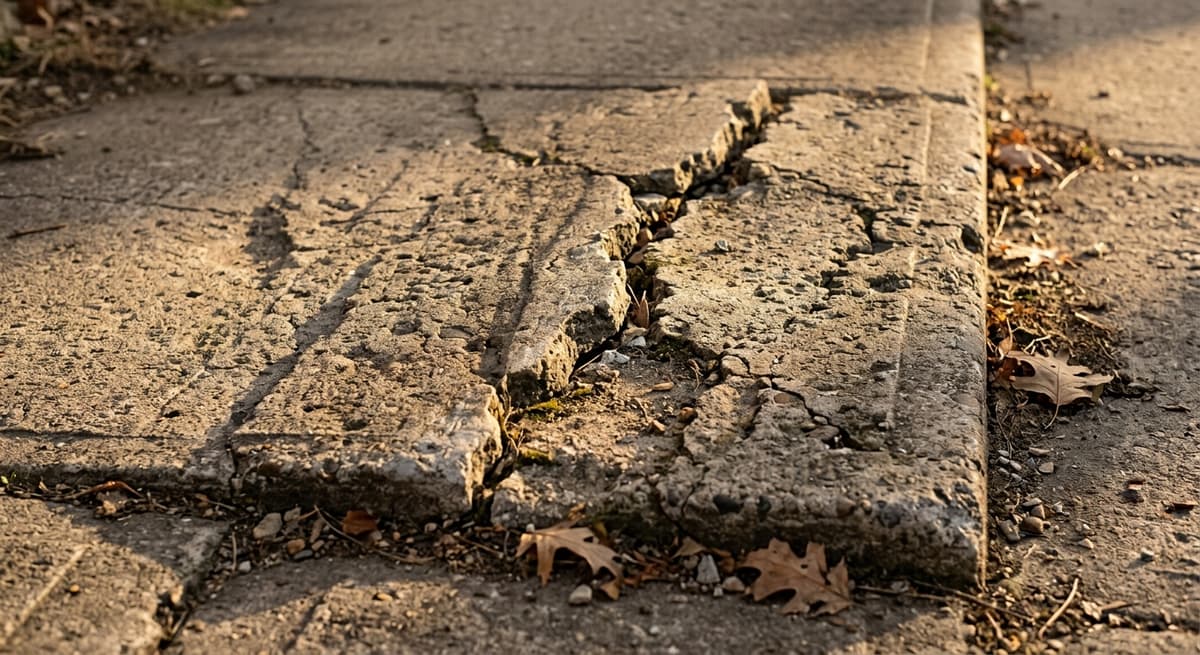
In practical terms, this is a comparative approach. If you walk directly into a hazard that was clearly visible, a jury can assign you a portion of the fault under Iowa Code chapter 668. That fault percentage reduces your recovery. However, it does not eliminate the landowner's duty as a threshold legal matter. Whether the landowner acted reasonably, and whether your own conduct was reasonable, are both questions for the jury.
This means Iowa plaintiffs are in a stronger position than those in states with a strict open-and-obvious bar. A hazard being obvious will not cause a judge to dismiss your claim outright. The inquiry remains: given all the circumstances, did the landowner act with reasonable care, and did your own conduct contribute to the fall?
Ice, snow, and natural accumulation in Iowa
Iowa does NOT follow the natural-accumulation immunity rule used in states like Illinois and Ohio. Under that rule, a property owner has no duty at all to remove ice or snow that accumulated naturally. Iowa rejects this approach.
The unified reasonable-care duty from Koenig v. Koenig extends to ice and snow hazards. There is no categorical immunity because precipitation was natural. In addition, Iowa Code section 364.12(2)(b) expressly makes abutting property owners responsible for removing natural accumulations of snow and ice from public sidewalks within a reasonable time.
Iowa does recognize the continuing-storm doctrine: an owner may wait until a storm ends plus a reasonable time before clearing accumulations, and is not liable for conditions during an actively occurring meaningful storm. The doctrine applies only to a real, ongoing accumulation of snow or ice. Once a storm has ended and a reasonable time has passed, the ordinary reasonable-care duty kicks back in fully.
The net result is that falls on icy sidewalks, parking lots, and entryways in Iowa are actionable if the owner failed to exercise reasonable care. The question is not whether the ice was natural, but whether a reasonable owner would have addressed it given the circumstances.
How fault is shared: Iowa's negligence rule
Iowa uses modified comparative fault with a 51% bar under Iowa Code section 668.3(1)(a). The statute provides that a claimant's contributory fault does not bar recovery "unless the claimant bears a greater percentage of fault than the combined percentage of fault attributed to the defendants."
This means a plaintiff who is exactly 50% at fault may still recover. Recovery is barred only when the plaintiff's fault exceeds the combined fault of all defendants, that is, when the plaintiff's share is 51% or more. Below that threshold, damages are reduced in direct proportion to the claimant's fault percentage.
For example: if a jury finds total damages of $80,000 and assigns the plaintiff 35% of the fault, the plaintiff recovers $52,000 (65% of $80,000). If the jury assigns the plaintiff 51% or more of the fault, the plaintiff recovers nothing. The comparison is made to the combined fault of the defendants, which prevents defendants from escaping liability by pointing blame at each other in a way that drives each individual percentage down.
This rule also explains why the open-and-obvious and ice-and-snow questions matter so much. Defense attorneys will argue that an obvious or natural hazard means the plaintiff's own fault percentage should be high. The higher your assigned fault, the less you recover, and at 51% you walk away with nothing.
Deadlines: statute of limitations and government claims
Two deadlines apply to Iowa slip and fall cases.
Personal-injury statute of limitations: Under Iowa Code section 614.1(2), you have 2 years to file a personal-injury lawsuit. Iowa applies a discovery rule, so the clock can start when the injury is or should reasonably have been discovered, which matters when an injury worsens over time or a cause is not immediately apparent. Tolling provisions exist for minors (generally one year after turning 18) and persons with a qualifying mental illness (one year after the disability ends). For additional detail on Iowa's civil filing windows, see the Iowa statute of limitations page.
Government property: no separate notice-of-claim deadline. Unlike many states that require a short written notice of claim before you can sue a government entity, Iowa eliminated that requirement. The former 60-day municipal notice rule was repealed. Under Iowa Code section 670.5 (municipal tort claims) and Iowa Code section 669.13 (State Tort Claims Act), the only deadline a claimant must meet is the same 2-year limitation period. There is no separate notice-of-claim window to track. If you slipped on a public sidewalk, in a government building, or on other government-owned property, you have the standard 2 years.
What an Iowa slip and fall claim is worth
The value of an Iowa slip and fall settlement or verdict depends on your actual losses, the nature of your injury, and your assigned percentage of fault.

Economic damages cover your verifiable financial losses: emergency medical care, surgeries, ongoing treatment, physical therapy, future medical expenses, lost wages, and loss of earning capacity. Economic damages are not capped in Iowa.
Non-economic damages cover pain and suffering, emotional distress, loss of enjoyment of life, and similar intangible harms. Iowa imposes no statutory cap on non-economic damages in general personal-injury cases (note that medical malpractice claims have a separate cap; it does not apply to premises-liability slip and fall cases). Juries have broad discretion to award non-economic damages based on the severity and permanence of the injury.
Comparative-fault reduction: Whatever total damages a jury awards, they are reduced by your percentage of fault. At 50% fault you still recover half. At 51% or more, you recover nothing. Serious slip and fall injuries involving clear owner negligence, strong notice evidence, and modest plaintiff fault tend to produce the highest recoveries.
Use the Iowa Slip and Fall Settlement Calculator to estimate how your economic losses, non-economic damages, and fault percentage interact in your specific situation.
This article is general legal information, not legal advice. Premises liability law varies by state and changes, and case values depend on the specific facts. For advice about a specific fall, consult a licensed attorney in Iowa.
Related:
- Slip and Fall Laws by State (full 50-state hub)
- Iowa Slip and Fall Settlement Calculator
More Iowa Laws
Frequently Asked Questions
How do I prove a slip and fall in Iowa?
Under the unified reasonable-care standard from Koenig v. Koenig (Iowa 2009), you must show the property owner owed you a duty of reasonable care as a lawful visitor, that a dangerous condition existed on the premises, that the owner had actual or constructive notice of the hazard, that the owner failed to act with reasonable care, and that this failure caused your injury. Constructive notice is established by showing the hazard existed long enough that a reasonable inspection would have found it.
Is Iowa an open-and-obvious state?
No, not in the sense that an obvious hazard automatically bars your claim. Iowa uses a comparative approach: an open-and-obvious condition is a factor the jury considers when apportioning fault between you and the landowner, but it does not eliminate the owner's duty as a matter of law. Consistent with Koenig v. Koenig and Restatement (Second) of Torts section 343A, a landowner can still owe a duty of care even when a hazard is visible, particularly when harm was foreseeable.
Can I sue for falling on ice in Iowa?
Yes. Iowa does not follow the natural-accumulation immunity rule. Property owners owe a duty of reasonable care for ice and snow under the Koenig standard, and Iowa Code section 364.12(2)(b) specifically requires abutting owners to remove natural accumulations of snow and ice from public sidewalks within a reasonable time. The continuing-storm doctrine may excuse delay during an active storm, but once the storm ends and a reasonable time passes, the full duty applies.
How long do I have to file a slip and fall lawsuit in Iowa?
Two years from the date of injury (or discovery) under Iowa Code section 614.1(2). Iowa applies a discovery rule for latent injuries. If you were hurt on government property, Iowa does NOT require a separate pre-suit notice of claim. The former 60-day municipal notice requirement was repealed; both the municipal act (Iowa Code section 670.5) and the State Tort Claims Act (Iowa Code section 669.13) now impose only the standard 2-year limitation period.
Can I recover if I was partly at fault for my fall?
Yes, as long as your fault does not exceed the combined fault of the defendants. Iowa uses modified comparative fault with a 51% bar (Iowa Code section 668.3). If your fault is 50% or less, you recover damages reduced by your fault percentage. If your fault is 51% or more, you recover nothing. A plaintiff at exactly 50% fault still recovers half of their damages.
How much is an Iowa slip and fall claim worth?
Value depends on your economic losses (medical bills, lost wages, future care costs), non-economic losses (pain, suffering, loss of enjoyment of life), and your percentage of fault. Iowa has no statutory cap on non-economic damages in premises-liability cases, so serious injuries with clear owner negligence can produce substantial verdicts. Your total award is reduced by your share of fault, and eliminated entirely if your fault exceeds 50%.
Do I need to file a notice of claim before suing the government in Iowa?
No. Iowa eliminated the short notice-of-claim requirement for slip and fall cases against government entities. The old 60-day municipal notice rule was repealed. Under Iowa Code section 670.5 and Iowa Code section 669.13 (State Tort Claims Act), the only deadline is the standard 2-year statute of limitations. This is a significant advantage compared to states like Colorado, where a 182-day government notice deadline operates as a jurisdictional bar.
Injured in Iowa? Get a free case review from a personal-injury attorney
If someone else's negligence caused your injury, you may be owed compensation for medical bills, lost wages, and pain and suffering. Get a free, no-obligation review from a Iowa personal-injury attorney. Most work on contingency, so there is no upfront cost.
Sources and References
- Iowa Code section 670.5 — Municipal Tort Claims Act(legis.iowa.gov).gov
- Iowa Code section 669.13 — State Tort Claims Act, Claim Filing(legis.iowa.gov).gov
- Iowa Code section 668.3 — Modified Comparative Fault, 51% Bar(legis.iowa.gov).gov
- Iowa Code section 614.1(2) — 2-Year Personal-Injury Statute of Limitations(legis.iowa.gov).gov
- Iowa Code section 364.12(2)(b) — Sidewalk Snow and Ice Removal(legis.iowa.gov).gov
- Koenig v. Koenig, 766 N.W.2d 635 (Iowa 2009)(legis.iowa.gov)