
Alaska
Alaska Slip and Fall Laws: Proving Premises Liability

To win a slip and fall claim in Alaska, you must show that a property owner was negligent (owed you a duty of care, failed to address a hazardous condition, and that failure caused your injuries). Alaska applies pure comparative fault under AS 09.17.060, meaning your own partial fault reduces your recovery but never bars it entirely.
Proving a slip and fall claim in Alaska
Every premises liability claim in Alaska rests on four elements: duty, breach, causation, and damages. A property owner or occupier owes invitees (customers, guests) a duty to maintain the premises in a reasonably safe condition and to warn of known hazards. A mere tenant or social guest may receive a lesser duty, but commercial invitees get the full duty of care.
The notice requirement is central to most slip and fall cases. You must show the owner either had actual notice of the dangerous condition (an employee saw it, for example) or constructive notice (the hazard existed long enough that a reasonable inspection would have discovered it). The longer a hazard existed before your fall, the stronger the argument that the owner should have known about it and corrected it.
Causation ties the hazard to your injury. You must show the dangerous condition, not some other factor, was the proximate cause of your fall and resulting harm. Alaska courts apply the standard "but for" test of causation in premises cases. The stronger your medical records and incident documentation, the clearer the causal link.
The open-and-obvious doctrine in Alaska
In many states an open and obvious hazard is a complete defense, barring the injured person's recovery entirely. Alaska takes a different approach. In the seminal case Kremer v. Carr's Food Center, Inc., 462 P.2d 747 (Alaska 1969), the Alaska Supreme Court adopted Restatement (Second) of Torts Section 343A(1), which holds that a land possessor IS liable for harm from a known or obvious danger when the possessor should anticipate the harm despite its obviousness.
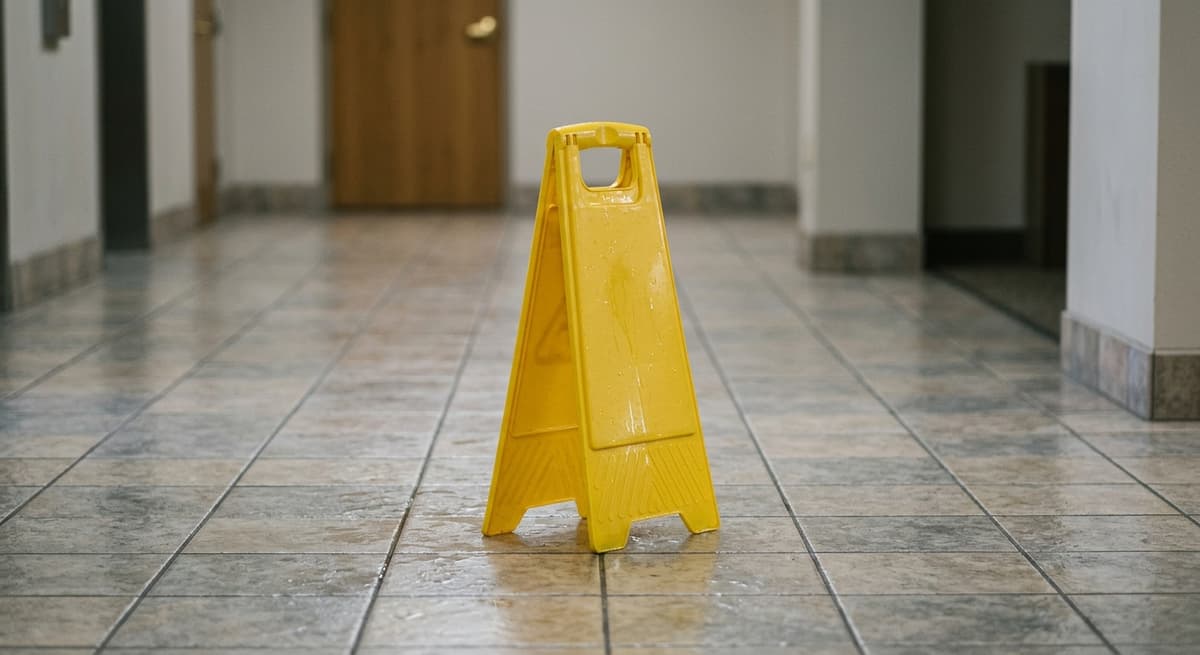
This means the question is not simply whether you could see the hazard. The court asks whether the owner should have anticipated that invitees would encounter the obvious risk anyway, perhaps because they are distracted, have no reasonable alternative route, or because the hazard is not truly easy to avoid in context. A slippery parking lot surface, a wet floor near the only exit, or an icy walkway customers must cross to enter a store can all generate liability even if the danger is visible.
Because Alaska is a pure comparative fault state, a plaintiff's awareness of the hazard goes to apportionment of fault rather than elimination of the owner's duty. Knowing about a risk and proceeding anyway may increase your share of fault, but it does not wipe out the owner's liability. Obviousness is a comparative factor, not a complete bar.
Ice, snow, and natural accumulation in Alaska
A number of states follow the "natural accumulation" doctrine, which holds that property owners have no duty to remove or warn of ice or snow that accumulated naturally from weather conditions. Alaska explicitly rejects this rule.
The Kremer decision is directly on point: the Alaska Supreme Court reversed a directed verdict for a grocery store where a customer slipped on snow and ice that had formed into "deep ruts and sharp ridges" in the store parking lot. The court held that the jury could find the store failed to exercise reasonable care for its parking lot conditions. There was no exception shielding the store simply because the accumulation was caused by natural weather.
What this means for Alaska fall victims is that you do not need to prove the owner created the hazardous ice or tracked snow inside. You need to prove the owner knew or should have known about the dangerous condition and failed to address it within a reasonable time. Regular inspections, salting, sanding, or otherwise mitigating ice hazards are all part of an owner's reasonable care obligation in Alaska's climate.
How fault is shared: Alaska's negligence rule
Alaska is a pure comparative fault state under AS 09.17.060 and AS 09.17.080. Under this system, the jury assigns a percentage of fault to each party, and each party's damages are reduced (but not eliminated) by their own percentage of fault. A plaintiff found 30% at fault recovers 70% of their damages. Even a plaintiff found 90% at fault can recover 10%.
This rule is significantly more plaintiff-friendly than the modified comparative fault systems used in most states (which cut off recovery at 50% or 51% fault) and far more favorable than the pure contributory negligence rule used in a handful of states (Alabama, Maryland, North Carolina, Virginia, and DC), where any plaintiff fault bars all recovery.
Alaska also generally applies several liability rather than joint and several liability, meaning each defendant is responsible only for their own share of fault. If the at-fault parties include the property owner, a maintenance contractor, and a third party, each pays their proportionate share. Collecting the full judgment requires pursuing each defendant separately for their portion.
Deadlines: statute of limitations and government claims
Under AS 09.10.070, Alaska sets a 2-year statute of limitations for personal injury actions. The clock generally starts running on the date of the fall. However, Alaska applies a discovery rule: if the injury or its connection to the fall was not immediately apparent, the clock begins when you knew or reasonably should have known about it. Tolling (pausing the clock) applies for minors, persons who are legally incapacitated, and for defendants who conceal themselves.
For falls on public property (state-owned buildings, municipal sidewalks, public parks), Alaska stands apart from most states in a critical way. There is NO special pre-suit notice-of-claim requirement. The State Tort Claims Act, AS 09.50.250, waives sovereign immunity but contains no short-notice-of-claim deadline. Suits against municipalities are authorized by AS 09.65.070, which likewise imposes no statutory notice period.
In Johnson v. City of Fairbanks, 583 P.2d 181 (Alaska 1978), the Alaska Supreme Court invalidated a city charter provision requiring a 120-day pre-suit notice, holding that such local notice requirements conflict with the uniform statewide limitations period. The controlling deadline for government claims is the general 2-year period. Practical caution: individual municipalities may still have local ordinance notice requirements, but those rules are legally vulnerable under Johnson. Note that state liability is capped at $400,000 under AS 09.50.280.
For more on Alaska's personal injury time limits, see the Alaska statute of limitations page.
What an Alaska slip and fall claim is worth
Economic damages in Alaska (medical bills, lost wages, rehabilitation costs, future care) are not capped and are recoverable in full. The value of economic damages turns on the severity of your injuries, your earnings history, and your projected future care needs.
Non-economic damages (pain and suffering, emotional distress, loss of enjoyment of life) are capped in Alaska under AS 09.17.010. The cap is approximately $400,000 for ordinary injuries. For cases involving severe permanent physical impairment or disfigurement, the cap rises to approximately $1,000,000. These figures are tied to life expectancy and should be confirmed with an attorney at the time of filing because they adjust over time.
Both categories of damages are subject to reduction by your comparative fault percentage. If your total damages are $500,000 and you are found 25% at fault, your net recovery is $375,000 (before the cap analysis on non-economic damages). Use the Alaska slip and fall settlement calculator to model how fault percentages and damage categories interact in your scenario.
This article is general legal information, not legal advice. Premises liability law varies by state and changes, and case values depend on the specific facts. For advice about a specific fall, consult a licensed attorney in Alaska.
Related: Slip and Fall Laws by State (hub) | Alaska Slip and Fall Settlement Calculator | Alaska Statute of Limitations
More Alaska Laws
Frequently Asked Questions
How do I prove a slip and fall in Alaska?
You must prove four elements: (1) the property owner owed you a duty of care, (2) a hazardous condition existed on the premises, (3) the owner had actual or constructive notice of the hazard and failed to address it, and (4) that failure caused your injury and damages. Documenting the scene, gathering witness names, obtaining an incident report, and seeing a doctor immediately all strengthen your case.
Is Alaska an open-and-obvious state?
No, not in the way that bars recovery. Alaska adopted Restatement (Second) of Torts Section 343A in Kremer v. Carr's Food Center (1969), which means a visible hazard does not automatically defeat your claim. The owner can still be liable if it should have anticipated invitees would encounter the risk anyway. Your awareness of the hazard may increase your comparative fault share, but it does not eliminate the owner's duty.
Can I sue for falling on ice in Alaska?
Yes. Alaska rejects the natural accumulation doctrine. Property owners owe a duty of reasonable care to maintain their premises, including parking lots and walkways, against ice and snow hazards. Kremer v. Carr's Food Center (1969) established this directly in an icy-parking-lot case. You must still show the owner knew or should have known about the dangerous condition and failed to act.
How long do I have to file a slip and fall lawsuit in Alaska?
You generally have 2 years from the date of your fall under AS 09.10.070. Alaska applies a discovery rule, so the clock may start later if your injury was not immediately apparent. If you were injured on government property (state or municipal), there is no short pre-suit notice-of-claim deadline in Alaska; the 2-year statute of limitations applies.
Can I recover if I was partly at fault for my fall?
Yes. Alaska uses pure comparative fault (AS 09.17.060), which means your damages are reduced by your share of fault but you are never barred from recovering entirely. Even if a jury finds you 80% responsible for your own fall, you can still recover 20% of your proven damages. This is one of the most plaintiff-friendly fault rules in the country.
How much is an Alaska slip and fall claim worth?
Every case turns on its specific facts. Economic damages (medical bills, lost income, future care) are uncapped and recoverable in full. Non-economic damages (pain and suffering) are capped at roughly $400,000 for ordinary injuries and up to $1,000,000 for severe permanent impairment under AS 09.17.010. Both categories are reduced by your comparative fault percentage. Use the Alaska slip and fall settlement calculator to model your scenario.
Do I need to file a notice of claim before suing the government in Alaska?
No. Unlike most states, Alaska imposes no special pre-suit notice-of-claim deadline for suing the state or a municipality. The State Tort Claims Act (AS 09.50.250) and the municipal tort statute (AS 09.65.070) contain no such requirement, and the Alaska Supreme Court struck down a city charter notice provision in Johnson v. City of Fairbanks (1978). The controlling deadline is the standard 2-year personal injury statute of limitations.
Injured in Alaska? Get a free case review from a personal-injury attorney
If someone else's negligence caused your injury, you may be owed compensation for medical bills, lost wages, and pain and suffering. Get a free, no-obligation review from a Alaska personal-injury attorney. Most work on contingency, so there is no upfront cost.
Sources and References
- Kremer v. Carr's Food Center, Inc., 462 P.2d 747 (Alaska 1969)(courts.alaska.gov).gov
- Johnson v. City of Fairbanks, 583 P.2d 181 (Alaska 1978)(courts.alaska.gov).gov
- AS 09.10.070 (2-year personal injury statute of limitations)(courts.alaska.gov).gov
- AS 09.17.060/.080 (pure comparative fault and apportionment)(courts.alaska.gov).gov
- AS 09.17.010 (non-economic damages cap)(courts.alaska.gov).gov
- AS 09.50.250 (Alaska State Tort Claims Act)(courts.alaska.gov).gov
- AS 09.50.280 ($400,000 state liability cap)(courts.alaska.gov).gov
- AS 09.65.070 (municipal tort liability)(courts.alaska.gov).gov