
South Dakota
South Dakota Self-Defense Laws: Stand Your Ground & Castle Doctrine (2026)
Independently fact-checked against primary sources (last audited August 17, 2026). · Reviewed by the RecordingLaw editorial team. · Law checked current as of August 17, 2026. · 7 primary sources cited on this page. How we verify our legal content

Yes, South Dakota is a stand-your-ground state. Under SDCL 22-18-4.1, enacted through HB 1212 in March 2021, a person who is not engaged in criminal activity and is in any place where they have a right to be may stand their ground and use deadly force in self-defense without any duty to retreat. A single immunity statute at SDCL 22-18-4.8 protects justified actors from both criminal prosecution and civil liability, and a 2022 amendment (SB 195) added a burden-shift requiring the prosecution to disprove a self-defense claim by clear and convincing evidence.
Information last verified on June 2, 2026. This article provides general legal information, not legal advice. It does not create an attorney-client relationship. Anyone facing a use-of-force situation or a criminal charge in South Dakota should consult a licensed South Dakota criminal-defense attorney.
Is South Dakota a Stand-Your-Ground State?
Yes. South Dakota is a stand-your-ground state. HB 1212, signed by Governor Kristi Noem on March 29, 2021, restructured South Dakota's use-of-force statutes across SDCL 22-18-4 through 22-18-4.9.
The deadly-force stand-your-ground provision is at SDCL 22-18-4.1 ("Deadly force--Defense of person"). It provides that a person is justified in using or threatening to use deadly force if the person reasonably believes that doing so is necessary to prevent imminent death or great bodily harm to themselves or another, or to prevent the imminent commission of a forcible felony. A person acting under that section has no duty to retreat and has the right to stand their ground, provided they are not engaged in criminal activity and are in a place where they have a right to be.
SDCL 22-18-4 ("Force--Defense of person") covers the parallel non-deadly-force right: a person may use or threaten force (other than deadly force) against another if they reasonably believe it is necessary to defend against the other's imminent use of unlawful force. No duty to retreat applies for non-deadly force either.
Before 2021, South Dakota self-defense law did not include an express statutory stand-your-ground provision for deadly force, and a duty to retreat in public could be argued under prior common-law analysis. HB 1212 replaced the prior justifiable-homicide statutes (which were simultaneously repealed) with the current comprehensive framework.
The no-retreat right under SDCL 22-18-4.1 applies statewide. It is not limited to the home. A person confronted with an imminent deadly threat in any location where they are lawfully present may choose to stand their ground, and the availability of a safe retreat route is not a factor that defeats the self-defense claim.
In 2022, South Dakota enacted SB 195, which amended SDCL 22-18-4.8 to add a burden-shift provision: once a defendant raises a prima facie claim of self-defense immunity, the burden of proof shifts to the prosecution to disprove immunity by clear and convincing evidence. This significantly strengthens the practical value of the stand-your-ground defense in South Dakota courts.
Castle Doctrine: Defense of the Home Under SDCL 22-18-4.2 and 22-18-4.3
South Dakota's castle doctrine is codified at SDCL 22-18-4.2 ("Defense of dwelling or residence--Force--Deadly force") and SDCL 22-18-4.3 ("Imminent death--Great bodily injury--Reasonable fear"). A person in their home occupies the strongest possible position under South Dakota self-defense law.
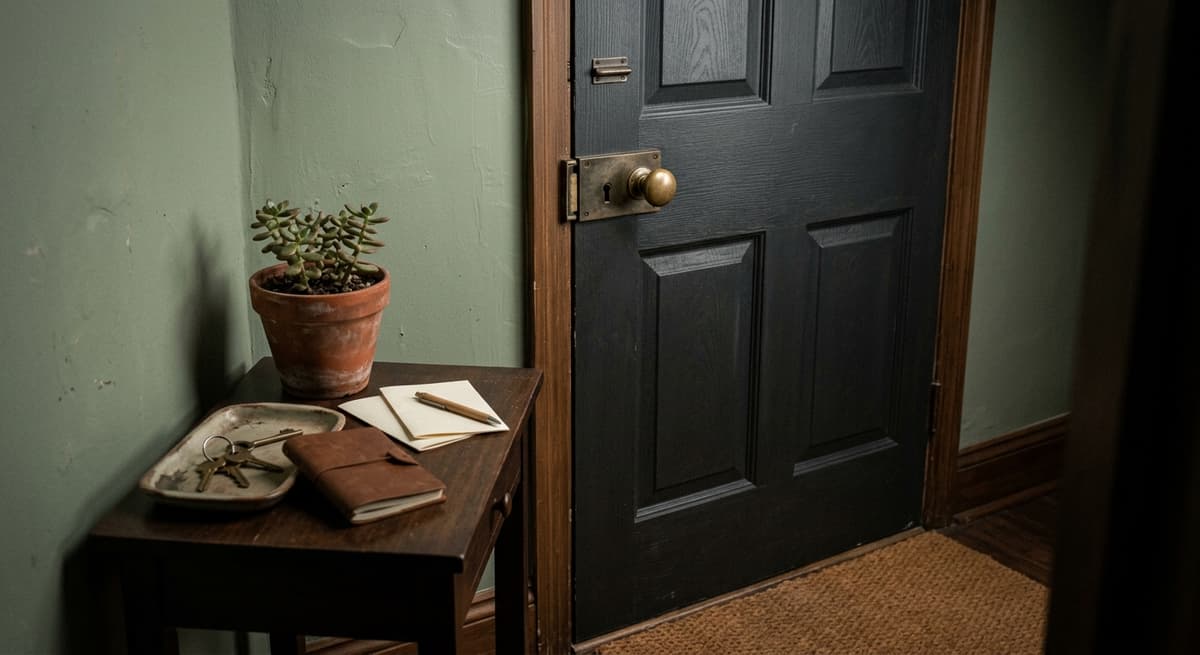
SDCL 22-18-4.2 provides that a person who is in a dwelling or residence in which they have a right to be has no duty to retreat, has the right to stand their ground, and has the right to use or threaten to use force (including deadly force) to defend themselves or another against the imminent use of unlawful force, or to prevent the imminent commission of a forcible felony.
SDCL 22-18-4.3 creates a presumption of reasonable fear, and the statute sets two conjunctive prongs that must both be satisfied. First, the person against whom the defensive force was used must have been in the process of unlawfully entering a dwelling, residence, or occupied vehicle, have already unlawfully entered one, or have removed or been attempting to remove another against that person's will from one. Second, the person who used or threatened the defensive force must have known or had reason to believe that an unlawful entry or an unlawful and forcible act was occurring or had occurred. When both prongs are met, the person is presumed to have held a reasonable fear of imminent peril of death or great bodily harm, which reduces what the occupant must show to establish that their use of force was justified.
SDCL 22-18-4.4 sets out four exceptions to the presumption. The presumption does not apply when the person against whom force was used had a right to be in the premises (for example, a lawful resident, owner, lessee, or titleholder who is not subject to a protection order), when the person being removed is a child, grandchild, or otherwise in the lawful custody or guardianship of the person against whom force was used, when the person using force was engaged in criminal activity or was using the dwelling, residence, or occupied vehicle to further criminal activity, or when the person against whom force was used is a law enforcement officer who enters or attempts to enter in the performance of official duties and either identified themselves as an officer or the person using force knew or reasonably should have known that they were an officer.
SDCL 22-18-4.5 adds a companion presumption: a person who unlawfully enters or attempts to enter a dwelling, residence, or occupied vehicle is presumed to be doing so with the intent to commit an unlawful act involving force or violence.
The term "dwelling" in South Dakota law means a building or structure used as a place of habitation, including a primary residence or apartment. The castle doctrine presumption in SDCL 22-18-4.3 extends to occupied vehicles as well as dwellings. The stand-your-ground rule in SDCL 22-18-4.1 continues to apply in any location where the person is lawfully present.
When Deadly Force Is Justified
Under SDCL 22-18-4.1, deadly force is justified when a person reasonably believes it is necessary to prevent imminent death or great bodily harm to themselves or another person, or to prevent the imminent commission of a forcible felony. This standard governs both home-defense scenarios and confrontations in public.
The imminence requirement is firm. The threat must be about to occur, not something feared in the future. Courts assess imminence from the perspective of a reasonable person in the defendant's circumstances. A person cannot use deadly force to prevent a past threat or to retaliate after the danger has passed.
Proportionality is also required. Deadly force must be a reasonable response to the perceived threat. Using a firearm against an unarmed person making no threatening gesture is unlikely to satisfy the proportionality standard, regardless of the no-retreat rule. The defensive response must match the level of the threat.
Defense of a third person follows the same standard as self-defense. SDCL 22-18-4.1 expressly permits the use of deadly force to prevent imminent death or great bodily harm to another person. South Dakota does not limit defense-of-others claims to close family members; any person present may be defended.
SDCL 22-18-4.7 ("Deadly force--Defense of property other than a dwelling") authorizes deadly force to defend non-dwelling property only when the person reasonably believes it is necessary to prevent the imminent commission of a forcible felony. Deadly force is not justified simply to protect property.
Immunity for Justified Force: SDCL 22-18-4.8
SDCL 22-18-4.8 ("Immunity--Burden of proof") is the single immunity statute created by HB 1212. It provides that a person who uses or threatens to use force as permitted under SDCL 22-18-4 through 22-18-4.7 is justified in that conduct and is immune from both criminal prosecution and civil liability for the use or threatened use of such force brought by the person against whom force was used, or by any personal representative or heir of that person.

The statute provides a fee-shifting mechanism: if a civil action is brought against a person who is found immune under this section, the court must award the defendant reasonable attorney fees, court costs, compensation for loss of income, and all expenses incurred in defending the civil action.
SB 195 (2022) amended SDCL 22-18-4.8 to add the burden-shift paragraph. In a criminal prosecution, once a prima facie claim of self-defense immunity has been raised by the defendant, the burden of proof by clear and convincing evidence is on the party seeking to overcome the immunity. This shifts the evidentiary burden in pretrial immunity hearings to the prosecution.
The law enforcement exception applies to both tracks: immunity does not attach when force was used against a law enforcement officer acting in the performance of official duties who identified themselves, or when the person using force knew or reasonably should have known that the person was a law enforcement officer performing official duties.
When Self-Defense Fails: Aggressor, Unlawful Activity, Provocation, and Excessive Force
South Dakota's stand-your-ground statutes contain important limitations. Self-defense is not available in every confrontation, and several circumstances defeat the claim entirely.
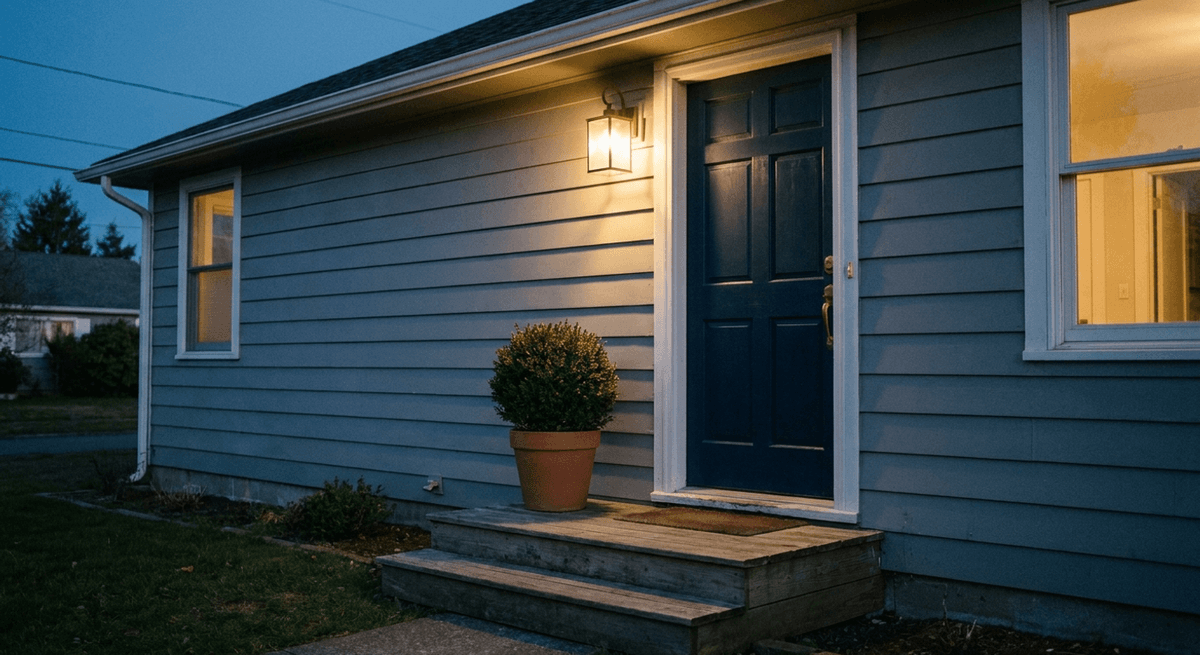
Criminal activity. SDCL 22-18-4.1 expressly conditions the no-retreat right on the person not being engaged in criminal activity at the time. A person committing a crime when the confrontation occurs cannot invoke the stand-your-ground rule. This is one of the clearest disqualifiers in the statute.
Not in a place with a right to be. The second express condition in SDCL 22-18-4.1 requires that the person be in a place where they have a legal right to be. A trespasser or an uninvited person who has been ordered to leave cannot claim the benefit of the no-retreat rule for force used in that location.
The initial aggressor. This bar is express and statutory, not a matter of general principle. SDCL 22-18-4.9, enacted by the same HB 1212, provides that any justification for the use or threatened use of either force or deadly force is not available to a person who is attempting to commit, is committing, or is escaping after the commission of a forcible felony, or who initially provokes the use or threatened use of force against themselves. Forcible felony is defined at SDCL 22-18-3.1(3) as arson, assault, burglary, kidnapping, manslaughter, murder, rape, or robbery, and any other felony involving the use or threat of physical force or violence against a person.
The provocation bar has two statutory pathways back, and both appear in the text. Under SDCL 22-18-4.9(2)(a), the justification survives where the force or threat of force is so great that the person reasonably believes he or she is in imminent danger of death or great bodily harm and every reasonable means of escape has been exhausted, other than force likely to cause death or great bodily harm to the assailant. Under SDCL 22-18-4.9(2)(b), it survives where the person in good faith withdraws from physical contact with the assailant and indicates clearly a desire to withdraw and terminate the use or threatened use of force, but the assailant continues or resumes.
Excessive force. Using force that is disproportionate to the actual or perceived threat defeats the justification. A person confronted with a minor physical threat who responds with a firearm has likely used excessive force. Proportionality runs through the statutory standard: the force used must be the amount reasonably believed necessary to prevent the harm.
Mutual combat. Where both parties agree to or invite a physical confrontation, the party who initially provoked the use or threatened use of force runs into the SDCL 22-18-4.9(2) bar and must fit one of that subdivision's two exceptions before the justification becomes available again.
Legal disclaimer: This article provides general legal information about South Dakota self-defense law, the stand-your-ground rule, castle doctrine, and justifiable homicide as of June 2, 2026. It is not legal advice and does not create an attorney-client relationship. Use of force carries serious criminal and civil consequences that depend on highly specific facts. The statutes described here are applied differently by South Dakota courts in different factual contexts, and the law continues to evolve. Anyone facing a self-defense situation or a criminal charge in South Dakota should consult a licensed South Dakota criminal-defense attorney before acting on any information in this article.
For information about protecting property from trespassers and squatters, see the South Dakota squatters rights guide.
For a side-by-side comparison of all 50 states and Washington D.C., including which states have stand-your-ground laws, duty-to-retreat requirements, and castle doctrine presumptions, see the self-defense laws by state hub.
Last updated: June 2, 2026.
Statutes cited reflect their in-force version as of June 2, 2026.
More South Dakota Laws
Frequently Asked Questions
Is South Dakota a stand-your-ground state?
Yes. South Dakota enacted its stand-your-ground law when Governor Noem signed HB 1212 on March 29, 2021. SDCL 22-18-4.1 provides that a person who is not engaged in criminal activity and who is in any place where they have a right to be may stand their ground and use deadly force in self-defense without any duty to retreat. The law applies statewide, not only in the home.
What is the castle doctrine in South Dakota?
South Dakota's castle doctrine is codified at SDCL 22-18-4.2 and 22-18-4.3. SDCL 22-18-4.2 provides that a person in their dwelling or residence has no duty to retreat and may use or threaten force, including deadly force, to defend themselves or another. SDCL 22-18-4.3 creates a presumption of reasonable fear of imminent death or great bodily harm when a person uses defensive force against someone who was unlawfully entering, or had unlawfully entered, a dwelling, residence, or occupied vehicle. That presumption also requires a second, conjunctive showing: the person using defensive force must have known or had reason to believe that an unlawful entry or an unlawful and forcible act was occurring or had occurred. SDCL 22-18-4.4 then lists four exceptions that defeat the presumption, including force used against a law enforcement officer who enters in the performance of official duties.
Do I have a duty to retreat in South Dakota?
No. Under SDCL 22-18-4.1, there is no duty to retreat when using deadly force in any place where you have a legal right to be, as long as you are not engaged in criminal activity at the time. Under SDCL 22-18-4, there is also no duty to retreat when using non-deadly force. The availability of a safe exit route does not defeat a valid self-defense claim under South Dakota law.
Can I be prosecuted or sued if I use force in self-defense in South Dakota?
South Dakota law provides immunity from both criminal prosecution and civil liability under SDCL 22-18-4.8 for a person whose use of force is justified under SDCL 22-18-4 through 22-18-4.7. Additionally, under SB 195 (2022), the prosecution bears the burden of disproving a self-defense immunity claim by clear and convincing evidence once a prima facie claim is raised. These protections do not apply automatically; the use of force must actually satisfy the justification standard for immunity to attach.
When is deadly force justified in South Dakota?
Under SDCL 22-18-4.1, deadly force is justified when a person reasonably believes it is necessary to prevent imminent death or great bodily harm to themselves or another person, or to prevent the imminent commission of a forcible felony. The threat must be imminent and the force must be proportionate to the perceived danger.
Does South Dakota's stand-your-ground law apply to defense of others?
Yes. SDCL 22-18-4.1 expressly permits the use of deadly force to prevent imminent death or great bodily harm to another person. The stand-your-ground rule removes the duty to retreat in defense-of-others situations just as it does for self-defense. South Dakota does not limit defense-of-others claims to family members.
What happens if I was the initial aggressor in a South Dakota self-defense claim?
SDCL 22-18-4.9(2) provides expressly that any justification for the use or threatened use of force is not available to a person who initially provokes the use or threatened use of force against themselves. Two statutory exceptions can restore it. Under subdivision (2)(a), the justification survives if the responding force is so great that the person reasonably believes he or she is in imminent danger of death or great bodily harm and every reasonable means of escape has been exhausted. Under subdivision (2)(b), it survives if the person in good faith withdraws from physical contact and indicates clearly a desire to withdraw and terminate the use of force, but the assailant continues or resumes. Separately, SDCL 22-18-4.9(1) removes the justification from a person attempting, committing, or escaping after a forcible felony.
Updates
Corrected the HB 1212 signing date to March 29, 2021, added the controlling aggressor statute SDCL 22-18-4.9 and both of its statutory exceptions, and completed our descriptions of the castle-doctrine presumption in SDCL 22-18-4.3 and its exceptions in SDCL 22-18-4.4.
Repaired the source link for South Dakota's 2022 burden-of-proof bill (SB 195), which pointed at an unrelated bill.
Independently fact-checked against the cited primary sources; governing law re-checked for recent changes
Governing law re-checked for recent changes
Reviewed and approved by an editor
The Law Behind This Article
This article rests on the statutory provisions below, held in our own legal record and retrieved from the official source. Tap a section to read the operative text.
South Dakota Codified Laws, Chapter 22-18: ASSAULTS AND PERSONAL INJURIES
§ 22-18-4.1Deadly force--Defense of person.In forcecited in 4 of our articles
A person is justified in using or threatening to use deadly force if the person reasonably believes that using or threatening to use deadly force is necessary to prevent imminent death or great bodily harm to himself, herself, or another, or to prevent the imminent commission of a forcible felony. A person who uses or threatens to use deadly force in accordance with this section does not have a duty to retreat and has the right to stand his or her ground, if the person using or threatening to use the deadly force is: (1) Not engaged in a criminal activity; and (2) In a place where the person has a right to be.
Official text (excerpt) · last checked 2026-09-01 · Read the full text in our law library · Verify at sdlegislature.gov
Cited in 4 court opinions in our collectionLatest citing opinion in our collection: 2026
Opinions citing this section in our collection:
- State v. Braveheart (South Dakota Supreme Court 2026, 2026 S.D. 36)“…it within the statutes themselves. Under the provisions of SDCL 22-18-4.1 and SDCL 22-18- 4.2, a person using de…”
- State v. Bendel (South Dakota Supreme Court 2026, 2026 S.D. 35)“…The justifiable use of deadly force is defined in SDCL 22-18-4.1. That statute reads, in its entirety:…”
- Anderson v. Streeter (South Dakota Supreme Court 2026, 2026 S.D. 17)“…justified in exercising deadly force in self-defense under SDCL 22-18-4.1 and was immune from civil liability un…”
Identified automatically from the court opinions citing this section — not a ranking of which case controls.
Also relied on in: South Dakota Supreme Court Affirms Stand Your Ground Immunity in Bunker-Community Shooting, Stand Your Ground States: Rules in All 50 States and DC
§ 22-18-4.2Defense of dwelling or residence--Force--Deadly force.In force
A person who is in a dwelling or residence, in which the person has a right to be: (1) Has no duty to retreat; (2) Has the right to stand his or her ground; and (3) Has the right to use or threaten to use: (a) Force against another, if the person reasonably believes that using or threatening to use force is necessary to defend himself, herself, or another against the imminent use of unlawful force; and (b) Deadly force, if the person reasonably believes that using or threatening to use deadly force is necessary to prevent imminent death or great bodily harm to himself, herself, or another, or to prevent the imminent commission of a forcible felony.
Official text (excerpt) · last checked 2026-07-30 · Read the full text in our law library · Verify at sdlegislature.gov
Cited in 1 court opinions in our collectionLatest citing opinion in our collection: 2026
Opinions citing this section in our collection:
- State v. Braveheart (South Dakota Supreme Court 2026, 2026 S.D. 36)“…hicles within its subsections, the same cannot be said for SDCL 22-18-4.2, which is limited to dwellings and resi…”
Identified automatically from the court opinions citing this section — not a ranking of which case controls.
§ 22-18-4.3Imminent death--Great bodily injury--Reasonable fear.In forcecited in 3 of our articles
For purposes of § 22-18-4.2, a person is presumed to have held a reasonable fear of imminent peril of death or great bodily harm, to himself, herself, or another, when using or threatening to use defensive force that is intended or likely to cause death or great bodily harm if: (1) The person against whom the defensive force was used or threatened: (a) Was in the process of unlawfully entering a dwelling, residence, or occupied vehicle; (b) Had unlawfully entered, a dwelling, residence, or occupied vehicle; or (c) Had removed or was attempting to remove another against the other's will from a dwelling, residence, or occupied vehicle; and (2) The person who uses or threatens to use defensive force knew or had reason to believe that an unlawful entry or an unlawful and forcible act was occurring or had occurred.
Official text (excerpt) · last checked 2026-07-30 · Read the full text in our law library · Verify at sdlegislature.gov
Cited in 1 court opinions in our collectionLatest citing opinion in our collection: 2026
Opinions citing this section in our collection:
- State v. Braveheart (South Dakota Supreme Court 2026, 2026 S.D. 36)“…driver’s side window.” The court also concluded that under SDCL 22-18-4.3, Braveheart was “presumed to have had…”
Identified automatically from the court opinions citing this section — not a ranking of which case controls.
Also relied on in: Castle Doctrine States: Rules in All 50 States and DC
§ 22-18-4.8Immunity--Burden of proof.In forcecited in 2 of our articles
A person who uses or threatens to use force, as permitted in §§ 22-18-4 to 22-18-4.7, inclusive, is justified in such conduct and is immune from criminal prosecution and from civil liability for the use or threatened use of such force brought by the person against whom force was used or threatened, or by any personal representative or heir of the person against whom force was used or threatened, unless: (1) (a) The person against whom force was used or threatened is a law enforcement officer, who was acting in the performance of official duties; and (b) The officer identified himself or herself; or (2) The person using or threatening to use force knew or reasonably should have known that the person was a law enforcement officer who was acting in the performance of official duties. The court shall award reasonable attorney's fees, court costs, compensation for loss of income, and all expenses incurred by a defendant in the defense of any civil action brought by a plaintiff, if the court finds that the defendant is immune from prosecution in accordance with this section.
Official text (excerpt) · last checked 2026-07-30 · Read the full text in our law library · Verify at sdlegislature.gov
Cited in 6 court opinions in our collectionLatest citing opinion in our collection: 2026
Opinions citing this section in our collection:
- State v. Smith (South Dakota Supreme Court 2023, 2023 S.D. 32)“…ed to a pretrial determination of statutory immunity under SDCL 22-18-4.8, a statute which became effective durin…”
- State v. Tuopeh (South Dakota Supreme Court 2025, 2025 S.D. 16)“…s request for statutory immunity under SDCL 22-18-4.8. 8. Whether the circu…”
- State v. Bendel (South Dakota Supreme Court 2026, 2026 S.D. 35)“…endel filed a motion to dismiss the indictment pursuant to SDCL 22-18-4.8, asserting that he had acted in lawful…”
Identified automatically from the court opinions citing this section — not a ranking of which case controls.
§ 22-18-4Force--Defense of person.In force
A person is justified in using or threatening to use force, other than deadly force, against another if the person reasonably believes that using or threatening to use force is necessary to defend against the other's imminent use of unlawful force. A person who uses or threatens to use force in accordance with this section does not have a duty to retreat before using or threatening to use force.
Official text (excerpt) · last checked 2026-07-30 · Read the full text in our law library · Verify at sdlegislature.gov
Cited in 16 court opinions in our collectionLatest citing opinion in our collection: 2026
Opinions citing this section in our collection:
- State v. Blue Thunder (South Dakota Supreme Court 1991, 466 N.W.2d 613)“…5, or to prevent an offense against one’s self or property, SDCL 22-18-4. “Unless the individual situation requi…”
- State v. Grimes (South Dakota Supreme Court 1976, 90 S.D. 43)“…forbid the defense of unrelated friends or total strangers. SDCL 22-18-4 sets out the law and applicable standar…”
- State v. Frey (South Dakota Supreme Court 1989, 440 N.W.2d 721)“…espass and justification of force to prevent trespass under SDCL 22-18-4. [7] The trial court in Instruction…”
Identified automatically from the court opinions citing this section — not a ranking of which case controls.
§ 22-18-4.4Presumption of fear--Exceptions.In force
The presumption set forth in § 22-18-4.3 does not apply if: (1) The person against whom the defensive force is used or threatened: (a) Has the right to be in or is a lawful resident of the dwelling, residence, or vehicle, including as an owner, lessee, or titleholder; and (b) Is not the subject of a protection order, including a temporary protection order; (2) The person sought to be removed is the child, grandchild, or otherwise in the lawful custody or under the lawful guardianship of the person against whom the defensive force is used or threatened; (3) The person who uses or threatens to use defensive force is engaged in a criminal activity or is using the dwelling, residence, or occupied vehicle to further a criminal activity; or (4) The person against whom the defensive force is used or threatened is a law enforcement officer, who enters or attempts to enter a dwelling, residence, or vehicle in the performance of official duties and: (a) The officer identified himself or herself as a law enforcement officer; or (b) The person using or threatening to use force knew or reasonably should have known that the person entering or attempting to enter was a law enforcement…
Official text (excerpt) · last checked 2026-07-30 · Read the full text in our law library · Verify at sdlegislature.gov
§ 22-18-4.5Unlawful entry--Presumption.In force
A person who unlawfully enters or attempts to enter a person's dwelling, residence, or occupied vehicle is presumed to be doing so with the intent to commit an unlawful act involving force or violence.
Official text (excerpt) · last checked 2026-07-30 · Read the full text in our law library · Verify at sdlegislature.gov
Cited in 1 court opinions in our collectionLatest citing opinion in our collection: 2026
Opinions citing this section in our collection:
- State v. Braveheart (South Dakota Supreme Court 2026, 2026 S.D. 36)“…ond presumption the Legislature created can be found under SDCL 22-18-4.5. This presumption attributes to an indi…”
Identified automatically from the court opinions citing this section — not a ranking of which case controls.
§ 22-18-4.7Deadly force--Defense of property other than a dwelling.In force
A person is justified in using or threatening to use deadly force only if the person reasonably believes that the use of deadly force is necessary to prevent the imminent commission of a forcible felony. A person who uses or threatens to use deadly force in accordance with this section does not have a duty to retreat and has the right to stand his or her ground, if the person using or threatening to use the deadly force is not engaged in a criminal activity and is in a place where the person has a right to be.
Official text (excerpt) · last checked 2026-07-30 · Read the full text in our law library · Verify at sdlegislature.gov
Cited in 1 court opinions in our collectionLatest citing opinion in our collection: 2026
Opinions citing this section in our collection:
- State v. Braveheart (South Dakota Supreme Court 2026, 2026 S.D. 36)“…mmission of a forcible felony.” (Emphasis added); see also SDCL 22-18-4.7 (requiring a reasonable belief that “de…”
Identified automatically from the court opinions citing this section — not a ranking of which case controls.
§ 22-18-3.1Definitions.In force
Terms used in §§ 22-18-4 to 22-18-4.9, inclusive, mean: (1) "Deadly force," force that is likely to cause death or great bodily harm; (2) "Dwelling," a building or structure of any kind, whether temporary or permanent, that is designed to be occupied by people lodging therein at night, together with any attached garage or porch, and which includes: (a) A tent; (b) A camper or motorhome; and (c) Any other conveyance, whether mobile or immobile; (3) "Forcible felony," arson, assault, burglary, kidnapping, manslaughter, murder, rape, and robbery, and any other felony that involves the use of or the threat of physical force or violence against a person; (4) "Residence," a dwelling in which a person: (a) Resides, either temporarily or permanently; or (b) Is an invited guest; (5) "Unlawful force," an act of force that is employed without the consent of the person against whom it is directed and without legal justification or excuse; and (6) "Vehicle," a conveyance of any kind, whether motorized or not, which is designed to transport people or property.
Official text (excerpt) · last checked 2026-07-30 · Read the full text in our law library · Verify at sdlegislature.gov
Cited in 2 court opinions in our collectionLatest citing opinion in our collection: 2026
Opinions citing this section in our collection:
- State v. Braveheart (South Dakota Supreme Court 2026, 2026 S.D. 36)“…tutory scheme for the defense of persons and property, see SDCL 22-18-3.1 and 22-18-4 through -4.9,…”
- State v. Bendel (South Dakota Supreme Court 2026, 2026 S.D. 35)“…threat of physical force or violence against a person[.]” SDCL 22-18-3.1(3). [¶50.] Bendel’s argument t…”
Identified automatically from the court opinions citing this section — not a ranking of which case controls.
§ 22-18-4.9Aggressor--Use of force--Justification not available.In force
Any justification for the use or the threatened use of either force or deadly force is not available to a person who: (1) Is attempting to commit, committing, or escaping after the commission of a forcible felony; or (2) Initially provokes the use or threatened use of force against himself or herself, unless: (a) Such force or threat of force is so great that the person reasonably believes he or she is in imminent danger of death or great bodily harm and that every reasonable means to escape such danger has been exhausted, other than the use or threatened use of force that is likely to cause death or great bodily harm to the assailant; or (b) In good faith, the person withdraws from physical contact with the assailant and indicates clearly to the assailant that he or she desires to withdraw and terminate the use or threatened use of force, but the assailant continues or resumes the use or threatened use of force.
Official text (excerpt) · last checked 2026-07-30 · Read the full text in our law library · Verify at sdlegislature.gov
Search our full record of US law — 2.1 million sections, every state + federal →
Sources and References
- SDCL 22-18-4 - Justification in using force against another (stand your ground)(sdlegislature.gov)
- SDCL 22-18-4.1 - Immunity from criminal prosecution for justified use of force(sdlegislature.gov)
- SDCL 22-18-4.8 - Immunity from civil liability for justified use of force(sdlegislature.gov)
- SDCL 22-16-34 - Justifiable homicide in defense of person(sdlegislature.gov)
- SDCL 22-16-35 - Justifiable homicide; resisting felony or murder attempt in dwelling(sdlegislature.gov)
- South Dakota HB 1212 (2021) - Stand Your Ground legislation signed March 8, 2021(sdlegislature.gov)
- South Dakota SB 195 (2022) - Burden of proof in self-defense cases(sdlegislature.gov)
- Cornell Law School LII - South Dakota Codified Laws(law.cornell.edu)
- National Conference of State Legislatures - Self-Defense and Stand Your Ground(ncsl.org)
- SDCL 22-18-4 - Force--Defense of person (non-deadly force)(sdlegislature.gov).gov
- SDCL 22-18-4.1 - Deadly force--Defense of person (stand your ground)(sdlegislature.gov).gov
- SDCL 22-18-4.2 - Defense of dwelling or residence(sdlegislature.gov).gov
- SDCL 22-18-4.3 - Presumption of reasonable fear (castle doctrine)(sdlegislature.gov).gov
- SDCL 22-18-4.4 - Presumption of fear--Exceptions(sdlegislature.gov).gov
- SDCL 22-18-4.5 - Unlawful entry--Presumption(sdlegislature.gov).gov
- SDCL 22-18-4.8 - Immunity--Burden of proof (criminal and civil immunity)(sdlegislature.gov).gov
- SDCL 22-18-4.9 - Aggressor--Use of force--Justification not available(sdlegislature.gov)
- SDCL 22-18-3.1 - Definitions (forcible felony, dwelling, residence, deadly force)(sdlegislature.gov)
- South Dakota HB 1212 (2021) - An Act to clarify the use of force; signed by the Governor March 29, 2021(sdlegislature.gov)