
South Carolina
South Carolina Probate and Intestate Succession: What Happens Without a Will (2026)
Independently fact-checked against primary sources (last audited August 20, 2026). · Reviewed by the RecordingLaw editorial team. · Law checked current as of August 20, 2026. · 6 primary sources cited on this page. How we verify our legal content
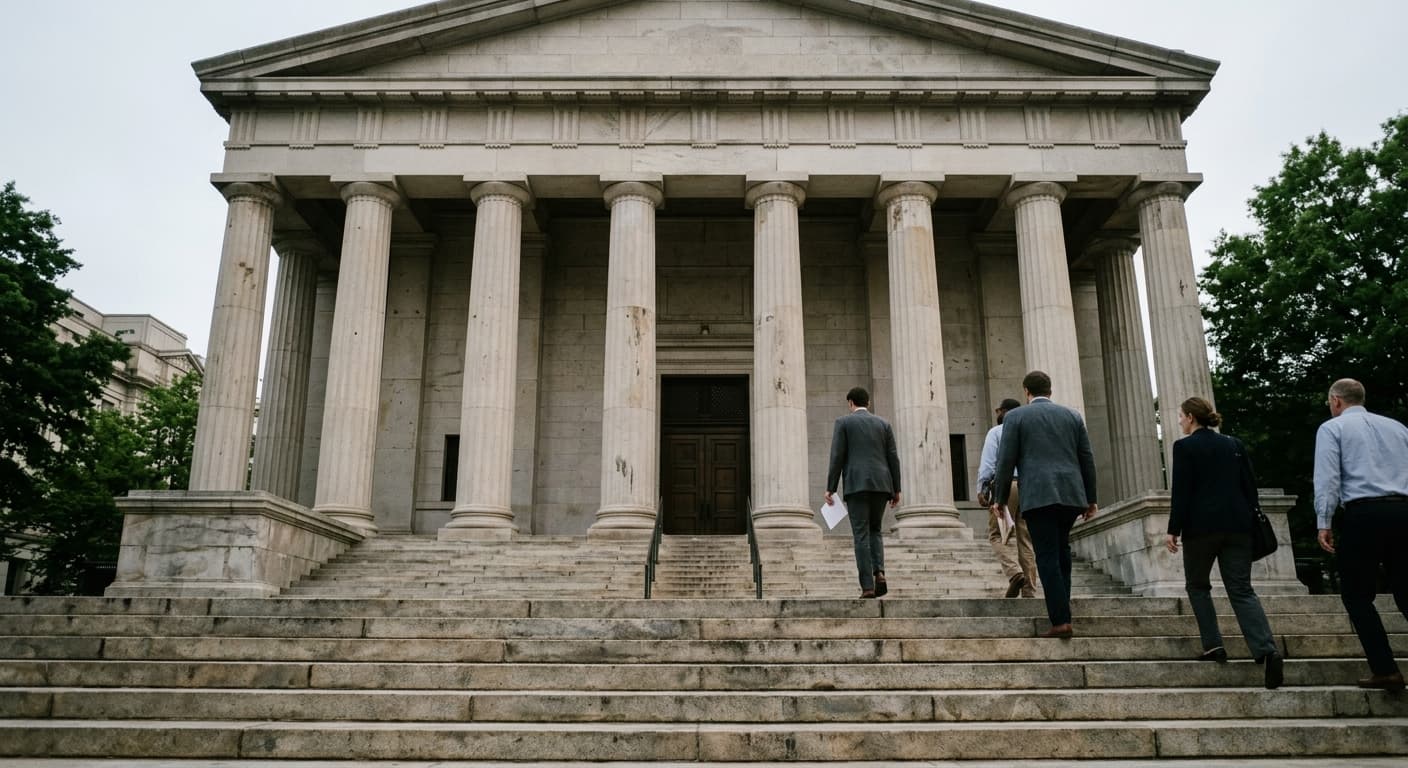
South Carolina probate is handled by an elected Probate Judge in the county where the decedent lived, one of 46 county Probate Courts statewide, under a Uniform Probate Code based statute at S.C. Code Title 62. Most estates proceed through the informal, uncontested track.
Information last verified on 2026-07-16. This article has not yet been reviewed by a licensed lawyer.
How Probate Works in South Carolina
South Carolina probate is a county-level process. Each of the state's 46 counties elects its own Probate Judge, who has exclusive jurisdiction over decedents' estates, guardianships, conservatorships, and marriage licenses within that county, and an estate is filed in the county where the decedent resided.
South Carolina adopted a probate code substantially based on the Uniform Probate Code, codified at S.C. Code Title 62, and it offers the standard UPC two-track structure. Informal probate and appointment, under Section 62-3-301 et seq., is an administrative process handled by the Probate Court without a judicial hearing, used when the estate is uncontested; most South Carolina estates proceed this way. Formal proceedings, under Section 62-3-402 et seq., involve judicial adjudication of a will's validity or of who has priority to serve as personal representative, and are used when there is a dispute or when a party wants the added certainty of a court order. For qualifying small estates, South Carolina also offers a streamlined affidavit procedure that avoids appointing a personal representative, though it still requires approval by the probate judge, described below. Creditors have a defined window to make claims: under S.C. Code § 62-3-803, claims are barred unless presented within the earlier of one year after the decedent's death or eight months after first publication of the notice to creditors.
Intestate Succession in South Carolina: Who Inherits Without a Will
South Carolina's intestate succession statute, S.C. Code § 62-2-102, sets a comparatively simple spousal share. If the decedent leaves no surviving issue, the surviving spouse takes the entire intestate estate. If the decedent does leave surviving issue, the spouse takes one-half of the intestate estate and the issue take the other half. Notably, unlike some other Uniform Probate Code states, South Carolina's statute does not further adjust this split based on whether the children are also the surviving spouse's children; the one-half, one-half division applies whenever there is any surviving issue, regardless of parentage. South Carolina is not a community-property state, so standard separate-property succession rules apply throughout.
Whatever share does not pass to the spouse, or the entire estate if there is no surviving spouse, passes under S.C. Code § 62-2-103 in the following order: first to the decedent's issue by representation; if there is no surviving issue, to the decedent's parents equally or to the surviving parent; if no parent survives, to the issue of the decedent's parents (siblings, and by representation their descendants); if none survive, to grandparents and their issue, split between the paternal and maternal sides. If no qualifying heir can be found under any of these categories, the estate ultimately escheats to the state.
One way to make sure your property goes to the people you actually choose, rather than following South Carolina's intestate succession order, is to have a valid will in place. recordinglaw.com's free South Carolina Last Will and Testament Generator can help you create one, with no account required.
Small Estate and Simplified Probate in South Carolina
South Carolina's small estate threshold is $45,000, raised from the prior $25,000 by Act No. 26 of 2025 (Bill 3472), signed by the Governor on May 8, 2025 and effective immediately. Under the Affidavit for Collection of Personal Property, S.C. Code § 62-3-1201, an heir can use this process once at least 30 days have passed since death, as long as the entire probate estate, wherever located and less liens and encumbrances, does not exceed $45,000, no application for a personal representative is pending or has been granted, and the person signing the affidavit is legally entitled to the property. For thresholds, waiting periods and forms, see our guide to the South Carolina small estate affidavit.
This procedure is simpler than full administration, but it is not purely extrajudicial, and the court step is the one readers most often miss. Before the affidavit can be presented to anyone holding the decedent's property, S.C. Code § 62-3-1201(a)(5) requires it to be approved and countersigned by the probate judge of the county of the decedent's domicile at the time of death, and only upon that judge's satisfaction that the successor is entitled to payment or delivery of the property. Subsection (a)(6) then requires the affidavit to be filed in that same probate court. If the decedent was not domiciled in South Carolina, both steps take place in the county where the property is located.
Only after the judge countersigns it and it is filed does the affidavit go to the bank, transfer agent, or other institution or person holding the property. What this process avoids is the appointment of a personal representative and the formal accounting that regular administration requires, so a qualifying small estate in South Carolina can still be resolved considerably faster than a full probate case.
The Affidavit for Collection of Personal Property as a PDF
The county Probate Court that must approve and countersign the Affidavit for Collection of Personal Property is also the place to ask for the version of the form it accepts. If you complete it as a PDF, PDFelement is paid software that can fill in its fields, edit text, and turn scanned records into searchable text with OCR. Nothing you sign in PDFelement replaces the probate judge's approval and countersignature or any notary or witness step that applies, and it does not make the affidavit valid by itself.
Read About PDFelementAffiliate disclosure: if you sign up through this link we may earn a commission, at no extra cost to you. Learn more
Does South Carolina Have an Estate or Inheritance Tax?
No. South Carolina levies neither a state estate tax nor a state inheritance tax. An estate settled in South Carolina can still be subject to the federal estate tax, which in 2026 applies only to estates above a $15,000,000 per-person basic exclusion amount, but that affects only a very small number of the largest estates nationally and has no separate South Carolina counterpart.
Do You Need a Probate Attorney?
South Carolina's informal probate track and its small estate affidavit process are both designed to be navigable without a lawyer for a straightforward, uncontested estate. If a will contest or heir dispute is likely, the estate holds a business interest, a blended family raises § 62-2-102 spousal-share questions, or formal proceedings under § 62-3-402 become necessary, ask a South Carolina probate attorney for a free case evaluation on taking the estate through Probate Court (attorney advertising). The county Probate Court where the estate will be filed can also answer procedural questions directly.

For readers exploring probate law more broadly, Probate by State covers the general process, formal versus informal tracks, and estate and inheritance tax rules across all 50 states.
Disclaimer
This article provides general information about probate and intestate succession law in South Carolina as of the verification date above. It is not legal advice and does not create an attorney-client relationship. It is not a substitute for advice from a probate attorney licensed in South Carolina, particularly for a contested estate, a business interest, a blended family, or formal proceedings. Figures and statutes change; verify current details directly with the county Probate Court or the South Carolina Legislature's official statutes before relying on any figure here.

Last updated: 2026-07-16. Figures and statutes cited reflect their in-force version as of 2026-07-16.
More South Carolina Laws
- South Carolina Child Custody Laws
- South Carolina Divorce Laws
- South Carolina Power of Attorney Laws
- South Carolina Unclaimed Property
Frequently Asked Questions
Which court handles probate in South Carolina?
The Probate Court of the county where the decedent resided. Each of South Carolina's 46 counties has its own elected Probate Judge with exclusive jurisdiction over estates.
Does South Carolina use informal or formal probate?
Both. South Carolina's Uniform Probate Code based statute (Title 62) offers informal probate under Section 62-3-301 et seq. for uncontested estates and formal proceedings under Section 62-3-402 et seq. for contested matters. Most estates proceed informally.
What is South Carolina's small estate threshold?
$45,000, raised from $25,000 by Act No. 26 of 2025. The Affidavit for Collection of Personal Property (S.C. Code § 62-3-1201) is available once 30 days have passed since death, if no personal representative has been appointed. The affidavit is not purely extrajudicial: it must be approved and countersigned by the probate judge of the decedent's county of domicile and filed in that court before it can be presented to a bank or transfer agent.
Who inherits if I die without a will in South Carolina and I'm married with children?
Under S.C. Code § 62-2-102, your spouse takes one-half of your intestate estate and your children take the other half, regardless of whether the children are also your spouse's children.
Does South Carolina have an estate or inheritance tax?
No. South Carolina levies neither a state estate tax nor a state inheritance tax.
How long do creditors have to file claims against a South Carolina estate?
Under S.C. Code § 62-3-803, claims are barred unless presented within the earlier of one year after the decedent's death or eight months after first publication of the notice to creditors.
Does having a will mean my estate skips South Carolina probate?
No. A will still generally needs to go through South Carolina's probate process. What a will avoids is intestate succession, ensuring your own wishes, not the § 62-2-102 statutory split, control who inherits.
Updates
Corrected the small estate section: South Carolina's affidavit for collection of personal property must be approved and countersigned by the county probate judge and filed with that court before it can be presented to a bank or transfer agent, so it is not the purely out-of-court process the article previously described.
Independently fact-checked against the cited primary sources; governing law re-checked for recent changes
Governing law re-checked for recent changes
Reviewed and approved by an editor
The Law Behind This Article
This article rests on the statutory provisions below, held in our own legal record and retrieved from the official source. Tap a section to read the operative text.
South Carolina Code of Laws, Title 62: SOUTH CAROLINA PROBATE CODE
§ 62-2-102Share of the spouseIn force
The intestate share of the surviving spouse is: (1) if there is no surviving issue of the decedent, the entire intestate estate; (2) if there are surviving issue, one-half of the intestate estate.
Official text (excerpt) · last checked 2026-09-06 · Read the full text in our law library · Verify at scstatehouse.gov
§ 62-2-103Share of heirs other than surviving spouseIn force
The part of the intestate estate not passing to the surviving spouse under Section 62-2-102, or the entire estate if there is no surviving spouse, passes as follows: (1) to the issue of the decedent: if they are all of the same degree of kinship to the decedent they take equally, but if of unequal degree then those of more remote degree take by representation; (2) if there is no surviving issue, to his parent or parents equally; (3) if there is no surviving issue or parent, to the issue of the parents or either of them by representation; (4) if there is no surviving issue, parent or issue of a parent, but the decedent is survived by one or more grandparents or issue of grandparents, half of the estate passes to the paternal grandparents if both survive, or to the surviving paternal grandparent, or to the issue of the paternal grandparents if both are deceased, the issue taking equally if they are all of the same degree of kinship to the decedent, but if of unequal degree those of more remote degree take by representation; and the other half passes to the maternal relatives in the same manner; but if there be no surviving grandparent or issue of grandparent on either the…
Official text (excerpt) · last checked 2026-07-29 · Read the full text in our law library · Verify at scstatehouse.gov
Cited in 4 court opinions in our collectionLatest citing opinion in our collection: 2023
Opinions citing this section in our collection:
- Swiger by and through DeHaven v. Smith (Court of Appeals of South Carolina 2019, 426 S.C. 408)“…of Decedent and, therefore, an "interested person." See S.C. Code Ann. § 62-2-103 (3) (Supp. 2018) (providing for intest…”
- Ballard v. Ballard (Supreme Court of South Carolina 1994, 314 S.C. 40)“…sulting in an equal share to each parent. See S.C. Code Ann. § 62-2-103 (1987). Mother contends under § 15-51-…”
- Singleton v. City of Georgetown (Court of Appeals of South Carolina 2019)“…e are surviving issue, one-half of the intestate estate."); S.C. Code Ann. § 62-2-103 (Supp. 2018) (providing the part of the…”
Identified automatically from the court opinions citing this section — not a ranking of which case controls.
§ 62-3-1201Collection of personal property by affidavitIn forcecited in 2 of our articles
(a) Thirty days after the death of a decedent, any person indebted to the decedent or having possession of tangible personal property or an instrument evidencing a debt, obligation, stock, or chose in action belonging to the decedent shall make payment of the indebtedness or deliver the tangible personal property or the instrument evidencing the debt, obligation, stock, or chose in action to a person claiming to be the successor of the decedent upon being presented an affidavit made by or on behalf of the successor.
Official text (excerpt) · last checked 2026-07-29 · Read the full text in our law library · Verify at scstatehouse.gov
Also relied on in: South Carolina Small Estate Affidavit: $45,000 Limit, Wait and Form
§ 62-3-803Limitations on presentation of claimsIn force
(a) All claims against a decedent's estate which arose before the death of the decedent, including claims of the State and any political subdivision thereof, whether due or to become due, absolute or contingent, liquidated or unliquidated, founded on contract, tort, or other legal basis, if not barred earlier by another statute of limitations or nonclaim statute; are barred against the estate, the personal representative, the decedent's heirs and devisees, and nonprobate transferees of the decedent; unless presented within the earlier of the following: (1) one year after the decedent's death; or (2) the time provided by Section 62-3-801(b) for creditors who are given actual notice, and within the time provided in Section 62-3-801(a) for all creditors barred by publication. (b) A claim described in subsection (a) which is barred by the nonclaim statute of the decedent's domicile before the giving of notice to creditors in this State is barred in this State.
Official text (excerpt) · last checked 2026-07-29 · Read the full text in our law library · Verify at scstatehouse.gov
Cited in 8 court opinions in our collectionLatest citing opinion in our collection: 2026
Opinions citing this section in our collection:
- Anderson Area Medical Center, Inc. v. Tollison (Court of Appeals of South Carolina 1995, 320 S.C. 132)“…is hereby Affirmed. Shaw and Connor, JJ., concur. S.C. Code Ann. §§ 62-3-803 , -804 (Supp. 1994). AAMC receiv…”
- Ex Parte Estate of Evans v. Lynch Ex Rel. Estate of Evans (Supreme Court of South Carolina 1989, 299 S.C. 366)“…We conclude the classification is reasonable and hold S. C. Code Ann. § 62-3-803(c)(2)(1987) does not violate the equal…”
- Rene Wells v. David Shealy (Court of Appeals of South Carolina 2026)“…esented" within one year of the decedent's death. S.C. Code Ann. § 62-3-803(a)(1) (2022). However, the Probate Code…”
Identified automatically from the court opinions citing this section — not a ranking of which case controls.
§ 62-3-301Applications for informal probate or appointment; contentsIn force
(a) Applications for informal probate or informal appointment shall be directed to the court, and verified by the applicant to be accurate and complete to the best of his knowledge and belief as to the following information: (1) Every application for informal probate of a will or for informal appointment of a personal representative, other than a special or successor representative, shall contain the following: (i) a statement of the interest of the applicant; (ii) the name, and date of death of the decedent, his age, and the county and state of his domicile at the time of death, and the names and addresses of the spouse, children, heirs (regardless of whether the decedent died intestate and determined as if the decedent died intestate) and devisees, and the ages of any who are minors so far as known or ascertainable with reasonable diligence by the applicant; (iii) if the decedent was not domiciled in the State at the time of his death, a statement showing venue; (iv) a statement identifying and indicating the address of any personal representative of the decedent appointed in this State or elsewhere whose appointment has not been terminated; (v) a statement indicating…
Official text (excerpt) · last checked 2026-07-29 · Read the full text in our law library · Verify at scstatehouse.gov
§ 62-3-402Formal testacy or appointment proceedings; petition; contentsIn force
(a) Petitions for formal probate of a will, or for adjudication of intestacy with or without request for appointment of a personal representative, must be directed to the court, request a judicial order after notice and hearing, and contain further statements as indicated in this section. A petition for formal probate of a will: (1) requests an order as to the testacy of the decedent in relation to a particular instrument which may or may not have been informally probated and determining the heirs; (2) contains the statements required for informal applications as stated in the six subitems under Section 62-3-301(a)(1), and the statements required by subitems (ii) and (iii) of Section 62-3-301(a)(2); (3) states whether the original of the last will of the decedent is in the possession of the court or accompanies the petition. If the original will is neither in the possession of the court nor accompanies the petition and no authenticated copy of a will probated in another jurisdiction accompanies the petition, the petition also must state the contents of the will, and indicate that it is lost, destroyed, or otherwise unavailable.
Official text (excerpt) · last checked 2026-07-29 · Read the full text in our law library · Verify at scstatehouse.gov
Explore the law
This article also draws on these acts and chapters (opening at their first section): South Carolina Code of Laws, Title 62: SOUTH CAROLINA PROBATE CODE § 62-3-101 (Devolution of estate at death; restrictions) · South Carolina Code of Laws, Title 62: SOUTH CAROLINA PROBATE CODE § 62-2-101 (Intestate estate)
Related law for further reading — not part of this article’s citations.
Search our full record of US law — 2.1 million sections, every state + federal →
Sources and References
- South Carolina Code of Laws, Title 62, Chapter 2, Intestate Succession and Wills(scstatehouse.gov).gov
- South Carolina Code of Laws, Title 62, Chapter 3, Probate of Wills and Administration(scstatehouse.gov).gov
- South Carolina General Assembly, Bill 3472 (Act No. 26 of 2025, raising the small estate threshold to $45,000)(scstatehouse.gov).gov
- S.C. Code § 62-3-1201, Affidavit for Collection of Personal Property (South Carolina Legislature Online)(scstatehouse.gov).gov
- S.C. Code § 62-3-803, Limitations on Presentation of Claims (South Carolina Legislature Online)(scstatehouse.gov).gov
- South Carolina Judicial Branch, Probate Court(sccourts.org).gov
Paid attorney referral. RecordingLaw may receive compensation when you use an attorney-help link. RecordingLaw is not a law firm. Submitting a request does not guarantee that an attorney will accept your case and does not create an attorney-client relationship.