
Wyoming
Wyoming Police Body Camera Laws: W.S. 16-4-203 Access
Independently fact-checked against primary sources (last audited August 20, 2026). · Reviewed by the RecordingLaw editorial team. · Law checked current as of August 20, 2026. · 3 primary sources cited on this page. How we verify our legal content

Wyoming has no law requiring police to wear body cameras, and the one statute addressing footage that does exist, W.S. 16-4-203(d)(xviii), makes bodycam video closed by default, with release beyond a narrow mandatory category left to the discretion of the agency that holds it.
This guide is part of our Police Bodycam Laws by State series.
Jurisdiction scope: This article addresses Wyoming law governing police body cameras: the absence of a use mandate, the W.S. 16-4-203(d)(xviii) access framework for peace officer recordings, and the 2021 legislative effort to change it. It does not address a civilian's right to record law enforcement, which is covered separately in our guide to recording laws.
Does Wyoming require police to wear body cameras?
No. Wyoming has no statute requiring a police department, sheriff's office, or the Wyoming Highway Patrol to equip officers with body cameras. Whether an agency buys cameras, and its rules for when an officer must activate one, is a decision made locally by each department, often shaped by budget and available grant funding rather than by any state requirement. Wyoming's one dedicated statute on this subject, W.S. 16-4-203(d)(xviii), does not create a mandate to use cameras at all. It only addresses what happens to a recording once one exists: who can see it, and under what circumstances the agency holding it may release a copy. An agency that never buys a camera has nothing to disclose and violates no Wyoming statute by not having one.
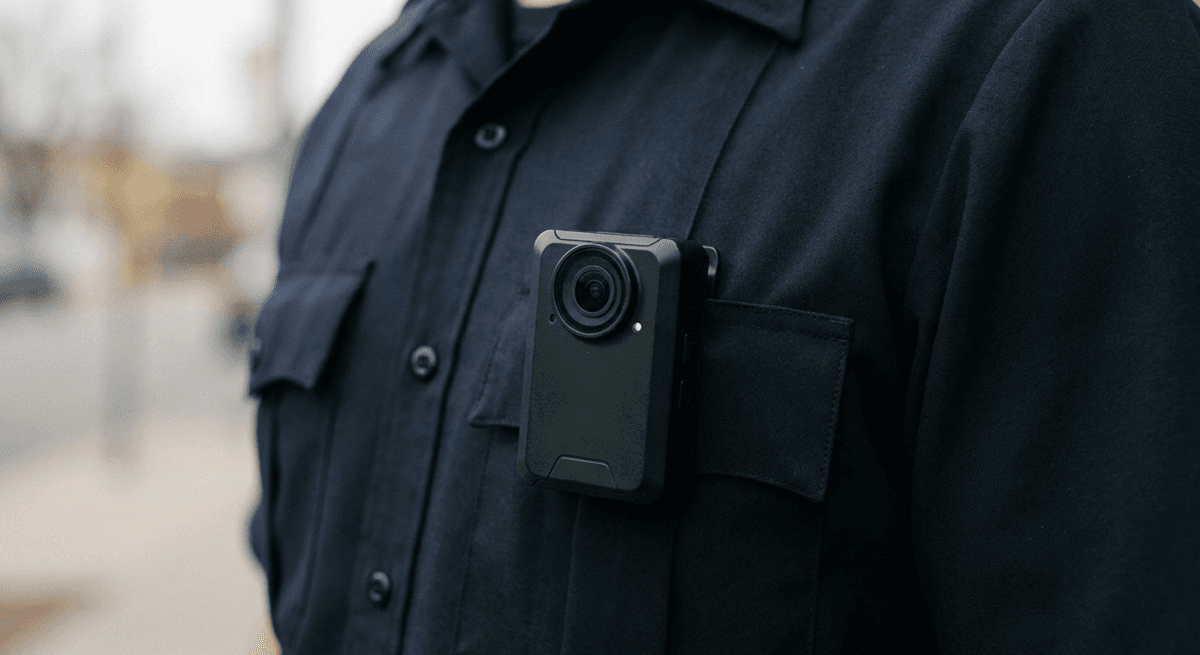
Is Wyoming bodycam footage a public record?
Not by default. Wyoming's Public Records Act generally presumes government records are open, but W.S. 16-4-203(d)(xviii) singles out "information obtained through a peace officer recording" for the opposite treatment. Subsection (d) provides that the custodian "shall deny the right of inspection" of the records it lists unless otherwise provided by law, so for a peace officer recording denial is the starting point and disclosure is the exception. W.S. 16-4-201(a)(xi) defines a peace officer recording as any audio or video data recorded by a peace officer that is provided to or used by the officer in performing official business and designed to be worn on the officer's body or attached to a vehicle the officer uses, a definition that covers both body cameras and dash cameras. The custodian must allow inspection in only one circumstance: to law enforcement personnel or public agencies conducting official business, or under a court order. The remaining categories of access, including access by the person actually shown in the footage, are left to the custodian's judgment rather than guaranteed by statute, and a request that fits none of the listed categories must be denied.
When can the public see Wyoming bodycam footage?
Beyond the mandatory law-enforcement and court-order access, W.S. 16-4-203(d)(xviii)(B) lists four situations in which a custodian, meaning the police chief, sheriff, or other agency head holding the recording, may choose to allow inspection: to the person in interest, meaning the subject of the recording; if the footage involves an incident of deadly force or serious bodily injury as defined in W.S. 6-1-104(a)(x); in response to a complaint filed against law enforcement personnel, if the custodian determines that inspection would not be contrary to the public interest; or in the interest of public safety generally. None of these four grounds obligates release, and the statute gives a requester no deadline by which a discretionary decision must be made. The Wyoming Association of Sheriffs and Chiefs of Police, the Wyoming Press Association, and the ACLU of Wyoming all negotiated and supported this framework when Senate File 32 passed in 2017, but Wyoming lawmakers have since said the resulting statute leaves the outcome of any given request almost entirely up to the individual custodian.
| Question | Wyoming rule |
|---|---|
| Statewide camera mandate | No |
| Governing statute | W.S. 16-4-203(d)(xviii) (enacted 2017 by Senate File 32) |
| Default access rule | Closed; the custodian must deny inspection unless a listed exception applies |
| Mandatory access | Law enforcement or public agencies (official business) or under a court order |
| Discretionary access | Person in interest; deadly force or serious injury incidents; complaints against an officer; public safety |
| Retention period | No statewide statute; set by each agency |
The push to open Wyoming's bodycam law
In 2021, Representative Karlee Provenza of Laramie introduced House Bill 213, Disclosure of peace officer recordings, to set consistent statewide standards for tracking and releasing records of police conduct, standards Provenza said did not otherwise exist. The bill was prompted partly by the case of David Cain, a 36-year-old Platte County man killed during a law enforcement response to a domestic dispute in April 2020. Cain's family member, Salvador Jimenez, testified that law enforcement agencies had "made it a game," going back and forth with the family for weeks over access to body camera footage of the encounter. Wyoming Highway Patrol Colonel Kebin Haller opposed the bill, arguing that releasing footage before a case concluded could create a "public trial" without the due process protections a formal proceeding provides. House Bill 213 never received a committee hearing; it died without a vote in the House Judiciary Committee. No comparable bill has passed in any session since, so W.S. 16-4-203(d)(xviii) remains in the form Senate File 32 gave it in 2017, and whether a Wyoming family can see footage of a fatal encounter still depends on the discretion of the agency that recorded it.
Is it illegal to record police in Wyoming?
That is a separate question from the one this page addresses. Wyoming generally recognizes a person's right to record an on-duty officer performing public duties in a public place. For a full explanation of that right and how it differs from the rules on police-generated bodycam footage discussed here, see Is It Illegal to Record Someone?
More Wyoming Laws
Frequently Asked Questions
Does Wyoming require police to wear body cameras?
No. Wyoming has no statute requiring any agency to equip officers with body cameras. Adoption is a local decision, and the state's only bodycam-specific statute addresses access to footage, not whether cameras must be used.
Is Wyoming bodycam footage a public record?
Not by default. W.S. 16-4-203(d) requires a custodian to deny inspection of a peace officer recording unless one of the exceptions in paragraph (d)(xviii) applies, and release outside a narrow mandatory category is discretionary rather than guaranteed.
Who can definitely get access to Wyoming bodycam footage?
Only law enforcement personnel or public agencies conducting official business, or a requester acting under a court order. The custodian must allow inspection in those two circumstances.
Can the person shown in Wyoming bodycam footage get a copy?
Only at the custodian's discretion. W.S. 16-4-203(d)(xviii)(B) lists the person in interest as one of four categories a custodian may, but is not required to, allow to inspect the recording.
What happened to the 2021 effort to open up Wyoming's bodycam law?
House Bill 213 died without a committee vote in the House Judiciary Committee, despite testimony from the family of David Cain, a Platte County man killed by police in 2020, that agencies had stonewalled their requests for footage.
Does Wyoming set a retention period for bodycam footage?
No. Wyoming has no statewide statute setting a minimum or maximum retention period for peace officer recordings; individual agencies set their own practices.
Is it illegal to record on-duty police in Wyoming?
No, recording an on-duty officer performing public duties in a public place is generally protected. That is a separate question from public access to police-recorded bodycam footage covered on this page.
Updates
Corrected the description of W.S. 16-4-203(d): the custodian must deny inspection of a peace officer recording unless a listed exception applies, rather than merely having discretion to deny.
Independently fact-checked against the cited primary sources; governing law re-checked for recent changes
Governing law re-checked for recent changes
Reviewed and approved by an editor
The Law Behind This Article
This article rests on the statutory provisions below, held in our own legal record and retrieved from the official source. Tap a section to read the operative text.
Wyoming Statutes, Title 16 - City, County, State and Local Powers - Chapter 4: Uniform Municipal Fiscal Procedures; Public Records, Documents and Meetings - Article 2: Public Records
§ 16-4-203Right of inspection; grounds for denial; access of news media; order permitting or restricting disclosure; exceptions.In forcecited in 7 of our articles
(a) The custodian of any public records shall allow any person the right of inspection of the records or any portion thereof except on one (1) or more of the following grounds or as provided in subsection (b) or (d) of this section: (i) The inspection would be contrary to any state statute; (ii) The inspection would be contrary to any federal statute or regulation issued thereunder having the force and effect of law; or (iii) The inspection is prohibited by rules promulgated by the supreme court or by the order of any court of record.
Official text (excerpt) · last checked 2026-09-02 · Read the full text in our law library · Verify at wyoleg.gov
Cited in 22 court opinions in our collectionLatest citing opinion in our collection: 2023
In the courts (editorial summary, independently checked):Houghton v. Franscell (1994) held a hospital district's physician recruitment contract is not a hospital record exempt under section 16-4-203(d)(vii). Powder River Basin Resource Council (2014) adopted a narrow FOIA definition of trade secrets for (d)(v) and required the show cause procedure in (f), with the burden on the custodian.
Opinions citing this section in our collection:
- Gale v. State (Wyoming Supreme Court 1990, 792 P.2d 570)✓A defendant charged with child sexual abuse sought the complaining children's school records; the court treated them as privileged under section 16-4-203(d)(viii), reviewed them in camera under the Ritchie materiality test, and affirmed the refusal to disclose.
- Powder River Basin Resource Council v. Wyoming Oil & Gas Conservation Commission (Wyoming Supreme Court 2014, 320 P.3d 222)✓Conservation groups sought the identity of hydraulic fracturing chemicals the Commission withheld as trade secrets; the court held such a denial must be challenged through the show cause procedure in section 16-4-203(f), not administrative review, and remanded.
- Houghton v. Franscell (Wyoming Supreme Court 1994, 870 P.2d 1050)✓A newspaper sought a hospital district's physician recruitment contract; the court held a record of the public funds paid to induce a doctor to relocate is not a hospital record exempt under section 16-4-203(d)(vii), and affirmed the order to disclose it.
Identified automatically from the court opinions citing this section — not a ranking of which case controls.
Also relied on in: Wyoming Laws on Recording Police: Your Rights and Limits, Wyoming Police Report: How to Get a Crash Report from WYDOT, an Incident Report, or Body Camera (Peace Officer Recording) Footage, Wyoming Public Records Act: Deadlines, Fees, and Appeals (2026)
§ 16-4-201Definitions; short title; designation of ombudsman.In forcecited in 3 of our articles
(a) As used in this act: (i) "Custodian" means the official custodian or any authorized person having personal custody and control of the public records in question; (ii) "Official custodian" means any officer or employee of a governmental entity, who is responsible for the maintenance, care and keeping of public records, regardless of whether the records are in his actual personal custody and control; (iii) "Person in interest" means the person who is the subject of a record or any representative designated by the person, except if the subject of the record is under legal disability or is the dependent high school student of his parents, "person in interest" means the parent or duly appointed legal representative; (iv) "Political subdivision" means every county, city and county, city, incorporated and unincorporated town, school district and special district within the state; (v) "Public records" when not otherwise specified includes any information in a physical form created, accepted, or obtained by a governmental entity in furtherance of its official function and transaction of public business which is not privileged or confidential by law.
Official text (excerpt) · last checked 2026-07-30 · Read the full text in our law library · Verify at wyoleg.gov
Cited in 21 court opinions in our collectionLatest citing opinion in our collection: 2023
Opinions citing this section in our collection:
- Wyo. Jet Ctr., LLC v. Jackson Hole Airport Bd. (Wyoming Supreme Court 2019, 432 P.3d 910)“…sions of a principal act or the Wyoming Public Records Act, W.S. 16-4-201 through 16-4-205, are effective and con…”
- Pagel v. Franscell (Wyoming Supreme Court 2002, 57 P.3d 1226)“…by failing to correctly interpret the Public Records Act ( Wyo. Stat. Ann. § 16-4-201 et seq.) in conjunction with Wyo. Sta…”
- Laramie County School District No. One v. Cheyenne Newspapers, Inc. (Wyoming Supreme Court 2011, 250 P.3d 522)“…ed as a matter of law that the Wyoming Public Records Act, Wyo. Stat. Ann. §§ 16-4-201 through -205 (LexisNexis 2009), read i…”
Identified automatically from the court opinions citing this section — not a ranking of which case controls.
Wyoming Statutes, Title 6 - Crimes and Offenses - Chapter 1: General Provisions - Article 1: In General
§ 6-1-104Definitions.In forcecited in 7 of our articles
(a) As used in this act, unless otherwise defined: (i) "Bodily injury" means: (A) A cut, abrasion, burn or temporary disfigurement; (B) Physical pain; or (C) Impairment of the function of a bodily member, organ or mental faculty. (ii) "Coin machine" means a mechanical or electronic device or receptacle designed to: (A) Receive a coin, bill or token made for that purpose; and (B) Automatically offer, provide or assist in providing or permit the acquisition of property or service in return for the insertion of the coin, bill or token. (iii) "Criminal negligence" is defined as the following conduct: A person acts with criminal negligence when, through a gross deviation from the standard of care that a reasonable person would exercise, he fails to perceive a substantial and unjustifiable risk that the harm he is accused of causing will occur, and the harm results.
Official text (excerpt) · last checked 2026-07-30 · Read the full text in our law library · Verify at wyoleg.gov
Cited in 64 court opinions in our collectionLatest citing opinion in our collection: 2026
Opinions citing this section in our collection:
- Wilson v. State (Wyoming Supreme Court 2000, 14 P.3d 912)“…physical condition. Both definitions are taken from Wyo.Stat. Ann. § 6-1-104 (Michie 1997). The district court refus…”
- Schmuck v. State (Wyoming Supreme Court 2017, 406 P.3d 286)“…statutory definition of the term “recklessly” provided by Wyo. Stat. Ann. § 6-1-104 (a)(ix) (LexisNexis 2017): (a) As use…”
- Perritt v. State (Wyoming Supreme Court 2005, 120 P.3d 181)“…ny or any other association or entity, public or private." Wyo. Stat. Ann. § 6-1-104 (a)(vi) (LexisNexis 2005). "Property" i…”
Identified automatically from the court opinions citing this section — not a ranking of which case controls.
Also relied on in: Wyoming Pepper Spray and Stun Gun Laws (2026), Wyoming Knife Laws (2026): Concealed Carry, Schools, Preemption, Wyoming AI Laws and Regulation (2026)
Search our full record of US law — 2.1 million sections, every state + federal →
Sources and References
- W.S. 16-4-203, right of inspection, grounds for denial, exceptions including peace officer recordings (Title 16, Wyoming Statutes)(wyoleg.gov).gov
- W.S. 16-4-201, definitions, including "peace officer recording" (Title 16, Wyoming Statutes)(wyoleg.gov).gov
- 2017 Wyoming Senate File 32 (Session Laws of Wyoming 2017), peace officer recordings(wyoleg.gov).gov
- Reporters Committee for Freedom of the Press, Open Government Guide: Wyoming(rcfp.org)
- K2 Radio, Wyoming Senate Passes Police Body Camera Legislation(k2radio.com)
- WyoFile, As police reform hits national stage, Wyo lawmakers kill two measures(wyofile.com)