
South Dakota
South Dakota Police Body Camera Laws: No Mandate, No Access Rule
Independently fact-checked against primary sources (last audited August 20, 2026). · Reviewed by the RecordingLaw editorial team. · Law checked current as of August 20, 2026. · 4 primary sources cited on this page. How we verify our legal content
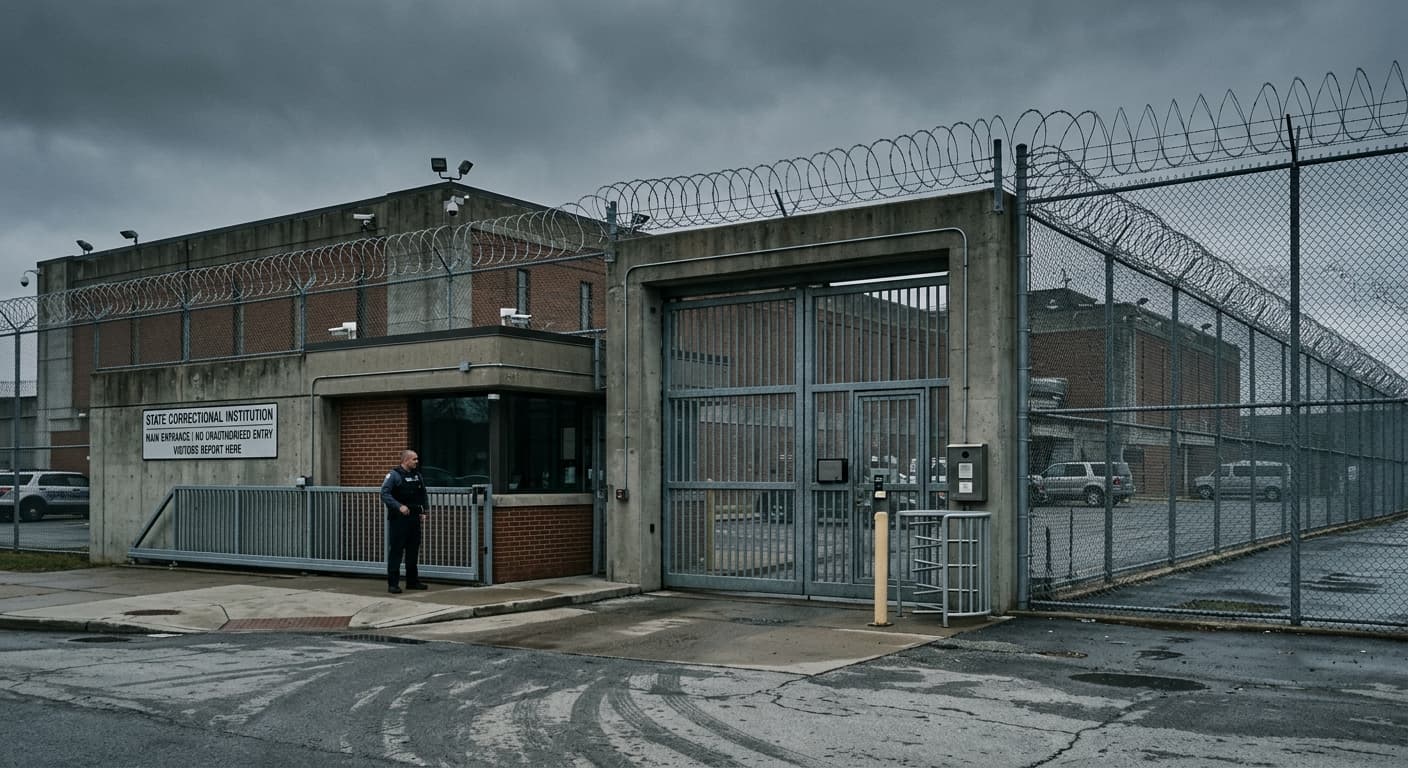
South Dakota has no law that specifically addresses police body cameras, neither a mandate to use them nor a rule for releasing the footage. Whether an agency records at all, and whether the public ever sees it, is left almost entirely to that agency's own discretion under the state's general public records law.
This guide is part of our Police Bodycam Laws by State series.
Jurisdiction scope: This article addresses South Dakota law governing police body cameras: the absence of a statewide equipment mandate and the general public-records framework that governs access to footage where an agency chooses to use cameras. It does not address a civilian's right to record law enforcement, which is covered separately in our guide to recording laws.
Does South Dakota require police to wear body cameras?
No. South Dakota has never enacted a statute requiring any state, county, or municipal law enforcement agency to equip officers with body cameras. Most agencies, including the South Dakota Highway Patrol and many municipal and county departments, use car and body cameras as a matter of internal policy, but that choice, along with when a camera must be turned on and what happens to the footage afterward, is set locally rather than by state law.
A 2020 bill, Senate Bill 100, would have changed that by creating statewide standards for how agencies handle, retain, and release police video. Law enforcement organizations argued existing department-level "best practices" were sufficient, the bill's original language was removed in committee, and even a scaled-back proposal for a summer legislative study of the issue was voted down. No comparable bill has passed since.

Is South Dakota bodycam footage a public record?
South Dakota's Public Records Act, codified starting at SDCL § 1-27-1, establishes a general presumption that records kept by public bodies are open to inspection. But SDCL § 1-27-1.5(5) allows an agency to close records "developed or received by law enforcement agencies" and other investigative public bodies where the record forms part of "the examination, investigation, intelligence information, citizen complaint or inquiry, informant identification, or strategic or tactical information used in law enforcement training." Note the trailing qualifier on that last item: the strategic and tactical prong reaches law enforcement training material, not operational tactics at large. Body camera and dashcam footage generated during a stop, pursuit, or use-of-force incident falls within the examination-and-investigation category rather than that training prong.
A second statute reinforces the same result and is often the stronger ground. SDCL § 23-5-11 provides that "confidential criminal justice information and criminal history information are specifically exempt from disclosure pursuant to §§ 1-27-1 to 1-27-1.15, inclusive, and may be withheld by the lawful custodian of the records." SDCL § 23-5-10 defines that term to include "criminal investigative information," which the same section defines as information compiled by a law enforcement agency in the course of investigating a crime, expressly including information "derived from reports of officers, deputies, agents, informants, or investigators or from any type of surveillance." Video an officer records on a body camera during an investigation is squarely within that language. Section 23-5-11 also carves out basic call-for-service data, which is not confidential criminal justice information and must be released unless it would expose criminal intelligence or jeopardize an ongoing investigation, and it does not override more specific access or confidentiality rules elsewhere in state or federal law.
The key distinction from a state like South Carolina is that South Dakota's exemptions are discretionary rather than an absolute statutory bar; both § 1-27-1.5(5) and § 23-5-11 permit an agency to withhold investigative footage, and neither requires it. In practice, reporting on South Dakota's open-records landscape has found that agencies almost uniformly choose to invoke the exemption for body camera and dashcam video, particularly in cases involving officer use of force, leaving requesters with little practical difference from a state that closes the records outright.
How does a South Dakota agency actually decide whether to release video?
Because there is no bodycam-specific statute, a South Dakota records custodian evaluates a video request the same way it would evaluate a request for any other investigative file: case by case, under SDCL § 1-27-1.5(5) and SDCL § 23-5-11, with no bodycam-specific presumption pushing the decision toward release. Reporters and advocates for open government have described the result as agencies having "complete discretion" over whether footage becomes public, since neither statute sets a timeline, a list of eligible requesters, or a standard the agency must apply beyond the general exemptions themselves.
The written-request procedure in SDCL § 1-27-37 does not change that calculus much. It is a follow-up remedy rather than the ordinary first channel: the section opens "If an informal request is denied in whole or in part by the custodian of a document or record, a written request may be made by the requestor pursuant to this section." Only then does the ten-business-day clock start, and the public record officer can meet it by acknowledging the request and estimating the time needed to respond further, so a written request buys a documented paper trail and a written statement of reasons for any denial, not a guaranteed decision on the merits within ten days.
| Question | South Dakota rule |
|---|---|
| Statewide equipment mandate | None; department-by-department policy |
| Governing statute for footage | None specific to bodycams; general investigative-records exemption, SDCL § 1-27-1.5(5), plus the confidential criminal justice information exemption, SDCL § 23-5-11 |
| Default public-records status | Discretionary closure; agencies routinely withhold footage |
| Who decides | The individual agency or the local state's attorney |
| 2020 reform effort | Senate Bill 100, gutted in committee, never passed |
A real example: the Corson County shooting of Samir Albaidhani
On June 30, 2023, a Corson County sheriff's deputy and tribal officers pursued 25-year-old Samir Albaidhani, who brandished a gun during the chase before officers shot and wounded him. When South Dakota News Watch later requested video of the incident as part of a broader survey of police-involved shooting records, the local state's attorney denied the request.
That denial was not an outlier. In a November 2025 records push, News Watch asked agencies across the state for video from eight separate police-involved shootings spanning 2016 through 2025, every one of which state investigators had ruled legally justified. Every agency declined to provide footage. Other documented examples include a May 30, 2023 Rapid City shooting in which an officer killed Kyle Whiting after Whiting brandished what turned out to be a fake gun, and a 2022 Rapid City shooting of Barney Leroy Peoples Jr., footage of which local reporters were allowed to view privately but which was never released publicly. Taken together, these cases show how South Dakota's discretionary framework functions in the cases that matter most to accountability, even where the underlying shooting was ultimately found justified.
Is it illegal to record police in South Dakota?
That is a separate question from the one this page addresses. South Dakota generally recognizes a person's right to record an on-duty officer performing public duties in a public place. For a full explanation of that right and how it differs from the rules on police-generated bodycam footage discussed here, see Is It Illegal to Record Someone?
More South Dakota Laws
Frequently Asked Questions
Does South Dakota require police departments to use body cameras?
No. South Dakota has no statute requiring any agency to equip officers with body cameras. Departments that use cameras do so under their own internal policy, not a state mandate.
Is police bodycam footage a public record in South Dakota?
Not usually in practice. Two statutes let an agency close it: SDCL § 1-27-1.5(5) covers records developed or received in the course of a law enforcement investigation, and SDCL § 23-5-11 exempts confidential criminal justice information, which SDCL § 23-5-10 defines to include investigative information derived from officer reports or any type of surveillance. Both exemptions are discretionary, but agencies routinely use them, especially for use-of-force footage.
Is there a South Dakota law specifically about body cameras?
No. A 2020 proposal, Senate Bill 100, would have created statewide rules for police video access and release, but its substance was removed in committee and it never passed. No dedicated bodycam statute exists as of this writing.
Who decides whether South Dakota bodycam footage gets released?
The individual law enforcement agency or the local state's attorney, applying SDCL § 1-27-1.5(5) and SDCL § 23-5-11 case by case. There is no statewide standard, timeline, or list of people guaranteed access.
How long does a South Dakota agency have to answer a records request for video?
There is no deadline on an informal request. SDCL § 1-27-37 lets you make a written request only after an informal request has been denied in whole or in part, and the public record officer then has ten business days to respond. That response can be the records, a written denial with reasons, or simply an acknowledgment with an estimate of how long a fuller answer will take.
Has South Dakota ever released bodycam footage of a police shooting?
Rarely to the public. A November 2025 survey by South Dakota News Watch found that all eight agencies asked for video from police-involved shootings dating to 2016 declined to release it, even though every shooting had been ruled justified.
What happened in the Corson County shooting of Samir Albaidhani?
On June 30, 2023, a deputy and tribal officers shot and wounded Albaidhani after he brandished a gun during a pursuit. When South Dakota News Watch requested the video, the local state's attorney denied the request, consistent with the state's general practice.
Is it illegal to record on-duty police in South Dakota?
No, recording an on-duty officer performing public duties in a public place is generally protected. That is a separate question from public access to police-recorded bodycam footage covered on this page.
Updates
Added the second controlling statute for withholding police video (SDCL § 23-5-11 with the definitions in § 23-5-10), quoted the investigative-records exemption in SDCL § 1-27-1.5(5) accurately, and corrected the description of the 10-business-day records deadline in SDCL § 1-27-37.
Fixed a cross-page citation error: the page cited Rhode Island's public-records response-deadline statute (§ 38-2-3) for South Dakota's 10-business-day requirement; the correct South Dakota citation is SDCL § 1-27-37, now added to the page's sources.
Independently fact-checked against the cited primary sources; governing law re-checked for recent changes
Governing law re-checked for recent changes
Reviewed and approved by an editor
The Law Behind This Article
This article rests on the statutory provisions below, held in our own legal record and retrieved from the official source. Tap a section to read the operative text.
South Dakota Codified Laws, Chapter 1-27: PUBLIC RECORDS AND FILES
§ 1-27-1.5Records not open to inspection and copying.In forcecited in 6 of our articles
The following records are not subject to §§ 1-27-1, 1-27-1.1, 1-27-1.3, and § 1-27-1.23: (1) Personal information in records regarding any student, prospective student, or former student of any educational institution, if the records are maintained by and in the possession of a public entity, other than routine directory information specified and made public in accordance with 20 U.S.C. § 1232g (January 1, 2009); (2) Medical records, including all records of drug or alcohol testing, treatment, or counseling, other than records of births and deaths.
Official text (excerpt) · last checked 2026-09-03 · Read the full text in our law library · Verify at sdlegislature.gov
Cited in 7 court opinions in our collectionLatest citing opinion in our collection: 2020
In the courts (editorial summary, independently checked):Argus Leader Media v. Hogstad (2017) read section 1-27-1.5(20) to cover a contract only if its parties are in a civil or criminal action, so a city settlement contract that declared itself confidential stayed open. Mercer v. South Dakota Attorney General Office (2015) applied subdivision (5) to death investigation records.
Opinions citing this section in our collection:
- Mercer v. South Dakota Attorney General Office (South Dakota Supreme Court 2015, 864 N.W.2d 299)✓A pro se requester sought state records on the death of a former state tourism secretary; the court held section 1-27-1.5(5) exempts law enforcement investigation records from disclosure, so the Attorney General could withhold them and no redacted alternative was required.
- In Re the Discipline of Tornow (South Dakota Supreme Court 2013, 2013 S.D. 61)“…ic record “based on the clear and unambiguous provisions of SDCL 1-27-1.5(12).” Tornow characterized the phone ca…”
- Argus Leader Media v. Hogstad (South Dakota Supreme Court 2017, 902 N.W.2d 778)“…emier Center. The city attorney denied the request, citing SDCL 1-27-1.5(20) and the agreement’s confidentiality…”
Identified automatically from the court opinions citing this section — not a ranking of which case controls.
Also relied on in: South Dakota Recording Laws (2026): One-Party Consent Rules, South Dakota Police Report: How to Get a Crash Report, Incident Report, or Body Camera Footage, Are Autopsy Reports Public in South Dakota? (2026)
§ 1-27-1Public records open to inspection and copying.In forcecited in 2 of our articles
Except as otherwise expressly provided by statute, all citizens of this state, and all other persons interested in the examination of the public records, as defined in § 1-27-1.1, are hereby fully empowered and authorized to examine such public record, and make memoranda and abstracts therefrom during the hours the respective offices are open for the ordinary transaction of business and, unless federal copyright law otherwise provides, obtain copies of public records in accordance with this chapter. Each government entity or elected or appointed government official shall, during normal business hours, make available to the public for inspection and copying in the manner set forth in this chapter all public records held by that entity or official.
Official text (excerpt) · last checked 2026-09-02 · Read the full text in our law library · Verify at sdlegislature.gov
Cited in 7 court opinions in our collectionLatest citing opinion in our collection: 2017
In the courts (editorial summary, independently checked):Argus Leader v. Hagen (2007) read the pre-2009 SDCL 1-27-1 to reach only records a statute required an officer to keep, so a Governor's Hunt invitation list carried no disclosure duty. Under the 2009 rewrite, Argus Leader Media v. Hogstad (2017) applied the broadened openness presumption and ordered release of a city settlement contract.
Opinions citing this section in our collection:
- Argus Leader v. Hagen (South Dakota Supreme Court 2007, 739 N.W.2d 475)✓A newspaper sought the invitation list for the Governor's Hunt by mandamus; the court affirmed the denial, reading the then-current SDCL 1-27-1 to open only records a statute requires be kept, and no statute required the Secretary to keep that list.
- Mercer v. South Dakota Attorney General Office (South Dakota Supreme Court 2015, 864 N.W.2d 299)✓A pro se requester sought a state official's death investigation records; the court affirmed the denial, holding the openness the 2009 Public Records Act built into SDCL 1-27-1 was overcome because SDCL 1-27-1.5(5) and 23-5-11 expressly exempt those records.
- Doe v. Quiring (South Dakota Supreme Court 2004, 686 N.W.2d 918)“…g to a general public records act codified in SDCL ch 1-27. SDCL 1-27-1 of that act provides that if any inform…”
Identified automatically from the court opinions citing this section — not a ranking of which case controls.
Also relied on in: South Dakota Public Records Law: How to Request Records (SDCL 1-27)
§ 1-27-37Written request for disclosure of records.In forcecited in 2 of our articles
If an informal request is denied in whole or in part by the custodian of a document or record, a written request may be made by the requestor pursuant to this section: (1) A written request may be made to the public record officer of the public entity involved. The public record officer shall promptly respond to the written request but in no event later than ten business days from receipt of the request. The public record officer shall respond to the request by: (a) Providing the record in whole or in part to the requestor upon payment of any applicable fees pursuant to §§ 1-27-35 and 1-27-36; (b) Denying the request for the record; or (c) Acknowledging that the public record officer has received the request and providing an estimate of the time reasonably required to further respond thereto; (2) Additional time to respond to the written request under subsection (1)(c) of this section may be based upon the need to clarify the nature and scope of the written request, to locate and assemble the information requested, to notify any third persons or government agencies affected by the written request, or to determine whether any of the information requested is not subject to…
Official text (excerpt) · last checked 2026-07-30 · Read the full text in our law library · Verify at sdlegislature.gov
Cited in 2 court opinions in our collectionLatest citing opinion in our collection: 2015
Opinions citing this section in our collection:
- Grant County Concerned Citizens v. Grant County Board of Adjustment (South Dakota Supreme Court 2015, 866 N.W.2d 149)“…d, a written request may be made by the requestor . . . .” SDCL 1-27-37. A written request either forces the c…”
- Mercer v. South Dakota Attorney General Office (South Dakota Supreme Court 2015, 864 N.W.2d 299)“…equest to the South Dakota Attorney General’s Office under SDCL 1-27-37 for the release of the Division of Cri…”
Identified automatically from the court opinions citing this section — not a ranking of which case controls.
South Dakota Codified Laws, Chapter 23-5: CRIMINAL IDENTIFICATION
§ 23-5-10Definition of terms.In force
Terms used in §§ 23-5-10 to 23-5-13, inclusive, mean: (1) "Confidential criminal justice information," criminal identification information compiled pursuant to chapter 23-5, criminal intelligence information, criminal investigative information, criminal statistics information made confidential pursuant to § 23-6-14, and criminal justice information otherwise made confidential by law; (2) "Criminal history information," arrest information, conviction information, disposition information and correction information compiled by the attorney general pursuant to chapter 23-5, commonly referred to as a "rap sheet"; (3) "Criminal intelligence information," information associated with an identifiable individual, group, organization, or event compiled by a law enforcement agency: in the course of conducting an investigation into a criminal conspiracy, projecting a potential criminal operation, or producing an estimate of future criminal activities; or in relation to the reliability of information derived from reports of informants or investigators or from any type of surveillance; (4) "Criminal investigative information," information associated with an individual, group, organization,…
Official text (excerpt) · last checked 2026-07-30 · Read the full text in our law library · Verify at sdlegislature.gov
Cited in 2 court opinions in our collectionLatest citing opinion in our collection: 2020
Opinions citing this section in our collection:
- Mercer v. South Dakota Attorney General Office (South Dakota Supreme Court 2015, 864 N.W.2d 299)“…justice information otherwise made confidential by law[.]” SDCL 23-5-10(1). [¶20.] It is undisputed that…”
- Danielson v. Huether (District Court, D. South Dakota 2020)“…al justice information otherwise made confidential by law,” SDCL § 23-5-10(1). In Mercer v. South Dakota Attorne…”
Identified automatically from the court opinions citing this section — not a ranking of which case controls.
§ 23-5-11Confidential criminal justice information not subject to inspection--Exception.In forcecited in 3 of our articles
Confidential criminal justice information and criminal history information are specifically exempt from disclosure pursuant to §§ 1-27-1 to 1-27-1.15, inclusive, and may be withheld by the lawful custodian of the records. Information, if maintained, about calls for service revealing the date, time, and general location and general subject matter of the call is not confidential criminal justice information and shall be released to the public unless the information contains criminal intelligence, identity information that would jeopardize an ongoing investigation, or identity information associated with a mental health or a chemical dependency or abuse intervention. The provisions of this section do not supersede more specific provisions regarding public access or confidentiality elsewhere in state or federal law.
Official text (excerpt) · last checked 2026-07-30 · Read the full text in our law library · Verify at sdlegislature.gov
Cited in 3 court opinions in our collectionLatest citing opinion in our collection: 2020
Opinions citing this section in our collection:
- Mercer v. South Dakota Attorney General Office (South Dakota Supreme Court 2015, 864 N.W.2d 299)“…Benda’s death. However, it ruled that SDCL 1-27-1.5(5) and SDCL 23-5-11 clearly and unambiguously prohibited th…”
- Jacobson v. Leisinger (South Dakota Supreme Court 2008, 746 N.W.2d 739)“…clusively bound by his own testimony, and cannot 6. SDCL 23-5-11 states that information related to ongo…”
- Danielson v. Huether (District Court, D. South Dakota 2020)“…3-5-11 exempts “confidential criminal justice information,” SDCL § 23-5-11, which is defined in relevant part as “…”
Identified automatically from the court opinions citing this section — not a ranking of which case controls.
Search our full record of US law — 2.1 million sections, every state + federal →
Sources and References
- SDCL § 1-27-1, public records open to inspection and copying(sdlegislature.gov).gov
- SDCL § 1-27-1.5, certain records not open to inspection and copying, including law enforcement investigative records(sdlegislature.gov).gov
- South Dakota Legislature, 2020 Senate Bill 100, proposed statewide rules for police video access and release; failed in committee(sdlegislature.gov).gov
- Reporters Committee for Freedom of the Press, Open Government Guide: South Dakota, on the investigative-records exemption and its application to police video(rcfp.org)
- South Dakota News Watch, "Improving open records law in SD an uphill battle for advocates"(sdnewswatch.org)
- South Dakota News Watch, "Police video releases discretion South Dakota body cam," on the Kyle Whiting and Barney Leroy Peoples Jr. shootings(sdnewswatch.org)
- SDCL § 1-27-37, public record officer response deadline (10 business days)(sdlegislature.gov).gov
- SDCL § 23-5-11, confidential criminal justice information exempt from disclosure and may be withheld by the lawful custodian(sdlegislature.gov)
- SDCL § 23-5-10, definitions, including criminal investigative information derived from officer reports or any type of surveillance(sdlegislature.gov)