
Oklahoma
Oklahoma Police Bodycam Laws: Access, Retention & Redactions
Independently fact-checked against primary sources (last audited August 20, 2026). · Reviewed by the RecordingLaw editorial team. · Law checked current as of August 20, 2026. · 3 primary sources cited on this page. How we verify our legal content
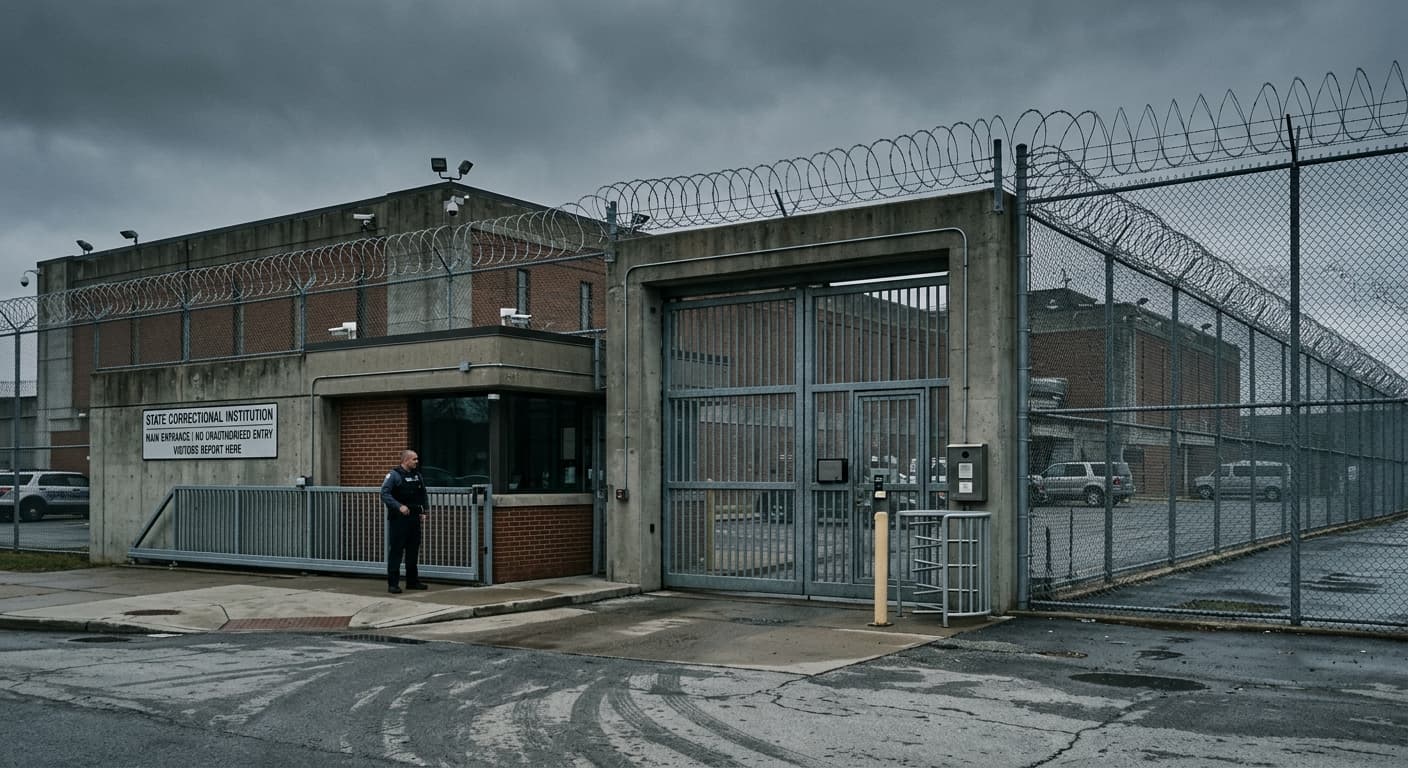
Oklahoma has no law requiring police departments to equip officers with body cameras, but once an agency records footage, a dedicated Open Records Act provision, 51 O.S. Section 24A.8, controls when the public can see it, separate from the general records process most other agencies use.
This guide is part of our Police Bodycam Laws by State series. It covers whether Oklahoma law enforcement must use bodycams, how footage moves from an incident to public disclosure, and what agencies can redact along the way.
Jurisdiction scope: This article addresses Oklahoma law governing police body-worn cameras under the Oklahoma Open Records Act, 51 O.S. Section 24A.8: mandate status, activation, retention, disclosure timelines, and redaction categories. It does not address a civilian's own right to record an on-duty officer, a different question covered in our guide on recording someone without their consent.
Does Oklahoma Require Police to Wear Body Cameras?
No. The Oklahoma Legislature has never passed a statute compelling city police departments, county sheriff's offices, or the Oklahoma Highway Patrol to equip officers with body cameras. What the Legislature has done, through House Bill 1037 in 2015, is set rules for what happens to footage once an agency chooses to record it, by amending the Oklahoma Open Records Act at 51 O.S. Section 24A.8. Whether a given department uses cameras at all remains a local budget and policy decision, and adoption is uneven: larger departments such as Oklahoma City have equipped patrol officers for years, while coverage among smaller and rural agencies is far less consistent. A resident who wants to know whether a specific department uses bodycams should check that department's own policy.
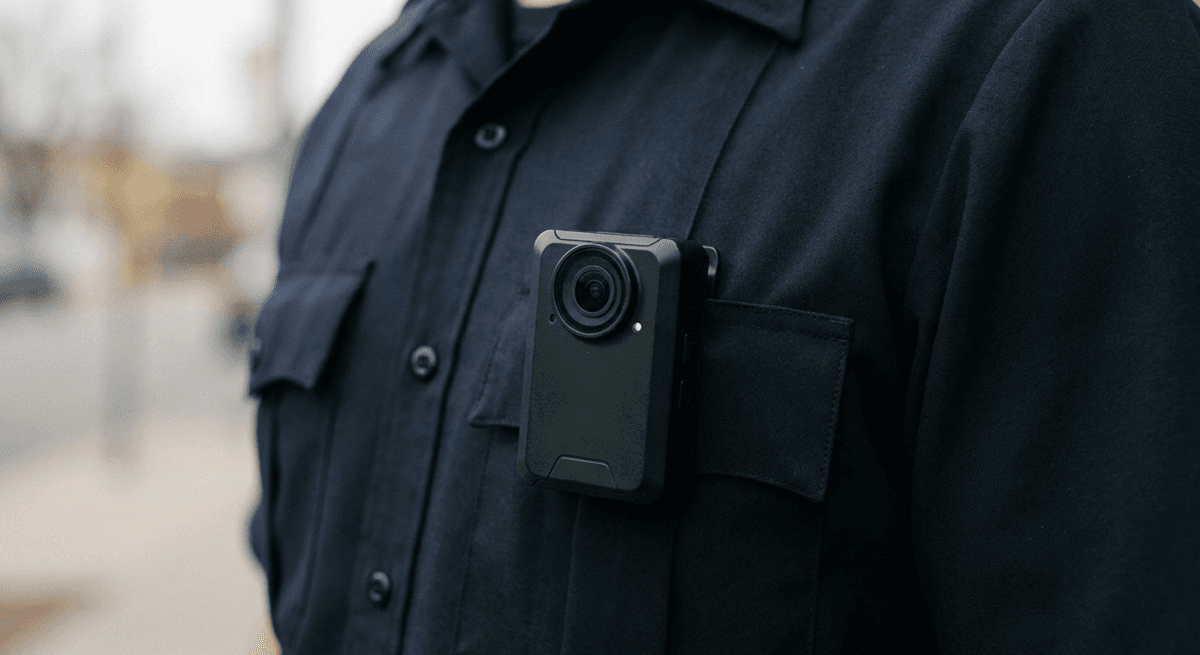
When Must an Oklahoma Officer's Camera Be Recording?
Because no statute mandates bodycams in the first place, Oklahoma has no single statewide activation trigger written into law comparable to states that require continuous recording from the moment an officer develops reasonable suspicion. Activation policy, including when officers must turn a camera on, when they may turn it off, and what happens when a required recording never starts, is set by each agency in its own written policy. The Open Records Act provisions in Section 24A.8 govern what happens to a recording after it exists; they do not tell an agency when to make one.
How Long Must Oklahoma Departments Keep Bodycam Footage?
Oklahoma has no statewide minimum retention period for body camera recordings. Unlike states such as Oregon or Georgia, which set a statutory floor and ceiling for how long footage must be kept, Oklahoma leaves retention entirely to agency policy and to the general records-retention schedules that apply to law enforcement records. Some departments retain footage tied to a use-of-force incident far longer than routine footage; others delete non-evidentiary recordings after as little as 60 to 90 days. A person who wants to preserve a specific recording, whether as a witness, a subject of the footage, or an attorney, should submit a written request or a preservation letter promptly rather than assume the footage will still exist months later.
Can the Public Get a Copy of Bodycam Footage in Oklahoma?
Yes. Subsection A of Section 24A.8 directs that law enforcement agencies shall make available for public inspection and copying, if kept, the records it goes on to list, and paragraph 10 puts body-worn camera footage on that list when it depicts the use of physical force or violence by an officer, a pursuit, a traffic stop, an arrest or citation, a detention of any length for investigation, or any other exercise of authority that deprives a person of liberty. Footage in those categories is open to a public request as soon as it exists. Oklahoma does not make a requester wait for an arraignment, and the statute sets no general waiting period before release.
What the statute does allow is a temporary redaction. Among the categories an agency may obscure before release is material that would materially compromise an ongoing criminal investigation or prosecution. That first call belongs to the agency itself: nothing in the section requires it to demonstrate anything to a court before withholding on this ground. A judge enters the picture only when someone asks for more time or challenges the denial, and at that point the court holds a hearing and weighs the interests of the public against the interests the parties assert.
Two separate tracks then govern how long that withholding can last, and they carry different ceilings.
If a person is charged, the arraignment track applies. Ten days after that person's formal arraignment or initial appearance, whichever occurs first, the recording must be made available with no redaction of the portions temporarily withheld on this ground. Before that release, the prosecutor or the charged person's lawyer may ask the district court for an extension. Each extension runs six months or less, and cumulative extensions cannot add up to more than 18 months.
If nobody is charged, a different track applies, and it reaches considerably further. Once 120 days pass from the date of the events in the recording without any person being criminally charged, a requester whose request was denied on this ground may appeal that denial to the district court. Extensions on this track are ordered in 12-month increments and cumulatively cannot add up to more than three years, not 18 months. Charges being filed automatically cancel any extension and move the matter onto the arraignment track described above.
Both tracks sit under one hard stop. The option to withhold on the ongoing-investigation ground expires in totality four years after the recording was made, at which point every recording withheld on that ground must be made available regardless of the status of any case connected to it.
| Oklahoma bodycam fact | Rule |
|---|---|
| Statewide mandate | None; agency discretionary |
| Governing statute | 51 O.S. Section 24A.8 (added by HB 1037, 2015) |
| Standard retention | No statewide minimum; set by agency policy |
| Access to arrest/force footage | On the mandatory-disclosure list; open to request once the recording exists, no waiting period |
| Investigation redaction, charged case | Must come off 10 days after arraignment or initial appearance; court extensions capped at 18 months total |
| Investigation redaction, no charges filed | After 120 days a denied requester may appeal to district court; extensions capped at 3 years total |
| Absolute outer limit on withholding | 4 years from date of recording |
| Officer killed in the line of duty | Access must be denied unless a court orders release |
What Gets Redacted, and What Can't Be Hidden?
Before releasing a recording, an agency may obscure portions showing a death or a deceased person, nudity, the identity of a minor under 16, severe violence causing great bodily injury, nonpublic medical or mental-health information, and the identity of a confidential informant or a witness who requested anonymity. These are redaction categories, not blanket withholding grounds, so an agency is expected to release the rest of the footage rather than withhold an entire recording over one sensitive portion.
The statute draws a sharp line around one category: footage showing a death or severe violence caused by a law enforcement officer cannot be redacted or withheld under those same provisions, closing what lawmakers described as a loophole that could otherwise let an agency treat an officer-involved death the same as any other sensitive recording.
One situation runs in the opposite direction, and it is the single place where the statute flips from must-disclose to must-withhold. Under Section 24A.8(B)(2)(a), a law enforcement agency shall deny access to any audio or video recording depicting the death of a law enforcement officer who was acting in the course of official duties, including any related acts or events immediately preceding or following the events that caused the death, unless a court finds that the public interest or the interest of an individual outweighs the reason for denial. The agency may allow a spouse, adult child, parent, or sibling of the deceased officer to hear or view the recording under protocols it establishes, and nothing in the provision blocks prosecution or defense counsel from access or from using the recording as evidence in a legal proceeding.
Real Enforcement: The Vu Case and the Corrections Department Dispute
Two recent Oklahoma cases show this framework cutting in different directions. On October 27, 2024, Oklahoma City police sergeant Joseph Gibson stopped 71-year-old Lich Vu over a traffic citation. Bodycam and dashcam video showed Gibson slamming Vu to the ground after a brief argument, causing a brain bleed, a fractured neck, and a broken bone near his eye. Footage became public within days, consistent with Section 24A.8's use-of-force disclosure category, and Gibson was placed on leave and investigated. Prosecutors charged Gibson with aggravated assault and battery; Attorney General Gentner Drummond later dropped the charges, and Gibson resigned. Vu died in October 2025, nearly a year after the encounter, and his family's federal civil rights lawsuit remains active. The case shows the mandatory-disclosure category functioning as written, even though the criminal case against the officer did not proceed.
A second, ongoing dispute shows a limit of the statute. The Oklahoma Department of Corrections began equipping correctional officers with body cameras in October 2024, but has since restricted footage to prosecutors, law enforcement, and court-ordered subpoenas, citing facility-security concerns. The Frontier, working with the Reporters Committee for Freedom of the Press, sued in Oklahoma County District Court over withheld incident reports and recordings tied to prisoner deaths and violent incidents. Whether the Department of Corrections counts as a "law enforcement agency" under Section 24A.8's disclosure duty is contested and, as of this writing, unresolved in that pending litigation.
Recording Police Versus Police Recording You
This article addresses the opposite question from most of the recording-law content on this site. Oklahoma's consent rules for recording conversations govern civilians recording each other, not an officer's on-duty bodycam use, and they do not restrict a bystander's separate right to record police performing public duties. For that question, see our guide on whether it's illegal to record someone without their consent.
More Oklahoma Laws
Frequently Asked Questions
Are Oklahoma police required to wear body cameras?
No. Oklahoma has no statute requiring any law enforcement agency to equip officers with body cameras. Whether a department uses them, and its activation policy, is decided locally.
How can I request Oklahoma police bodycam footage?
Submit a written records request to the specific agency that holds the recording, citing 51 O.S. Section 24A.8. Footage showing force, a pursuit, a traffic stop, an arrest, or a detention is on the statute's mandatory-disclosure list, so it is open to a request as soon as it exists, subject to the redaction categories the statute allows. There is no waiting period tied to an arraignment.
How long does an Oklahoma police department keep bodycam footage?
There is no statewide minimum. Retention is set by each agency's own policy, and some departments delete non-evidentiary footage after 60 to 90 days, so requesting or preserving footage promptly matters.
Can Oklahoma police withhold bodycam footage during an investigation?
Yes, but only temporarily, and the ceiling depends on whether anyone has been charged. An agency may redact material that would materially compromise an ongoing investigation or prosecution without first proving anything to a court. If a person is charged, the redaction must come off 10 days after arraignment or initial appearance, and court-ordered extensions cannot total more than 18 months. If 120 days pass with no charges filed, a denied requester can appeal to district court, where extensions run in 12-month increments and can total up to three years. Either way, no recording can be withheld on this ground past 4 years from the date it was made.
What can Oklahoma police redact from bodycam video before releasing it?
Agencies may redact portions showing a death, nudity, a minor under 16, severe violence causing great bodily injury, nonpublic medical information, or the identity of a confidential informant, but footage of a death or severe violence caused by an officer cannot be redacted or withheld under those categories. Separately, an agency must deny access to a recording depicting the death of an officer killed in the line of duty unless a court orders release.
Does every Oklahoma police department have body cameras?
No. Because there is no statewide mandate, coverage is uneven. Larger departments such as Oklahoma City have equipped patrol officers, while adoption among Oklahoma's many smaller and rural agencies varies.
Do Oklahoma police need my consent to record me with a bodycam?
No. Oklahoma's consent rules for recording private conversations apply to civilians recording each other; they do not require an on-duty officer to get a subject's consent before activating a body camera during official duties.
Updates
Corrected Oklahoma's bodycam disclosure rules: force and arrest footage is open on request rather than subject to a 10-day post-arraignment waiting period, investigation-based withholding is capped at 18 months only once charges are filed and at three years when no one is charged, and the article now covers the mandatory denial for footage depicting the death of an officer killed in the line of duty.
Independently fact-checked against the cited primary sources; governing law re-checked for recent changes
Reviewed and approved by an editor
The Law Behind This Article
This article rests on the statutory provisions below, held in our own legal record and retrieved from the official source. Tap a section to read the operative text.
Oklahoma Statutes, Title 51: OFFICERS
§ 24A.8Law enforcement records - DisclosureIn forcecited in 6 of our articles
A. Law enforcement agencies shall make available for public inspection and copying, if kept, the following records: 1. An arrestee description, including the name, date of birth, address, race, sex, physical description, and occupation of the arrestee; 2. Facts concerning the arrest, including the cause of arrest and the name of the arresting officer; 3. A chronological list of all incidents, including initial offense report information showing the offense, date, time, general location, officer, and a brief summary of what occurred; 4. Radio logs, including a chronological listing of the calls dispatched; 5. Conviction information, including the name of any person convicted of a criminal offense; 6. Disposition of all warrants, including orders signed by a judge of any court commanding a law enforcement officer to arrest a particular person; 7. A crime summary, including an agency summary of crimes reported and public calls for service by classification or nature and number; 8.
Official text (excerpt) · last checked 2026-09-02 · Read the full text in our law library · Verify at oklegislature.gov
Also relied on in: Oklahoma Warrant Search: How to Check If You Have a Warrant (2026), Oklahoma Police Reports: How to Get a Collision or Incident Report, Oklahoma Open Records Act: How to Request Public Records
Explore the law
This article also draws on these acts and chapters (opening at their first section): Oklahoma Statutes, Title 51: OFFICERS § 1 (Beginning of term - Time of qualifying)
Related law for further reading — not part of this article’s citations.
Search our full record of US law — 2.1 million sections, every state + federal →
Sources and References
- 51 O.S. Section 24A.8 (Law enforcement agency records available for public inspection; body-worn and vehicle camera recordings)(oscn.net).gov
- "Legislature sends police body cam legislation to Governor's desk" (HB 1037, 2015 session summary)(oksenate.gov).gov
- Oklahoma Statutes Title 51, Open Records Act index(oklahoma.gov).gov
- "Oklahoma City cop is investigated for slamming 70-year-old man to ground," NPR(npr.org)
- "Oklahoma AG drops charges against officer who threw 71-year-old man to the ground during traffic stop," NBC News(nbcnews.com)
- "Elderly man in OKC police takedown dies at 72," Free Press OKC(freepressokc.com)
- "Oklahoma Department of Corrections refuses to release body camera footage," KGOU (NPR)(kgou.org)
- Access to Police Body-Worn Camera Video, Reporters Committee for Freedom of the Press(rcfp.org)
- Oklahoma Statutes Title 51, Section 24A.8 (Law enforcement records; body-worn and vehicle camera recordings), complete title PDF, Oklahoma Legislature(oklegislature.gov)