
Missouri
Missouri Police Bodycam Laws (2026): Active vs. Inactive Rule
Independently fact-checked against primary sources (last audited August 20, 2026). · Reviewed by the RecordingLaw editorial team. · Law checked current as of August 20, 2026. · 2 primary sources cited on this page. How we verify our legal content
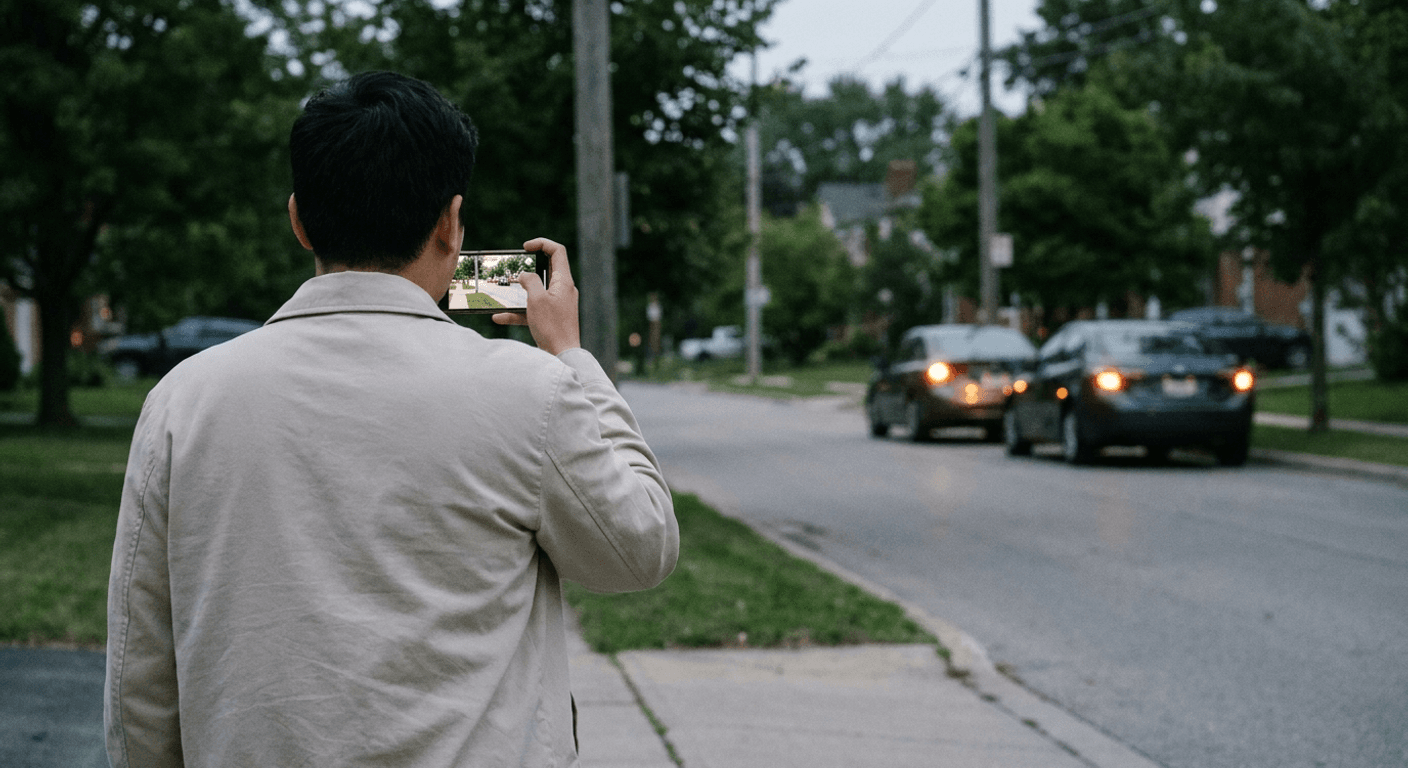
Missouri has no statute requiring police to wear body cameras, but it has one of the country's more distinctive rules for what happens to the footage once it exists. Under Mo. Rev. Stat. section 610.100, mobile video recordings stay closed while the underlying investigation is active and open once it becomes inactive.
Information last verified on 2026-07-08. This article has not yet been reviewed by a licensed lawyer.
Jurisdiction scope: This article addresses Missouri law under Mo. Rev. Stat. section 610.100 (Missouri's Sunshine Law), as verified on 2026-07-08. It does not address whether a civilian may lawfully record an on-duty police officer; that question is settled separately and covered in Is It Illegal to Record Someone in Public?. This page addresses the reverse question: what happens to footage Missouri police record of the public.
Does Missouri require police to wear body cameras?
No. Missouri has no statute compelling any city, county, or state law enforcement agency to purchase or issue body cameras. Whether a department in Missouri uses them, and how many officers carry one, is a local budget and policy decision, the same as in most states without a bodycam-specific mandate. What Missouri does have is a detailed statute governing what happens once an agency records something: Mo. Rev. Stat. section 610.100, part of the state's open-records law known as the Sunshine Law. Missouri added the term "mobile video recordings," covering both dashcam and bodycam data, to that statute effective August 28, 2016, and has revised the disclosure and penalty provisions since, most recently in a version effective August 28, 2020.

What is Missouri's active versus inactive rule?
This is the framework that sets Missouri apart from most other states. Under section 610.100.2(2), mobile video recordings and investigative reports of any Missouri law enforcement agency are closed records while the underlying investigation is active. They become open records once the investigation becomes inactive. The statute defines "inactive" to mean one of three things has happened: the law enforcement agency has decided not to pursue the case; the statute of limitations to file charges has run, or ten years have passed since the offense, whichever comes first; or every person convicted based on the investigation has exhausted their appeals and the convictions are final. In practice, this means a bystander who requests bodycam footage the week after an incident will usually be told the case is still open, while the same request filed years later, after the case is formally closed, generally must be granted unless another exemption applies.
That closure rule is not absolute, and the statute says so in its own text. Section 610.100.2(2) closes the recordings "notwithstanding any other provision of law other than the provisions of subsections 4, 5 and 6 of this section," which means subsections 4 and 5 operate as express exceptions to the active-investigation bar. The two sections below cover them.
Can I get a copy of footage of myself, even during an active investigation?
If the recording was made in a nonpublic location, yes, and the right is broader than just the person on camera. Section 610.100.2(4) covers any person who is depicted in a mobile video recording made in a nonpublic location, a term the statute defines as a place with a reasonable expectation of privacy such as a dwelling, school, or medical facility, or whose voice is in the recording. The same right runs to the parent or legal guardian of such a person if he or she is a minor, to a family member within the first degree of consanguinity if that person is deceased or incompetent, and to that person's attorney or insurer. Any of them may request and receive a complete, unaltered, unedited copy on written request, regardless of whether the investigation is still active.
The deceased-or-incompetent branch matters more than its dry wording suggests. It is the provision that lets the family of someone killed or gravely injured during a police encounter inside a home request the footage themselves rather than waiting years for the investigation to go inactive.
This particular right does not reach footage recorded in public, such as an ordinary traffic stop on a public street. That is not a dead end, though. Section 610.100.4, covered next, provides a separate route to closed footage recorded anywhere when the request is tied to a civil claim or defense.
Can I get closed footage for a civil claim or defense?
Yes, and for most people asking about their own incident this is the more useful provision. Section 610.100.4 lets any person involved in an incident, or whose property was involved in an incident, obtain records closed under this section for purposes of investigating a civil claim or defense. The same right runs to that person's attorney or insurer, to the parent or legal guardian of a person who is a minor, and to a family member within the first degree of consanguinity if the person is deceased or incompetent. Unlike the nonpublic-location right in subsection 2(4), this route does not turn on where the camera was rolling, so it can reach footage of a traffic stop, a street arrest, or a crash on a public road.
The request is made in writing. Within thirty days, the agency must either provide the requested material or file a motion in the circuit court with jurisdiction over it, stating that the safety of the victim, witness, or another individual cannot reasonably be ensured, or that a criminal investigation is likely to be jeopardized. If the court finds for the agency, it orders the record closed or orders the sensitive portions redacted from what is released. The practical effect is that an agency cannot simply sit on a subsection 4 request; it has to act, one way or the other, inside thirty days.
Note the limits built into the provision. It runs to people involved in the incident and their listed representatives, not to the general public or the press, and the stated purpose is investigating a civil claim or defense. It also does not guarantee release: it guarantees a decision, either from the agency or from a judge.
What gets redacted, even from open footage?
Section 610.100.3 requires an agency to redact portions of a recording that are reasonably likely to pose a clear and present danger to the safety of a victim, witness, or undercover officer, or that would jeopardize a criminal investigation or reveal law enforcement investigative techniques and procedures. This redaction duty applies on top of the active/inactive rule, so even footage that has become an open record under the inactive-investigation trigger can still come back with sensitive portions blacked out or muted.
Are there special rules for footage recorded inside a home?
Yes. When a mobile video recording captures a nonpublic location, such as the inside of a residence, a recipient who obtains the footage cannot display or disclose it, including describing what it shows, without first giving direct notice to each non-law-enforcement person whose image or voice appears in it. Those individuals then get a window to seek a court order blocking the disclosure before the recipient can share it further. This layer exists specifically because mobile video recordings often capture people inside their own homes who were never suspects in anything.
What happens if an agency wrongly withholds footage?
Missouri's Sunshine Law has real teeth here, and a 2026 case shows it. On August 27, 2023, a Stoddard County sheriff's deputy shot and killed a family's dog during a call. The Pennington family requested the deputy's bodycam footage within days, but Sheriff Carl Hefner refused, citing an active investigation and safety concerns. The video was not released for roughly eight months, and even then it came from the county prosecutor rather than the sheriff. The family sued, and a trial court found Hefner committed a knowing violation of the Sunshine Law, in part because the department failed to timely justify continued closure of the record, and imposed a $500 civil penalty plus $817.50 in deposition costs and $5,000 in attorney fees. The Missouri Court of Appeals, Southern District, affirmed that judgment in February 2026 in The Oliver Firm, L.C. v. Hefner, No. SD38762, rejecting the sheriff's argument that the civil penalty provision applied only to incident and arrest reports rather than to mobile video recordings themselves. The case confirms that "active investigation" is not a magic phrase that lets an agency sit on footage indefinitely; the statute's own definition of inactive, and its penalty provisions, apply whether or not an agency wants them to.
What penalties apply for violating the disclosure rules?
Section 610.100 sets escalating civil penalties. A knowing violation, where the public body knew its refusal violated the Sunshine Law, carries a penalty up to $1,000. A purposeful violation carries a penalty up to $5,000. In both cases, a court can also award the requester's costs and reasonable attorney fees, which is what happened in the Hefner case above. A requester who is denied access can also ask a circuit court under section 610.100.5 to order disclosure directly rather than waiting for the investigation to become inactive on its own.
Weigh the cost exposure before filing that action, because it runs the opposite way from the penalty provisions. Under section 610.100.5(6), the court may find that the party seeking disclosure bears the reasonable and necessary costs and attorneys' fees of both parties, unless the court finds that the agency's decision to keep the recording closed was substantially unjustified under all relevant circumstances. Only in that case may the court shift costs and fees to the agency instead. A requester who brings a subsection 5 action and loses can therefore be ordered to pay the agency's legal bill on top of their own, which is a reason to talk to a Missouri lawyer before filing and a reason to try the subsection 4 civil-claim route first where it applies.
Disclaimer
This article provides general legal information about Missouri law governing police body cameras and public access to footage, as verified on 2026-07-08. It does not constitute legal advice and does not create an attorney-client relationship. Readers should consult a lawyer licensed in Missouri for advice about a specific records request or incident.
Related articles
- Police Bodycam Laws by State: the complete hub
- Is It Illegal to Record Someone in Public?
- Missouri Recording Laws: One-Party Consent Rules
Last updated: 2026-07-08. Statutes cited reflect their in-force version as of 2026-07-08.
More Missouri Laws
Frequently Asked Questions
Does Missouri require police departments to use body cameras?
No. There is no Missouri statute mandating body cameras for any law enforcement agency. Mo. Rev. Stat. section 610.100 only governs what happens to footage that an agency chooses to record; it does not require the recording to happen in the first place.
When does Missouri bodycam footage become a public record?
Once the underlying investigation becomes 'inactive' under Mo. Rev. Stat. section 610.100.2(2): the agency decides not to pursue the case, the statute of limitations or ten years passes (whichever is first), or all resulting convictions become final after appeals.
Can I get bodycam footage of my own arrest while the case is still open in Missouri?
Often yes, by one of two routes. If the recording was made in a nonpublic location, meaning a place with a reasonable expectation of privacy such as a dwelling, school, or medical facility, section 610.100.2(4) gives a copy right to anyone depicted in it or whose voice is in it, to the parent or legal guardian of a recorded minor, to a family member within the first degree of consanguinity if that person is deceased or incompetent, and to that person's attorney or insurer, even during an active investigation. If the arrest happened in public, such as during an ordinary traffic stop, that provision does not apply, but section 610.100.4 separately lets a person involved in the incident, or their attorney, insurer, guardian, or first-degree family member, obtain records closed under this section for purposes of investigating a civil claim or defense. The agency then has thirty days to provide the material or ask a circuit court to keep it closed.
Can the family of someone killed by police in Missouri get the bodycam footage?
Section 610.100.2(4) extends the nonpublic-location copy right to a family member within the first degree of consanguinity when the person recorded is deceased or incompetent, so a parent, child, or spouse can request footage recorded inside a home, school, or medical facility on written request. For an encounter recorded in public, section 610.100.4 is the route: a first-degree family member of a person involved in the incident may obtain closed records for purposes of investigating a civil claim or defense, and the agency has thirty days to comply or move the court to keep the record closed.
What happens if a Missouri sheriff or police department refuses to release footage it should have released?
A requester can sue. Courts have found knowing or purposeful violations of section 610.100, which carry civil penalties up to $1,000 or $5,000 respectively, plus attorney fees, as in the 2026 Missouri Court of Appeals decision in The Oliver Firm, L.C. v. Hefner, No. SD38762.
Does it cost anything to ask a Missouri court to release closed footage?
It can. Under section 610.100.5(6), a court may order the party seeking disclosure to bear the reasonable and necessary costs and attorneys' fees of both parties, unless it finds the agency's decision to keep the recording closed was substantially unjustified. That default runs against the requester, so a losing requester can be taxed with the agency's fees as well as their own.
Does Missouri redact bodycam footage even after a case closes?
Yes. Section 610.100.3 requires redaction of material that would endanger a victim, witness, or undercover officer, or that would reveal investigative techniques, regardless of whether the recording has otherwise become an open record.
Do I need to notify people before sharing Missouri bodycam footage recorded inside a home?
Yes. If the footage was recorded in a nonpublic location, the recipient must give direct notice to each non-law-enforcement person shown in it before displaying or disclosing the recording further, giving that person a chance to seek a court order first.
Does an officer need my consent to record me on a body camera in Missouri?
No. Missouri is a one-party consent state for recording, and an on-duty officer recording a member of the public raises no consent issue under state wiretap law at all.
Updates
Added Missouri’s section 610.100.4 civil-claim access route, which reaches closed bodycam footage recorded in public, corrected the list of people entitled to a copy of nonpublic-location footage to include a recorded minor’s parent and a deceased or incompetent person’s immediate family, and disclosed that a requester who loses a court action under section 610.100.5 can be ordered to pay both sides’ costs and fees.
Independently fact-checked against the cited primary sources; governing law re-checked for recent changes
Rescoped the section 610.100.2(4) personal-copy right to recordings made in a nonpublic location (a dwelling, school, or medical facility, per the statute's definition) and replaced the traffic-stop example, since that right does not extend to footage recorded in public.
Governing law re-checked for recent changes
Reviewed and approved by an editor
The Law Behind This Article
This article rests on the statutory provisions below, held in our own legal record and retrieved from the official source. Tap a section to read the operative text.
Revised Statutes of Missouri, Title XXXIX (CONDUCT OF PUBLIC BUSINESS), Chapter 610
§ 610.100Arrest and incident records — definitions — available to public — closed records, when — action for disclosure of investigative report authorized, costs — application to open incident and arrest reports, violations, civil penalty — identity of victim of sexual offense — confidentiality of recording.In forcecited in 9 of our articles
1. As used in sections 610.100 to 610.150, the following words and phrases shall mean: (1) "Arrest", an actual restraint of the person of the defendant, or by his or her submission to the custody of the officer, under authority of a warrant or otherwise for a criminal violation which results in the issuance of a summons or the person being booked; (2) "Arrest report", a record of a law enforcement agency of an arrest and of any detention or confinement incident thereto together with the charge therefor; (3) "Inactive", an investigation in which no further action will be taken by a law enforcement agency or officer for any of the following reasons: (a) A decision by the law enforcement agency not to pursue the case; (b) Expiration of the time to file criminal charges pursuant to the applicable statute of limitations, or ten years after the commission of the offense; whichever date earliest occurs; (c) Finality of the convictions of all persons convicted on the basis of the information contained in the investigative report, by exhaustion of or expiration of all rights of appeal of such persons; (4) "Incident report", a record of a law enforcement agency consisting of…
Official text (excerpt) · last checked 2026-09-02 · Read the full text in our law library · Verify at revisor.mo.gov
Cited in 29 court opinions in our collectionLatest citing opinion in our collection: 2026
In the courts (editorial summary, independently checked):Buckler v. Johnson County Sheriff's Department (1989) held section 610.100 permits closure of an arrest record but does not authorize expungement, which rests on a court's equitable power. D.K.B. v. Toelke (1995) held the 1994 amendment closing pre-arrest investigative reports did not remove the remedies in section 610.027.
Opinions citing this section in our collection:
- Buckler v. Johnson County Sheriff's Department (Missouri Court of Appeals 1989, 798 S.W.2d 155)✓A man arrested for investigation of rape but never charged asked to erase the record; the court held section 610.100 allows only closure and not expungement, then found extraordinary circumstances letting it order expungement under its equitable power.
- D.K.B. v. Toelke (Missouri Court of Appeals 1995, 903 S.W.2d 267)✓A mother won access to a sheriff's investigation file, then lost fines and fees after a 1994 amendment closed pre-arrest investigative reports; the court held that amendment to section 610.100 did not withdraw the remedies in section 610.027 and remanded.
- Opinion No. (1994) (Missouri Attorney General Reports 1994)✓Asked how the 1994 amendment worked, the Attorney General opined that section 610.100 closes investigative reports mandatorily until an arrest is made, while incident reports stay open except for 911 information and the name of a victim who can identify an assailant at large.
Identified automatically from the court opinions citing this section — not a ranking of which case controls.
Also relied on in: Missouri Recording Laws (2026): One-Party Consent Rules, Missouri Laws on Recording Police: Your Rights and Legal Limits, Missouri Security Camera Laws: Home, Business, and Neighbor Rules
Search our full record of US law — 2.1 million sections, every state + federal →
Sources and References
- Mo. Rev. Stat. section 610.100, arrest and incident records, mobile video recordings, closed records until investigation inactive(revisor.mo.gov).gov
- Missouri Attorney General, Sunshine Law FAQs(ago.mo.gov).gov
- The Missouri Bar, Law enforcement navigation of Missouri's Sunshine Law(news.mobar.org)
- Missouri Lawyers Media, Appeals court backs trial ruling in bodycam Sunshine Law case (The Oliver Firm, L.C. v. Hefner, No. SD38762)(molawyersmedia.com)
- Lewis Rice, Missouri Revises Its Sunshine Law to Address Mobile Video Recordings(lewisrice.com)