
Illinois
Illinois Car Accident Laws: Fault, Insurance, and Your Claim
Independently fact-checked against primary sources (last audited August 17, 2026). · Reviewed by the RecordingLaw editorial team. · Law checked current as of August 17, 2026. · 8 primary sources cited on this page. How we verify our legal content
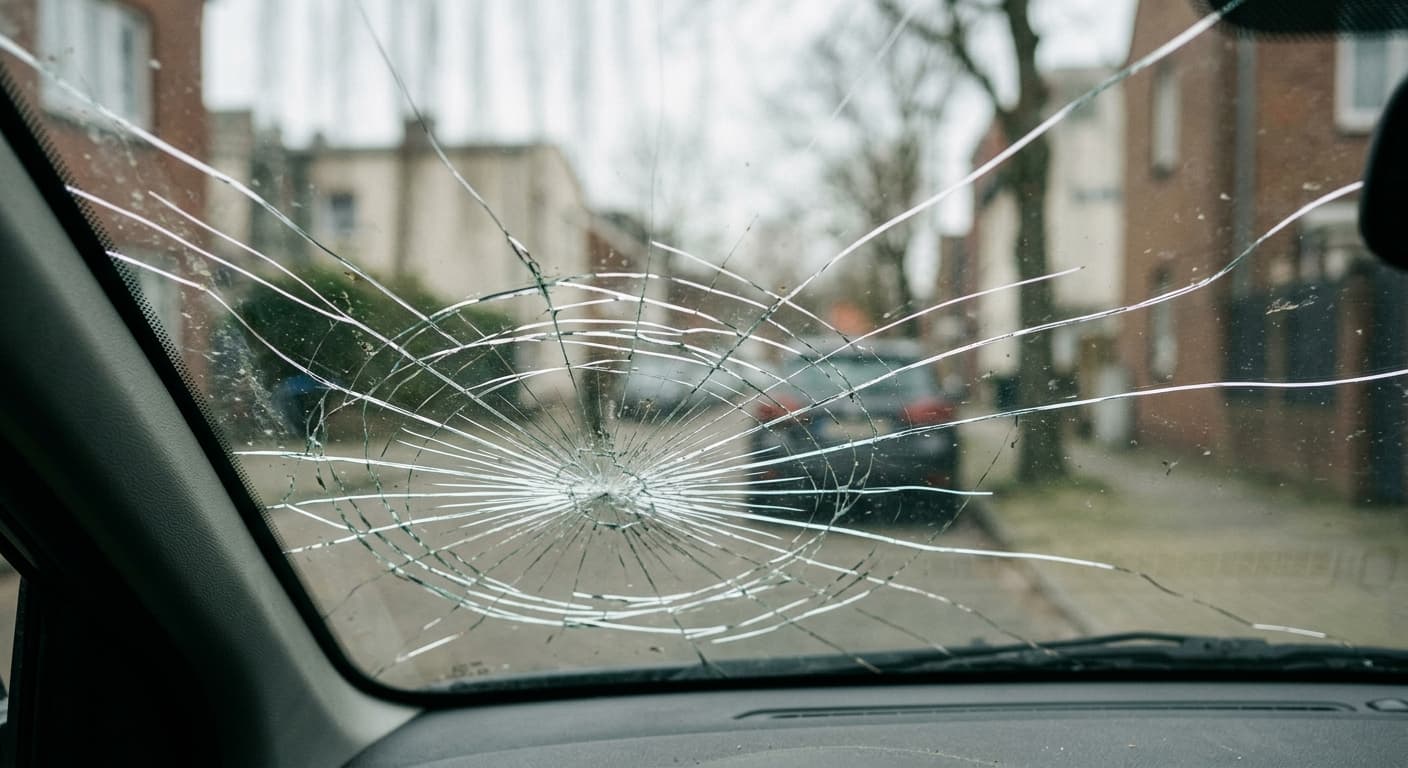
Illinois is an at-fault (tort) state that follows modified comparative negligence with a 51% bar, so the at-fault driver's liability insurer pays your damages, and you can recover as long as you are not more than 50% responsible for the crash.
Is Illinois a no-fault or at-fault state?
Illinois is an at-fault (tort) state. It is not one of the twelve traditional no-fault jurisdictions and has no Personal Injury Protection (PIP) mandate, no choice-no-fault election, and no verbal or monetary threshold that an injured person must clear before pursuing pain-and-suffering damages. When a crash occurs, the injured party looks to the at-fault driver's bodily-injury liability coverage for medical bills, lost wages, and pain and suffering. If the at-fault driver is uninsured or carries too little coverage, the injured party turns to their own UM or UIM coverage. Because Illinois imposes no no-fault threshold, any injured person may file a negligence claim for the full range of compensatory damages from the very first dollar of loss. Fault-based liability itself comes from Illinois common-law negligence, as modified by the comparative-fault statute at 735 ILCS 5/2-1116. The insurance statutes do not create it: 625 ILCS 5/7-601 requires every registered vehicle to be covered by a liability policy and 625 ILCS 5/7-203 sets the minimum amounts, so together they decide who has money behind a liability claim, not who is legally at fault.
How fault is shared: Illinois's negligence rule
Illinois follows modified comparative negligence with a 51% bar, codified at 735 ILCS 5/2-1116. Under this rule, a jury assigns a percentage of fault to each party. If you are 50% or less responsible for the crash, you may still recover damages, but your award is reduced by your exact fault percentage. For example, if a jury finds you 30% at fault and awards $100,000 in total damages, you collect $70,000. If you are found to be 51% or more at fault, however, your recovery is entirely barred. This is a critical difference from pure comparative negligence states, which allow recovery regardless of fault percentage, and from pure contributory negligence states (Alabama, Maryland, North Carolina, Virginia, and DC), where even 1% of fault bars all recovery. In Illinois, the 51% threshold means most partially-at-fault plaintiffs can still recover, but cases that approach the 50/50 line can be vigorously contested by defense insurers.

Minimum car insurance in Illinois
Every owner of a registered motor vehicle in Illinois must carry liability insurance meeting the 25/50/20 minimums set by 625 ILCS 5/7-203 and enforced by 625 ILCS 5/7-601: $25,000 bodily injury per person, $50,000 bodily injury per accident, and $20,000 property damage per accident. The current $20,000 property-damage figure has been in effect since the 2015 increase from $15,000.
Uninsured motorist bodily-injury (UM) coverage is mandatory under 215 ILCS 5/143a. Every auto liability policy that includes bodily-injury liability must carry UM coverage at least equal to the financial-responsibility limits ($25,000 per person / $50,000 per accident), and an insured cannot waive UM coverage at the statutory floor. Underinsured motorist (UIM) coverage is required under 215 ILCS 5/143a-2 whenever you purchase UM limits above the statutory minimum; UIM must equal your chosen UM limits, and you may waive UIM only above the mandatory floor in writing. Uninsured motorist property damage (UMPD) is optional coverage that insurers must make available under 215 ILCS 5/143a(2), in the amount of the vehicle's actual cash value or the corresponding policy limit, whichever is less, subject to a maximum $250 deductible. No written rejection is required: if no premium is paid for UMPD, the statute treats the policyholder as having elected not to accept it.
Illinois does not require Personal Injury Protection. Optional Medical Payments (MedPay) coverage is available from most carriers as a supplement but is not mandated by law.
How long you have to file: the statute of limitations
Illinois gives injured accident victims two years from the date of the crash to file a personal-injury lawsuit under 735 ILCS 5/13-202. This deadline applies to bodily-injury negligence claims arising from auto accidents, regardless of the severity of the injury. If you miss the two-year window, the court will almost certainly dismiss your case and the at-fault driver's insurer has no legal obligation to pay.

Property-damage claims for vehicle repair or total-loss value operate under a longer five-year limitation period (735 ILCS 5/13-205). This means you could still pursue property damage after the personal-injury window has closed, though in practice both claims are typically resolved together. If the at-fault vehicle was operated by an employee of a local public entity (a city bus, a county snowplow, etc.), the Local Governmental and Governmental Employees Tort Immunity Act requires you to file suit within one year, not two (745 ILCS 10/8-101). That Act does not cover the State itself, which is expressly excluded from its definition of a local public entity (745 ILCS 10/1-206). A crash with a State vehicle, such as an IDOT truck or an Illinois State Police car, is brought in the Illinois Court of Claims instead, where the deadline is 2 years (705 ILCS 505/22(h)). This compressed deadline catches many victims off guard, so if any government vehicle was involved, consult an attorney promptly.
For Illinois statute-of-limitations rules across all civil claims, see the Illinois statute of limitations page.
What an Illinois car accident claim is worth
An Illinois car accident claim's value depends on two categories of damages. Economic damages cover quantifiable losses: medical expenses (emergency care, hospitalization, surgery, physical therapy, future medical costs), lost wages, reduced earning capacity, and property damage. Non-economic damages cover pain and suffering, emotional distress, loss of enjoyment of life, and scarring or disfigurement. Illinois imposes no statutory cap on compensatory damages in automobile negligence cases, so both categories are theoretically recoverable in full.
The modified-comparative-negligence rule directly affects your final award. If you were 20% at fault, you collect 80% of the jury's total damages figure. Defense insurers will often argue your fault percentage upward to reduce their exposure, making it important to preserve evidence and document the scene thoroughly.
Practical recovery is also limited by insurance minimums. Illinois's $25,000-per-person bodily-injury floor is often insufficient for serious injuries, and the at-fault driver may carry only minimum coverage. Your own UIM coverage becomes critical in those situations. Use the Illinois car accident settlement calculator to estimate the range your specific facts might support, keeping in mind that only a licensed attorney can advise you on actual settlement value.
What to do after a car accident in Illinois
Stay safe and call for help. If anyone is injured, call 911 immediately. Move vehicles out of traffic only if it is safe to do so and the vehicles are driveable. Illinois law requires you to stop and remain at the scene of any crash that injures or kills someone (625 ILCS 5/11-401) or that damages a vehicle (625 ILCS 5/11-402). You may leave only after meeting the separate duty to give your information and render aid (625 ILCS 5/11-403).

File a police report. Illinois requires drivers to report accidents that result in injury, death, or property damage of $1,500 or more when a police officer is not present. A police report creates an official record of the crash and is often essential evidence in an insurance claim or lawsuit.
Document everything. Photograph the scene, vehicle damage, skid marks, road conditions, traffic signals, and visible injuries before vehicles are moved. Collect insurance information, driver's license numbers, and contact information from all parties. Note names and contact details of any witnesses.
Seek medical attention promptly. Even if you feel fine, adrenaline can mask serious injuries. A documented medical evaluation within 24-48 hours of the crash establishes a causal link between the accident and your injuries, which defense insurers otherwise contest aggressively.
Do not give a recorded statement to the at-fault driver's insurer. The opposing insurer's adjuster is not on your side. Do not accept a quick settlement offer until you know the full extent of your injuries and have consulted an attorney.
Consult a personal-injury attorney. Many Illinois car accident attorneys handle cases on contingency (no fee unless you recover). Within the two-year statute of limitations, get a free claim review from an Illinois car accident lawyer who can investigate the crash and file suit (attorney advertising).
For related Illinois crash topics, see the Illinois hit-and-run laws page and the car accident laws hub.
This article is general legal information, not legal advice. Car accident law varies by state and changes, and settlement values depend on the specific facts. For advice about a specific crash, consult a licensed attorney in Illinois.
More Illinois Laws
- Illinois Dashcam Laws
- Illinois Hit and Run Laws
- Illinois Slip and Fall Laws
- Illinois Statute of Limitations
- Illinois Workers Compensation Laws
Frequently Asked Questions
Is Illinois a no-fault state?
No. Illinois is an at-fault (tort) state. There is no Personal Injury Protection (PIP) mandate and no serious-injury threshold to clear. Injured drivers claim directly against the at-fault driver's liability insurer for medical bills, lost wages, and pain and suffering.
Is Illinois an at-fault state?
Yes. Illinois is an at-fault (tort) state. Fault-based liability comes from common-law negligence as modified by the comparative-fault statute (735 ILCS 5/2-1116), not from the insurance statutes, which only set the mandatory coverage. The driver who caused the crash, through their liability insurer, is responsible for compensating injured parties. If that driver is uninsured, you turn to your own UM coverage.
What is the statute of limitations for a car accident in Illinois?
Two years from the date of the accident for personal-injury claims (735 ILCS 5/13-202). Property-damage claims have a five-year limit. If a local government vehicle was involved, you must file suit within one year under the Local Governmental and Governmental Employees Tort Immunity Act (745 ILCS 10/8-101). Claims over a State vehicle go to the Illinois Court of Claims, which allows two years (705 ILCS 505/22(h)).
Can I still recover if I was partly at fault in Illinois?
Yes, as long as you were 50% or less at fault. Illinois follows modified comparative negligence (735 ILCS 5/2-1116), so your award is reduced by your share of fault. If you are found 51% or more responsible, you are completely barred from recovery.
What are the minimum insurance requirements in Illinois?
Illinois requires 25/50/20: $25,000 bodily injury per person, $50,000 bodily injury per accident, and $20,000 property damage. Uninsured motorist bodily-injury coverage at $25,000/$50,000 is also mandatory and cannot be waived at the statutory minimum.
How much is my Illinois car accident claim worth?
Value depends on economic damages (medical costs, lost wages, property damage) and non-economic damages (pain and suffering, emotional distress). Illinois has no cap on compensatory damages in auto cases. Your final recovery is reduced by your percentage of fault under the 51% bar. Use the Illinois car accident settlement calculator for a range estimate.
Does Illinois require PIP coverage?
No. Illinois does not require Personal Injury Protection. Because Illinois is a tort state, medical expenses and lost wages are recovered from the at-fault driver's bodily-injury liability coverage. Optional MedPay coverage can be purchased but is not mandated.
Updates
Corrected the statutes cited for the duty to remain at a crash scene, limited the one-year government-claim deadline to local public entities (State claims go to the Court of Claims on a two-year deadline) and named the Tort Immunity Act correctly, reattributed Illinois fault liability to common-law negligence and the comparative-fault statute rather than the insurance statutes, removed the repealed $15,000 uninsured-motorist property-damage cap, and deleted an unsupported legal term.
Independently fact-checked against the cited primary sources; governing law re-checked for recent changes
Reviewed and approved by an editor
The Law Behind This Article
This article rests on the statutory provisions below, held in our own legal record and retrieved from the official source. Tap a section to read the operative text.
Illinois Compiled Statutes Chapter 735, Act 5 (Code of Civil Procedure)
§ 2-1116Limitation on recovery in tort actionsIn forcecited in 8 of our articles
In all actions on account of bodily injury or death or physical damage to property, based on negligence, or product liability based on strict tort liability, the plaintiff shall be barred from recovering damages if the trier of fact finds that the contributory fault on the part of the plaintiff is more than 50% of the proximate cause of the injury or damage for which recovery is sought. The plaintiff shall not be barred from recovering damages if the trier of fact finds that the contributory fault on the part of the plaintiff is not more than 50% of the proximate cause of the injury or damage for which recovery is sought, but any damages allowed shall be diminished in the proportion to the amount of fault attributable to the plaintiff. No contributory fault may be attributed to a plaintiff bringing an action for damages for personal injury based on childhood sexual abuse as defined in Section 13-202.2.
Official text (excerpt) · last checked 2026-09-08 · Read the full text in our law library · Verify at ilga.gov
Cited in 65 court opinions in our collectionLatest citing opinion in our collection: 2026
Opinions citing this section in our collection:
- Best v. Taylor MacHine Works (Illinois Supreme Court 1997, 179 Ill. 2d 367)“…the allocation of fault and several liability provisions (735 ILCS 5/2-1116, 2-1117 (West 1996)), (3) the amendment…”
- Board of Trustees of Community College District No. 508 v. Lybrand (Illinois Supreme Court 2003, 208 Ill. 2d 259)“…iff." Ill.Rev. Stat.1987, ch. 110, par. 2-1116, codified at 735 ILCS 5/2-1116. [1] Since the 1986 version of the st…”
- Karas v. Strevell (Appellate Court of Illinois 2006, 308 Ill. Dec. 81)“…abrogated by Ill.Rev. Stat.1991, ch. 110, par. 2-1116 (now 735 ILCS 5/2-1116 (West 2004)) (adopting partial comparat…”
Identified automatically from the court opinions citing this section — not a ranking of which case controls.
Also relied on in: Motorcycle Accident Laws in Illinois (2026): Deadlines & Helmets, Truck Accident Laws in Illinois (2026): Deadlines & Liability, Illinois Dog Bite Laws: Liability and Victim Rights
§ 13-202Personal injury - PenaltyIn forcecited in 7 of our articles
Actions for damages for an injury to the person, or for false imprisonment, or malicious prosecution, or for a statutory penalty, or for abduction, or for seduction, or for criminal conversation that may proceed pursuant to subsection (a) of Section 7.1 of the Criminal Conversation Abolition Act, except damages resulting from first degree murder or the commission of a Class X felony and the perpetrator thereof is convicted of such crime, shall be commenced within 2 years next after the cause of action accrued but such an action against a defendant arising from a crime committed by the defendant in whose name an escrow account was established under the "Criminal Victims' Escrow Account Act" shall be commenced within 2 years after the establishment of such account. If the compelling of a confession or information by imminent bodily harm or threat of imminent bodily harm results in whole or in part in a criminal prosecution of the plaintiff, the 2-year period set out in this Section shall be tolled during the time in which the plaintiff is incarcerated, or until criminal prosecution has been finally adjudicated in favor of the above referred plaintiff, whichever is later.
Official text (excerpt) · last checked 2026-09-08 · Read the full text in our law library · Verify at ilga.gov
Cited in 460 court opinions in our collectionLatest citing opinion in our collection: 2026
Opinions citing this section in our collection:
- Landis v. Marc Realty, L.L.C. (Illinois Supreme Court 2009, 235 Ill. 2d 1)“…ns period in section 13-202 of the Code of Civil Procedure (735 ILCS 5/13-202 (West 2004)) applied to section 5-12-08…”
- Hernandez v. Pritikin (Illinois Supreme Court 2012, 981 N.E.2d 981)“…itations for a personal injury or product liability action (735 ILCS 5/13-202, 13-213 (West 1998) (two-year li…”
- Relf v. Shatayeva (Illinois Supreme Court 2013, 2013 IL 114925)“…ar statute of limitations for personal injury actions (735 ILCS 5/13-202 (West 2010)) was about to expire, plain…”
Identified automatically from the court opinions citing this section — not a ranking of which case controls.
Also relied on in: Illinois Statute of Limitations: Filing Deadlines by Case Type, Illinois Hit and Run Laws: Penalties and What to Do, Illinois Slip and Fall Laws: Proving Premises Liability
§ 13-205Five year limitationIn forcecited in 6 of our articles
Except as provided in Section 2-725 of the "Uniform Commercial Code", approved July 31, 1961, as amended, and Section 11-13 of "The Illinois Public Aid Code", approved April 11, 1967, as amended, actions on unwritten contracts, expressed or implied, or on awards of arbitration, or to recover damages for an injury done to property, real or personal, or to recover the possession of personal property or damages for the detention or conversion thereof, and all civil actions not otherwise provided for, shall be commenced within 5 years next after the cause of action accrued.
Official text (excerpt) · last checked 2026-07-29 · Read the full text in our law library · Verify at ilga.gov
Cited in 400 court opinions in our collectionLatest citing opinion in our collection: 2026
Opinions citing this section in our collection:
- Sundance Homes, Inc. v. County of Du Page (Illinois Supreme Court 2001, 195 Ill. 2d 257)“…n period on "all civil actions not otherwise provided for." 735 ILCS 5/13-205 (West 1996). The county argued that the…”
- Richter v. Prairie Farms Dairy (Illinois Supreme Court 2016, 2016 IL 119518)“…vely, that the five-year statute of limitations (see 735 ILCS 5/13-205 (West 2012)) barred plaintiffs’ claims…”
- Armstrong v. Guigler (Illinois Supreme Court 1996, 174 Ill. 2d 281)“…tations for "all civil actions not otherwise provided for" (735 ILCS 5/13-205 (West 1992)), applies to a cause of act…”
Identified automatically from the court opinions citing this section — not a ranking of which case controls.
Also relied on in: Illinois Scam and Fraud Laws: Where to Report, Your Right to Sue (2026), BIPA Explained: Illinois Biometric Privacy Act (740 ILCS 14), BIPA Statute of Limitations: The 5-Year Deadline (2026)
Illinois Compiled Statutes Chapter 625, Act 5 (Illinois Vehicle Code)
§ 7-601Required liability insurance policyIn forcecited in 2 of our articles
(a) No person shall operate, register or maintain registration of, and no owner shall permit another person to operate, register or maintain registration of, a motor vehicle designed to be used on a public highway in this State unless the motor vehicle is covered by a liability insurance policy. The insurance policy shall be issued in amounts no less than the minimum amounts set for bodily injury or death and for destruction of property under Section 7-203 of this Code, and shall be issued in accordance with the requirements of Sections 143a and 143a-2 of the Illinois Insurance Code, as amended. No insurer other than an insurer authorized to do business in this State shall issue a policy pursuant to this Section for any vehicle subject to registration under this Code. Nothing herein shall deprive an insurer of any policy defense available at common law.
Official text (excerpt) · last checked 2026-07-29 · Read the full text in our law library · Verify at ilga.gov
Cited in 73 court opinions in our collectionLatest citing opinion in our collection: 2026
Opinions citing this section in our collection:
- Progressive Universal Insurance v. Liberty Mutual Fire Insurance (Illinois Supreme Court 2005, 215 Ill. 2d 121)“…he Illinois Safety and Family Financial Responsibility Law (625 ILCS 5/7-601(a) (West 2000)) mandates liability insu…”
- Nelson v. Artley (Illinois Supreme Court 2015, 2015 IL 118058)“…he Illinois Safety and Family Financial Responsibility Law (625 ILCS 5/7-601(a) (West 2010)) mandates liability insu…”
- Country Mut. Ins. Co. v. Universal Underwriters Ins. Co. (Appellate Court of Illinois 2000, 316 Ill. App. 3d 161)“…ict Appellate Court held that section 7-601(a) of the Code (625 ILCS 5/7-601(a) (West 1996)), establishes the minimu…”
Identified automatically from the court opinions citing this section — not a ranking of which case controls.
§ 7-203Requirements as to policy or bondIn forcecited in 2 of our articles
No such policy or bond referred to in Section 7-202 shall be effective under this Section unless issued by an insurance company or surety company authorized to do business in this State, except that if such motor vehicle was not registered in this State, or was a motor vehicle which was registered elsewhere than in this State at the effective date of the policy or bond, or the most recent renewal thereof, such policy or bond shall not be effective under this Section unless the insurance company or surety company, if not authorized to do business in this State, shall execute a power of attorney authorizing the Secretary of State to accept service on its behalf of notice or process in any action upon such policy or bond arising out of such motor vehicle crash.
Official text (excerpt) · last checked 2026-07-29 · Read the full text in our law library · Verify at ilga.gov
Cited in 47 court opinions in our collectionLatest citing opinion in our collection: 2024
Opinions citing this section in our collection:
- Scott v. American Alliance Casualty Co. (Appellate Court of Illinois 2024, 2024 IL App (4th) 231305)“…section 7-203 of the Illinois Vehicle Code (625 ILCS 5/7-203 (West 2020))]?” ¶3 We answ…”
- STATE FARM MUT. AUTO. INS. v. Illinois Farmers Ins. (Illinois Supreme Court 2007, 226 Ill. 2d 395)“…he Illinois Safety and Family Financial Responsibility Law (625 ILCS 5/7-203, 7-317(b) (West 2002)) when the insured…”
- Progressive Universal Insurance v. Liberty Mutual Fire Insurance (Illinois Supreme Court 2005, 215 Ill. 2d 121)“…e pertinent statutes here specify minimum coverage amounts (625 ILCS 5/7-203, 7-601(a), 7-317(b)(3) (West 2000)) and…”
Identified automatically from the court opinions citing this section — not a ranking of which case controls.
§ 11-401Motor vehicle crashes involving death or personal injuriesIn forcecited in 2 of our articles
(a) The driver of any vehicle involved in a motor vehicle crashes resulting in personal injury to or death of any person shall immediately stop such vehicle at the scene of such crash, or as close thereto as possible and shall then forthwith return to, and in every event shall remain at the scene of the crash until the requirements of Section 11-403 have been fulfilled. Every such stop shall be made without obstructing traffic more than is necessary. (b) Any person who has failed to stop or to comply with the requirements of paragraph (a) shall, as soon as possible but in no case later than one-half hour after such motor vehicle crash, or, if hospitalized and incapacitated from reporting at any time during such period, as soon as possible but in no case later than one-half hour after being discharged from the hospital, report the place of the crash, the date, the approximate time, the driver's name and address, the registration number of the vehicle driven, and the names of all other occupants of such vehicle, at a police station or sheriff's office near the place where such crash occurred.
Official text (excerpt) · last checked 2026-09-23 · Read the full text in our law library · Verify at ilga.gov
Cited in 64 court opinions in our collectionLatest citing opinion in our collection: 2026
Opinions citing this section in our collection:
- People v. Digirolamo (Illinois Supreme Court 1997, 179 Ill. 2d 24)“…g to report an accident involving personal injury or death (625 ILCS 5/11-401(b) (West 1992)) and with two counts of…”
- People v. Eubanks (Illinois Supreme Court 2019, 2019 IL 123525)“…ilure to report an accident involving death or injury (625 ILCS 5/11-401(b), (d) (West 2008)), and aggravated dr…”
- People v. Lawson (Appellate Court of Illinois 2018, 2018 IL App (4th) 170105)“…bstructing traffic more than is necessary.” 625 ILCS 5/11-401(a) (West 2010). Violation of thi…”
Identified automatically from the court opinions citing this section — not a ranking of which case controls.
§ 11-402Motor vehicle crash involving damage to vehicleIn forcecited in 2 of our articles
(a) The driver of any vehicle involved in a motor vehicle crash resulting only in damage to a vehicle which is driven or attended by any person shall immediately stop such vehicle at the scene of such motor vehicle crash or as close thereto as possible, but shall forthwith return to and in every event shall remain at the scene of such motor vehicle crash until the requirements of Section 11-403 have been fulfilled. A driver does not violate this Section if the driver moves the vehicle as soon as possible off the highway to the nearest safe location on an exit ramp shoulder, a frontage road, the nearest suitable cross street, or other suitable location that does not obstruct traffic and remains at that location until the driver has fulfilled the requirements of Section 11-403. Every such stop shall be made without obstructing traffic more than is necessary. If a damaged vehicle is obstructing traffic lanes, the driver of the vehicle must make every reasonable effort to move the vehicle or have it moved so as not to block the traffic lanes. Any person failing to comply with this Section shall be guilty of a Class A misdemeanor.
Official text (excerpt) · last checked 2026-07-29 · Read the full text in our law library · Verify at ilga.gov
Cited in 25 court opinions in our collectionLatest citing opinion in our collection: 2026
Opinions citing this section in our collection:
- People v. Digirolamo (Illinois Supreme Court 1997, 179 Ill. 2d 24)“…403's duty to give information and render aid is fulfilled. 625 ILCS 5/11-402, 11-403 (West 1992). Under section 11-4…”
- People v. Thornton (Appellate Court of Illinois 2006, 363 Ill. App. 3d 481)“…ene of an accident without exchanging personal information (625 ILCS 5/11-402(a) (West 2000)) and sentenced to one ye…”
- Townsend v. City of Chicago (Appellate Court of Illinois 2021, 2019 IL App (1st) 180771)“…fficer as attempting to leave the scene of an accident. See 625 ILCS 5/11-402(a) (West 2008) (leaving scene of…”
Identified automatically from the court opinions citing this section — not a ranking of which case controls.
§ 11-403Duty to give information and render aidIn forcecited in 2 of our articles
The driver of any vehicle involved in a motor vehicle crash resulting in injury to or death of any person or damage to any vehicle which is driven or attended by any person shall give the driver's name, address, registration number and owner of the vehicle the driver is operating and shall upon request and if available exhibit such driver's license to the person struck or the driver or occupant of or person attending any vehicle collided with and shall render to any person injured in such crash reasonable assistance, including the carrying or the making of arrangements for the carrying of such person to a physician, surgeon or hospital for medical or surgical treatment, if it is apparent that such treatment is necessary or if such carrying is requested by the injured person. If none of the persons entitled to information pursuant to this Section is in condition to receive and understand such information and no police officer is present, such driver after rendering reasonable assistance shall forthwith report such motor vehicle crash at the nearest office of a duly authorized police authority, disclosing the information required by this Section.
Official text (excerpt) · last checked 2026-07-29 · Read the full text in our law library · Verify at ilga.gov
Cited in 13 court opinions in our collectionLatest citing opinion in our collection: 2025
Opinions citing this section in our collection:
- People v. Digirolamo (Illinois Supreme Court 1997, 179 Ill. 2d 24)“…d (3) render "reasonable assistance" to any injured person. 625 ILCS 5/11-403 (West 1992). Defendant here was convi…”
- People v. Eubanks (Illinois Supreme Court 2019, 2019 IL 123525)“…gistration number, and the name of the vehicle’s owner. See 625 ILCS 5/11-403 (West 2008).…”
- People v. Higgenbotham (Appellate Court of Illinois 2012, 974 N.E.2d 800)“…c law violations, including: failure to render aid (625 ILCS 5/11-403 (West 2008)); operating a motor…”
Identified automatically from the court opinions citing this section — not a ranking of which case controls.
Illinois Compiled Statutes Chapter 215, Act 5 (Illinois Insurance Code)
§ 143aUninsured and hit-and-run motor vehicle coverageIn force
(1) No policy insuring against loss resulting from liability imposed by law for bodily injury or death suffered by any person arising out of the ownership, maintenance or use of a motor vehicle that is designed for use on public highways and that is either required to be registered in this State or is principally garaged in this State shall be renewed, delivered, or issued for delivery in this State unless coverage is provided therein or supplemental thereto, in limits for bodily injury or death set forth in Section 7-203 of the Illinois Vehicle Code for the protection of persons insured thereunder who are legally entitled to recover damages from owners or operators of uninsured motor vehicles and hit-and-run motor vehicles because of bodily injury, sickness or disease, including death, resulting therefrom.
Official text (excerpt) · last checked 2026-07-29 · Read the full text in our law library · Verify at ilga.gov
Cited in 210 court opinions in our collectionLatest citing opinion in our collection: 2025
Opinions citing this section in our collection:
- Phoenix Insurance v. Rosen (Illinois Supreme Court 2011, 242 Ill. 2d 48)“…iability policies must include uninsured-motorist coverage. 215 ILCS 5/143a (West 2006). Uninsured-motorist coverag…”
- Schultz v. Illinois Farmers Insurance (Illinois Supreme Court 2010, 237 Ill. 2d 391)“…contravene section 143a — 2 of the Illinois Insurance Code (215 ILCS 5/143a — 2 (West 2002)) and are therefore void…”
- Cummins v. Country Mutual Insurance (Illinois Supreme Court 1997, 178 Ill. 2d 474)“…her security maintained on the underinsured motor vehicle.” 215 ILCS 5/143a — 2(4) (West 1992). A careful review…”
Identified automatically from the court opinions citing this section — not a ranking of which case controls.
§ 143a-2(1) Additional uninsured motor vehicle coverageIn force
No policy insuring against loss resulting from liability imposed by law for bodily injury or death suffered by any person arising out of the ownership, maintenance or use of a motor vehicle shall be renewed or delivered or issued for delivery in this State with respect to any motor vehicle designed for use on public highways and required to be registered in this State unless uninsured motorist coverage as required in Section 143a of this Code is included in an amount equal to the insured's bodily injury liability limits unless specifically rejected by the insured as provided in paragraph (2) of this Section. Each insurance company providing the coverage must provide applicants with a brief description of the coverage and advise them of their right to reject the coverage in excess of the limits set forth in Section 7-203 of the Illinois Vehicle Code. The provisions of this amendatory Act of 1990 apply to policies of insurance applied for after June 30, 1991. (2) Right of rejection of additional uninsured motorist coverage.
Official text (excerpt) · last checked 2026-07-29 · Read the full text in our law library · Verify at ilga.gov
Cited in 110 court opinions in our collectionLatest citing opinion in our collection: 2026
Opinions citing this section in our collection:
- Cummins v. Country Mutual Insurance (Illinois Supreme Court 1997, 178 Ill. 2d 474)“…olicy and section 143a-2(4) of the Illinois Insurance Code (215 ILCS 5/143a-2(4) (West 1992)). Defendant argued that…”
- Allstate Property & Casualty Insurance Company v. Trujillo (Appellate Court of Illinois 2014, 2014 IL App (1st) 123419)“…of liability of the UDIM coverage provided by Allstate. See 215 ILCS 5/143a-2(4) (West 2008). Trujillo does not dispu…”
- Thounsavath v. State Farm Mutual Automobile Insurance Co. (Illinois Supreme Court 2018, 2018 IL 122558)“…ed that section 143a-2 of the Illinois Insurance Code (215 ILCS 5/143a-2 (West 2012)) required all policies of…”
Identified automatically from the court opinions citing this section — not a ranking of which case controls.
Illinois Compiled Statutes Chapter 745, Act 10 (Local Governmental and Governmental Employees Tort Immunity Act)
§ 8-101LimitationIn forcecited in 3 of our articles
(a) No civil action other than an action described in subsection (b) may be commenced in any court against a local entity or any of its employees for any injury unless it is commenced within one year from the date that the injury was received or the cause of action accrued. (b) No action for damages for injury or death against any local public entity or public employee, whether based upon tort, or breach of contract, or otherwise, arising out of patient care shall be brought more than 2 years after the date on which the claimant knew, or through the use of reasonable diligence should have known, or received notice in writing of the existence of the injury or death for which damages are sought in the action, whichever of those dates occurs first, but in no event shall such an action be brought more than 4 years after the date on which occurred the act or omission or occurrence alleged in the action to have been the cause of the injury or death. (c) For purposes of this Article, the term "civil action" includes any action, whether based upon the common law or statutes or Constitution of this State.
Official text (excerpt) · last checked 2026-07-29 · Read the full text in our law library · Verify at ilga.gov
Cited in 304 court opinions in our collectionLatest citing opinion in our collection: 2026
Opinions citing this section in our collection:
- Tosado v. Miller (Illinois Supreme Court 1999, 188 Ill. 2d 186)“…vernmental Employees Tort Immunity Act (Tort Immunity Act) (745 ILCS 10/8-101 et seq. (West 1996)) barred plaintiff…”
- Bertolis v. Community Unit School District No. 7 (Appellate Court of Illinois 1996)“…vernmental Employees Tort Immunity Act (Tort Immunity Act) (745 ILCS 10/8-101 (West 1994)), governs the action. We co…”
- Taylor v. The Board of Education of the City of Chicago (Appellate Court of Illinois 2014, 2014 IL App (1st) 123744)“…efore the plaintiff filed his claim under the Act. See 745 ILCS 10/8-101(a) (West 2008). With regard to the…”
Identified automatically from the court opinions citing this section — not a ranking of which case controls.
§ 1-206"Local public entity" includes a county, township, municipality, municipal corporation, school district, school board, educational service region, regional board of school trustees, trustees of schools of townships, treasurers of schools of townships, community college district, community college board, forest preserve district, park district, fire protection district, sanitary district, museum district, emergency telephone system board, and all other local governmental bodiesIn force
"Local public entity" also includes library systems and any intergovernmental agency or similar entity formed pursuant to the Constitution of the State of Illinois or the Intergovernmental Cooperation Act as well as any not-for-profit corporation organized for the purpose of conducting public business. It does not include the State or any office, officer, department, division, bureau, board, commission, university or similar agency of the State. The changes made by this amendatory Act of the 94th General Assembly do not apply to an action or proceeding accruing on or before its effective date.
Official text (excerpt) · last checked 2026-07-29 · Read the full text in our law library · Verify at ilga.gov
Cited in 92 court opinions in our collectionLatest citing opinion in our collection: 2026
Opinions citing this section in our collection:
- Better Government Association v. Illinois High School Ass'n (Illinois Supreme Court 2018, 2017 IL 121124)“…tal Employees Tort Immunity Act (Tort Immunity Act). 745 ILCS 10/1-206 (West 2014). ¶ 11 Thereafter, the…”
- Martinez v. Cook County Sheriff's Office (Appellate Court of Illinois 2018, 2017 IL App (3d) 160514)“…r and is the true party defendant in this case). See 745 ILCS 10/1-206, 2-102 (West 2014). Punitive damages ar…”
- Brugger v. Joseph Academy, Inc. (Appellate Court of Illinois 2001, 326 Ill. App. 3d 328)“…vernmental Employees Tort Immunity Act (Tort Immunity Act) (745 ILCS 10/1-206, 3-108(a) (West 1996)); and (2) the tri…”
Identified automatically from the court opinions citing this section — not a ranking of which case controls.
Search our full record of US law — 2.1 million sections, every state + federal →
Sources and References
- 625 ILCS 5/7-601 — Mandatory Motor Vehicle Insurance(ilga.gov).gov
- 625 ILCS 5/7-203 — Financial Responsibility Limits(ilga.gov).gov
- 215 ILCS 5/143a — Uninsured Motorist Coverage(ilga.gov).gov
- 215 ILCS 5/143a-2 — Underinsured Motorist Coverage(ilga.gov).gov
- 735 ILCS 5/2-1116 — Modified Comparative Negligence(ilga.gov).gov
- 735 ILCS 5/13-202 — Personal Injury Statute of Limitations (2 years)(ilga.gov).gov
- 735 ILCS 5/13-205 — Property Damage Statute of Limitations (5 years)(ilga.gov).gov
- 745 ILCS 10/8-101 — Government Entity Claims (1 year)(ilga.gov).gov
- 625 ILCS 5/11-401 - Motor vehicle crashes involving death or personal injuries (duty to stop and remain)(ilga.gov)
- 625 ILCS 5/11-402 - Motor vehicle crash involving damage to vehicle (duty to stop)(ilga.gov)
- 625 ILCS 5/11-403 - Duty to give information and render aid(ilga.gov)
- 745 ILCS 10/1-206 - Definition of "Local public entity" (excludes the State)(ilga.gov)
- 705 ILCS 505/22 - Court of Claims limitation periods (2 years for other claims)(ilga.gov)
- 735 ILCS 5/2-1116 - Limitation on recovery in tort actions (modified comparative fault)(ilga.gov)
Paid attorney referral. RecordingLaw may receive compensation when you use an attorney-help link. RecordingLaw is not a law firm. Submitting a request does not guarantee that an attorney will accept your case and does not create an attorney-client relationship.