
Connecticut
Connecticut Car Accident Laws: Fault, Insurance, and Your Claim
Independently fact-checked against primary sources (last audited August 17, 2026). · Reviewed by the RecordingLaw editorial team. · Law checked current as of August 17, 2026. · 8 primary sources cited on this page. How we verify our legal content
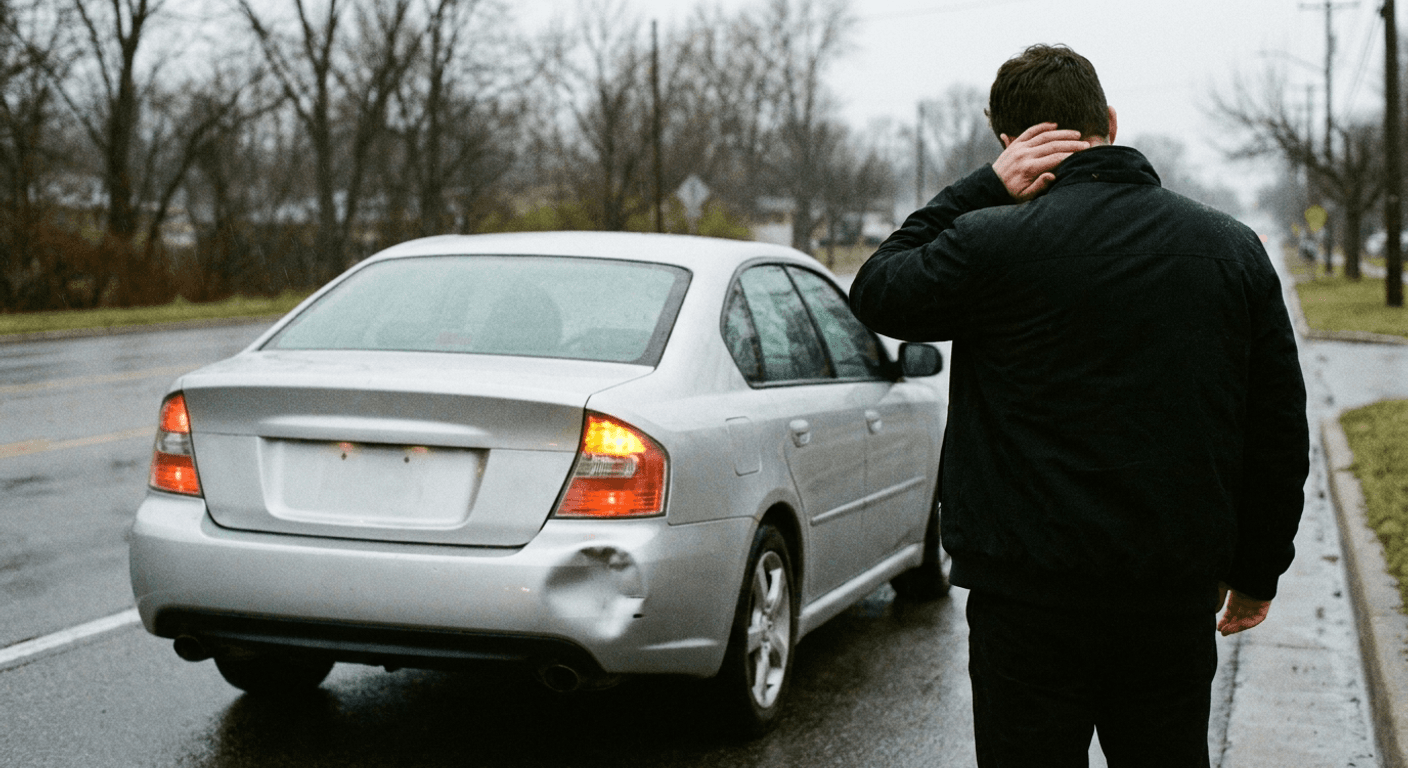
Connecticut is an at-fault (tort) state that follows modified comparative negligence with a 51% bar, meaning the at-fault driver pays for damages and you can recover only if your fault is not greater than the combined fault of the parties you seek recovery from, which in a typical two-vehicle crash means 50% or less, with your award reduced by your percentage of fault.
Is Connecticut a no-fault or at-fault state?
Connecticut is a pure at-fault (tort) state. The driver who is legally responsible for a crash bears liability for the resulting bodily injury and property damage. Connecticut was a no-fault auto-insurance state during the 1970s and 1980s, but the legislature repealed the no-fault basic-reparations law through Public Act 93-297, which took effect January 1, 1994. Since that repeal, Connecticut has not been one of the traditional no-fault states, and there is no mandatory personal injury protection (PIP) coverage.
Because Connecticut is an at-fault state, an injured accident victim goes directly against the at-fault driver and that driver's liability insurer for compensation. You do not need to clear any verbal or monetary threshold before suing for pain and suffering. Optional medical-payments (MedPay) coverage is available from insurers on a voluntary basis, but it is not required. Injured parties who are harmed by an uninsured or underinsured driver can turn to their own mandatory UM/UIM coverage for compensation instead.
How fault is shared: Connecticut's negligence rule
Connecticut follows modified comparative negligence with a 51% bar under CGS § 52-572h. The statute measures the claimant's negligence against the combined negligence of the person or persons against whom recovery is sought, including settled or released persons under subsection (n). In the ordinary two-vehicle crash where the other driver is the only party at fault, that produces the familiar rule: you can recover if you are 50% or less at fault. Where more than one other party contributed, your share is weighed against the combined fault of the parties you actually pursue, so 50% or less is necessary but not always sufficient if a negligent party is left out of the case. If a court finds your negligence greater than that combined figure, you are completely barred from recovering any compensation. Otherwise your total damages award is reduced in proportion to your share of fault.

For example, if a jury awards you $100,000 in damages but finds you 30% at fault for the collision, your net recovery is reduced to $70,000. This rule means that partial fault does not automatically destroy your claim, but it does reduce your payout. Connecticut courts apply this rule to all parties in a multi-vehicle crash, comparing the fault percentages of every claimant and defendant. Comparative fault in a product-liability claim, such as a defective airbag or a defective vehicle component, runs under a different statute: CGS § 52-572o(a) provides that the claimant's comparative responsibility does not bar recovery but reduces the award proportionately. CGS § 52-572h(o) in fact bars apportionment between parties liable for negligence and parties liable on any basis other than negligence, including strict liability.
Minimum car insurance in Connecticut
Connecticut requires all registered motor vehicles to carry liability insurance at minimum limits of 25/50/25. That means $25,000 in bodily-injury coverage per person injured, $50,000 in bodily-injury coverage per accident (regardless of how many people are hurt), and $25,000 in property-damage coverage per accident. The dollar figures themselves are set by Connecticut's financial-responsibility statute, CGS § 14-112(a), which states the $25,000 per person, $50,000 per accident, and $25,000 property-damage amounts. CGS § 38a-335 (auto liability policy limits) and CGS § 38a-336 (UM/UIM limits) are what turn those amounts into a policy requirement: each provides that coverage limits must be not less than those specified in subsection (a) of section 14-112. The current 25/50/25 minimums took effect January 1, 2018 under Public Act 17-114, replacing the prior 20/40/10 threshold.
Uninsured and underinsured motorist (UM/UIM) coverage is mandatory in Connecticut and cannot be waived outright. Under CGS § 38a-336, every auto liability policy must include UM/UIM bodily-injury coverage at limits that are at least equal to the policy's own liability limits, but not less than the statutory minimum of $25,000 per person and $50,000 per accident. An insured who wants limits lower than their liability limits must sign an informed-consent form. Connecticut also allows policyholders to purchase optional add-on or conversion underinsured-motorist coverage under CGS § 38a-336a for broader protection. Because PIP is not required, UM/UIM is the primary safety net for victims hit by an uninsured or underinsured driver.
How long you have to file: the statute of limitations
Connecticut gives accident victims two years to file a personal-injury lawsuit arising from a car accident. The two-year clock generally starts running from the date the injury is first sustained or discovered, or reasonably should have been discovered, under CGS § 52-584. The same statute imposes an outer three-year statute of repose measured from the date of the negligent act or omission, meaning that even if an injury is not discovered immediately, the lawsuit must be filed within three years of the crash.

For wrongful-death claims, a separate statute applies. Under CGS § 52-555, a wrongful-death action must be filed within two years of the date of death, and no later than five years from the act or omission that caused the death. Property damage claims arising from negligence also fall under CGS § 52-584 and carry the same two-year limitation period. If a government entity or municipal employee was involved in the crash, you may also need to provide advance written notice to the municipality within a shorter window before filing suit. Consulting an attorney early after the accident protects your ability to meet all applicable deadlines.
For more background on Connecticut's limitation rules, see our Connecticut statute of limitations page.
What a Connecticut car accident claim is worth
The value of a Connecticut car accident claim depends on your economic damages, your non-economic damages, and the reduction imposed by any fault you share for the crash. Economic damages include verifiable monetary losses such as medical bills (emergency care, surgery, rehabilitation, future treatment), lost wages and lost earning capacity, and costs to repair or replace your vehicle. Non-economic damages cover pain and suffering, emotional distress, loss of enjoyment of life, and permanent scarring or disability.
Because Connecticut follows modified comparative negligence, any percentage of fault assigned to you reduces your award by that amount. A jury that finds you 20% at fault for a rear-end collision will reduce a $200,000 verdict to $160,000. Practical recovery is also limited by the at-fault driver's insurance limits. Minimum-limits policies (25/50/25) cap the insurer's per-person payout at $25,000, even when your actual damages are far higher. In those cases, your own UM/UIM coverage and any umbrella or MedPay policies become the next source of recovery.
Use our Connecticut car accident settlement calculator to model potential damages ranges based on injury severity, fault percentage, and available insurance coverage.
What to do after a car accident in Connecticut
The steps you take in the hours and days after a Connecticut car accident can directly affect your claim.

Stay safe and call for help. Move to a safe location if possible without moving injured persons. Call 911 if anyone is hurt, if there is significant property damage, or if a driver appears impaired. Under CGS § 14-224, a driver knowingly involved in a crash that causes death, injury, or damage to property must stop at once, render whatever assistance is needed, and give their name, address, operator's license number, and registration number to the injured person or property owner, or to an officer or witness. A driver who cannot give that information at the scene must report the crash immediately to a police officer, a constable, a state police officer, an inspector of motor vehicles, or the nearest police station. Connecticut does not place a separate crash-report duty on drivers: under CGS § 14-108a, the police officer or agency that investigates the crash files the accident report with the Commissioner of Transportation.
Document the scene thoroughly. Photograph the vehicles, road conditions, traffic controls, skid marks, debris, and any visible injuries. Collect the names, contact information, driver's license numbers, and insurance information for all drivers involved. Get contact information from independent witnesses before they leave.
Seek medical attention promptly. See a doctor as soon as possible even if you feel fine initially. Injuries like whiplash, concussions, and soft-tissue damage often show symptoms hours or days later. A timely medical record ties your injuries to the crash and protects your claim.
Preserve evidence and notify your insurer. Report the accident to your own insurance company promptly and honestly. Keep copies of all medical bills, repair estimates, and documentation of lost work time. Photograph your injuries over time as they evolve.
Consult an attorney before accepting a settlement. Insurance adjusters represent the insurer, not you. Before you sign any release, get a free claim review from a Connecticut personal-injury attorney on your full damages and fault exposure (attorney advertising). Most Connecticut car accident attorneys handle these cases on a contingency-fee basis, so there is no upfront cost.
For related Connecticut driving laws, see our Connecticut hit-and-run laws page.
This article is general legal information, not legal advice. Car accident law varies by state and changes, and settlement values depend on the specific facts. For advice about a specific crash, consult a licensed attorney in Connecticut.
Related pages:
- Connecticut Car Accident Settlement Calculator
- Connecticut Hit-and-Run Laws
- Car Accident Laws by State: Hub
- Connecticut Statute of Limitations
More Connecticut Laws
- Connecticut Dashcam Laws
- Connecticut Hit and Run Laws
- Connecticut Slip and Fall Laws
- Connecticut Statute of Limitations
- Connecticut Workers Compensation Laws
Frequently Asked Questions
Is Connecticut a no-fault state?
No. Connecticut repealed its no-fault auto-insurance law effective January 1, 1994 (Public Act 93-297). It is now a pure at-fault (tort) state. There is no mandatory PIP coverage, and injured drivers go directly against the at-fault driver's liability insurer rather than their own coverage first.
Is Connecticut an at-fault state?
Yes. Connecticut is an at-fault state. The driver who causes the crash is responsible for the resulting bodily injury and property damage. Injured victims file claims with the at-fault driver's liability insurer and, if needed, their own mandatory UM/UIM coverage.
What is the statute of limitations for a car accident in Connecticut?
Two years from the date the injury is first sustained or discovered, under CGS § 52-584. There is also a three-year outer statute of repose from the date of the negligent act, regardless of discovery. Wrongful-death claims must be filed within two years of death and no later than five years from the act (CGS § 52-555). Missing these deadlines normally bars your claim.
Can I still recover if I was partly at fault in Connecticut?
Yes, as long as your negligence is not greater than the combined negligence of the parties you seek recovery from, which in a typical two-vehicle crash means 50% or less. Connecticut follows modified comparative negligence with a 51% bar (CGS § 52-572h), and the statute counts settled or released parties in that combined figure. Your damages award is reduced by your percentage of fault. If your share is greater than that combined figure, you recover nothing.
What are the minimum insurance requirements in Connecticut?
Connecticut requires minimum liability coverage of 25/50/25: $25,000 bodily injury per person, $50,000 bodily injury per accident, and $25,000 property damage per accident. The dollar figures are set by CGS § 14-112(a), and CGS §§ 38a-335 and 38a-336 require every auto liability policy to carry limits not less than those figures. Uninsured/underinsured motorist (UM/UIM) coverage at matching limits is also mandatory and cannot be waived (CGS § 38a-336).
How much is my Connecticut car accident claim worth?
Your claim value depends on economic damages (medical bills, lost wages, property damage), non-economic damages (pain and suffering, disability), your percentage of fault, and the at-fault driver's insurance limits. Because Connecticut follows modified comparative negligence, any fault assigned to you reduces your award proportionally. Use our Connecticut car accident settlement calculator for a personalized estimate.
Does Connecticut require PIP coverage?
No. Connecticut eliminated mandatory personal injury protection (PIP) when it repealed its no-fault law on January 1, 1994 (Public Act 93-297). Optional medical-payments (MedPay) coverage is available from insurers but is not required. Injured drivers recover from the at-fault driver's liability insurer or their own UM/UIM coverage.
Updates
Corrected the source of Connecticut’s 25/50/25 insurance minimums to CGS § 14-112(a), which is in force and not repealed; replaced an incorrect DMV crash-reporting duty with the driver’s actual stop-and-identify duties under CGS § 14-224; re-cited product-liability comparative fault to CGS § 52-572o; and clarified that the comparative-negligence bar measures your fault against the combined fault of the parties you seek recovery from.
Repaired five Connecticut statute source links that pointed at the wrong chapter of the General Statutes.
Independently fact-checked against the cited primary sources; governing law re-checked for recent changes
Re-anchored the 25/50/25 minimum-insurance figures to the current, operative statutes (CGS §§ 38a-335 and 38a-336) instead of the repealed CGS § 14-112, which the article had cited three times as controlling authority.
Governing law re-checked for recent changes
Reviewed and approved by an editor
The Law Behind This Article
This article rests on the statutory provisions below, held in our own legal record and retrieved from the official source. Tap a section to read the operative text.
Connecticut General Statutes, Title 52 (Civil Actions), Chapter 925
§ 52-572hNegligence actions. Doctrines applicable. Liability of multiple tortfeasors for damages.In forcecited in 8 of our articles
(a) For the purposes of this section: (1) “Economic damages” means compensation determined by the trier of fact for pecuniary losses including, but not limited to, the cost of reasonable and necessary medical care, rehabilitative services, custodial care and loss of earnings or earning capacity excluding any noneconomic damages; (2) “noneconomic damages” means compensation determined by the trier of fact for all nonpecuniary losses including, but not limited to, physical pain and suffering and mental and emotional suffering; (3) “recoverable economic damages” means the economic damages reduced by any applicable findings including but not limited to set-offs, credits, comparative negligence, additur and remittitur, and any reduction provided by section 52-225a; (4) “recoverable noneconomic damages” means the noneconomic damages reduced by any applicable findings including but not limited to set-offs, credits, comparative negligence, additur and remittitur.
Official text (excerpt) · last checked 2026-09-08 · Read the full text in our law library · Verify at cga.ct.gov
Cited in 636 court opinions in our collectionLatest citing opinion in our collection: 2026
Opinions citing this section in our collection:
- Williams Ford, Inc. v. Hartford Courant Co. (Supreme Court of Connecticut 1995, 232 Conn. 559)“…f he is negligent in so relying.” The Courant concedes that General Statutes § 52-572h (b) 16 has eliminated this rule in fav…”
- Eskin v. Castiglia (Supreme Court of Connecticut 2000, 253 Conn. 516)“…ng to add a person who may be liable to the plaintiff under General Statutes § 52-572h, 2 may be filed against an unidentifie…”
- Fleming v. Garnett (Supreme Court of Connecticut 1994, 231 Conn. 77)“…sis of the percentage of the claimant’s own negligence. See General Statutes § 52-572h (a) (3), (a) (4) and (b). Indeed, when…”
Identified automatically from the court opinions citing this section — not a ranking of which case controls.
Also relied on in: Truck Accident Laws in Connecticut (2026): Deadlines & Liability, Connecticut Dog Bite Laws: Liability and Victim Rights, Connecticut Slip and Fall Laws: Proving Premises Liability
§ 52-555Actions for injuries resulting in death.In forcecited in 6 of our articles
(a) In any action surviving to or brought by an executor or administrator for injuries resulting in death, whether instantaneous or otherwise, such executor or administrator may recover from the party legally at fault for such injuries just damages together with the cost of reasonably necessary medical, hospital and nursing services, and including funeral expenses, provided no action shall be brought to recover such damages and disbursements but within two years from the date of death, and except that no such action may be brought more than five years from the date of the act or omission complained of. (b) Notwithstanding the provisions of subsection (a) of this section, an action may be brought under this section at any time after the date of the act or omission complained of if the party legally at fault for such injuries resulting in death has been convicted or found not guilty by reason of mental disease or defect of a violation of section 53a-54a, 53a-54b, 53a-54c, 53a-54d, 53a-55 or 53a-55a with respect to such death.
Official text (excerpt) · last checked 2026-09-06 · Read the full text in our law library · Verify at cga.ct.gov
Cited in 219 court opinions in our collectionLatest citing opinion in our collection: 2026
Opinions citing this section in our collection:
- Gionfriddo v. Avis Rent A Car System, Inc. (Supreme Court of Connecticut 1984, 192 Conn. 280)“…4a, or (2) the statute authorizing a wrongful death action, General Statutes § 52-555. We disagree with both of these argumen…”
- Ecker v. Town of West Hartford (Supreme Court of Connecticut 1987, 205 Conn. 219)“…rt W. Ecker, brought this wrongful death action pursuant to General Statutes § 52-555 for injuries her deceased husband recei…”
- Sharp v. Mitchell (Supreme Court of Connecticut 1988, 209 Conn. 59)“…and October 20,1986. The operative statute of limitation is General Statutes § 52-555, 8 *71 which states in pertinent part…”
Identified automatically from the court opinions citing this section — not a ranking of which case controls.
Also relied on in: Wrongful Death Laws in Connecticut (2026): Deadlines
Connecticut General Statutes, Title 38a (Insurance), Chapter 700
§ 38a-335(Formerly Sec. 38-175b). Minimum coverages. Applicability. Statement of coverage for rented motor vehicle.In force
(a) Each automobile liability insurance policy shall provide insurance in accordance with the regulations adopted pursuant to section 38a-334 against loss resulting from the liability imposed by law, with limits not less than those specified in subsection (a) of section 14-112, for damages because of bodily injury or death of any person and injury to or destruction of property arising out of the ownership, maintenance or use of a specific motor vehicle or motor vehicles within any state, territory, or possession of the United States of America or Canada. (b) Each automobile liability insurance policy issued, renewed, amended or endorsed on or after October 1, 1988, and covering a private passenger motor vehicle as defined in subsection (e) of section 38a-363, shall contain or have attached thereto a conspicuous statement specifying whether the policy provides liability, collision or comprehensive coverage for damage to a rented private passenger motor vehicle and, where the policy provides such coverage, the limit of coverage provided and whether any deductible amount applies.
Official text (excerpt) · last checked 2026-07-29 · Read the full text in our law library · Verify at cga.ct.gov
Cited in 28 court opinions in our collectionLatest citing opinion in our collection: 2026
Opinions citing this section in our collection:
- American States Insurance v. Allstate Insurance (Supreme Court of Connecticut 2007, 282 Conn. 454)“…a manner that likely would not satisfy the requirements of General Statutes § 38a-335 (d), which provides in relevant part th…”
- Deming v. Nationwide Mutual Insurance (Supreme Court of Connecticut 2006, 279 Conn. 745)“…in contracts encompass a substantive obligation. See, e.g., General Statutes § 38a-335 (prescribing minimum coverage for insur…”
- Middlesex Insurance v. Quinn (Supreme Court of Connecticut 1993, 225 Conn. 257)“…miting liability coverage to particular *267 vehicles. See General Statutes § 38a-335 (a) and (d). Because the driver was not…”
Identified automatically from the court opinions citing this section — not a ranking of which case controls.
§ 38a-336(Formerly Sec. 38-175c). Uninsured and underinsured motorist coverage.In forcecited in 2 of our articles
(a)(1)(A) Each automobile liability insurance policy shall provide insurance, herein called uninsured and underinsured motorist coverage, in accordance with the regulations adopted pursuant to section 38a-334, with limits for bodily injury or death not less than those specified in subsection (a) of section 14-112, for the protection of persons insured thereunder who are legally entitled to recover damages because of bodily injury, including death resulting therefrom, from owners or operators of uninsured motor vehicles and underinsured motor vehicles and insured motor vehicles, the insurer of which becomes insolvent prior to payment of such damages. (B) Each insurer licensed to write automobile liability insurance in this state shall provide uninsured and underinsured motorist coverage with limits requested by any named insured upon payment of the appropriate premium, provided each such insurer shall offer such coverage with limits that are twice the limits of the bodily injury coverage of the policy issued to the named insured.
Official text (excerpt) · last checked 2026-07-29 · Read the full text in our law library · Verify at cga.ct.gov
Cited in 369 court opinions in our collectionLatest citing opinion in our collection: 2026
Opinions citing this section in our collection:
- Haynes v. Yale-New Haven Hospital (Supreme Court of Connecticut 1997, 243 Conn. 17)“…nsured motorist coverage in the amount of only $20,000; see General Statutes §§ 38a-336 18 and 14-112; 19 but opted to pay ad…”
- Bennett v. Automobile Insurance (Supreme Court of Connecticut 1994, 230 Conn. 795)“…fendant claimed that the undisputed terms of the policy and General Statutes § 38a-336 (b) 9 required a reduction of the judg…”
- Covenant Insurance v. Coon (Supreme Court of Connecticut 1991, 220 Conn. 30)“…mining if a vehicle is “underinsured” within the meaning of General Statutes § 38a-336 (d), the limit of a tortfeasor’s liabil…”
Identified automatically from the court opinions citing this section — not a ranking of which case controls.
Also relied on in: Connecticut Hit and Run Laws: Penalties and What to Do
§ 38a-336aUnderinsured motorist conversion coverage.In force
(a) Each insurer licensed to write automobile liability insurance in this state shall offer, for an additional premium, underinsured motorist conversion coverage with limits in accordance with section 38a-336. The purchase of such underinsured motorist conversion coverage shall be in lieu of underinsured motorist coverage pursuant to section 38a-336. For each new automobile liability insurance policy issued, the insurer shall disclose to an insured at the time of sale or issuance the availability of, the premium cost and a description of underinsured motorist conversion coverage. Such description of coverage shall be included in a conspicuous manner with the informed consent form specified in subdivision (2) of subsection (a) of section 38a-336. (b) Such underinsured motorist conversion coverage shall provide for the protection of persons insured thereunder who are legally entitled to recover damages from owners or operators of underinsured motor vehicles.
Official text (excerpt) · last checked 2026-07-29 · Read the full text in our law library · Verify at cga.ct.gov
Cited in 11 court opinions in our collectionLatest citing opinion in our collection: 2022
Opinions citing this section in our collection:
- Florestal v. Government Employees Insurance (Supreme Court of Connecticut 1996, 236 Conn. 299)“…e known as “underinsured motorist conversion coverage.” See General Statutes § 38a-336a. 3 This option, which is available fo…”
- Doyle v. Metropolitan Property & Casualty Insurance (Supreme Court of Connecticut 1999, 252 Conn. 79)“…n of underinsured motorist conversion coverage in 1994. See General Statutes § 38a-336a; 4 see also Florestal v. Government…”
- Todd v. Nationwide Mutual Insurance (Connecticut Appellate Court 2010, 121 Conn. App. 597)“…279 Conn. 312, 318-19 , 901 A.2d 1207 (2006). General Statutes § 38a-336a (c) provides in relevant part: “Each in…”
Identified automatically from the court opinions citing this section — not a ranking of which case controls.
Connecticut General Statutes, Title 52 (Civil Actions), Chapter 926
§ 52-584Limitation of action for injury to person or property caused by negligence, misconduct or malpractice.In forcecited in 8 of our articles
No action to recover damages for injury to the person, or to real or personal property, caused by negligence, or by reckless or wanton misconduct, or by malpractice of a physician, surgeon, dentist, podiatrist, chiropractor, advanced practice registered nurse, hospital or sanatorium, shall be brought but within two years from the date when the injury is first sustained or discovered or in the exercise of reasonable care should have been discovered, and except that no such action may be brought more than three years from the date of the act or omission complained of, except that a counterclaim may be interposed in any such action any time before the pleadings in such action are finally closed.
Official text (excerpt) · last checked 2026-07-29 · Read the full text in our law library · Verify at cga.ct.gov
Cited in 769 court opinions in our collectionLatest citing opinion in our collection: 2026
In the courts (editorial summary, independently checked):Burns v. Hartford Hospital (1984) held the two year period runs from discovery of actionable harm, which need not have reached its fullest manifestation. Connell v. Colwell (1990) applied both the two year and three year limits and held a continuing course of conduct tolled 52-584 only until the injury was diagnosed.
Opinions citing this section in our collection:
- Gurliacci v. Mayer (Supreme Court of Connecticut 1991, 218 Conn. 531)✓A Stamford officer sued a deputy chief who allegedly rear-ended her patrol car while driving intoxicated, then amended after the two years ran to allege he acted wilfully or outside his employment. The court held the amendment related back, so section 52-584 did not bar it.
- Connell v. Colwell (Supreme Court of Connecticut 1990, 214 Conn. 242)✓A physician who monitored a patient's prostate for years allegedly failed to disclose abnormalities; cancer was diagnosed in December 1982 and suit was filed in May 1987. The court held any tolling ended at diagnosis, so section 52-584's three-year repose barred the action.
- Burns v. Hartford Hospital (Supreme Court of Connecticut 1984, 192 Conn. 451)✓A toddler developed a leg infection from contaminated IV tubes; his mother learned of the injury and its cause in November 1975 but sued in November 1978. The court held section 52-584 runs from actionable harm, which need not have fully manifested, so the suit was late.
Identified automatically from the court opinions citing this section — not a ranking of which case controls.
Also relied on in: Motorcycle Accident Laws in Connecticut (2026): Helmets, Medical Malpractice Laws in Connecticut (2026): Deadlines & Caps, Connecticut Statute of Limitations: Filing Deadlines by Case Type
Connecticut General Statutes, Title 14 (Motor Vehicles. Use of the Highway By Vehicles. Gasoline), Chapter 246
§ 14-112Proof of financial responsibility.Repealedcited in 2 of our articles
(a) When commissioner shall require. To entitle any person to receive or retain a motor vehicle operator's license or a certificate of registration of any motor vehicle when, in the opinion of the commissioner, such person has a record on file with the commissioner which is sufficient, in the opinion of the commissioner, to require evidence of financial responsibility for the reasonable protection of other persons, the commissioner shall require from such person proof of financial responsibility to satisfy any claim for damages by reason of personal injury to, or the death of, any one person, of twenty-five thousand dollars, or by reason of personal injury to, or the death of, more than one person on account of any accident, of at least fifty thousand dollars, and for damage to property of at least twenty-five thousand dollars. When the commissioner requires proof of financial responsibility from an operator or owner of any motor vehicle, he may require proof in the amounts herein specified for each vehicle operated or owned by such person.
Official text (excerpt) · last checked 2026-07-29 · Read the full text in our law library · Verify at cga.ct.gov
Cited in 36 court opinions in our collectionLatest citing opinion in our collection: 2021
Opinions citing this section in our collection:
- Izzo v. Colonial Penn Insurance (Supreme Court of Connecticut 1987, 203 Conn. 305)“…is not a claim for “bodily injury,” argues that, because of General Statutes § 14-112, the policy should be construed to cove…”
- Mass v. United States Fidelity & Guaranty Co. (Supreme Court of Connecticut 1992, 222 Conn. 631)“…t may he elect less than the statutory minimum specified in General Statutes § 14-112 (a). 8 In Travelers Indemnity Co. v.…”
- Rodriguez v. Testa (Supreme Court of Connecticut 2010, 296 Conn. 1)“…ts on the owners or operators of motor vehicles. See, e.g., General Statutes § 14-112 (a) (“[t]o entitle any person to receiv…”
Identified automatically from the court opinions citing this section — not a ranking of which case controls.
Connecticut General Statutes, Title 14 (Motor Vehicles. Use of the Highway By Vehicles. Gasoline), Chapter 248
§ 14-224Evasion of responsibility in operation of motor vehicles. Racing, contests, demonstrations of speed or skill or street takeovers. Required removal of motor vehicle from traveled portion of highway. Penalties.In forcecited in 2 of our articles
(a) Each operator of a motor vehicle who is knowingly involved in an accident which results in the death of any other person shall at once stop and render such assistance as may be needed and shall give such operator's name, address and operator's license number and registration number to any officer or witness to the death of any person, and if such operator of the motor vehicle causing the death of any person is unable to give such operator's name, address and operator's license number and registration number to any witness or officer, for any reason or cause, such operator shall immediately report such death of any person to a police officer, a constable, a state police officer or an inspector of motor vehicles or at the nearest police precinct or station, and shall state in such report the location and circumstances of the accident causing the death of any person and such operator's name, address, operator's license number and registration number.
Official text (excerpt) · last checked 2026-09-23 · Read the full text in our law library · Verify at cga.ct.gov
Cited in 81 court opinions in our collectionLatest citing opinion in our collection: 2026
Opinions citing this section in our collection:
- State v. Johnson (Supreme Court of Connecticut 1993, 227 Conn. 534)“…responsibility in operating a motor vehicle in violation of General Statutes § 14-224 (b). 2 The defendant was *536 sentenc…”
- State v. Rosario (Connecticut Appellate Court 2004, 81 Conn. App. 621)“…does not make sense, as Scofield was not interpreting General Statutes § 14-224. Further, we risk incorrect use of othe…”
- State v. Pieger (Connecticut Appellate Court 1996, 42 Conn. App. 460)“…om his conviction of evading responsibility in violation of General Statutes § 14-224 (a). 1 The defendant claims that the c…”
Identified automatically from the court opinions citing this section — not a ranking of which case controls.
Search our full record of US law — 2.1 million sections, every state + federal →
Sources and References
- CGS § 14-112(a) (repealed) — original financial-responsibility source of the 25/50/25 figures, now carried forward as current law by CGS §§ 38a-335 and 38a-336(cga.ct.gov).gov
- CGS § 38a-335 — mandatory auto liability policy provisions(cga.ct.gov).gov
- CGS § 38a-336 — mandatory uninsured/underinsured motorist coverage(cga.ct.gov).gov
- CGS § 38a-336a — optional add-on underinsured motorist coverage(cga.ct.gov).gov
- CGS § 52-572h — comparative negligence (modified 51% bar)(cga.ct.gov).gov
- CGS § 52-584 — two-year statute of limitations for negligence(cga.ct.gov).gov
- CGS § 52-555 — wrongful death statute of limitations(cga.ct.gov).gov
- Public Act 93-297 — repeal of Connecticut no-fault auto-insurance law (eff. Jan. 1, 1994)(cga.ct.gov).gov
- CGS § 14-224 – duties of a driver involved in a crash: stop, render assistance, give name, address, license and registration(cga.ct.gov)
Paid attorney referral. RecordingLaw may receive compensation when you use an attorney-help link. RecordingLaw is not a law firm. Submitting a request does not guarantee that an attorney will accept your case and does not create an attorney-client relationship.