
California
California Car Accident Laws: Fault, Insurance, and Your Claim
Independently fact-checked against primary sources (last audited August 17, 2026). · Reviewed by the RecordingLaw editorial team. · Law checked current as of August 17, 2026. · 8 primary sources cited on this page. How we verify our legal content
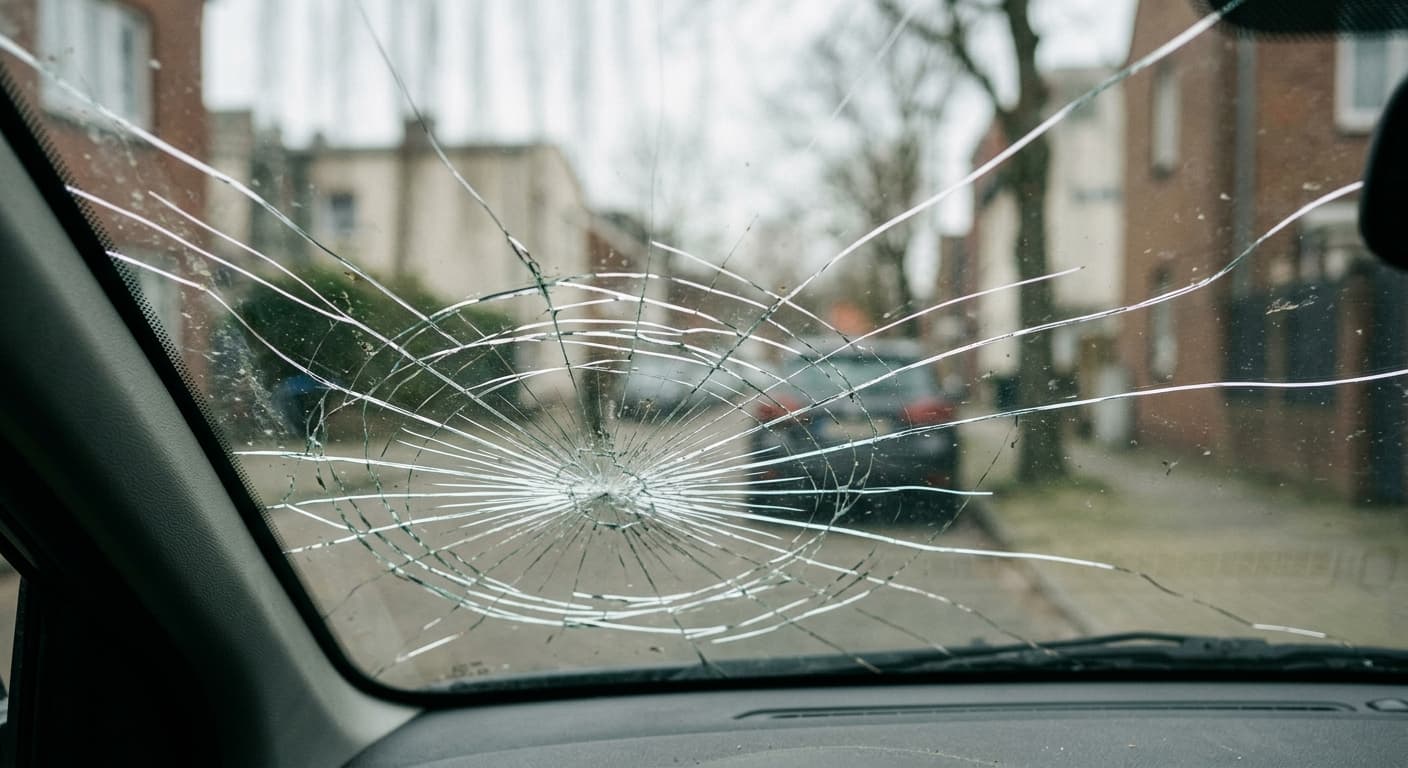
California is an at-fault (tort) state that follows pure comparative negligence, so the at-fault driver's insurer pays, and your recovery is reduced by your own percentage of fault but is never barred, no matter how high your share of fault.
Is California a no-fault or at-fault state?
California is a traditional at-fault (tort) state, and it has never adopted a no-fault or PIP system. When a crash happens, liability follows fault: the driver who caused the accident (and their insurer) is responsible for the other party's bodily-injury and property-damage losses. That legal obligation is grounded in Civil Code section 1714, which holds every person responsible for injury caused by their failure to exercise ordinary care.
Because California is a pure tort state, there is no statutory injury threshold that a victim must clear before suing for pain and suffering. You file a claim (or a lawsuit) directly against the at-fault driver's liability carrier. If that driver was uninsured or underinsured, you turn to your own UM/UIM coverage. No-fault and PIP are not part of California's auto-insurance landscape.
One important carve-out affects the uninsured themselves. Proposition 213, codified at Civil Code section 3333.4, bars a driver who was uninsured at the time of the crash, or who was driving under the influence, from recovering non-economic (pain and suffering) damages even if the other driver was primarily at fault. That rule is a coverage-eligibility bar, not a no-fault threshold, but it has real consequences for uninsured crash victims. There is one statutory exception, and it is narrower than it is often described. Civil Code section 3333.4(c) reaches only "a person described in paragraph (2) of subdivision (a)," meaning the owner of a vehicle that was not insured as required. That owner may still recover non-economic damages if the other motorist was operating in violation of Vehicle Code section 23152 or 23153 (DUI) and is convicted of that offense. The exception does not reach an injured operator who cannot establish financial responsibility but does not own the vehicle (paragraph (a)(3)), and it does not reach a plaintiff who is barred because of their own DUI (paragraph (a)(1)).
How fault is shared: California's negligence rule
California follows pure comparative negligence, the most plaintiff-friendly negligence system in the United States. The California Supreme Court adopted it in Li v. Yellow Cab Co., 13 Cal.3d 804 (1975), replacing the old contributory-negligence bar with a proportional rule: a plaintiff's damages are reduced by their own percentage of fault, but recovery is never eliminated. If a jury finds you 80% at fault and the other driver 20% at fault, you still collect 20% of your proven damages.
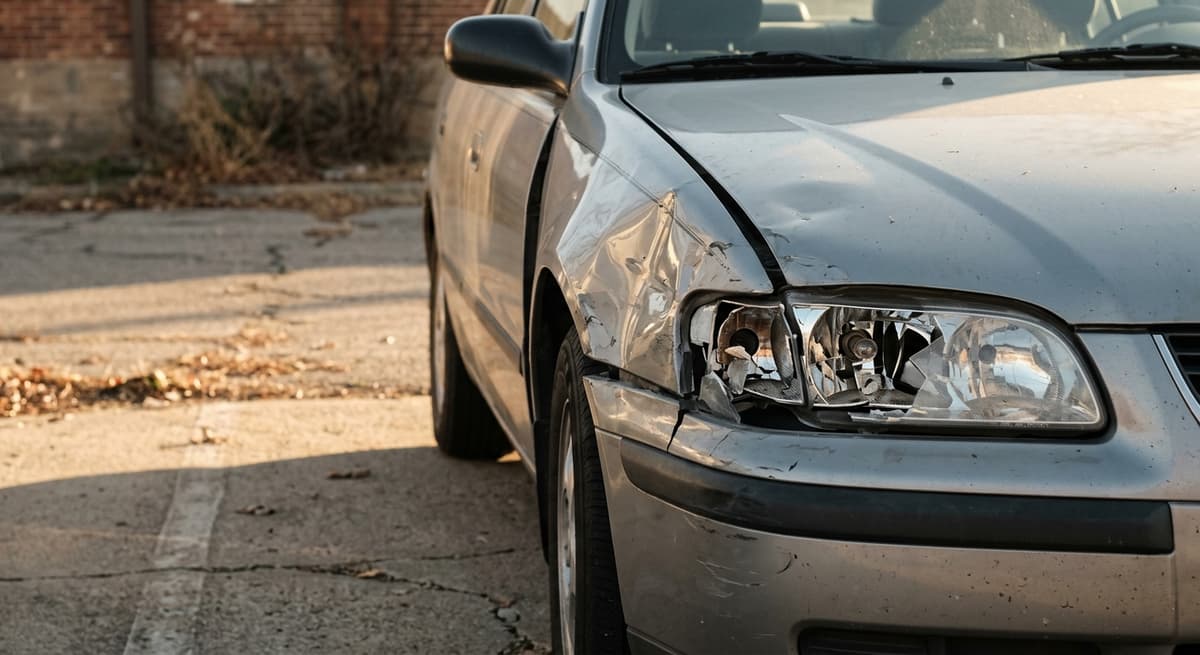
This rule matters in everyday crashes. An injured driver who ran a yellow light can still recover from the speeding driver who hit them. A pedestrian who crossed mid-block can still recover from the driver who failed to yield. The at-fault driver's insurer will almost always raise comparative-fault arguments to reduce the payout, so documenting what the other driver did wrong is just as important as documenting your own injuries.
Pure comparative negligence is also why California claims sometimes settle differently than they would in modified-comparative states. There is no 50% or 51% bar that wipes out a seriously injured plaintiff, so insurers have less leverage to deny claims outright when the liability picture is murky.
Minimum car insurance in California
California's minimum liability limits are 30/60/15, effective January 1, 2025. That means $30,000 bodily injury per person, $60,000 bodily injury per accident (total across all injured parties), and $15,000 property damage per accident. Senate Bill 1107 (2022) raised these from the prior 15/30/5 minimums, which had been unchanged for decades. The limits are codified at Vehicle Code section 16056, with conforming changes at Vehicle Code sections 16430, 16451, and 16500. A second scheduled increase will bring them to 50/100/25 on January 1, 2035.
Drivers who prefer not to carry a liability policy may instead file a $75,000 cash deposit with the DMV, obtain a DMV self-insurance certificate, or post a $75,000 surety bond (Veh. Code sections 16054-16056).
Uninsured and underinsured motorist coverage is not required but must be offered. Under Insurance Code section 11580.2, every bodily-injury liability auto policy sold in California must include UM/UIM coverage matching the policy's liability limits unless the named insured rejects or reduces it in writing. If you never signed a rejection form, your policy almost certainly includes UM/UIM. That coverage becomes your primary recourse when the at-fault driver has no insurance or too little to cover your losses.
California does not require personal injury protection (PIP). Optional MedPay coverage is available from many insurers, but there is no statutory minimum or mandate.
How long you have to file: the statute of limitations
The standard deadline for a California personal-injury car accident lawsuit is two years from the date of the crash. That limit is set by Code of Civil Procedure section 335.1, which covers actions for injury or death caused by another's wrongful act or neglect. Missing the two-year window almost always means losing your right to sue, regardless of how strong your case is.

Property-damage claims, such as a lawsuit to recover the cost of repairing or replacing your vehicle, carry a longer three-year deadline under Code of Civil Procedure section 338.
One critical exception applies when a government entity is involved. If the at-fault vehicle was a city bus, county vehicle, state car, or any other publicly owned vehicle, the Government Claims Act (Gov. Code sections 910 and 911.2) requires you to file a written tort claim with the responsible public agency within six months of the injury. Failing to file that claim on time can bar your lawsuit entirely, even if the two-year window has not yet closed. If a government vehicle was involved, consult an attorney immediately.
What a California car accident claim is worth
California allows injured drivers to recover both economic damages (medical bills, lost wages, future care costs, vehicle repair) and non-economic damages (pain and suffering, emotional distress, loss of enjoyment of life). There is no statutory cap on non-economic damages in ordinary car accident cases, unlike California's medical malpractice rules.
Pure comparative negligence shapes every settlement calculation. Insurers will investigate and assign a percentage of fault to every driver involved. If an adjuster concludes you were 30% at fault, expect an initial offer that already has 30% subtracted. Your job is to challenge that allocation with evidence: the police report, traffic-camera footage, witness statements, and accident reconstruction if warranted.
The reality of minimum-limits policies is also a hard constraint. Even a clearly liable driver carrying only the 30/60/15 minimum delivers at most $30,000 for a single injury. Serious fractures, surgeries, and long-term disability routinely exceed those limits. That is exactly why uninsured/underinsured motorist coverage on your own policy matters: it provides an additional layer of recovery when the at-fault driver's limits are exhausted.
For a personalized estimate, use the California car accident settlement calculator to model how fault percentage, medical costs, and insurance limits interact in your situation.
What to do after a car accident in California
The steps you take in the first hours and days after a California crash can significantly affect your claim.

Move to safety immediately and call 911. Law enforcement should be called to any crash with injury, and a police report is one of the most important documents your attorney and the insurance company will use to establish fault.
California also sets hard reporting deadlines. Vehicle Code section 16000 requires the driver of a vehicle involved in an accident that caused damage to the property of any one person in excess of $1,000, or any bodily injury, or a death, to report it to the DMV within 10 days (the SR-1 form). Vehicle Code section 20008 separately requires a written report to the California Highway Patrol, or to the city police if the crash happened inside a city, within 24 hours of any injury or fatal accident.
Skipping the SR-1 carries its own penalty. Under Vehicle Code section 16004, the DMV suspends the driving privilege of a person who fails, refuses, or neglects to make a required accident report, and that suspension runs until the department receives the report.
Document everything at the scene before vehicles move (if it is safe). Photograph all vehicles, damage, skid marks, signals, and the road layout. Get the other driver's name, license plate, insurance company, and policy number. Collect names and contact information for any witnesses.
Seek medical attention the same day, even if you feel minor pain. Adrenaline masks injury, and a documented exam ties your injuries to the crash in the medical record. A gap in treatment is one of the first things insurers use to argue your injuries were not serious.
Report the crash to your own insurer promptly. Your policy likely includes a cooperation clause, and delay can affect your UM/UIM claim. However, do not give the at-fault driver's insurer a recorded statement until you have a California car accident lawyer advise you on it in a free claim review (attorney advertising). Adjusters are trained to elicit statements that reduce comparative fault to the other side's advantage.
Accept nothing before you know your full medical picture. Once you sign a release and accept a settlement, you cannot reopen the claim even if new injuries emerge. The two-year statute of limitations gives you time to understand your complete damages before resolving your claim.
This article is general legal information, not legal advice. Car accident law varies by state and changes, and settlement values depend on the specific facts. For advice about a specific crash, consult a licensed attorney in California.
Related:
- California Car Accident Settlement Calculator
- California Hit-and-Run Laws
- Car Accident Laws by State (Hub)
- California Statute of Limitations
More California Laws
- California Dashcam Laws
- California Hit and Run Laws
- California Slip and Fall Laws
- California Statute of Limitations
- California Workers Compensation Laws
Frequently Asked Questions
Is California a no-fault state?
No. California is a pure at-fault (tort) state. There is no no-fault or PIP system. When you are injured in a crash caused by another driver, you file a claim against that driver's liability insurer, not your own. California has never adopted mandatory personal injury protection coverage.
Is California an at-fault state?
Yes. California is an at-fault state. Liability follows fault: the driver who caused the crash is responsible for bodily injuries and property damage. The legal basis is Civil Code section 1714, and California applies pure comparative negligence, so partial fault on your part reduces but does not eliminate your recovery.
What is the statute of limitations for a car accident in California?
Two years from the date of the crash for bodily-injury claims, under Code of Civil Procedure section 335.1. Property-damage-only claims have a three-year limit under CCP section 338. If a government vehicle was involved, a written government tort claim must be filed within six months under the Government Claims Act, or your lawsuit may be barred.
Can I still recover if I was partly at fault in California?
Yes. California's pure comparative negligence rule (Li v. Yellow Cab Co., 13 Cal.3d 804 (1975)) reduces your damages by your percentage of fault but never bars recovery entirely. Even if you were 70% at fault, you can still recover 30% of your proven damages from the other driver.
What are the minimum insurance requirements in California?
As of January 1, 2025, the minimums are 30/60/15: $30,000 bodily injury per person, $60,000 per accident, and $15,000 property damage per accident. These were raised from the old 15/30/5 by SB 1107 (2022). UM/UIM coverage must be offered and is included unless you reject it in writing. California has no PIP requirement.
How much is my California car accident claim worth?
California allows recovery of economic damages (medical bills, lost income, future care) and non-economic damages (pain and suffering, emotional distress) with no statutory cap for ordinary car accidents. Your recovery is reduced by your share of comparative fault. Minimum-limits policies cap the at-fault driver's payout at $30,000 per person, which is why UM/UIM coverage on your own policy matters for serious injuries.
What does Prop 213 mean for California car accident claims?
Proposition 213 (Civil Code section 3333.4) bars an uninsured driver, or a driver who was under the influence at the time of the crash, from recovering non-economic (pain and suffering) damages, even when the other driver was at fault. If you were uninsured and injured by a negligent driver, you can still recover your economic losses (medical bills, lost wages) but not pain and suffering. The one exception, in Civil Code section 3333.4(c), is narrow: it applies only where you were the owner of the uninsured vehicle and the driver who hit you was convicted of DUI under Vehicle Code section 23152 or 23153. An injured operator who cannot show financial responsibility but does not own the vehicle gets no exception, and neither does a plaintiff barred because of their own DUI.
Updates
Corrected the minimum-limits citation (the Insurance Code section cited did not exist), added California's DMV SR-1 crash-reporting duty ($1,000 damage, injury, or death; 10 days) and the 24-hour police report, and narrowed the Proposition 213 exception to the uninsured vehicle owner it actually covers.
Independently fact-checked against the cited primary sources; governing law re-checked for recent changes
Corrected the Prop 213 (Civil Code section 3333.4) discussion to reflect the statute's exception: an uninsured crash victim is not barred from pain-and-suffering damages if the at-fault driver was convicted of DUI.
Governing law re-checked for recent changes
Reviewed and approved by an editor
The Law Behind This Article
This article rests on the statutory provisions below, held in our own legal record and retrieved from the official source. Tap a section to read the operative text.
California Civil Code
§ 1714In forcecited in 4 of our articles
(a) Everyone is responsible, not only for the result of his or her willful acts, but also for an injury occasioned to another by his or her want of ordinary care or skill in the management of his or her property or person, except so far as the latter has, willfully or by want of ordinary care, brought the injury upon himself or herself. The design, distribution, or marketing of firearms and ammunition is not exempt from the duty to use ordinary care and skill that is required by this section. The extent of liability in these cases is defined by the Title on Compensatory Relief. (b) It is the intent of the Legislature to abrogate the holdings in cases such as Vesely v. Sager (1971) 5 Cal.3d 153, Bernhard v. Harrah’s Club (1976) 16 Cal.3d 313, and Coulter v.
Official text (excerpt) · last checked 2026-09-08 · Read the full text in our law library · Verify at leginfo.legislature.ca.gov
Cited in 828 court opinions in our collectionLatest citing opinion in our collection: 2026
Opinions citing this section in our collection:
- Merrill v. Navegar, Inc. (California Supreme Court 2001, 110 Cal. Rptr. 2d 370)“…nsumer product, is subject to the general duty of due care (Civ. Code, § 1714, *494 subd. (a)) toward those foreseea…”
- Zelig v. County of Los Angeles (California Supreme Court 2002, 119 Cal. Rptr. 2d 709)“…ed that the county’s negligence caused their injury, citing Civil Code section 1714. They alleged that the county invited m…”
- Thing v. La Chusa (California Supreme Court 1989, 48 Cal. 3d 644)“…liable for injuries caused by failure to exercise due care (Civ. Code, § 1714, subd. (a)), “no such exception should…”
Identified automatically from the court opinions citing this section — not a ranking of which case controls.
Also relied on in: Truck Accident Laws in California (2026): Deadlines & Liability, California Slip and Fall Laws: Proving Premises Liability, California Motorcycle Accident Laws (2026): Deadlines & Helmets
§ 3333.4In forcecited in 2 of our articles
(a) Except as provided in subdivision (c), in any action to recover damages arising out of the operation or use of a motor vehicle, a person shall not recover non-economic losses to compensate for pain, suffering, inconvenience, physical impairment, disfigurement, and other nonpecuniary damages if any of the following applies: (1) The injured person was at the time of the accident operating the vehicle in violation of Section 23152 or 23153 of the Vehicle Code, and was convicted of that offense. (2) The injured person was the owner of a vehicle involved in the accident and the vehicle was not insured as required by the financial responsibility laws of this state. (3) The injured person was the operator of a vehicle involved in the accident and the operator can not establish his or her financial responsibility as required by the financial responsibility laws of this state. (b) Except as provided in subdivision (c), an insurer shall not be liable, directly or indirectly, under a policy of liability or uninsured motorist insurance to indemnify for non-economic losses of a person injured as described in subdivision (a).
Official text (excerpt) · last checked 2026-07-28 · Read the full text in our law library · Verify at leginfo.legislature.ca.gov
Cited in 33 court opinions in our collectionLatest citing opinion in our collection: 2024
Opinions citing this section in our collection:
- Day v. City of Fontana (California Supreme Court 2001, 105 Cal. Rptr. 2d 457)“…J. I dissent. The majority broadly extend the scope of Civil Code section 3333.4, which limits automobile insurance clai…”
- Horwich v. Superior Court (California Supreme Court 1999, 87 Cal. Rptr. 2d 222)“…rest. BROWN, J. In this case, we must determine whether Civil Code section 3333.4 (all unspecified statutory references a…”
- Hodges v. Superior Court (California Supreme Court 1999, 86 Cal. Rptr. 2d 884)“…er of the car, seeking compensatory and punitive damages. Civil Code section 3333.4, enacted by the voters in the 1996 Gene…”
Identified automatically from the court opinions citing this section — not a ranking of which case controls.
California Code of Civil Procedure
§ 335.1In forcecited in 7 of our articles
Within two years: An action for assault, battery, or injury to, or for the death of, an individual caused by the wrongful act or neglect of another.
Official text (excerpt) · last checked 2026-07-28 · Read the full text in our law library · Verify at leginfo.legislature.ca.gov
Cited in 320 court opinions in our collectionLatest citing opinion in our collection: 2026
In the courts (editorial summary, independently checked):California courts have applied Section 335.1's two-year period. Aguilera v. Heiman (2009) held it did not operate retroactively to revive a personal injury claim already barred under former Section 340(3). Pugliese v. Superior Court (2007) applied it to bar assault and battery counts, counting each incident separately.
Opinions citing this section in our collection:
- Quiroz v. Seventh Avenue Center (California Court of Appeal 2006, 45 Cal. Rptr. 3d 222)“…in opposition to the motion that the then recently enacted Code of Civil Procedure section 335.1, which provides for a two-year—instead…”
- Pugliese v. Superior Court (California Court of Appeal 2007, 53 Cal. Rptr. 3d 681)✓A wife sued her husband over roughly 15 years of domestic abuse. The court held 335.1 runs separately from each incident, so her assault and battery counts, last alleged act in 2001, were barred, though her emotional distress count and her domestic violence claim were timely.
- Aguilera v. Heiman (California Court of Appeal 2009, 174 Cal. App. 4th 590)✓A gutter installer hurt by a high voltage wire in 1997 sued the property manager in 2007. The court held 335.1's two-year period, effective January 1, 2003, did not operate retroactively to revive a claim already barred under the former one-year statute, and affirmed dismissal.
Identified automatically from the court opinions citing this section — not a ranking of which case controls.
Also relied on in: California Dog Bite Laws: Liability and Victim Rights, California Statute of Limitations: Filing Deadlines by Case Type, California Wrongful Death Laws (2026): Deadlines & Who Can Sue
§ 338In forcecited in 3 of our articles
Within three years: (a) An action upon a liability created by statute, other than a penalty or forfeiture. (b) An action for trespass upon or injury to real property. (c) (1) An action for taking, detaining, or injuring goods or chattels, including an action for the specific recovery of personal property. (2) The cause of action in the case of theft, as described in Section 484 of the Penal Code, of an article of historical, interpretive, scientific, or artistic significance is not deemed to have accrued until the discovery of the whereabouts of the article by the aggrieved party, the aggrieved party’s agent, or the law enforcement agency that originally investigated the theft.
Official text (excerpt) · last checked 2026-07-28 · Read the full text in our law library · Verify at leginfo.legislature.ca.gov
Cited in 1,184 court opinions in our collectionLatest citing opinion in our collection: 2026
Opinions citing this section in our collection:
- Neel v. Magana, Olney, Levy, Cathcart & Gelfand (California Supreme Court 1971, 6 Cal. 3d 176)“…[9] three-year limitations govern damage to real property (Code Civ. Proc., § 338, subd. 2) or to tangible personal prope…”
- Murphy v. Kenneth Cole Productions, Inc. (California Supreme Court 2007, 40 Cal. 4th 1094)“…premium pay subject to a three-year statute of limitations (Code Civ. Proc., § 338) or a penalty subject to a one-year sta…”
- Wyatt v. Union Mortgage Co. (California Supreme Court 1979, 24 Cal. 3d 773)“…year period allowed for commencing actions based on fraud (Code Civ. Proc., § 338, subd. 4) had passed, the complaint hav…”
Identified automatically from the court opinions citing this section — not a ranking of which case controls.
Also relied on in: California Scam and Fraud Laws: Where to Report, Your Right to Sue (2026)
California Government Code
§ 911.2In forcecited in 4 of our articles
(a) A claim relating to a cause of action for death or for injury to person or to personal property or growing crops shall be presented as provided in Article 2 (commencing with Section 915) not later than six months after the accrual of the cause of action. A claim relating to any other cause of action shall be presented as provided in Article 2 (commencing with Section 915) not later than one year after the accrual of the cause of action. (b) For purposes of determining whether a claim was commenced within the period provided by law, the date the claim was presented to the Department of General Services is one of the following: (1) The date the claim is submitted with a twenty-five dollar ($25) filing fee. (2) If a fee waiver is granted, the date the claim was submitted with the affidavit requesting the fee waiver. (3) If a fee waiver is denied, the date the claim was submitted with the affidavit requesting the fee waiver, provided the filing fee is paid to the department within 10 calendar days of the mailing of the notice of the denial of the fee waiver.
Official text (excerpt) · last checked 2026-07-28 · Read the full text in our law library · Verify at leginfo.legislature.ca.gov
Cited in 424 court opinions in our collectionLatest citing opinion in our collection: 2026
Opinions citing this section in our collection:
- State v. Superior Court (California Supreme Court 2004, 32 Cal. 4th 1234)“…th our decision here. Plaintiff’s reliance on language in Government Code section 911.2 stating that the claim must be filed wi…”
- Shirk v. Vista Unified School District (California Supreme Court 2007, 64 Cal. Rptr. 3d 210)“…laintiff’s obligation under the claim presentation statute (Gov. Code, §911.2, subd. (a)) was to present her claim “n…”
- John R. v. Oakland Unified School District (California Supreme Court 1989, 48 Cal. 3d 438)“…able estoppel so as to avoid the claim-filing periods under Government Code sections 911.2 and 911.4, subdivision (b). A. Equit…”
Identified automatically from the court opinions citing this section — not a ranking of which case controls.
California Vehicle Code
§ 16056In force
(a) A policy or bond shall not be effective under Section 16054 unless issued by an insurance company or surety company admitted to do business in this state by the Insurance Commissioner, except as provided in subdivision (b), and unless the policy or bond is subject to either of the following: (1) If the accident has resulted in bodily injury or death, to a limit, exclusive of interest and costs, of not less than fifteen thousand dollars ($15,000) because of bodily injury to or death of one person in any one accident and, subject to that limit for one person, to a limit of not less than thirty thousand dollars ($30,000) because of bodily injury to or death of two or more persons in any one accident, and, if the accident has resulted in injury to, or destruction of property, to a limit of not less than five thousand dollars ($5,000) because of injury to or destruction of property of others in any one accident.
Official text (excerpt) · last checked 2026-07-28 · Read the full text in our law library · Verify at leginfo.legislature.ca.gov
Cited in 38 court opinions in our collectionLatest citing opinion in our collection: 2019
Opinions citing this section in our collection:
- Haynes v. Farmers Insurance Exchange (California Supreme Court 2004, 13 Cal. Rptr. 3d 68)“…and $5,000 for property damage. (See Ins. Code, § 11580.1; Veh. Code, § 16056, subd. (a).) The question here is wheth…”
- Dominguez v. Financial Indemnity Co. (California Court of Appeal 2010, 183 Cal. App. 4th 388)“…sly, minimum limits for insurance coverage are specified in Vehicle Code section 16056, subdivision (a), and require not less…”
- Alderson v. Insurance Co. of North America (California Court of Appeal 1990, 223 Cal. App. 3d 397)“…oreover, a cash deposit with DMV in the amount specified in Vehicle Code section 16056, subdivision (a), i.e., $35,000, cannot…”
Identified automatically from the court opinions citing this section — not a ranking of which case controls.
§ 16000In force
(a) The driver of a motor vehicle who is in any manner involved in an accident originating from the operation of the motor vehicle on a street or highway, or is involved in a reportable off-highway accident, as defined in Section 16000.1, that has resulted in damage to the property of any one person in excess of one thousand dollars ($1,000), or in bodily injury, or in the death of any person shall report the accident, within 10 days after the accident, either personally or through an insurance agent, broker, or legal representative, on a form approved by the department, to the office of the department at Sacramento, subject to this chapter. The driver shall identify on the form, by name and current residence address, if available, any person involved in the accident complaining of bodily injury. (b) A report is not required under subdivision (a) if the motor vehicle involved in the accident was owned or leased by, or under the direction of, the United States, this state, another state, or a local agency.
Official text (excerpt) · last checked 2026-07-28 · Read the full text in our law library · Verify at leginfo.legislature.ca.gov
Cited in 60 court opinions in our collectionLatest citing opinion in our collection: 2024
Opinions citing this section in our collection:
- State Farm Mutual Automobile Insurance v. Haight (California Court of Appeal 1988, 205 Cal. App. 3d 223)“…rson who has been involved in an accident as described in Vehicle Code section 16000 to establish proof of financial respons…”
- Contreras v. America, Compania General De Seguros (California Court of Appeal 1975, 48 Cal. App. 3d 270)“…the Vehicle Code entitled “Financial Responsibility Laws.” (Veh. Code, §§ 16000-16560.) The Financial Responsibility L…”
- Fahlgren v. Department of Motor Vehicles (California Court of Appeal 1986, 186 Cal. App. 3d 930)“…utomobile accident with Ms. Dorothea Wilson. As required by California Vehicle Code section 16000 et seq.* 1 (the financial…”
Identified automatically from the court opinions citing this section — not a ranking of which case controls.
§ 16004In force
(a) The department shall suspend the driving privilege of any person who fails, refuses, or neglects to make a report of an accident as required in this chapter. (b) A suspension taken under this section shall remain in effect until terminated by receipt of the report of the accident or upon receipt of evidence that financial responsibility as provided in Section 16021 is in effect. (c) The driving privilege shall not be suspended under this section, and, if a suspension has been imposed and is in effect under this section, that suspension shall be terminated, if the driving privilege is suspended under Section 16370 or 16381 as the result of a judgment arising out of the same accident for which the report of the accident is required by this section. The department may suspend or reimpose the suspension of the driving privilege of a person under this section if the suspension under Section 16370 or 16381 is later set aside for a reason other than that the person has satisfied the judgment in full or to the extent provided in Chapter 2 (commencing with Section 16250) and has given proof of financial responsibility, as provided in Chapter 3 (commencing with Section 16430).
Official text (excerpt) · last checked 2026-07-28 · Read the full text in our law library · Verify at leginfo.legislature.ca.gov
Cited in 1 court opinions in our collectionLatest citing opinion in our collection: 1993
Opinions citing this section in our collection:
- Kruger v. Department of Motor Vehicles (California Court of Appeal 1993, 13 Cal. App. 4th 541)“…on that he failed to file a traffic accident report. Though Vehicle Code section 16004 does call for the mandatory suspension…”
Identified automatically from the court opinions citing this section — not a ranking of which case controls.
§ 20008In forcecited in 2 of our articles
(a) The driver of a vehicle, other than a common carrier vehicle, involved in any accident resulting in injuries to or death of any person shall within 24 hours after the accident make or cause to be made a written report of the accident to the Department of the California Highway Patrol or, if the accident occurred within a city, to either the Department of the California Highway Patrol or the police department of the city in which the accident occurred. If the agency which receives the report is not responsible for investigating the accident, it shall immediately forward the report to the law enforcement agency which is responsible for investigating the accident. On or before the fifth day of each month, every police department which received a report during the previous calendar month of an accident which it is responsible for investigating shall forward the report or a copy thereof to the main office of the Department of the California Highway Patrol at Sacramento.
Official text (excerpt) · last checked 2026-07-28 · Read the full text in our law library · Verify at leginfo.legislature.ca.gov
Cited in 7 court opinions in our collectionLatest citing opinion in our collection: 2013
Opinions citing this section in our collection:
- Collins v. Navistar, Inc. (California Court of Appeal 2013, 214 Cal. App. 4th 1486)“…uch accident report” refers to accident reports required by Vehicle Code section 20008 of *1516 every driver involved in an a…”
- In Re Murdock (California Supreme Court 1968, 68 Cal. 2d 313)“…on or before the 5th of the month following the accident. (Veh. Code, § 20008, subd. (a).) Thus, by a process of si…”
- People Ex Rel. Department of Transportation v. Superior Court (California Court of Appeal 1976, 60 Cal. App. 3d 352)“…ossession, custody, or control; ...” 5 Vehicle Code section 20008 in pertinent part provides: ’’(a) The d…”
Identified automatically from the court opinions citing this section — not a ranking of which case controls.
Also relied on in: California Hit and Run Laws: Penalties and What to Do
California Insurance Code
§ 11580.2In force
(a) (1) No policy of bodily injury liability insurance covering liability arising out of the ownership, maintenance, or use of any motor vehicle, except for policies that provide insurance in the Republic of Mexico issued or delivered in this state by nonadmitted Mexican insurers, shall be issued or delivered in this state to the owner or operator of a motor vehicle, or shall be issued or delivered by any insurer licensed in this state upon any motor vehicle then principally used or principally garaged in this state, unless the policy contains, or has added to it by endorsement, a provision with coverage limits at least equal to the limits specified in subdivision (m) and in no case less than the financial responsibility requirements specified in Section 16056 of the Vehicle Code insuring the insured, the insured’s heirs or legal representative for all sums within the limits that he, she, or they, as the case may be, shall be legally entitled to recover as damages for bodily injury or wrongful death from the owner or operator of an uninsured motor vehicle.
Official text (excerpt) · last checked 2026-07-28 · Read the full text in our law library · Verify at leginfo.legislature.ca.gov
Cited in 394 court opinions in our collectionLatest citing opinion in our collection: 2026
Opinions citing this section in our collection:
- Neal v. Farmers Insurance Exchange (California Supreme Court 1978, 21 Cal. 3d 910)“…offset provision was contained in the following language of Insurance Code section 11580.2, subdivision (h) then in effect: “Any l…”
- Smith v. State Farm Mutual Automobile Insurance (California Court of Appeal 2001, 113 Cal. Rptr. 2d 399)“…ld be no violation of law or an unlawful conspiracy. Insurance Code section 11580.2, 7 the code section that g…”
- Freeman v. State Farm Mutual Automobile Insurance (California Supreme Court 1975, 14 Cal. 3d 473)“…year statute of limitations provided in subdivision (i) of Insurance Code section 11580.2. 1 A motion for reconsider…”
Identified automatically from the court opinions citing this section — not a ranking of which case controls.
Search our full record of US law — 2.1 million sections, every state + federal →
Sources and References
- Cal. Veh. Code section 16056 (minimum liability limits)(leginfo.legislature.ca.gov).gov
- Cal. Ins. Code section 11580.1b (minimum limits per SB 1107, 2022)(leginfo.legislature.ca.gov).gov
- Cal. Ins. Code section 11580.2 (UM/UIM must be offered, rejectable in writing)(leginfo.legislature.ca.gov).gov
- Cal. Civ. Code section 1714 (negligence; basis for pure comparative fault)(leginfo.legislature.ca.gov).gov
- Cal. Civ. Code section 3333.4 (Prop 213 — uninsured/DUI driver non-economic damages bar)(leginfo.legislature.ca.gov).gov
- Cal. Code Civ. Proc. section 335.1 (2-year personal-injury SOL)(leginfo.legislature.ca.gov).gov
- Cal. Code Civ. Proc. section 338 (3-year property-damage SOL)(leginfo.legislature.ca.gov).gov
- Cal. Gov. Code section 911.2 (6-month government tort claim deadline)(leginfo.legislature.ca.gov).gov
- Cal. Veh. Code section 16000 (SR-1 report to DMV within 10 days; $1,000 property damage, injury, or death)(leginfo.legislature.ca.gov)
- Cal. Veh. Code section 20008 (written report to CHP or city police within 24 hours of an injury or fatal accident)(leginfo.legislature.ca.gov)
- Cal. Veh. Code section 16004 (license suspension for failing to make a required accident report)(leginfo.legislature.ca.gov)
Paid attorney referral. RecordingLaw may receive compensation when you use an attorney-help link. RecordingLaw is not a law firm. Submitting a request does not guarantee that an attorney will accept your case and does not create an attorney-client relationship.