
Virginia
Virginia Window Tint Laws (2026): Legal VLT Limits
Independently fact-checked against primary sources (last audited August 18, 2026). · Reviewed by the RecordingLaw editorial team. · Law checked current as of August 18, 2026. · 3 primary sources cited on this page. How we verify our legal content
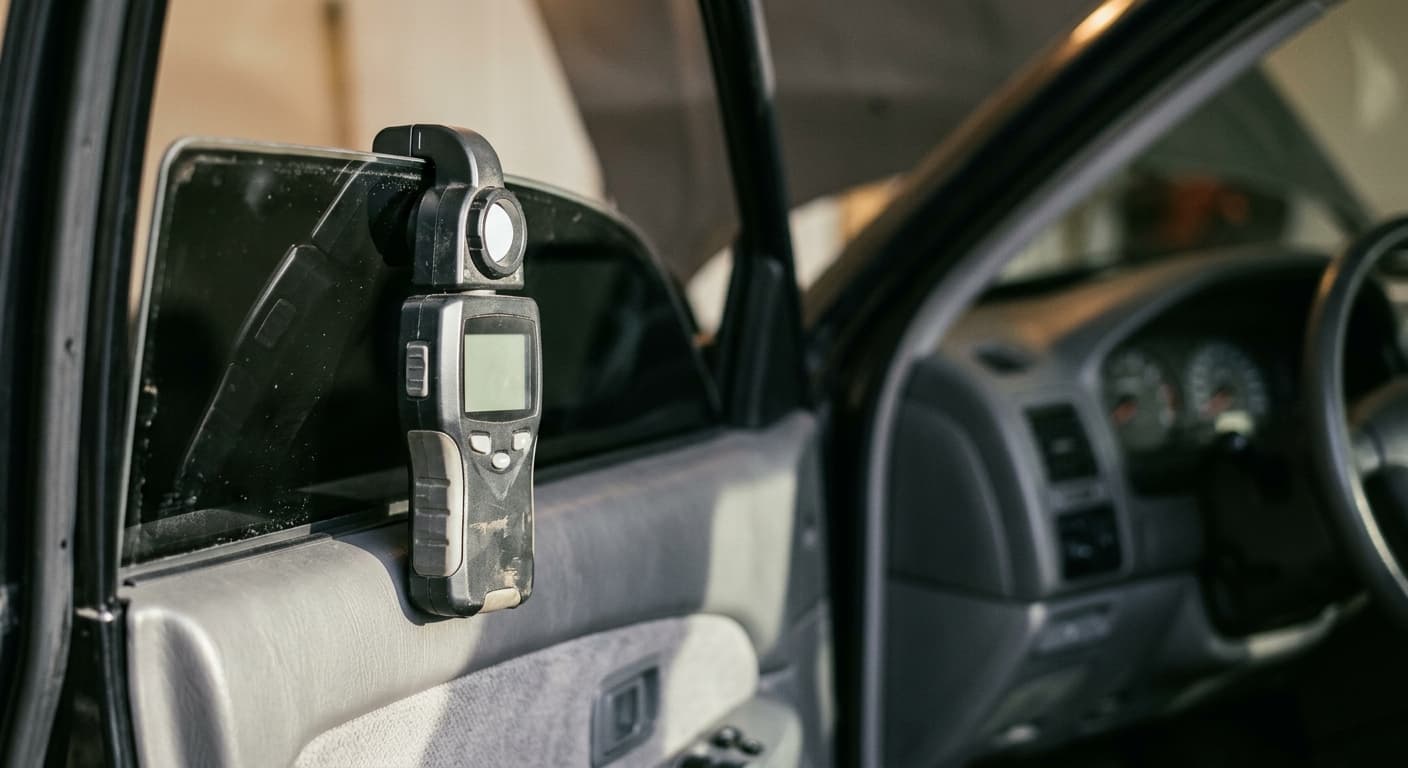
Virginia requires front side windows to allow at least 50% of visible light through on all vehicles. Rear side and rear windows must allow at least 35% VLT on sedans, while multipurpose passenger vehicles and pickup trucks may use any darkness on windows behind the driver.
What is the legal tint limit in Virginia?
Virginia's window tint law is set out in Va. Code 46.2-1052. The single most important rule: front side windows must allow at least 50% of visible light through on every vehicle. A quick concept check before the details: VLT stands for Visible Light Transmission, the share of light that passes through the glass. A higher VLT percentage is lighter tint; a lower VLT percentage is darker. So 50% VLT is a moderately light tint, and anything below that number on the front side windows is illegal.
For sedans, the back side windows and rear window each require at least 35% VLT. Va. Code 46.2-1052(H) treats one group differently: multipurpose passenger vehicles and pickup trucks may carry any level of darkness on the rear side windows and rear window, which makes Virginia permissive for much of the SUV and truck market.
The statutory definition is narrower than the everyday meaning of SUV or van, so check it before assuming it covers your vehicle. Subsection A defines a multipurpose passenger vehicle as one that is (i) designed to carry no more than 10 persons and (ii) constructed either on a truck chassis or with special features for occasional off-road use. A body-on-frame SUV qualifies. A passenger van built for more than 10 occupants fails the first test, and a unibody minivan with no off-road features may fail the second. Where a vehicle does not qualify, the 35% sedan limits apply behind the driver.
| Window | Sedans | Multipurpose Passenger Vehicles and Pickups |
|---|---|---|
| Front side windows | 50% VLT minimum | 50% VLT minimum |
| Back side windows | 35% VLT minimum | Any darkness permitted |
| Rear window | 35% VLT minimum | Any darkness permitted |
Windshield tint rules in Virginia
Virginia's windshield rule is not measured from the AS-1 line. Under Va. Code 46.2-1052(F), no film or darkening material may be applied on the windshield except to replace the sunshield in the uppermost area as installed by the manufacturer of the vehicle. The governing boundary is the factory sunshield area, not an AS-1 measurement.
The same subsection allows one further option. Clear film may be applied to a windshield, so long as it is maintained in a condition consistent with 49 C.F.R. 571.205, Standard No. 205, Glazing Materials. A clear, non-darkening product such as a clear paint-protection or clear ceramic film is therefore permitted on the windshield, while any film that darkens the glass outside the factory sunshield area is not.
AS-1 does appear in Virginia tint law, but only inside the medical exemption at Va. Code 46.2-1053, which allows windshield transmittance down to 70% except for the upper five inches of the windshield or the AS-1 line, whichever is closer to the top. It is not the standard for ordinary aftermarket windshield film.
Reflectivity is capped at 20% on any window. Virginia also specifically prohibits holographic and prism-effect films, meaning rainbow-sheen or light-diffracting films are banned regardless of their VLT rating. Standard metallic-look films that push reflectance above 20% are likewise prohibited.
The windshield strip must not itself be reflective. Even the top-edge strip must stay within the 20% reflectance cap, and any holographic or prism material would violate the color restriction even at the very top of the windshield.
Medical exemptions
Virginia provides a formal medical exemption process under Va. Code 46.2-1053. If you have a medical condition requiring reduced sun exposure, you may apply to the Virginia DMV for written authorization to use film darker than the standard limits, down to a minimum of 35% VLT on the windows covered by the exemption.
The application requires a statement from a licensed physician or optometrist certifying the medical necessity. Qualifying conditions typically include photosensitive disorders, certain autoimmune diseases, skin cancer, or eye conditions that are aggravated by visible light or UV exposure.
Once the DMV grants the authorization, you must carry the written approval in the vehicle at all times. If you are stopped and the officer questions your tint, presenting the DMV authorization resolves the issue on the spot. Without it in the vehicle, you may receive a citation even if the exemption is technically valid.
How tint is measured and certified
Virginia law enforcement officers use a VLT meter to measure the light transmission through window film during a traffic stop or vehicle inspection. Under Va. Code 46.2-1052(E), measurements made by law-enforcement officers are given a tolerance of minus seven percentage points, so a meter reading as low as roughly 43% on front side windows still falls within the legal tolerance for the 50% minimum.
Virginia does not require a tint compliance sticker. Va. Code 46.2-1052(G) is purely permissive: nothing in the section prohibits affixing a single sticker no larger than 20 square inches to the rear window, placed in the lower 5 inches of the glass. That is a permission for identifying stickers, not a tint compliance label requirement, and Virginia does not mandate an installer certification sticker the way some other states do.
If you are buying a used vehicle with existing tint, have a shop verify the front-window VLT with a meter before assuming it complies. Film can fade or darken over time, and what was installed at 50% might not read at 50% today.
Penalties for illegal tint in Virginia
Operating a vehicle with illegal tint in Virginia is a traffic infraction. It carries no demerit points on your driving record. That civil penalty applies to the driver operating the vehicle with non-compliant tint.
Installing illegal tint is treated more seriously. A person who installs tint that does not comply with Va. Code 46.2-1052 commits a Class 3 misdemeanor on a first offense and a Class 2 misdemeanor on a subsequent offense. Under Va. Code 18.2-11, a Class 3 misdemeanor carries a fine of not more than $500. A Class 2 misdemeanor carries confinement in jail for not more than six months and a fine of not more than $1,000, either or both, so a repeat installer faces potential jail time and not only a fine.
One notable feature of Virginia law: a police officer may not stop a vehicle solely because of suspected window tint. Tint enforcement in Virginia is a secondary offense, meaning the officer must have an independent reason to make the traffic stop before citing you for tint. If your stop was based entirely on tint, speak with a traffic attorney about whether the stop was lawful.
If you want to tint your windows in Virginia
The front side windows are your critical measurement point. Choose a film rated at 50% VLT or lighter (higher number) to comply. Many Virginia drivers opt for 50% factory-match film, which provides modest heat and UV reduction while staying exactly at the legal limit. Installers who know Virginia law will confirm the VLT on the front side windows with a meter after installation.

For sedans, the back side and rear windows require at least 35% VLT. A popular choice is 35% film, which provides a noticeable privacy effect while remaining compliant. If your vehicle is a pickup truck, or meets the statutory definition of a multipurpose passenger vehicle, there is no rear-window limit, so you can go as dark as you want behind the driver's row, including full limo-tint if you prefer it. Confirm that classification first if you drive a minivan or a large passenger van, since those do not automatically qualify.
Ask your installer to provide a written record of the VLT percentage applied to each window. Store that record in your glove box. While Virginia does not require an installer sticker, having documentation of the installed VLT is useful if you are ever questioned during a stop.
If you have a qualifying medical condition, pursue the DMV authorization under Va. Code 46.2-1053 before installation rather than after. The exemption allows tint down to 35% VLT on covered windows and gives you the legal paperwork to carry in the vehicle.
This article is general legal information, not legal advice. Window tint limits vary by state and change, and enforcement depends on local practice and your specific vehicle. For a definitive answer, check your state DMV or consult a local attorney.
Virginia drivers should also review Virginia Windshield Mounting Restrictions for related vehicle equipment rules.
More Virginia Laws
Frequently Asked Questions
What is the legal tint in Virginia?
Virginia requires front side windows to allow at least 50% VLT on all vehicles. Sedans must also have at least 35% VLT on back side and rear windows. Multipurpose passenger vehicles and pickup trucks may use any darkness on windows behind the driver.
How dark can my front windows be in Virginia?
Your front side windows must allow at least 50% of visible light through. Film darker than 50% VLT (a lower number) is not legal on the front side windows of any vehicle. The 50% minimum applies equally to sedans, SUVs, and trucks.
Is 35% tint legal in Virginia?
On front side windows, 35% VLT is darker than the 50% minimum and is not legal without a medical exemption. On back side and rear windows of a sedan, 35% is exactly at the legal limit. For qualifying multipurpose passenger vehicles and pickup trucks, 35% on the rear windows is well within the permitted any-darkness rule.
Can I get a medical exemption for window tint in Virginia?
Yes. Under Va. Code 46.2-1053, the Virginia DMV may issue written authorization for tint down to 35% VLT on covered windows. You need a statement from a physician or optometrist certifying the medical need. Carry the DMV authorization in the vehicle at all times.
What is the penalty for illegal tint in Virginia?
Operating with illegal tint is a traffic infraction in Virginia with no demerit points. Installing non-compliant tint is a Class 3 misdemeanor for a first offense and a Class 2 misdemeanor for any subsequent offense. Under Va. Code 18.2-11, a Class 3 misdemeanor carries a fine of not more than $500, and a Class 2 misdemeanor carries up to six months in jail and a fine of not more than $1,000, either or both.
Is windshield tint legal in Virginia?
Darkening film is not allowed on a Virginia windshield. Va. Code 46.2-1052(F) permits only a replacement of the factory sunshield in the uppermost area, plus clear film that is maintained in a condition consistent with 49 C.F.R. 571.205. The boundary is the manufacturer's sunshield area, not the AS-1 line. Reflective, holographic, and prism-effect films are also prohibited on all windows.
Do SUVs have different tint rules in Virginia?
Only if the vehicle fits the statutory definition. Va. Code 46.2-1052(H) lets multipurpose passenger vehicles and pickup trucks use any darkness on the rear side windows and rear window. Subsection A defines a multipurpose passenger vehicle as one designed to carry no more than 10 persons and constructed either on a truck chassis or with special features for occasional off-road use, so a van built for more than 10 occupants or a unibody minivan with no off-road features may not qualify and would face the 35% sedan limits. The 50% VLT minimum on front side windows applies to every vehicle type.
Can police stop me just for tinted windows in Virginia?
No. Under Virginia law, an officer may not stop a vehicle solely because of suspected window tint. Tint is a secondary offense in Virginia, meaning the officer needs a separate, independent reason to initiate the stop before citing you for non-compliant tint.
Updates
Corrected the Virginia windshield rule to the statutory factory-sunshield standard rather than the AS-1 line, added the clear-film allowance under 46.2-1052(F), removed a nonexistent rear-window sticker requirement, stated the six-month jail exposure that comes with a Class 2 misdemeanor installer conviction, and added the statutory definition of a multipurpose passenger vehicle.
Independently fact-checked against the cited primary sources; governing law re-checked for recent changes
Corrected the tint-measurement section: Va. Code 46.2-1052(E) gives law-enforcement measurements a stated tolerance of minus seven percentage points, contrary to the article's claim that no tolerance is published.
Governing law re-checked for recent changes
Reviewed and approved by an editor
The Law Behind This Article
This article rests on the statutory provisions below, held in our own legal record and retrieved from the official source. Tap a section to read the operative text.
Code of Virginia, Title 46.2: Motor Vehicles
§ 46.2-1052Tinting films, signs, decals, and stickers on windshields, etc.; penaltiesIn forcecited in 3 of our articles
A. As used in this article, unless the context requires a different meaning: "Front side windows" means those windows located adjacent to and forward of the driver's seat. "Holographic effect" means a picture or image that may remain constant or change as the viewing angle is changed. "Multipurpose passenger vehicle" means any motor vehicle that is (i) designed to carry no more than 10 persons and (ii) constructed either on a truck chassis or with special features for occasional off-road use. "Prism effect" means a visual, iridescent, or rainbow-like effect that separates light into various colored components that may change depending on viewing angle. "Rear side windows" means those windows located to the rear of the driver's seat. "Rear window" or "rear windows" means those windows that are located to the rear of the passenger compartment of a motor vehicle and that are approximately parallel to the windshield. B.
Official text (excerpt) · last checked 2026-09-01 · Read the full text in our law library · Verify at law.lis.virginia.gov
Cited in 5 court opinions in our collectionLatest citing opinion in our collection: 2016
In the courts (editorial summary, independently checked):United States v. Stewart (2001) held Section 46.2-1052 puts the burden on the driver to prove the pre-July 1987 grandfather exemption by receipts, so a possible exemption does not defeat reasonable suspicion for a stop. United States v. Brooks (2008) applied the statute's 50% front side window limit in upholding a tint-based stop.
Opinions citing this section in our collection:
- United States v. Michael Palmer (Court of Appeals for the Fourth Circuit 2016, 820 F.3d 640)✓An officer stopped a Nissan because its windows looked too dark, and later measured 40% and 25% transmittance against the statute's 50% and 35% limits; the court held the officer's belief the tint was illegal was an objectively reasonable basis for the stop.
- United States v. Billy Howard Stanfield (Court of Appeals for the Fourth Circuit 1997, 109 F.3d 976)“…107 (1955-96); Utah Code, 1953 § 41-6-149 (Michie 1987-96); Code of Virginia § 46.2-1052(C)(1) (Michie 1982-96); Wyoming Stat. 1…”
- United States v. Stewart (District Court, E.D. Virginia 2001, 149 F. Supp. 2d 236)✓An officer stopped a driver in a public library parking lot for tinted windows later measured at 3% transmittance; the court held the lot counts as a highway and that the pre-1987 grandfather clause puts the proof burden on the driver, so suspicion was reasonable.
Identified automatically from the court opinions citing this section — not a ranking of which case controls.
Also relied on in: Virginia Dashcam Laws: Installation, Audio, and Evidence Rules, Virginia Windshield Mounting Laws (2026 Guide)
§ 46.2-1053Equipping certain motor vehicles with sun-shading or tinting films or applicationsIn force
Notwithstanding the provisions of § 46.2-1052, a motor vehicle operated by or regularly used to transport any person with a medical condition which renders him susceptible to harm or injury from exposure to sunlight or bright artificial light may be equipped, on its windshield and any or all of its windows, with sun-shading or tinting films or applications which reduce the transmission of light into the vehicle to levels not less than 35 percent. Such sun-shading or tinting film when applied to the windshield of a motor vehicle shall not cause the total light transmittance to be reduced to any level less than 70 percent except for the upper five inches of such windshield or the AS-1 line, whichever is closer to the top of the windshield. Vehicles equipped with such sun-shading or tinting films shall not be operated on any highway unless, while being so operated, the driver or an occupant of the vehicle has in his possession a written authorization issued by the Commissioner of the Department of Motor Vehicles authorizing such operation.
Official text (excerpt) · last checked 2026-07-29 · Read the full text in our law library · Verify at law.lis.virginia.gov
Code of Virginia, Title 18.2: Crimes and Offenses Generally
§ 18.2-11Punishment for conviction of misdemeanorIn forcecited in 13 of our articles
The authorized punishments for conviction of a misdemeanor are: (a) For Class 1 misdemeanors, confinement in jail for not more than twelve months and a fine of not more than $2,500, either or both. (b) For Class 2 misdemeanors, confinement in jail for not more than six months and a fine of not more than $1,000, either or both. (c) For Class 3 misdemeanors, a fine of not more than $500. (d) For Class 4 misdemeanors, a fine of not more than $250. For a misdemeanor offense prohibiting proximity to children as described in subsection A of § 18.2-370.2, the sentencing court is authorized to impose the punishment set forth in subsection B of that section in addition to any other penalty provided by law.
Official text (excerpt) · last checked 2026-07-29 · Read the full text in our law library · Verify at law.lis.virginia.gov
Cited in 27 court opinions in our collectionLatest citing opinion in our collection: 2026
Opinions citing this section in our collection:
- Commonwealth v. White (Virginia Circuit Court 2002, 58 Va. Cir. 154)“…meanors carry a possible sentence of twelve months in jail. Va. Code § 18.2-11(a). Upon discovery of this violation…”
- Virginia v. Moore (Supreme Court of the United States 2008, 553 U.S. 164)“…le under Virginia law by a year in jail and a $2,500 fine, Va. Code Ann. §§18.2-11 (Lexis 2004), 18.2-272 (Supp. 2007), 4…”
- Richard Weidman v. Exxon Mobil Corporation (Court of Appeals for the Fourth Circuit 2015, 776 F.3d 214)“…months and a fine of not more than $2,500, either or both.” Va. Code Ann. § 18.2-11(a).…”
Identified automatically from the court opinions citing this section — not a ranking of which case controls.
Also relied on in: Virginia Smart Glasses Recording Laws, Virginia GPS Tracking Laws: Is It Legal to Put a Tracker on a Car? (2026), Virginia Surveillance Camera Laws (2026 Guide)
Code of Federal Regulations Title 49
§ 571.205Standard No. 205, Glazing materials.In forcecited in 11 of our articles
S1. Scope. This standard specifies requirements for glazing materials for use in motor vehicles and motor vehicle equipment. S2. Purpose. The purpose of this standard is to reduce injuries resulting from impact to glazing surfaces, to ensure a necessary degree of transparency in motor vehicle windows for driver visibility, and to minimize the possibility of occupants being thrown through the vehicle windows in collisions. S3. Application. This standard applies to passenger cars, multipurpose passenger vehicles, trucks designed to carry at least one person, buses, motorcycles, slide-in campers, pickup covers designed to carry persons while in motion and low speed vehicles, and to glazing materials for use in those vehicles. S4. Definitions. Bullet resistant shield means a shield or barrier that is installed completely inside a motor vehicle behind and separate from glazing materials that independently comply with the requirements of this standard. Camper means a structure designed to be mounted in the cargo area of a truck, or attached to an incomplete vehicle with motive power, for the purpose of providing shelter for persons.
Official text (excerpt) · last checked 2026-07-28 · Read the full text in our law library · Verify at ecfr.gov
Cited in 34 court opinions in our collectionLatest citing opinion in our collection: 2024
In the courts (editorial summary, independently checked):O'Hara Ex Rel. H.O. v. General Motors Corp. (2007) held FMVSS 205, 49 CFR 571.205, does not preempt a state design claim seeking advanced side glazing. McCracken v. Ford Motor Co. (2008) read the same standard as mandatory rather than a floor, so a conflicting claim would be preempted, and denied dismissal only on that open question.
Opinions citing this section in our collection:
- O'Hara Ex Rel. H.O. v. General Motors Corp. (Court of Appeals for the Fifth Circuit 2007, 508 F.3d 753)✓A child was partially ejected through a Tahoe's tempered-glass side window in a rollover, and her parents claimed GM should have used advanced glazing; the court held FMVSS 205 is a minimum safety standard that does not preempt their common law claims.
- United States v. Ruel Antonio Wallace (Court of Appeals for the Ninth Circuit 2000, 213 F.3d 1216)“…uirements of Federal Motor Vehicle Safety Standard No. 205 (49 C.F.R. 571.205), including the specified minimum light…”
- McCracken v. Ford Motor Co. (District Court, E.D. Pennsylvania 2008, 588 F. Supp. 2d 635)✓A buyer blaming his thyroid cancer on radiation through his Fords' windshields said Lucite or leaded glass should have been used; treating FMVSS 205 as a mandatory standard, the court refused to dismiss on preemption because the pleadings did not show Lucite was unapproved.
Identified automatically from the court opinions citing this section — not a ranking of which case controls.
Also relied on in: Alaska Window Tint Laws (2026): Legal VLT Limits, Iowa Windshield Mounting Laws (2026 Guide), California Windshield Mounting Laws (2026 Guide)
Search our full record of US law — 2.1 million sections, every state + federal →
Sources and References
- Va. Code 46.2-1052 (Tinting materials on windshields and windows)(law.lis.virginia.gov).gov
- Va. Code 46.2-1053 (Medical exemptions for window tint)(law.lis.virginia.gov).gov
- Virginia Department of Motor Vehicles(dmv.virginia.gov).gov
- Va. Code 18.2-11 (Punishment for conviction of misdemeanor)(law.lis.virginia.gov)