
Utah
Utah Window Tint Laws (2026): Legal VLT Limits
Independently fact-checked against primary sources (last audited August 18, 2026). · Reviewed by the RecordingLaw editorial team. · Law checked current as of August 18, 2026. · 2 primary sources cited on this page. How we verify our legal content
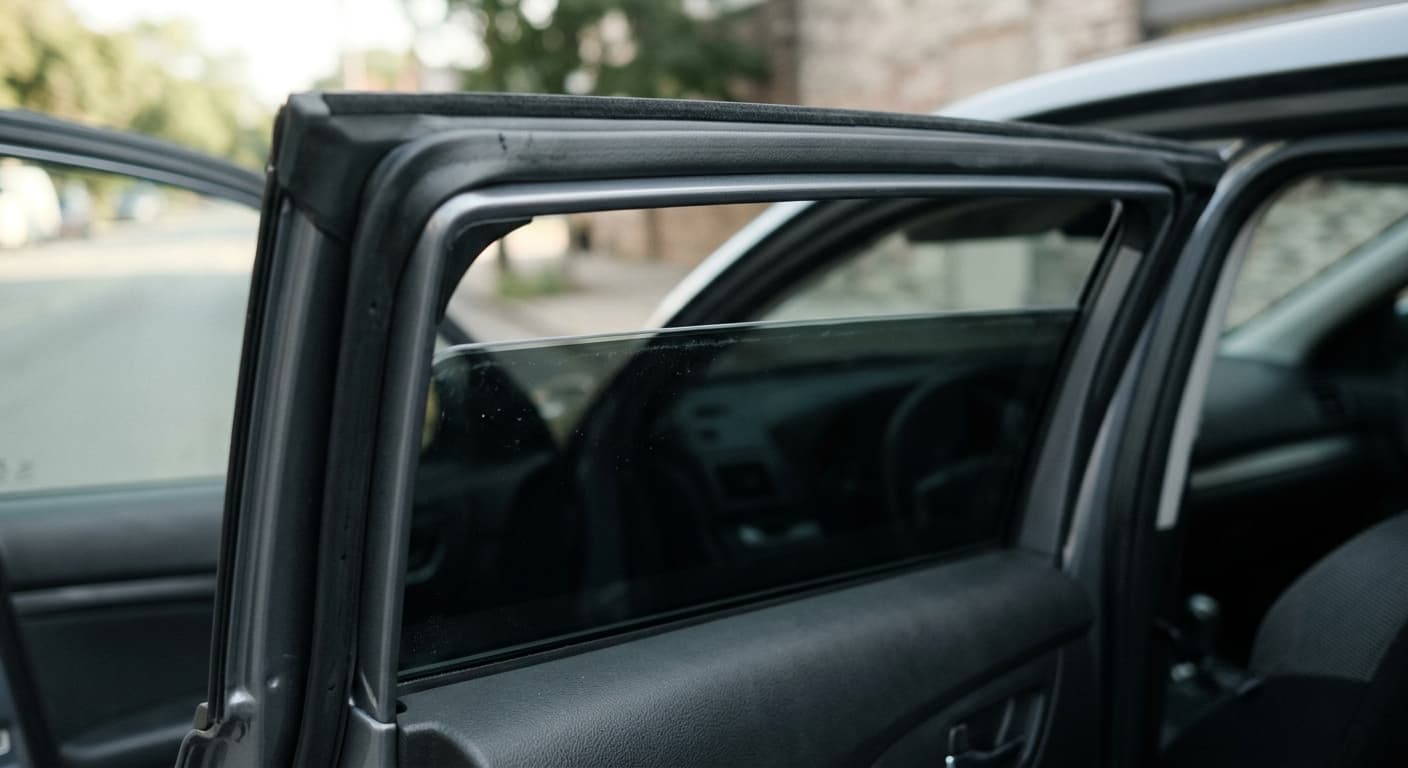
Utah law requires front side windows to allow at least 35% of visible light through (35% VLT minimum), a limit that took effect on May 4, 2022 under SB 149. Back side and rear windows may be tinted to any darkness.
What is the legal tint limit in Utah?
Utah's front side window tint limit changed on May 4, 2022, when SB 149, the Tinted Vehicle Windows Amendments, took effect. The prior limit was 43% VLT; it is now 35% VLT. That means the film and glass combined must allow at least 35% of visible light to pass through your front side windows under current Utah law.
A higher VLT percentage is lighter; a lower percentage is darker. A 35% VLT film is noticeably tinted while still permitting a substantial amount of light. The old 43% limit was lighter (less dark); the current 35% allows drivers to go moderately darker on their front windows than before.
Back side and rear windows have no VLT minimum in Utah. Any level of darkness is permitted on those windows. The mirror rule is broader than the rear window, though. Except for compliant windshield material, a motor vehicle with tinting or nontransparent material on any window must be equipped with rear-view mirrors on both the left and right side. That requirement does not depend on the rear window being tinted, and it does not depend on the tint obstructing your view: a car with legal 35% front side tint and clear rear glass is covered.
| Window Position | All Vehicle Types |
|---|---|
| Front side windows | 35% VLT minimum (since May 4, 2022) |
| Back side windows | Any darkness |
| Rear window | Any darkness |
Utah does not draw a distinction between sedans and multipurpose vehicles (SUVs, vans, trucks) for back side or rear windows. The any-darkness rule applies to all vehicle types behind the driver.
The statute allows no more than a 5% variance when a peace officer meters the light transmittance, so a front side window reading modestly below 35% may still be treated as compliant. That variance is written into the front side window standard alone; the 70% windshield requirement carries no variance. It is also not a plus-or-minus tolerance in both directions: a 40% reading complies because it exceeds the 35% floor, not because of any allowance. Installers should still target close to the stated VLT to avoid the borderline range during enforcement.
Windshield tint rules in Utah
Utah's windshield rules are specific. The windshield as a whole must allow at least 70% of visible light to pass through. The statute bars only a windshield that allows less than 70% light transmittance, so a reading of exactly 70% complies. Non-transparent material, including dark tint film, is permitted only in two limited zones: above the AS-1 line or the top 4 inches of the windshield (whichever is lower), or in a small lower-left corner area no larger than 3 inches by 4 inches.
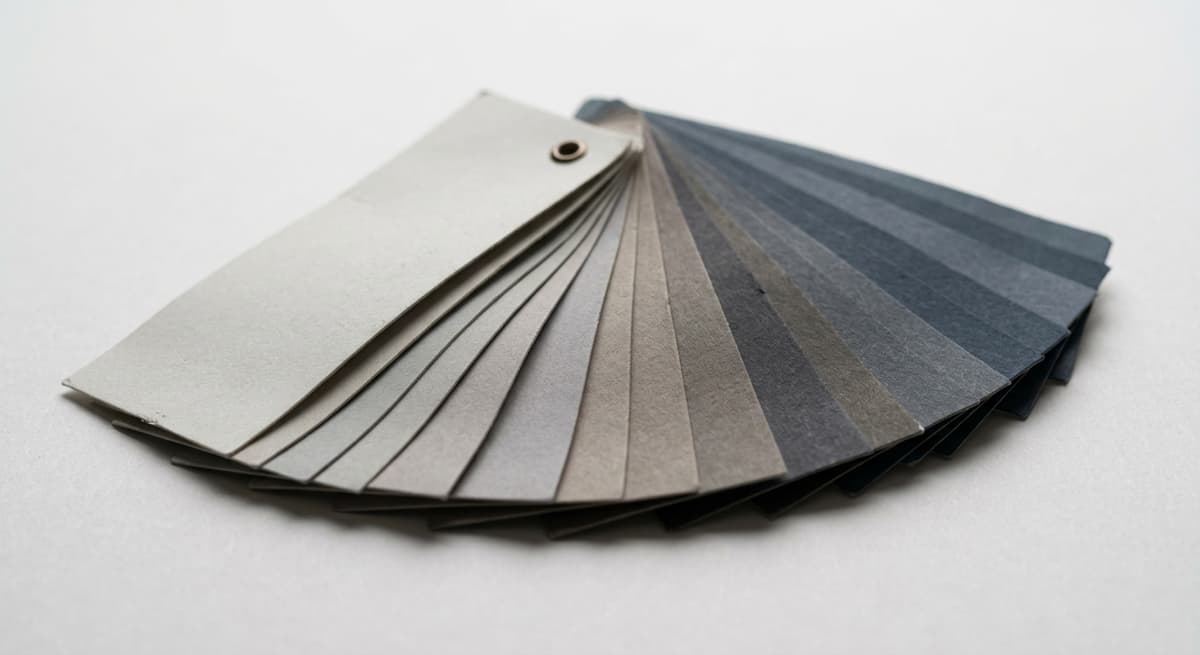
The small lower-left exception is unusual compared to most states and exists to accommodate certain factory configurations. Outside these two zones, the windshield must remain clear and allow at least 70% light transmittance.
Metallic or mirrored film is prohibited on all windows under Utah law, and that prohibition applies to the windshield strip as well. If you are adding a sun strip, choose a non-metallic, non-mirrored film that stays within the permitted zones.
Medical exemptions
Utah Code 41-6a-1635, the state's window tint statute, does not contain a medical exemption, physician-certification process, or waiver for darker front-window tint. Utah Highway Patrol's own window-tint guidance likewise describes no such process. The statute's only carve-outs are the AS-1/4-inch windshield strip, the 3-by-4-inch lower-left windshield corner, and the general any-darkness allowance already permitted on back side and rear windows.
If sunlight sensitivity is a genuine concern, the available legal options are the any-darkness back side and rear windows (with dual outside mirrors) or a clear, non-tinting UV-blocking film on the front windows and windshield that does not reduce visible light transmission below the legal minimums. Contact the Utah Driver License Division or Department of Public Safety directly to confirm whether any administrative accommodation exists before installing tint that exceeds the 35% front-window minimum.
How tint is measured and certified
Utah uses a VLT meter to measure the combined light transmission through both the glass and the applied film. Because factory glass already absorbs some light, the combined reading will always be darker than the film's standalone rating. Before purchasing film, ask your installer to measure the factory glass VLT so you can calculate what aftermarket film will keep you above the 35% combined minimum.
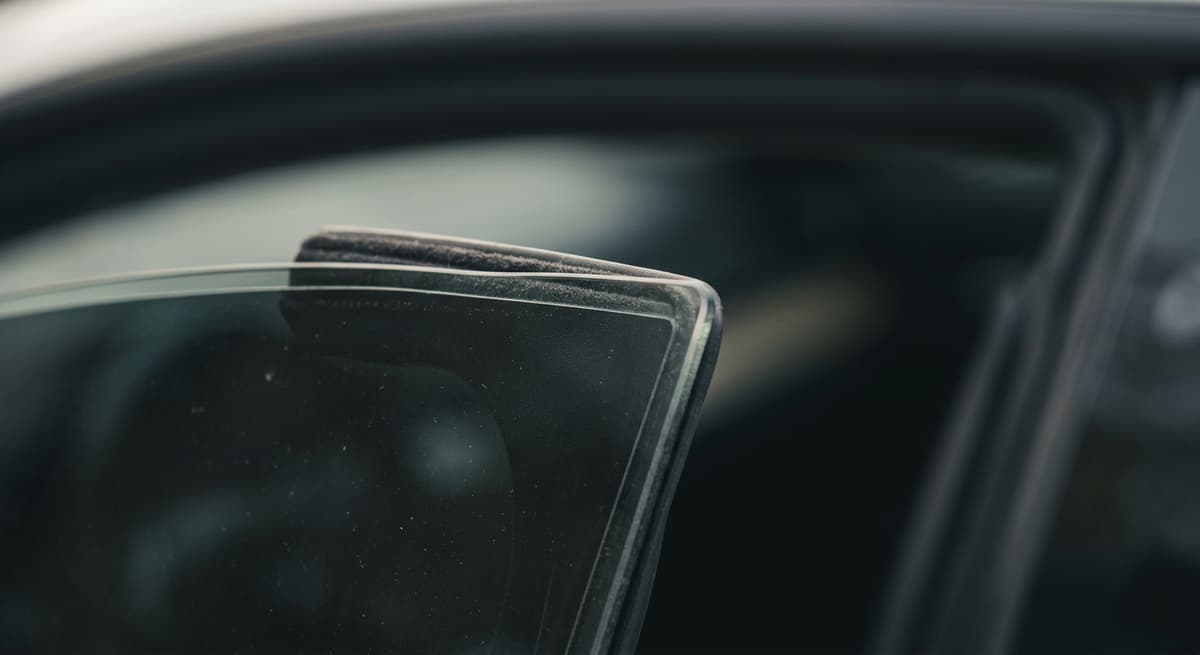
The 5% metering variance in the front side window standard provides some practical leeway, and a reading of 31% on a 35%-rated front window may fall within it. That variance does not extend to the 70% windshield standard. Targeting 37-40% film on top of lightly tinted factory glass gives you a safer margin.
Utah Code 41-6a-1635 does not itself require a tint compliance sticker or label. Ask your installer about current practice, as many professional tinters apply a label citing the film's VLT and the installer's contact information as a courtesy even when not mandated. Keeping the manufacturer's film certificate in the glove box is always a good precaution.
Penalties for illegal tint in Utah
Non-compliant window tint in Utah is an infraction under Utah Code 41-6a-1635(9). An infraction is a criminal offense rather than a civil violation: it is defined and punished in Utah's Criminal Code. What sets it apart is that it carries no jail. A person convicted of an infraction may not be imprisoned and is instead subject to a fine, forfeiture, disqualification, or some combination, and where no punishment is specified the fine may be set as for a class C misdemeanor. Utah law enforcement officers may cite a driver during a roadside stop if the tint appears to violate the VLT requirements.
Since May 7, 2025, Utah Code 41-6a-1635(10) also bars a peace officer from requesting that the Motor Vehicle Division or Driver License Division revoke or suspend your vehicle registration or driver license over a violation, or multiple violations, of the windshield or front side window limits. That subsection was added by HB 112, the 2025 bill on motor vehicle safety inspection modifications, which left every tint percentage unchanged.
After receiving a citation, you will typically need to remove or replace the non-compliant film and may be asked to provide proof of correction. Because it is an infraction, the financial consequences are modest compared to misdemeanor states, but the cost of having film professionally removed and replaced can exceed the fine itself.
The simplest way to avoid a citation is to choose compliant film from the start and have it installed by a reputable shop that will verify the combined VLT before the vehicle leaves the bay.
If you want to tint your windows in Utah
The key number is 35% VLT on front side windows, the standard in effect since May 4, 2022. If your vehicle still carries tint installed under the older 43% rule, that film remains legal: the change allowed darker tint, so film that met the old 43% standard still exceeds the 35% minimum. You can now go as dark as 35% on front windows, where the prior limit was 43%.
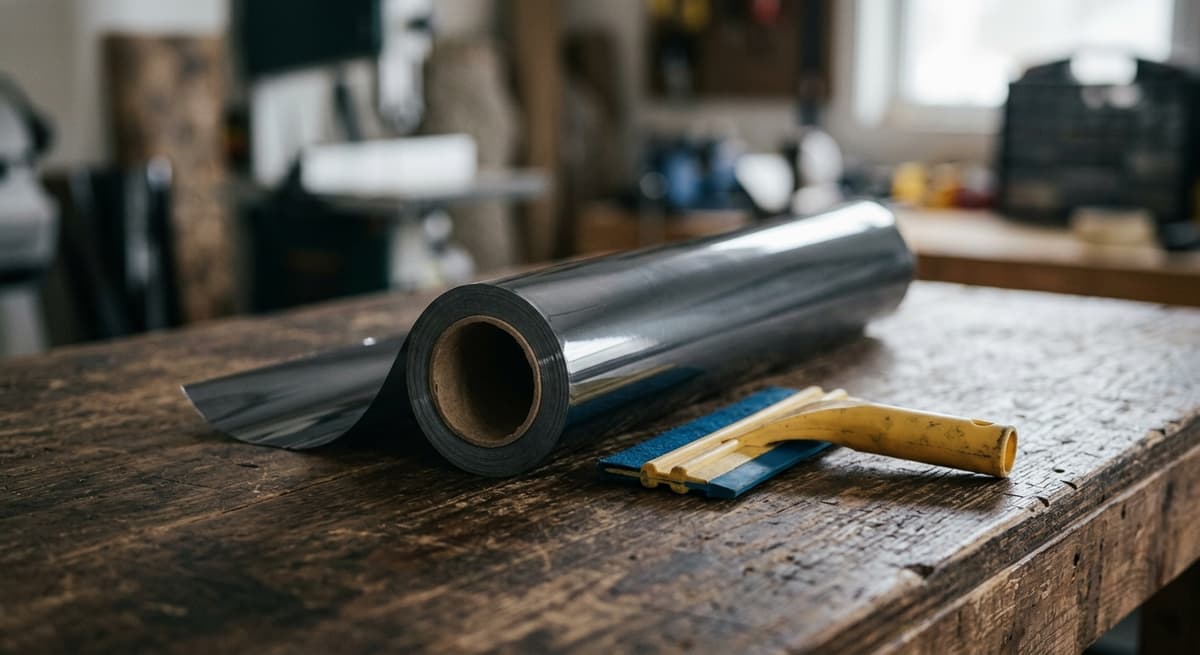
Start by measuring your factory glass. Many dealerships can tell you the factory VLT. Then choose a film whose combined VLT with the factory glass will be 35% or higher. Ask your installer to verify the combined reading before you drive away.
For back side and rear windows, any darkness works, but make sure your vehicle has rear-view mirrors on both the left and right side, which the statute requires whenever any window carries tinting. Metallic and mirrored films are not permitted on any window, so stay with conventional dyed, carbon, or ceramic films.
Utah does not offer a medical exemption for darker front-window tint, so a documented light-sensitivity condition does not change the 35% minimum on those windows. Ask your installer about any compliance labels or certificates to keep in the vehicle.
This article is general legal information, not legal advice. Window tint limits vary by state and change, and enforcement depends on local practice and your specific vehicle. For a definitive answer, check your state DMV or consult a local attorney.
For more state tint rules, see the Window Tint Laws by State hub. Utah drivers may also want to review Utah Windshield Mounting Restrictions for related vehicle glass regulations.
More Utah Laws
Frequently Asked Questions
What is the legal tint limit in Utah?
Since May 4, 2022, Utah requires front side windows to allow at least 35% of visible light through (35% VLT minimum), lowered from the previous 43% limit by SB 149. Back side and rear windows may be tinted to any darkness. Metallic and mirrored films are prohibited on all windows.
How dark can my front windows be in Utah?
The darkest legal front side window tint in Utah is 35% VLT. The combined transmission of the film and the factory glass must be at least 35%. This limit took effect May 4, 2022, replacing the prior 43% limit. A 35% film is noticeably tinted while still allowing considerable light through.
Is 20% tint legal in Utah?
Not on front side windows. Utah requires at least 35% VLT on front side windows, so 20% (which is darker than 35%) is not permitted there. However, 20% tint is legal on back side and rear windows, which have no VLT minimum.
When did Utah change its tint law?
Utah lowered the front side window minimum from 43% VLT to 35% VLT through SB 149, the Tinted Vehicle Windows Amendments, which took effect on May 4, 2022. A later bill, HB 112 (2025), changed no tint percentage: it added Subsection (10), which bars a peace officer from seeking revocation or suspension of a registration or driver license over a tint violation.
Can I get a medical exemption for window tint in Utah?
No. Utah Code 41-6a-1635 does not include a medical exemption, physician-certification process, or waiver for darker front-window tint, and Utah Highway Patrol's own guidance describes no such process. Contact the Utah Driver License Division to confirm whether any administrative accommodation exists.
What is the penalty for illegal tint in Utah?
Illegal window tint in Utah is an infraction under Utah Code 41-6a-1635(9). An infraction is a criminal offense rather than a civil violation, but it carries no jail time: a person convicted of an infraction may not be imprisoned and is instead subject to a fine. Utah Code 41-6a-1635(10) also bars an officer from requesting that your registration or driver license be revoked or suspended over a tint violation. You will generally need to remove and replace non-compliant film and provide proof of correction to resolve the citation.
Is windshield tint legal in Utah?
Only in limited zones. Non-transparent film is allowed above the AS-1 line or top 4 inches of the windshield, and in a small lower-left corner (3 by 4 inches). The rest of the windshield must allow at least 70% of visible light through. Metallic or mirrored films are prohibited.
Updates
Corrected the history of Utah's 35% front side window limit, which was set by S.B. 149 effective May 4, 2022 and not by H.B. 112 in 2025; added the 2025 provision barring registration or license suspension over a tint violation; and fixed the windshield threshold, the scope of the 5% metering variance, the dual mirror rule, and the description of an infraction.
Removed an unsupported claim that Utah offers a medical exemption for darker window tint; Utah Code 41-6a-1635 contains no such provision, and the page now states that plainly.
Independently fact-checked against the cited primary sources; governing law re-checked for recent changes
Simplified the explanation of the front-window tint limit change so it states the rule once, clearly.
Governing law re-checked for recent changes
Reviewed and approved by an editor
The Law Behind This Article
This article rests on the statutory provisions below, held in our own legal record and retrieved from the official source. Tap a section to read the operative text.
Utah Code, Title 41: Motor Vehicles
§ 41-6a-1635Windshields and windows -- Tinting -- Obstructions reducing visibility -- Wipers -- Prohibitions.In forcecited in 4 of our articles
(1) Except as provided in Subsections (2), (3), and (4) a person may not operate a motor vehicle with: (a) a windshield that allows less than 70% light transmittance; (b) a front side window that allows less than 35% light transmittance, with no more than a 5% variance observed by a peace officer metering the light transmittance; (c) any windshield or window that is composed of, covered by, or treated with any material or component that presents a metallic or mirrored appearance; (d) any sign, poster, or other nontransparent material on the windshield or side windows of the motor vehicle except: (i) a certificate or other paper required to be so displayed by law; or (ii) the vehicle's identification number displayed or etched in accordance with rules made by the department under Section 41-6a-1601; or (e) any debris, frost, or other substance that materially obstructs the operator's view. (2) (a) A person may not operate a motor vehicle with an object or device hanging or mounted in a manner that materially obstructs the operator's view.
Official text (excerpt) · last checked 2026-09-08 · Read the full text in our law library · Verify at le.utah.gov
Cited in 3 court opinions in our collectionLatest citing opinion in our collection: 2023
Opinions citing this section in our collection:
- Harvey v. Butcher (District Court, D. Utah 2023)“…de windows that “allow less than 43% light transmittance.” Utah Code § 41-6a-1635(1)(b) (2015). Officer Simpson measured…”
- Linin v. Neff (District Court, D. Utah 2021)“…ff saw that Linin had a cracked windshield in violation of Utah Code § 41-6A-1635. Neff informed Linin of the reasons for…”
Identified automatically from the court opinions citing this section — not a ranking of which case controls.
Also relied on in: Utah Dashcam Laws, Utah Windshield Mounting Laws (2026 Guide), Illinois Law Bars Police From Stopping Drivers Solely for Windshield Obstructions Like Air Fresheners
Utah Code, Title 76: Criminal Offenses
§ 76-3-205Infraction conviction -- Fine, forfeiture, and disqualification.In force
(1) A person convicted of an infraction may not be imprisoned but may be subject to: (a) a fine, which may include compensatory service as a method to satisfy the fine; (b) forfeiture; (c) disqualification; or (d) any combination of the above. (2) Compensatory service shall be considered in accordance with Section 76-3-301.7. (3) Whenever a person is convicted of an infraction and no punishment is specified, the person may be fined as for a class C misdemeanor.
Official text (excerpt) · last checked 2026-07-29 · Read the full text in our law library · Verify at le.utah.gov
Cited in 3 court opinions in our collectionLatest citing opinion in our collection: 2004
Opinions citing this section in our collection:
- Salt Lake City v. Grotepas (Utah Supreme Court 1995, 278 Utah Adv. Rep. 3)“…there is no possibility of imprisonment, see Utah Code Ann. § 76-3-205 (1), 2 the court of appeal…”
- Peterson v. Farnsworth (Court of Appeals for the Tenth Circuit 2004, 371 F.3d 1219)“…ine, forfeiture, and disqualification, or any combination.” Utah Code Ann. § 76-3-205. The summons was issued pursuan…”
- Cooper v. State of Utah (District Court, D. Utah 1987, 684 F. Supp. 1060)“…rfeiture, and disqualification, or any combination,” under Utah Code Ann. § 76-3-205 (2) (1978). In addition, section 30-1-2…”
Identified automatically from the court opinions citing this section — not a ranking of which case controls.
Search our full record of US law — 2.1 million sections, every state + federal →
Sources and References
- Utah Code Section 41-6a-1635 - Window Tinting Requirements(le.utah.gov).gov
- Utah Legislature HB 112 (2025) - Window Tint Limit Change(le.utah.gov).gov
- Utah S.B. 149 (2022) - Tinted Vehicle Windows Amendments (Chapter 183, effective May 4, 2022; lowered front side windows from 43% to 35% VLT)(le.utah.gov)
- Utah Code Section 76-3-205 - Infraction Conviction: Fine, Forfeiture, and Disqualification(le.utah.gov)