
Texas
Texas Window Tint Laws (2026): Legal VLT Limits
Independently fact-checked against primary sources (last audited August 18, 2026). · Reviewed by the RecordingLaw editorial team. · Law checked current as of August 18, 2026. · 2 primary sources cited on this page. How we verify our legal content
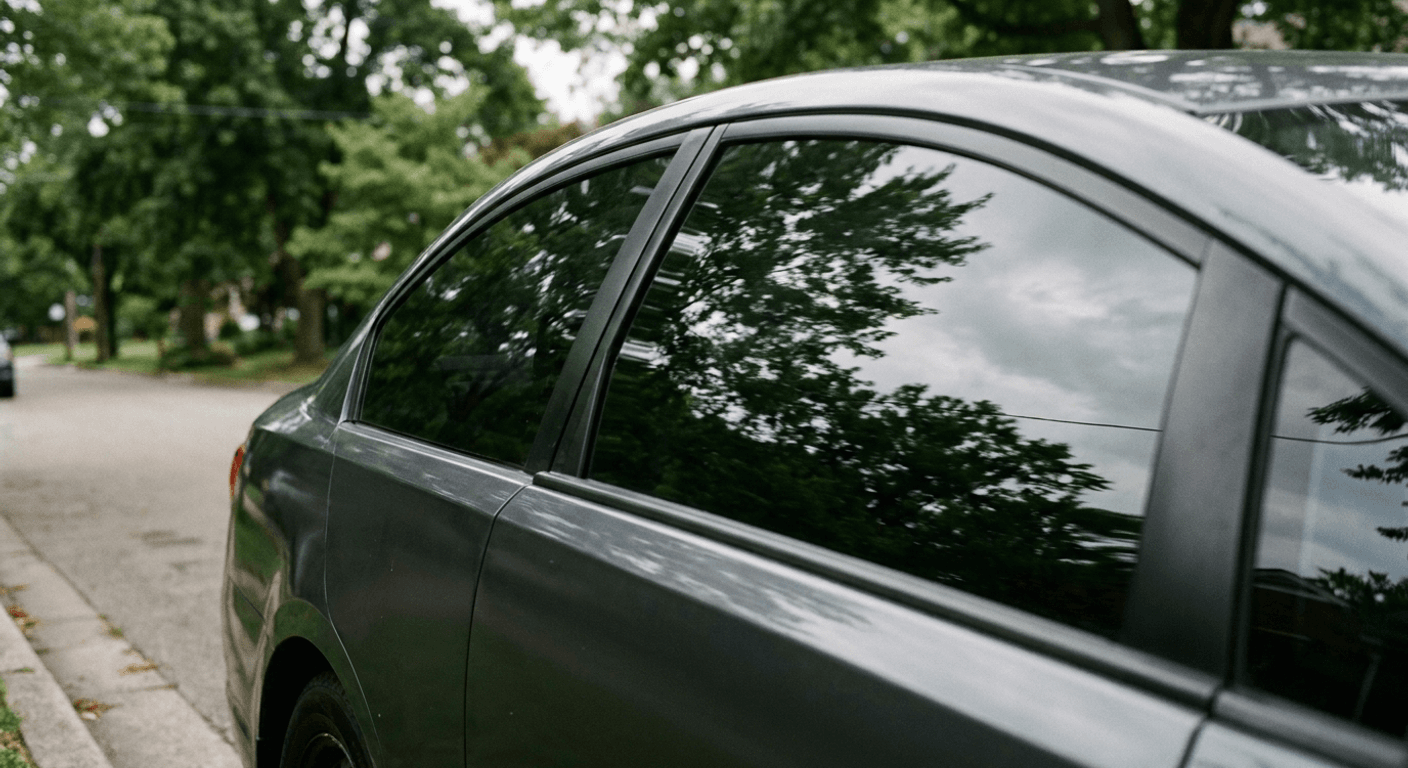
Texas law requires front side windows to allow at least 25% of visible light through (25% VLT minimum). Side windows behind the driver may be tinted to any darkness, and the rear window may be any darkness if the vehicle has an outside mirror on each side, giving most drivers considerable flexibility behind the driver's seat.
What is the legal tint limit in Texas?
Texas sets a 25% VLT minimum for front side windows, meaning the film and glass combined must allow at least 25% of visible light to pass through. A higher VLT percentage is lighter; a lower percentage is darker. So 25% is the darkest shade legally permitted on your front windows, and 70% (nearly clear) would be much lighter.
Back side windows (the windows behind the driver on sedans, SUVs, vans, and trucks) may be tinted to any darkness under Texas law, with no further condition attached. The rear window may also be any darkness, but only if the vehicle has an outside mirror on each side that reflects to the driver a view of the highway for at least 200 feet behind the vehicle.
Without those two mirrors, the rear window has no darkness allowance at all. Section 547.613(b) sets no VLT floor for the rear glass, so aftermarket film that reduces light transmission there is an offense under Section 547.613(a)(2) at any shade, not permitted down to 25%. Factory-tinted or pretinted glass installed by the vehicle manufacturer is separately exempt under Section 547.613(b)(13).
| Window Position | Sedan | SUV / Van / Truck |
|---|---|---|
| Front side windows | 25% VLT minimum | 25% VLT minimum |
| Back side windows | Any darkness | Any darkness |
| Rear window | Any darkness with an outside mirror on each side; no aftermarket tint without them | Any darkness with an outside mirror on each side; no aftermarket tint without them |
The dual-mirror rule ensures the driver can always see rearward, even when the rear glass is blacked out. If you plan on very dark rear tint, confirm your vehicle has functional outside mirrors on both sides.
Texas also caps reflectance at 25% on the windshield and front side windows; a film that bounces back more than 25% of light is not legal there. Beyond reflectivity, Texas bans red, blue, and amber tint colors on the windshield. Windows to the rear of the driver, the back side windows and the rear window, are exempt from the reflectance cap and color ban entirely under Transportation Code Sec. 547.613.
Windshield tint rules in Texas
The windshield receives the most restrictive treatment under Texas Transportation Code Section 547.613. Aftermarket tint on the main windshield is limited to a non-reflective strip at the top of the glass.
Section 547.613(b)(1)(D) allows that strip only where it does not extend downward beyond the AS-1 line or more than five inches from the top of the windshield, whichever is closer to the top of the windshield. The statute picks the more restrictive of the two boundaries, not the lower one. So if the AS-1 line on your vehicle sits more than five inches down from the top, the five-inch mark controls; if the AS-1 line is higher than five inches from the top, the AS-1 line controls.
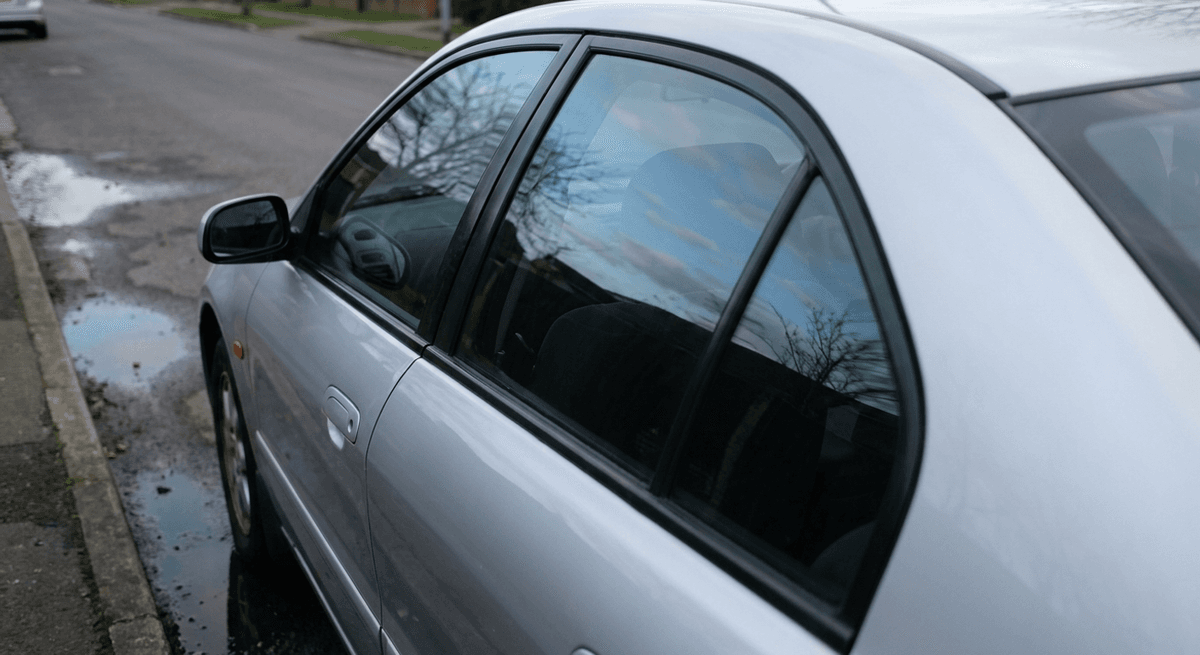
There is one notable exception: clear UV-filtering film that does not reduce visible light transmission may be applied to the entire windshield. These films are designed to block ultraviolet radiation without visibly darkening the glass, and they are fully legal in Texas as long as they do not alter the appearance of the glass or reduce VLT.
The 25% reflectance cap and the ban on red, blue, and amber colors apply to the windshield's non-reflective strip. A dark or colored band across the top of your windshield would not meet these requirements.
Medical exemptions
Texas does not issue a window tint medical exemption permit. What Section 547.613(e) creates is an affirmative defense to prosecution: it is a defense to a charge under Subsection (a) that the defendant, or a passenger in the vehicle at the time of the violation, is required for a medical reason to be shielded from direct rays of the sun. Qualifying conditions typically involve photosensitivity, lupus, or similar conditions a physician can document.
That distinction matters in practice. The statute prescribes no application, no state form, no physician certificate, no approval process, and no darker VLT figure that gets approved in advance. The defense is raised in response to a citation, in the case itself; it is not a pre-cleared exemption you hold before a stop.
Because the defense turns on a medical requirement, documentation from a treating physician describing the condition and the need to be shielded from sunlight is the practical way to support it. Carrying that letter in the vehicle is sensible and an officer may take it into account, but Texas law does not require you to carry it, and an officer is not obliged to drop a citation because you have one.
The older Department of Public Safety medical exemption paperwork ran through the vehicle safety inspection program, which ended for non-commercial vehicles on January 1, 2025. Do not expect an inspection station or a county tax office to issue a tint exemption today.
How tint is measured and certified
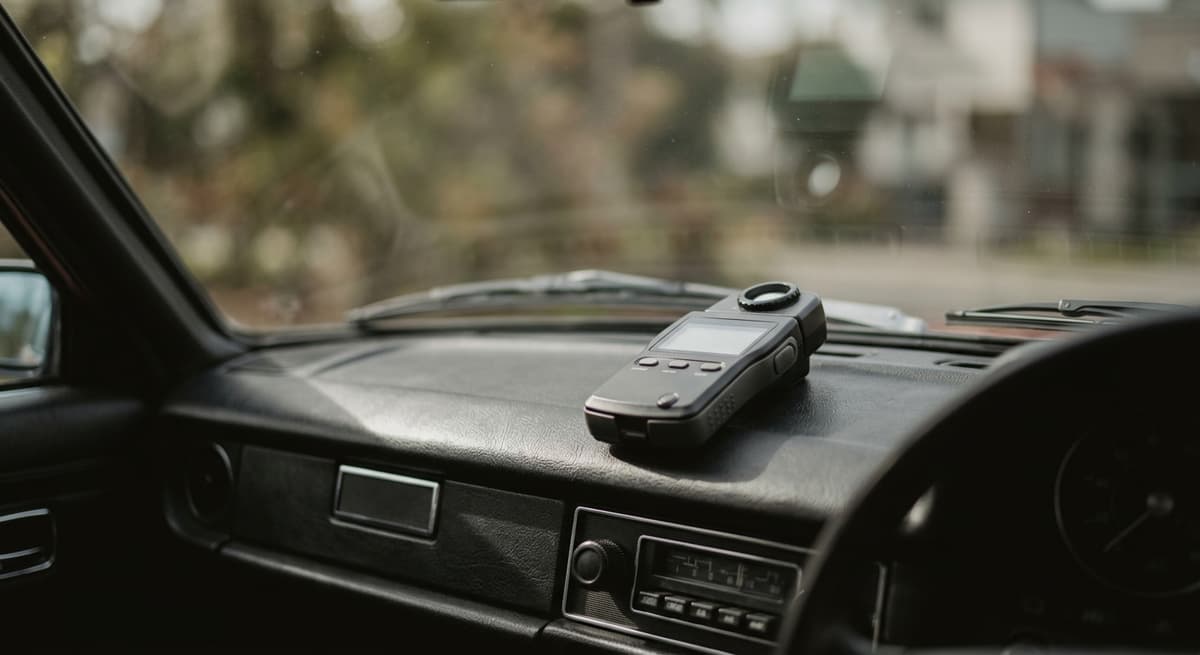
Texas uses a VLT meter (sometimes called a tintometer or photometer) to measure the combined light transmission through the glass and film together. The meter is placed on the window edge and reads the percentage of light passing through. Both the film itself and the factory glass tint count toward the total, so a car with factory-tinted glass may have very little room for additional aftermarket film before hitting the 25% floor.
Texas law requires a compliance label on a sunscreening device, permanently installed between the film and the surface it is applied to under Section 547.609(4). The statute does not designate a particular window for it: Section 547.613(a-1)(2) refers to the label going on the windshield or side or rear window of the vehicle, as applicable, meaning whichever glass was tinted.
The label must be legible, must carry the light transmission and luminous reflectance information the Department of Public Safety requires, and, on a windshield or a side or rear window, must state that the device's light transmission is consistent with Section 547.613(b)(1) or (2), as applicable. Applying the label is the installer's legal obligation, not the driver's: a business that tints a window without installing a complying label commits a misdemeanor punishable by a fine of up to $1,000 under Section 547.613(a-1).
When choosing a tinter, ask for the manufacturer's certificate of compliance showing the film's VLT rating and reflectance. Keep that document in the vehicle along with any medical paperwork. A reputable installer will apply the label automatically and provide you with the certificate.
Section 547.613(d) lets DPS treat a front side window as compliant if its light transmission or luminous reflectance varies by no more than three percent from the standard. That is a narrow allowance rather than a general enforcement tolerance, so installers should still target a margin above the 25% minimum to account for normal variation.
Penalties for illegal tint in Texas
Texas ended its Vehicle Safety Inspection Program for non-commercial vehicles on January 1, 2025 (House Bill 3297, 88th Legislature). Non-commercial vehicles no longer need a safety inspection before registration; owners instead pay a $7.50 inspection program replacement fee at registration. Commercial vehicles are still inspected. For an ordinary driver, illegal tint is no longer caught at an annual inspection; it is enforced through roadside stops and citations.
An officer who observes or measures illegal tint during a stop can issue a citation. A tint violation under Section 547.613(a) is a misdemeanor, and because that section sets no penalty of its own for the driver, the general penalty in Transportation Code Section 542.401 controls: a fine of not less than $1 or more than $200, assessed by the court. DPS sets the standards a sunscreening device must meet (Sections 547.001(9) and 547.613(c) and (d)); it does not set fine amounts.
The one fixed dollar figure in the tint statute itself falls on the trade. An installer who applies tint without the required compliance label faces a fine of up to $1,000 under Section 547.613(a-1). If you are cited as a driver, you will typically also need to remove the offending film and provide proof of correction to resolve the ticket.
Repeat violations or failure to correct the problem can lead to escalating consequences. The simplest path forward is to remove and replace non-compliant film before a stop occurs.
If you want to tint your windows in Texas
Start with the legal numbers: 25% VLT minimum on front side windows, any darkness on side windows behind the driver, any darkness on the rear window if the vehicle has an outside mirror on each side, 25% maximum reflectance on the windshield strip and front side windows, and no red, blue, or amber film on the windshield (windows behind the driver are exempt from the reflectance and color rules under Transp. Code 547.613(b)). If your vehicle already has factory-tinted glass, measure or ask the dealer for the factory VLT before adding aftermarket film. Many factory glass panels transmit 70-80%, leaving room for a 35% or 50% aftermarket film while staying legal.
Choose a licensed installer who is familiar with Texas requirements. Ask them to install the required compliance label between the film and the glass on each window they tint, stating that the film's light transmission is consistent with Section 547.613(b)(1) or (2), and ask for a written manufacturer's certificate showing the film's VLT and reflectance specs. Keep both in your vehicle.
If you have a qualifying medical condition, ask your physician for documentation of the need to be shielded from direct sunlight before installation, and carry it. It is not a permit, but it is what supports the affirmative defense under Section 547.613(e) if you are cited.
Finally, confirm your vehicle has an outside mirror on each side before blacking out the rear window entirely. Without those mirrors, aftermarket film on the rear glass is not legal at any darkness.
This article is general legal information, not legal advice. Window tint limits vary by state and change, and enforcement depends on local practice and your specific vehicle. For a definitive answer, check your state DMV or consult a local attorney.
Texas drivers may also want to review Texas Windshield Mounting Restrictions for related vehicle glass regulations.
More Texas Laws
Frequently Asked Questions
What is the legal tint limit in Texas?
Texas requires front side windows to allow at least 25% of visible light through (25% VLT minimum). Side windows behind the driver may be any darkness, with no further condition. The rear window may be any darkness only if the vehicle has an outside mirror on each side. The 25% reflectance limit applies to the windshield strip and front side windows; windows behind the driver are exempt from it. Red, blue, and amber tint is banned on the windshield (Transp. Code 547.613(b)(1)).
How dark can my front windows be in Texas?
The darkest legal front side window tint in Texas is 25% VLT. That means the film and glass combined must let through at least 25% of visible light. Going darker than 25% on the front side windows is a violation.
Is 20% tint legal in Texas?
No, not on the front side windows. Texas requires a minimum of 25% VLT there, so 20% tint (which allows only 20% of light through, darker than 25%) is not legal up front. However, 20% is permitted on side windows behind the driver, and on the rear window if the vehicle has an outside mirror on each side.
Can I get a medical exemption for window tint in Texas?
Not as a permit. Section 547.613(e) makes a medical need to be shielded from direct rays of the sun an affirmative defense to prosecution, raised in response to a citation rather than approved in advance. Texas prescribes no application, no state form, no physician certificate, and no requirement to carry documentation, though a physician's letter describing the condition is the practical way to support the defense.
What is the penalty for illegal tint in Texas?
Texas ended its safety inspection program for non-commercial vehicles on January 1, 2025 (HB 3297), so illegal tint is no longer caught at an annual inspection. It is now enforced through roadside stops. A driver's tint offense is a misdemeanor for which Section 547.613 sets no penalty, so the general penalty in Transportation Code Section 542.401 applies: a fine of not less than $1 or more than $200. Installers who fail to apply the required compliance label face up to $1,000 under Section 547.613(a-1).
Is windshield tint legal in Texas?
Only as a non-reflective strip at the top. Section 547.613(b)(1)(D) allows it where it does not extend below the AS-1 line or more than five inches from the top of the windshield, whichever is closer to the top of the windshield. Clear UV-filtering film that does not reduce visible light may cover the entire windshield. No colored or heavily reflective film is permitted below that strip.
Do SUVs have different tint rules in Texas?
SUVs, vans, and trucks follow the same 25% VLT rule on front side windows as sedans. Side windows behind the driver may be any darkness on all vehicle types, and the rear window may be any darkness if the vehicle has an outside mirror on each side.
Updates
Corrected the Texas tint rules against the statute: the rear window has no 25% alternative without dual outside mirrors, the windshield strip boundary is whichever line is closer to the top, a driver fine is $1 to $200 under Section 542.401 (with a $1,000 installer label fine), the medical provision is a defense to prosecution rather than a permit, and the compliance label is not tied to the driver window.
Removed a stale claim that illegal tint blocks vehicle registration through the annual safety inspection; Texas ended that inspection program for non-commercial vehicles on January 1, 2025 (HB 3297), so tint is now enforced through roadside stops. Also corrected the scope of the 25% reflectance cap and the red/blue/amber color ban, which apply to the windshield and front side windows, not to windows behind the driver.
Independently fact-checked against the cited primary sources; governing law re-checked for recent changes
Governing law re-checked for recent changes
Reviewed and approved by an editor
The Law Behind This Article
This article rests on the statutory provisions below, held in our own legal record and retrieved from the official source. Tap a section to read the operative text.
Texas Transportation Code
§ 547.613RESTRICTIONS ON WINDOWSIn forcecited in 4 of our articles
(a) Except as provided by Subsection (b), a person commits an offense that is a misdemeanor: (1) if the person operates a motor vehicle that has an object or material that is placed on or attached to the windshield or side or rear window and that obstructs or reduces the operator's clear view; or (2) if a person, including an installer or manufacturer, places on or attaches to the windshield or side or rear window of a motor vehicle a transparent material that alters the color or reduces the light transmission. (a-1) A person in the business of placing or attaching transparent material that alters the color or reduces the light transmission to the windshield or side or rear window of a motor vehicle commits a misdemeanor punishable by a fine not to exceed $1,000 if the person: (1) places or attaches such transparent material to the windshield or side or rear window of a motor vehicle; and (2) does not install a label that complies with Section 547.609 between the transparent material and the windshield or side or rear window of the vehicle, as applicable.
Official text (excerpt) · last checked 2026-09-08 · Read the full text in our law library · Verify at statutes.capitol.texas.gov
Cited in 14 court opinions in our collectionLatest citing opinion in our collection: 2026
In the courts (editorial summary, independently checked):State v. Exiga (2002) held DPS exceeded its rulemaking authority by extending window tint standards to pre-1988 vehicles that section 547.613(b) exempts, so a stop of a 1985 vehicle could not rest on tint. Johnson v. State (2007) upheld a stop where an officer correctly reading 547.613 would have suspected illegal mirrored tint.
Opinions citing this section in our collection:
- Johnson v. State (Texas Court of Appeals, 10th District (Waco) 2007, 237 S.W.3d 390)✓A trooper stopped Johnson for mirrored one-way tint while relying on an outdated DPS rule; the court held an officer correctly reading Transportation Code 547.613 and its current rules could still have suspected the tint fell below 25 percent light transmittance.
- State v. Luis Exiga (Texas Court of Appeals, 13th District 2002)“…transmission," except as specifically allowed by statute. Tex. Transp. Code Ann. § 547.613 (a), (b) (Vernon 1999). However, thes…”
- Christopher Fred Burleson v. State (Texas Court of Appeals, 3rd District (Austin) 2001)“…windows having a light transmission of 35 percent or less. Tex. Transp. Code Ann. § 547.613(a)(1), (b)(2) (West 1999).1 Appellant…”
Identified automatically from the court opinions citing this section — not a ranking of which case controls.
Also relied on in: Texas Dashcam Laws: Legality, Placement Rules, and Evidence Use, Window Tint Laws by State (2026): Legal VLT Limits, Texas Windshield Mounting Laws (2026 Guide)
Search our full record of US law — 2.1 million sections, every state + federal →
Sources and References
- Texas Transportation Code Section 547.613 - Window Tinting(statutes.capitol.texas.gov).gov
- Texas Department of Public Safety - Window Tinting Standards(dps.texas.gov).gov
- Texas Transportation Code Section 542.401 - General Penalty(tcss.legis.texas.gov)