
Oregon
Oregon Window Tint Laws (2026): Legal VLT Limits
Independently fact-checked against primary sources (last audited August 18, 2026). · Reviewed by the RecordingLaw editorial team. · Law checked current as of August 18, 2026. · 3 primary sources cited on this page. How we verify our legal content
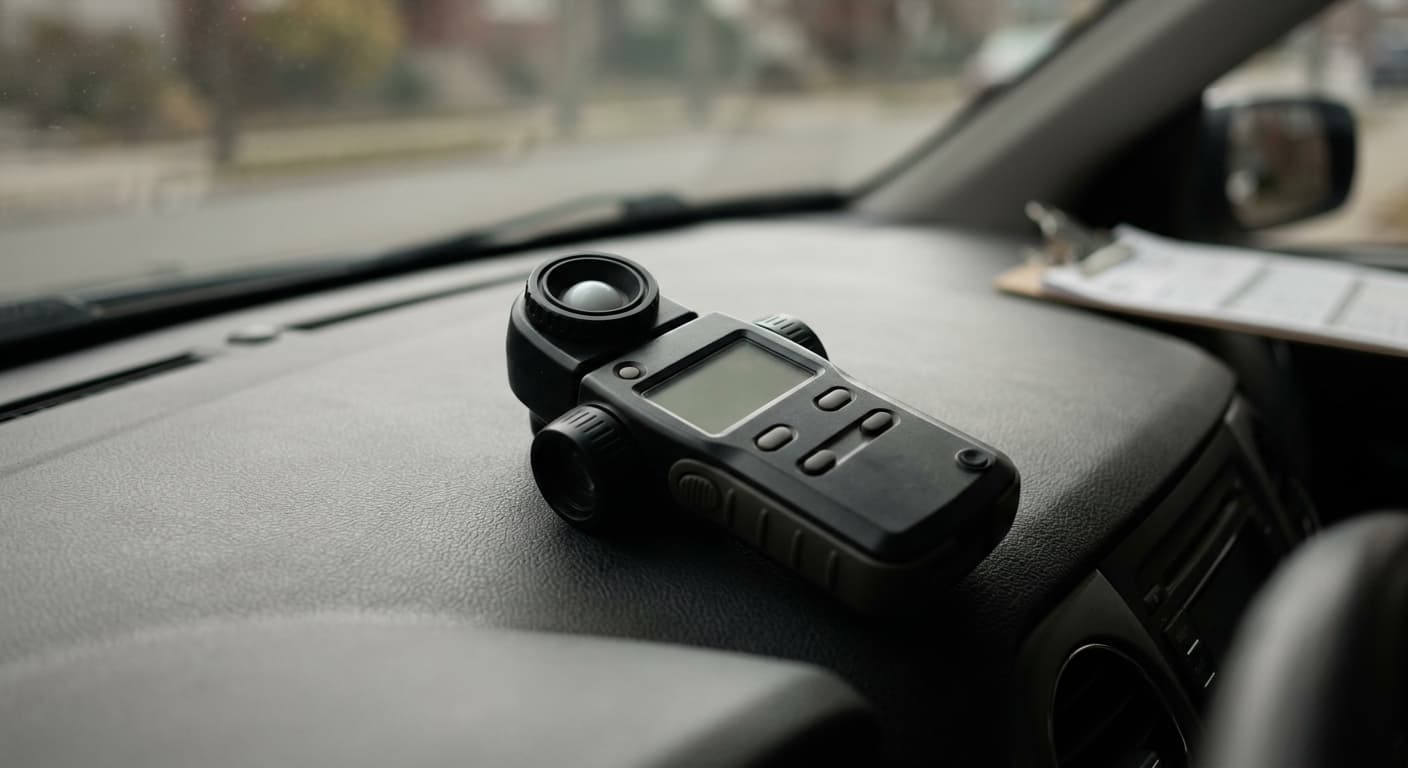
Oregon requires window tint film on front side windows to allow at least 50% VLT on its own, and the combined film-plus-glass must allow at least 35% VLT. Passenger car back side and rear windows follow the same standard, while multipurpose vehicles (SUVs, vans, and trucks) may run any darkness behind the driver only if they have dual outside mirrors AND the tinted glass meets AS-3 federal glazing standards.
What is the legal tint limit in Oregon?
Oregon's tint law works in two layers, which makes it somewhat unique. The film itself must allow at least 50% Visible Light Transmission (VLT). But beyond that, the combined transmittance of the film and the factory glass together must be at least 35% VLT. A higher VLT% means lighter tint; a lower VLT% means darker tint. Most factory glass already absorbs some light, so a 50% film applied to glass that passes 80% of light would yield a combined VLT of about 40%, which is above the 35% threshold. If your factory glass is already dark, you have less room to add tint.
For passenger cars (sedans), the dual standard applies to all side windows, including the windows behind the driver. For multipurpose vehicles (SUVs, vans, and trucks), the same rules apply to the front side windows, but the windows behind the driver and the rear window have no VLT restriction if two conditions are both met: the vehicle has dual outside mirrors providing an adequate rear view, and the tinted glass meets AS-3 glazing material standards under federal regulation (ORS 815.221(4)).
| Window Position | Passenger Car | Multipurpose Vehicle |
|---|---|---|
| Front side windows | Film 50% min; combined 35% min | Film 50% min; combined 35% min |
| Back side windows | Film 50% min; combined 35% min | Any darkness (dual mirrors + AS-3 glazing required) |
| Rear window | Film 50% min; combined 35% min | Any darkness (dual mirrors + AS-3 glazing required) |
| Windshield | Top 6 inches only; no tint below that line | Top 6 inches only; no tint below that line |
Oregon's 13% reflectance cap on side and rear window film is stricter than many states. Combined with the statewide ban on mirror finish material, that puts highly reflective or mirrored films off the table regardless of how much light they transmit.
Windshield tint rules in Oregon
Oregon allows tint film on the windshield only within the top 6 inches. Below that line, the windshield must be free of any added film: ORS 815.221(3) permits the darker material on the top six inches and prohibits tinting material on any other portion of the windshield. That subsection sets no reflectance figure for the permitted strip. The 13% light reflectance limit sits in ORS 815.221(2)(b), which is written for the side and rear windows. What does restrict a reflective windshield strip is the separate ban on mirror finish material in ORS 815.221(8), which applies to every window. Spray-on tint is expressly prohibited on any window, not just the windshield.
Several colors are banned across all windows. Red, gold, yellow, amber, and black tint films are not lawful in Oregon. Mirror-finish films are also prohibited statewide. These bans apply to every window on the vehicle, not just the windshield strip. When shopping for film, confirm that the product does not carry any of these color designations and that it is not marketed as a mirror or reflective finish.
The 13% reflectance limit on side and rear windows is relatively strict. Many states allow 20 to 35% reflectance. Oregon's lower ceiling means even lightly metallic gray films may push past the legal line. Ask your installer to measure reflectance before installation if the film you want has any metallic content.
Medical exemptions
Oregon allows a medical exemption for window tint that exceeds the standard VLT limits, but the statute is narrower than most summaries suggest. ORS 815.221(5) permits tinting material with lower light transmittance on the side and rear windows of a vehicle registered in the name of a person, or that person's legal guardian, where that person or another person in the person's household has a physical condition that requires the lower transmittance. The condition must be documented by a licensed physician or optometrist in one of three forms named in the statute: an affidavit, a prescription, or a letter on the practitioner's letterhead.
Two limits in that language matter in practice. The exemption attaches to a registered vehicle, not to a person, so it does not follow you into a rental, a borrowed car, or a vehicle that is not registered to you or your legal guardian. It also reaches beyond the driver: a condition belonging to another member of your household supports the exemption on a vehicle registered in your name.
You do not file the documentation with a state agency. ORS 815.221(6) requires the document to be kept in the vehicle and shown to a police officer who asks about the tint. Without the documentation in the car, the exemption provides no protection during a traffic stop.
How tint is measured and certified
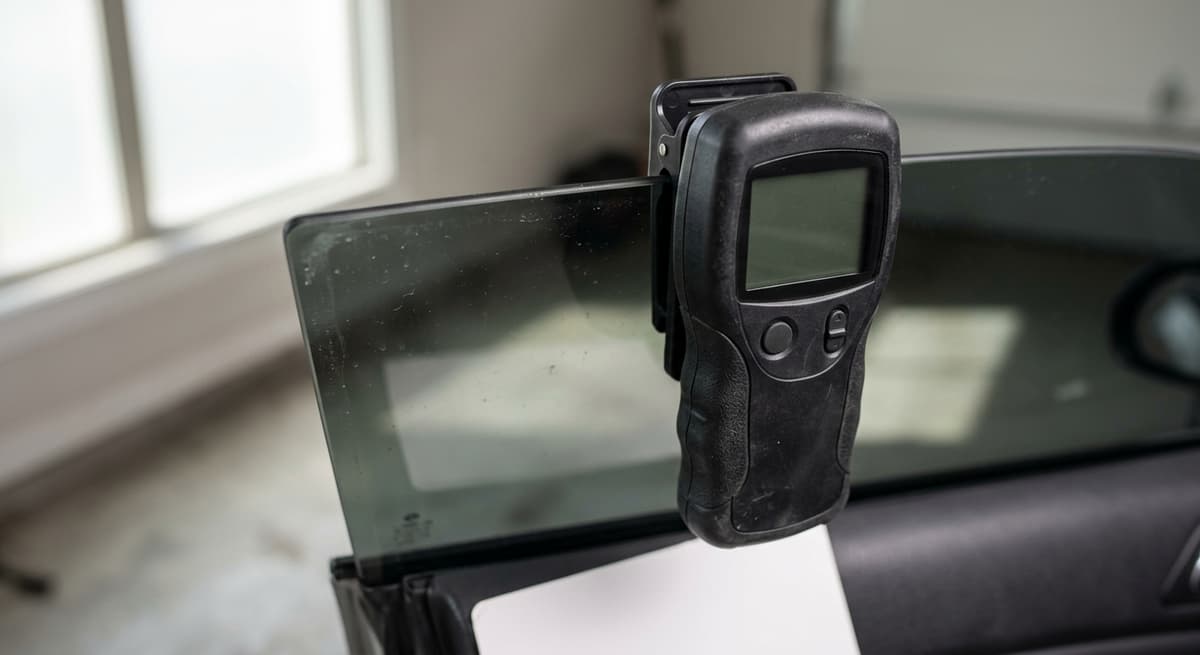
Tint is measured with a VLT meter, a device that shines a light through the glass and measures how much passes through. Oregon's dual-standard rule means a meter reading the combined film-plus-glass must show at least 35%, while a separate reading of only the film must show at least 50%. In practice, most officers and inspectors measure the combined reading at the window itself. If you are concerned about a specific film, ask your installer to take both readings before the installation is complete.

Oregon does not require a compliance sticker on the vehicle. However, the installer is required to provide a certificate of transmittance and reflectance to the vehicle owner. This document shows the measured VLT and reflectance values for the film installed. Keep this certificate in the glove box alongside any medical documentation. It will not prevent a stop, but it can help demonstrate compliance if you are cited and contest the ticket.
No specific measurement tolerance is listed in ORS 815.221, so any reading that measures below the threshold may result in a citation. If you are close to the limit, erring on the lighter side of the range is the safer choice.
Penalties for illegal tint in Oregon
Driving with non-compliant window tint in Oregon is a Class B traffic violation under ORS 815.222. The presumptive fine is $265, set by ORS 153.019 as amended by 2024's HB 4002. A Class B violation does not carry the risk of jail time, but court costs and assessments can add to the amount actually owed.
Oregon does provide statutory relief after a tint citation, in two separate forms. Under ORS 815.222(4), a court may dismiss a citation issued under that section, or reduce the fine, if you show the vehicle's windows were modified to comply after the citation was issued. The statute names the proof a court may consider: a receipt from a business for removing the nonconforming material or installing conforming material, a written statement by a law enforcement officer, or other evidence that the windows were modified or the material removed. Fixing the tint is not automatic dismissal, since the statute leaves the decision with the court, but it is a remedy the legislature wrote into the law rather than an informal courtesy.
ORS 815.222(5) creates a second path. A court may likewise dismiss the citation or reduce the fine if you establish that, at the time of the citation, you or another person in your household had a physical condition requiring the lower light transmittance, proved by an affidavit, a prescription, or a letter on the practitioner's letterhead signed by a licensed physician or optometrist. Separately from either statutory path, you can contest the citation outright by presenting measurement evidence showing your tint is within the legal limits.
Installers who knowingly put on illegal tint may also face liability under Oregon law. When selecting an installer, confirm in writing that the film they plan to use meets Oregon's dual VLT standard and the 13% side and rear window reflectance cap.
If you want to tint your windows in Oregon
Start by selecting a film that is rated at 50% or higher VLT on its own. Do not assume a 50%-rated film will automatically produce a compliant combined reading with your specific factory glass. Ask the installer to measure the combined transmittance through your vehicle's glass before cutting the film, and confirm that side and rear window film does not exceed 13% reflectance.
Avoid any film sold as red, gold, yellow, amber, or black in color, and avoid mirror-finish or spray-on products. These are banned regardless of how much light they transmit. Stick with neutral tones (gray, charcoal, ceramic, or smoke finishes) that carry no color designation.
After installation, get the transmittance and reflectance certificate from the installer and keep it in the vehicle. If you have a medical exemption, keep that documentation in the car as well. If you drive an SUV, van, or truck, remember that your front side windows must still meet the full dual standard even though your rear side windows and rear window are unrestricted, provided the vehicle has dual outside mirrors and the glass meets AS-3 federal glazing standards.
If you are buying a used vehicle in Oregon, inspect any existing tint carefully. The prior owner's compliance is not guaranteed, and you will be responsible for the tint on the vehicle you drive.
This article is general legal information, not legal advice. Window tint limits vary by state and change, and enforcement depends on local practice and your specific vehicle. For a definitive answer, check your state DMV or consult a local attorney.
More Oregon Laws
Frequently Asked Questions
What is the legal tint in Oregon?
Oregon requires tint film to allow at least 50% VLT on its own, and the combined film-plus-factory-glass must allow at least 35% VLT. For multipurpose vehicles (SUVs, vans, trucks), back side and rear windows have no VLT restriction only if the vehicle has dual outside mirrors AND the tinted glass meets AS-3 federal glazing standards.
How dark can my front windows be in Oregon?
On the front side windows, the tint film must allow at least 50% VLT by itself, and when measured together with your factory glass, the combined transmittance must be at least 35%. This is Oregon's dual-standard rule, which is stricter than a simple single-number limit.
Is 35% tint legal in Oregon?
A 35% combined reading is exactly at the minimum threshold and is technically compliant. However, the film itself must also independently pass at least 50% VLT. If your film reads 35% on its own, it fails the film-only requirement even if the combined number is above 35%.
Can I get a medical exemption for window tint in Oregon?
Yes, but the exemption attaches to a vehicle rather than to a person. ORS 815.221(5) allows lower-transmittance tint on the side and rear windows of a vehicle registered in the name of the person, or that person's legal guardian, when that person or another person in their household has a physical condition requiring it. The condition must be documented by a licensed physician or optometrist in an affidavit, a prescription, or a letter on the practitioner's letterhead, and ORS 815.221(6) requires that document to be kept in the vehicle and shown to an officer who asks about the tint. No state agency filing is required.
What is the penalty for illegal tint in Oregon?
Illegal window tint is a Class B traffic violation under ORS 815.222, with a presumptive fine of $265 under ORS 153.019. It does not carry jail time. ORS 815.222(4) also lets a court dismiss the citation or reduce the fine if you show the windows were brought into compliance after the citation, and ORS 815.222(5) provides the same relief where a physical condition in your household required the lower light transmittance.
Is windshield tint legal in Oregon?
Only the top 6 inches of the windshield may be tinted. ORS 815.221(3) prohibits tinting material on any other portion of the windshield and sets no reflectance figure for the permitted strip; the 13% reflectance cap in ORS 815.221(2)(b) is written for the side and rear windows. A mirrored strip is still barred, because the ban on mirror finish material in ORS 815.221(8) covers every window. Spray-on windshield tints are expressly banned in Oregon.
Do SUVs have different tint rules in Oregon?
Yes. Multipurpose vehicles (SUVs, vans, and trucks) must still meet the dual VLT standard on the front side windows, but they may use any darkness on the back side windows and rear window, as long as dual outside mirrors are installed AND the tinted glass meets AS-3 federal glazing standards.
Updates
Corrected the Oregon window tint page: the windshield strip rule and the 13% reflectance cap are now attributed to the subsections that actually contain them, the medical exemption now states that it applies to a vehicle registered to the person or their legal guardian and covers a household member's condition, and the penalties section now describes the two statutory dismissal or fine-reduction paths in ORS 815.222(4) and (5) that the page previously said did not exist.
Corrected Oregon's window-tint page: the multipurpose-vehicle rear-window exception requires BOTH dual outside mirrors AND AS-3-rated glazing, not just mirrors; and the Class B violation's presumptive fine is $265 under ORS 153.019, not the $360 previously stated.
Independently fact-checked against the cited primary sources; governing law re-checked for recent changes
Governing law re-checked for recent changes
Reviewed and approved by an editor
The Law Behind This Article
This article rests on the statutory provisions below, held in our own legal record and retrieved from the official source. Tap a section to read the operative text.
Oregon Revised Statutes, Chapter 815: Vehicle Equipment Generally
§ 815.221Tinting; authorized and prohibited materials; certificateIn forcecited in 2 of our articles
(1) Notwithstanding any other provision of law, a person may apply tinting material to the windows of a motor vehicle in compliance with this section. (2) Tinting material may be applied to the side and rear windows of a motor vehicle if: (a) The tinting material has a light transmittance of 50 percent or more; (b) The tinting material has a light reflectance of 13 percent or less; and (c) The total light transmittance through the window with the tinting material applied is 35 percent or more. (3) Tinting material that has a lower light transmittance or produces a lower total light transmittance than permitted in subsection (2)(a) and (c) of this section may be applied to the top six inches of a windshield. Tinting material may not be applied to any other portion of the windshield. (4) Tinting material that has a lower light transmittance or produces a lower total light transmittance than permitted in subsection (2)(a) and (c) of this section may be applied to all windows of a multipurpose passenger vehicle that are behind the driver. This subsection applies only to vehicles that are equipped with rearview mirrors on each side of the vehicle.
Official text (excerpt) · last checked 2026-09-01 · Read the full text in our law library · Verify at oregonlegislature.gov
Cited in 3 court opinions in our collectionLatest citing opinion in our collection: 2019
Opinions citing this section in our collection:
- State v. Lawson (Court of Appeals of Oregon 2019, 300 Or. App. 292)“…mounted mirror. Defendant pointed out that another statute, ORS 815.221, specifically refers to side mirrors wi…”
- State v. De La Rosa (Court of Appeals of Oregon 2009, 228 Or. App. 666)“…ith window tinting “not in compliance with or authorized by ORS 815.221,” which specifies the degree of tint pe…”
- State v. BAKER/JAY (Court of Appeals of Oregon 2009, 232 Or. App. 112)“…ng material that is not in compliance with or authorized by ORS 815.221.” Indeed, the certificate that d…”
Identified automatically from the court opinions citing this section — not a ranking of which case controls.
Also relied on in: Oregon Windshield Mounting Laws (2026 Guide)
§ 815.222Illegal window tinting; dismissal; penaltyIn forcecited in 2 of our articles
(1) A person commits the offense of illegal window tinting if the person applies window tinting material that does not comply with ORS 815.221 or applies window tinting material to a window of a motor vehicle that is not authorized by ORS 815.221 to be equipped with window tinting material. (2) A person commits the offense of operating a vehicle with illegal window tinting if the person operates a vehicle registered or required to be registered in Oregon that is equipped with window tinting material that is not in compliance with or authorized by ORS 815.221. (3) Each offense described in this section is a Class B traffic violation. (4) A court may dismiss a citation issued for violation of subsection (2) of this section, or reduce the fine that the court would otherwise have imposed for the offense, if the defendant establishes to the satisfaction of the court that after the citation for the offense was issued the windows of the vehicle were modified to comply with the requirements of ORS 815.221.
Official text (excerpt) · last checked 2026-07-29 · Read the full text in our law library · Verify at oregonlegislature.gov
Cited in 2 court opinions in our collectionLatest citing opinion in our collection: 2009
Opinions citing this section in our collection:
- State v. De La Rosa (Court of Appeals of Oregon 2009, 228 Or. App. 666)“…pport it. Ehly, 317 Or at 75 . Furthermore, ORS 815.222 provides that the operation of a vehicl…”
- State v. BAKER/JAY (Court of Appeals of Oregon 2009, 232 Or. App. 112)“…believe that the Caprice was being operated in violation of ORS 815.222(2): “A person commits the offens…”
Identified automatically from the court opinions citing this section — not a ranking of which case controls.
Oregon Revised Statutes, Chapter 153: Violations and Fines
§ 153.019Presumptive fines; generallyIn forcecited in 2 of our articles
(1) Except as provided in ORS 153.020, the presumptive fines for violations are: (a) $440 for a Class A violation. (b) $265 for a Class B violation. (c) $165 for a Class C violation. (d) $115 for a Class D violation. (2) The presumptive fine for a specific fine violation is: (a) The amount specified by statute as the presumptive fine for the violation; or (b) An amount equal to the greater of 20 percent of the maximum fine prescribed for the violation, or the minimum fine prescribed by statute for the violation. (3) Any surcharge imposed under ORS 1.188 shall be added to and made a part of the presumptive fine.
Official text (excerpt) · last checked 2026-07-29 · Read the full text in our law library · Verify at oregonlegislature.gov
Also relied on in: Oregon Car Seat Laws (2026): Ages, Exemptions & Penalty
Search our full record of US law — 2.1 million sections, every state + federal →
Sources and References
- ORS 815.221 - Unlawfully dark or obscuring windshield or window(oregon.public.law).gov
- Oregon DOT - Frequently Asked Questions About Window Tinting(oregon.gov).gov
- ORS 815.222 - Penalty for unlawfully dark or obscuring windshield or window(oregon.public.law).gov
- ORS Chapter 815 - Vehicle Equipment Generally (ORS 815.221 window tinting; ORS 815.222 penalty and dismissal provisions), Oregon State Legislature(oregonlegislature.gov)