
New Jersey
New Jersey Window Tint Laws (2026): Legal VLT Limits
Independently fact-checked against primary sources (last audited August 18, 2026). · Reviewed by the RecordingLaw editorial team. · Law checked current as of August 18, 2026. How we verify our legal content

In New Jersey, aftermarket tinting on the front side windows and windshield is prohibited by law for most drivers. The back side windows and rear window may be tinted to any darkness.
What is the legal tint limit in New Jersey?
New Jersey's front window tinting rule is the strictest in the United States in one key respect: it does not simply require a high VLT percentage for the front side windows. It prohibits aftermarket tint on those windows entirely. Under NJSA 39:3-74, placing any non-transparent or obscuring material on the windshield or front side windows is banned. That means no film, no spray, and no aftermarket treatment that reduces visibility from the driver or front passenger windows is legal for the vast majority of New Jersey drivers.
A higher VLT percentage means lighter (less dark) tint; a lower VLT percentage means darker tint. In New Jersey, the concept of a minimum VLT percentage for the front does not apply because the starting point is zero aftermarket film.
The rear of the vehicle is handled very differently. Back side windows and the rear window may be tinted to any darkness, giving drivers with SUVs, vans, trucks, and passenger sedans wide flexibility behind the driver's seat. New Jersey's mirror statute, NJSA 39:3-71, is not written as a tint rule: it requires every passenger automobile manufactured after January 1, 1965 and registered in the state to have an interior mirror and an exterior mirror on the driver's side whether or not the rear glass is tinted.
| Window | Rule | Notes |
|---|---|---|
| Front side windows | Prohibited (no aftermarket film) | NJSA 39:3-74 |
| Back side windows | Any darkness | No VLT minimum |
| Rear window | Any darkness | No VLT minimum |
| Windshield | Prohibited (no aftermarket film) | No exceptions without medical exemption |
Windshield tint rules in New Jersey
No aftermarket tinting is permitted on the windshield in New Jersey. The same NJSA 39:3-74 prohibition that covers the front side windows applies to the windshield: no material may be applied that reduces transparency or obstructs the driver's view through the glass.
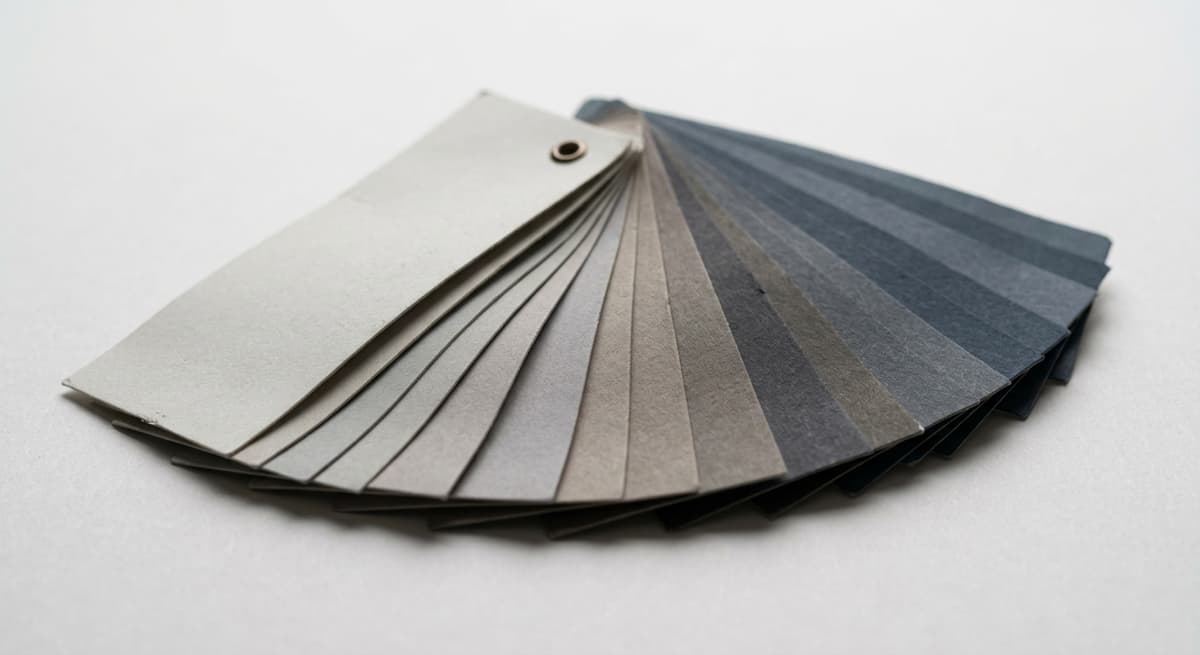
The general prohibition in NJSA 39:3-74 is not written as a VLT percentage or a reflectivity number. It bans non-transparent material outright. Numeric transmittance, reflectance and color limits do exist in New Jersey, but they sit in the MVC rules that govern vehicles holding a medical exemption, and they are covered in the next section. In practice, for a vehicle with no exemption, any film applied to the windshield or front side glass that measurably reduces light transmission or creates a mirrored appearance would be unlawful.
Factory-installed features such as UV-blocking embedded in the glass itself are not aftermarket films and are not affected by this statute. The prohibition applies to products installed after the vehicle leaves the factory.
Medical exemptions
New Jersey does provide a path for drivers who have a genuine medical need for sun-screening on the front glass. Under NJSA 39:3-75.1, the owner or lessee of a vehicle that is driven by or regularly used to transport a person with a medical condition involving ophthalmic or dermatologic photosensitivity may apply to the MVC for permission to have the windshield and windows treated. The application must include a written certification from a certified ophthalmologist or a physician holding a plenary license to practice medicine and surgery in New Jersey or a bordering state. The statute names qualifying conditions including polymorphous light eruption, persistent light reactivity, actinic reticuloid, porphyrins, solar urticaria and lupus erythematosus, along with other photosensitive disorders the director determines.
The exemption is not permission for dark front glass. The rules adopted under NJSA 39:3-75.2 and published by the MVC at NJAC 13:20-1 set ceilings that apply even to an exempt vehicle:
- Windshield film may not reduce visible light transmittance below 70 percent, except on the portion of the windshield above the AS-1 line (NJAC 13:20-1.2(a) and (b)).
- Front side window film may not reduce visible light transmittance below 60 percent (NJAC 13:20-1.2(c)).
- A readily removable strip on the uppermost six-inch portion of the front side windows may go down to 35 percent visible light transmittance, but only between sunrise and sunset (NJAC 13:20-1.2(d)).
- Visible light reflectance of film on the windshield or front side windows may not exceed eight percent (NJAC 13:20-1.3).
- Windshield film must be clear film; front side window film may be clear or tinted (NJAC 13:20-1.4).
The exemption must be obtained from the New Jersey Motor Vehicle Commission (MVC) before any film is applied to the front side windows. Simply having a doctor's letter in the glove box is not enough. The formal MVC exemption is required, the certificate or card is valid for no more than 48 months under NJSA 39:3-75.2(b), and it must be kept in the vehicle and exhibited to a law enforcement officer or a motor vehicle examiner on request.
Without this formal exemption, any aftermarket front side tint is illegal regardless of medical circumstances. Drivers who believe they qualify should contact the MVC and have their physician prepare the required certification before scheduling the installation.
How tint is measured and certified
For a vehicle with no medical exemption, New Jersey's front window rule is a flat prohibition rather than a VLT percentage floor, so enforcement does not depend on a meter reading confirming a specific percentage. An officer can cite a vehicle if any film is observed on the front side windows or windshield.
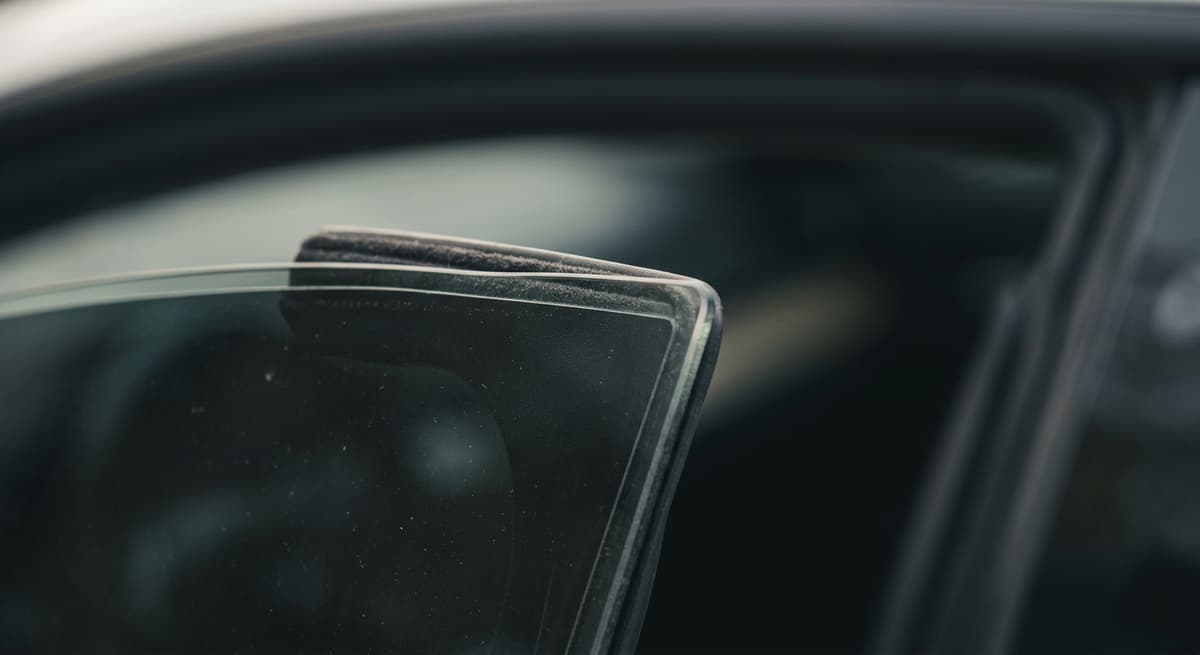
For the rear windows, where any darkness is permitted, there is no VLT measurement requirement. No measurement tolerance is specified in the statute because no minimum percentage applies to those windows.
There is no compliance sticker or installer certification label for ordinary rear window tinting. A label requirement does exist, but it is scoped to medical exemption installs. NJSA 39:3-75.2(c) directs the MVC to require an appropriate label on each windshield and window to which an approved material is applied, and NJAC 13:20-1.8 implements it: a one inch by one inch label carrying the sun-screening product manufacturer's name and the registration number of the installation facility, attached to the lower right corner of the windshield and to the lower corner of each front side window. For vehicles that do have rear tinting, keeping the installer's documentation noting the film type and VLT can help demonstrate that no prohibited front window film is present.
Penalties for illegal tint in New Jersey
Front tint that is not covered by a medical exemption is charged as a violation of NJSA 39:3-74, the windshield obstruction provision. The New Jersey Courts Statewide Violations Bureau Schedule (updated July 29, 2021) lists that offense, "Obstruction of windshield for vision," at $55.00 payable. NJSA 39:3-79, the general penalty provision for this article of Title 39, sets a fine not exceeding $25 for violations of the article.
A much larger fine schedule exists in NJSA 39:3-75.3, but it applies to a different situation. Subsection (b) sets fines not to exceed $1,000 for a first offense and $5,000 for a second or subsequent offense only for violations of the regulations adopted under subsections c. and d. of NJSA 39:3-75.2. Those subsections govern how approved sun-screening material is installed and labeled and the registration of the businesses that install it, so that schedule reaches installers and registered installation facilities operating under the medical exemption program rather than an ordinary driver who tinted the front windows with no exemption at all. The driver-facing penalty in that program is in subsection (a): failing to exhibit a valid exemption certificate carries a fine not exceeding $100, and the municipal court judge may dismiss the charge if the driver produces a certificate that was valid on the day of the charge.
Officers may cite a driver during any traffic stop or vehicle inspection. There is no automatic fix-it ticket mechanism described in the statute. Removing the film promptly after a citation is advisable to avoid a repeat offense.
If you want to tint your windows in New Jersey
If you own a vehicle registered or driven in New Jersey, the safest approach is to leave the front side windows and windshield entirely free of aftermarket film unless you hold a valid MVC medical exemption.

For the rear windows, any VLT darkness is legal, giving you broad choices for privacy and UV protection. When selecting a rear film, confirm that your installer understands the front prohibition and will not apply film to any window forward of the driver's seat.
If you have a photosensitivity condition, start the exemption process before booking an installation appointment. Contact the New Jersey MVC, have your physician or ophthalmologist prepare the NJSA 39:3-75.1 certification, submit the documentation to the MVC, and carry the approved permit in the vehicle at all times. Note that the exemption still limits how dark the film may be, so discuss the NJAC 13:20-1 transmittance and reflectance ceilings with your installer.
If you purchased a vehicle from out of state that already has front side tint installed, note that out-of-state tint is not grandfathered under New Jersey law. You may need to have non-compliant film removed to avoid a citation once the vehicle is operated in New Jersey.
This article is general legal information, not legal advice. Window tint limits vary by state and change, and enforcement depends on local practice and your specific vehicle. For a definitive answer, check your state DMV or consult a local attorney.
For a state-by-state comparison, see the Window Tint Laws hub. New Jersey also regulates what drivers may affix to or mount on the windshield; see New Jersey Windshield Mounting Restrictions.
More New Jersey Laws
Frequently Asked Questions
What is the legal tint in New Jersey?
Aftermarket tinting on the front side windows and windshield is prohibited entirely in New Jersey under NJSA 39:3-74. The back side and rear windows may be tinted to any darkness. A medical exemption is available for front windows under NJSA 39:3-75.1.
How dark can my front windows be in New Jersey?
They cannot have any aftermarket tint at all. New Jersey law bans applying any non-transparent or obscuring material to the front side windows or windshield. The only exception is a formal MVC medical exemption for certified photosensitivity, and even then MVC rules do not allow front side window film to drop visible light transmittance below 60 percent.
Is 35% tint legal in New Jersey?
Not on the front side windows or windshield. Any aftermarket tinting on those windows is prohibited regardless of VLT percentage. On the back side windows and rear window, any darkness including 35% is legal.
Can I get a medical exemption for window tint in New Jersey?
Yes. Under NJSA 39:3-75.1, the MVC may issue a medical exemption when a certified ophthalmologist or licensed physician certifies an ophthalmic or dermatologic photosensitivity condition. The formal MVC permit must be obtained before installation and kept in the vehicle. The exemption does not authorize dark front glass: under NJAC 13:20-1, windshield film must keep visible light transmittance at 70 percent or above below the AS-1 line, front side window film at 60 percent or above, and reflectance may not exceed eight percent.
What is the penalty for illegal tint in New Jersey?
Front tint with no medical exemption is charged under NJSA 39:3-74. The New Jersey Courts Statewide Violations Bureau Schedule lists that offense, 'Obstruction of windshield for vision,' at $55.00 payable, and NJSA 39:3-79 caps the fine for violations of this article at $25. The larger fines of up to $1,000 and $5,000 in NJSA 39:3-75.3(b) apply to violations of the installation, labeling and installer registration rules adopted under the medical exemption program, not to an ordinary driver with illegal front tint.
Is windshield tint legal in New Jersey?
No. Aftermarket tinting on the windshield is prohibited under NJSA 39:3-74, the same provision that bans front side window tinting. There is no permitted windshield tint strip unless a medical exemption covers it.
Do SUVs have different tint rules in New Jersey?
No. The front window prohibition under NJSA 39:3-74 applies to all vehicles. SUVs, vans, and trucks may tint the rear windows behind the driver to any darkness, but the front side windows and windshield are prohibited for all vehicle types.
Updates
Corrected the penalty section after re-reading the statutes: the $1,000 and $5,000 fines apply to the installer and labeling rules of the medical-exemption program, not to ordinary illegal front tint, which is a $55 payable offense; removed a fabricated dual-mirror requirement for tinted rear windows, added the MVC transmittance, reflectance, color and label rules that apply to exempt vehicles, and dropped an inverted claim that New Jersey has among the highest tint fines in the country.
Repointed three dead pub.njleg.state.nj.us statute citation links (N.J.S.A. 39:3-74, 39:3-75.1, 39:3-75.3) to live, content-verified Justia mirrors.
Independently fact-checked against the cited primary sources; governing law re-checked for recent changes
Corrected who may certify the NJSA 39:3-75.1 medical tint exemption: the statute requires a physician with a plenary license to practice medicine and surgery or a certified ophthalmologist, not an optometrist.
Governing law re-checked for recent changes
Reviewed and approved by an editor
The Law Behind This Article
This article rests on the statutory provisions below, held in our own legal record and retrieved from the official source. Tap a section to read the operative text.
New Jersey Statutes (Unannotated)
§ 39:3-74Windshields must be unobstructed and equipped with cleanersIn forcecited in 2 of our articles
Every motor vehicle having a windshield shall be equipped with at least one device in good working order for cleaning rain, snow or other moisture from the windshield so as to provide clear vision for the driver, and all such devices shall be so constructed and installed as to be operated or controlled by the driver. No person shall drive any motor vehicle with any sign, poster, sticker or other non-transparent material upon the front windshield, wings, deflectors, side shields, corner lights adjoining windshield or front side windows of such vehicle other than a certificate or other article required to be so displayed by statute or by regulations of the commissioner. No person shall drive any vehicle so constructed, equipped or loaded as to unduly interfere with the driver's vision to the front and to the sides.
Official text (excerpt) · last checked 2026-09-08 · Read the full text in our law library · Verify at lis.njleg.state.nj.us
Cited in 41 court opinions in our collectionLatest citing opinion in our collection: 2026
In the courts (editorial summary, independently checked):State v. Cohen (2002) held N.J.S.A. 39:3-74 reaches tinted windows that fail the administrative light-transmittance standard, and upheld a stop for very dark tint. State v. Barrow (2009) held the statute's constructed, equipped or loaded clause covers objects hung from a rearview mirror that unduly interfere with vision.
Opinions citing this section in our collection:
- State v. Cohen (New Jersey Superior Court Appellate Division 2002, 347 N.J. Super. 375)✓An officer stopped a car at 3 a.m. because black tint on the driver's window kept him from seeing inside; the court held section 39:3-74 does prohibit tinted windows that fail the applicable administrative standard and upheld the stop and the DWI conviction.
- State v. Barrow (New Jersey Superior Court Appellate Division 2009, 408 N.J. Super. 509)✓An officer stopped an Acura for miniature boxing gloves swaying at the driver's eye level; the court held the loaded paragraph of section 39:3-74 reaches items hung from a rearview mirror and that his testimony that they obstructed the view justified the stop.
- State v. Perlstein (New Jersey Superior Court Appellate Division 1985, 206 N.J. Super. 246)“…C:29-1, having a PBA sticker on her windshield contrary to N.J.S.A. 39:3-74, and refusing to display her driver's l…”
Identified automatically from the court opinions citing this section — not a ranking of which case controls.
Also relied on in: New Jersey Windshield Mounting Laws (2026 Guide)
§ 39:3-75.1Certain tinting materials on windshields, windows of motor vehicles, permitted for medical reasonsIn forcecited in 2 of our articles
1. Notwithstanding the provisions of any other law to the contrary, the owner or lessee of a motor vehicle that is driven by or is used to regularly transport a person who has a medical condition involving ophthalmic or dermatologic photosensitivity may apply to the director for permission to have the windshield and windows of that vehicle covered by or treated with a product or material that increases its light reflectance or reduces its light transmittance. The application shall be in a form and manner prescribed by the director and shall include, but not be limited to, a written certification by a certified ophthalmologist or a physician with a plenary license to practice medicine and surgery in this State or a bordering state that the person for whom the application is submitted has a medical condition involving ophthalmic or dermatologic photosensitivity.
Official text (excerpt) · last checked 2026-08-01 · Read the full text in our law library · Verify at lis.njleg.state.nj.us
Cited in 4 court opinions in our collectionLatest citing opinion in our collection: 2024
Opinions citing this section in our collection:
- State of New Jersey v. Khalil H. Haskins (New Jersey Superior Court Appellate Division 2024)“…ont window tint which Corporal D'Ascenzo believed violated N.J.S.A. 39:3-75.1 As noted, our Supreme Court decided Sm…”
- State v. David L. Smith (085635) (Mercer County & Statewide) (Supreme Court of New Jersey 2022)“…afety glazing material, not aftermarket tinted window film. N.J.S.A. 39:3-75.1 provides an exception to window tinting…”
- STATE OF NEW JERSEY v. EDWARD BEJARANO (19-10-0623, SOMERSET COUNTY AND STATEWIDE) (New Jersey Superior Court Appellate Division 2022)“…th, 251 N.J. at 261. Specifically, the Court concluded that N.J.S.A. 39:3-75.1 and 39:3-75.2 did not support the stop…”
Identified automatically from the court opinions citing this section — not a ranking of which case controls.
§ 39:3-75.3Violations, finesIn forcecited in 2 of our articles
3. a. A person who violates the provisions of subsection b. of section 2 of P.L.1999, c.308 (C.39:3-75.2) shall be subject to a fine not exceeding $100; provided, however, if a person charged with such a violation can exhibit a certificate or card which was valid on the day he was charged to the judge of the municipal court before whom he is summoned to answer the charge, the judge may dismiss the charge. The judge, however, may impose court costs. b. A person who violates the provisions of the regulations adopted pursuant to subsection c. or d. of section 2 of P.L.1999, c.308 (C.39:3-75.2) shall be subject to a fine not to exceed $1,000 for a first offense and not to exceed $5,000 for a second or subsequent offense.
Official text (excerpt) · last checked 2026-08-01 · Read the full text in our law library · Verify at lis.njleg.state.nj.us
§ 39:3-75.2Rules, regulationsIn forcecited in 2 of our articles
2. The director, pursuant to the "Administrative Procedure Act," P.L.1968, c.410 (C.52:14B-1 et seq.), shall promulgate rules and regulations to effectuate the purposes of this act. The rules and regulations shall include, but shall not be limited to: a. Standards and specifications governing the types of materials and products that may be applied to a motor vehicle windshield and windows under this act. These standards and specifications shall include the color of the materials or products, the maximum allowable percentage of total light reflectance of the materials or products, the maximum allowable percentage of the light transmittance and ultraviolet transmittance of the materials or products, and such other matters as the director shall deem appropriate and necessary. In establishing the standards and specifications, the director shall consider, to the greatest extent possible, the safety of law enforcement officers, who during the performance of their duties may find it necessary to inspect or otherwise observe the interior of a motor vehicle having a windshield and windows to which an approved material or product is applied.
Official text (excerpt) · last checked 2026-08-01 · Read the full text in our law library · Verify at lis.njleg.state.nj.us
Cited in 1 court opinions in our collectionLatest citing opinion in our collection: 2022
Opinions citing this section in our collection:
- State v. David L. Smith (085635) (Mercer County & Statewide) (Supreme Court of New Jersey 2022)“…tinting restrictions for medical reasons not claimed here. N.J.S.A. 39:3-75.2 authorizes the promulgation of rules an…”
Identified automatically from the court opinions citing this section — not a ranking of which case controls.
§ 39:3-71MirrorsIn force
Every motor vehicle shall have rear view mirrors so located and angled as to give the driver adequate rear view vision. Every passenger automobile manufactured after January 1, 1965 and registered in this State, shall be equipped with an interior mirror and an exterior mirror on the driver's side. On and after January 1, 1965, every commercial motor vehicle registered in this State, other than a trailer or semitrailer, shall be equipped with an interior mirror and an exterior mirror on the driver's side, except that every such vehicle so constructed or loaded as to obstruct or obscure a rear view from an interior mirror shall, in lieu of an interior mirror, be equipped with an exterior mirror on the side of the vehicle opposite the driver's side. The director may by regulation establish other mirror requirements for special or unusual types of vehicles. Any person operating a motor vehicle without the equipment prescribed by this section shall, on conviction, be fined as provided in Revised Statutes 39:3-79.
Official text (excerpt) · last checked 2026-08-01 · Read the full text in our law library · Verify at lis.njleg.state.nj.us
Cited in 2 court opinions in our collectionLatest citing opinion in our collection: 2021
Opinions citing this section in our collection:
- Cruz v. Trotta (New Jersey Superior Court Appellate Division 2003, 363 N.J. Super. 353)“…is conduct the jury could consider the following statutes: N.J.S.A. 39:3-71, which in pertinent part provides that…”
- STATE OF NEW JERSEY VS. ORLANDO A. HERNANDEZ (16-03-0363, BERGEN COUNTY AND STATEWIDE) (New Jersey Superior Court Appellate Division 2021)“…failure to have a driver's side, external rearview mirror, N.J.S.A. 39:3-71. DeCamp transported defendant to police…”
Identified automatically from the court opinions citing this section — not a ranking of which case controls.
§ 39:3-79Fine for violating articleIn force
Any person violating any of the provisions of this article shall be subject to a fine not exceeding twenty-five dollars.
Official text (excerpt) · last checked 2026-08-01 · Read the full text in our law library · Verify at lis.njleg.state.nj.us
Search our full record of US law — 2.1 million sections, every state + federal →
Sources and References
- N.J.S.A. 39:3-74 - Windshields and Windows (Justia)(law.justia.com)
- N.J.S.A. 39:3-75.1 - Medical Exemption for Window Tinting (Justia)(law.justia.com)
- N.J.S.A. 39:3-75.3 - Penalties for Window Tint Violations (Justia)(law.justia.com)
- N.J.A.C. 13:20-1.1 to -1.8 - NJ MVC Sun-Screening Standards: light transmittance, reflectance, color, and label requirements(www.nj.gov)
- New Jersey Courts Statewide Violations Bureau Schedule - N.J.S.A. 39:3-74 obstruction of windshield, $55.00 payable(www.njcourts.gov)
- New Jersey MVC - Window Tinting (Sunscreening) Medical Exemption(www.nj.gov)