
Mississippi
Mississippi Window Tint Laws (2026): Legal VLT Limits
Independently fact-checked against primary sources (last audited August 18, 2026). · Reviewed by the RecordingLaw editorial team. · Law checked current as of August 18, 2026. · 1 primary source cited on this page. How we verify our legal content
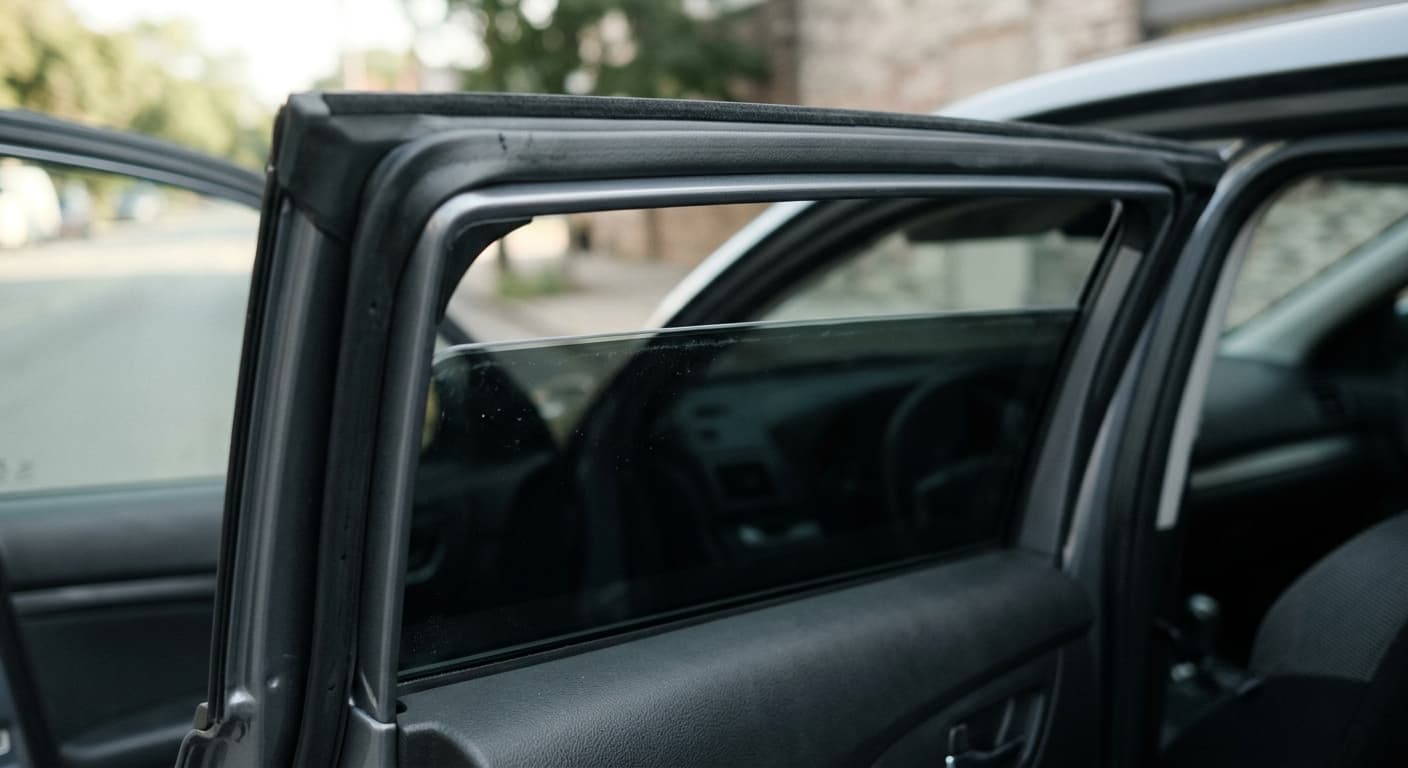
In Mississippi, front side windows must allow at least 28% of visible light through (VLT), and back side windows and the rear window generally follow the same 28% floor. Pickup trucks, vans, motor homes, RVs, SUVs, and other multipurpose vehicles get an exception: their windows behind the front two side windows may be tinted as dark as federal law allows for factory-tinted glass on that vehicle, without meeting the 28% floor.
What is the legal tint limit in Mississippi?
Mississippi's window tint law is found at Miss. Code Ann. 63-7-59. The central concept is Visible Light Transmission (VLT): a higher VLT percentage means a lighter film that lets more light in, while a lower VLT percentage means a darker film. Mississippi's 28% VLT floor is moderately permissive compared to states like Minnesota (50%) but is stricter than states like New Mexico (20%) or Texas (25%).
Mississippi applies the 28% standard to front side windows on ordinary passenger vehicles, and to back side windows and the rear window on sedans and coupes. Pickup trucks, vans, motor homes, RVs, SUVs, and other multipurpose vehicles have a separate exemption: the windows behind the front two side windows, including the rear window, may be as dark as the light transmittance authorized for that window and vehicle under federal law before factory delivery, regardless of the 28% floor.
Two further exemptions take entire vehicles outside the 28% rule rather than just certain windows. Subsection (3)(a) exempts school buses, other buses used for public transportation, any bus or van owned or leased by a Mississippi nonprofit corporation, funeral home services vehicles, limousines owned or leased by a private or public entity, government-owned law enforcement or fire department vehicles, and volunteer fire department vehicles. Because that exemption is written against subsection (2) as a whole, it reaches the front side windows too, not only the glass behind them. Subsection (3)(c) separately exempts any other vehicle whose windows were tinted or darkened before factory delivery as federal law or regulations permit.
| Window | Sedans and Coupes | Pickups, Vans, Motor Homes, RVs, SUVs, MPVs |
|---|---|---|
| Front side windows | 28% | 28% |
| Back side windows | 28% | Federal factory-tint standard for that vehicle |
| Rear window | 28% | Federal factory-tint standard for that vehicle |
| Windshield (main viewing area) | No aftermarket tint allowed | No aftermarket tint allowed |
The figures above describe ordinary passenger vehicles. The vehicle classes listed in subsection (3)(a), such as buses, limousines, funeral home vehicles and government law enforcement or fire vehicles, are outside the 28% requirement on every window.
Because the statute does not specify a measurement tolerance, enforcement follows officer discretion and meter readings. Choosing a film rated at 30% or above gives you a practical buffer against borderline readings.
Windshield tint rules in Mississippi
Mississippi bans tinted film, glazing material, or darkening material of any kind on the windshield, with one exception written into Miss. Code Ann. 63-7-59(1): material designed to replace or provide a sun shield in the uppermost area, as authorized to be installed by manufacturers of vehicles under federal law.
Note that the Mississippi statute does not use the phrase "AS-1 line" that appears in many other states' tint laws. It points instead to the federally authorized factory sun shield zone at the top of the windshield. In practice, installers still treat the AS-1 marking printed on most windshields as the working boundary for that zone, but the legal test is the federal manufacturer authorization rather than the marking itself. If your windshield carries no visible marking, confirm the permissible area with your installer before proceeding.

Mississippi's statute does not set a numeric reflectivity percentage cap or ban particular tint colors, but Miss. Code Ann. 63-7-59(1) categorically bans any glazing material that causes a "mirrored effect" on the front windshield, side wings, or side or rear windows. That prohibition applies regardless of how the film measures on a tintometer. Non-reflective films are the safest choice throughout.
Medical exemptions
Mississippi allows a medical exemption under Miss. Code Ann. 63-7-59(4). A physician licensed to practice medicine in the State of Mississippi must diagnose a physical condition or disease that is seriously aggravated by minimum exposure to sunlight. The document that makes the exemption valid is not the physician's own letter. It is a certificate of medical exemption on a form prepared by the Commissioner of Public Safety, signed by the person on whose behalf it is issued, and displayed prominently on the vehicle dashboard.
Qualifying conditions typically include photosensitive skin conditions such as lupus or xeroderma pigmentosum, severe photophobia or certain eye disorders, and other documented medical needs where ultraviolet or visible light exposure worsens the condition. The exemption is written at the vehicle level rather than window by window: it permits tint that would otherwise violate the section upon the windshield or windows of the motor vehicle, and it covers any vehicle the qualifying person owns, operates, or regularly travels in as a passenger, not only a vehicle titled in that person's name.
Getting the certificate is a counter transaction, not something the physician can hand you directly. The certificate is issued free of charge through the offices of the tax collectors of the counties. The applicant must present two things to the issuing official: an affidavit signed personally by the applicant and signed and attested by a physician, stating the condition or disease that entitles the applicant to the exemption, and proof of ownership of the vehicle, or a signed affidavit by the owner of a vehicle operated for the applicant's use. Only once the county office issues that state form is there anything valid to display on the dashboard.
How tint is measured and certified in Mississippi
Mississippi's compliance sticker requirement does not reach every tinted vehicle. Under Miss. Code Ann. 63-7-59(6), DPS issues labels to official tint inspection stations for vehicles required to be inspected in this state that have a window tinted or darkened after factory delivery, so glass that came tinted from the factory needs no label. The sticker is a self-destructive, pressure-sensitive label no larger than one inch square, affixed to the lower left corner of the windshield. Self-destructive labels are designed to tear apart if anyone attempts to remove them, preventing a sticker from being transferred from a compliant vehicle to a non-compliant one. The same subsection requires the inspection station to test the window's actual light transmittance before affixing the label, so the label is not simply applied by whichever shop installs the film unless that shop is an authorized inspection station.
The statute does not specify a measurement tolerance. Officers use tintometers (VLT meters) to measure the film during roadside stops, and readings at or above 28% should satisfy enforcement. Because there is no named tolerance, films rated right at 28% have less margin than in states with a formal plus-or-minus allowance. Choosing a film rated at 30% or above is the conservative approach.
Enforcement authority here is a hard statutory limit, not a matter of local practice. Miss. Code Ann. 63-7-59(12) provides that violations of the section shall be enforced only by law enforcement officers of the Mississippi Department of Public Safety and municipal law enforcement officers of municipalities having a population of two thousand (2,000) or more, on the public roads, streets and highways under their jurisdiction. County sheriff's deputies and officers in municipalities under 2,000 people have no authority to enforce this section at all. The tint standards still apply statewide, but the set of officers who may cite you under this section is narrow.
Penalties for illegal tint in Mississippi
Miss. Code Ann. 63-7-59(10) sets maximum penalties rather than fixed ones: a fine of not more than $1,000, or imprisonment in the county jail for not more than three months, or both. Those maximums apply specifically to installers who apply non-compliant film and to anyone who alters, reproduces, or knowingly misuses a compliance label or medical exemption certificate. An ordinary violation, such as driving with tint darker than 28% and no compliant label, is instead punishable as provided in Section 63-7-7, which makes it a misdemeanor to drive a vehicle that is equipped in any manner in violation of the chapter. Either way, driving with unlabeled or non-compliant tint exposes you to a citation.
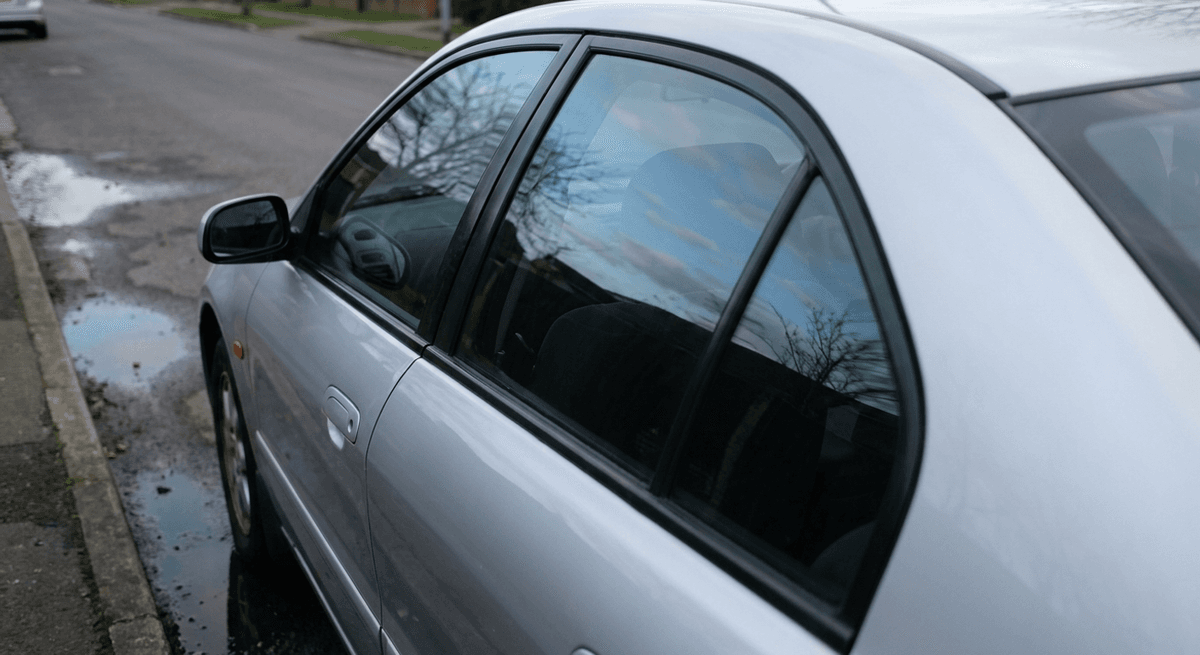
The compliance sticker requirement gives officers an immediate enforcement reference. If the lower-left corner of the windshield lacks a self-destructive label on a vehicle that should carry one, the officer can proceed to meter the windows. Bringing the vehicle into compliance and affixing the proper sticker is the surest way to avoid further contact.
Installers who apply non-compliant film share responsibility under the statute. Mississippi's penalty structure creates financial and legal risk for shops that knowingly install film darker than 28% without a valid medical exemption covering the vehicle.
If you want to tint your windows in Mississippi
On an ordinary sedan or coupe, Mississippi's 28% VLT floor applies to the front side windows, back side windows and rear window alike. It is not a universal rule, though: the statute allows darker glass behind the front two side windows on pickups, vans, motor homes, RVs and SUVs, and it exempts whole classes of vehicles such as buses and limousines. For a standard passenger car, choose a film rated at 28% VLT or lighter, and consider going with 30% or above to give yourself a practical buffer given the absence of a formal measurement tolerance in the statute.
After installation, have the film tested and labeled at a DPS-authorized official tint inspection station, which affixes the self-destructive label to the lower-left corner of the windshield only after confirming the window meets the 28% transmittance standard. Ask your installer for documentation confirming the film's rated VLT so you have a manufacturer's spec sheet to supplement the sticker if needed. Keep that documentation in the vehicle for any roadside stop.
If you have a medical condition seriously aggravated by minimum sun exposure, complete the exemption paperwork before installation. Get the physician-attested affidavit first, then take it together with proof of vehicle ownership to your county tax collector's office to be issued the state certificate, and display that certificate prominently on the dashboard at all times when the vehicle is in use.
This article is general legal information, not legal advice. Window tint limits vary by state and change, and enforcement depends on local practice and your specific vehicle. For a definitive answer, check your state DMV or consult a local attorney.
Related reading
For rules about what may be attached to or mounted on your windshield, see Mississippi Windshield Mounting Restrictions.
More Mississippi Laws
Frequently Asked Questions
What is the legal tint in Mississippi?
Mississippi requires at least 28% VLT on front side windows, and on back side and rear windows for sedans and coupes. Pickup trucks, vans, motor homes, RVs, and SUVs may tint the windows behind the front two side windows as dark as the federal factory-tint standard for that vehicle, and subsection (3)(a) exempts classes such as buses, limousines and government law enforcement vehicles from the 28% rule entirely. On the windshield the only permitted material is a sun shield in the uppermost area, as manufacturers are federally authorized to install. A self-destructive compliance sticker is required on the lower-left corner of the windshield for vehicles subject to inspection whose windows were tinted after factory delivery.
How dark can my front windows be in Mississippi?
The darkest legal film for front side windows in Mississippi is 28% VLT. The statute does not specify a formal measurement tolerance, so choosing a film rated at 30% or above gives you a buffer against borderline meter readings.
Is 20% tint legal in Mississippi?
On a sedan or coupe, no. A 20% VLT film is darker than the 28% floor that applies to the front side windows, back side windows and rear window. On a pickup, van, motor home, RV or SUV, a 20% film may be lawful behind the front two side windows if it meets the federal factory-tint standard for that window and vehicle, but the front side windows still need 28%. A 20% film on the front side windows would otherwise require a valid state certificate of medical exemption.
Can I get a medical exemption for window tint in Mississippi?
Yes, but the paperwork runs through a county office. A Mississippi-licensed physician must diagnose a condition seriously aggravated by minimum sun exposure and attest an affidavit. You then present that affidavit and proof of vehicle ownership to a county tax collector's office, which issues a certificate of medical exemption free of charge on a form prepared by the Commissioner of Public Safety. That state certificate, not the physician's letter, is what must be displayed prominently on the dashboard. The exemption covers a vehicle you own, operate, or regularly travel in as a passenger.
What is the penalty for illegal tint in Mississippi?
Miss. Code Ann. 63-7-59(10) sets maximums of a $1,000 fine, three months in the county jail, or both, and those apply to installer violations and to fraud involving a compliance label or medical exemption certificate. An ordinary too-dark-tint violation is instead punishable under Section 63-7-7, which makes it a misdemeanor. Only Mississippi Department of Public Safety officers and municipal police in municipalities of 2,000 or more people may enforce this section.
Is windshield tint legal in Mississippi?
Mississippi bans tint on the windshield except material designed to replace or provide a sun shield in the uppermost area, as manufacturers are authorized to install it under federal law. The statute does not use the AS-1 line terminology found in many other states, though installers commonly treat the AS-1 marking as the practical boundary of that zone. No aftermarket tint is permitted across the main viewing area.
Do SUVs have different tint rules in Mississippi?
Yes. Pickup trucks, vans, motor homes, RVs, SUVs, and other multipurpose vehicles may tint the windows behind the front two side windows, including the rear window, as dark as the light transmittance authorized for that window and vehicle under federal law before factory delivery. Front side windows still require at least 28% VLT on those vehicles, though subsection (3)(a) separately exempts classes such as buses, limousines and government law enforcement or fire vehicles from the 28% rule on all windows.
Updates
Corrected this page against the text of Miss. Code Ann. 63-7-59: the medical exemption certificate is a state form issued through a county tax collector's office rather than a physician's letter, the 28% limit is not universal because subsection (3) exempts entire vehicle classes, only Department of Public Safety officers and municipal police in municipalities of 2,000 or more may enforce the section, the $1,000 fine and three-month jail term are maximums, the compliance label reaches only inspected vehicles tinted after factory delivery, and the windshield rule is stated in the statute's own sun-shield terms rather than as an AS-1 line.
Replaced a dead statute-citation link with a working, content-verified source; corrected the claim that Mississippi has no rule on mirrored film (Miss. Code Ann. 63-7-59(1) bans any glazing causing a mirrored effect, even though there is no numeric reflectance cap); and clarified that a DPS-authorized inspection station, not the installer generally, tests and affixes the required compliance label.
Independently fact-checked against the cited primary sources; governing law re-checked for recent changes
Restored the real behind-the-driver tint exemption Miss. Code Ann. 63-7-59(3)(b) grants to pickup trucks, vans, motor homes, RVs, SUVs, and other multipurpose vehicles (the article had flatly denied it exists), and corrected the $1,000/3-month penalty description to note it applies to installer violations and label/certificate fraud (subsections 7-9), not to an ordinary too-dark-tint violation, which is punished under the separately cross-referenced Section 63-7-7.
Governing law re-checked for recent changes
Reviewed and approved by an editor
The Law Behind This Article
This article rests on the statutory provisions below, held in our own legal record and retrieved from the official source. Tap a section to read the operative text.
Mississippi Code of 1972 Annotated
§ 63-7-59Windows and window glass generally; windshield wipers; tinted or darkened windows prohibited unless certified; additional fee for inspection stations conducting tests of light transmittance of motor vehicle windows; exceptions; penalties; public awareness program.In forcecited in 3 of our articles
(1) No person shall drive any motor vehicle required to be registered in this state upon the public roads, streets or highways in this state with any sign or poster, or with any glazing material which causes a mirrored effect, upon the front windshield, side wings or side or rear windows of the…
Official text (excerpt) · last checked 2026-09-08 · Read the full text in our law library · Verify at billstatus.ls.state.ms.us
Cited in 2 court opinions in our collectionLatest citing opinion in our collection: 2023
Opinions citing this section in our collection:
- Fluker v. State (Court of Appeals of Mississippi 2010, 44 So. 3d 1029)“…applies only to vehicles registered in Mississippi. See Miss.Code Ann. § 63-7-59 (Supp.2009). When Patrolman Williams ar…”
- Harris v. Dobbins (District Court, S.D. Mississippi 2023)“…operly fastened safety seat belt system ....”); Miss. Code Ann. § 63-7-59 (proscribing certain wi…”
Identified automatically from the court opinions citing this section — not a ranking of which case controls.
Also relied on in: Mississippi Windshield Mounting Laws (2026 Guide), Mississippi Dashcam Laws: Mounting Rules, Audio Recording, and Evidence (2026)
§ 63-7-7Operation of vehicle in violation of chapter.In forcecited in 2 of our articles
It is a misdemeanor for any person to drive or move or for the owner to cause or knowingly permit to be driven or moved on any highway any vehicle or combination of vehicles which is in such unsafe condition as to endanger any person, or which does not contain those parts or is not at all times…
Official text (excerpt) · last checked 2020-07-08 · Read the full text in our law library
Cited in 5 court opinions in our collectionLatest citing opinion in our collection: 2014
Opinions citing this section in our collection:
- City of Jackson v. Lewis (Mississippi Supreme Court 2014, 153 So. 3d 689)“…commenced pursuit some time before 9:41 p.m. . See Miss.Code Ann. § 63-7-7 (Rev. 2013) (“It is a misdemeanor for a…”
- Mosley v. State (Court of Appeals of Mississippi 2011, 89 So. 3d 41)“…brakes and that are visible from 100 feet in the daylight); Miss.Code Ann. § 63-7-7 (Rev.2004) (stating that driving a vehi…”
- Tory v. City of Edwards (Court of Appeals of Mississippi 2002, 829 So. 2d 1246)“…n actually was.” These offenses are misdemeanor violations. Miss.Code Ann. §§ 63-7-7 (Rev.1996); 63-7-13(3) (Rev.1996); 63-3…”
Identified automatically from the court opinions citing this section — not a ranking of which case controls.
Search our full record of US law — 2.1 million sections, every state + federal →