
Minnesota
Minnesota Window Tint Laws (2026): Legal VLT Limits
Independently fact-checked against primary sources (last audited August 18, 2026). · Reviewed by the RecordingLaw editorial team. · Law checked current as of August 18, 2026. · 1 primary source cited on this page. How we verify our legal content
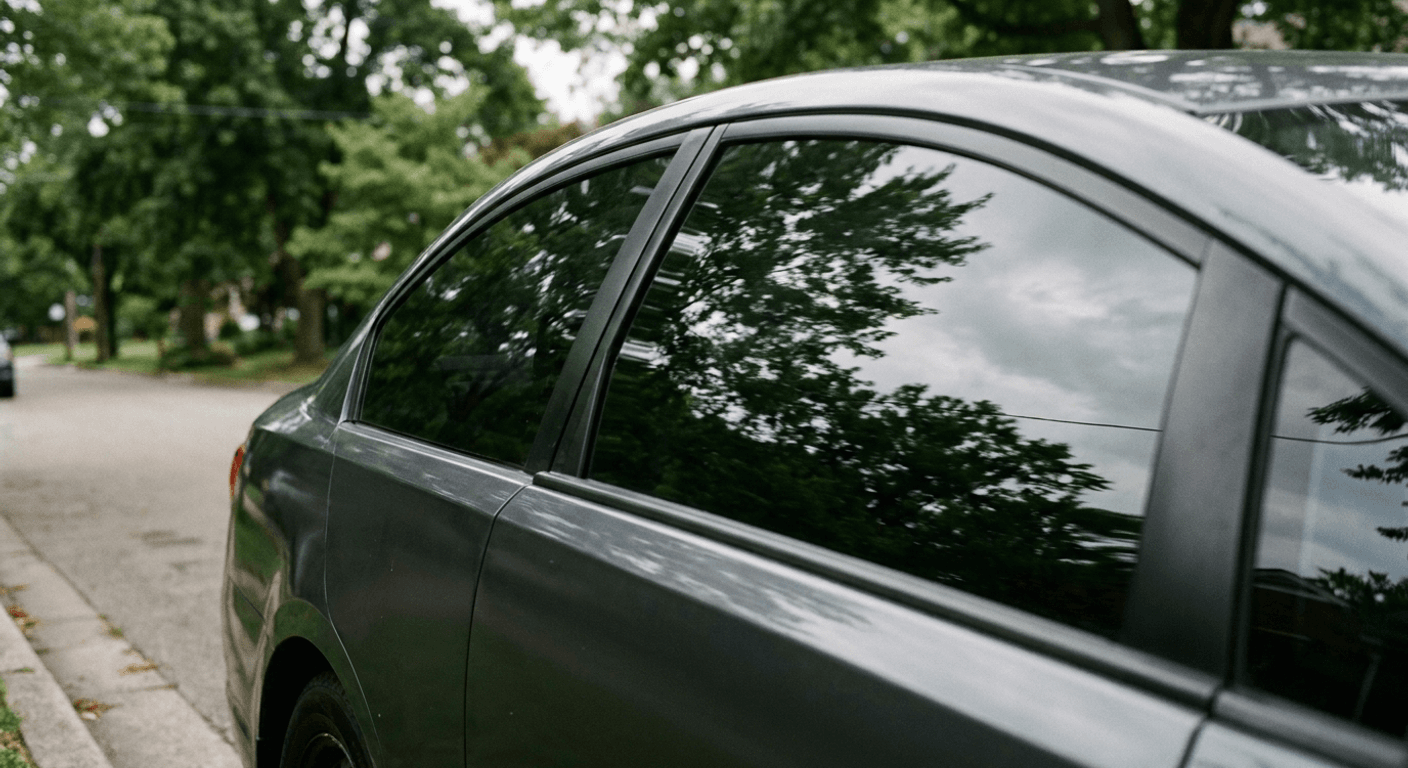
In Minnesota, front side windows, back side windows, and the rear window all require at least 50% VLT (visible light transmission) for passenger cars. Vans are exempt on the back side windows and the rear window. Limousines, funeral vehicles, and police vehicles are exempt on their side and rear windows, which reaches their front side windows too. Pickup trucks are exempt only on the rear window, not the side windows behind the driver's seat.
What is the legal tint limit in Minnesota?
Minnesota's window tint rules appear in Minn. Stat. 169.71. The key concept is Visible Light Transmission: a higher VLT percentage means a lighter, less restrictive film that lets more light through, while a lower VLT percentage means a darker film that blocks more light. Minnesota uses a 50% VLT floor, which is one of the lighter (less permissive) standards in the country.
For passenger cars, all three window groups must meet 50% VLT: the front side windows, the back side windows (behind the driver), and the rear window. Unlike many states that allow SUVs and vans to run any darkness on rear windows, Minnesota's standard rule applies equally to sedans. The statute does exempt several vehicle types, and it does not exempt them all to the same extent. Vans may use any darkness on the rear window and on the side windows behind the driver's seat. Limousines, vehicles used by a funeral establishment to transport human remains, and police vehicles are exempt on their side and rear windows, and that difference is deliberate: the van clause is expressly limited to "the side windows on either side behind the driver's seat," while the limousine, funeral-vehicle, and police clauses are not, so their exemption reaches the front side windows as well. Pickup trucks are exempt only on the rear window; their side windows behind the driver's seat must still meet the 50% VLT minimum.
| Window | Passenger Cars | Pickup Trucks | Vans | Limos, Funeral, Police |
|---|---|---|---|---|
| Front side windows | 50% VLT minimum | 50% VLT minimum | 50% VLT minimum | Exempt (any darkness) |
| Back side windows | 50% VLT minimum | 50% VLT minimum | Exempt (any darkness) | Exempt (any darkness) |
| Rear window | 50% VLT minimum | Exempt (any darkness) | Exempt (any darkness) | Exempt (any darkness) |
| Windshield (below roofline) | No aftermarket tint | No aftermarket tint | No aftermarket tint | No aftermarket tint |
Minn. Stat. 169.71 subd. 4(3) writes a measurement tolerance of plus or minus three percent into the standard itself. A front side window reading of 47% on a tintometer falls within compliance under that tolerance.
Windshield tint rules in Minnesota
Minnesota prohibits any additional aftermarket tint on the front windshield. Unlike many states that allow a clear strip at the top above the AS-1 line, Minnesota's statute does not permit any applied tint film on the windshield at all. Factory-installed tinted glass embedded during manufacturing is treated differently from aftermarket film and is generally permissible, but no aftermarket film may be added.
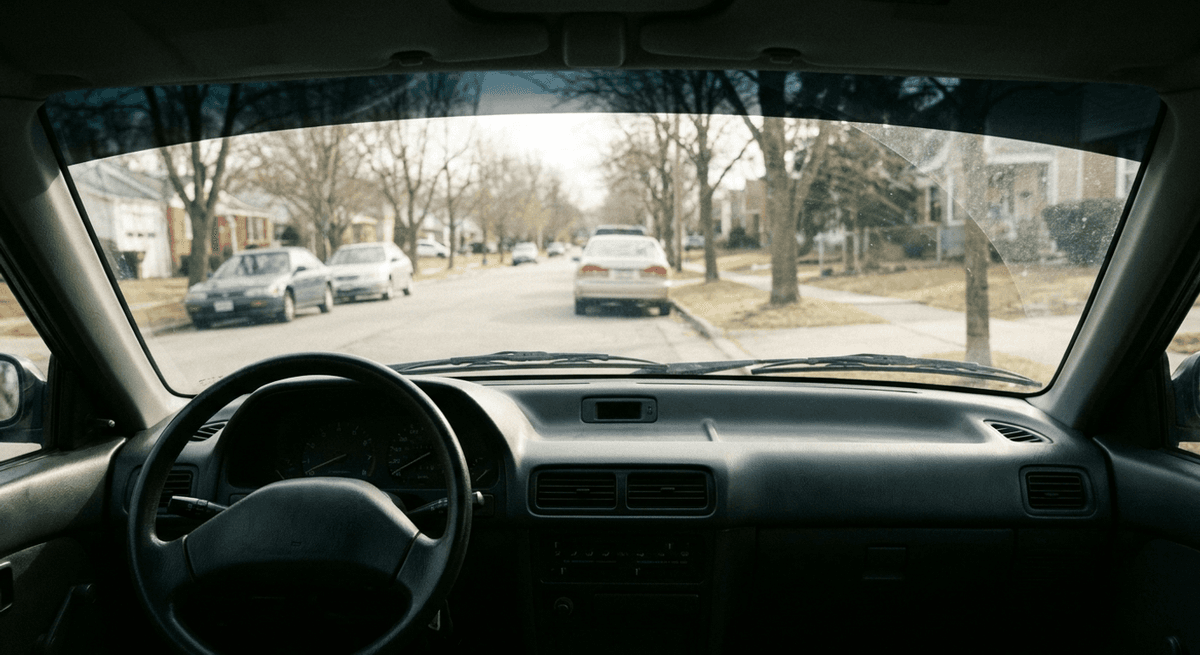
The reflectivity limit of 20% luminous reflectance, plus or minus 3% tolerance (so up to 23% is compliant), is set by Minn. Stat. 169.71 subd. 4(3) and applies to side windows and rear windows, which is stricter than the 35% cap many other states use. The windshield is governed separately by subd. 4(1), which bars any material that makes the windshield more reflective at all. Films with a mirrored appearance are specifically prohibited. There are no named banned tint colors in the statute, but any highly reflective metallic or mirror-finish film would almost certainly exceed the reflectance cap and would not be lawful.
Medical exemptions
Minnesota allows a medical exemption under Minn. Stat. 169.71. A licensed physician must provide a written statement documenting the medical need for additional tint. The exemption statement is valid for up to two years, or indefinitely if the physician certifies the condition is permanent. The driver must keep the physician's statement in the vehicle and present it during any traffic stop where the tint is questioned.
Qualifying conditions typically involve sensitivity to ultraviolet or visible light, such as lupus, xeroderma pigmentosum, photosensitive eye conditions, or certain skin disorders. The exemption allows darker tint than the 50% standard on the affected windows, but the exemption document is the operative authorization and must accompany the vehicle at all times.
There is no pre-registration process with the DMV required to claim the exemption. The physician's written statement, current and signed, is sufficient documentation.
How tint is measured and certified in Minnesota
Minnesota requires a permanent marking on any window that has had film applied after August 1, 1985, showing the film's measured transmittance (VLT) and reflectance values. Minn. Stat. 169.71 subd. 4(4) does not limit this to the driver-side window or specify that the marking sit between the film and the glass; it only requires the marking be readable when installed and not obscure the driver's vision. This requirement places the responsibility on the installer to mark the film at the time of installation, giving officers a fast reference point during traffic stops without the need to use a tintometer every time.
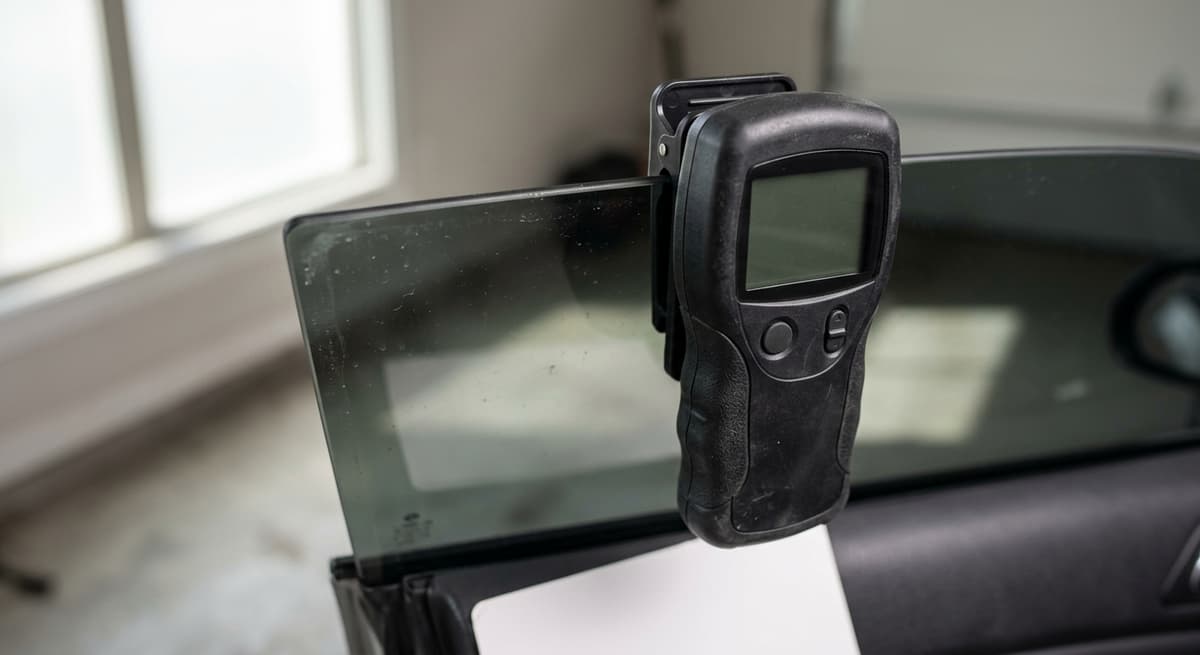
Enforcement otherwise relies on a VLT meter (tintometer) at roadside. The plus-or-minus 3% tolerance is applied in enforcement, meaning a reading of 47% on a front side window or 47% on a rear window would still be compliant. Installers who apply film that does not meet the 50% standard can face a misdemeanor charge, which is a stronger deterrent than in states that only penalize the vehicle owner.
Penalties for illegal tint in Minnesota
Minnesota splits tint liability between the driver and the installer, and the two carry very different exposure.
If you simply drive a vehicle whose tint violates Minn. Stat. 169.71 subd. 4, you commit a petty misdemeanor. Minn. Stat. 169.89 subd. 1 makes it a petty misdemeanor to do any act forbidden by chapter 169 unless the chapter declares otherwise, and subd. 2 provides that a person convicted of a petty misdemeanor "is not subject to imprisonment but shall be punished by a fine of not more than $300." There is no jail exposure for the driver.
Selling or applying non-compliant window film is the heavier offense. Under Minn. Stat. 169.71 subd. 5 that conduct is a misdemeanor, which Minn. Stat. 609.02 subd. 3 defines as carrying up to 90 days in jail, a fine of up to $1,000, or both. That classification is aimed at commercial installers and dealers rather than at the driver.

The compliance marking requirement means that during a stop, an officer can quickly check whether the film was installed to spec. If a tinted window lacks its marking, the vehicle is immediately suspect and may be subject to a meter reading. A vehicle with clearly non-compliant tint and no marking gives officers grounds to cite both the installation and the operation of the vehicle in that state.
If you want to tint your windows in Minnesota
Minnesota's 50% VLT rule means you should choose a film rated at 50% VLT or lighter for all windows on a passenger car to stay comfortably above the compliance floor. With the 3% tolerance, a film rated at exactly 50% may read as low as 47% on a meter and still pass, but going with 50% or above on paper gives you a clear margin.
For vans, the back side windows and the rear window are exempt, meaning you may use any darkness you prefer behind the driver, but the front side windows still need 50% VLT. For limousines, funeral vehicles, and police vehicles, the statute exempts the side and rear windows without limiting the exemption to windows behind the driver. For pickup trucks, only the rear window is exempt; the side windows behind the driver's seat must still meet the 50% VLT minimum. On a passenger car or SUV, every window needs 50% VLT.
Use a reputable installer who works with the compliance marking requirement. Minnesota law requires a permanent marking, readable once installed, on every window that receives film, not just the driver's side window. Ask for the installer's documentation showing the film's rated VLT so you have a second record on file. If you have a qualifying medical condition, obtain the physician's statement before installation so the film you choose is covered by the exemption from day one.
This article is general legal information, not legal advice. Window tint limits vary by state and change, and enforcement depends on local practice and your specific vehicle. For a definitive answer, check your state DMV or consult a local attorney.
Related reading
For rules about what may be attached to or mounted on your windshield, see Minnesota Windshield Mounting Restrictions.
More Minnesota Laws
Frequently Asked Questions
What is the legal tint in Minnesota?
Minnesota requires at least 50% VLT on front side windows, back side windows, and the rear window of passenger cars. Vans are exempt on the back side windows and the rear window; limousines, funeral vehicles, and police vehicles are exempt on their side and rear windows; pickup trucks are exempt only on the rear window. No additional tint is permitted on the windshield, and side and rear windows must have no more than 20% reflectance (plus or minus 3% tolerance).
How dark can my front windows be in Minnesota?
The darkest legal film for front side windows in Minnesota is 50% VLT on a passenger car, SUV, pickup truck, or van. Limousines, funeral vehicles, and police vehicles are exempt on their side windows, so the 50% floor does not apply to them. With the plus-or-minus 3% measurement tolerance, a meter reading as low as 47% will still pass, but choosing a film rated at 50% or lighter is the safest approach.
Is 35% tint legal in Minnesota?
No. A 35% VLT film is too dark for front side windows and rear windows on passenger cars in Minnesota, which require at least 50% VLT. A 35% film would only be lawful on the back side windows of a van, on any side or rear window of a limousine, funeral vehicle, or police vehicle, on the rear window of a pickup truck or van, or under a medical exemption.
Can I get a medical exemption for window tint in Minnesota?
Yes. Minn. Stat. 169.71 allows a medical exemption. A licensed physician must provide a written statement of medical need, valid for up to 2 years (or permanently if the condition is permanent). The driver must keep the statement in the vehicle and show it on request during any traffic stop.
What is the penalty for illegal tint in Minnesota?
It depends on whether you drove the vehicle or installed the film. A driver who operates a vehicle with illegal tint commits a petty misdemeanor under Minn. Stat. 169.89, which carries no jail time and a fine of not more than $300. Selling or applying non-compliant film is a misdemeanor under Minn. Stat. 169.71 subd. 5, punishable by up to 90 days in jail, a fine of up to $1,000, or both.
Is windshield tint legal in Minnesota?
No. Minnesota prohibits any additional aftermarket tint on the front windshield. Unlike many states that allow a non-reflective strip above the AS-1 line, Minnesota does not permit any aftermarket windshield film at all.
Do SUVs have different tint rules in Minnesota?
SUVs are generally treated as passenger cars in Minnesota and must meet the 50% VLT standard on all windows. The vehicle-type exemptions apply to vans (back side windows and rear window), to limousines, funeral vehicles, and police vehicles (side and rear windows), and to pickup trucks (rear window only), not to SUVs in general.
Updates
Corrected the front side window rule for limousines, funeral vehicles and police vehicles, which the statute exempts on all side windows, and separated the driver penalty (a petty misdemeanor with no jail and a $300 fine cap) from the heavier misdemeanor that applies to selling or applying illegal film.
Corrected the compliance-marking requirement to match Minn. Stat. 169.71 subd. 4(4): the permanent transmittance/reflectance marking applies to any window that has had film applied, not only the driver-side window, and the statute does not specify placement between the film and glass. Also added the statutory +/-3% tolerance to the 20% reflectance cap.
Independently fact-checked against the cited primary sources; governing law re-checked for recent changes
Corrected the pickup-truck tint exemption: Minnesota law exempts pickups only on the rear window, not the side windows behind the driver, while vans, limousines, and funeral/police vehicles are exempt on both.
Governing law re-checked for recent changes
Reviewed and approved by an editor
The Law Behind This Article
This article rests on the statutory provisions below, held in our own legal record and retrieved from the official source. Tap a section to read the operative text.
Minnesota Statutes, Chapter 169: TRAFFIC REGULATIONS
§ 169.71WINDSHIELDIn forcecited in 4 of our articles
Subdivision 1. Prohibitions generally; exceptions. (a) A person shall not drive or operate any motor vehicle with: (1) a windshield cracked or discolored to an extent to limit or obstruct proper vision; (2) any objects suspended between the driver and the windshield, other than: (i) sun visors; (ii) rearview mirrors; (iii) driver feedback and safety monitoring equipment when mounted immediately behind, slightly above, or slightly below the rearview mirror; (iv) global positioning systems or navigation systems when mounted or located near the bottommost portion of the windshield; (v) electronic toll collection devices; and (vi) an identifying device as provided in section 169.58, subdivision 5, when the device is mounted or located near the bottommost portion of the windshield; or (3) any sign, poster, or other nontransparent material upon the front windshield, sidewings, or side or rear windows of the vehicle, other than a certificate or other paper required to be so displayed by law or authorized by the state director of the Division of Emergency Management or the commissioner of public safety. (b) Paragraph (a), clauses (2) and (3), do not apply to law enforcement vehicles.
Official text (excerpt) · last checked 2026-09-07 · Read the full text in our law library · Verify at revisor.mn.gov
Cited in 17 court opinions in our collectionLatest citing opinion in our collection: 2026
In the courts (editorial summary, independently checked):State v. Varnado (1998) treated a Minn. Stat. 169.71 windshield violation as probable cause to stop but held it is only a petty misdemeanor that did not justify a frisk. State v. Smith (2002) assumed without deciding that the tinted window subdivision was unconstitutional and held the exclusionary rule still did not bar the evidence.
Opinions citing this section in our collection:
- State v. Smith (Court of Appeals of Minnesota 2002, 652 N.W.2d 546)✓A deputy stopped a car he could not see through for excessive tint under Minn. Stat. 169.71, subd. 4; the court assumed without deciding that the tint statute violated equal protection and held the exclusionary rule did not reach the evidence found after the stop.
- Gerding v. Commissioner of Public Safety (Court of Appeals of Minnesota 2001, 628 N.W.2d 197)✓An officer stopped Gerding after seeing an object hanging from her rear vision mirror; the court read the then-current Minn. Stat. 169.71, subd. 1 to bar any suspended object except sun visors and mirrors, whether or not it obstructed vision, so the stop was justified.
- State v. Varnado (Supreme Court of Minnesota 1998, 582 N.W.2d 886)✓Officers stopped Varnado for a cracked windshield and frisked her before seating her in a squad car; the court called that Minn. Stat. 169.71 violation a petty misdemeanor that justified the stop but not the frisk, and reinstated the suppression order.
Identified automatically from the court opinions citing this section — not a ranking of which case controls.
Also relied on in: Minnesota Dashcam Laws: Legality, Mounting Rules, and Evidence Use, Minnesota Windshield Mounting Laws (2026 Guide), Are Radar Detectors Legal? State Laws Explained (2026)
§ 169.89PENALTIESIn forcecited in 3 of our articles
Subdivision 1. Violation; when petty misdemeanor enhanced to misdemeanor. Unless otherwise declared in this chapter with respect to particular offenses, it is a petty misdemeanor for any person to do any act forbidden or fail to perform any act required by this chapter; except that: (1) a violation which is committed in a manner or under circumstances so as to endanger or be likely to endanger any person or property; or (2) exclusive of violations relating to the standing or parking of an unattended vehicle, a violation of any of the provisions of this chapter, classified therein as a petty misdemeanor, when preceded by two or more petty misdemeanor convictions within the immediate preceding 12-month period; is a misdemeanor to which the provisions of subdivision 2 shall not apply. Subd. 2. Petty misdemeanor penalty; no jury trial. A person charged with a petty misdemeanor is not entitled to a jury trial but shall be tried by a judge without a jury. If convicted, the person is not subject to imprisonment but shall be punished by a fine of not more than $300. Subd. 3. [Obsolete] Subd. 4. Driver's record.
Official text (excerpt) · last checked 2026-07-29 · Read the full text in our law library · Verify at revisor.mn.gov
Cited in 23 court opinions in our collectionLatest citing opinion in our collection: 2016
Opinions citing this section in our collection:
- State v. Johnson (Supreme Court of Minnesota 1994, 514 N.W.2d 551)“…on in a year, he was charged with a misdemeanor pursuant to Minn.Stat. § 169.89, subd. I. 2 Appellant…”
- State v. Batzer (Court of Appeals of Minnesota 1989, 448 N.W.2d 565)“…ty misdemeanor and would result in a maximum fine of $100. Minn. Stat. § 169.89 , subd. 1(b). Appellant, however, had t…”
- State v. Host (Court of Appeals of Minnesota 1984, 350 N.W.2d 479)“…lties provided in section 169.89 apply. Id. Minn.Stat. § 169.89 (1982) in turn provides: Unless…”
Identified automatically from the court opinions citing this section — not a ranking of which case controls.
Also relied on in: Minnesota E-Scooter Laws: Sidewalk, Helmet & Age Rules (2026)
Minnesota Statutes, Chapter 609: CRIMINAL CODE
§ 609.02DEFINITIONSIn forcecited in 13 of our articles
Subdivision 1. Crime. "Crime" means conduct which is prohibited by statute and for which the actor may be sentenced to imprisonment, with or without a fine. Subd. 2. Felony. "Felony" means a crime for which a sentence of imprisonment for one year or more may be imposed. Subd. 2a. [Repealed, 1999 c 194 s 11] Subd. 3. Misdemeanor. "Misdemeanor" means a crime for which a sentence of not more than 90 days or a fine of not more than $1,000, or both, may be imposed. Subd. 4. Gross misdemeanor. "Gross misdemeanor" means any crime which is not a felony or misdemeanor. The maximum fine which may be imposed for a gross misdemeanor is $3,000. Subd. 4a. Petty misdemeanor. "Petty misdemeanor" means a petty offense which is prohibited by statute, which does not constitute a crime and for which a sentence of a fine of not more than $300 may be imposed. Subd. 5. Conviction. "Conviction" means any of the following accepted and recorded by the court: (1) a plea of guilty; or (2) a verdict of guilty by a jury or a finding of guilty by the court. Subd. 6. Dangerous weapon.
Official text (excerpt) · last checked 2026-07-29 · Read the full text in our law library · Verify at revisor.mn.gov
Cited in 539 court opinions in our collectionLatest citing opinion in our collection: 2026
Opinions citing this section in our collection:
- State v. Stewart (Court of Appeals of Minnesota 2019, 923 N.W.2d 668)“…he intentionally inflicted great bodily harm upon B.G.D. Minn. Stat. §§ 609.02 , subd. 10(2), .221, subd. 1 (2014). S…”
- State v. Fleck (Supreme Court of Minnesota 2012, 810 N.W.2d 303)“…itted two forms of assault to the jurors: (1) assault-fear, Minn.Stat. § 609.02, subd. 10(1) (2010) (prohibiting an act…”
- State v. Vance (Supreme Court of Minnesota 2007, 734 N.W.2d 650)“…iction of or attempt to inflict bodily harm upon another. Minn.Stat. § 609.02, subd. 10 (2004). 4 The statute furthe…”
Identified automatically from the court opinions citing this section — not a ranking of which case controls.
Also relied on in: Minnesota Hit and Run Laws: Penalties and What to Do, Minnesota Recording Laws (2026): One-Party Consent Rules, Minnesota Eviction Law Changes Take Effect August 1, 2026 Under HF 3809
Search our full record of US law — 2.1 million sections, every state + federal →