
Massachusetts
Massachusetts Window Tint Laws (2026): Legal VLT Limits
Independently fact-checked against primary sources (last audited August 18, 2026). · Reviewed by the RecordingLaw editorial team. · Law checked current as of August 18, 2026. · 1 primary source cited on this page. How we verify our legal content

Massachusetts law requires all side windows, front and back, to let through at least 35% of visible light (VLT). The same 35% minimum applies to the rear window, and the only film allowed on the windshield is a transparent strip along the top 6 inches that does not encroach on the driver's direct forward viewing area.
What is the legal tint limit in Massachusetts?
Massachusetts sets a single VLT floor of 35% that applies to every side window on the vehicle, front and rear, as well as to the rear window. A higher VLT percentage means more light passes through and the tint appears lighter. A lower VLT percentage means less light passes through and the tint is darker. The 35% minimum means your windows must transmit at least 35% of incoming visible light when the tint film and the glass are measured together.
There is no sedan-versus-SUV distinction in Massachusetts. Unlike many states that allow SUVs, vans, and trucks to run any darkness on the windows behind the driver, Massachusetts imposes the same 35% rule on all passenger vehicles regardless of body style.
| Window | Minimum VLT (all vehicles) |
|---|---|
| Front side windows | 35% |
| Back side windows | 35% |
| Rear window | 35% (vehicle must have two outside mirrors) |
| Windshield | No film below the top 6-inch strip |
The rear window allowance carries a condition that is easy to miss. Section 9D(4) permits the 35% material on the rear window if the vehicle is equipped with two outside mirrors, one on each side, adjusted so that the driver has a clear view of the highway behind the vehicle. The same mirror requirement gates the separate allowance for draperies, louvers and similar window treatments on the rear window and on a side window behind the driver. Almost every modern vehicle meets the condition as delivered, but it is a stated element of the exception.
The statute does draw lines, and it draws them by registration status rather than by body style. Section 9D does not apply to a vehicle registered in another state, territory, country or province, so an out-of-state-registered car driven in Massachusetts is not measured against the 35% rule. A private passenger vehicle registered in Massachusetts for public livery and hired for that purpose, which the statute expressly does not extend to taxicabs, is exempt on the side windows behind the driver and on the rear window.
Reflectance is treated as capped at 35% on the side and rear windows, and highly metallic or mirror-finish films can push a reading past that. One nuance is worth knowing. Section 9D(4) is written disjunctively, permitting material which has a total visible light reflectance of not more than thirty-five per cent or a visible light transmittance of not less than thirty-five per cent. Registry practice and the tint trade treat both figures as limits, and staying inside both is the safe course, but the section does not literally require a film to satisfy both.
Windshield tint rules in Massachusetts
Massachusetts permits a transparent strip only on the uppermost 6 inches of the windshield. Below that line, no tint film of any kind may be applied. The purpose of the top-strip allowance is to reduce glare from direct sunlight without blocking the driver's view of the road.
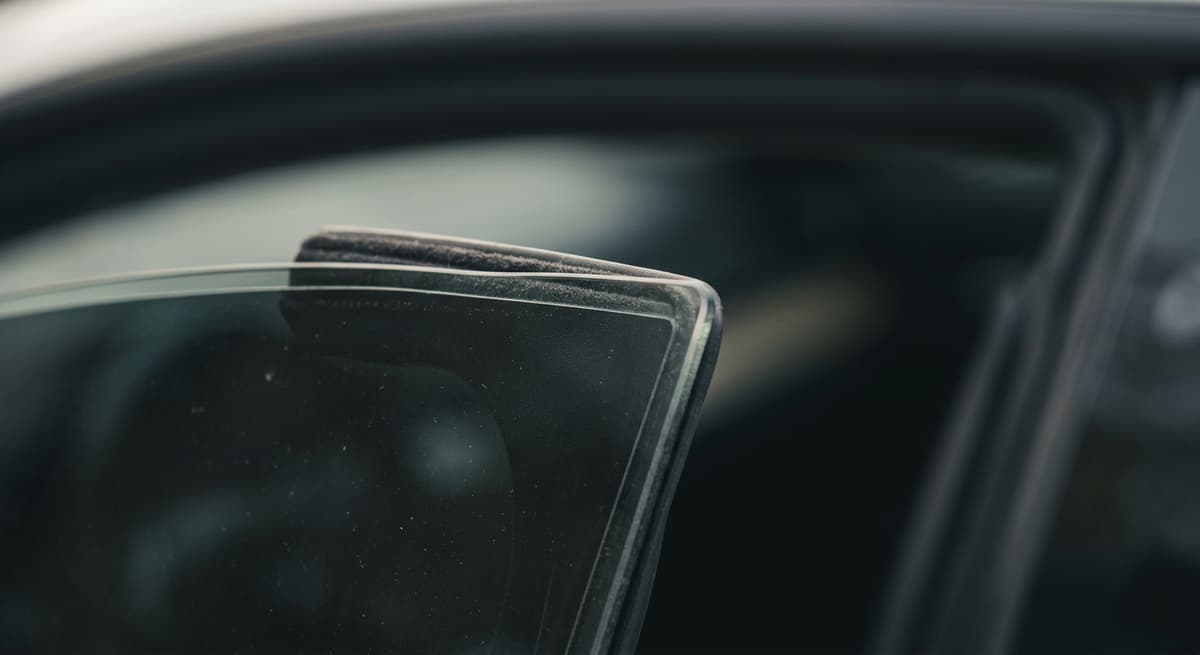
The statutory condition is placement, not finish. Section 9D(5) allows the use of any transparent material limited to the uppermost 6 inches along the top of the windshield, provided such strip does not encroach upon the driver's direct forward viewing area as more particularly described and defined in applicable Federal Motor Vehicle Safety Standards. So there are two requirements: the material must be transparent, and the strip must stay clear of the direct forward viewing area that the federal standards define. A strip that fits inside the top 6 inches but still reaches into that viewing area does not qualify.
No specific tint colors are banned by Massachusetts statute. Color matters only through the reflectance and transmittance readings a film produces on the side and rear windows.
Medical exemptions
Massachusetts law (Mass. Gen. Laws ch. 90, section 9D) allows a special window treatment determined necessary by a licensed physician for the protection of the owner or operator of a private passenger motor vehicle who is determined to be light or photosensitive. The exemption is written around the person who owns or drives the car. A passenger's photosensitivity is not a basis for it under the statute.
The application goes to the medical advisory board, not to the Registrar. Section 9D(8) requires applications to be made in writing to the medical advisory board established under section 8C, supported by a written attestation from a physician licensed to practice in Massachusetts. The board is what grants or denies the exemption.

Once the board grants the exemption, the Registrar issues a sufficiently noticeable sticker that must be affixed to the side window immediately adjacent to the operator, and the Registrar keeps a record of every sticker issued. Officers use that sticker to verify the exemption during a traffic stop. Simply carrying a physician letter in the vehicle is not sufficient; the official sticker is required.
The statute does not set a replacement VLT number for an exempt vehicle. It exempts the special window treatment the physician determines is necessary, and the sticker on the operator-side window is what evidences it.
How tint is measured and certified
Massachusetts uses a VLT meter to measure how much light passes through the combined film-plus-glass system. Measurement is taken at the window surface, not just at the film itself, because the factory glass already has some tint built in. A window that meets 35% with film and glass together is compliant; a window that only meets 35% based on the film alone may not be.
Measurement is not left to roadside discretion. Section 9D directs that the Registrar shall establish rules and regulations, in accordance with section 31 of chapter 90, to provide standards to measure the percentage of reflectance and transmittance of light, and shall provide for testing of any motor vehicle glazing alleged to be in violation of the section. The statute also makes a statement from the Registrar attesting that treated glazing complies with section 9D prima facie evidence of that compliance in any prosecution. To give yourself a margin of safety, installers generally recommend choosing a film rated a few VLT points above the legal minimum, such as a 38% or 40% film, to account for variation across different glass types.
Massachusetts does not require a general-use compliance sticker from the installer. The only window sticker requirement is the Registrar-issued medical-exemption sticker, which applies only to vehicles with an approved exemption.
Penalties for illegal tint in Massachusetts
Every violation of Massachusetts window tint law carries a fine of up to $250. On a third or subsequent conviction, the Registrar of Motor Vehicles must suspend the operator's license for a period not to exceed 90 days, on top of that fine. The statute uses mandatory language, so the suspension is not a matter of Registry discretion once the third conviction is entered. That makes Massachusetts one of the stricter states on enforcement consequences for repeat offenders.
Officers issue a citation during a traffic stop when a window fails a visual or instrument check. The citation itself does not automatically require removing the tint before the next drive, but the vehicle is subject to re-inspection and the tint must ultimately be brought into compliance to avoid further penalties.
If you want to tint your windows in Massachusetts
The steps below will keep you on the right side of Massachusetts law.
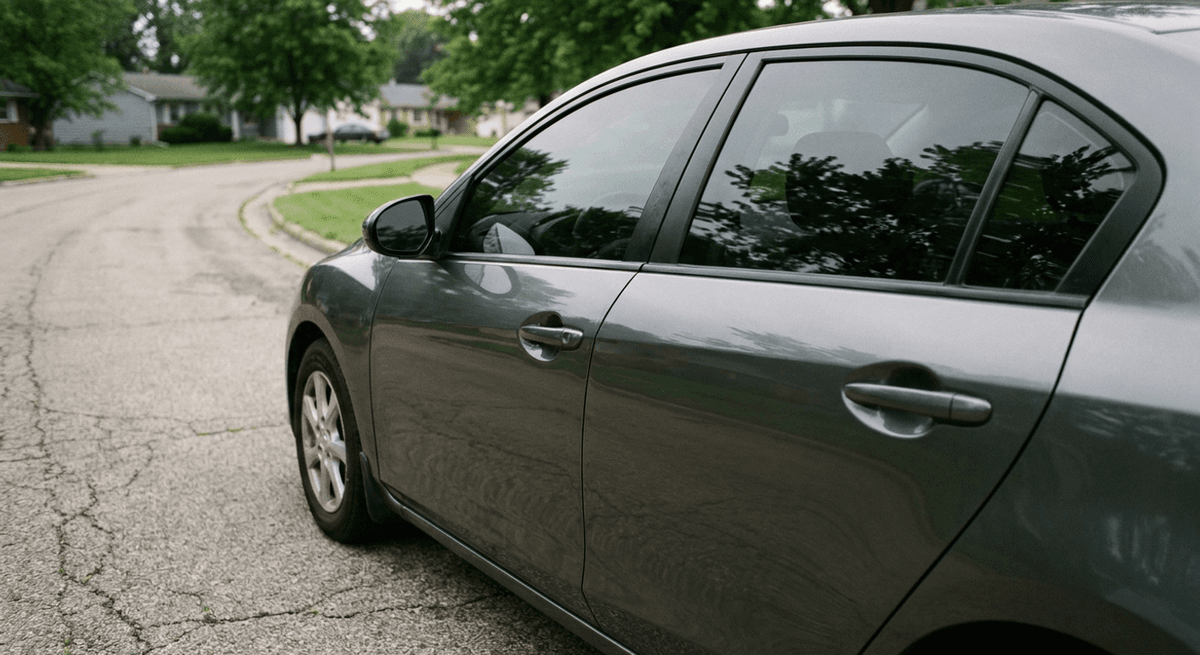
Choose a legal VLT percentage. Any film that brings the combined glass-plus-film transmittance to 35% or higher on all side and rear windows is legal. Ask your installer to confirm the post-installation VLT at the glass, not just the film rating. A film rated 35% may produce a slightly lower combined reading on darker factory glass.
Use a reputable installer who is familiar with Massachusetts requirements and can provide a certificate or documentation of the VLT level installed. While Massachusetts does not mandate a compliance sticker for standard tint jobs, written documentation from the installer is useful if you are questioned during a stop.
If you have a qualifying medical condition, apply in writing to the medical advisory board before installing any darker film. Installing first and applying afterward leaves you in violation until the board grants the exemption and the Registrar issues the sticker.
Keep the Registrar-issued medical-exemption sticker on the operator-side window at all times if your vehicle has an approved medical exemption. Do not remove it.
Finally, inspect your windows periodically. Factory tint and added film can interact over time, and a film that tested at 36% when new may degrade slightly. Staying above 35% with a comfortable buffer is the simplest way to avoid a citation.
This article is general legal information, not legal advice. Window tint limits vary by state and change, and enforcement depends on local practice and your specific vehicle. For a definitive answer, check your state DMV or consult a local attorney.
For a full overview of how window tint laws work across all 50 states, see the Window Tint Laws hub. Massachusetts drivers may also want to review Massachusetts windshield mounting restrictions for related rules on what may be mounted on or near the windshield.
More Massachusetts Laws
Frequently Asked Questions
What is the legal tint in Massachusetts?
Massachusetts requires all side windows (front and back) and the rear window to allow at least 35% VLT (visible light transmission). The windshield may only carry a transparent strip on the top 6 inches, and that strip may not encroach on the driver's direct forward viewing area as defined in the Federal Motor Vehicle Safety Standards.
How dark can my front windows be in Massachusetts?
Your front side windows must let through at least 35% of visible light. A film that produces a combined glass-plus-film VLT below 35% is illegal. There is no distinction between sedans and SUVs; the 35% rule applies to all vehicle types.
Is 35% tint legal in Massachusetts?
Yes. A 35% VLT film is exactly at the legal limit and is permitted on all side and rear windows. In practice, many installers recommend a 38% or 40% film to provide a small buffer above the minimum, because factory glass already absorbs some light.
Can I get a medical exemption for window tint in Massachusetts?
Yes. Under Mass. Gen. Laws ch. 90, section 9D, a physician licensed in Massachusetts can attest that a special window treatment is necessary for an owner or operator who is light or photosensitive. The application is made in writing to the medical advisory board established under section 8C, and the board grants or denies it. If the board grants the exemption, the Registrar issues an official sticker for the operator-side window. A physician letter alone is not sufficient, and a passenger's photosensitivity is not a basis for the exemption.
What is the penalty for illegal tint in Massachusetts?
Every violation carries a fine of up to $250. On a third or subsequent conviction, the Registrar must suspend the operator's license for a period not to exceed 90 days on top of that fine.
Is windshield tint legal in Massachusetts?
Only a transparent strip on the uppermost 6 inches of the windshield is permitted. No tint film may be applied below that line, and the strip may not encroach on the driver's direct forward viewing area as defined in the applicable Federal Motor Vehicle Safety Standards.
Do SUVs have different tint rules in Massachusetts?
No. Massachusetts applies the same 35% VLT minimum to all vehicle types, including SUVs, vans, and trucks. There is no separate looser standard for multipurpose vehicles on the rear windows. The statute draws its lines by registration status instead: a vehicle registered in another state, territory, country or province is outside section 9D, and a livery-registered private passenger vehicle other than a taxicab is exempt on the rear and rear side windows.
Updates
Corrected the Massachusetts tint page against the text of Mass. Gen. Laws ch. 90, section 9D: the third-offense license suspension is mandatory rather than discretionary, the medical exemption covers the owner or operator (not passengers) and is applied for in writing to the medical advisory board rather than the Registrar, the windshield allowance is for a transparent strip that must stay clear of the driver's direct forward viewing area under the Federal Motor Vehicle Safety Standards rather than a non-reflective strip, and the page now states the two-outside-mirrors condition on the rear-window allowance, the Registrar's measurement and testing regulations with their prima facie evidence effect, and the out-of-state and livery registration exemptions.
Clarified that Massachusetts window tint fines and the third-conviction license suspension are additive, not alternatives.
Independently fact-checked against the cited primary sources; governing law re-checked for recent changes
Reviewed and approved by an editor
The Law Behind This Article
This article rests on the statutory provisions below, held in our own legal record and retrieved from the official source. Tap a section to read the operative text.
Massachusetts General Laws, Chapter 90
§ 9DWindshields and windows obscured by nontransparent materialsIn forcecited in 3 of our articles
Section 9D. No person shall operate any motor vehicle upon any public way or upon any way to which the public shall have the right of access with any of the following affixed thereto: (1) a sign, poster or sticker on the front windshield, the side windows immediately adjacent to the operator's seat and the front passenger seat, the side windows immediately to the rear of the operator's seat and the front passenger seat and the rear window in such a manner so as to obstruct, impede or distort the vision of the operator. (2) nontransparent or sunscreen material, window application, reflective film or nonreflective film used in any way to cover or treat the front windshield, the side windows immediately adjacent to the right and left of the operator's seat, the side windows immediately to the rear of the operator's seat and the front passenger seat and the rear window, so as to make such windshield and said window glass areas in any way nontransparent or obscured from either the interior or exterior thereof.
Official text (excerpt) · last checked 2026-09-08 · Read the full text in our law library · Verify at malegislature.gov
Cited in 12 court opinions in our collectionLatest citing opinion in our collection: 2026
In the courts (editorial summary, independently checked):Commonwealth v. Baez (1999) held that a stop for a suspected section 9D violation is judged by whether the officer reasonably suspected from visual observation that the tint exceeded the limit, with no meter reading required first. Commonwealth v. Cordero (2017) held detention had to end once that investigation was complete.
Opinions citing this section in our collection:
- Commonwealth v. Cordero (Massachusetts Supreme Judicial Court 2017, 477 Mass. 237)✓A trooper stopped a car for broken lights and illegal tint and held the driver for a drug inquiry after testing the tint; the court held that once the tint and lights investigation ended with no reasonable suspicion, the driver had to be allowed to drive away.
- Commonwealth v. Baez (Massachusetts Appeals Court 1999, 47 Mass. App. Ct. 115)✓A trooper stopped a car whose side windows looked darker than the legal limit and later measured them at 31 percent light transmission; the court held such a stop is lawful if the officer reasonably suspected from visual observation that the tint exceeded the limit.
- Commonwealth v. Washington (Massachusetts Supreme Judicial Court 2011, 459 Mass. 32)“…of window followed traffic stop for suspected violation of G. L. c. 90, § 9D). In this limited sense, issuance of a…”
Identified automatically from the court opinions citing this section — not a ranking of which case controls.
Also relied on in: Massachusetts Windshield Mounting Laws (2026 Guide), Massachusetts Dashcam Laws
Search our full record of US law — 2.1 million sections, every state + federal →
Sources and References
- Mass. Gen. Laws ch. 90, section 9D (window tint law)(malegislature.gov).gov