
Maryland
Maryland Window Tint Laws (2026): Legal VLT Limits
Independently fact-checked against primary sources (last audited August 18, 2026). · Reviewed by the RecordingLaw editorial team. · Law checked current as of August 18, 2026. · 1 primary source cited on this page. How we verify our legal content

In Maryland, all windows (front side, back side, and rear) on a vehicle registered under Transportation § 13-912 (standard passenger cars) must allow at least 35% visible light transmission (VLT). Vehicles registered under § 13-913, § 13-917, or § 13-937, such as SUVs and vans, must meet that 35% floor only on the front side windows immediately next to the driver. Transportation § 22-406 itself regulates only light transmittance, but a separate inspection regulation, COMAR 29.02.01.11F(6), bans mirrored, one-way vision, or sparkling effect tint and red, yellow, or amber tint on any window or windshield.
What is the legal tint limit in Maryland?
Maryland's window tint rules are set out in Md. Code, Transportation 22-406. For standard passenger cars, the 35% VLT rule applies uniformly to the front side windows, back side windows, and the rear window. VLT stands for visible light transmission, the percentage of visible light a window allows through. A higher VLT percentage means lighter tint; a lower VLT percentage means darker tint. At 35%, Maryland sits in the middle range nationally.
SUVs and vans have a partial exception, but it turns on vehicle registration under Transportation § 13-913, § 13-917, or § 13-937, not on equipment such as mirrors. For a vehicle registered under one of those sections, § 22-406(i) sets the 35% floor only on the windows immediately to the right or left of the driver, leaving the back side and rear windows without a floor under this section. The front side windows remain at the 35% minimum for all vehicle types without exception.
| Window | § 13-912 (e.g. sedans) VLT Minimum | § 13-913/917/937 (e.g. SUVs, vans) |
|---|---|---|
| Front side windows | 35% | 35% |
| Back side windows | 35% | No floor under this section |
| Rear window | 35% | No floor under this section |
| Windshield | No tint below AS-1 line or top 5 inches | Same |
No measurement tolerance is specified in the Maryland statute, so the 35% figure should be treated as an exact floor.
Windshield tint rules in Maryland
Maryland permits tint on the windshield only in the top strip: above the AS-1 line or within the top 5 inches, whichever applies to your vehicle. Below that line, the windshield must remain free of any tint film.
Md. Code, Transportation § 22-406 itself regulates only light transmittance (VLT), but that is not the whole rule. COMAR 29.02.01.11F(6), the Defect 61 (Glass) standard applied at Maryland safety inspection, prohibits a mirrored, one-way vision, or sparkling effect tint on any window or windshield, and separately prohibits a red, yellow, or amber color tint.
Section 22-406 sets no percentage cap on reflectance, and its only measurable requirement is the 35% VLT floor described above. The mirrored and colored finishes above are barred outright by regulation rather than capped by a number. Section 22-406(i)(4)(iv)3 expressly preserves the Administrator's authority to adopt regulations regarding vehicle windows except as to light transmittance, which is where that regulation gets its force.
Medical exemptions
Maryland law allows a medical exemption under Md. Code, Transportation 22-406(i)(4). A driver or vehicle owner whose medical condition requires protection from sunlight or UV radiation may obtain an exemption by having a licensed physician provide written certification of the medical necessity.
Once you have the physician's written certification, you must carry it in the vehicle at all times. Maryland distinguishes between temporary and permanent conditions. An exemption based on a temporary condition is valid for up to two years; if the condition is permanent, the exemption may be issued indefinitely. Having the paperwork in the vehicle is critical because an officer or inspector will need to see it if the tint appears darker than the standard limits.
How tint is measured and certified
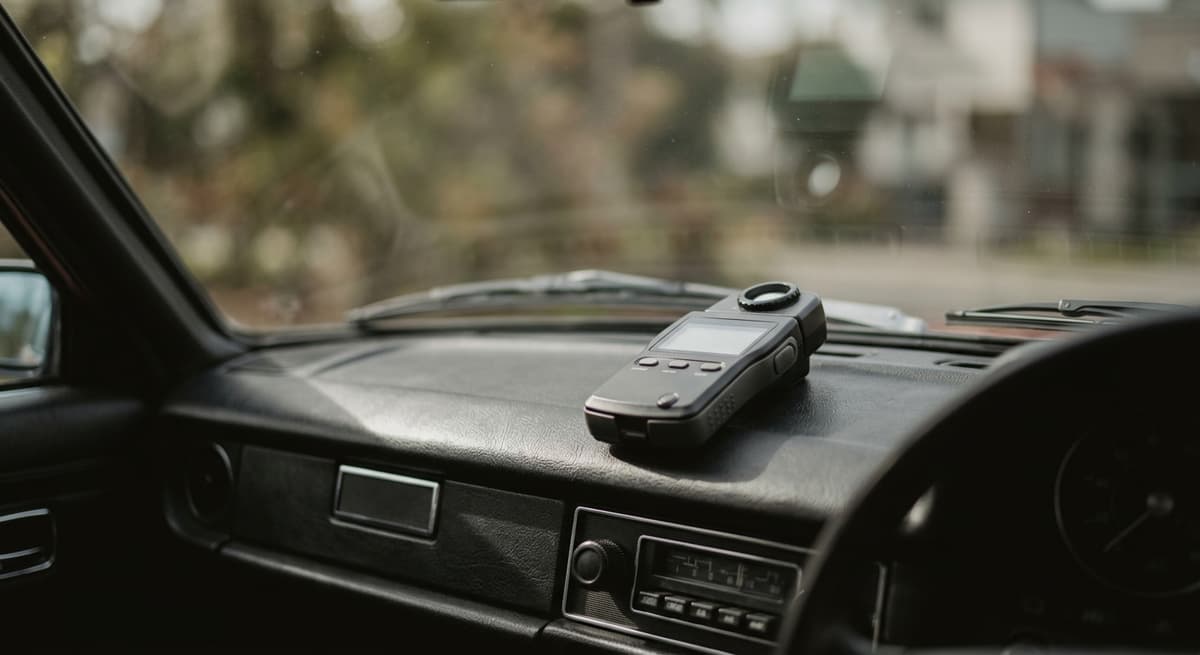
Maryland does not require a compliance sticker on tinted windows by statute. When an officer measures your tint, they will use a calibrated VLT meter. The reading is taken through the film and glass together; it is the combined transmittance that must meet the 35% minimum.
Because no tolerance is specified in the statute, avoid cutting it close. A film nominally rated at 35% may measure slightly below that on some vehicles depending on the factory glass tint. Ask your installer to verify the combined reading on your specific vehicle before you leave the shop.
If you have a medical exemption, carry that paperwork in the glove box. The exemption document substitutes for compliance with the standard VLT numbers.
Penalties for illegal tint in Maryland
Section 22-406(i)(2) allows a police officer to issue a safety equipment repair order in addition to a citation charging the driver with the tint violation, not instead of a citation. That citation carries money. A tint violation is a violation of the Maryland Vehicle Law, and under Md. Code, Transportation 27-101(a) and (b) a violation of the Vehicle Law is a misdemeanor punishable by a fine of up to $500 unless the Vehicle Law provides otherwise. Section 22-406 sets no different penalty, so the $500 ceiling applies.
The repair order runs on its own clock. Under Md. Code, Transportation 23-105(b)(1), the order directs the owner to have the equipment corrected within 10 days of issuance, at a place of the owner's choosing, and to submit documentation of the repair. Under 23-105(e)(2)(i), the registration of a vehicle for which a repair order has been issued may be suspended on failure to comply with the order within 30 days after it was issued, and 23-105(e)(2)(ii) provides for reinstatement once satisfactory evidence of the correction is submitted. Suspension is what happens if you let that window run out; it does not attach the moment the citation is written. Address a tint violation promptly by removing or replacing the non-compliant film and submitting proof of the repair.
If you want to tint your windows in Maryland
If you are planning to have aftermarket tint applied in Maryland, take these steps to stay compliant.
First, plan your VLT targets. For the front side windows, you need at least 35% VLT through the film and glass combined for any vehicle type. For a vehicle registered under § 13-912, plan the same 35% minimum for the back side windows and rear window as well. If your vehicle is registered under § 13-913, § 13-917, or § 13-937, such as an SUV or van, this statute sets no VLT floor for the back side or rear windows.
Second, confirm your factory glass. Most modern vehicles have factory glass in the 70-80% VLT range, meaning you can typically apply a film rated around 35-50% and still clear the combined 35% threshold. Your installer should measure your actual glass before selecting the film.
Third, check the film color. COMAR 29.02.01.11F(6) prohibits a red, yellow, or amber color tint on any window or windshield, so a film in those colors will fail a Maryland safety inspection as a Defect 61 (Glass) item even if it meets the 35% VLT floor.
Fourth, avoid a mirrored film. The same regulation prohibits a mirrored, one-way vision, or sparkling effect tint on any window or windshield, regardless of how much light the film lets through.
Fifth, if you have a qualifying medical condition, see your physician for written certification before you have the tint applied. Keep the original certification in the vehicle so it is available at any inspection or traffic stop.
This article is general legal information, not legal advice. Window tint limits vary by state and change, and enforcement depends on local practice and your specific vehicle. For a definitive answer, check your state DMV or consult a local attorney.
Related pages:
- Window Tint Laws by State (hub)
- Maryland Windshield Mounting Restrictions: /us-laws/windshield-mounting-restrictions/maryland-windshield-mounting-laws
More Maryland Laws
Frequently Asked Questions
What is the legal tint in Maryland?
Maryland requires at least 35% VLT on all windows for vehicles registered under Transportation § 13-912, including front side, back side, and rear windows. Vehicles registered under § 13-913, § 13-917, or § 13-937, such as SUVs and vans, must meet the 35% floor only on the windows immediately beside the driver.
How dark can my front windows be in Maryland?
The darkest legal front side window tint in Maryland is 35% VLT measured through the film and glass combined. This applies to all vehicle types including sedans, SUVs, and vans.
Is 20% tint legal in Maryland?
Not on the front side windows, or on the rear windows of a vehicle registered under § 13-912. A 20% VLT reading falls below Maryland's 35% minimum on those windows. On the rear windows of a vehicle registered under § 13-913, § 13-917, or § 13-937, this statute sets no VLT floor, so a 20% film would not violate this section there.
Can I get a medical exemption for window tint in Maryland?
Yes. Under Md. Code, Transportation 22-406(i)(4), a physician can certify that you need reduced sunlight exposure, and that written certification allows darker tint. A temporary exemption lasts up to two years; a permanent condition may be covered indefinitely. Carry the certification in the vehicle.
What is the penalty for illegal tint in Maryland?
Illegal tint is a violation of the Maryland Vehicle Law, which Md. Code, Transportation 27-101 makes a misdemeanor punishable by a fine of up to $500. An officer may also issue a safety equipment repair order, and 22-406(i)(2) makes clear that the repair order is in addition to a citation, not a replacement for one. Under Transportation 23-105, the repair order directs correction within 10 days, and the vehicle's registration may be suspended if the owner does not comply within 30 days after the order was issued.
Is windshield tint legal in Maryland?
Only in the top strip. Maryland allows tint above the AS-1 line or within the top 5 inches of the windshield. Below that line, the windshield must be clear. Separately, COMAR 29.02.01.11F(6) prohibits mirrored, one-way vision, or sparkling effect tint, and red, yellow, or amber tint, on any window or windshield.
Do SUVs have different tint rules in Maryland?
Partially. The 35% VLT rule applies to all vehicle types for the front side windows. Vehicles registered under § 13-913, § 13-917, or § 13-937, such as SUVs and vans, have no VLT floor under this section on the windows behind the driver, including the rear window. Vehicles registered under § 13-912 must meet 35% on all windows.
Updates
Added Maryland's regulatory ban on mirrored and red, yellow, or amber tint (COMAR 29.02.01.11F(6)), disclosed the up to $500 misdemeanor fine under Transportation 27-101, and corrected the registration consequence to the 10-day repair and 30-day suspension clock in Transportation 23-105.
Independently fact-checked against the cited primary sources; governing law re-checked for recent changes
Corrected the medical-exemption citation to Transportation 22-406(i)(4), replaced the fabricated 'dual side mirrors' condition on SUV/van rear-window tint with the statute's actual registration-class basis, removed color-ban and reflective-finish claims not found in this statute, and fixed the penalty description so it reflects that a citation is issued in addition to the safety equipment repair order.
Governing law re-checked for recent changes
Reviewed and approved by an editor
The Law Behind This Article
This article rests on the statutory provisions below, held in our own legal record and retrieved from the official source. Tap a section to read the operative text.
Maryland Code, Transportation Article
§ 22-406In forcecited in 3 of our articles
§22–406. (a) (1) In this section the following words have the meanings indicated. (2) “Aftermarket safety glass replacement” means motor vehicle safety glass replacement services that occur after the original installation by a vehicle manufacturer. (3) “Safety glass” means: (i) Any glass product that is so made or treated as substantially to prevent the glass from shattering and flying when struck or broken; or (ii) Any similar or other product that the Administration approves. (b) A person may not drive on any highway in this State any motor vehicle manufactured or assembled after June 1, 1937, and registered in this State, unless the vehicle is equipped with safety glass wherever glass is used in the motor vehicle in doors, windows, windshields, and wings. (c) A person may not sell any motor vehicle manufactured or assembled after June 1, 1937, registered or intended to be registered in this State and driven or intended to be driven on any highway in this State, unless the vehicle is equipped with safety glass wherever glass is used in the motor vehicle in doors, windows, windshields, and wings. Each sale in violation of this provision is a separate offense.
Official text (excerpt) · last checked 2026-09-01 · Read the full text in our law library · Verify at mgaleg.maryland.gov
Cited in 3 court opinions in our collectionLatest citing opinion in our collection: 2026
Opinions citing this section in our collection:
- United States v. Antonio Walker-Bey, Jr. (Court of Appeals for the Fourth Circuit 2020)“…a light transmittance through the window of at least 35%.” Md. Code Ann., Transp. § 22-406(i)(1)(i) (LexisNexis 2009). A law enfor…”
- United States v. Michael Brandon (Court of Appeals for the Fourth Circuit 2026)“…believed violated Maryland’s window tint statute, Md. Code Ann., Transp. § 22-406(i). Stewart pulled behind the…”
- United States v. Daniel Taylor (Court of Appeals for the Fourth Circuit 2015, 601 F. App'x 212)“…and issue a safety equipment repair order. Md. Code Ann., Transp. § 22-406(i)(2) (2014). Taylor…”
Identified automatically from the court opinions citing this section — not a ranking of which case controls.
Also relied on in: Maryland Dashcam Laws: Legality, Audio Rules, and Evidence Use (2026), Maryland Windshield Mounting Laws (2026 Guide)
§ 23-105In force
§23–105. (a) (1) If a police officer observes that a vehicle registered in this State is being operated with any equipment that apparently does not meet the standards established under this subtitle or the standards established under § 24-106.1(e) of this article, the officer shall stop the driver of the vehicle and issue to him a safety equipment repair order. (2) A police officer may issue a safety equipment repair order for a cover required under § 24-106.1(e) of this article only if: (i) The vehicle is equipped with a cover; and (ii) The cover, or any equipment necessary to properly secure the cover, does not meet the standards established under § 24-106.1(e) of this article. (b) The safety equipment repair order shall direct the owner of the vehicle: (1) To have the equipment corrected as necessary at a place of the owner’s choosing within 10 days from the issuance of the order; and (2) To send to the Division a repair order certification dated subsequent to the issuance of the order.
Official text (excerpt) · last checked 2026-07-29 · Read the full text in our law library · Verify at mgaleg.maryland.gov
§ 27-101In forcecited in 3 of our articles
§27–101. (a) A person who violates a provision of the Maryland Vehicle Law is guilty of a misdemeanor unless the violation: (1) Is a felony under the Maryland Vehicle Law; or (2) Is punishable by a civil penalty under the applicable provision of the Maryland Vehicle Law. (b) Except as otherwise provided in the Maryland Vehicle Law, a person convicted of a misdemeanor for a violation of a provision of the Maryland Vehicle Law is subject to a fine not exceeding $500.
Official text (excerpt) · last checked 2026-07-29 · Read the full text in our law library · Verify at mgaleg.maryland.gov
Cited in 2 court opinions in our collectionLatest citing opinion in our collection: 2021
Opinions citing this section in our collection:
- Stutzman v. Krenik (District Court, D. Maryland 2018, 350 F. Supp. 3d 366)“…s otherwise or a civil penalty is assessed as punishment. Md. Code Ann., Transp. § 27-101 . Since the provision prohibiting flee…”
- Adeyemi v. Office of General Counsel for Booth Police Officers, National Security Agency (District Court, D. Maryland 2021)“…law, driving without valid registration is a misdemeanor. Md. Code, Transp. § 27-101(a) (“It is a misdemeanor for any perso…”
Identified automatically from the court opinions citing this section — not a ranking of which case controls.
Also relied on in: Is Jaywalking Illegal in Maryland? Crossing Rules and $50 Fine (2026)
Search our full record of US law — 2.1 million sections, every state + federal →
Sources and References
- Maryland General Assembly, Md. Code, Transportation 22-406 (Sun-Screening Devices)(mgaleg.maryland.gov).gov
- COMAR 29.02.01.11 (Defect 61, Glass), Maryland Division of State Documents(regs.maryland.gov)
- Maryland General Assembly, Md. Code, Transportation 23-105 (Safety Equipment Repair Orders)(mgaleg.maryland.gov)
- Maryland General Assembly, Md. Code, Transportation 27-101 (Penalties for Vehicle Law Violations)(mgaleg.maryland.gov)