
Kansas
Kansas Window Tint Laws (2026): Legal VLT Limits
Independently fact-checked against primary sources (last audited August 18, 2026). · Reviewed by the RecordingLaw editorial team. · Law checked current as of August 18, 2026. · 1 primary source cited on this page. How we verify our legal content
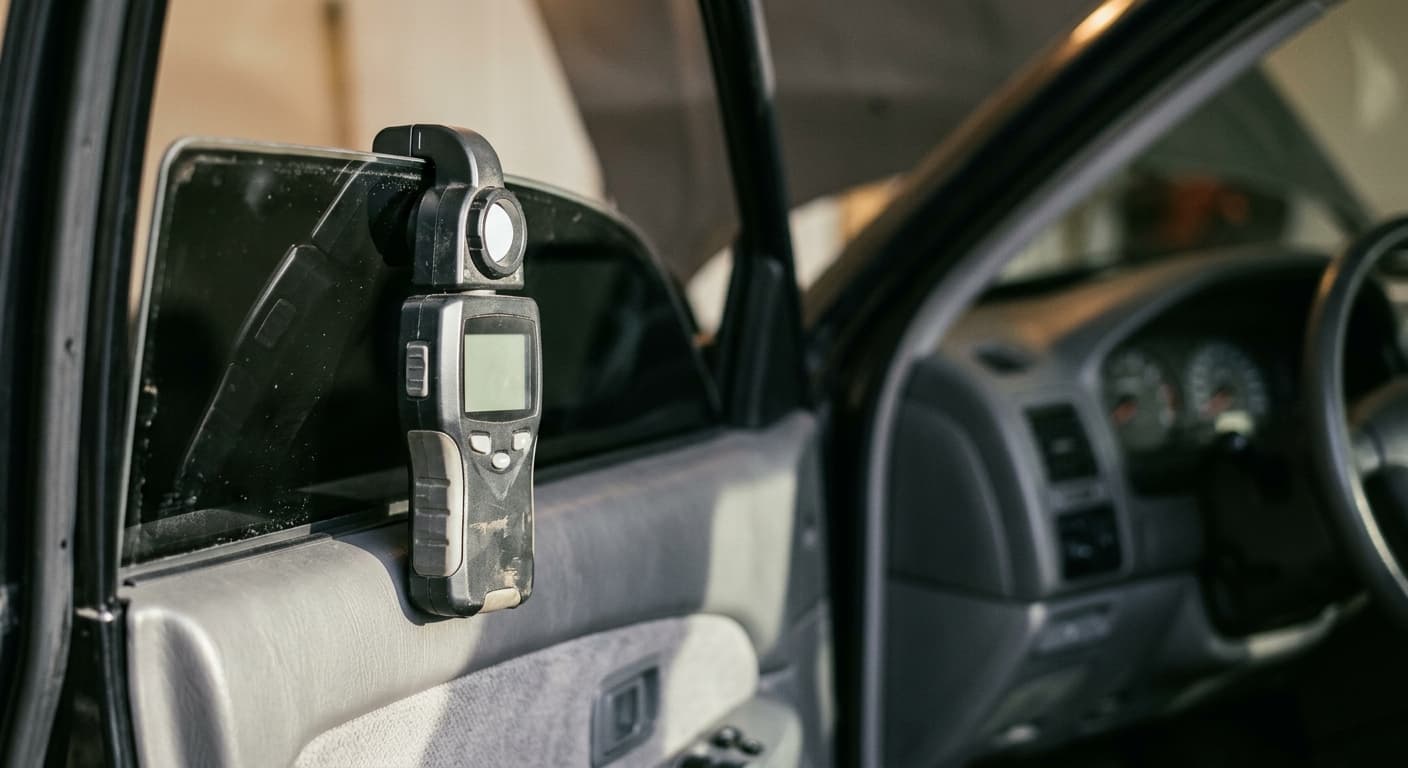
Kansas requires at least 35% visible light transmission (VLT) on all windows, including both front and rear side windows and the rear glass. The only medical exemption available is a clear UV-blocking film, not a darker-tinted film.
What is the legal tint limit in Kansas?
Kansas Statutes Annotated section 8-1749a sets a flat 35% VLT floor for every window on the vehicle. That means the combined transmission of the factory glass and any applied film must allow at least 35 out of every 100 units of visible light through. A higher VLT percentage is lighter and less privacy-providing; a lower percentage is darker.
Unlike many states, Kansas does not distinguish between sedans and multipurpose vehicles (SUVs, vans, trucks) for windows behind the driver. The 35% standard applies uniformly.
| Window | VLT Minimum | Notes |
|---|---|---|
| Front side windows | 35% | Combined film plus glass |
| Back side windows | 35% | All vehicle types |
| Rear window | 35% | All vehicle types |
| Windshield (below AS-1 line) | No aftermarket tint | Non-reflective strip at top only |
Film VLT versus combined (net) VLT
The VLT number printed on a roll of window film is the film's rating measured in isolation, against plain air in a lab. That is not the reading you will get at a traffic stop.
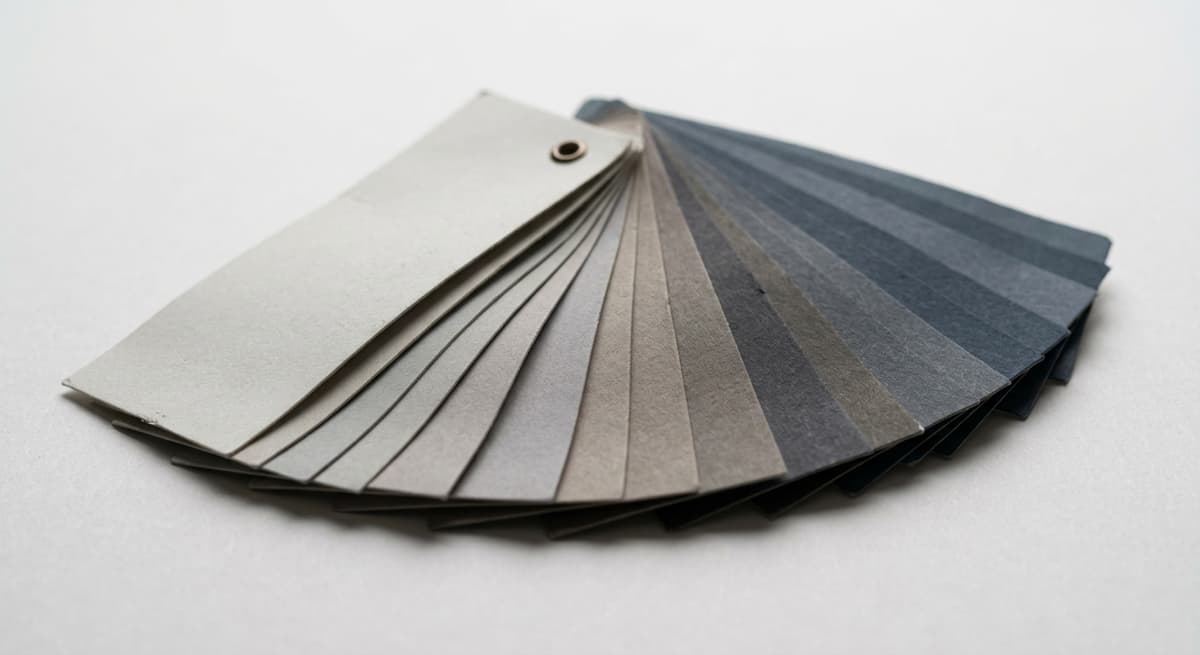
Factory automotive glass made to Federal Motor Vehicle Safety Standard 205 typically transmits around 70% to 75% VLT. When you apply film on top of the glass, the light must pass through both layers, and the values multiply. A film rated at 50% VLT applied to factory glass that reads 72% produces a combined result of approximately 36% (0.50 x 0.72 = 0.36). That 36% is above Kansas's 35% floor, but only barely. A film rated at 45% on the same glass would yield about 32%, which is a violation.
This math matters in Kansas because the 35% minimum applies to all windows. Even if a film is sold as "35% tint," its combined reading after installation on typical factory glass will likely be in the 25-28% range, well below the legal floor. Kansas installers familiar with the statute should measure the combined VLT with a calibrated meter before and after application.
Windshield tint rules in Kansas
Kansas permits a non-reflective sun-screening strip along the very top of the windshield, above the manufacturer's AS-1 line. The AS-1 line is typically etched into the glass and marks the boundary of the primary vision area. Any film that extends below that line on the windshield violates state law.
Banned colors on the windshield strip include red, yellow, and amber. These colors can confuse other drivers or interfere with traffic signals. All sun-screening material on any window must be non-reflective; K.S.A. 8-1749a does not provide a specific percentage for reflectivity, but the non-reflective requirement means mirror-finish and metallic-look films are prohibited.
Medical exemptions
Kansas offers a narrow medical exemption under K.S.A. 8-1749a, but it is significantly more limited than exemptions in most other states. Only clear UV-blocking film qualifies. That film must allow at least 78% VLT, which is considerably lighter than standard factory glass.
To qualify, a licensed physician or optometrist must provide a signed statement identifying the person and stating that the material is medically necessary to protect that person's health. The statement must accompany the vehicle at all times, because K.S.A. 8-1749a(c)(4) requires the driver or occupant to possess it.
The 60-day cure in K.S.A. 8-1749a(d) is narrow, and it is easy to misread. It applies only to a driver cited for failing to possess that signed statement. Such a driver has 60 days to either produce the signed statement in court or remove the clear UV material, and on either showing the court must dismiss the citation. A driver cited because the film itself is too dark does not get 60 days and cannot cure the violation by obtaining a physician's statement after the fact.
This exemption will not help drivers who want darker privacy tint. A patient with severe photosensitivity, skin cancer, or light sensitivity from eye surgery may use clear UV film that blocks ultraviolet radiation without reducing visible light below 78%. Darker-than-35% tint on side windows is not permissible under any exemption.
How tint is measured at a traffic stop
Officers use a handheld tint meter that clamps over the window edge. The device shines an internal light source through the glass and film and reads the percentage of visible light that passes through on the opposite side. The reading captures the combined transmission of the factory glass plus any applied film, including any factory privacy glass baked into the window.
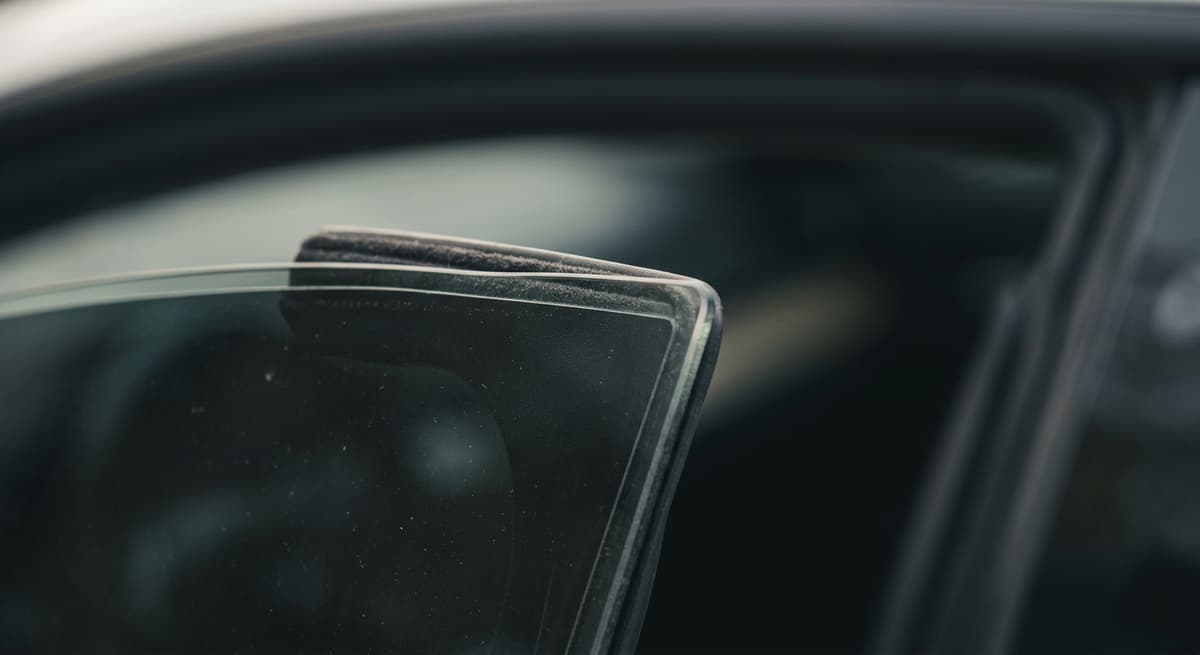
K.S.A. 8-1749a does not specify a measurement tolerance. There is no statutory buffer, so a reading at exactly 35% is compliant and a reading at 34% is not. Building in a margin of at least three to five percentage points above the legal floor helps account for minor calibration differences between meters.
Kansas does not require a compliance sticker or installer label on tinted windows. However, you should keep a copy of the installer's VLT certification in the vehicle so you can demonstrate compliance if stopped. If you are relying on the UV-film medical exemption, keep the physician's statement in the vehicle at all times. If you are cited for not having it with you, K.S.A. 8-1749a(d) gives you 60 days to produce it in court or remove the film, and the court must then dismiss the citation. That cure is not available for a citation over film that is too dark.
Penalties for illegal tint in Kansas
A violation of K.S.A. 8-1749a is a misdemeanor. Kansas does not specify a tiered fine schedule in the tint statute itself, but misdemeanor penalties under Kansas law can include fines and court costs. Enforcement is typically by the Kansas Highway Patrol and local law enforcement officers.
Kansas does not provide a general "fix-it ticket" mechanism for over-dark film. Once cited for tint that is too dark, you face the misdemeanor charge regardless of whether you remove the noncompliant film. Removing the film before a hearing can help your case but does not automatically dismiss the citation. The one statutory cure is narrower: under K.S.A. 8-1749a(d), a driver cited for failing to possess the physician's statement required for the clear UV-film exemption has 60 days to produce that statement or remove the material, and the court must then dismiss that citation.
Choosing a compliant film and installer in Kansas
Kansas applies the same 35% VLT floor to every window, which simplifies the decision but leaves less room than in many neighboring states. The combined-VLT math described above is especially important here: a film labeled "35%" will almost always read below 35% combined when installed on factory glass.
What to look for in an installer:
- The shop measures combined (net) VLT with a calibrated meter after installation, not just cites the film's rated VLT.
- They can tell you the standalone VLT of your factory glass before application.
- They provide a written meter reading you can keep in the vehicle.
- They use film that, combined with your factory glass reading, lands at 38% or higher, giving a few points of margin above the 35% legal floor.
How to stay compliant:
- Choose a film with a standalone VLT that, when multiplied by your factory glass reading, results in 38% or higher. For typical 72% factory glass, that means a film rated no darker than about 53% standalone (0.53 x 0.72 = 38%).
- Use a reputable installer who measures the combined VLT with a calibrated meter and provides a written reading.
- Keep the installer's VLT documentation in your vehicle even though Kansas does not mandate a sticker.
- If you have a medical condition requiring UV protection, ask your physician about a certified UV-blocking film at 78% VLT or higher. Get the written statement and keep it in the vehicle.
- Avoid any reflective or metallic-finish film; the non-reflective requirement applies to all windows statewide.
- The windshield tint strip must stay above the AS-1 line and must not be red, yellow, or amber.
This article is general legal information, not legal advice. Window tint limits vary by state and change, and enforcement depends on local practice and your specific vehicle. For a definitive answer, check your state DMV or consult a local attorney.
Related reading
For a side-by-side look at all 50 states plus the District of Columbia, visit the Window Tint Laws by State hub page.
Kansas also regulates what you can mount or attach to your windshield and windows. For the rules on GPS mounts, stickers, and other attachments, see Kansas Windshield Mounting Restrictions.
More Kansas Laws
Frequently Asked Questions
What is the legal tint in Kansas?
Kansas requires at least 35% combined VLT on all windows, including front side, back side, and rear. The windshield may only have a non-reflective strip above the AS-1 line.
How dark can my front windows be in Kansas?
The darkest legal front side tint in Kansas is a combined reading of 35% VLT (film plus glass). Going below 35% combined on any window is a misdemeanor under K.S.A. 8-1749a.
Is 20% tint legal in Kansas?
No. Kansas requires at least 35% combined VLT on all side and rear windows. A 20% combined reading is too dark and would be a misdemeanor violation.
Can I get a medical exemption for window tint in Kansas?
Only for clear UV-blocking film. The exemption under K.S.A. 8-1749a is limited to film that allows at least 78% VLT and blocks ultraviolet light. A physician or optometrist must provide a written statement. Darker-than-35% film is not permitted under any exemption.
What is the penalty for illegal tint in Kansas?
A misdemeanor under K.S.A. 8-1749a. Kansas does not publish a fixed dollar amount in the tint statute, but misdemeanor convictions can carry fines and court costs.
Is windshield tint legal in Kansas?
Only a non-reflective strip above the AS-1 line. Tint below the AS-1 line on the windshield is prohibited. Red, yellow, and amber colors are banned on the strip.
Do SUVs have different tint rules in Kansas?
No. Unlike many states, Kansas applies the same 35% combined VLT minimum to all vehicle types, including SUVs, vans, and trucks. There is no looser standard for rear or back side windows on multipurpose vehicles.
My film is labeled 35% but the officer's meter read lower. Why?
The film's label reflects its standalone VLT measured against plain air. At a stop, the meter reads the combined transmission of the film plus your factory glass. Because factory glass typically transmits about 70-75% on its own, multiplying the two values together produces a lower combined result. A film labeled 35% on 72% factory glass yields roughly 25% combined.
Does Kansas require a tint sticker or certificate?
No. K.S.A. 8-1749a does not require an installer compliance sticker. However, carrying a written VLT meter reading from your installer is useful if you are stopped, and drivers using the UV-film medical exemption must carry the physician's statement at all times.
Updates
Corrected the medical-exemption section: the 60-day period in K.S.A. 8-1749a(d) applies only to a citation for failing to carry the required physician's statement, not to a citation for tint that is too dark.
Independently fact-checked against the cited primary sources; governing law re-checked for recent changes
Governing law re-checked for recent changes
Reviewed and approved by an editor
The Law Behind This Article
This article rests on the statutory provisions below, held in our own legal record and retrieved from the official source. Tap a section to read the operative text.
Kansas Statutes Annotated, Chapter 8: AUTOMOBILES AND OTHER VEHICLES
§ 8-1749aOne-way glass and sun screening devices; requirements; exceptions; penalties.In forcecited in 2 of our articles
(a) No motor vehicle required to be registered in this state and that is operated on the highways of this state shall be equipped with one-way glass or any sun screening device, as defined in K.S.A. 8-1749b, and amendments thereto, and used in conjunction with windshields, side wings, side windows or rear windows that do not meet the following requirements: (1) A sun screening device when used in conjunction with the windshield shall be nonreflective and shall not be red, yellow or amber in color. A sun screening device shall be used only along the top of the windshield and shall not extend downward beyond the AS1 line, which is clearly defined and marked; (2) a sun screening device when used in conjunction with the side wings or side windows located at the immediate right and left of the driver, the side windows behind the driver and the rear most window shall be nonreflective; and (3) the total light transmission shall not be less than 35% when a sun screening device is used in conjunction with other existing sun screening devices. (b) Subsection (a)(3) shall not apply to a window of a law enforcement motor vehicle.
Official text (excerpt) · last checked 2026-09-01 · Read the full text in our law library · Verify at ksrevisor.gov
Also relied on in: Kansas Windshield Mounting Laws (2026 Guide)
Search our full record of US law — 2.1 million sections, every state + federal →