
Iowa
Iowa Window Tint Laws (2026): Legal VLT Limits
Independently fact-checked against primary sources (last audited August 18, 2026). · Reviewed by the RecordingLaw editorial team. · Law checked current as of August 18, 2026. · 1 primary source cited on this page. How we verify our legal content
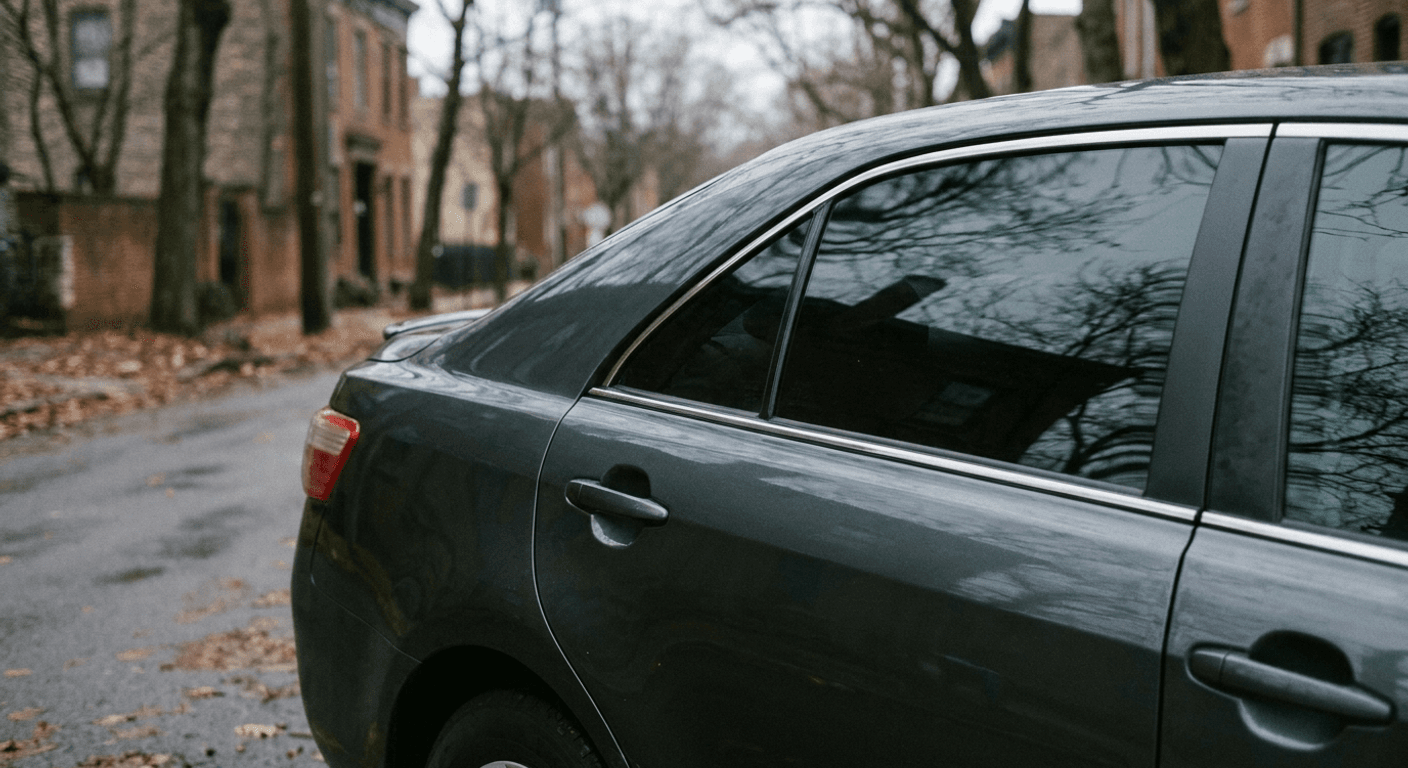
Iowa law requires front side windows to allow at least 50% visible light transmission (VLT), following House File 766, which took effect July 1, 2026 and lowered the floor from the prior 70% standard. Back side and rear windows have no VLT minimum under state law, though Iowa Code 321.438(1) still requires that side and rear windows permit clear vision.
What is the legal tint limit in Iowa?
Iowa Code 321.438, as amended by House File 766, sets a minimum of 50% VLT for front side windows under current law. That number means the glass and any film together must let at least 50 out of every 100 units of visible light pass through. A higher VLT percentage is lighter tint; a lower percentage is darker tint.
House File 766, signed on May 15, 2026, amended that standard. Effective July 1, 2026, the front side window minimum dropped from 70% to 50%, and that change is now in force.
Back side windows and the rear window have no VLT floor under Iowa law. There is no sedan-versus-SUV distinction in the statute for those windows.
That is not the same as no rule at all. HF 766 amended only subsection 2 of Iowa Code 321.438, which covers the front windshield and the front side windows and sidewings. Subsection 1 was left untouched, and it still reads: "A person shall not drive a motor vehicle equipped with a windshield, sidewings, or side or rear windows which do not permit clear vision." So while no measured percentage applies behind the front doors, glass dark enough to defeat clear vision can still be cited under that provision.
| Window | Prior VLT Minimum (through June 30, 2026) | Current VLT Minimum (from July 1, 2026, HF 766) |
|---|---|---|
| Front side windows | 70% | 50% |
| Back side windows | No VLT minimum | No VLT minimum |
| Rear window | No VLT minimum | No VLT minimum |
Windows carrying no VLT minimum are still subject to the clear-vision requirement in Iowa Code 321.438(1).
Film VLT versus combined (net) VLT
The number stamped on a roll of window film is the film's own VLT rating, measured in a lab against plain air. That is not the same number a tint meter will read at a traffic stop.
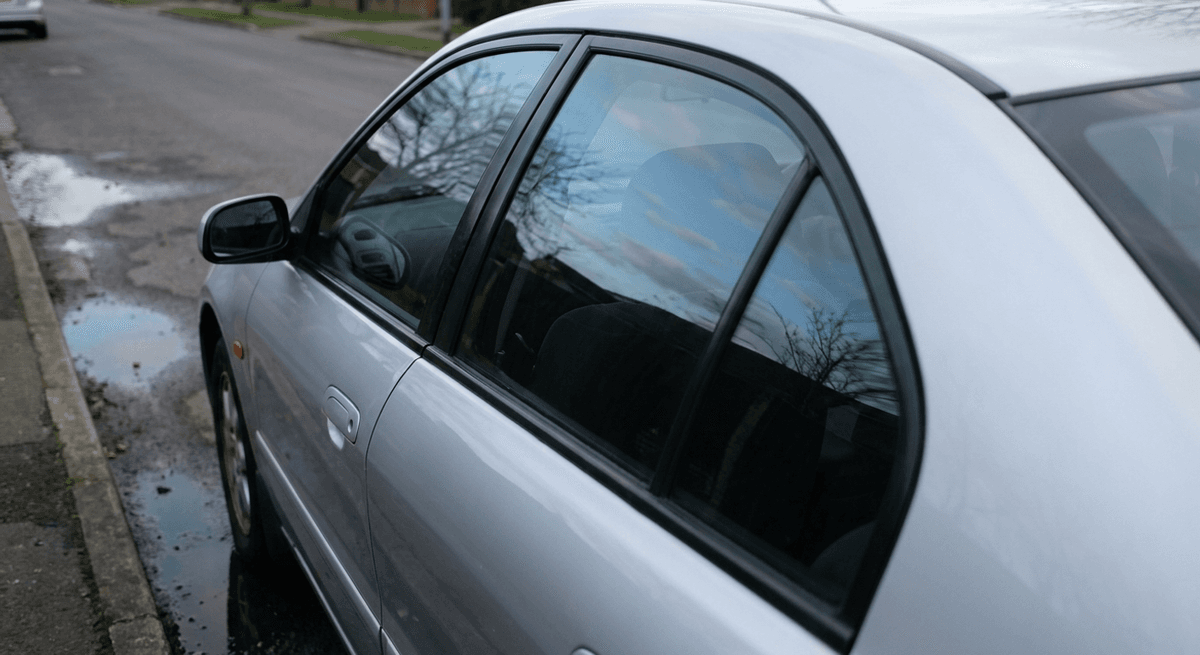
Your vehicle's factory glass already absorbs some light. Standard automotive glass made to Federal Motor Vehicle Safety Standard 205 typically transmits around 70% to 75% VLT on its own. When you layer film on top of that glass, the two VLT values multiply together. A 70% VLT film on 75% VLT factory glass yields a combined reading of roughly 52% (0.70 x 0.75 = 0.525). Under the standard that applied before July 1, 2026, that 52% combined reading was below the 70% minimum and would have been a violation. Under the current 50% minimum, a 52% combined reading is compliant.
This is why the front window standard in Iowa used to be so restrictive: with factory glass starting at about 72% to 75% VLT, almost any film other than a near-clear UV-protective product would have pushed the combined reading below the old 70% floor. Since July 1, 2026, the 50% floor gives real room to work: a film rated at 65% or 70% applied to standard factory glass lands well above the current minimum.
Windshield tint rules in Iowa
Iowa Code 321.438 requires the windshield to allow at least 70% light transmittance. This means aftermarket tinting film that would drop the windshield below 70% VLT is not permitted.
A non-reflective strip along the very top of the windshield is common in most states, but Iowa's statute is written around the 70% transmittance floor rather than an explicit "above the AS-1 line" rule. In practice, clear or near-clear UV-protection film is acceptable as long as the combined transmittance stays at 70% or above.
Iowa's statute does not specify a list of banned tint colors for the windshield. It also does not set a reflectivity cap.
Medical exemptions
Iowa does not offer a medical exemption for window tint. The state removed its medical exemption process in 2012. Regardless of any documented photosensitivity or medical condition, Iowa drivers must comply with the same VLT limits that apply to all vehicles.
If you have a condition aggravated by sunlight, speak with your physician about other options, such as UV-protective clothing, sun shields placed on parked windows, or a vehicle with factory-dark glass that already meets the 70% minimum through its original glazing.
How tint is measured at a traffic stop
Officers use a handheld tint meter, also called a photometer or tint testing device. The instrument clamps over the edge of the window glass and shines an internal light source through the window. A sensor on the opposite jaw reads the percentage of light that passes through. The reading applies to the combined system: factory glass, any factory privacy tint baked into the glass, and any aftermarket film.
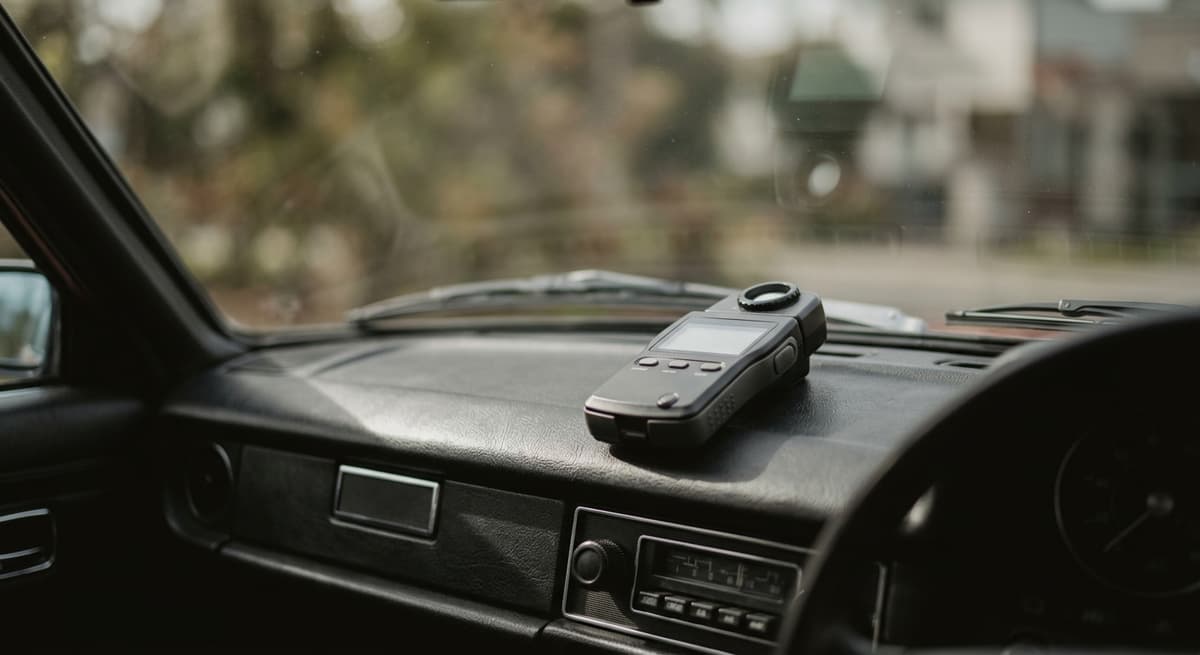
Because Iowa's statute does not specify a measurement tolerance, there is no built-in buffer in the law. On front side windows, a reading at exactly 50% is compliant; a reading at 49% is not. In practice, enforcement officers measure with the window rolled up and the door closed. Meter calibration can vary, which is one reason why building in a few percentage points of margin above the legal floor is good practice.
Iowa does not require a compliance sticker or installer certification label on tinted windows. There is no specified measurement tolerance in the statute.
HF 766 took effect on July 1, 2026, shifting the front side window standard from 70% to 50%. Tint at 50-69% VLT, which would have been noncompliant before that date, is legal now that the new law is in force.
Penalties for illegal tint in Iowa
Installing or operating a vehicle with window tint that does not meet Iowa's VLT standard is a simple misdemeanor under Iowa Code 321.438. The scheduled fine for a first offense is $70, set by Iowa Code 805.8A(3)(ai), though court costs and surcharges typically add to that base amount. Subsequent offenses can carry higher fines.
Iowa does not have a "fix-it ticket" system that dismisses the charge on proof of removal. A citation can stand even if the tint is later removed. Enforcement is at the discretion of the officer who stops the vehicle.
Choosing a compliant film and installer in Iowa
Because the front side minimum dropped from 70% to 50% on July 1, 2026, your choices depend on whether you tinted before or after that date.
Before July 1, 2026, front side window film had to leave at least 70% combined VLT. Most factory glass already transmits about 72% to 75% VLT on its own, so under that older standard a film rated at 95% VLT (essentially clear, but UV-blocking) was typically needed to keep the combined reading above 70%.
Since July 1, 2026, you can install film as dark as 50% combined VLT on front side windows. Back side windows and the rear window have no VLT minimum at any point, subject only to the clear-vision requirement in Iowa Code 321.438(1).
When selecting an installer, look for a shop that measures VLT with a calibrated meter before and after application, and provides a written reading you can keep in the vehicle. Iowa does not require installers to attach a compliance sticker, but a record of the measured result protects you at a traffic stop. Choose a film whose standalone VLT, when multiplied by your factory glass's VLT, produces a result a few points above the legal floor to account for minor meter variation.
Practical steps:
- Ask your installer for the film's standalone VLT rating and confirm what your factory glass reads before application.
- Request a written meter reading of the combined result after installation, and keep it in the vehicle.
- Aim for a combined result of 52% or higher for a comfortable margin over the current 50% floor.
- There is no medical exemption process in Iowa, so darker-than-legal front tint is not permitted regardless of health circumstances.
This article is general legal information, not legal advice. Window tint limits vary by state and change, and enforcement depends on local practice and your specific vehicle. For a definitive answer, check your state DMV or consult a local attorney.
Related reading
For a comparison of all 50 states plus the District of Columbia, visit the Window Tint Laws by State hub page.
Iowa also regulates what you can attach to your windshield or windows. For the rules on suction cups, mounts, and stickers, see Iowa Windshield Mounting Restrictions.
More Iowa Laws
Frequently Asked Questions
What is the legal tint in Iowa?
Front side windows must allow at least 50% VLT under current law, following HF 766's July 1, 2026 effective date, which lowered the floor from the prior 70% standard. Back side and rear windows have no VLT minimum, though Iowa Code 321.438(1) still requires that side and rear windows permit clear vision.
How dark can my front windows be in Iowa?
Through June 30, 2026, front side windows had to allow at least 70% VLT combined (film plus glass), which meant essentially clear or near-clear film only. Since July 1, 2026, film that produces a combined reading as dark as 50% VLT is legal on front side windows.
Is 50% tint legal in Iowa right now?
Yes. HF 766 took effect July 1, 2026 and lowered the front side window minimum to 50%, so a combined reading of 50% on front side windows is now compliant.
When does Iowa's new tint law take effect?
HF 766 took effect July 1, 2026. It lowered the front side window minimum from 70% to 50% VLT, and that lower standard is now in force. Back side and rear windows remain free of any VLT minimum, subject to the clear-vision requirement in Iowa Code 321.438(1).
Can I get a medical exemption for window tint in Iowa?
No. Iowa eliminated its medical exemption process in 2012. All drivers, regardless of medical condition, must comply with the same VLT minimums.
What is the penalty for illegal tint in Iowa?
A simple misdemeanor. The scheduled fine for a first offense is $70 under Iowa Code 805.8A(3)(ai), though court costs and surcharges typically add to that base amount. Iowa does not offer a fix-it ticket option that dismisses the citation upon removal.
Is windshield tint legal in Iowa?
The windshield must allow at least 70% light transmittance. Aftermarket film that reduces the combined reading below 70% is not permitted. A near-clear UV film that keeps the windshield at or above 70% VLT is acceptable.
Why does my film's rated VLT differ from what the officer's meter read?
Film VLT is rated in a lab against plain air. At a traffic stop, the meter reads the combined transmission of the film plus the factory glass, which already absorbs some light. Multiply the two values together to estimate the combined result. For example, a 90% rated film on 75% factory glass reads roughly 67% combined.
Can I tint my back windows any shade in Iowa?
There is no VLT minimum. Iowa Code 321.438(2), as amended by HF 766, sets measured limits only for the windshield and the front side windows and sidewings, so no percentage applies behind the front doors. Subsection 1 of the same section still applies, however, and bars driving with side or rear windows that do not permit clear vision, so very dark film on rear glass can still draw a citation.
Updates
Clarified that while Iowa sets no VLT minimum for back side and rear windows, Iowa Code 321.438(1) still requires that side and rear windows permit clear vision, and removed language suggesting 5% or 2% film is a safe choice on rear glass.
Corrected the Iowa window tint page's first-offense fine figure to the statutory $70 scheduled fine (Iowa Code 805.8A(3)(ai)), replacing an unsourced $50-$127 range, and noted that court costs and surcharges typically add to that base amount.
Independently fact-checked against the cited primary sources; governing law re-checked for recent changes
Flipped the current-vs-upcoming framing now that HF 766's July 1, 2026 effective date has passed: the article previously described the pre-amendment 70% front-side-window VLT floor as the current standard and the 50% floor as a future change; both are now correct (50% VLT front side windows is current law, 70% is the historical pre-amendment standard) throughout the intro, KeyTakeaways, table, worked examples, measurement section, and FAQ. The 70% windshield floor is unaffected by HF 766 and was left unchanged.
Governing law re-checked for recent changes
Reviewed and approved by an editor
The Law Behind This Article
This article rests on the statutory provisions below, held in our own legal record and retrieved from the official source. Tap a section to read the operative text.
Iowa Code, Chapter 321: MOTOR VEHICLES AND LAW OF THE ROAD
§ 321.438Windshields and windows.In forcecited in 4 of our articles
1. A person shall not drive a motor vehicle equipped with a windshield, sidewings, or side or rear windows which do not permit clear vision. 2. A person shall not operate on the highway a motor vehicle equipped with a front windshield, a side window to the immediate right or left of the driver, or a sidewing forward of and to the left or right of the driver which is excessively dark or reflective so that it is difficult for a person outside the motor vehicle to see into the motor vehicle through the windshield, window, or sidewing. a. The department shall adopt rules establishing a minimum measurable standard of transparency which shall apply to violations of this subsection. b. This subsection does not apply to a person who operates a motor vehicle owned or leased by a federal, state, or local law enforcement agency if the operation is part of the person’s official duties. 3. Every motor vehicle except a motorcycle, or a vehicle included in the provisions of section 321.383 or section 321.115 shall be equipped with a windshield in accordance with section 321.444.
Official text (excerpt) · last checked 2026-09-07 · Read the full text in our law library · Verify at legis.iowa.gov
Cited in 14 court opinions in our collectionLatest citing opinion in our collection: 2025
In the courts (editorial summary, independently checked):Iowa courts have applied section 321.438 mainly to validate traffic stops. State v. Aderholdt (1996) found an officer had reasonable cause to believe windows were tinted beyond subsection 2, and State of Iowa v. Gatkek Dual Lieth (2025) held a trooper's observation of a cracked windshield under subsection 1 gave probable cause to stop.
Opinions citing this section in our collection:
- State v. Aderholdt (Supreme Court of Iowa 1996, 545 N.W.2d 559)✓A trooper stopped a car whose occupants were unbelted and whose windows later metered at six percent light transmission; the court held he had reasonable cause to believe the tint exceeded what Iowa Code 321.438(2) permits, which helped justify the stop.
- State of Iowa v. Cassidy Jo Poage (Court of Appeals of Iowa 2025)“…his observation of the window-tint traffic violation. See Iowa Code §§ 321.438(2), 321.482 (2024). He also planned to…”
- State of Iowa v. Gatkek Dual Lieth (Court of Appeals of Iowa 2025)✓A trooper stopped the car Lieth rode in after seeing two windshield cracks, one in front of the driver's view; the court agreed that observing a violation of Iowa Code 321.438(1) gave probable cause for the stop, and treated his mistake-of-law argument as unpreserved.
Identified automatically from the court opinions citing this section — not a ranking of which case controls.
Also relied on in: Iowa Dashcam Laws: Recording Rules, Windshield Mounting, and Legal Limits (2026), Iowa Locks In 50% Front-Side Tint Floor: HF 766 Takes Effect July 1, Iowa Windshield Mounting Laws (2026 Guide)
Iowa Code, Chapter 805: CITATIONS IN LIEU OF ARREST
§ 805.8AMotor vehicle and transportation scheduled violations.In forcecited in 6 of our articles
1. Parking violations. a. For parking violations under sections 321.236, 321.239, 321.358, 321.360, and 321.361, the scheduled fine is five dollars, except if the local authority has established the fine by ordinance. The scheduled fine for a parking violation pursuant to section 321.236 increases by five dollars if authorized by ordinance and if the parking violation is not paid within thirty days of the date upon which the violation occurred. For purposes of calculating the unsecured appearance bond required under section 805.6, the scheduled fine shall be five dollars, or if the amount of the fine is greater than five dollars, the unsecured appearance bond shall be the amount of the fine established by the local authority. However, violations charged by a city or county upon simple notice of a fine instead of a uniform citation and complaint required by section 321.236, subsection 1, paragraph “b”, are not scheduled violations, and this section shall not apply to any offense charged in that manner. For a parking violation under section 461A.38, the scheduled fine is ten dollars. For a parking violation under section 321.362, the scheduled fine is twenty dollars. b.
Official text (excerpt) · last checked 2026-07-29 · Read the full text in our law library · Verify at legis.iowa.gov
Cited in 5 court opinions in our collectionLatest citing opinion in our collection: 2024
Opinions citing this section in our collection:
- City of Davenport v. Seymour (Supreme Court of Iowa 2008, 755 N.W.2d 533)“…e road established in Iowa Code chapter 321. Id. § 805.6. Iowa Code section 805.8A establishes a schedule of fines for suc…”
- State of Iowa v. Richard Eugene Noll (Court of Appeals of Iowa 2024)“…e arguments. 6 Iowa Code § 805.8A(2)(f), (3)(l) (designating a violation…”
- State of Iowa v. Jasmaine R. Warren (Court of Appeals of Iowa 2020)“…izes her violation was a completed parking infraction. See Iowa Code § 805.8A(1)(a) (classifying parking violations u…”
Identified automatically from the court opinions citing this section — not a ranking of which case controls.
Also relied on in: Iowa Hit and Run Laws: Penalties and What to Do, Iowa E-Scooter Laws: Sidewalk, Helmet & Age Rules (2026), Iowa Open Container Law (2026): Rules, THC, Penalties
Search our full record of US law — 2.1 million sections, every state + federal →
Sources and References
- Iowa Code 321.438 (window sun screening; as amended by 2026 HF 766, eff. July 1, 2026)(legis.iowa.gov).gov
- Iowa House File 766 (91st G.A.), enrolled Act: amends Iowa Code 321.438, subsection 2, to set 70% light transmittance for the front windshield and 50% for front side windows and sidewings(legis.iowa.gov)
- Iowa Code 321.438, subsection 1: no person shall drive a motor vehicle with a windshield, sidewings, or side or rear windows which do not permit clear vision(legis.iowa.gov)
- Iowa Legislature bill history, HF 766 (91st G.A.): passed Senate March 23, 2026; signed by the Governor May 15, 2026; effective July 1, 2026(legis.iowa.gov)