
Illinois
Illinois Window Tint Laws (2026): Legal VLT Limits
Independently fact-checked against primary sources (last audited August 18, 2026). · Reviewed by the RecordingLaw editorial team. · Law checked current as of August 18, 2026. · 1 primary source cited on this page. How we verify our legal content
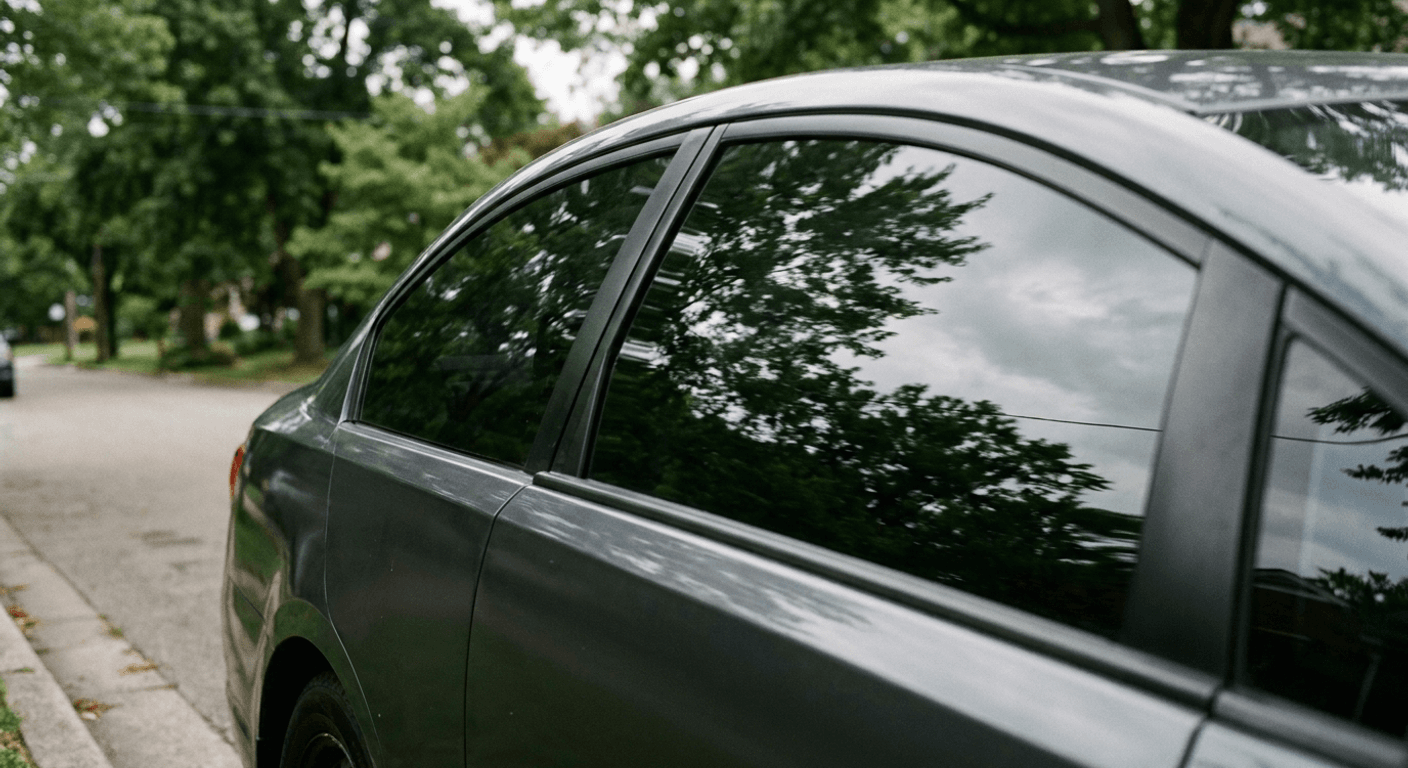
Illinois sets front side window tint through 625 ILCS 5/12-503(a-5), which gives three compliant paths: at least 50% VLT in front if no window behind the driver is treated below 30% VLT, at least 35% VLT in front if none is treated below 35% VLT, or at least 50% VLT in front on a vehicle whose rear-of-driver windows carry nonreflective smoked or tinted glass installed by the manufacturer. If the front side windows are left completely untinted, any darkness is allowed on the windows behind the driver.
What is the legal tint limit in Illinois?
Illinois window tint law (625 ILCS 5/12-503) does not set a single number for the front side windows. Subsection (a-5) begins with a flat prohibition on window treatment applied to the windows immediately adjacent to each side of the driver, then carves out three exceptions.
Under (a-5)(1), if no window to the rear of the driver's seat is treated in a manner allowing less than 30% light transmittance, front side film must allow at least 50% VLT. Under (a-5)(2), if no window to the rear is treated below 35% light transmittance, front side film must allow at least 35% VLT. Under (a-5)(4), if the windows to the rear of the driver's seat carry nonreflective smoked or tinted glass originally installed by the manufacturer, front side film must allow at least 50% VLT.
A higher VLT percentage means lighter (more transparent) tint, and a lower VLT percentage means darker film. The law requires that the film and factory glass together meet the limit.
The (a-5)(4) path matters because (a-5)(1) and (a-5)(2) look at how the rear windows are treated, not at how dark they read. Factory privacy glass is not a treatment applied to the window, so a vehicle that left the factory with dark smoked rear glass -- standard equipment on many SUVs, vans, and crossovers -- still qualifies for at least 50% VLT film on the front side windows however dark that factory glass meters. 12-503 does not classify vehicles by body style, but this exception draws a real line between a vehicle with factory smoked rear glass and one without it.
If you leave the front side windows completely untinted, subsection (b) instead allows a perforated window screen or other decorative window application of any darkness on the windows to the rear of the driver's seat. Subsection (b-5) then requires a side mirror on each side of the vehicle for any motor vehicle with a window to the rear of the driver's seat treated in that manner, which includes the back side windows and not only the back glass.
| Window Position | If front side windows are tinted | If front side windows stay untinted |
|---|---|---|
| Front side | 50% minimum (no rear window treated below 30%), 35% minimum (none treated below 35%), or 50% minimum on factory smoked or tinted rear glass under (a-5)(4) | No tint applied |
| Back side | 30% or 35% (matching the front choice), or any darkness if it is factory smoked or tinted glass | Any darkness; dual outside mirrors required if treated |
| Rear window | 30% or 35% (same as back), or any darkness if it is factory smoked or tinted glass | Any darkness; dual outside mirrors required if treated |
The measurement tolerance is plus or minus 5%, so a front window reading as low as 45% (if the 50% configuration is used) will still pass an enforcement check.
Windshield tint rules in Illinois
Illinois restricts windshield film to the top 6 inches of the glass. That strip must be nonreflective, because subsection (a) bars reflective material anywhere on the front windshield. Below the 6-inch band the windshield must remain fully clear.
The front side windows carry the same restriction in a different form. Subsection (a-5) authorizes only a "nonreflective tinted film" there, and (a-5)(4) likewise authorizes only a "nonreflective tint," so a mirrored, chrome, or metallic film is not a permitted treatment on the front sides either.
For windows to the rear of the driver's seat, 12-503 imposes no reflectivity condition. Subsection (b) allows a perforated window screen or other decorative window application without any reflectivity limit, and the rear-window language in (a-5) goes only to light transmittance.
The statute publishes no reflectance percentage cap at all. On the windshield and the front side windows the rule is simply that the material must be nonreflective, which in practice rules out any film advertised as mirror, chrome, or metallic finish on those windows.
Medical exemptions
Illinois offers a medical exemption, and the statutory list of qualifying conditions is open rather than closed. Subsection (g) reaches a person afflicted with or suffering from a medical disease that would require that person to be shielded from the direct rays of the sun, "including, but not limited to," systemic or discoid lupus erythematosus, disseminated superficial actinic porokeratosis (DSAP), light sensitivity as a result of a traumatic brain injury, or albinism. A photosensitivity disorder outside those four named examples is not automatically disqualified.
The real limiting principle is a proviso rather than a list. No exemption from the front side window rule in subsection (a-5) is granted for any condition where protection from the direct rays of the sun can be adequately obtained by the use of sunglasses or other eye protective devices.
The exemption also runs further than the afflicted driver. Subsection (g)(2) covers a vehicle used to transport a qualifying person who resides at the same address as the vehicle's registered owner, so a parent or caregiver can hold the exemption for a household member's condition rather than their own.
To obtain the exemption, an Illinois-licensed physician must certify the condition, and the owner must submit a copy of that certification to the Secretary of State. The Secretary of State then issues distinctive license plates or a license plate sticker under 625 ILCS 5/3-412(k); an installer may not apply the exempt window treatment until that plate or sticker is already on the vehicle. The certification must be renewed every four years by the attending physician and must be carried in the vehicle at all times.
If you believe a medical condition may qualify, consult an Illinois-licensed physician who can assess whether your condition requires shielding from the direct rays of the sun and provide the written certification.
How tint is measured and certified
Illinois law enforcement uses VLT meters to measure the amount of visible light passing through the window. The statute provides a plus or minus 5% measurement tolerance, which is slightly wider than the 3% tolerance used by many neighboring states. A film labeled "50% VLT" that meters at 46% during a roadside check would still be within tolerance.
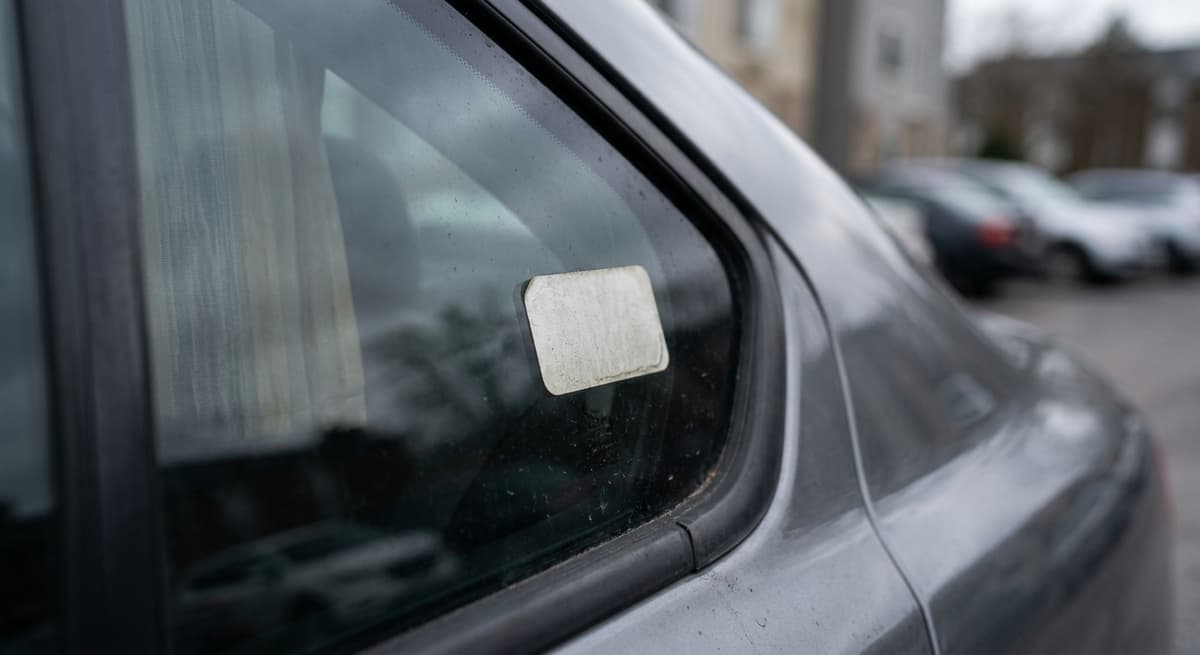
Illinois does not require a compliance sticker on the window or a certificate from the installer, unlike states such as Florida or Texas. However, keeping a copy of the film manufacturer's data sheet or installer documentation in the vehicle can be useful if you are challenged during a traffic stop.
When selecting a film, ensure the installer confirms the combined VLT of the film together with your factory glass. Factory glass already absorbs some light, so a film rated at 50% VLT will typically produce a combined reading somewhat below 50%.
Penalties for illegal tint in Illinois
A first violation of the Illinois window tint law is a petty offense carrying a fine of no less than $50 and no more than $500. A second or subsequent violation is a Class C misdemeanor, and subsection (j) sets both ends of that range too: no less than $100 and no more than $500, alongside the up to 30 days in jail available for a Class C misdemeanor.
Subsection (j) also adds a remediation order on top of the fine. Any person convicted under subsection (a), (a-5), (b), or (b-5) shall be ordered to alter any nonconforming windows into compliance with the section, so a conviction obliges you to remove or replace the offending film as well as pay.
Officers may stop a vehicle solely for a suspected tint violation. Illinois does not use a fix-it ticket system for window tint, so the fine is assessed at the time of the citation rather than waived upon correction. Bringing the windows into compliance after a conviction is an additional court-ordered obligation, not a substitute for the fine.
Installers who apply non-compliant film share liability under the statute and can face the same penalty tiers.
If you want to tint your windows in Illinois
The first step is deciding which configuration suits your vehicle. If you want darker back windows (as low as 30%), choose the 50% front setup. If you want slightly darker front windows (35%), match that with 35% or lighter in the back. If your vehicle already has smoked or tinted glass behind the driver, ask the installer to confirm it is original manufacturer glass, because (a-5)(4) then lets you run at least 50% VLT in front no matter how dark that factory glass is. If you would rather leave the front side windows untinted altogether, you can run any darkness on the back side and rear windows, as long as you install dual outside mirrors. Write down your choice before you visit an installer.
When you meet with the installer, ask them to measure your factory glass VLT first. A typical factory rear glass reads around 75% to 80%, meaning there is room for additional film. A typical factory front glass already sits near 70% to 74%, so reaching a compliant combined 50% on the front is straightforward with most standard films.
Request a receipt or data sheet noting the film brand, the VLT percentage of the film, and the measured combined VLT after installation. Keep this in your glove compartment. While Illinois does not mandate a compliance sticker, this documentation is your best protection during a traffic stop.
If you believe you qualify for a medical exemption, obtain the physician certification and the distinctive plate or plate sticker before installation, since an installer may not apply the exempt treatment until the plate or sticker is on the vehicle. The certificate must be renewed every four years, so calendar that date.
Finally, confirm that any film your installer proposes for the windshield strip or the front side windows is non-metallic and nonreflective, because those are the windows where 12-503 requires nonreflective material.
This article is general legal information, not legal advice. Window tint limits vary by state and change, and enforcement depends on local practice and your specific vehicle. For a definitive answer, check your state DMV or consult a local attorney.
For a broader look at how Illinois compares to neighboring states, see the Window Tint Laws by State hub. Illinois drivers should also review Illinois Windshield Mounting Restrictions for rules on devices attached to the glass.
More Illinois Laws
Frequently Asked Questions
What is the legal tint in Illinois?
625 ILCS 5/12-503(a-5) gives three ways to tint the front side windows: at least 50% VLT if no window behind the driver is treated below 30% VLT, at least 35% VLT if none is treated below 35% VLT, or at least 50% VLT if the windows behind the driver carry nonreflective smoked or tinted glass installed by the manufacturer. Alternatively, if you leave the front side windows completely untinted, Illinois allows any darkness on the windows behind the driver, and dual outside mirrors are then required for any window to the rear of the driver treated that way.
How dark can my front windows be in Illinois?
The darkest legal option for front side windows in Illinois is 35% VLT, and that is only permitted if no window behind the driver is treated below 35% VLT. If you want darker back windows (30%), your front windows must be at least 50% VLT.
Is 20% tint legal in Illinois?
It depends on the window and configuration. If you apply film to the front side windows, the darkest legal option for film on the back side and rear windows is 30% VLT (paired with 50% front tint), so 20% film would not be legal there. Factory smoked or tinted glass behind the driver is a separate case: under 625 ILCS 5/12-503(a-5)(4) it may be any darkness alongside at least 50% VLT film in front. If you leave the front side windows completely untinted, Illinois allows any darkness on the windows behind the driver, including 20% or lower, but subsection (b-5) then requires a side mirror on each side of the vehicle for any window to the rear of the driver treated that way, including the back side windows. Front side windows themselves can never go below 35% VLT.
Can I get a medical exemption for window tint in Illinois?
Yes. The statute covers a medical disease that would require a person to be shielded from the direct rays of the sun, and it says the qualifying conditions include, but are not limited to, lupus, disseminated superficial actinic porokeratosis, albinism, and light sensitivity from traumatic brain injury, so another photosensitivity disorder can qualify. The limiting rule is that no exemption is granted for a condition where sunglasses or other eye protective devices give adequate protection. The exemption also covers a vehicle used to transport a qualifying person who lives at the registered owner's address. A licensed Illinois physician must certify the condition, the owner must submit the certification to the Secretary of State, and the vehicle must display the distinctive plate or plate sticker issued under 625 ILCS 5/3-412(k) before an installer may apply the exempt tint. The certification must be renewed every four years and kept in the vehicle.
What is the penalty for illegal tint in Illinois?
A first offense is a petty offense with a fine of no less than $50 and no more than $500. A second or subsequent offense is a Class C misdemeanor fined no less than $100 and no more than $500, with up to 30 days in jail available. A conviction under subsection (a), (a-5), (b), or (b-5) also carries a court order to alter any nonconforming windows into compliance.
Is windshield tint legal in Illinois?
Only on the top 6 inches. Below that line, no additional film is allowed. The strip must be nonreflective and non-metallic.
Do SUVs have different tint rules in Illinois?
Not by body style, but factory glass changes the answer in practice. 625 ILCS 5/12-503 sets no separate rule for SUVs as a vehicle class, yet subsection (a-5)(4) creates a distinct path for any vehicle whose windows behind the driver carry nonreflective smoked or tinted glass installed by the manufacturer, which is standard equipment on most SUVs, vans, and crossovers. On those vehicles you may run at least 50% VLT film on the front side windows no matter how dark the factory rear glass is, instead of being pushed into the 35%/35% pairing or having to leave the front untinted.
Updates
Corrected the Illinois tint rules against the full text of 625 ILCS 5/12-503: added the factory smoked-glass path in (a-5)(4) that allows 50% front side tint regardless of how dark the manufacturer-installed rear glass is, scoped the reflective-film ban to the windshield and front side windows, extended the dual side mirror requirement to any window behind the driver treated under (b), corrected the medical exemption to the statute open condition list plus its household-transport coverage, and completed the penalty provision with the $100 repeat-offence minimum and the court-ordered obligation to bring nonconforming windows into compliance.
Corrected the Illinois window tint page: the statute does not have a separate SUV/van rule -- any-darkness rear tint is available on any vehicle, but only if the front side windows stay completely untinted; and the medical exemption requires a Secretary of State distinctive plate or plate sticker (625 ILCS 5/3-412(k)), not just a physician's letter.
Independently fact-checked against the cited primary sources; governing law re-checked for recent changes
Reviewed and approved by an editor
The Law Behind This Article
This article rests on the statutory provisions below, held in our own legal record and retrieved from the official source. Tap a section to read the operative text.
Illinois Compiled Statutes Chapter 625, Act 5 (Illinois Vehicle Code)
§ 12-503Windshields must be unobstructed and equipped with wipersIn forcecited in 4 of our articles
(a) No person shall drive a motor vehicle with any sign, poster, window application, reflective material, nonreflective material, or tinted film upon the front windshield, except that a nonreflective tinted film may be used along the uppermost portion of the windshield if such material does not extend more than 6 inches down from the top of the windshield. (a-3) No new or used motor vehicle dealer shall permit a driver to drive a motor vehicle offered for sale or lease off the premises where the motor vehicle is being offered for sale or lease, including when the driver is test driving the vehicle, with signs, decals, paperwork, or other material on the front windshield or on the windows immediately adjacent to each side of the driver that would obstruct the driver's view in violation of subsection (a) of this Section. For purposes of this subsection (a-3), "test driving" means when a driver, with permission of the new or used vehicle dealer or employee of the new or used vehicle dealer, drives a vehicle owned and held for sale or lease by a new or used vehicle dealer that the driver is considering to purchase or lease.
Official text (excerpt) · last checked 2026-09-07 · Read the full text in our law library · Verify at ilga.gov
Cited in 26 court opinions in our collectionLatest citing opinion in our collection: 2024
Opinions citing this section in our collection:
- People v. Dunmire (Appellate Court of Illinois 2021, 2019 IL App (4th) 190316)“…for visibility through windows on cars in Illinois. 625 ILCS 5/12-503 (West 2016). Subsection (a-5) deals wit…”
- People v. Thomas (Appellate Court of Illinois 2019, 2018 IL App (4th) 170440)“…shua Thomas, a warning for an obstructed windshield (625 ILCS 5/12-503(c) (West 2016)) and ended the tr…”
- People v. Cole (Appellate Court of Illinois 2007)“…nt windshield." When presented with a copy of the statute (625 ILCS 5/12-503(c) (West 2004)), however, Officer Hila…”
Identified automatically from the court opinions citing this section — not a ranking of which case controls.
Also relied on in: Illinois Windshield Mounting Laws (2026 Guide), Illinois Law Bars Police From Stopping Drivers Solely for Windshield Obstructions Like Air Fresheners, Illinois Dashcam Laws: Audio Rules, Placement, and Legal Use (2026)
§ 3-412Registration plates or digital registration plates and registration stickers or digital registration stickers to be furnished by the Secretary of StateIn force
(a) The Secretary of State upon registering a vehicle subject to annual registration for the first time shall issue or shall cause to be issued to the owner one registration plate or digital registration plate for a motorcycle, trailer, semitrailer, moped, autocycle, or truck-tractor, 2 registration plates, or a digital registration plate and metal plate as set forth in Section 3-401.5, for other motor vehicles and, where applicable, current registration stickers or digital registration stickers for motor vehicles of the first division. The provisions of this Section may be made applicable to such vehicles of the second division, as the Secretary of State may, from time to time, in his discretion designate. On subsequent annual registrations during the term of the registration plate or digital registration plate as provided in Section 3-414.1, the Secretary shall issue or cause to be issued registration stickers or digital registration stickers as evidence of current registration.
Official text (excerpt) · last checked 2026-07-29 · Read the full text in our law library · Verify at ilga.gov
Search our full record of US law — 2.1 million sections, every state + federal →