
Idaho
Idaho Window Tint Laws (2026): Legal VLT Limits
Independently fact-checked against primary sources (last audited August 18, 2026). · Reviewed by the RecordingLaw editorial team. · Law checked current as of August 18, 2026. · 1 primary source cited on this page. How we verify our legal content
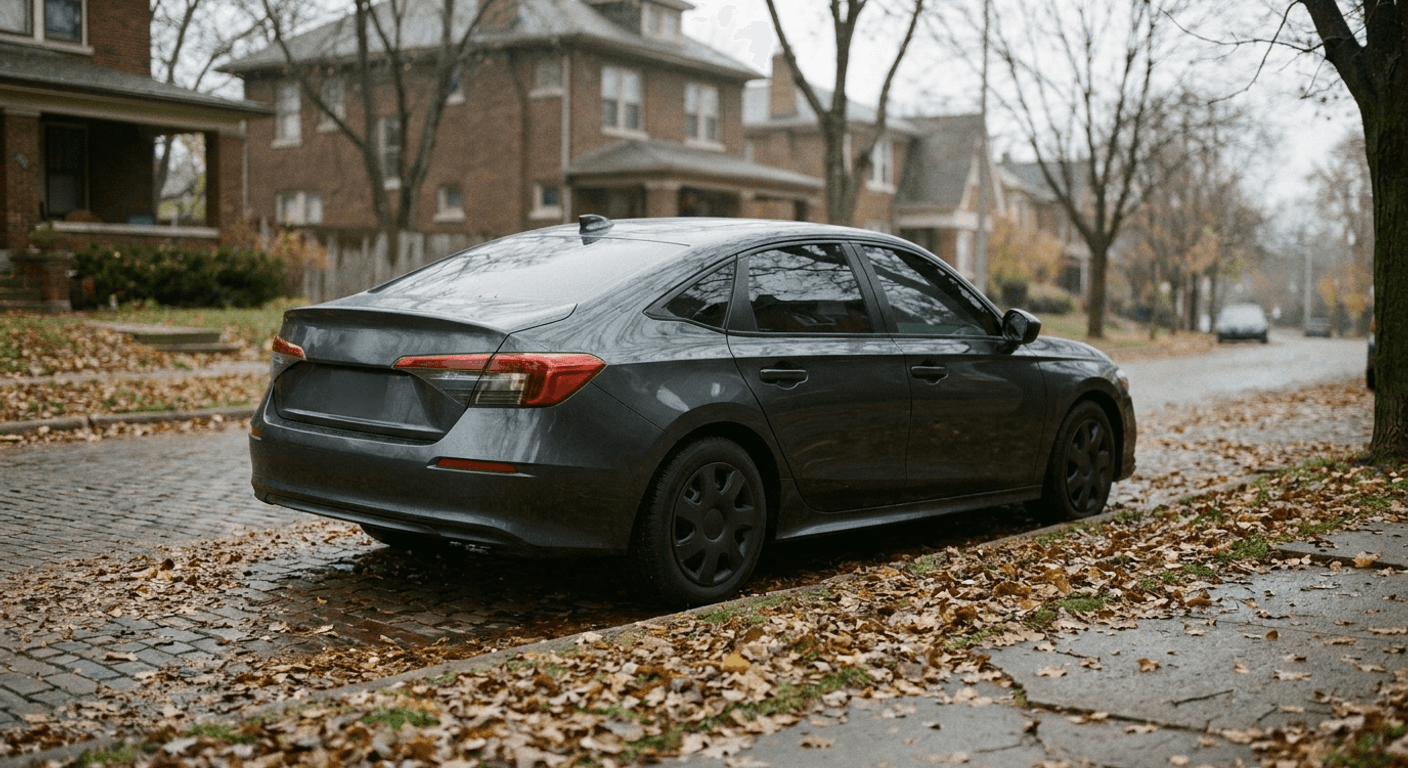
In Idaho, aftermarket tint on the front side and rear windows must allow at least 35% of visible light through (VLT), while back side windows have a slightly darker limit of 20% VLT. Idaho does not distinguish between sedans and multipurpose vehicles for these limits, though factory glass is treated separately under Idaho Code 49-944(5).
What is the legal tint limit in Idaho?
Idaho's window tint law is found at Idaho Code 49-944. The rules apply uniformly across all vehicle types: sedans, SUVs, vans, trucks, and other passenger vehicles are all treated the same. A higher VLT percentage means a lighter, less restrictive tint; a lower VLT percentage means a darker film that lets less light through.
The front side windows must have a minimum of 35% VLT. That is the most-searched and most-enforced number in Idaho. The back side windows behind the driver may be darker, down to 20% VLT. The rear window returns to the same 35% standard as the front. This creates an asymmetric setup where the passenger compartment's middle windows can go considerably darker than the front or back glass.
| Window | VLT Minimum |
|---|---|
| Front side windows | 35% |
| Back side windows | 20% |
| Rear window | 35% |
| Windshield (below AS-1) | No aftermarket tint allowed |
Idaho Code 49-944 builds a measurement tolerance of plus or minus 3% into each of its limits. A front side window reading of 32% on a tintometer would still be within compliance under that tolerance.
Windshield tint rules in Idaho
Idaho prohibits any aftermarket tint film below the AS-1 line on the windshield. The AS-1 line is the dotted or solid reference line near the top of the windshield, printed by the glass manufacturer. If that line is not visible on your windshield, the applicable limit is the top 6 inches measured from the roof line. Only a non-reflective strip in that topmost portion is permitted.

The reflectivity limit of 35% applies to all tinted windows in Idaho, meaning no mirrored or metallic films that bounce back more than 35% of light. There are no explicit banned tint colors in the Idaho statute beyond what the reflectivity rule already restricts, but highly reflective golds, silvers, and mirror-finish films would typically exceed the 35% reflectance cap and are therefore not allowed.
Medical exemptions
Idaho does allow a medical exemption under Idaho Code 49-944(4). The exemption attaches to a motor vehicle that is operated by, or is carrying as a passenger, a person who possesses written verification from a licensed physician that the operator or passenger must be protected from exposure to sunlight or heat for medical reasons associated with past or current treatment. That wording cuts both ways: a qualifying passenger triggers the exemption even when someone else is driving, which is how it commonly works for a child or an elderly rider, while an owner who is not in the vehicle at the time does not. The verification must be carried in the vehicle and presented on request during a traffic stop.
Under the medical exemption, the permissible VLT on the windows drops to not less than 20% (plus or minus 3%), including the front side windows that ordinarily require 35%. The statute treats the windshield separately, and this is the part most summaries leave out: subsection (4) permits windshield tint at not less than 70% VLT (plus or minus 3%), where the base rule in subsection (1)(a) allows no aftermarket film below the AS-1 line at all. The 35% reflectance cap still applies in each instance. This is a meaningful allowance for individuals with conditions such as lupus, xeroderma pigmentosum, porphyria, or severe photosensitivity. The statute does not impose a renewal deadline, but carrying a current letter from an actively treating physician is the safest practice.
Unlike some states that require the driver to pre-register the exemption with the DMV, Idaho's process is document-based: the physician's written verification is the operative document, and no state permit or sticker is issued.
How tint is measured and certified in Idaho
Idaho does not require a compliance sticker or installer label on tinted windows, which distinguishes it from states like Alabama, Florida, or Tennessee. Enforcement relies on officer observation and roadside measurement with a VLT meter during traffic stops. There is no periodic safety inspection in Idaho that routinely checks window tint.
The plus-or-minus 3% tolerance is built into enforcement. An officer using a calibrated tintometer who measures 32% on a front side window would treat that as compliant. Readings below 32% on a front side window, or below 17% on a back side window, or below 32% on a rear window would indicate a violation.
Because there is no required sticker, the only documentation an Idaho driver needs is the installer's receipt or a specification sheet from the tint manufacturer showing the film's rated VLT. Combined with a physician's letter if a medical exemption applies, that paperwork is your entire compliance record.
Penalties for illegal tint in Idaho
A violation of Idaho's window tint law is classified as an infraction under Idaho Code 49-944. Infractions in Idaho are civil penalties, not criminal charges, so a tint citation does not result in a criminal record or jail time. Fines for infractions are typically modest and set by local court schedules; expect a fine in the range other equipment infractions carry in the state.
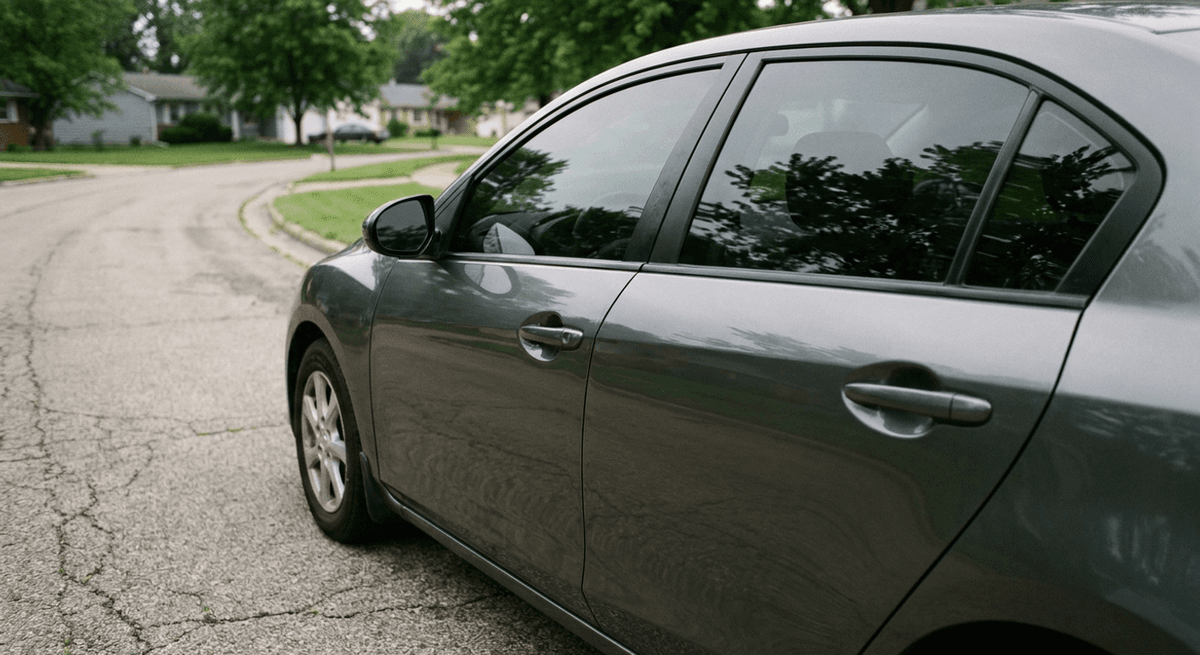
Because there is no safety-inspection system tying vehicle registration to tint compliance, a driver who receives a tint infraction is not automatically required to remove the film or face registration consequences. However, repeat stops for the same violation can result in escalating fines, and an officer may note the violation in the stop record. Bringing the vehicle into compliance after a citation is always the prudent course.
Idaho Code 49-944(1) makes it unlawful for any person, including an installer, to place, install, affix, or apply non-compliant window tinting film. Subsection (6) makes any violation of the section an infraction, so an installer who fits illegal tint can be independently liable under the statute itself, not just the vehicle owner.
If you want to tint your windows in Idaho
Idaho's rules are straightforward. For front side windows, choose a film rated at 35% VLT or higher to give yourself a clear buffer above the 32% floor under the measurement tolerance. For back side windows, a 20% film is the legal limit; going to 15% or lower without a medical exemption would be a violation. For the rear window, apply the same 35% standard as the front.
Select a reputable installer who carries manufacturer spec sheets for the film they use. Ask for documentation that confirms the film's rated VLT at the time of installation. Keep that documentation in the vehicle even though Idaho does not require a compliance sticker. If you or a regular passenger has a medical need that qualifies under 49-944(4), obtain the physician's written verification before installation so the darker film, and any windshield tint at 70% VLT or lighter, is covered from the start.
For SUVs, vans, and trucks, the aftermarket rules are the same as for sedans in Idaho. There is no multipurpose-vehicle exception that lets you apply darker film to the rear glass, as there is in many other states. What does differ by vehicle is the glass itself. Idaho Code 49-944(5) provides that nothing in the section makes illegal the operation or sale of a vehicle whose windshield or windows are composed of, covered by, or treated with any material the vehicle was sold with when new, or could have been equipped with for sale when new as standard or optional equipment from the manufacturer or authorized dealer. Factory privacy glass on the rear and rear side windows of many SUVs, vans, and trucks measures well below 35% VLT, and subsection (5) protects it. The 35/20/35 pattern governs the film you add, not the darkness the factory built in.
This article is general legal information, not legal advice. Window tint limits vary by state and change, and enforcement depends on local practice and your specific vehicle. For a definitive answer, check your state DMV or consult a local attorney.
Related reading
For a full comparison of window tint rules across all 50 states, visit the Window Tint Laws hub. For rules about what may be attached to or mounted on your windshield, see Idaho Windshield Mounting Restrictions.

More Idaho Laws
Frequently Asked Questions
What is the legal tint in Idaho?
For aftermarket film, Idaho requires at least 35% VLT on front side windows, at least 20% VLT on back side windows, and at least 35% VLT on the rear window. The windshield may only have a non-reflective strip above the AS-1 line or top 6 inches. All windows are subject to a 35% reflectivity cap.
How dark can my front windows be in Idaho?
The darkest legal film for front side windows in Idaho is 35% VLT. With Idaho's plus-or-minus 3% tolerance, a meter reading as low as 32% will still pass, but choosing a film rated at 35% or lighter is the safest approach.
Is 20% tint legal in Idaho?
A 20% VLT film is legal on back side windows in Idaho. It is not legal on front side windows or the rear window, which require at least 35% VLT. Where the medical exemption in Idaho Code 49-944(4) applies, the windows may go to 20% VLT including the front side windows, and the windshield may be tinted to no less than 70% VLT.
Can I get a medical exemption for window tint in Idaho?
Yes. Idaho Code 49-944(4) allows one. A licensed physician must provide written verification that the operator or a passenger must be protected from exposure to sunlight or heat for medical reasons associated with past or current treatment, and that verification must be carried in the vehicle. The exemption covers a vehicle operated by, or carrying as a passenger, the person named in it. It permits not less than 20% VLT on the windows, including the front side windows that normally require 35%, and windshield tint at not less than 70% VLT.
What is the penalty for illegal tint in Idaho?
Illegal window tint is an infraction in Idaho, which is a civil penalty rather than a criminal charge. Fines follow the local infraction schedule and are generally modest. There is no safety-inspection regime that ties registration renewal to tint compliance in Idaho.
Is windshield tint legal in Idaho?
Only a non-reflective tint strip above the AS-1 line, or within the top 6 inches if the AS-1 line is not marked, is allowed on the windshield. No aftermarket tint may appear below that line.
Do SUVs have different tint rules in Idaho?
Not for aftermarket film. Idaho applies the same 35% front side, 20% back side, and 35% rear window limits to SUVs, trucks, vans, and sedans alike, and there is no multipurpose-vehicle exception that lets you add darker film to the rear glass. Factory glass is a separate question: Idaho Code 49-944(5) does not make illegal the darker privacy glass many SUVs, vans, and trucks are sold with as standard or optional equipment when new.
Updates
Corrected the medical-exemption section to state the separate 70% VLT windshield allowance and the statute's operator-or-passenger eligibility, added the factory and original-equipment glass exception that protects manufacturer privacy glass on SUVs, vans and trucks, and removed an unsourced claim that Idaho's plus or minus 3% tolerance is a national standard.
Independently fact-checked against the cited primary sources; governing law re-checked for recent changes
Corrected a claim that Idaho installers face no separate liability for illegal tint; Idaho Code 49-944(1) and (6) make installation of non-compliant tint by any person an infraction in its own right.
Governing law re-checked for recent changes
Reviewed and approved by an editor
The Law Behind This Article
This article rests on the statutory provisions below, held in our own legal record and retrieved from the official source. Tap a section to read the operative text.
Idaho Code
§ 49-944Standards for windshields and windows of motor vehicles — Prohibited acts — PenaltyIn forcecited in 3 of our articles
49-944. Standards for windshields and windows of motor vehicles — Prohibited acts — Penalty. (1) It is unlawful for any person to place, install, affix, or apply any window tinting film or sunscreening device to the windows of any motor vehicle, except as follows: (a) Nonreflective window tinting…
Official text (excerpt) · last checked 2026-09-01 · Read the full text in our law library · Verify at legislature.idaho.gov
Cited in 5 court opinions in our collectionLatest citing opinion in our collection: 2021
In the courts (editorial summary, independently checked):State v. Debra Joan Noeller (2016) held Idaho Code 49-944 governs conduct on Idaho highways and reaches any vehicle driven in the state, not only Idaho-registered ones. State v. Farrell (2019) held the factory-tint exception in subsection (5), proved later, defeats the infraction but does not dispel an officer's reasonable suspicion.
Opinions citing this section in our collection:
- State v. Farrell (Idaho Court of Appeals 2019, 165 Idaho 839)✓An officer stopped a car for a dark rear window, measured 25% light transmittance and cited the driver; the court held the factory-tint exception meant the driver could not be convicted, but did not dispel the officer's suspicion, so the stop was not unlawfully prolonged.
- State v. Debra Joan Noeller (Idaho Court of Appeals 2016)✓An officer stopped an Arizona-plated car for suspected illegal tint; in an unpublished decision the court read the statute as governing conduct on Idaho highways, so it covers out-of-state vehicles too, but affirmed suppression because the stop was unreasonably extended.
- United States v. Billy Howard Stanfield (Court of Appeals for the Fourth Circuit 1997, 109 F.3d 976)“…1 § 4313 (1975-95); Code of Georgia § 40-8-73.1 (1982-96); Idaho Code § 49-944 (1) (Michie 1948-96); West’s Smith-Hurd…”
Identified automatically from the court opinions citing this section — not a ranking of which case controls.
Also relied on in: Idaho Dashcam Laws: Recording Rules, Windshield Mounting, and Legal Limits (2026), Idaho Windshield Mounting Laws (2026 Guide)
Search our full record of US law — 2.1 million sections, every state + federal →
Sources and References
- Idaho Code 49-944 - window tint law(legislature.idaho.gov).gov