
Florida
Florida Window Tint Laws (2026): Legal VLT Limits
Independently fact-checked against primary sources (last audited August 18, 2026). · Reviewed by the RecordingLaw editorial team. · Law checked current as of August 18, 2026. · 1 primary source cited on this page. How we verify our legal content

Florida law requires front side windows to allow at least 28% visible light through (VLT). Back side and rear windows follow a lower threshold: 15% for sedans and coupes, and 6% for multipurpose vehicles such as SUVs, vans, and trucks.
What is the legal tint limit in Florida?
Florida regulates window tint through Fla. Stat. 316.2951 to 316.2957, which set minimum Visible Light Transmission (VLT) percentages for each window. A higher VLT percentage means lighter tint; a lower percentage means darker tint. The law distinguishes between sedans/coupes and multipurpose vehicles (SUVs, vans, trucks) for the back windows.
| Window | Sedans and Coupes | Multipurpose Vehicles (SUVs, Vans, Trucks) |
|---|---|---|
| Front side windows | 28% minimum | 28% minimum |
| Back side windows | 15% minimum | 6% minimum |
| Rear window | 15% minimum | 6% minimum |
The front side minimum of 28% applies to every passenger vehicle regardless of type. The distinction only applies to the windows behind the driver. Side mirrors on both sides are required only where the rear window is composed of, covered by, or treated with material that has the effect of making the window nontransparent, under Fla. Stat. 316.2954(2). Legal 15% or 6% film cuts rearward visibility without necessarily making the window nontransparent, so the mirror requirement does not attach to every tinted rear window.
Windshield tint rules in Florida
Florida permits a transparent sunscreen strip along the top edge of the windshield. Fla. Stat. 316.2952(2)(b) allows that strip only where the material is transparent and "does not encroach upon the driver's direct forward viewing area as more particularly described and defined in Federal Motor Vehicle Safety Standards No. 205 as the AS/1 portion of the windshield." That boundary is the AS-1 line, a fixed limit defined by the federal glazing standard, not a subjective test of the driver's unobstructed view and not something set by the film manufacturer's guidelines. A transparent strip above the AS-1 line is permitted; material that reaches below it is not. No colored or opaque material may cover the windshield below that strip.
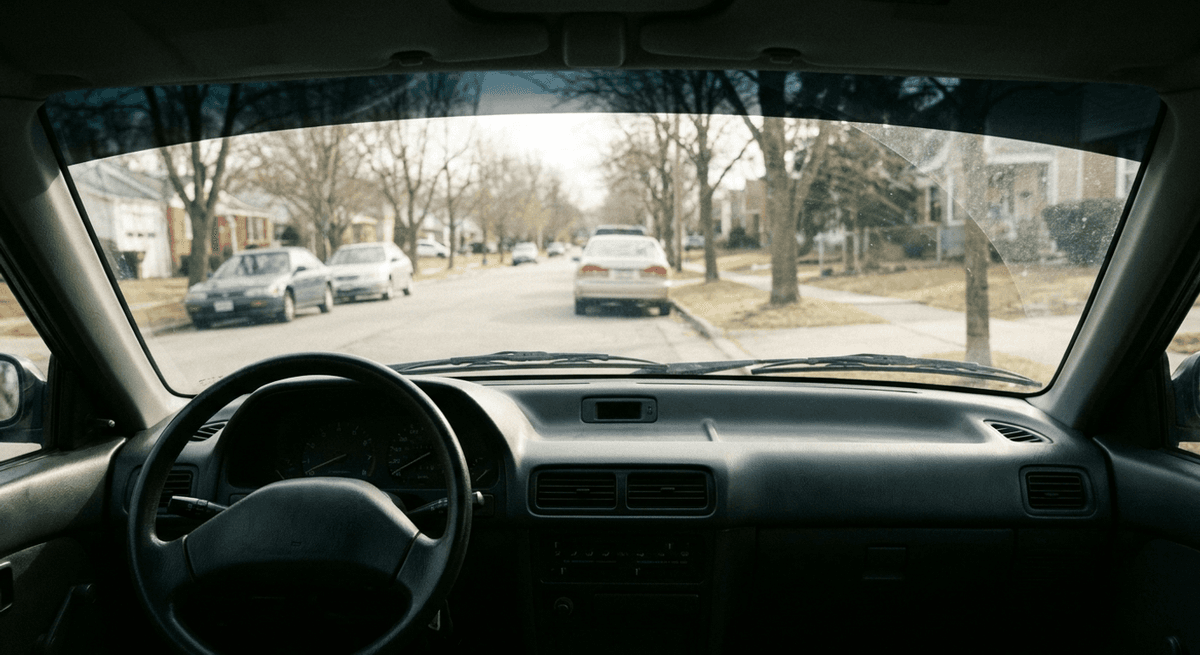
Reflectivity rules add another layer. Front side windows may not reflect more than 25% of incoming light. Rear side windows and the rear window may not reflect more than 35%. Mirrored or highly metallic films that push reflectance above those caps are prohibited on any window.
Florida does not specify a list of banned tint colors under 316.2951 to 316.2957, but any film that causes glare or interferes with another driver's vision could create liability under general traffic safety statutes.
Medical exemptions
Florida explicitly allows medical exemptions under F.S. 316.29545. The exemption covers conditions that cause photosensitivity, including lupus, certain autoimmune diseases, and other documented medical conditions in which sunlight exposure poses a health risk.
Getting the exemption is a two-step process, not just a doctor's note. First, a Florida-licensed physician or optometrist certifies the medical condition. Second, the applicant submits that certification on FLHSMV Form HSMV 83390, Application for Sunscreening Medical Exemption, to the FLHSMV Bureau of Motorist Compliance along with the required fee. FLHSMV then issues a vehicle-specific medical exemption certificate with its own decal number, tied to that vehicle's make, model, year, and VIN. The certificate is nontransferable and becomes void if the vehicle is sold or transferred.
The certificate must be kept in the vehicle at all times and shown to a law enforcement officer on request. A physician's letter alone, without the FLHSMV-issued certificate, does not satisfy Florida's exemption requirement. If you change vehicles, you need a new certificate for the replacement vehicle.
How tint is measured and certified
Fla. Stat. 316.2955(2) applies a tolerance of plus or minus 3 percent to every percentage measurement required by ss. 316.2951-316.2954, so a reading a few points below the stated minimum can still be compliant. Law enforcement officers may use a tint meter to measure the combined VLT of the aftermarket film and the factory glass together. The reading must meet the applicable minimum (28% front side, 15% or 6% rear depending on vehicle type) once that tolerance is applied.

Florida requires a compliance sticker as evidence that the tint meets legal standards. The sticker must be self-destructive (it cannot be removed and reapplied cleanly) and is placed on the inside of the left door jamb. The installer is typically responsible for affixing the sticker after verifying the VLT. If you buy a used vehicle with existing tint, confirming the presence of the sticker is a quick way to check whether the film was installed to code.
The sticker does not eliminate the need for a tint-meter check during a traffic stop, but it does give officers a baseline reference and may influence how a citation is handled.
Penalties for illegal tint in Florida
Under Fla. Stat. 316.2956(1), operating a vehicle on which sunscreening material was installed in violation of ss. 316.2951-316.2954 is a noncriminal traffic infraction, specifically a nonmoving violation. This means it does not add points to a driver's license the way a moving violation would. Fla. Stat. 316.29545 is the medical and law enforcement exemption section, so it grants relief from the tint limits rather than being a section a driver violates. Windshield violations fall outside that range and carry their own penalty clause: under Fla. Stat. 316.2952(7), a violation of the windshield section is a noncriminal traffic infraction punishable as a nonmoving violation.
The financial cost of a nonmoving citation in Florida varies by county and includes court costs in addition to the base fine. Nonmoving violations in Florida typically run from $60 to $130 or more once fees and surcharges are added. The citation does not result in a criminal record.
Installers and sellers face a separate, harsher penalty. Under Fla. Stat. 316.2956(3), selling or installing sunscreening material that violates the state's window-tint statutes is a second-degree misdemeanor, not a noncriminal infraction.
Florida does not have an explicit "fix-it ticket" provision for window tint in the same way some other states do. The infraction is treated as complete when issued. Removing the tint after the fact does not automatically dismiss the citation, though a judge may have discretion. Getting the tint removed and bringing proof to a hearing can help reduce the outcome.
If you want to tint your windows in Florida
Florida's rules are straightforward once you know the numbers, and a qualified installer can guide the entire process.
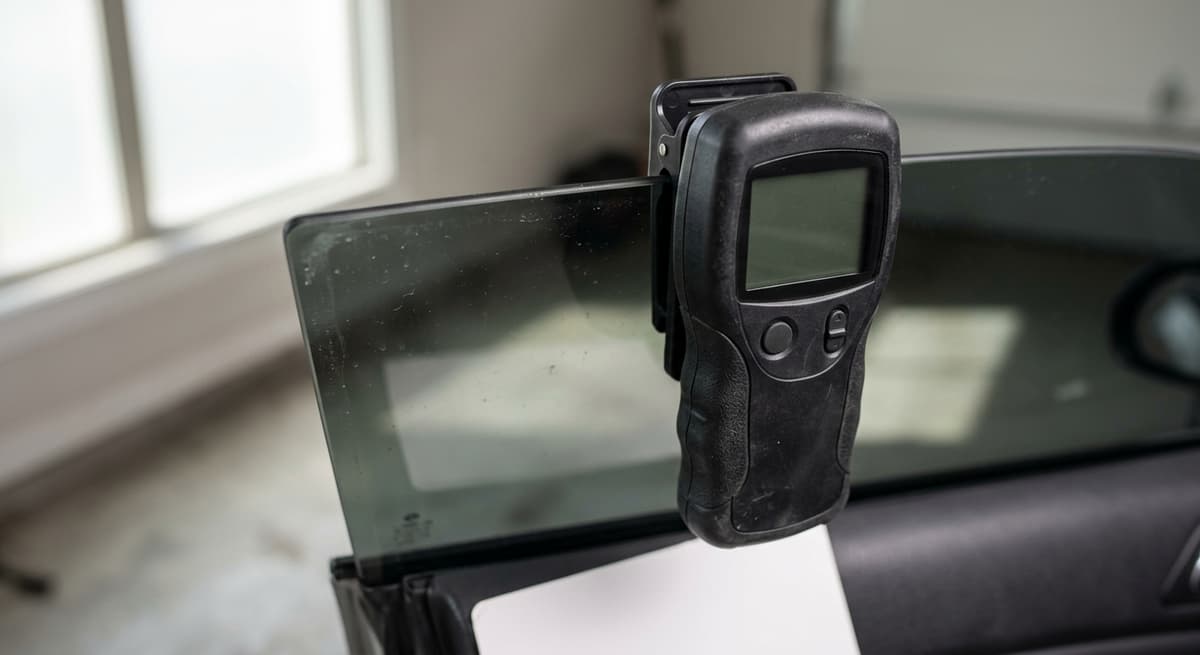
First, pick a film with a measured VLT that meets your category. For front side windows, the film plus factory glass must read at least 28%. For back side and rear windows on a sedan, the combined reading must be at least 15%. If you drive an SUV, van, or truck, the rear minimum drops to 6%, which gives you significant flexibility for privacy and heat reduction.
Second, use a licensed professional installer. Florida does not license tint installers by a state credential program, but a reputable shop will have a tint meter on-site to verify the final combined VLT before the job is complete. Ask to see the meter reading.
Third, make sure the installer affixes the self-destructive compliance sticker inside your left door jamb. This is required by law and protects you during a traffic stop.
Fourth, if you have a medical condition that requires darker tint, obtain the physician certification before having the film installed. The certificate needs to specify the medical necessity and should be dated. Keep the original in the glove box.
Finally, remember that factory-tinted windows already transmit less than 100% of visible light. On some vehicles, especially darker factory glass, adding even a light aftermarket film can bring the combined VLT below 28%. A tint meter check at the shop before you leave is the safest way to confirm compliance.
This article is general legal information, not legal advice. Window tint limits vary by state and change, and enforcement depends on local practice and your specific vehicle. For a definitive answer, check your state DMV or consult a local attorney.
More Florida Laws
Frequently Asked Questions
What is the legal tint in Florida?
Florida requires front side windows to allow at least 28% VLT. Back side and rear windows must allow at least 15% VLT on sedans and 6% VLT on SUVs, vans, and trucks. The windshield allows only a transparent strip above the AS-1 line at the top.
How dark can my front windows be in Florida?
The darkest legal front side window tint in Florida is 28% VLT (measured as the combined film plus factory glass). Anything below 28% is illegal without a valid medical exemption.
Is 20% tint legal on front windows in Florida?
No. A 20% VLT reading on a front side window is below Florida's 28% minimum and is not legal for standard vehicles. A medical exemption under F.S. 316.29545 can authorize darker front tint for qualifying conditions.
Can I get a medical exemption for window tint in Florida?
Yes. Florida law under F.S. 316.29545 allows medical exemptions for conditions such as lupus or autoimmune photosensitivity. A physician or optometrist certifies the condition, but that alone is not enough: the applicant must also submit FLHSMV Form HSMV 83390 with a fee, and FLHSMV issues a vehicle-specific, nontransferable certificate that must be kept in the vehicle.
What is the penalty for illegal tint in Florida?
Illegal window tint in Florida is a noncriminal traffic infraction (nonmoving violation). It does not add points to your license. Fines typically range from $60 to $130 or more after court costs and surcharges, depending on the county.
Is windshield tint legal in Florida?
Florida permits only a transparent sunscreen strip at the top of the windshield, above the AS-1 line defined by Federal Motor Vehicle Safety Standard 205 and referenced in Fla. Stat. 316.2952(2)(b). Tint that encroaches below the AS-1 line is not legal.
Do SUVs have different tint rules in Florida?
Yes. For multipurpose vehicles (SUVs, vans, trucks), Florida allows back side and rear windows as dark as 6% VLT. Sedans are held to a 15% minimum on those same windows. The front side 28% minimum applies equally to all vehicle types.
Updates
Corrected the windshield rule to the AS-1 line defined by Federal Motor Vehicle Safety Standard 205, fixed the statutory range and the penalty citation (Fla. Stat. 316.2956(1) covers ss. 316.2951-316.2954, with windshield violations penalized separately under 316.2952(7)), and narrowed the both-sides mirror requirement to a nontransparent rear window.
Corrected two procedural claims: Florida's tint law does carry a codified plus-or-minus 3 percent measurement tolerance (Fla. Stat. 316.2955), and the medical exemption is not just a physician's letter but a two-step process ending in an FLHSMV-issued, vehicle-specific certificate (Form HSMV 83390). Also added that installers and sellers of illegal tint face a separate second-degree-misdemeanor penalty.
Independently fact-checked against the cited primary sources; governing law re-checked for recent changes
Governing law re-checked for recent changes
Reviewed and approved by an editor
The Law Behind This Article
This article rests on the statutory provisions below, held in our own legal record and retrieved from the official source. Tap a section to read the operative text.
Florida Statutes
§ 316.2953Side windows; restrictions on sunscreening material.In forcecited in 2 of our articles
A person shall not operate any motor vehicle on any public highway, road, or street on which vehicle the side wings and side windows on either side forward of or adjacent to the operator’s seat are composed of, covered by, or treated with any sunscreening material or other product or covering which has the effect of making the window nontransparent or which would alter the window’s color, increase its reflectivity, or reduce its light transmittance, except as expressly permitted by this section. A sunscreening material is authorized for such windows if, when applied to and tested on the glass of such windows on the specific motor vehicle, the material has a total solar reflectance of visible light of not more than 25 percent as measured on the nonfilm side and a light transmittance of at least 28 percent in the visible light range. A violation of this section is a noncriminal traffic infraction, punishable as a nonmoving violation as provided in chapter 318.
Official text (excerpt) · last checked 2026-09-01 · Read the full text in our law library · Verify at leg.state.fl.us
Cited in 13 court opinions in our collectionLatest citing opinion in our collection: 2025
In the courts (editorial summary, independently checked):Florida courts have applied section 316.2953 mainly as a basis for traffic stops. State v. Gary Coley (2015) held an officer had probable cause where side tint hid the driver in daylight, the officer knowing the 28 percent limit. United States v. Frantz Pierre (2016) held illegal tint supplied probable cause regardless of motive.
Opinions citing this section in our collection:
- State v. Gary Coley (District Court of Appeal of Florida 2015, 157 So. 3d 542)“…see through it, therefore, it’s illegal. 1 Pursuant to section 316.2953, Florida Statutes (2013), the restriction as to sunscreen…”
- United States v. Frantz Pierre (Court of Appeals for the Eleventh Circuit 2016, 825 F.3d 1183)✓A detective could not see inside a Cadillac with dark tinted windows and had a marked unit stop it; the court held probable cause of a Florida tint violation supported the stop, so the debit cards found in the ensuing consent search were not suppressed.
- United States v. Larry Dwayne Leonard (Court of Appeals for the Eleventh Circuit 2009, 356 F. App'x 231)“…318. 11 Fla. Stat. § 316.2953. Here, Leonard did not raise a…”
Identified automatically from the court opinions citing this section — not a ranking of which case controls.
Also relied on in: Florida Windshield Mounting Laws (2026 Guide)
§ 316.2954Windows behind the driver; restrictions on sunscreening material.In forcecited in 2 of our articles
(1) A person shall not operate any motor vehicle on any public highway, road, or street on which vehicle any windows behind the driver are composed of, covered by, or treated with any sunscreening material, or other product or material which has the effect of making the window nontransparent or which would alter the window’s color, increase its reflectivity, or reduce its light transmittance, except as specified below:(a) Sunscreening material consisting of film which, when applied to and tested on the rear window glass of the specific motor vehicle, has a total solar reflectance of visible light of not more than 35 percent as measured on the nonfilm side and a light transmittance of at least 15 percent in the visible light range; however, sunscreening material which, when applied to and tested on the rear window glass of the specific motor vehicle, has a total solar reflectance of visible light of not more than 35 percent as measured on the nonfilm side and a light transmittance of at least 6 percent in the visible light range may be used on multipurpose passenger vehicles.
Official text (excerpt) · last checked 2026-07-28 · Read the full text in our law library · Verify at leg.state.fl.us
§ 316.29545Window sunscreening exclusions; medical exemption; certain law enforcement vehicles, process server vehicles, and private investigative service vehicles exempt.In forcecited in 2 of our articles
(1) The department shall issue medical exemption certificates to persons who are afflicted with Lupus, any autoimmune disease, or other medical conditions which require a limited exposure to light, which certificates shall entitle the person to whom the certificate is issued to have sunscreening material on the windshield, side windows, and windows behind the driver which is in violation of the requirements of ss. 316.2951-316.2957. The department shall consult with the Medical Advisory Board established in s. 322.125 for guidance with respect to the autoimmune diseases and other medical conditions which shall be included on the form of the medical certificate authorized by this section. At a minimum, the medical exemption certificate shall include a vehicle description with the make, model, year, vehicle identification number, medical exemption decal number issued for the vehicle, and the name of the person or persons who are the registered owners of the vehicle. A medical exemption certificate shall be nontransferable and shall become null and void upon the sale or transfer of the vehicle identified on the certificate.
Official text (excerpt) · last checked 2026-07-28 · Read the full text in our law library · Verify at leg.state.fl.us
§ 316.2952Windshields; requirements; restrictions.In forcecited in 2 of our articles
(1) A windshield in a fixed and upright position, which windshield is equipped with safety glazing as required by federal safety-glazing material standards, is required on every motor vehicle which is operated on the public highways, roads, and streets, except on a motorcycle or implement of husbandry. (2) A person shall not operate any motor vehicle on any public highway, road, or street with any sign, sunscreening material, product, or covering attached to, or located in or upon, the windshield, except the following:(a) A certificate or other paper required to be displayed by law. (b) Sunscreening material along a strip at the top of the windshield, so long as such material is transparent and does not encroach upon the driver’s direct forward viewing area as more particularly described and defined in Federal Motor Vehicle Safety Standards No. 205 as the AS/1 portion of the windshield. (c) A device, issued by a governmental entity as defined in s. 334.03, or its designee, for the purpose of electronic toll payments. (d) A global positioning system device or similar satellite receiver device that uses the global positioning system operated pursuant to 10 U.S.C. s.
Official text (excerpt) · last checked 2026-09-07 · Read the full text in our law library · Verify at leg.state.fl.us
Cited in 7 court opinions in our collectionLatest citing opinion in our collection: 2020
Opinions citing this section in our collection:
- Hilton v. State (Supreme Court of Florida 2007, 961 So. 2d 284)“…nstruction to section 316.610, Florida Statutes (2001), and section 316.2952, Florida Statutes (2001). Prior to the United States Su…”
- State v. Burke (District Court of Appeal of Florida 2005, 902 So. 2d 955)“…crack in the windshield was a proper basis for the stop. Section 316.2952, Florida Statutes (2003), provides that a windshield is r…”
- Ivory v. State (District Court of Appeal of Florida 2005, 898 So. 2d 184)“…ion and endangered neither him nor members of the public. Section 316.2952, Florida Statutes, provides that a vehicle must have a wi…”
Identified automatically from the court opinions citing this section — not a ranking of which case controls.
§ 316.2956Violation of provisions relating to windshields, windows, and sunscreening material; penalties.In force
(1) Any person who operates a motor vehicle on which, after June 20, 1984, material was installed in violation of ss. 316.2951-316.2954 commits a noncriminal traffic infraction, punishable as a nonmoving violation as provided in chapter 318. (2) The replacement or repair of any material legally installed is not a violation of ss. 316.2951-316.2954. (3) Any person who sells or installs sunscreening material in violation of any provision of ss. 316.2951-316.2955 is guilty of a misdemeanor of the second degree, punishable as provided in s. 775.082 or s. 775.083.
Official text (excerpt) · last checked 2026-07-28 · Read the full text in our law library · Verify at leg.state.fl.us
Cited in 1 court opinions in our collectionLatest citing opinion in our collection: 2008
Opinions citing this section in our collection:
- Richardson v. State (District Court of Appeal of Florida 2008, 971 So. 2d 295)“…belief that the windows were excessively tinted or violated Section 316.2956, Florida Statutes (2006). [2] Since this matter will b…”
Identified automatically from the court opinions citing this section — not a ranking of which case controls.
§ 316.2955Window sunscreening material; compliance labeling; tolerances.In force
(1) Each installer or seller of sunscreening material shall provide a pressure-sensitive, self-destructive, nonremovable, vinyl-type film label to the purchaser stating that the material complies with the provisions of ss. 316.2951-316.2954. Each such installer shall affix the required label to the inside left door jamb of the motor vehicle. In addition, the label shall state the trade name of the material and the installer’s or seller’s business name. Labeling is not required for factory glazing which complies with Federal Motor Vehicle Safety Standard No. 205. (2) Every percentage measurement required by ss. 316.2951-316.2954 is subject to a tolerance of plus or minus 3 percent. (3) The department shall adopt rules approving light transmittance measuring devices for use in making measurements required by ss. 316.2951-316.2954. A witness otherwise qualified to testify shall be competent to give testimony regarding the percentage of light transmission when the testimony is derived from the use of an approved device. The reading from an approved device is presumed accurate and shall be admissible into evidence in the trial of any infraction arising under ss. 316.2951-316.2954.
Official text (excerpt) · last checked 2026-07-28 · Read the full text in our law library · Verify at leg.state.fl.us
§ 316.2951Motor vehicle windows; definitions.In force
Whenever used in ss. 316.2951-316.2957, unless the context otherwise requires, the following terms have the following meanings:(1) “Motor vehicle” means any vehicle as defined in s. 316.003, except vehicles used in farm husbandry, which is registered or required to be registered in the state. (2) “Multipurpose passenger vehicle” means a motor vehicle with motive power designed to carry 10 persons or fewer which is constructed either on a truck chassis or with special features for occasional off-road operation. (3) “Reflectance” means the ratio of the amount of total light, expressed in a percentage, which is reflected outward by the product or material to the amount of total light falling on the product or material. (4) “Sunscreening material” means a product or material, including film, glazing, and perforated sunscreening, which, when applied to the windshield or windows of a motor vehicle, reduces the effects of the sun with respect to light reflectance or transmittance.
Official text (excerpt) · last checked 2026-07-28 · Read the full text in our law library · Verify at leg.state.fl.us
§ 316.2957Exemption for motor vehicle manufacturers.In force
The provisions of ss. 316.2951-316.2956 do not apply to the manufacturer’s tinting or glazing of motor vehicle windows or windshields which is otherwise in compliance with or permitted by Federal Motor Vehicle Safety Standard No. 205 as promulgated in 49 C.F.R. s. 571.205.
Official text (excerpt) · last checked 2026-07-28 · Read the full text in our law library · Verify at leg.state.fl.us
Search our full record of US law — 2.1 million sections, every state + federal →
Sources and References
- Fla. Stat. 316.2951 to 316.29545 - Florida Window Sunscreening Laws(leg.state.fl.us).gov
- Fla. Stat. 316.2952 - Windshield; restrictions on sunscreening material and the FMVSS 205 AS/1 portion(leg.state.fl.us)
- Fla. Stat. 316.2954 - Windows behind the driver; nontransparent rear window and side mirror requirement(leg.state.fl.us)
- Fla. Stat. 316.2956 - Penalties for violation of ss. 316.2951-316.2954(leg.state.fl.us)
- Fla. Stat. 316.2951 - Definitions applicable to ss. 316.2951-316.2957(leg.state.fl.us)