
District of Columbia
District of Columbia Window Tint Laws (2026): Legal VLT Limits
Independently fact-checked against primary sources (last audited August 18, 2026). · Reviewed by the RecordingLaw editorial team. · Law checked current as of August 18, 2026. · 1 primary source cited on this page. How we verify our legal content
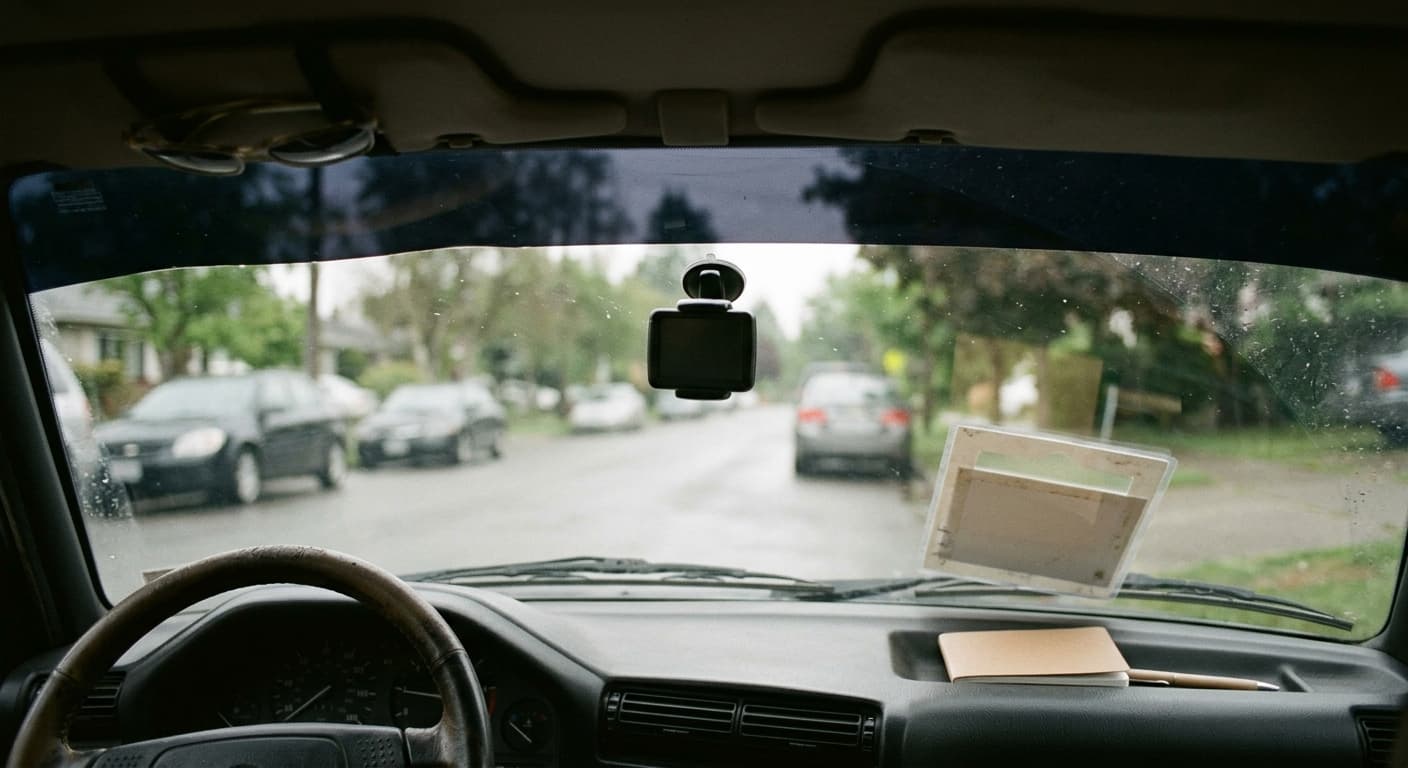
In the District of Columbia, standard vehicles must have front side windows that allow at least 70% of visible light through. Back side windows and the rear window must allow at least 50% VLT on standard vehicles. Minivans get slightly darker allowances: 55% on the front side windows and 35% on the back side windows and rear window.
What is the legal tint limit in the District of Columbia?
The DC tint law sets separate VLT minimums for two vehicle classes: standard vehicles and minivans. VLT stands for Visible Light Transmission, and a higher number means lighter (less tinted) glass. A lower number means darker tint. Understanding which class your vehicle falls into matters before any tint work is done.
For standard vehicles (sedans, coupes, SUVs, and most passenger cars), the rules are:
| Window Position | Minimum VLT (Standard Vehicle) |
|---|---|
| Front side windows | 70% |
| Back side windows | 50% |
| Rear window | 50% |
For minivans, the limits are somewhat more permissive:
| Window Position | Minimum VLT (Minivan) |
|---|---|
| Front side windows | 55% |
| Back side windows | 35% |
| Rear window | 35% |
The 70% front side window requirement for standard vehicles is among the strictest in the country. In practical terms, 70% VLT means your windows will look nearly factory-fresh; most factory glass already transmits around 70-75% of visible light. Adding any aftermarket tint to a standard vehicle's front side windows will bring you right to or below the legal limit, so drivers often skip the front sides entirely. Factory glass itself is not the target: subsection (h)(4) exempts vehicles with tinted windows installed by the manufacturer prior to purchase.
The DC tint statute is D.C. Code section 50-2207.02. Under subsection (f), any police officer or other authorized government agent of the District may order a vehicle removed from the public streets to an official District Inspection Station if that officer or agent determines the tint puts the health and safety of the public at risk.
Windshield tint rules in the District of Columbia
DC prohibits a front windshield that allows less than 70% light transmittance. Subsection (b) carves out an exception: a windshield may allow less than 70% above the manufacturer's AS-1 line, or within 5 inches from the top of the windshield. The AS-1 line is the dotted or dashed line printed on the windshield by the manufacturer, typically a few inches below the top edge.

The rule is a transmittance threshold rather than a flat ban on film. Below the AS-1 line, the windshield still has to let at least 70% of visible light through, counting the glass and any film together. What the statute prohibits outside the top strip is film dark enough to push the windshield under that 70% figure.
The DC code does not specify banned tint colors or a numerical reflectivity limit for side or rear windows. However, highly reflective or mirrored films can draw enforcement attention and may raise safety concerns under the general statute framework.
Medical exemptions
Subsection (h) exempts five categories from the tint limits entirely: limousines, ambulances, buses, and hearses meeting 18 DCMR 413.10; church-owned vehicles; all official government vehicles; vehicles with tinted windows installed by the manufacturer prior to purchase; and vehicles the DC DMV Director exempts on medical grounds. The factory-glass exemption is the one most drivers rely on without realizing it, and it is why a minivan or SUV sold with dark rear privacy glass is not ticketed for that glass.
DC law does allow for medical exemption from the standard tint limits. The Director of the DC DMV has authority to grant an exemption for a vehicle owner whose medical condition requires protection from sunlight beyond what the standard limits allow.
If you have a condition such as lupus, photosensitivity disorder, porphyria, or another light-sensitive diagnosis, you can apply to the DC DMV Director for a medical exemption. Once granted, your vehicle may lawfully carry darker tint than the statutory minimums. You should keep documentation of the exemption in the vehicle so it can be presented during a traffic stop or inspection.
The exemption is granted on a per-vehicle basis, not as a blanket personal permit, so each vehicle you wish to tint differently needs its own approval. Contact the DC DMV directly for the current application process and required medical documentation.
How tint is measured and certified
Law enforcement officers and vehicle inspectors measure window tint using a light transmission meter (sometimes called a tint meter or VLT meter). The meter is placed against the window glass and measures the percentage of visible light that passes through the tint film plus the glass together.
DC does not publish a specific measurement tolerance or a plus-or-minus allowance in its statute. As a practical matter, aftermarket tint film often has a stated VLT from the manufacturer that differs slightly from actual installed performance. If you are close to a legal limit, a small variance in measurement could result in a citation. Choosing a film rated a few percentage points lighter than the legal minimum is common practice to stay comfortably within compliance.
DC does not specify whether a compliance sticker or installer certificate is required to be affixed to the vehicle. It is good practice to keep the installer's receipt and the film manufacturer's data sheet in the glove box so that you can document the VLT rating if questioned.
Penalties for illegal tint in the District of Columbia
The DC tint penalty structure is unusual because it escalates only when the violation goes uncured. A vehicle operated or parked in violation of the limits draws a $50 citation. A vehicle found in violation must then be inspected at an official District Inspection Station within 5 business days after the finding, and if it is not brought into compliance by the end of that period the owner is fined not more than $1,000.
On a second or subsequent finding the same 5-business-day inspection requirement applies, and the owner may be fined not more than $5,000 if the vehicle is not brought into compliance by the end of that period. That ceiling is not automatic on a second ticket: a second violation cured inside the inspection window leaves the $50 citation, not the escalated fine. Fines imposed under those two provisions are adjudicated as moving violations under subsection (l).
The practical takeaway: if you receive a tint citation in DC, act inside the 5-business-day window. Remove or replace the non-compliant film and have the vehicle inspected at an official District Inspection Station, which is how the statute expects compliance to be established. The combination of a very strict 70% front window rule and a $5,000 second-offense ceiling makes DC one of the higher-stakes tint enforcement jurisdictions in the country.
If you want to tint your windows in the District of Columbia
Before booking an installer, confirm which vehicle class you have. Standard vehicles face a 70% front side window limit, which leaves almost no room for added film. Most professional installers in the DC area are familiar with this rule. Ask the installer to show you the manufacturer's VLT rating for any film they propose for your front side windows. Subsection (g) also makes the installation itself unlawful: no person may install window tinting in the District on a non-exempt vehicle that would put it in violation of the limits, so a shop that fits illegal film is breaking the law alongside the driver who then operates the car.
For back side windows and the rear window on a standard vehicle, 50% VLT gives more flexibility. A medium-smoke film in the 40-50% range would be legal. For minivans, the 35% rear limit allows noticeably darker glass that provides meaningful heat and glare reduction.
Practical steps to stay legal in DC:
- Identify your vehicle class (standard or minivan) before choosing a film darkness.
- Ask the installer for the manufacturer's certificate showing the VLT rating of the film.
- For the front side windows on a standard vehicle, confirm any added film keeps the combined VLT at 70% or higher.
- If you have a medical condition requiring darker tint, apply to the DC DMV Director for a medical exemption before having the film installed.
- Keep the installer's paperwork and the film spec sheet in your glove compartment.
- If you receive a citation, bring the vehicle into compliance and have it inspected at an official District Inspection Station within 5 business days to avoid the escalated fine.
DC's location at the intersection of Maryland and Virginia means vehicles registered in those states and driven into DC are subject to DC enforcement standards while on DC roads. If your Maryland or Virginia vehicle has tint that is legal at home but darker than DC limits, you could receive a citation in the District.
This article is general legal information, not legal advice. Window tint limits vary by state and change, and enforcement depends on local practice and your specific vehicle. For a definitive answer, check your state DMV or consult a local attorney.
For rules on what you can attach to your windshield, see DC Windshield Mounting Restrictions.
Frequently Asked Questions
What is the legal tint in the District of Columbia?
DC sets the limit based on vehicle type. Standard vehicles must have front side windows at 70% VLT or lighter and back side windows and rear window at 50% VLT or lighter. Minivans may have 55% on the front sides and 35% on the back sides and rear window.
How dark can my front windows be in DC?
For standard vehicles (sedans, coupes, SUVs), the front side windows must transmit at least 70% of visible light, which is nearly factory-clear glass. Minivans may go to 55% on the front side windows. Adding any aftermarket tint to a standard vehicle front window leaves almost no margin.
Is 50% tint legal in DC?
Yes, 50% VLT film is legal on the back side windows and rear window of a standard vehicle. It is not legal on the front side windows of a minivan: a minivan front side window may not allow less than 55% light transmittance, and 50% is darker than that. On standard vehicle front side windows, 50% is darker than the 70% minimum and is also a violation.
Can I get a medical exemption for window tint in DC?
Yes. The DC DMV Director may exempt a vehicle from standard tint limits when the owner has a medical condition that requires reduced light exposure. You must apply to the DC DMV with supporting medical documentation. Keep the exemption paperwork in the vehicle.
What is the penalty for illegal tint in DC?
The initial citation is $50. A vehicle found in violation must be inspected at an official District Inspection Station within 5 business days after the finding, and if it is not brought into compliance by the end of that period the owner is fined not more than $1,000 on a first finding. On a second or subsequent finding the owner may be fined not more than $5,000 under that same condition, so a second violation cured inside the window does not carry the $5,000 exposure. Fines under those provisions are adjudicated as moving violations.
Is windshield tint legal in DC?
A DC windshield has to allow at least 70% light transmittance. The exception in subsection (b) lets a windshield fall below 70% above the manufacturer's AS-1 line, or within 5 inches from the top of the windshield. Below that strip, the glass and any film together still have to reach 70%.
Do minivans have different tint rules in DC?
Yes. Minivans are treated as a separate class under DC law. They may have 55% VLT on the front side windows (compared to 70% for standard vehicles) and 35% VLT on the back side windows and rear window (compared to 50% for standard vehicles).
Updates
Corrected the DC tint page against the text of D.C. Code 50-2207.02: removed an unsupported claim that tint violations carry no license points, fixed a contradictory answer about 50% film on minivan front windows, changed the correction deadline to 5 business days and added the required official District Inspection Station step, tied the $1,000 and $5,000 fines to their statutory condition, corrected the windshield rule to a 70% transmittance threshold rather than a flat ban, and added the statute’s full exemption list and its prohibition on installing illegal tint.
Independently fact-checked against the cited primary sources; governing law re-checked for recent changes
Governing law re-checked for recent changes
Reviewed and approved by an editor
The Law Behind This Article
This article rests on the statutory provisions below, held in our own legal record and retrieved from the official source. Tap a section to read the operative text.
Code of the District of Columbia, Title 50: Motor and Non-Motor Vehicles and Traffic. - Chapter 22: Regulation of Traffic. - Subchapter IV: Obscured Vision.
§ 50-2207.02Tinted windows prohibited.In forcecited in 2 of our articles
(1) Except as provided in subsection (b) of this section, no motor vehicle, other than a mini-van, may be operated or parked upon the public streets or spaces of the District of Columbia with: (A) A front windshield or front side windows that allow less than 70% light transmittance; or (B) A rear windshield or rear side windows that allow less than 50% light transmittance. (2) Except as provided in subsection (b) of this section, no mini-van may be operated or parked upon the public streets or spaces of the District of Columbia with: (A) A front windshield or front side windows that allow less than 55% light transmittance, or (B) A rear windshield or rear side windows that allow less than 35% light transmittance. (b) A motor vehicle may be operated or parked upon the public streets of the District of Columbia with a front windshield that allows less than 70% light transmittance above the AS-1 line, or within 5 inches from the top of the windshield. (c) Any person who operates or parks a motor vehicle in violation of subsection (a) of this section shall be issued a $50 citation.
Official text (excerpt) · last checked 2026-09-01 · Read the full text in our law library · Verify at github.com
Cited in 6 court opinions in our collectionLatest citing opinion in our collection: 2026
In the courts (editorial summary, independently checked):Griffin v. United States (2026) held that Section 50-2207.02 sets a 70% light transmittance floor for front windshields on vehicles other than mini-vans, so an officer's belief that any tint was unlawful was not a reasonable mistake of law. United States v. Person (2024) left open whether "public streets or spaces" covers a private lot.
Opinions citing this section in our collection:
- Griffin v. United States (District of Columbia Court of Appeals 2026)✓Police stopped a driver because his front windshield looked tinted, but the officer wrongly believed any tint was illegal and never measured light transmittance; the court held the 70% limit in the statute is clear, found no reasonable suspicion, and vacated the convictions.
- Smith v. United States (District of Columbia Court of Appeals 2022)✓Officers stopped a car for apparent excessive tint and later found PCP; in a footnote the court noted the government's concession that a tint violation is not arrestable under the statute, which carries a $50 citation, though it called that error inconsequential.
- Maurice Coleman v. United States (District of Columbia Court of Appeals 2018, 194 A.3d 915)“…police officers for excessive window tint, in violation of D.C. Code § 50-2207.02 (a)(1) (2012 Repl.). The officers d…”
Identified automatically from the court opinions citing this section — not a ranking of which case controls.
Also relied on in: District of Columbia Windshield Mounting Laws
Search our full record of US law — 2.1 million sections, every state + federal →
Sources and References
- D.C. Code section 50-2207.02 - Window tint restrictions(code.dccouncil.gov).gov