
Delaware
Delaware Window Tint Laws (2026): Legal VLT Limits
Independently fact-checked against primary sources (last audited August 18, 2026). · Reviewed by the RecordingLaw editorial team. · Law checked current as of August 18, 2026. · 1 primary source cited on this page. How we verify our legal content
Delaware allows aftermarket tint on the front side windows and side wings at a visible light transmission of 50% or greater. That standard took effect on August 17, 2026, when the Governor signed SS 1 for SB 255 into law. The side windows behind the driver and the rear window may be any darkness, down to 0% VLT.
What is the legal tint limit in Delaware?
Delaware allows tint on the front side windows and side wings as long as the film has a visible light transmission of 50% or greater. That figure comes from 21 Del. C. section 4313(c)(1), as amended by SS 1 for SB 255 and signed into law on August 17, 2026 (85 Del. Laws ch. 425). The glass itself must still meet the federal motor vehicle safety standard FMVSS 205 as manufactured, but applied film on those windows is now measured against the 50% floor rather than banned outright.
To understand what this means: VLT is the percentage of visible light a window lets through. A higher VLT percentage means a lighter, less tinted window. A lower VLT percentage means a darker window. Factory glass at roughly 70% VLT is barely tinted at all, and any film added on top will lower that number, so a 50% floor leaves room for a light to moderate film.
The 50% floor applies only to the front side windows and side wings (the driver and front passenger door glass). The windows behind the driver are treated very differently.
This is a recent change. Until August 17, 2026, Delaware allowed no aftermarket film at all on the front side windows, which had to stay at the factory FMVSS 205 glass level. SS 1 for SB 255 (153rd General Assembly) replaced that prohibition with the 50% VLT floor, expressly authorized any darkness behind the driver, and repealed the old requirement that a tint certificate be displayed in the vehicle. The Governor signed it on August 17, 2026 and it took effect on signature.
| Window | Rule |
|---|---|
| Front side | 50% VLT or greater |
| Back side | Any darkness (0% VLT or greater) |
| Rear window | Any darkness (0% VLT or greater) |
| Windshield | Transparent products above AS-1 line only |
Delaware does not carve out SUVs, vans, or other multi-purpose vehicles. The same 50% VLT floor in front, and the same unrestricted allowance behind the driver, apply regardless of vehicle type.
Windshield tint rules in Delaware
Delaware permits only transparent products above the AS-1 line on the windshield. The AS-1 line is etched near the top of the windshield by the manufacturer and typically sits about five to six inches from the top, though the exact position varies by vehicle. Whatever is applied in that strip must be truly transparent, meaning it cannot add visible darkness or tint to the driving field.
Tint of any kind below the AS-1 line is not permitted. This rule ensures the driver's primary sightlines remain unobstructed, consistent with federal safety standards that Delaware incorporates by reference.
Any film applied to rear and back side windows should comply with FMVSS 205 for installation quality, even though Delaware does not set a specific VLT percentage or reflectivity ceiling for those windows. Metallic, highly reflective, or opaque films should still be chosen carefully because the general FMVSS 205 compliance requirement still applies.
Medical exemptions
Delaware offers one of the more accessible medical exemption processes in the region. A driver or vehicle owner whose physician or optometrist certifies a medical necessity for reduced light may apply for a waiver through the Delaware DMV. The DMV accepts this application online and can approve a waiver for up to four vehicles registered to the same owner.
The signed physician or optometrist statement of medical necessity must be kept in the vehicle at all times. If you are stopped by law enforcement and your front side windows appear tinted, you will need to present this documentation immediately. Without the waiver, the officer may issue an infraction even if you believe the film is light.
The waiver is specific to the listed vehicles. If you change vehicles, you must update the waiver with the DMV. The online process makes this relatively straightforward compared to states that require in-person visits.
Two other exemptions sit in the statute itself. Section 4313(e) exempts anodized glass correctly installed in the windshield and windows of an antique motor vehicle or street rod, and section 4313(f) exempts a vehicle operated by a law-enforcement officer, a carve-out the 2026 act broadened from the narrower police K-9 and surveillance-vehicle language it replaced.
How tint is measured and certified
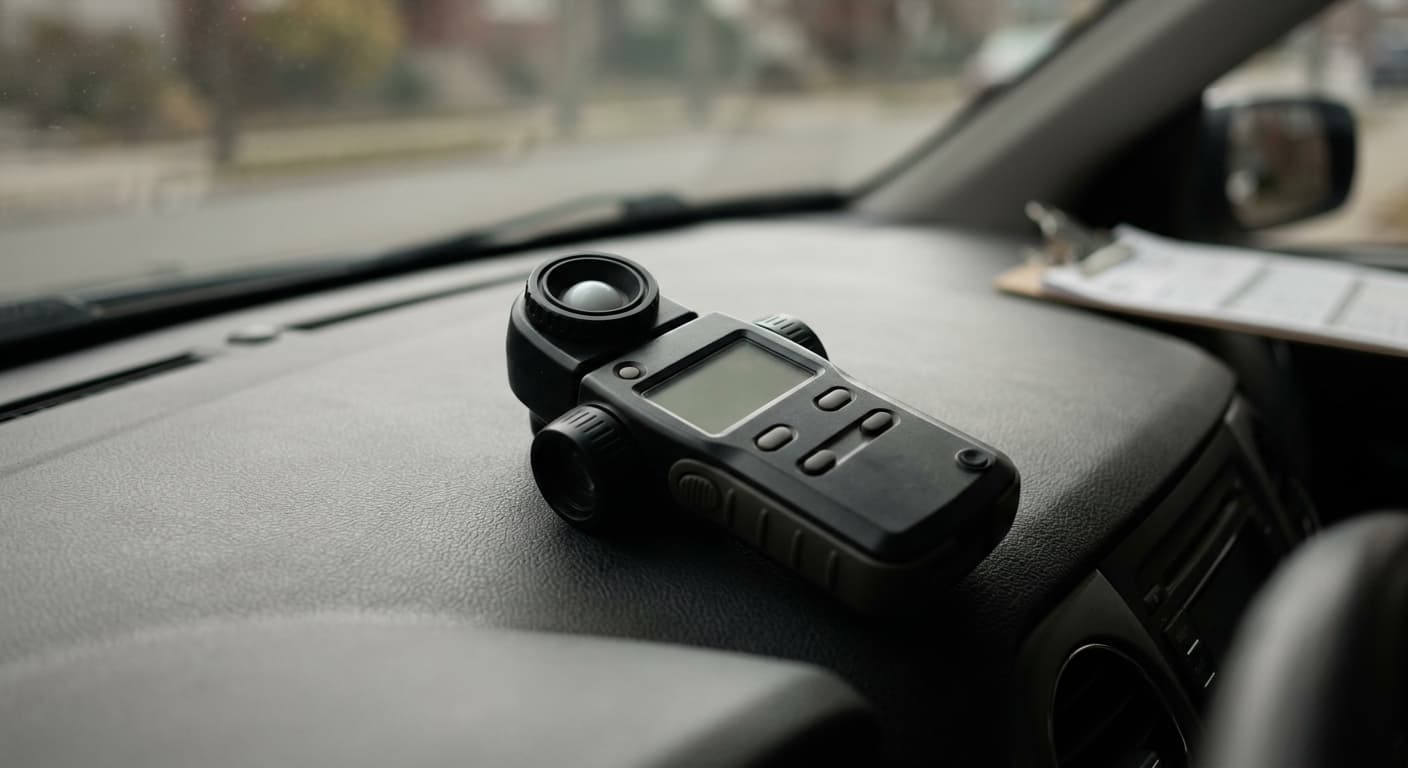
For Delaware's front side windows, the operative standard is a VLT meter reading. Since August 17, 2026 the question is not whether film is present, but whether the window still transmits 50% or more of visible light, so measurement is what establishes a violation.
For the rear and back side windows, where any darkness is permitted, there is no VLT measurement requirement from the state.
Delaware no longer requires a tint certificate or sticker. Section 4313 previously made it an offense to operate a vehicle that did not conspicuously display the film manufacturer's certificate of FMVSS 205 compliance, and SS 1 for SB 255 struck that requirement in full. Keeping the manufacturer's documentation is still sensible proof of what was installed, but it is no longer something you can be cited for lacking.
The statute sets the 50% figure without stating a measurement tolerance, so a reading close to the line comes down to local enforcement practice and the calibration of the meter used.
Penalties for illegal tint in Delaware
For drivers, a violation carries a fine of $28.75 to $100 per offense. Each non-compliant window can be treated as a separate offense, so multiple windows out of compliance at the same stop can result in multiple fines.
For installers, the penalties are significantly steeper: $100 to $500 per violation plus restitution. Delaware's statute specifically targets the commercial side of the industry, reflecting the legislature's view that professionals who apply illegal tint bear meaningful responsibility for the violation.
Delaware also provides a cure path. Under 21 Del. C. section 4315(g), where no collision has occurred, a section 4313 charge may be dismissed before trial if the defendant establishes that repairs have been made so the vehicle is in compliance. Bringing the film within the legal range promptly can therefore resolve the charge itself, not just prevent a second stop.
If you want to tint your windows in Delaware
The practical answer for most Delaware drivers is to keep front side film at 50% VLT or lighter. Ask your installer for a film rated at 50% or above, and to confirm the finished reading on the glass, since the factory glass already absorbs some light before the film goes on.
If you have a genuine medical need for reduced light, start with your doctor or optometrist. Get a signed letter of medical necessity and submit it through the Delaware DMV's online waiver process. List all vehicles you want covered, up to four. Once approved, you can go darker than the 50% floor on the front side windows and carry the documentation with you.
For the rear and back side windows, you have complete freedom. Section 4313(c)(2) permits film with a visible light transmission of 0% or greater behind the driver, and it attaches no mirror condition or other qualifier. Your installer can apply the film shade you prefer.
Using a licensed, reputable installer familiar with Delaware's rules is the best way to avoid compliance issues. Ask for the film's rated VLT in writing, since the installer, not the driver, faces the steeper penalty for applying non-compliant film.
For broader context on how Delaware's rules compare to neighboring states, see the cluster hub at Window Tint Laws by State and Delaware's Windshield Mounting Restrictions.
This article is general legal information, not legal advice. Window tint limits vary by state and change, and enforcement depends on local practice and your specific vehicle. For a definitive answer, check your state DMV or consult a local attorney.
More Delaware Laws
Frequently Asked Questions
What is the legal tint in Delaware?
Delaware permits aftermarket tint on the front side windows and side wings at a visible light transmission of 50% or greater, a standard that took effect August 17, 2026. The side windows behind the driver and the rear window may be any darkness. A medical waiver from the DMV can allow darker front tint for qualifying conditions.
Can I tint my front windows in Delaware?
Yes. Since August 17, 2026, 21 Del. C. section 4313(c)(1) permits film on the front side windows and side wings as long as it has a visible light transmission of 50% or greater. Darker film on those windows still requires a physician or optometrist medical necessity statement and a DMV-approved waiver.
How dark can my rear windows be in Delaware?
Any darkness is legal on the rear side windows and rear window in Delaware. Section 4313(c)(2) allows film with a visible light transmission of 0% or greater behind the driver, with no minimum percentage and no mirror requirement.
Can I get a medical exemption for window tint in Delaware?
Yes. Delaware offers an online medical waiver through the DMV for up to four vehicles. A physician or optometrist must provide a signed statement of medical necessity. Keep the documentation in the vehicle at all times when driving vehicles covered by the waiver.
What is the penalty for illegal tint in Delaware?
Drivers face fines of $28.75 to $100 per offense. Installers who apply illegal tint face $100 to $500 per violation plus restitution. Each non-compliant window can count as a separate offense.
Is windshield tint legal in Delaware?
Only transparent products applied above the AS-1 line are permitted on the windshield. Nothing may be applied below the AS-1 line. The strip above the AS-1 line must remain truly transparent and non-tinting.
Does Delaware require a tint sticker?
No. Delaware previously required the FMVSS 205 manufacturer certificate to be displayed in the vehicle, but SS 1 for SB 255 repealed that requirement effective August 17, 2026. Keeping the manufacturer's paperwork is still useful proof of the film's rating, but it is not something you can be cited for lacking.
Updates
Updated to reflect SS 1 for SB 255, signed August 17, 2026, which now permits tint on the front side windows and side wings at 50% VLT or greater, allows any darkness behind the driver, and repealed the tint certificate display requirement; also removed an incorrect dual outside mirrors condition that Delaware law does not impose.
Added a note that a bill relaxing Delaware's front-side-window tint ban to a 50% VLT floor has passed both chambers of the legislature and awaits the Governor's signature, while making clear the current factory-glass-only rule remains in force until it is signed.
Independently fact-checked against the cited primary sources; governing law re-checked for recent changes
Reviewed and approved by an editor
The Law Behind This Article
This article rests on the statutory provisions below, held in our own legal record and retrieved from the official source. Tap a section to read the operative text.
Delaware Code, Title 21 (Motor Vehicles), Chapter 043 (EQUIPMENT AND CONSTRUCTION OF VEHICLES)
§ 4313Safety glass — Federal safety standards applicable to windshield, front side windows and side wings; window tinting.In forcecited in 2 of our articles
(a) No person shall operate any motor vehicle on any public highway, road or street with the front windshield, the side windows to the immediate right and left of the driver and/or side wings forward of and to the left and right of the driver that do not meet the requirements of Federal Motor Vehicle Safety Standard 205 in effect at the time of its manufacture. (b) Nothing in this section shall prohibit the use of any products or materials along the top edge of the windshield so long as such products or materials are transparent and do not encroach upon the AS-1 portion of the windshield as provided by FMVSS 205 and [former] FMVSS 128. (c) No person shall operate any motor vehicle on any public highway, road or street which does not conspicuously display a certificate by the manufacturer of any “after manufacture” window tinting material which may have been installed that such window tinting material meets the requirements of FMVSS 205 in effect at the time of the vehicle’s manufacture.
Official text (excerpt) · last checked 2026-09-01 · Read the full text in our law library · Verify at delcode.delaware.gov
Cited in 13 court opinions in our collectionLatest citing opinion in our collection: 2025
Opinions citing this section in our collection:
- State of Delaware v. Dario Davis (Delaware Court of Common Pleas 2022)“…ing a Vehicle with Improper Window Tinting in violation of 21 Del. C. § 4313. Trial was held on March 24, 2022. The…”
- State v. Morris (Superior Court of Delaware 2019)“…blished Necessary Reasonable Suspicion that Morris Violated 21 Del. C. § 4313. The window tint law in Delaware is not…”
- State v. Moore (Superior Court of Delaware 2017)“…ow tint without a medical waiver constituted a violation of 21 Del. C. § 4313. At the suppression hearing, Officer Wi…”
Identified automatically from the court opinions citing this section — not a ranking of which case controls.
Also relied on in: Delaware Windshield Mounting Laws (2026 Guide)
Search our full record of US law — 2.1 million sections, every state + federal →
Sources and References
- Del. Code tit. 21, section 4313 (Delaware window tint law)(delcode.delaware.gov).gov
- SS 1 for SB 255, 153rd Gen. Assembly (signed Aug. 17, 2026; 85 Del. Laws ch. 425) amending 21 Del. C. section 4313(legis.delaware.gov)