
Colorado
Colorado Window Tint Laws (2026): Legal VLT Limits
Independently fact-checked against primary sources (last audited August 18, 2026). · Reviewed by the RecordingLaw editorial team. · Law checked current as of August 18, 2026. How we verify our legal content
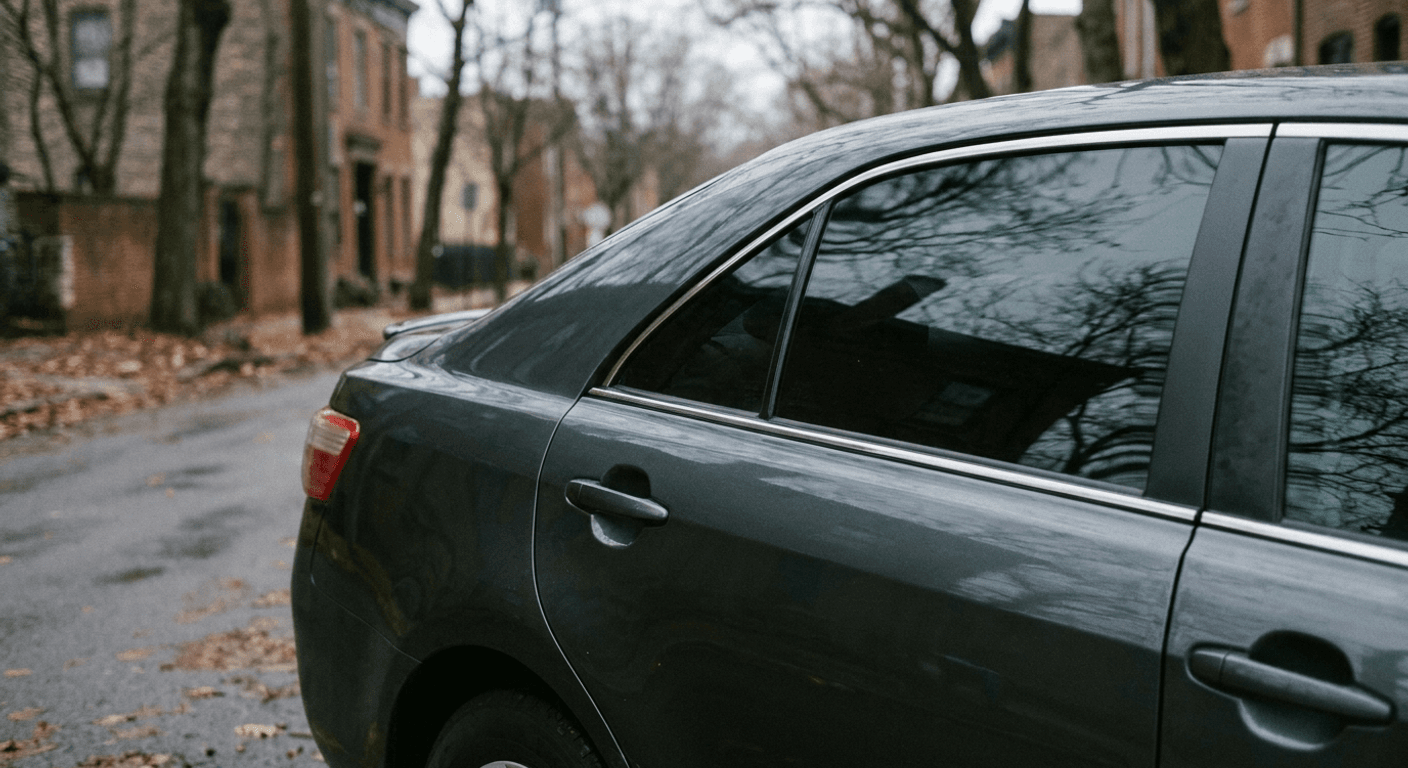
Colorado requires front side windows on a vehicle registered in Colorado to allow at least 27% visible light transmission (VLT). Back side and rear windows may be any darkness if the front side windows and windshield already allow at least 70% VLT; otherwise those rear windows must also meet the 27% minimum. Colorado has no medical exemption process.
What is the legal tint limit in Colorado?
Visible Light Transmission (VLT) is the share of visible light a window allows through. A higher VLT% is lighter (less dark); a lower VLT% is darker. Colorado's 27% VLT minimum for front side windows makes it one of the more permissive states in the country for front window darkness.
The back side and rear windows follow a conditional rule. If the vehicle's front side windows and windshield each allow at least 70% VLT, the windows behind the driver can be any darkness at all. If the front side windows or windshield do not meet 70%, then the back side and rear windows must also meet the 27% minimum. In practice, most vehicles with lightly tinted or factory-clear front windows will qualify for the any-darkness rear option.
| Window | Rule |
|---|---|
| Front side | 27% VLT minimum |
| Back side | Any darkness if front sides and windshield are 70%+ VLT; otherwise 27% minimum |
| Rear window | Any darkness if front sides and windshield are 70%+ VLT; otherwise 27% minimum |
| Windshield | 70% VLT minimum; nontransparent strip allowed on the top 4 inches only |
Colorado Revised Statutes Section 42-4-227 applies to all vehicle types equally. There is no separate standard for sedans versus SUVs, vans, or trucks on the front side windows.
Note the scope of the statute. The operative prohibition in 42-4-227(1)(a)(I) reaches a person who operates "a motor vehicle registered in Colorado," so a vehicle registered in another state falls outside this particular prohibition. Drivers of out-of-state vehicles should check the tint rules of the state where the vehicle is registered.
Film VLT versus combined (net) VLT
The VLT number on a roll of window film is the film's standalone rating, measured in a lab against plain air. That is a different number from what an enforcement officer's tint meter will read at a traffic stop.
Factory automotive glass typically transmits around 70% to 75% VLT on its own. When film is applied over the glass, light must pass through both layers, and the combined result is the product of the two values. A film rated at 30% VLT applied to factory glass that reads 75% produces a net reading of approximately 22% (0.30 x 0.75 = 0.225), which falls below Colorado's 27% front-side minimum.
For the front windows in Colorado, a safe approach is to choose a film whose standalone rating, multiplied by your factory glass reading, lands at 30% or higher combined. For typical 72% to 75% factory glass, that means selecting a standalone film rated around 40% or above. A 40% standalone film on 75% factory glass yields about 30% combined, sitting comfortably above the 27% floor.
The same logic applies to the conditional rear-window rule. Colorado asks whether the front side windows and windshield each read at least 70% VLT. That question is answered by the combined (net) reading of the glass and any film together.
Windshield tint rules in Colorado
Colorado sets a light transmittance floor for the windshield rather than banning film outright. C.R.S. 42-4-227(1)(a)(I) requires that the windshield allow at least 70% light transmittance. Subsection (1)(b) then adds a narrow carve-out: nontransparent material may be applied to the topmost portion of the windshield, provided the bottom edge of the material extends no more than 4 inches down from the top, the material is not red or amber, it does not affect the perception of primary colors or otherwise distort or obstruct vision, and it does not reflect sunlight or headlight glare into the eyes of occupants of oncoming or preceding vehicles any more than the bare windshield would.
Below that 4-inch strip, the windshield is not a no-film zone, but the 70% floor governs. A transparent film, including a clear UV-blocking or heat-rejecting film, is not prohibited on the main driving area as long as the windshield still measures at least 70% VLT with the film in place and the film is not metallic or mirrored.
Metallic or mirrored film is prohibited on every window, including the windshield strip. Any film that creates a mirror-like or highly reflective appearance violates the statute regardless of where it is placed. Red and amber colors are also specifically banned on the windshield strip.
Medical exemptions
Colorado does not offer a medical exemption for window tint. C.R.S. 42-4-227 contains no provision allowing a physician, optometrist, or state agency to authorize darker tint for medical reasons. Every vehicle registered in Colorado is subject to the same VLT minimums, regardless of the medical condition of the driver or any passenger.
The statute does carry two exceptions, but neither helps a private motorist. Section 42-4-227(1)(a)(III) lets a law enforcement vehicle run below 27% on every window except the windshield, and only for the purpose of providing a valid law enforcement service. Section 42-4-227(1)(c) preserves factory glazing that was treated in a manner approved by federal statute or regulation and was included as a component part of the vehicle at the time of manufacture.
If you have a medical condition requiring reduced UV exposure or shade, you may want to explore UV-blocking film that still meets the 27% VLT standard on the front side windows. Such films can block a high percentage of UV rays while remaining compliant with the light transmission requirement. However, Colorado offers no formal exemption pathway, and no certificate or letter from a physician creates a legal exception.
How tint is measured at a traffic stop
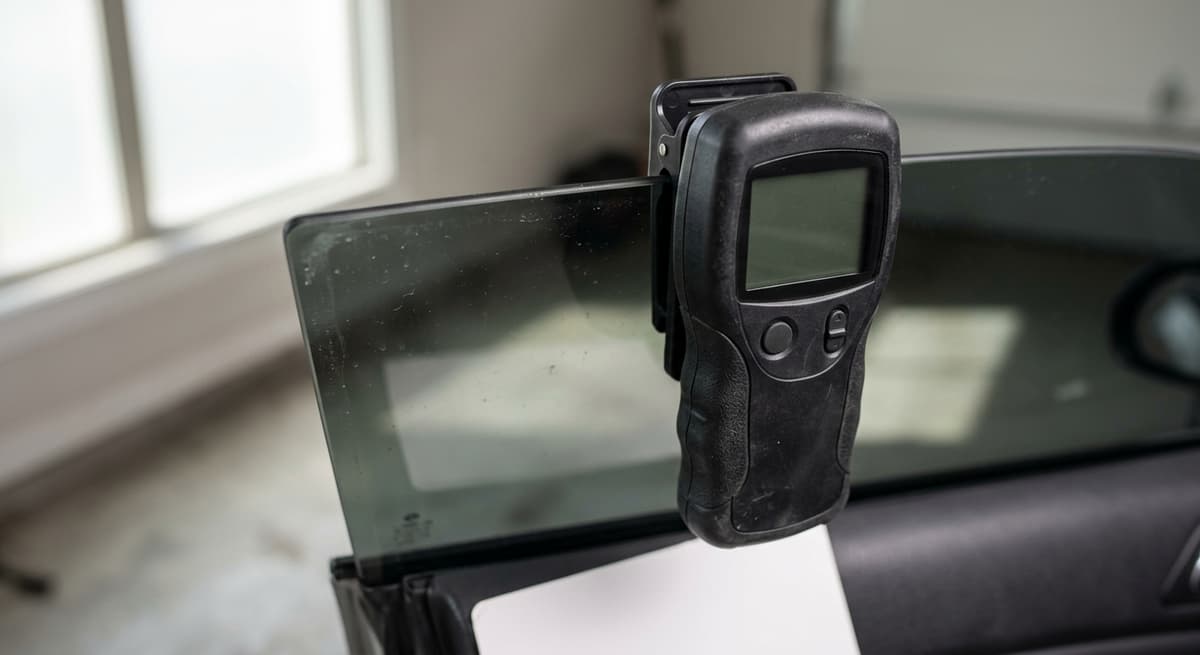
Enforcement officers use a handheld tint meter that clamps over the edge of the window. The device sends an internal beam of light through the glass and any applied film, measuring the percentage that reaches the sensor on the opposite jaw. The reading captures the combined system: factory glass plus film.

Colorado law does not specify a measurement tolerance for VLT readings. Because no tolerance is codified, the 27% figure is treated as a firm minimum for the front side windows. There is no built-in buffer in the statute, so a reading of 27% passes and a reading of 26% does not. Choosing a film and installation that produces a combined reading of 30% or higher provides a practical cushion against minor meter variation between different units.
Colorado does not require a compliance sticker or installer label under C.R.S. 42-4-227. However, keeping documentation from your installer, such as the manufacturer's specification sheet showing the film's VLT rating and the installer's combined meter reading, is useful if you are ever stopped.
Penalties for illegal tint in Colorado
Operating a vehicle with window tint that does not comply with C.R.S. 42-4-227 is a class B traffic infraction. Installing, covering, or treating a windshield or window so that it does not meet the requirements of subsection (1)(a) is a class A traffic infraction.
The fine does not change with the class. C.R.S. 42-4-1701(3)(a)(I) sets an identical range for both, a $15 minimum penalty and a $100 maximum penalty, and the penalty and surcharge schedule at 42-4-1701(4)(a)(I)(D) lists section 42-4-227 as a single flat entry of a $50 penalty plus a $16 surcharge, with no separate figure for the two classes. The difference between the classes is license points rather than money: under 42-4-1701(3)(c), the department has no authority to assess points under section 42-2-127 upon entry of judgment for a class B traffic infraction, and that restriction does not apply to class A infractions.
Unlike a correctable fix-it ticket in some states, Colorado traffic infractions related to tint may result in fines without an automatic correction pathway. Removing the non-compliant film promptly is the practical remedy. Repeat stops for the same violation will result in additional fines each time.
Choosing a compliant film and installer in Colorado
Colorado's 27% VLT minimum on front side windows is lenient compared to most states, giving drivers a real range of darkness options. A 30% or 35% combined VLT on the front side windows is both legal and noticeably dark, providing significant heat and glare reduction while staying above the legal floor.
When selecting an installer, look for these indicators:
- The shop measures your factory glass VLT before applying any film.
- They measure the combined (net) VLT after installation with a calibrated tint meter.
- They provide a written record of both readings that you can keep in the vehicle.
- They can advise on which film standalone rating is needed to achieve a target combined result for your specific vehicle's glass.
If your vehicle's front side windows and windshield already allow 70% VLT or more (true of most vehicles with factory glass), you can run any darkness you choose on the back side windows and rear window, including very dark 5% or 2% film.
Practical steps:
- Confirm the film's standalone VLT rating and your factory glass reading before purchase. Choose a combination that yields 30% or higher combined on front side windows.
- Use an installer familiar with Colorado law who measures combined VLT and provides documentation. No sticker is required, but the written reading is valuable at a traffic stop.
- Verify that your front side windows and windshield each read at least 70% combined VLT if you want to run any-darkness film on the rear windows.
- Keep the installer's meter reading and the film manufacturer's specification sheet in the vehicle.
- Remember: Colorado has no medical exemption, so there is no documentation that creates a legal exception to the 27% front window rule.
This article is general legal information, not legal advice. Window tint limits vary by state and change, and enforcement depends on local practice and your specific vehicle. For a definitive answer, check your state DMV or consult a local attorney.
More Colorado Laws
Frequently Asked Questions
What is the legal tint in Colorado?
On a vehicle registered in Colorado, front side windows must allow at least 27% combined VLT (film plus glass) and the windshield must allow at least 70%. Back side and rear windows can be any darkness if the front sides and windshield each allow 70% or more combined VLT; otherwise they must also meet 27%.
How dark can my front windows be in Colorado?
Down to 27% combined VLT, which is noticeably dark. Colorado is one of the more permissive states for front window tint. A combined reading of 30% or higher gives you a comfortable margin above the legal floor.
Is 20% tint legal in Colorado on front windows?
No. Colorado requires at least 27% combined VLT on front side windows. A 20% combined reading on the front side windows violates C.R.S. 42-4-227.
Can I get a medical exemption for window tint in Colorado?
No. Colorado Revised Statutes Section 42-4-227 does not include a medical exemption process. No physician letter or certificate creates a legal exception to the tint limits.
What is the penalty for illegal tint in Colorado?
Operating with non-compliant tint is a class B traffic infraction and installing it is a class A traffic infraction. The money is the same either way: C.R.S. 42-4-1701 sets a $15 to $100 range for both classes, and the penalty schedule lists section 42-4-227 at a $50 penalty plus a $16 surcharge. The class A label matters for license points, not for the fine, because the department cannot assess points for a class B infraction.
Is windshield tint legal in Colorado?
The windshield must allow at least 70% light transmittance. Nontransparent material is permitted only on the top 4 inches, and it may not be red or amber. Below that strip the statute sets a 70% floor rather than a total ban, so a transparent film that leaves the windshield at 70% VLT or above, and that is not metallic or mirrored, is not prohibited.
Do SUVs have different tint rules in Colorado?
No. Colorado's 27% VLT minimum on front side windows applies equally to all vehicle types. There is no separate standard for SUVs, vans, or trucks.
My film is rated 30% but the tint meter showed a lower reading. Why?
The 30% rating is the film's standalone VLT measured against plain air. When applied to your factory glass, the meter reads the combined result of both layers. Factory glass typically transmits about 70-75% VLT, so a 30% film on 72% glass yields roughly 22% combined. Choose a film whose combined result with your factory glass stays at 27% or higher.
Can I run very dark tint on my rear windows in Colorado?
Yes, if your front side windows and windshield each allow at least 70% combined VLT. In that case, there is no VLT minimum for the back side windows or rear window, so even 5% or 2% film is legal on those windows.
Updates
Corrected the penalty comparison (class A and class B traffic infractions carry the same $15 to $100 range and the same $50 penalty plus $16 surcharge for a tint violation, with license points rather than fines being the real difference), replaced the incorrect statement that no film is allowed below the windshield strip with the statute’s actual 70% light transmittance floor for the windshield, noted the law enforcement and factory glazing exceptions, and clarified that the limits apply to vehicles registered in Colorado.
Repointed the Colorado tint-statute citation to a working deep link for the specific section.
Independently fact-checked against the cited primary sources; governing law re-checked for recent changes
Governing law re-checked for recent changes
Reviewed and approved by an editor
The Law Behind This Article
This article rests on the statutory provisions below, held in our own legal record and retrieved from the official source. Tap a section to read the operative text.
Colorado Revised Statutes, Title 42: Vehicles and Traffic
§ 42-4-227Windows unobstructed - certain materials prohibited - windshield wiper requirementsIn forcecited in 4 of our articles
(1) (a) (I) Except as otherwise provided in this paragraph (a), no person shall operate a motor vehicle registered in Colorado on which any window, except the windshield, is composed of, covered by, or treated with any material or component that presents an opaque, nontransparent, or metallic or mirrored appearance in such a way that it allows less than twenty-seven percent light transmittance. The windshield shall allow at least seventy percent light transmittance. (II) Notwithstanding subparagraph (I) of this paragraph (a), the windows to the rear of the driver, including the rear window, may allow less than twenty-seven percent light transmittance if the front side windows and the windshield on such vehicles allow at least seventy percent light transmittance. (III) A law enforcement vehicle may have its windows, except the windshield, treated in such a manner so as to allow less than twenty-seven percent light transmittance only for the purpose of providing a valid law enforcement service. A law enforcement vehicle with such window treatment shall not be used for any traffic law enforcement operations, including operations concerning any offense in this article.
Official text (excerpt) · last checked 2026-09-01 · Read the full text in our law library · Verify at olls.info
Cited in 2 court opinions in our collectionLatest citing opinion in our collection: 2023
Opinions citing this section in our collection:
- United States v. Ramirez (Court of Appeals for the Tenth Circuit 2004, 86 F. App'x 384)“…w tinting did not violate Colorado's less restrictive law. Colo. Rev. Stat. Ann. § 42-4-227(1)(a) (prohibiting window treatments t…”
- Collins v. Barela (District Court, D. Colorado 2023)“…excessive tint of the automobile windows, in violation of Colo. Rev. Stat. § 42-4-227. [#62, 6-8] Based upon the excessive…”
Identified automatically from the court opinions citing this section — not a ranking of which case controls.
Also relied on in: Colorado Dashcam Laws: Legality, Mounting Rules, and Evidence Use, Colorado Windshield Mounting Laws (2026 Guide), Window Tint Laws by State (2026): Legal VLT Limits
§ 42-4-1701Traffic offenses and infractions classified - penalties - penalty and surcharge schedule - repealIn forcecited in 4 of our articles
(1) It is a traffic infraction for any person to violate any of the provisions of articles 1 to 3 of this title 42 and parts 1 to 3 and 5 to 19 of this article 4 unless such violation is, by articles 1 to 3 of this title 42 and parts 1 to 3 and 5 to 19 of this article 4 or by any other law of this state, declared to be a felony, misdemeanor, petty offense, civil infraction, or misdemeanor traffic offense. Such a traffic infraction constitutes a civil matter. (2) (a) For the purposes of this part 17, judge shall include any county court magistrate who hears traffic infraction matters, but no person charged with a traffic violation other than a traffic infraction or class 2 misdemeanor traffic offense shall be taken before a county court magistrate. (b) For the purposes of this part 17, magistrate shall include any county court judge who is acting as a county court magistrate in traffic infraction and class 2 misdemeanor traffic offense matters.
Official text (excerpt) · last checked 2026-07-29 · Read the full text in our law library · Verify at olls.info
Cited in 2 court opinions in our collectionLatest citing opinion in our collection: 2011
Opinions citing this section in our collection:
- United States v. Boyer (District Court, D. Colorado 1996, 935 F. Supp. 1138)“…ative Crimes Act (ACA). 18 U.S.C. § 13 . See, Colo.Rev.Stat. § 42-4-1701(4)(a)(l). Defendant argues that he cann…”
- Laidley v. City and County of Denver (District Court, D. Colorado 2011, 798 F. Supp. 2d 1193)“…uilty of a class 2 misdemeanor traffic offense. Pursuant to C.R.S. § 42-4-1701(3)(a)(II)(A), the penalties for a class…”
Identified automatically from the court opinions citing this section — not a ranking of which case controls.
Also relied on in: Colorado Car Seat Laws (2026): Ages, Rear Seat & the Rear-Seat Change, Colorado Open Container Law (2026): Statute and Penalty
Search our full record of US law — 2.1 million sections, every state + federal →
Sources and References
- Colorado Revised Statutes Section 42-4-227 - Motor vehicle window tinting(colorado.public.law)
- Colorado Revised Statutes 2026, Title 42 (Vehicles and Traffic): C.R.S. 42-4-227 (windows unobstructed, certain materials prohibited) and 42-4-1701 (traffic offenses and infractions classified, penalty and surcharge schedule)(olls.info)
- Colorado General Assembly, Office of Legislative Legal Services: Colorado Revised Statutes(leg.colorado.gov)