
Arkansas
Arkansas Window Tint Laws (2026): Legal VLT Limits
Independently fact-checked against primary sources (last audited August 18, 2026). · Reviewed by the RecordingLaw editorial team. · Law checked current as of August 18, 2026. How we verify our legal content
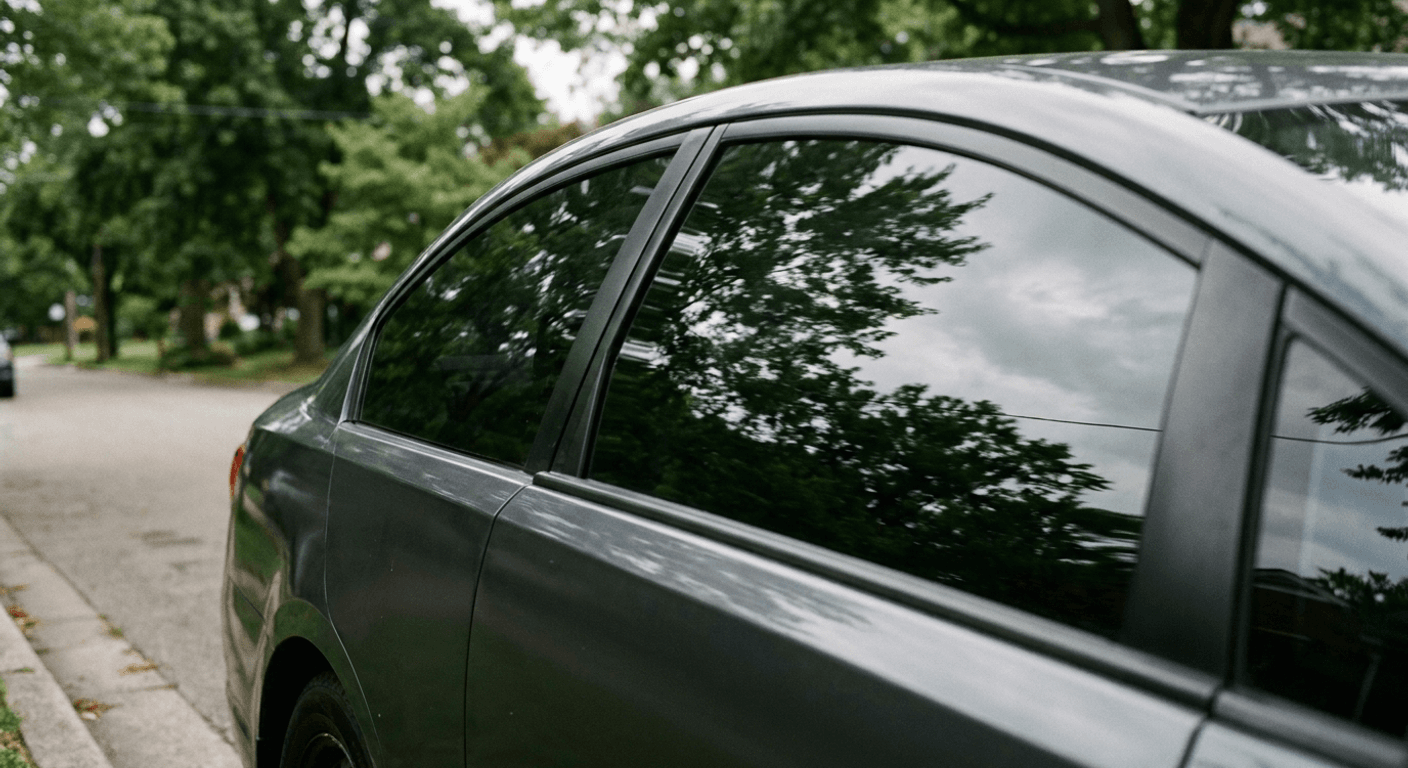
Arkansas law sets the front side window minimum at 25% VLT for all vehicles the statute covers. Rear side windows follow 25% VLT for passenger cars but allow 10% VLT for trucks, buses, motor homes, and multipurpose vehicles (SUVs/vans). The rearmost window may be 10% VLT for all vehicle types.
What is the legal tint limit in Arkansas?
Arkansas window tint law is set out in Ark. Code Ann. 27-37-306. The law draws a clear distinction between passenger cars and multipurpose vehicles (SUVs, vans, trucks, and motor homes) for the rear windows.
Understanding VLT is essential: VLT stands for Visible Light Transmission, the percentage of visible light that passes through the combined glass and film. A higher VLT percentage is a lighter, less dark tint, while a lower VLT percentage is darker. So 25% is noticeably dark, and 10% is very dark (often called "limo tint").
For front side windows, the rule is the same across the vehicle types the section covers: at least 25% VLT must pass through. This is among the more permissive front-window limits in the country. The schedule in subsection (b) is written for 1994 and later model vehicles, and subsection (h) extends the section to 1993 and older vehicles that were never tinted under the repealed 1991 acts, and to those older vehicles once ownership is transferred.
For back side windows, passenger cars must meet the same 25% VLT minimum. Trucks, buses, motor homes, and multipurpose vehicles (SUVs/vans) may go as dark as 10% VLT on the rear side windows.
The rearmost window (back glass) may be 10% VLT for all vehicle types, so sedans, pickups, and SUVs alike can have very dark rear glass.
| Window | Passenger Cars | Trucks, Buses, Motor Homes, MPVs |
|---|---|---|
| Front side windows | 25% VLT | 25% VLT |
| Back side windows | 25% VLT | 10% VLT |
| Rear (rearmost) window | 10% VLT | 10% VLT |
| Windshield | Top strip only (5 in max) | Top strip only (5 in max) |
Vehicles and drivers the table does not cover
The schedule above is not universal. Ark. Code Ann. 27-37-306 carves out four situations:
- Vehicles registered in another state. Under subsection (d), the section does not apply to motorists operating vehicles registered in other states that have enacted their own legislation regulating the shading of windshields or windows, while they are driving on Arkansas roads and highways.
- Vehicles that transport dead human bodies. Subsection (f) exempts vehicles, and the operators of vehicles, used exclusively or primarily for that purpose.
- Law enforcement windshields. Subsection (i) allows the windshield of a law enforcement vehicle to be tinted to at least 50% VLT, notwithstanding the narrow eyebrow strip everyone else is limited to.
- Chauffeur-driven sedans for hire. Subsection (j) removes them from the section entirely. Under Ark. Code Ann. 27-37-307, a sedan is a motor vehicle licensed as an automobile for hire that accommodates a minimum of three rear passengers and is chauffeur-driven, and is not a taxicab or van. Such a sedan may run at least 15% VLT on the rear passenger doors, at least 10% VLT on the rear windshield, at least 10% VLT on the windshield eyebrow, and at least 25% VLT on the front passenger doors. If it is sold to a person or entity not in the business of renting automobiles for hire and is no longer expected to be used as a sedan for hire, the owner must remove that tinting and return the vehicle to 27-37-306 compliance, unless the glass itself is tinted rather than filmed.
Windshield tint rules in Arkansas
Arkansas permits a tint strip at the top edge of the windshield only. The strip may not extend more than 5 inches down from the top center of the windshield. This narrow "eyebrow" strip is the only permissible aftermarket tint on the windshield.
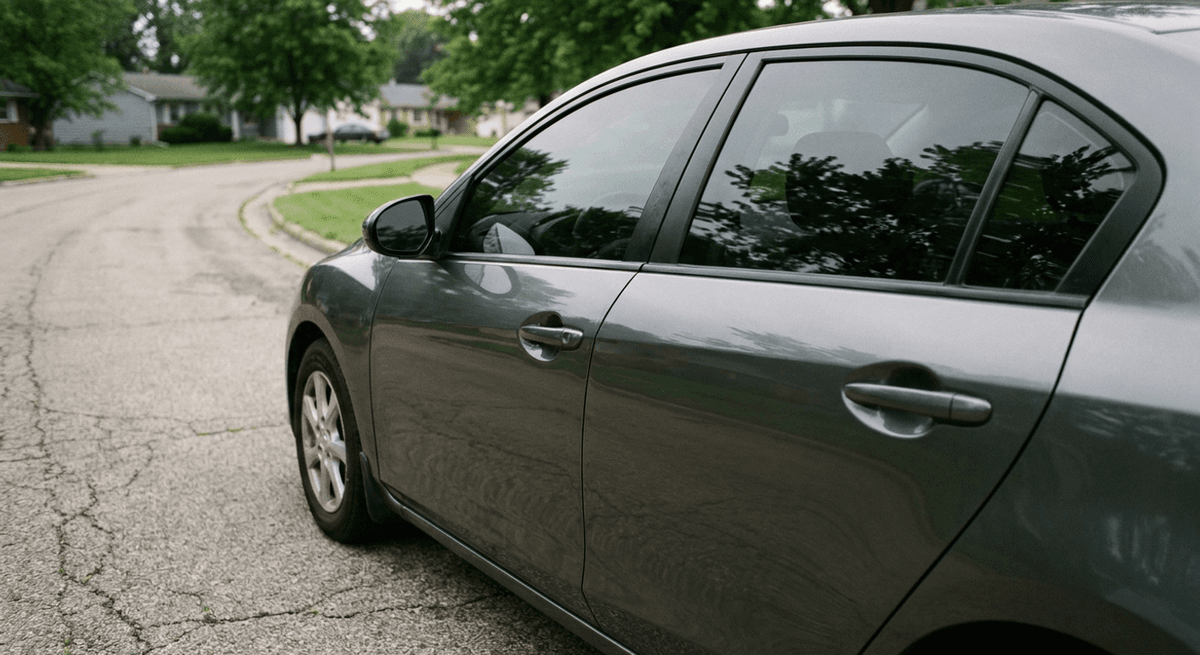
No tint is allowed in the driver's main viewing area of the windshield below that strip. Arkansas has no specific mention of the AS-1 line in its statute, but the 5-inch measurement accomplishes a similar boundary.
Arkansas does not regulate tint color or reflectivity. Section 27-37-306 sets no reflectivity standard and says nothing about metallic or mirrored films, so a film is judged on its VLT reading rather than on how it looks. What subsection (a) does prohibit is separate: it is unlawful to operate a vehicle on the public highways if after-market tinting material, together with striping material, has been applied to any window, or if letters or logos larger than one-quarter inch have been applied to the windows.
Medical exemptions
Arkansas does provide a medical exemption process under Ark. Code Ann. 27-37-306. With a physician certification documenting a qualifying medical need, a driver may use darker film than the standard limits.
Under the medical exemption, the allowable tint becomes 20% VLT on side windows, 10% VLT on the rearmost window, and 50% VLT on the front windshield. Note that the 20% side-window allowance is slightly darker than the standard 25% for passenger cars, and matches the back-seat limit already available to multipurpose vehicles. The windshield allowance goes well beyond the standard 5-inch top strip, letting a medically-exempted driver tint the full windshield down to 50% VLT.
The physician's certification must be carried in the vehicle while driving. If you are stopped, presenting the documentation to the officer is the standard way to demonstrate your legal basis for the darker tint. The certification is not open-ended: under 27-37-306(e)(5), any physician certification issued in compliance with that subsection is valid for three (3) years from the date of issue, so it has to be renewed to keep the exemption alive.
Subsection (e)(6) adds a duty when the vehicle changes hands. On transfer of a vehicle with window tinting under the medical waiver, the transferor must either disclose that the tinting is not within legal limits without a medical waiver, or remove the tinting that was based on the waiver.
How tint is measured and certified
Law enforcement in Arkansas uses a VLT meter to measure the total visible light transmission through the combined factory glass and any aftermarket film. The reading reflects what actually reaches the interior of the vehicle.
Arkansas statute does not specify a numerical measurement tolerance. In practice, officers and inspectors compare the meter reading against the applicable limit for your vehicle type and window position. Because there is no stated tolerance, it is prudent to ensure your film meets the 25% (or 10%) minimum without relying on any margin.
Arkansas does require a compliance label. The law requires a label to be attached to the front glass immediately to the operator's left, containing the installer's name and phone number and a certification that the tint complies with the statute. If you purchase a vehicle that already has tinted windows, confirm that the label is present. Its absence can itself be a basis for scrutiny.
Penalties for illegal tint in Arkansas
Non-compliant window tint is a Class B misdemeanor under Ark. Code Ann. 27-37-306. Critically, Arkansas law makes the misdemeanor applicable to both the person who installs the non-compliant tint (the installer) and the operator of the vehicle. This dual applicability is unusual: in many states only the driver faces liability, but in Arkansas the tinting shop also faces criminal exposure if it applies illegal film.

A Class B misdemeanor in Arkansas carries a maximum fine of $1,000 and up to 90 days in jail, though in practice tint violations typically result in lower fines rather than incarceration. The specific penalty imposed depends on the court. Section 27-37-306 does not set out a correctable-violation or fix-it-ticket procedure and does not create a separate first-offense disposition, so how a first citation is resolved is left to the prosecutor and the court.
If you buy a vehicle with non-compliant tint, replacing the film before you are cited is clearly the better path. The installer label requirement also creates a paper trail: if illegal tint was installed by a shop, that shop's name on the label can be referenced in any enforcement action.
If you want to tint your windows in Arkansas
Start by choosing film that meets the applicable VLT limit for each window position on your specific vehicle. For a passenger car, that means 25% VLT or higher on every side window, and 10% VLT or higher on the rear window. For a truck, van, or SUV, you have more flexibility on the rear side windows (10% VLT is legal), while the front side windows remain at 25% VLT.
Use an installer who is familiar with Arkansas law and who will provide the required compliance label, including their business name and the certification that the tint meets state standards. Confirm you receive the label at installation, and verify it is affixed in the correct position before you drive the vehicle.
Watch the two add-ons subsection (a) actually prohibits: do not let the installer pair the tint with striping material, and do not apply letters or logos larger than one-quarter inch to the windows. Arkansas sets no reflectivity or color standard, so a metallic or mirrored film is not prohibited by the tint statute on that basis alone.
If you have a qualifying medical condition, obtain physician certification before tinting your windows. Have the exemption documentation in hand so the installer applies the correct (darker) film from the start, and keep the certification in your vehicle. Diary its three-year expiry so the exemption does not lapse, and if you later transfer the vehicle, disclose the tint or remove it as subsection (e)(6) requires.
This article is general legal information, not legal advice. Window tint limits vary by state and change, and enforcement depends on local practice and your specific vehicle. For a definitive answer, check your state DMV or consult a local attorney.
Related
Arkansas drivers may also want to review Arkansas Windshield Mounting Restrictions for rules on objects attached to or near the windshield.
More Arkansas Laws
Frequently Asked Questions
What is the legal tint in Arkansas?
Arkansas requires front side windows to allow at least 25% VLT for all vehicles. Back side windows must be at least 25% VLT on passenger cars and at least 10% VLT on trucks, buses, motor homes, and multipurpose vehicles. The rearmost window allows at least 10% VLT on all vehicles.
How dark can my front windows be in Arkansas?
The darkest legal tint for front side windows in Arkansas is 25% VLT. Any film with a lower VLT (darker) on the front side windows violates Ark. Code Ann. 27-37-306.
Is 20% tint legal in Arkansas?
A 20% tint is not legal on front side windows in Arkansas, which require at least 25% VLT. On a passenger car's rear side windows, 20% is also below the 25% minimum. However, on the rearmost window of any vehicle, and on the rear side windows of trucks, SUVs, vans, and motor homes, 20% is legal since those positions allow down to 10% VLT.
Can I get a medical exemption for window tint in Arkansas?
Yes. A physician certification allows you to use 20% VLT on side windows, 10% VLT on the rearmost window, and 50% VLT on the front windshield. Carry the certification in your vehicle at all times when driving with the exemption tint. Under Ark. Code Ann. 27-37-306(e)(5), the certification is valid for three (3) years from the date of issue, so it must be renewed.
What is the penalty for illegal tint in Arkansas?
Illegal window tint in Arkansas is a Class B misdemeanor. Both the installer and the vehicle operator can be charged. A Class B misdemeanor carries up to $1,000 in fines and up to 90 days in jail, though tint offenses typically result in fines.
Is windshield tint legal in Arkansas?
Only a narrow strip at the very top of the windshield is permitted, no more than 5 inches down from the top center. No tint is allowed in the driver's main viewing area below that strip, except for drivers with a medical exemption, who may cover the full windshield with tint that allows at least 50% VLT.
Do SUVs have different tint rules in Arkansas?
Yes. Trucks, buses, motor homes, and multipurpose vehicles (including SUVs and vans) may have 10% VLT on back side windows, while passenger cars must have at least 25% VLT on those same windows. Front side windows are 25% VLT for all vehicle types. The rearmost window is 10% VLT for all types.
Updates
Corrected this page to remove a reflectivity rule that is not in current Arkansas law, added the prohibitions subsection (a) actually imposes, added the three-year expiry and transfer duty that apply to a medical tint certification, and added the four statutory exemptions the VLT table does not cover.
Repointed the Arkansas tint-statute citation to the specific section instead of the legislature's generic law portal.
Independently fact-checked against the cited primary sources; governing law re-checked for recent changes
Corrected the medical exemption description (Ark. Code Ann. 27-37-306(e)(2)) to include the windshield allowance the statute grants (50% VLT), and fixed the compliance label's required location to the front glass immediately to the operator's left as the statute specifies.
Governing law re-checked for recent changes
Reviewed and approved by an editor
The Law Behind This Article
This article rests on the statutory provisions below, held in our own legal record and retrieved from the official source. Tap a section to read the operative text.
Arkansas Code of 1987 Annotated
§ 27-37-306Light transmission levels for tinting of motor vehicle windows.In forcecited in 2 of our articles
(a) It shall be unlawful to operate a vehicle on the public highways if after-market tinting material, together with striping material, has been applied to any windows of the vehicle or if letters or logos larger than one-quarter inch (¼") have been applied to the windows of the vehicle. (b)…
Official text (excerpt) · last checked 2026-09-01 · Read the full text in our law library · Verify at arkleg.state.ar.us
Cited in 4 court opinions in our collectionLatest citing opinion in our collection: 2005
Opinions citing this section in our collection:
- Opinion No. (Arkansas Attorney General Reports 2005)“…SE With respect to your first question, it is my opinion A.C.A. § 27-37-306 (b)(1) (Supp. 2003) specifies that "eye…”
- State v. Sullivan (Supreme Court of Arkansas 2002, 348 Ark. 647)“…f which was an illegal window-tint, which is a violation of Ark.Code Ann. § 27-37-306(b)(1) (Repl.1994). That offense is not…”
Identified automatically from the court opinions citing this section — not a ranking of which case controls.
Also relied on in: Arkansas Windshield Mounting Laws (2026 Guide)
§ 27-37-307Window tinting on chauffeur-driven sedans.In forcecited in 2 of our articles
(a)(1) As used in this section, “sedan” means a motor vehicle that: (A) Has been licensed as an automobile for hire under § 27-14-601(a)(2) ; (B) Accommodates a minimum of three (3) rear passengers;…
Official text (excerpt) · last checked 2020-11-06 · Read the full text in our law library
Search our full record of US law — 2.1 million sections, every state + federal →
Sources and References
- Ark. Code Ann. 27-37-306, Arkansas Legislature - Sunscreening devices(law.justia.com)
- Act 293 of 2013 (HB1307), amending Ark. Code Ann. 27-37-306(e): medical waiver tint levels, three-year certification validity, and transfer duty(arkleg.state.ar.us)
- Act 1141 of 2011 (SB718), enacting Ark. Code Ann. 27-37-307 (window tinting on chauffeur-driven sedans) and adding 27-37-306(j)(arkleg.state.ar.us)