
North Carolina
North Carolina Squatters Rights and Adverse Possession Laws (2026)
Independently fact-checked against primary sources (last audited August 18, 2026). · Reviewed by the RecordingLaw editorial team. · Law checked current as of August 18, 2026. · 5 primary sources cited on this page. How we verify our legal content
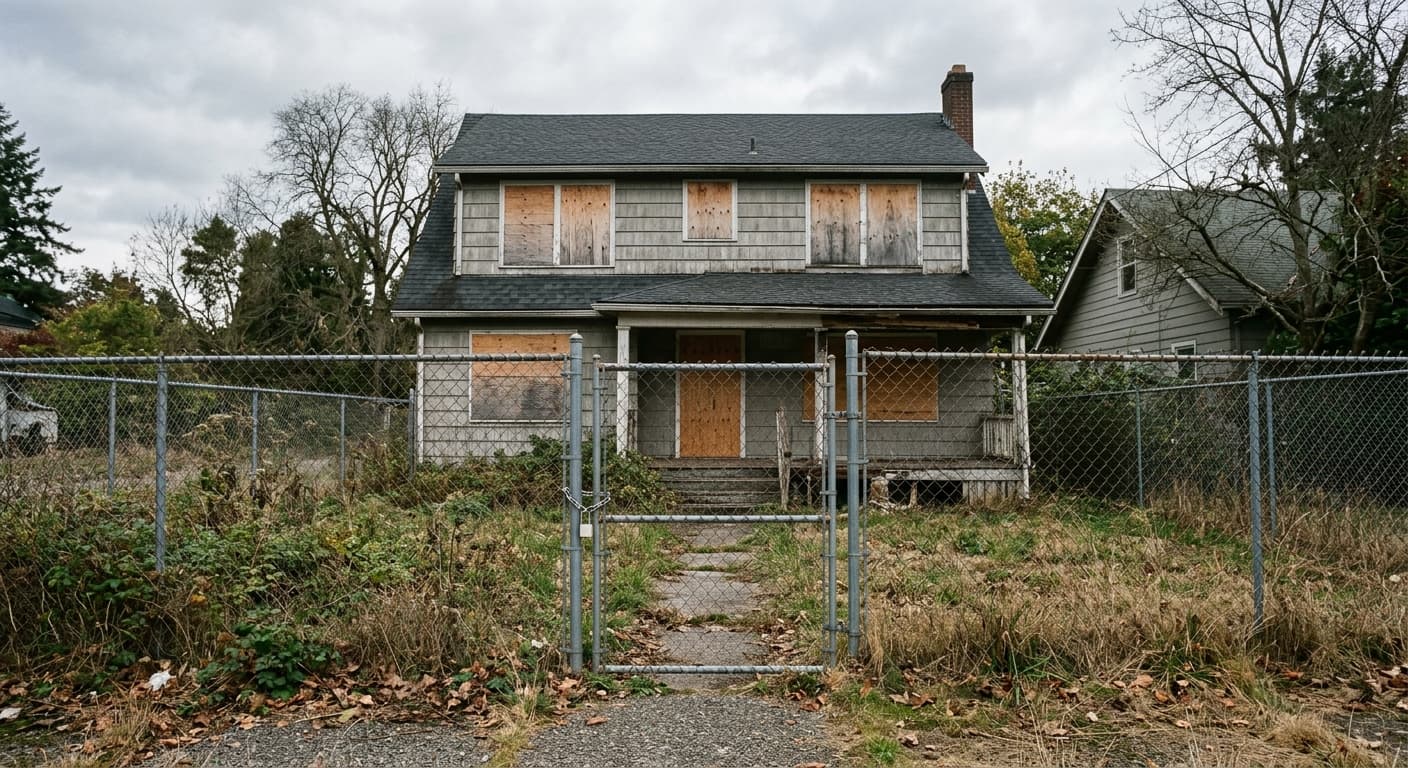
North Carolina sets a 20-year adverse possession period without color of title under N.C. Gen. Stat. § 1-40, and a 7-year period with color of title under § 1-38. Property owners may remove squatters through the expedited removal process codified at N.C. Gen. Stat. §§ 14-159.50 through 14-159.56 (enacted by Session Law 2025-88, effective December 1, 2025) or through traditional summary ejectment under Chapter 42, Article 3.
Verified as of May 2026. Adverse possession periods confirmed against N.C. Gen. Stat. §§ 1-40 and 1-38 (ncleg.gov). Removal procedures confirmed against Chapter 42, Article 3, and Chapter 14, Article 12B (§§ 14-159.50 through 14-159.56). This page is legal information, not legal advice.
Jurisdiction scope: This page covers North Carolina state law only. For a comparison of all 50 states, see the national squatters rights guide.
Adverse Possession in North Carolina: Period and Elements
North Carolina recognizes two adverse possession tracks, both codified in Chapter 1 of the General Statutes.

Twenty-year period without color of title (N.C. Gen. Stat. § 1-40)
A claimant who occupies land under known and visible lines and boundaries for 20 years, without any written instrument purporting to convey title, may bring an action to quiet title based on that possession. Section 1-40 provides that possession so held gives a title in fee to the possessor "against all persons not under disability."
That disability carve-out matters. Under N.C. Gen. Stat. § 1-17(a), a person who was under a disability when the cause of action accrued, meaning a minor, a person who is insane, or a person adjudicated incompetent, must bring an action to recover real property within three years after the disability is removed, and at no time after that. So the running of the 20-year period does not by itself extinguish the claim of an owner who was under a disability; that owner still has a three-year window once the disability ends.
Seven-year period with color of title (N.C. Gen. Stat. § 1-38)
When a claimant holds a written instrument (a deed, a court judgment, or another document) that purports to convey the land but is defective for some reason, the adverse possession period drops to 7 years. Under § 1-38, the claimant must also enter into and continue in possession of the land described in that instrument, under known and visible lines and boundaries. Section 1-38(a) uses the same disability formula as § 1-40: seven years of such possession is "a perpetual bar against all persons not under disability."
Paying property taxes listed in the claimant's own name is not a statutory requirement for either track. Section 1-38(b) does make listing and paying taxes prima facie evidence of possession under known and visible lines and boundaries, but only where two other conditions have already been satisfied:
- The boundaries are marked by distinctive markings on trees, or by visible metal or concrete boundary markers set in the boundary lines, with those markings visible to a height of 18 inches above the ground; and
- A map prepared from an actual survey by a surveyor registered under North Carolina law has been recorded in the book of maps in the register of deeds office for the county where the land sits, with the surveyor's certificate attached tying the mapped boundaries to the deed or other title instrument.
Without both the boundary markings and the recorded certified survey, paying taxes on the tract triggers no statutory presumption at all. Where all three pieces are in place, that evidence can be decisive in contested litigation.
The five elements
North Carolina courts require a claimant to prove all five elements throughout the entire statutory period:
- Actual possession. The claimant physically uses the land in the manner a reasonable owner would, such as fencing, farming, building, or maintaining it.
- Open and notorious possession. The use is visible and obvious so that a reasonable owner inspecting the property would notice it.
- Hostile possession. The claimant occupies the land without the owner's permission and under a claim of right.
- Exclusive possession. The claimant does not share possession with the general public or with the true owner.
- Continuous possession. The claimant maintains uninterrupted possession for the full statutory period. Seasonal use can qualify if it mirrors how a reasonable owner would use that type of land.
A break in any element resets the statutory clock. A property owner who discovers a squatter and grants written permission to remain on the land defeats the hostility element and restarts the period from zero.
Tacking
North Carolina allows tacking, meaning a claimant may add the adverse possession periods of prior occupants in privity with the claimant to reach the 20-year or 7-year threshold. Privity typically requires a conveyance, written or oral, between successive occupants.
How to Remove a Squatter in North Carolina
North Carolina now provides two legal pathways for removing an unauthorized occupant. Property owners must use one of these court-supervised processes. Self-help removal is prohibited.

Path 1 - Expedited Removal under N.C. Gen. Stat. §§ 14-159.50 to 14-159.56 (effective December 1, 2025)
Session Law 2025-88, now codified as Article 12B of Chapter 14 of the General Statutes, created a new expedited removal action targeted specifically at true squatters. Section 14-159.50(7) defines an "unauthorized person" as someone occupying residential property who has no legal claim to it, is not entitled to occupy it under a valid rental agreement or contract for deed, has never paid rent or any other form of payment to the owner or the owner's authorized representative in connection with the occupancy, and is not otherwise authorized to be there. The same subdivision expressly excludes a tenant who holds over after the lease term expires under G.S. 42-26.
Holdover tenants, prior renters, and anyone with a contractual claim to the property do not qualify as unauthorized persons under this statute. Property owners who misclassify a tenant as a squatter and use this process face civil exposure: § 14-159.56(a) gives a person wrongfully removed a civil action to recover possession and actual damages.
The expedited removal procedure works as follows:
- File the complaint. The property owner or an authorized representative files form AOC-CVM-407 ("Complaint In Action For Expedited Removal Of Unauthorized Persons From Residential Property") with the clerk of superior court in the county where the property is located, or with a magistrate if the clerk's office is closed. Standard complaint forms cannot be used. Section 14-159.51 lists the ten allegations the complaint must make.
- Sheriff service. The complainant provides the summons and complaint to the sheriff. Under § 14-159.52(a), the sheriff must serve them within 24 hours of receiving them for service, either personally on the occupant or by posting a copy on the front door. Note that the 24-hour clock runs from the sheriff's receipt of the papers, not from the filing of the complaint, so the time it takes to get the papers to the sheriff sits on top of that window.
- Magistrate hearing. A magistrate must hold the hearing as soon as practicable and in no event more than 48 hours after service (§ 14-159.52(a)).
- Vacate order. If the magistrate rules for the property owner, the court immediately enters a written order granting possession and setting the time to vacate, which under § 14-159.52(b) can be no more than 4 hours after the order is served on the occupant. An occupant who fails to vacate in accordance with that order commits criminal trespass under § 14-159.54.
- Appeal and bond. Either side may appeal the order to district court for a trial de novo under § 14-159.53. If the court finds for the property owner, it sets the appeal bond the occupant must post to pursue that appeal, and the bond is a minimum of $10,000, or higher if the court estimates greater rent and damages during the appeal.
Property managers and brokers must hold written authority from the owner specifically authorizing expedited removal filings, because standard property management agreements may not cover this new process.
Path 2 - Summary Ejectment under Chapter 42, Article 3
Before Session Law 2025-88 took effect, and still today for holdover tenants and former licensees, the standard removal tool is summary ejectment under N.C. Gen. Stat. Chapter 42, Article 3. The property owner files a complaint with the magistrate's court (small claims). The magistrate issues a summons, holds a hearing, and renders judgment on the day all evidence concludes.
A party who loses before the magistrate may appeal for a trial de novo before a district court judge. Under N.C. Gen. Stat. § 7A-228(a) and (b), notice of appeal may be given orally in open court when the judgment is announced or rendered; otherwise, written notice of appeal must be filed in the office of the clerk of superior court within 10 days after the judgment is rendered. In a summary ejectment case the court costs of the appeal must also be paid within 10 days after judgment, or the appeal is dismissed automatically.

Self-help is illegal in North Carolina. Under N.C. Gen. Stat. § 42-25.9, self-help removal exposes a landlord to liability toward a tenant: changing locks, removing doors, cutting off utilities, or any other act designed to force a tenant out without a court order can result in a claim for actual damages plus the tenant's right to return to the premises. A true squatter's removal is governed by the expedited-removal or summary-ejectment procedures described above, not by self-help of any kind.
Disclaimer: This page provides general legal information about North Carolina law and is not legal advice. Laws change and individual circumstances vary. Consult a lawyer licensed in North Carolina before taking action related to adverse possession or squatter removal.
Page maintained by RecordingLaw.com. Last reviewed May 2026. For the law in other states, see the national squatters rights guide.
More North Carolina Laws
Frequently Asked Questions
How long does someone have to squat in North Carolina to claim ownership?
Twenty years under N.C. Gen. Stat. § 1-40 without color of title, or 7 years under § 1-38 with color of title. The claimant must prove actual, open, notorious, hostile, exclusive, and continuous possession throughout the entire period. Both sections bar only persons not under disability, and § 1-17(a) gives an owner who was a minor, insane, or adjudicated incompetent three years after the disability is removed to sue for the property.
Does North Carolina require squatters to pay property taxes to claim adverse possession?
No. North Carolina does not make tax payment a statutory requirement for adverse possession. Section 1-38(b) does treat listing and paying taxes as prima facie evidence of possession under known and visible lines and boundaries, but only where the claimant has also marked the boundaries with distinctive markings on trees or with visible metal or concrete markers standing 18 inches above the ground, and has recorded a certified map prepared by a North Carolina registered surveyor with the register of deeds. Paying the taxes alone does not trigger the presumption.
What is the fastest way to remove a squatter in North Carolina in 2026?
For true squatters (no lease, no rent history, entered without permission), file form AOC-CVM-407 under the expedited removal article, N.C. Gen. Stat. §§ 14-159.50 through 14-159.56 (enacted by Session Law 2025-88, effective December 1, 2025). The sheriff must serve the summons and complaint within 24 hours of receiving them for service, a magistrate holds a hearing no more than 48 hours after service, and a vacate order can require the occupant to leave within 4 hours of being served with it. Because the 24-hour clock starts when the sheriff receives the papers rather than when the complaint is filed, the real-world timeline also includes however long it takes to deliver them to the sheriff.
Can a landlord change the locks to remove a squatter in North Carolina?
For a tenant, yes. N.C. Gen. Stat. § 42-25.9's self-help remedy runs to 'the tenant' by its text; changing locks, cutting utilities, or removing doors without a court order exposes the property owner to civil liability toward a tenant under that section. A parallel prohibition on self-help against a true squatter would rest on the expedited removal article (N.C. Gen. Stat. §§ 14-159.50 through 14-159.56) or common law, not on § 42-25.9's text, and a squatter should still be removed only through the expedited-removal or summary-ejectment procedures described above.
What is the difference between the expedited removal process and summary ejectment in North Carolina?
The expedited removal article, N.C. Gen. Stat. §§ 14-159.50 through 14-159.56 (Session Law 2025-88), targets true unauthorized occupants with no rental history and can produce a vacate order within days of service, with a minimum $10,000 appeal bond under § 14-159.53. Summary ejectment under Chapter 42, Article 3 applies to holdover tenants and other former occupants with a prior legal relationship to the property, and follows the standard magistrate court timeline, where notice of appeal is given orally in open court or filed in writing with the clerk of superior court within 10 days after judgment under § 7A-228.
What is color of title in North Carolina?
Color of title is a written instrument, such as a defective deed or court judgment, that purports to convey ownership of a specific parcel but is legally flawed. Holding color of title and occupying the described land for 7 years under the conditions of § 1-38 allows a claimant to bring an adverse possession action, compared to 20 years without any such document.
Does granting permission to stay defeat a squatter's adverse possession claim in North Carolina?
Yes. Permission destroys the hostility element required under both § 1-40 and § 1-38. If a property owner grants written or documented oral permission, the occupant's possession is no longer adverse and the statutory clock resets to zero.
Updates
Corrected the summary ejectment appeal deadline to 10 days under N.C. Gen. Stat. § 7A-228, corrected the statement that adverse possession runs against owners under a disability (§§ 1-40 and 1-17 provide the opposite), added the boundary-marking and recorded-survey conditions that § 1-38(b) requires before tax payment counts as prima facie evidence of possession, clarified that the expedited removal 24-hour service clock runs from the sheriff receiving the papers rather than from filing, and cited the expedited removal law by its codified sections (§§ 14-159.50 through 14-159.56) including the $10,000 minimum appeal bond.
Independently fact-checked against the cited primary sources; governing law re-checked for recent changes
Corrected two errors: N.C. Gen. Stat. § 1-38's 7-year color-of-title track does not require tax payment (only listing/paying taxes in the claimant's own name is optional supporting evidence), and § 42-25.9's self-help remedy runs to a tenant by its text, not to any residential occupant including squatters.
Governing law re-checked for recent changes
Reviewed and approved by an editor
The Law Behind This Article
This article rests on the statutory provisions below, held in our own legal record and retrieved from the official source. Tap a section to read the operative text.
North Carolina General Statutes, Chapter 1: Civil Procedure.
§ 1-40Twenty years adverse possessionIn force
No action for the recovery or possession of real property, or the issues and profits thereof, shall be maintained when the person in possession thereof, or defendant in the action, or those under whom he claims, has possessed the property under known and visible lines and boundaries adversely to all other persons for 20 years; and such possession so held gives a title in fee to the possessor, in such property, against all persons not under disability. (C.C.P., s. 23; Code, s. 144; Rev., s. 384; C.S., s. 430.)
Official text (excerpt) · last checked 2026-09-08 · Read the full text in our law library · Verify at ncleg.gov
Cited in 55 court opinions in our collectionLatest citing opinion in our collection: 2025
In the courts (editorial summary, independently checked):Dockery rejected title because the claimant did not prove known, visible boundaries throughout 20 years; a 1997 survey did not fill the gap. Jones held that acknowledged permission interrupted hostility when the possessors took no step to reassert their claim until 2004.
Opinions citing this section in our collection:
- Dockery v. Hocutt (Supreme Court of North Carolina 2003, 357 N.C. 210)✓Dockery cleared, gardened and stored items on disputed land, but could not show known and visible boundaries for the full 20 years required by § 1-40. The court held the claim legally insufficient and affirmed title in the record owners.
- Jones v. Miles (Court of Appeals of North Carolina 2008, 189 N.C. App. 289)✓The Joneses used an encroaching driveway and shrubs, but accepted the owners’ 1992 permission and did not reassert a hostile claim until fencing the tract in 2004. The court held they lacked 20 continuous hostile years under § 1-40.
- Pegg v. Jones (Court of Appeals of North Carolina 2007, 187 N.C. App. 355)✓Jones claimed land occupied by his parents under a life estate. The court upheld findings that the family lacked 20 years of hostile possession under § 1-40 and affirmed Pegg’s fee-simple title; Jones’s own adverse possession began in 1994.
Identified automatically from the court opinions citing this section — not a ranking of which case controls.
§ 1-38Seven years' possession under color of titleIn force
(a) When a person or those under whom he claims is and has been in possession of any real property, under known and visible lines and boundaries and under color of title, for seven years, no entry shall be made or action sustained against such possessor by a person having any right or title to the same, except during the seven years next after his right or title has descended or accrued, who in default of suing within that time shall be excluded from any claim thereafter made; and such possession, so held, is a perpetual bar against all persons not under disability: Provided, that commissioner's deeds in judicial sales and trustee's deeds under foreclosure shall also constitute color of title.
Official text (excerpt) · last checked 2026-07-29 · Read the full text in our law library · Verify at ncleg.gov
Cited in 58 court opinions in our collectionLatest citing opinion in our collection: 2025
Opinions citing this section in our collection:
- Eason v. Spence (Supreme Court of North Carolina 1950, 232 N.C. 579)“…color of title under the statute of limitation set forth in G.S. 1-38. We now reach this last question…”
- Scott Poultry Company v. Bryan Oil Company (Supreme Court of North Carolina 1967, 272 N.C. 16)“…actions for recovery of real estate there are two statutes, G.S. 1-38 and G.S. 1-40, which are expressly appl…”
- Foreman v. Sholl (Court of Appeals of North Carolina 1994, 113 N.C. App. 282)“…im deed dated 6 August 1981. Plaintiffs claim, pursuant to N.C. Gen. Stat. § 1-38 (1983), that they “under known and vis…”
Identified automatically from the court opinions citing this section — not a ranking of which case controls.
§ 1-17DisabilitiesIn forcecited in 3 of our articles
(a) A person entitled to commence an action who is under a disability at the time the cause of action accrued may bring his or her action within the time limited in this Subchapter, after the disability is removed, except in an action for the recovery of real property, or to make an entry or defense founded on the title to real property, or to rents and services out of the real property, when the person must commence his or her action, or make the entry, within three years next after the removal of the disability, and at no time thereafter. For the purpose of this section, a person is under a disability if the person meets one or more of the following conditions: (1) The person is within the age of 18 years. (2) The person is insane. (3) The person is incompetent as defined in G.S. 35A-1101(7) or (8). (a1) For those persons under a disability on January 1, 1976, as a result of being imprisoned on a criminal charge, or in execution under sentence for a criminal offense, the statute of limitations shall commence to run and no longer be tolled from January 1, 1976.
Official text (excerpt) · last checked 2026-07-29 · Read the full text in our law library · Verify at ncleg.gov
Cited in 63 court opinions in our collectionLatest citing opinion in our collection: 2026
Opinions citing this section in our collection:
- Shearin v. Lloyd (Supreme Court of North Carolina 1957, 246 N.C. 363)“…the removal of the disability, and at no time thereafter.” G.S. 1-17; G.S. 1-20; White v. Scott,…”
- Bryant v. Adams (Court of Appeals of North Carolina 1994, 116 N.C. App. 448)“…ility action, G.S. § 1-50(6), is tolled by the operation of G.S. § 1-17, the statutory provision which allows a…”
- King by and Through Small v. Albemarle Hospital Authority (Supreme Court of North Carolina 2018, 370 N.C. 467)“…e Court of Appeals, arguing that the plain language of N.C.G.S. § 1-17(b) tolled the statute of limitations pe…”
Identified automatically from the court opinions citing this section — not a ranking of which case controls.
Also relied on in: North Carolina Medical Records Retention Laws (2026 Guide), North Carolina Statute of Limitations: Filing Deadlines by Case Type
North Carolina General Statutes, Chapter 42: Landlord and Tenant.
§ 42-26Tenant holding over may be dispossessed in certain casesIn force
(a) Any tenant or lessee of any house or land, and the assigns under the tenant or legal representatives of such tenant or lessee, who holds over and continues in the possession of the demised premises, or any part thereof, without the permission of the landlord, and after demand made for its surrender, may be removed from such premises in the manner hereinafter prescribed in any of the following cases: (1) When a tenant in possession of real estate holds over after his term has expired. (2) When the tenant or lessee, or other person under him, has done or omitted any act by which, according to the stipulations of the lease, his estate has ceased. (3) When any tenant or lessee of lands or tenements, who is in arrear for rent or has agreed to cultivate the demised premises and to pay a part of the crop to be made thereon as rent, or who has given to the lessor a lien on such crop as a security for the rent, deserts the demised premises, and leaves them unoccupied and uncultivated. (b) An arrearage in costs owed by a tenant for water or sewer services pursuant to G.S. 62-110(g) or electric service pursuant to G.S.
Official text (excerpt) · last checked 2026-07-29 · Read the full text in our law library · Verify at ncleg.gov
Cited in 36 court opinions in our collectionLatest citing opinion in our collection: 2026
Opinions citing this section in our collection:
- Chrisalis Properties, Inc. v. Separate Quarters, Inc. (Court of Appeals of North Carolina 1990, 101 N.C. App. 81)“…ted a summary ejectment action in December 1988 pursuant to G.S. 42-26 based on defendant’s breach of a condit…”
- Twin City Apartments, Inc. v. Landrum (Court of Appeals of North Carolina 1980, 45 N.C. App. 490)“…contends that the summary ejectment procedure as set out in G.S. 42-26(1) and G.S. 42-32, is unconstitutional.…”
- Morris v. Austraw (Supreme Court of North Carolina 1967, 269 N.C. 218)“…actions between the landlord and tenant are established by G.S. 42-26. Defendants’ brief states that the firs…”
Identified automatically from the court opinions citing this section — not a ranking of which case controls.
§ 42-25.9RemediesIn force
(a) If any lessor, landlord, or agent removes or attempts to remove a tenant from a dwelling unit in any manner contrary to this Article, the tenant shall be entitled to recover possession or to terminate his lease and the lessor, landlord or agent shall be liable to the tenant for damages caused by the tenant's removal or attempted removal. Damages in any action brought by a tenant under this Article shall be limited to actual damages as in an action for trespass or conversion and shall not include punitive damages, treble damages or damages for emotional distress. (b) If any lessor, landlord, or agent seizes possession of or interferes with a tenant's access to a tenant's or household member's personal property in any manner not in accordance with G.S. 44A-2(e2), 42-25.9(d), 42-25.9(g), 42-25.9(h), or G.S.
Official text (excerpt) · last checked 2026-07-29 · Read the full text in our law library · Verify at ncleg.gov
Cited in 11 court opinions in our collectionLatest citing opinion in our collection: 2026
Opinions citing this section in our collection:
- Stanley v. Moore (Supreme Court of North Carolina 1995, 339 N.C. 717)“…reble damages in wrongful eviction actions contained in N.C.G.S. § 42-25.9(a) of the North Carolina Ejectment of R…”
- Heaton-Sides v. Snipes (Court of Appeals of North Carolina 2014, 233 N.C. App. 1)“…l conversion by defendants because defendants violated N.C.G.S. § 42-25.9(g) when they disposed of plaintiff’s p…”
- Myers v. Broome-Edwards (Court of Appeals of North Carolina 2024)“…efendants had engaged in self-help tactics in violation of N.C. Gen. Stat. §§ 42-25.9, -59.1, and 75-1.1. At trial, plaintif…”
Identified automatically from the court opinions citing this section — not a ranking of which case controls.
North Carolina General Statutes, Chapter 14: Criminal Law.
§ 14-159.50DefinitionsIn force
The following definitions apply to this Article: (1) Authorized representative. - A real estate broker or other person who has written legal authority to act on behalf of a property owner. (2) Contract for deed. - As defined in G.S. 47H-1. (3) Law enforcement agency. - A county sheriff's office, a county police department, or a municipal police department. (4) Real estate broker. - As defined in G.S. 93A-2(a). (5) Residential property. - As defined in G.S. 42A-4. (6) Tenant. - As defined in G.S. 42-59. (7) Unauthorized person. - A person or persons occupying residential property who has no legal claim to the property, is not entitled to occupy it under a valid rental agreement or contract for deed, has not paid any rent or other form of payment to the property owner or an authorized representative of the property owner in connection with the occupancy of the property, and is not otherwise authorized to occupy the property. This term does not include a tenant who holds over after the lease term has expired under G.S. 42-26.
Official text (excerpt) · last checked 2026-07-29 · Read the full text in our law library · Verify at ncleg.gov
§ 14-159.51Requirements for removal of unauthorized personsIn force
A property owner or an authorized representative of the property owner may initiate an expedited removal proceeding for the removal of an unauthorized person unlawfully occupying residential property pursuant to this Article. The complaint in the proceeding shall allege at least the following: (1) The requesting party is the property owner or the authorized representative of the property owner. (2) The property that is being unlawfully occupied is residential property or property used in connection with or appurtenant to residential property. (3) An unauthorized person has entered the property after the property owner acquired the property and is remaining or residing unlawfully on the residential property of the property owner. (4) The property was not offered or intended as an accommodation for the general public at the time the unauthorized person entered. (5) The property owner or the authorized representative of the property owner has directed the unauthorized person to leave the residential property. (6) The unauthorized person is not a tenant of the owner of the property being unlawfully occupied.
Official text (excerpt) · last checked 2026-07-29 · Read the full text in our law library · Verify at ncleg.gov
§ 14-159.52Removal of unauthorized personsIn force
(a) An expedited removal proceeding shall commence with the filing of a complaint and issuance of a summons in the county where the property is located. If the office of the clerk of the superior court is closed, the complaint shall be filed with, and the summons issued by, a magistrate. If the identity of the unauthorized person occupying the property is not known to the property owner or the authorized representative of the property owner, then the complaint and summons may properly be addressed to "John (and/or Jane) Doe and all Occupants." The complainant shall provide the summons and the complaint to the sheriff. The service of the summons and complaint for expedited removal shall be made by the sheriff on the unauthorized person personally or by posting a copy of the summons and complaint on the front door of the property and shall be made within 24 hours of the sheriff receiving the summons and complaint for service. The sheriff, upon service, shall promptly file a return. A hearing on the expedited removal shall be held before a magistrate in the county where the property is located as soon as practicable, but no more than 48 hours after such service.
Official text (excerpt) · last checked 2026-07-29 · Read the full text in our law library · Verify at ncleg.gov
§ 14-159.53AppealIn force
An unauthorized person, property owner, or authorized representative of the property owner may appeal a court order issued pursuant to G.S. 14-159.52(b) to the district court for a trial de novo. If the court finds for the property owner or the authorized representative of the property owner, the court shall determine the amount of the appeal bond that the unauthorized person shall be required to post should the unauthorized person seek to appeal the court order. The amount of the bond shall be a minimum of ten thousand dollars ($10,000), but may be set at a higher amount based on an estimate of the rent that could reasonably be charged for a valid rental of the property during the time the unauthorized person is prosecuting the appeal and reasonable damages that the property owner may suffer, including damage to property and damages arising from the inability of the property owner to reside in or rent the property during the unauthorized person's possession of the property.
Official text (excerpt) · last checked 2026-07-29 · Read the full text in our law library · Verify at ncleg.gov
§ 14-159.54Violation of court orderIn force
If the court has entered an order of removal and an unauthorized person fails to remove personal property from the residential property within the time allowed by the order, the property owner or authorized representative of the property owner may remove the personal property from the premises to or near the property line. The failure of an unauthorized person to vacate a residential property in accordance with a court order issued pursuant to G.S. 14-159.52(b) shall constitute a criminal trespass under G.S. 14-159.13(a)(1).
Official text (excerpt) · last checked 2026-07-29 · Read the full text in our law library · Verify at ncleg.gov
§ 14-159.56Remedy for wrongful removalIn force
(a) A person may bring a civil cause of action against the property owner or authorized representative for wrongful removal under this Article. A person harmed by a wrongful removal under this Article may be entitled to recover possession of the property and may recover from the property owner or authorized representative damages limited to actual damages as in an action for trespass or conversion and shall not include punitive damages, treble damages, or damages for emotional distress. (b) This Article does not limit the rights of a property owner or limit the authority of a law enforcement officer to arrest an unauthorized person for trespassing, vandalism, theft, or other crimes. (c) The remedies created by this section are supplementary to all existing common-law and statutory rights and remedies.
Official text (excerpt) · last checked 2026-07-29 · Read the full text in our law library · Verify at ncleg.gov
North Carolina General Statutes, Chapter 7A: Judicial Department.
§ 7A-228New trial before magistrate; appeal for trial de novo; how appeal perfected; oral notice; dismissalIn forcecited in 2 of our articles
(a) The chief district court judge may authorize magistrates to hear motions to set aside an order or judgment pursuant to G.S. 1A-1, Rule 60(b)(1) and order a new trial before a magistrate. The exercise of the authority of the chief district court judge in allowing magistrates to hear Rule 60(b)(1) motions shall not be construed to limit the authority of the district court to hear motions pursuant to Rule 60(b)(1) through (6) of the Rules of Civil Procedure for relief from a judgment or order entered by a magistrate and, if granted, to order a new trial before a magistrate. After final disposition before the magistrate, the sole remedy for an aggrieved party is appeal for trial de novo before a district court judge or a jury. Notice of appeal may be given orally in open court upon announcement or after a judgment is rendered. If not announced in open court, written notice of appeal must be filed in the office of the clerk of superior court within 10 days after a judgment is rendered. The appeal must be perfected in the manner set out in subsection (b).
Official text (excerpt) · last checked 2026-07-29 · Read the full text in our law library · Verify at ncleg.gov
Cited in 23 court opinions in our collectionLatest citing opinion in our collection: 2025
Opinions citing this section in our collection:
- First Union National Bank v. Richards (Court of Appeals of North Carolina 1988, 90 N.C. App. 650)“…rial de novo in the district court pursuant to G.S. 7A-228(a). If plaintiff had failed to appear a…”
- Chandak v. Electronic Interconnect Corp. (Court of Appeals of North Carolina 2001, 144 N.C. App. 258)“…urt for a trial de novo. G.S. § 7A-224 (1999); G.S. § 7A-228 (1999). The statutes create a sc…”
- Jones v. Ratley (Court of Appeals of North Carolina 2005, 168 N.C. App. 126)“…2d 25, 29 (2001) (citing N.C. Gen.Stat. § 7A-224 (1999); N.C. Gen.Stat. § 7A-228 (1999)). In explaining "the nature of t…”
Identified automatically from the court opinions citing this section — not a ranking of which case controls.
Also relied on in: North Carolina Small Claims Court: $10,000 Limit and How to File
Search our full record of US law — 2.1 million sections, every state + federal →
Sources and References
- N.C. Gen. Stat. § 1-40(ncleg.gov).gov
- N.C. Gen. Stat. § 1-38(ncleg.gov).gov
- N.C. Gen. Stat. § 42-26 - Summary Ejectment(ncleg.gov).gov
- N.C. Gen. Stat. § 42-25.9 - Self-Help Eviction Prohibition(ncleg.gov).gov
- Session Law 2025-88 - Expedited Removal of Unauthorized Persons(ncleg.gov).gov
- Squatters Beware: Navigating NC Expedited Removal Law - UNC SOG(sog.unc.edu)
- Don t Try This at Home: Self-Help Evictions - UNC SOG(civil.sog.unc.edu)
- N.C. Gen. Stat. § 1-17 - Disabilities(ncleg.gov)
- N.C. Gen. Stat. § 7A-228 - New trial before magistrate; appeal for trial de novo(ncleg.gov)
- N.C. Gen. Stat. § 14-159.50 - Expedited Removal Definitions(ncleg.gov)
- N.C. Gen. Stat. § 14-159.51 - Requirements for Removal of Unauthorized Persons(ncleg.gov)
- N.C. Gen. Stat. § 14-159.52 - Removal of Unauthorized Persons(ncleg.gov)
- N.C. Gen. Stat. § 14-159.53 - Appeal and Minimum $10,000 Bond(ncleg.gov)
- N.C. Gen. Stat. § 14-159.54 - Violation of Court Order(ncleg.gov)
- N.C. Gen. Stat. § 14-159.56 - Remedy for Wrongful Removal(ncleg.gov)