
New Jersey
New Jersey Squatters Rights and Adverse Possession Laws (2026)
Independently fact-checked against primary sources (last audited August 18, 2026). · Reviewed by the RecordingLaw editorial team. · Law checked current as of August 18, 2026. · 2 primary sources cited on this page. How we verify our legal content
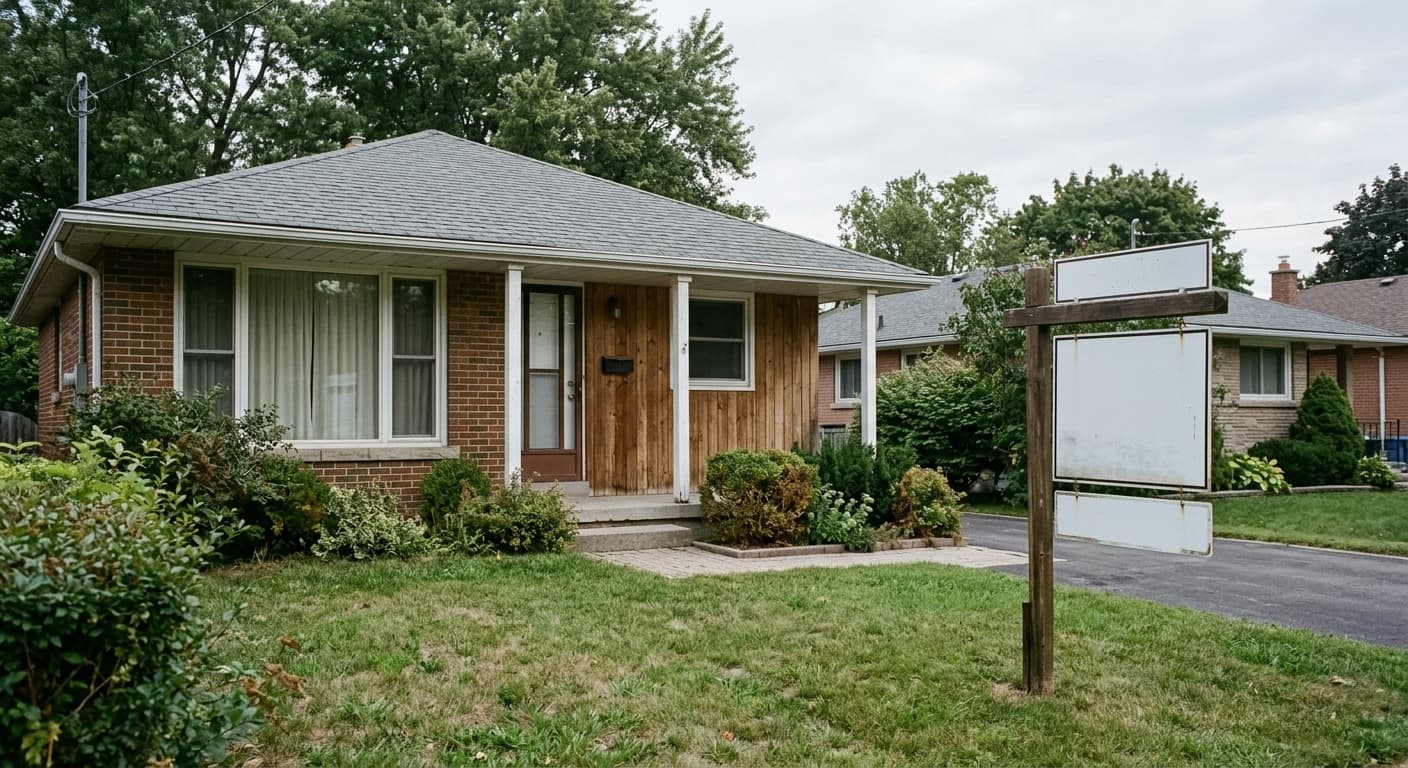
New Jersey law sets one of the longest adverse possession periods in the country: 30 years of continuous, open, exclusive, hostile, and actual possession for most land, and 60 years for woodlands or uncultivated tracts, under N.J. Stat. Ann. § 2A:14-30. Property owners remove squatters through a Superior Court ejectment action, not a standard landlord-tenant eviction.
Information last verified on May 27, 2026. This article provides general legal information, not legal advice.
Jurisdiction scope: This article covers squatters rights and adverse possession law in New Jersey only. For a comparison of all 50 states, see the national squatters rights guide.
Adverse Possession in New Jersey: The 30-Year and 60-Year Periods
New Jersey's adverse possession framework rests primarily on N.J. Stat. Ann. § 2A:14-30, which sets two distinct limitation periods based on the character of the land. For ordinary improved or agricultural land, a claimant who maintains possession for 30 years vests title against the record owner. For woodlands or uncultivated tracts, the period extends to 60 years. These are among the longest statutory periods of any state in the country; most states require between 5 and 21 years.

The Five Elements
A claimant asserting adverse possession in New Jersey must prove five elements by clear and convincing evidence throughout the full statutory period:
- Actual possession. The claimant must physically occupy and use the land in a manner consistent with how a typical owner would use that type of property.
- Open and notorious. The possession must be visible and obvious, putting a reasonable owner on notice that someone is asserting a claim.
- Exclusive. The claimant must possess the property alone, not jointly with the public or with the record owner.
- Hostile. The claimant must treat the land as their own, without the owner's permission. New Jersey applies an objective standard: the claimant's subjective intent (good faith or bad faith) is not controlling.
- Continuous. Possession must be uninterrupted for the entire statutory period (30 or 60 years, as applicable).
All five elements must be satisfied simultaneously for the full period. A gap in possession, an acknowledgment of the owner's title, or evidence of the owner's permission restarts the clock.
What the 20-Year Statutes (N.J.S.A. § 2A:14-6 and -7) Actually Do
New Jersey has two separate limitations provisions that speak to a 20-year period. Section 2A:14-6 requires a person having a right or title of entry into real estate to make that entry within 20 years. Section 2A:14-7 requires an action at law for real estate to be commenced within 20 years. It is critical to understand what those statutes do and do not do, because older New Jersey decisions read them incorrectly and the Supreme Court has since overruled that reading.
In J&M Land Co. v. First Union Nat'l Bank, 166 N.J. 493 (2001), the New Jersey Supreme Court held that title does not vest in an adverse possessor until the 30-year or 60-year period has passed, and it concluded that earlier judges who treated 20 years of adverse possession as vesting title had misinterpreted the statutes. A squatter who has been present for 20 years cannot claim ownership.
The Court also closed the gap that the 20-year statutes might otherwise appear to leave open for the occupant. Because N.J.S.A. § 2A:35-1 contains no specified time in which proceedings must be instituted under it, the Court held that its practical effect is to supersede those provisions of § 2A:14-6 and -7 that create repose for common-law ejectment actions after 20 years. A landowner may therefore bring a possessory action under § 2A:35-1 even when the wrongful possessor has been in possession for 20 years or more. The Court expressly disavowed the older Spottiswoode and Braue holdings under which a party could choose among the competing statutes. In J&M itself, the record owner successfully asserted its ownership after 39 years of adverse possession by a neighboring landowner.
No Tax-Payment Requirement
Unlike California (Cal. Civ. Proc. Code § 325), Florida (Fla. Stat. § 95.18), and several other states, New Jersey imposes no requirement that an adverse possession claimant pay property taxes during the statutory period. The absence of tax payments does not defeat a claim, though evidence that the claimant paid taxes may strengthen the "hostile" and "claim of right" elements as a practical matter.
Color of Title
New Jersey has a second vesting statute, N.J.S.A. § 2A:14-31, which is the provision a claimant holding color of title would actually plead. It vests title after 30 years of actual possession where that possession is founded on a proprietary right duly laid and recorded pursuant to law, or was obtained by a fair bona fide purchase from a person in possession who was supposed to have legal right and title to the land. The New Jersey Supreme Court has described § 2A:14-31 as the 30-year period for real estate held under a claim of title.
Section 2A:14-31 does not shorten the ordinary 30-year period, so holding a document that looks like a deed does not deliver title any faster on ordinary land. The two statutes differ in one way that can matter: unlike § 2A:14-30, the text of § 2A:14-31 reaches any real estate and contains no exception for woodlands or uncultivated tracts. Which statute controls a given claim is decided on the particular facts, including the character of the land in question.
Color of title may also affect the geographic scope of a successful claim: a claimant with color of title who actually occupies only a portion of the described parcel may assert constructive adverse possession over the entire described area, whereas a claimant without any instrument is generally limited to the land actually occupied.
When Does Title Actually Vest?
By its own terms, § 2A:14-30 provides that the required period of actual possession shall vest a full and complete right and title in the actual possessor, and J&M describes title as vesting once the 30-year or 60-year period is satisfied. What the statute does not do is change the public record. The adverse possessor must still bring a quiet title action in the Superior Court, Chancery Division, to obtain a judgment establishing that title and clearing the record. Until that judgment is entered, record title still stands in the original owner's name, and the adverse possessor will generally be unable to convey marketable title to a buyer, obtain title insurance, or borrow against the property.
How to Remove a Squatter in New Jersey
Property owners in New Jersey do not use the standard landlord-tenant eviction (summary dispossess) proceeding to remove a squatter. The summary dispossess process under N.J.S.A. § 2A:18-53 and § 2A:18-61.1 applies only to tenants: people who entered the property with the owner's permission under a rental agreement, whether written or oral. A squatter, by definition, entered without permission and without a tenancy relationship. Treating a squatter as a tenant and filing in the Special Civil Part landlord-tenant division will result in dismissal for lack of subject-matter jurisdiction.

The correct proceeding is an ejectment action filed in the Superior Court under N.J.S.A. § 2A:35-1 et seq. Ejectment is an action brought by the party with the right to possess property against the party in actual possession, and it requires the plaintiff to prove paramount title (superior ownership rights) over the defendant.
Step-by-Step Ejectment Process
- Gather title evidence. Compile the deed, tax records, and any other documents confirming the owner's record title.
- Serve written notice to vacate. While not a statutory prerequisite for ejectment in the way a notice to quit is required for summary dispossess, providing written notice creates a record and often prompts voluntary departure.
- File a complaint in Superior Court. The complaint must allege the owner's right to possession, the defendant's wrongful occupation, and demand for possession and any applicable damages.
- Serve the squatter. Service of process on the squatter is required under the New Jersey Court Rules.
- Obtain a judgment and writ of possession. If the defendant does not answer or the owner prevails at hearing, the court issues a judgment of ejectment and a writ of possession (also called a writ of restitution). New Jersey Courts Form 11947 covers the application for a writ of possession in an ejectment action.
- Enforcement by court officer. Only a Special Civil Part officer is authorized to execute the writ and physically remove the occupant. An owner who removes a squatter without a court order faces civil liability and potential criminal exposure.
No Expedited Removal Law in New Jersey
As of May 2026, New Jersey has not enacted an expedited sheriff-administered squatter-removal law of the type that Florida (Fla. Stat. § 82.036, effective July 1, 2024), Georgia (HB 1017, effective April 24, 2024), Alabama (HB 182, effective June 1, 2024), and Tennessee (Pub. Ch. 1009, effective July 1, 2024) passed during the 2024 legislative wave. Bills addressing unauthorized occupants have been introduced in the New Jersey Legislature in recent sessions, but none had been enacted into law as of the date this article was verified. Property owners in New Jersey must use the ejectment process described above; there is no shortcut to police or sheriff removal without a court order.
What About Calling the Police?
A squatter who entered a property by force or broke in may be removed by police as a criminal trespasser under N.J.S.A. § 2C:18-3, which makes unlicensed entry on premises a criminal offense. However, once a person has established a pattern of habitation on the property (for example, they have been sleeping there, have belongings on site, or have lived there for any period of time), police typically treat the matter as a civil dispute and decline to remove the occupant without a court order. Property owners should not assume police will resolve the situation; the ejectment route is the reliable path.
Self-Help Is Prohibited
New Jersey courts prohibit self-help eviction methods. Changing locks, shutting off utilities, removing the squatter's belongings, or physically confronting the occupant are all unlawful and may expose the property owner to civil liability. Only the court process and enforcement by an authorized officer provides a lawful resolution.

Not legal advice. This article provides general legal information about squatters rights and adverse possession law in New Jersey. It does not create an attorney-client relationship and is not a substitute for legal advice tailored to your situation. Property law varies based on the specific facts of your case, and the law may have changed since this article was last verified. If you are a New Jersey property owner dealing with an unauthorized occupant, or if you believe you may have an adverse possession claim, consult a licensed New Jersey real estate attorney. Information last verified on May 27, 2026.
Sources
- N.J. Stat. Ann. § 2A:14-30 (adverse possession; 30-year and 60-year periods)
- N.J.S.A. § 2A:14-31 (30 years' possession under a recorded proprietary right or bona fide purchase; no woodlands exception)
- N.J.S.A. § 2A:14-6 (20-year limit on right of entry); § 2A:14-7 (20-year limit on actions at law for real estate)
- N.J.S.A. § 2A:35-1 et seq. (ejectment)
- N.J.S.A. § 2A:18-53; § 2A:18-61.1 (summary dispossess; tenant proceedings only)
- N.J.S.A. § 2C:18-3 (criminal trespass)
- J&M Land Co. v. First Union Nat'l Bank, 166 N.J. 493 (2001) (title vests only after 30 or 60 years; § 2A:35-1 supersedes the 20-year repose of § 2A:14-6 and -7)
- New Jersey Courts, Form 11947 (Application for Writ of Possession, Ejectment Action)
- National squatters rights guide
More New Jersey Laws
Frequently Asked Questions
How long does it take to get squatters rights in New Jersey?
New Jersey requires 30 years of adverse possession for most land under N.J. Stat. Ann. § 2A:14-30. For woodlands or uncultivated tracts, the period is 60 years. These are among the longest adverse possession periods in the United States. After the full period runs, the claimant must still file a quiet title action in Superior Court to formally vest title.
Do squatters have to pay property taxes in New Jersey?
No. New Jersey does not require an adverse possession claimant to pay property taxes during the statutory period. This distinguishes New Jersey from states like California and Florida, where tax payment is a required element of an adverse possession claim.
What is the difference between N.J.S.A. § 2A:14-6 and § 2A:14-30?
Section 2A:14-6 sets a 20-year limit on making an entry into real estate, while § 2A:14-30 is the statute that actually vests title, after 30 years for most land and 60 years for woodlands or uncultivated tracts. In J&M Land Co. v. First Union Nat'l Bank, 166 N.J. 493 (2001), the New Jersey Supreme Court held that 20 years does not vest title in the occupant, and that because § 2A:35-1 contains no time limit for possessory actions, it supersedes the 20-year repose in § 2A:14-6 and -7. An occupant present for 20 but fewer than 30 years therefore neither owns the property nor is protected from a possessory action by the record owner.
Can I use the landlord-tenant eviction process to remove a squatter in New Jersey?
No. The summary dispossess process under N.J.S.A. § 2A:18-53 and § 2A:18-61.1 applies only to tenants who entered with the owner's permission. A squatter who entered without permission is not a tenant. The correct procedure is an ejectment action filed in the Superior Court under N.J.S.A. § 2A:35-1 et seq.
Does New Jersey have an expedited squatter-removal law like Florida or Georgia?
No. As of May 2026, New Jersey has not enacted an expedited sheriff-administered removal law comparable to Florida's Fla. Stat. § 82.036 or Georgia's 2024 Squatter Reform Act. Property owners in New Jersey must use the standard ejectment process in Superior Court. Police may remove someone as a criminal trespasser under N.J.S.A. § 2C:18-3 if the entry was clearly unlawful and recent, but once habitation is established, a court order is required.
What happens after 20 years of a squatter living on my New Jersey property?
Twenty years by itself does not cost you the property or your remedy. In J&M Land Co. v. First Union Nat'l Bank, 166 N.J. 493 (2001), the New Jersey Supreme Court held that N.J.S.A. § 2A:35-1 sets no time limit for a possessory action and supersedes the 20-year repose in § 2A:14-6 and -7, so a landowner may sue for possession even when the occupant has been there for 20 years or more. The record owner in J&M asserted its ownership successfully after 39 years. Title passes to the occupant only if the full 30-year period under § 2A:14-30 runs, or 60 years for woodlands and uncultivated tracts. Acting early is still strongly advised, because continued possession moves closer to the vesting period and older facts are harder to prove. Consult a New Jersey real estate attorney as soon as you discover unauthorized possession.
Can a squatter claim ownership of New Jersey woodlands or forests after 30 years?
No. For woodlands and uncultivated tracts, N.J. Stat. Ann. § 2A:14-30 extends the adverse possession period to 60 years, not 30. A claimant who has occupied woodland property for 30 years has not yet met the statutory period and cannot bring a successful quiet title action on that basis.
Updates
Corrected our explanation of what 20 years of adverse possession means in New Jersey: under J&M Land Co. v. First Union Nat'l Bank (2001) the possessory statute N.J.S.A. 2A:35-1 has no time limit and supersedes the 20-year repose, so an owner can still sue to recover the property, and we added the second vesting statute, N.J.S.A. 2A:14-31, to the color-of-title discussion.
Replaced every citation link on the New Jersey squatters rights page (which all pointed only to homepages or were missing entirely) with working, content-verified links to the actual statute sections, case opinion, and court form. The legal content itself was already accurate.
Independently fact-checked against the cited primary sources; governing law re-checked for recent changes
Governing law re-checked for recent changes
Reviewed and approved by an editor
The Law Behind This Article
This article rests on the statutory provisions below, held in our own legal record and retrieved from the official source. Tap a section to read the operative text.
New Jersey Statutes (Unannotated)
§ 2A:14-3030 years' possession of real estate, except woodlands or uncultivated tracts, and 60 years' possession of woodlands or uncultivated tracts however commenced or continuedIn force
Thirty years' actual possession of any real estate excepting woodlands or uncultivated tracts, and 60 years' actual possession of woodlands or uncultivated tracts, uninterruptedly continued by occupancy, descent, conveyance or otherwise, shall, in whatever way or manner such possession might have commenced or have been continued, vest a full and complete right and title in every actual possessor or occupier of such real estate, woodlands or uncultivated tracts, and shall be a good and sufficient bar to all claims that may be made or actions commenced by any person whatsoever for the recovery of any such real estate, woodlands or uncultivated tracts.
Official text (excerpt) · last checked 2026-09-08 · Read the full text in our law library · Verify at lis.njleg.state.nj.us
§ 2A:14-620 years; right of entry into real estateIn force
Every person having any right or title of entry into real estate shall make such entry within 20 years next after the accrual of such right or title of entry, or be barred therefrom thereafter.
Official text (excerpt) · last checked 2026-08-01 · Read the full text in our law library · Verify at lis.njleg.state.nj.us
Cited in 19 court opinions in our collectionLatest citing opinion in our collection: 2025
Opinions citing this section in our collection:
- O'KEEFFE v. Snyder (Supreme Court of New Jersey 1980, 83 N.J. 478)“…N.J.S.A. 2A:14-1 is consistent with the construction of N.J.S.A. 2A:14-6, one of the statutes pertaining to titl…”
- J & M Land Co. v. First Union National Bank (Supreme Court of New Jersey 2001, 166 N.J. 493)“…this appeal requires us to reconcile the meaning of N.J.S.A. 2A:14-6 and -7 with N.J.S.A. 2A: 1…”
- Patton v. North Jersey District Water Supply Commission (Supreme Court of New Jersey 1983, 93 N.J. 180)“…itle by adverse possession may be acquired under (1) N.J.S.A. 2A:14-6 and 2A:14-7, 1 (2)…”
Identified automatically from the court opinions citing this section — not a ranking of which case controls.
§ 2A:35-1Jurisdiction in real property possessory actionsIn force
2A:35-1. Any person claiming the right of possession of real property in the possession of another, or claiming title to such real property, shall be entitled to have his rights determined in an action in the Superior Court.
Official text (excerpt) · last checked 2026-08-01 · Read the full text in our law library · Verify at lis.njleg.state.nj.us
Cited in 37 court opinions in our collectionLatest citing opinion in our collection: 2026
Opinions citing this section in our collection:
- Housing Authority, Newark v. West (Supreme Court of New Jersey 1976, 69 N.J. 293)“…20); or he may bring an action to recover possession under N.J.S.A. 2A:35-1 et seq. ; or he may seek to remove a d…”
- J & M Land Co. v. First Union National Bank (Supreme Court of New Jersey 2001, 166 N.J. 493)“…o reconcile N.J.S.A 2A:14-6 and -7 with N.J.S.A. 2A:35-1. We hold that title does not vest in an…”
- Tahir Zaman v. Barbara Felton (072128) (Supreme Court of New Jersey 2014, 219 N.J. 199)“…in the Law Division. In the complaint, filed pursuant to N.J.S.A. 2A:35-1 to -2, Zaman sought possession of real…”
Identified automatically from the court opinions citing this section — not a ranking of which case controls.
§ 2A:18-53Removal of tenant in certain cases; jurisdictionIn force
2A:18-53. Except for residential lessees and tenants included in section 2 of this act, any lessee or tenant at will or at sufferance, or for a part of a year, or for one or more years, of any houses, buildings, lands or tenements, and the assigns, undertenants or legal representatives of such tenant or lessee, may be removed from such premises by the Superior Court, Law Division, Special Civil Part in an action in the following cases: a. Where such person holds over and continues in possession of all or any part of the demised premises after the expiration of his term, and after demand made and written notice given by the landlord or his agent, for delivery of possession thereof. The notice shall be served either personally upon the tenant or such person in possession by giving him a copy thereof or by leaving a copy of the same at his usual place of abode with a member of his family above the age of 14 years. b. Where such person shall hold over after a default in the payment of rent, pursuant to the agreement under which the premises are held. c.
Official text (excerpt) · last checked 2026-08-01 · Read the full text in our law library · Verify at lis.njleg.state.nj.us
Cited in 88 court opinions in our collectionLatest citing opinion in our collection: 2025
Opinions citing this section in our collection:
- Marini v. Ireland (Supreme Court of New Jersey 1970, 56 N.J. 130)“…rent in the Camden County District Court pursuant to N. J. S. A. 2A:18-53(b) alleging the nonpayment of the July…”
- Guttenberg Savings & Loan Ass'n v. Rivera (Supreme Court of New Jersey 1981, 85 N.J. 617)“…summary removal of residential tenants was authorized in N.J.S.A. 2A:18-53. It provided for summary actions for te…”
- Housing Authority, Newark v. West (Supreme Court of New Jersey 1976, 69 N.J. 293)“…ourt judge in the disposition of a dispossess action under N.J.S.A. 2A:18-53 et seq. Specifically, the Appellate D…”
Identified automatically from the court opinions citing this section — not a ranking of which case controls.
§ 2A:18-61.1Grounds for removal of tenants.In forcecited in 2 of our articles
2. No lessee or tenant or the assigns, under-tenants or legal representatives of such lessee or tenant may be removed by the Superior Court from any house, building, mobile home or land in a mobile home park or tenement leased for residential purposes, other than (1) owner-occupied premises with not more than two rental units or a hotel, motel or other guest house or part thereof rented to a transient guest or seasonal tenant; (2) a dwelling unit which is held in trust on behalf of a member of the immediate family of the person or persons establishing the trust, provided that the member of the immediate family on whose behalf the trust is established permanently occupies the unit; and (3) a dwelling unit which is permanently occupied by a member of the immediate family of the owner of that unit, provided, however, that exception (2) or (3) shall apply only in cases in which the member of the immediate family has a developmental disability, except upon establishment of one of the following grounds as good cause: a. The person fails to pay rent due and owing under the lease whether the same be oral or written; provided that, for the purposes of this section, any portion of rent…
Official text (excerpt) · last checked 2026-09-06 · Read the full text in our law library · Verify at lis.njleg.state.nj.us
Cited in 245 court opinions in our collectionLatest citing opinion in our collection: 2026
Opinions citing this section in our collection:
- HOUSING AUTHORITY OF TOWN OF MORRISTOWN v. Little (Supreme Court of New Jersey 1994, 135 N.J. 274)“…in favor of the Authority based on nonpayment of rent. See N.J.S.A. 2A:18-61.1.a. The court also issued a warrant of r…”
- Green v. Morgan Properties (Supreme Court of New Jersey 2013, 215 N.J. 431)“…at the eviction complaints violated the Anti-Eviction Act, N.J.S.A. 2A:18-61.1 to -61.12, because defendants misrepres…”
- Vasquez v. Glassboro Service Ass'n, Inc. (Supreme Court of New Jersey 1980, 83 N.J. 86)“…mworker is not a tenant or otherwise included within N.J.S.A. 2A:18-61.1(m) pertaining to the dispossession of c…”
Identified automatically from the court opinions citing this section — not a ranking of which case controls.
Also relied on in: New Jersey Landlord-Tenant Laws (2026): Deposits, Rent Control, and Anti-Eviction Protections
§ 2C:18-3Unlicensed entry of structures; defiant trespasser; peering into dwelling places; defenses.In force
2C:18-3. a. Unlicensed entry of structures. A person commits an offense if, knowing that he is not licensed or privileged to do so, he enters or surreptitiously remains in any research facility, structure, or separately secured or occupied portion thereof, or in or upon utility company property, or in the sterile area or operational area of an airport. An offense under this subsection is a crime of the fourth degree if it is committed in a school or on school property. The offense is a crime of the fourth degree if it is committed in a dwelling. An offense under this section is a crime of the fourth degree if it is committed in a research facility, power generation facility, waste treatment facility, public sewage facility, water treatment facility, public water facility, nuclear electric generating plant or any facility which stores, generates or handles any hazardous chemical or chemical compounds. An offense under this subsection is a crime of the fourth degree if it is committed in or upon utility company property. An offense under this subsection is a crime of the fourth degree if it is committed in the sterile area or operational area of an airport.
Official text (excerpt) · last checked 2026-08-01 · Read the full text in our law library · Verify at lis.njleg.state.nj.us
Cited in 148 court opinions in our collectionLatest citing opinion in our collection: 2026
Opinions citing this section in our collection:
- State v. Dangerfield (Supreme Court of New Jersey 2002, 171 N.J. 446)“…d that there was no basis for his arrest and search. N.J.S.A. 2C:18-3d(3). Accordingly, the court suppressed…”
- State v. David M. Gibson (070910) (Supreme Court of New Jersey 2014, 218 N.J. 277)“…ence seized during the search must be suppressed. 1. Under N.J.S.A. 2C:18-3(b), a person commits the petty disorder…”
- Kamen v. Egan (New Jersey Superior Court Appellate Division 1999, 322 N.J. Super. 222)“…17, 1997, was predicated upon an act of criminal trespass, N.J.S.A. 2C:18-3. Defendant's complaint, filed on June 1…”
Identified automatically from the court opinions citing this section — not a ranking of which case controls.
Florida Statutes
§ 82.036Limited alternative remedy to remove unauthorized persons from residential real property.In forcecited in 3 of our articles
(1) The Legislature finds that the right to exclude others from entering, and the right to direct others to immediately vacate, residential real property are the most important real property rights. The Legislature further finds that existing remedies regarding unauthorized persons who unlawfully remain on residential real property fail to adequately protect the rights of the property owner and fail to adequately discourage theft and vandalism. The intent of this section is to quickly restore possession of residential real property to the lawful owner of the property when the property is being unlawfully occupied and to thereby preserve property rights while limiting the opportunity for criminal activity. (2) A property owner or his or her authorized agent may request from the sheriff of the county in which the property is located the immediate removal of a person or persons unlawfully occupying a residential dwelling pursuant to this section if all of the following conditions are met:(a) The requesting person is the property owner or authorized agent of the property owner. (b) The real property that is being occupied includes a residential dwelling.
Official text (excerpt) · last checked 2026-07-28 · Read the full text in our law library · Verify at leg.state.fl.us
Also relied on in: Squatters Rights by State: Adverse Possession Laws (2026), Florida Squatters Rights and Adverse Possession Laws (2026)
§ 95.18Real property actions; adverse possession without color of title.In forcecited in 3 of our articles
(1) When the possessor has been in actual continued possession of real property for 7 years under a claim of title exclusive of any other right, but not founded on a written instrument, judgment, or decree, or when those under whom the possessor claims meet these criteria, the property actually possessed is held adversely if the person claiming adverse possession:(a) Paid, subject to s. 197.3335, all outstanding taxes and matured installments of special improvement liens levied against the property by the state, county, and municipality within 1 year after entering into possession; (b) Made a return, as required under subsection (3), of the property by proper legal description to the property appraiser of the county where it is located within 30 days after complying with paragraph (a); and (c) Has subsequently paid, subject to s. 197.3335, all taxes and matured installments of special improvement liens levied against the property by the state, county, and municipality for all remaining years necessary to establish a claim of adverse possession.
Official text (excerpt) · last checked 2026-09-08 · Read the full text in our law library · Verify at leg.state.fl.us
Cited in 21 court opinions in our collectionLatest citing opinion in our collection: 2018
In the courts (editorial summary, independently checked):Herron reversed summary judgment because ownership and tax-assessment disputes remained. Meyer held color of title did not extend beyond recorded boundaries, requiring the no-color statutory route. Pasekoff left dismissal of a § 95.18 count unchallenged for lack of a tax return.
Opinions citing this section in our collection:
- Herron v. Dastic (District Court of Appeal of Florida 2000, 754 So. 2d 185)✓Claimants paid taxes for seven years, but neighbors paid first in the last year. Ownership and assessment disputes required trial, and the court expressed no view on the other § 95.18 elements.
- Meyer v. Law (Supreme Court of Florida 1973, 287 So. 2d 37)✓Neighbors built across a mistakenly surveyed line. Their deed gave no color of title beyond its recorded boundaries, so they had to satisfy the tax-return, tax-payment, and possession rules for claims without color.
- Pasekoff v. Kaufman (District Court of Appeal of Florida 1981, 392 So. 2d 971)✓The trial court dismissed the estate’s § 95.18 count for lack of evidence that the property was returned for taxes. That ruling was conceded and not challenged on appeal.
Identified automatically from the court opinions citing this section — not a ranking of which case controls.
Search our full record of US law — 2.1 million sections, every state + federal →
Sources and References
- N.J. Stat. Ann. § 2A:14-30(law.justia.com)
- N.J.S.A. § 2A:14-6(law.justia.com)
- J&M Land Co. v. First Union Nat'l Bank, 166 N.J. 493 (2001)(courtlistener.com)
- N.J.S.A. § 2A:35-1 et seq.(law.justia.com)
- N.J.S.A. § 2A:18-53; § 2A:18-61.1(law.justia.com)
- N.J.S.A. § 2C:18-3(law.justia.com)
- New Jersey Courts Form 11947 (Application for Writ of Possession, Ejectment Action)(njcourts.gov).gov
- New Jersey Courts, Self-Help Landlord-Tenant Resources(njcourts.gov).gov
- N.J.S.A. § 2A:14-31 (30 years' actual possession of any real estate under claim or color of title)(lis.njleg.state.nj.us)
- N.J.S.A. § 2A:14-7 (20 years; real actions)(lis.njleg.state.nj.us)