
Hawaii
Hawaii Squatters Rights and Adverse Possession Laws (2026)
Independently fact-checked against primary sources (last audited August 18, 2026). · Reviewed by the RecordingLaw editorial team. · Law checked current as of August 18, 2026. · 5 primary sources cited on this page. How we verify our legal content
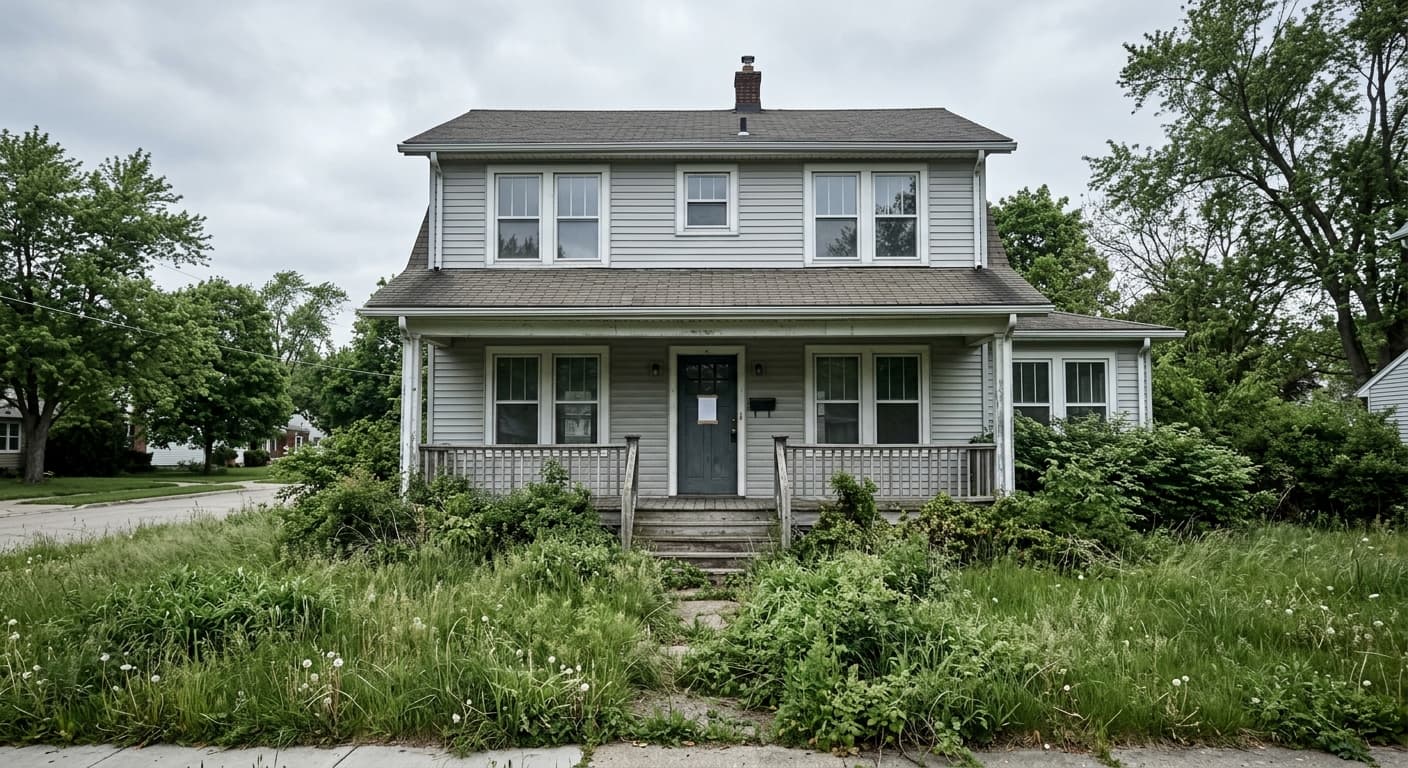
Hawaii imposes one of the longest adverse possession periods in the United States: 20 years of continuous occupation under Haw. Rev. Stat. § 657-31. The state also layers on statutory limits that make a successful adverse possession claim exceptionally difficult, and adverse possession is barred outright against land registered in the Land Court. Removal of an unauthorized occupant runs through the courts, either as summary possession under Haw. Rev. Stat. ch. 666 or as an ejectment action, which a district court may hear under Haw. Rev. Stat. § 604-6 when title is not in question.
Information last verified on May 27, 2026. This article provides general legal information, not legal advice.
Jurisdiction scope: This article covers Hawaii state law on squatters rights and adverse possession. For a comparison of all 50 states, see the national squatters rights guide.
Adverse Possession in Hawaii: Period and Strict Limits
Under Haw. Rev. Stat. § 657-31, no action for the recovery of real property may be maintained unless it is brought within 20 years after the right to bring the action first accrued. A squatter who satisfies that 20-year period and meets the five traditional elements can petition the court for title through a quiet title action under Haw. Rev. Stat. § 669-1.

The five elements a claimant must prove are:
- Actual possession - the claimant physically uses and occupies the land.
- Open and notorious - possession is visible and obvious to the owner.
- Hostile - the claimant occupies without the owner's permission.
- Exclusive - the claimant does not share possession with the owner or the general public.
- Continuous - possession runs uninterrupted for the full 20-year period.
Hawaii does not require payment of property taxes as part of the adverse possession test, distinguishing it from states such as California, which impose a tax-payment element.
Hawaii's statutory limits. Haw. Rev. Stat. § 669-1 governs quiet title actions and imposes restrictions that go beyond the bare 20-year clock, and the restrictions differ sharply by parcel size. For a parcel larger than five acres, § 669-1(b) allows a claim only if the 20-year adverse possession period was already complete before November 7, 1978, a cutoff that in practice forecloses new adverse possession claims to any parcel over five acres going forward. For a parcel of five acres or less, § 669-1(c) allows a claimant to assert an adverse possession claim no more than once in 20 years, and § 669-1(b) separately requires any person claiming title by adverse possession to show good faith, defined as a reasonable belief in an interest in title based on inheritance, a written instrument of conveyance, or the judgment of a court of competent jurisdiction. An action under § 669-1(a) or (b) is brought in the circuit court of the circuit where the property is situated. These layers mean that even a claimant who can demonstrate 20 years of physical occupation may fail the quiet title petition if the statutory requirements are not also satisfied, and a claim to a large parcel may be foreclosed entirely regardless of how long the occupation has continued.
Registered land cannot be taken by adverse possession. Hawaii maintains a Land Court title registration system under Haw. Rev. Stat. ch. 501, and § 501-87 provides that no title, right, or interest in, to, or across registered land in derogation of that of the registered owner may be acquired by prescription or adverse possession. Where the parcel is registered land, the 20-year clock, the acreage rules, and the good-faith test never come into play, because the claim is barred at the threshold. A property owner or occupant should confirm whether a parcel is registered (Land Court) or recorded in the Bureau of Conveyances regular system before assessing any adverse possession question.

Because of these overlapping restrictions, Hawaii adverse possession claims succeed far less frequently than in states that only require satisfying the five elements and the limitations period.
How to Remove a Squatter in Hawaii
Property owners in Hawaii must use legal process to remove a squatter. Self-help removal, including changing locks, removing belongings, or cutting off utilities, is prohibited and can expose the property owner to civil liability.

Which process applies depends on whether the occupant was ever a tenant. Summary possession under Haw. Rev. Stat. ch. 666 is the fast route, but read § 666-1 closely: it applies where a lessee or tenant, or a person holding under the lessee or tenant, holds possession without right after the tenancy has terminated, either by passage of time, by forfeiture under the conditions or covenants in a lease, or, for a tenant by parol, by a notice to quit of at least ten days. By its terms it does not reach a true squatter who never had any landlord-tenant relationship with the owner. Against that occupant, the removal vehicle is an ejectment action, and Haw. Rev. Stat. § 604-6 expressly permits a district court to take jurisdiction in ejectment where the title to real estate does not come in question at trial, to give judgment for the plaintiff, and to issue a writ of possession.
Summary possession steps for a holdover tenant. Where the occupant is a former tenant or someone holding under one, summary possession is filed in the district court of the circuit where the property is located, under Haw. Rev. Stat. § 666-6. The general steps are:
- Serve the required notice. Under § 666-1, a tenancy by parol is terminated for these purposes by a notice to quit of at least ten days; a written lease is governed by its own termination and forfeiture terms. Residential tenancies also carry notice requirements under the Residential Landlord-Tenant Code.
- File a complaint for summary possession in the district court of the applicable circuit.
- Serve the summons and complaint on the occupant.
- Attend the hearing. The district court typically schedules the matter within days to weeks after filing.
- Obtain a writ of possession if the court rules in the property owner's favor. The writ authorizes the sheriff or police to physically remove the occupant.
Ejectment where there was never a tenancy, or where title is disputed. For an occupant who never held a tenancy, ejectment is the action that fits, and § 604-6 lets a district court hear it and issue a writ of possession so long as title does not come into question. If the occupant asserts a colorable claim to title, the case belongs in circuit court, which is also where a quiet title action under § 669-1 is filed.
2024-2025 expedited squatter-removal legislation. As of the date this article was verified (May 27, 2026), Hawaii has not enacted a stand-alone expedited squatter-removal statute comparable to laws passed in Florida (2024) or Georgia (2024). The Hawaii Legislature considered landlord-tenant and housing bills during the 2024 and 2025 sessions, and Act 278, signed July 2, 2025 and in effect from February 5, 2026 through February 4, 2028, requires a landlord to give ten days' written notice and to participate in pre-filing mediation if the tenant requests it before filing an eviction suit for nonpayment of rent alone. Act 278 addresses residential nonpayment-of-rent evictions; it does not create a separate fast-track process for removing trespassers or squatters who have no lease. Property owners should confirm the current status of any pending legislation with the Hawaii State Judiciary or a Hawaii-licensed attorney.
Watch out: Removing a squatter without a court order, even if they have no valid lease, can expose you to claims for wrongful eviction or trespass to chattels under Hawaii law. Always obtain a writ of possession before physically removing anyone.
Legal disclaimer: This article presents general legal information about Hawaii squatters rights and adverse possession laws as of May 27, 2026. It is not legal advice and does not create an attorney-client relationship. Laws change, and individual circumstances vary. Consult a lawyer licensed in Hawaii for advice about your specific situation.
National squatters rights guide
Last updated: May 27, 2026.
Statutes cited reflect their in-force version as of May 27, 2026.
More Hawaii Laws
Frequently Asked Questions
How long does a squatter need to stay in Hawaii to claim adverse possession?
A squatter must maintain actual, open, notorious, hostile, exclusive, and continuous possession for 20 years. This period is set by Haw. Rev. Stat. § 657-31. There is no shorter period available under color of title in Hawaii; the 20-year requirement applies uniformly. If the parcel is registered Land Court land, Haw. Rev. Stat. § 501-87 bars the claim no matter how long the occupation lasts.
Does Hawaii require a squatter to pay property taxes to claim adverse possession?
No. Hawaii does not require payment of property taxes as an element of adverse possession. A claimant must satisfy the five traditional elements and the 20-year period under § 657-31, but tax payment is not among them.
Can a squatter use adverse possession more than once against the same owner?
Not quite. Under Haw. Rev. Stat. § 669-1(c), an action to claim property of five acres or less on the basis of adverse possession may be asserted in good faith by any person not more than once in 20 years. It caps how often that claimant may bring such a claim; it is not limited to repeat claims against the same owner or the same parcel. The good-faith standard itself is defined in § 669-1(b), which requires any person claiming title by adverse possession to show a reasonable belief in an interest in title based on inheritance, a written instrument of conveyance, or the judgment of a court of competent jurisdiction. For a parcel larger than five acres, § 669-1(b) requires the 20-year adverse possession period to have already been complete before November 7, 1978, a cutoff that forecloses new claims to larger parcels today.
Can someone adversely possess Land Court registered property in Hawaii?
No. Haw. Rev. Stat. § 501-87 provides that no title, right, or interest in, to, or across registered land in derogation of the registered owner's title may be acquired by prescription or adverse possession. For a parcel registered in the Land Court, the acreage rules, the 20-year period, and the good-faith test in § 669-1 never come into play, because the claim is barred at the outset.
What court handles squatter removal in Hawaii?
It depends on the occupant and on whether title is disputed. Summary possession under Haw. Rev. Stat. ch. 666 is filed in the district court of the circuit where the property is located under § 666-6, but § 666-1 is written for a lessee or tenant, or a person holding under one, who stays past the end of the tenancy. Against an occupant who was never a tenant, the action is ejectment, and Haw. Rev. Stat. § 604-6 permits a district court to hear ejectment and issue a writ of possession where title to the real estate does not come in question at trial. If the occupant raises a colorable claim to title, the matter belongs in circuit court, which is also where a quiet title action under § 669-1 is filed.
Is self-help eviction legal in Hawaii?
No. Hawaii law prohibits self-help eviction. A property owner cannot physically remove an occupant, change locks, remove belongings, or shut off utilities to force someone out without first obtaining a writ of possession from the court. Doing so can result in civil liability.
Did Hawaii pass a new squatter-removal law in 2024 or 2025?
As of May 27, 2026, Hawaii has not enacted a stand-alone expedited squatter-removal statute. Act 278, signed July 2, 2025 and in effect from February 5, 2026 through February 4, 2028, requires a landlord to give ten days' written notice and to participate in pre-filing mediation at the tenant's request before filing an eviction suit for nonpayment of rent alone, but it does not establish a fast-track removal process for squatters or trespassers with no rental agreement. Property owners should monitor the Hawaii Legislature and Hawaii State Judiciary websites for updates.
What is the difference between a squatter and a trespasser in Hawaii?
A trespasser enters property without permission and without any intent to stay. A squatter occupies property without permission but does so continuously and openly, potentially building toward an adverse possession claim over time. The distinction that drives procedure, though, is whether the occupant ever held a tenancy: summary possession under Haw. Rev. Stat. ch. 666 is written for a holdover lessee or tenant, while an occupant who never had a rental agreement is removed through ejectment, which a district court may hear under § 604-6 where title is not in question.
Updates
Corrected which Hawaii removal statute reaches which occupant, since summary possession under chapter 666 applies to holdover tenants while an occupant who was never a tenant is removed by ejectment that a district court may hear under section 604-6, and added the section 501-87 bar on adverse possession of Land Court registered land.
Fixed five dead citation links (three statute URLs on capitol.hawaii.gov, the Hawaii Constitution link, and a courts.state.hi.us link) and added Hawaii's November 7, 1978 cutoff for adverse-possession claims to parcels over five acres plus the good-faith-title requirement for smaller parcels, both previously missing from the page.
Independently fact-checked against the cited primary sources; governing law re-checked for recent changes
Corrected the description of the once-every-20-years limit in Haw. Rev. Stat. § 669-1(c): it caps how often a claimant may bring an adverse possession action on a parcel of five acres or less, not a same-owner restriction.
Governing law re-checked for recent changes
Reviewed and approved by an editor
The Law Behind This Article
This article rests on the statutory provisions below, held in our own legal record and retrieved from the official source. Tap a section to read the operative text.
Hawaii Revised Statutes, Chapter 669: QUIETING TITLE
§ 669-1Object of actionIn force
(a) Action may be brought by any person against another person who claims, or who may claim adversely to the plaintiff, an estate or interest in real property, for the purpose of determining the adverse claim. (b) Action for the purpose of establishing title to a parcel of real property of five acres or less may be brought by any person who has been in adverse possession of the real property for not less than twenty years. Action for the purpose of establishing title to a parcel of real property of greater than five acres may be brought by any person who had been in adverse possession of the real property for not less than twenty years prior to November 7, 1978, or for not less than earlier applicable time periods of adverse possession. For purposes of this section, any person claiming title by adverse possession shall show that such person acted in good faith. Good faith means that, under all the facts and circumstances, a reasonable person would believe that the person has an interest in title to the lands in question and such belief is based on inheritance, a written instrument of conveyance, or the judgment of a court of competent jurisdiction.
Official text (excerpt) · last checked 2026-09-08 · Read the full text in our law library · Verify at capitol.hawaii.gov
Cited in 36 court opinions in our collectionLatest citing opinion in our collection: 2025
In the courts (editorial summary, independently checked):Keamo allowed heirship and related quiet-title issues in one proceeding. Lambert held an unrecorded deed could support statutory good faith. Bremer required a title-seeking counterclaim to follow quiet-title procedure.
Opinions citing this section in our collection:
- In Re the Determination & Declaration of the Heirs of Keamo (Hawaii Intermediate Court of Appeals 1982, 3 Haw. App. 360)✓The circuit court could determine heirs and resolve the related quiet-title claim in one proceeding.
- Lambert v. Waha (Hawaii Supreme Court 2016, 137 Haw. 423)✓One cotenant lacked 20 years, but another could show statutory good faith through an unrecorded quitclaim deed; recording was not required.
- Bremer v. Weeks (Hawaii Supreme Court 2004, 104 Haw. 43)✓A counterclaim seeking title relief had to satisfy quiet-title procedure even though it arose within another property action.
Identified automatically from the court opinions citing this section — not a ranking of which case controls.
Hawaii Revised Statutes, Chapter 657: LIMITATION OF ACTIONS
§ 657-31Twenty yearsIn force
No person shall commence an action to recover possession of any lands, or make any entry thereon, unless within twenty years after the right to bring the action first accrued. [L 1870, c 22, §1; am L 1898, c 19, §1; RL 1925, §2657; RL 1935, §3928; RL 1945, §10439; RL 1955, §241-30; HRS §657-31; am L 1973, c 26, §4]
Official text (excerpt) · last checked 2026-07-30 · Read the full text in our law library · Verify at capitol.hawaii.gov
Cited in 26 court opinions in our collectionLatest citing opinion in our collection: 2026
Opinions citing this section in our collection:
- Gold Coast Neighborhood Association v. State. (Hawaii Supreme Court 2017, 140 Haw. 437)“…uch longer’ than the twenty year prescriptive period under HRS § 657-31,” relying on this court’s decision in…”
- Campbell v. Hipawai Corp. (Hawaii Intermediate Court of Appeals 1982, 3 Haw. App. 11)“…aim of adverse possession set forth under the provisions of HRS §§ 657-31 1 and 669-1. 2…”
- Malulani Group, Ltd. v. Kaupo Ranch, Ltd. (Hawaii Intermediate Court of Appeals 2014, 133 Haw. 425)“…on the additional basis that the statute of limitations in HRS § 657-31 barred Malulani’s claims; 4) finding th…”
Identified automatically from the court opinions citing this section — not a ranking of which case controls.
Hawaii Revised Statutes, Chapter 501: 501 Land Court Registration
§ 501-87No adverse possession or prescriptionIn force
No title, right, or interest in, to, or across registered land in derogation of that of the registered owner shall be acquired by prescription or adverse possession; provided that this section shall not prejudice any adverse claim, as against any person registered as first owner of land with a possessory title only, in respect of length of possession of any other person, who was in possession of the land at the time when the registration of the first owner took place. Land registered pursuant to this chapter is not subject to surrender under section 264-1. [L 1903, c 56, §46; am L 1921, c 135, §1; RL 1925, §3236; RL 1935, §5046; RL 1945, §12646; am L 1949, c 64, §1; RL 1955, §342-47; HRS §501-87]
Official text (excerpt) · last checked 2026-07-30 · Read the full text in our law library · Verify at capitol.hawaii.gov
Cited in 5 court opinions in our collectionLatest citing opinion in our collection: 2021
Opinions citing this section in our collection:
- Gold Coast Neighborhood Association v. State. (Hawaii Supreme Court 2017, 140 Haw. 437)“…which were properties registered in land court. See HRS § 501-87 (2006) (providing 14…”
- City and County of Honolulu v. Bennett (Hawaii Supreme Court 1976, 57 Haw. 195)“…flatly banned adverse possession against registered land. HRS § 501-87, derived from S.L.H. 1903, c. 56.…”
- Application of Banning (Hawaii Supreme Court 1992, 73 Haw. 297)“…enty years. Further, this interpretation is consistent with HRS § 501-87. Under HRS § 501-87, once the title to…”
Identified automatically from the court opinions citing this section — not a ranking of which case controls.
Hawaii Revised Statutes, Chapter 666: LANDLORD AND TENANT
§ 666-1Summary possession on termination or forfeiture of leaseIn force
Whenever any lessee or tenant of any lands or tenements, or any person holding under the lessee or tenant, holds possession of lands or tenements without right, after the termination of the tenancy, either by passage of time or by reason of any forfeiture, under the conditions or covenants in a lease, or, if a tenant by parol, by a notice to quit of at least ten days, the person entitled to the premises may be restored to the possession thereof in [the] manner hereinafter provided. [CC 1859, §939; am L 1864, p 14; RL 1925, §2778; RL 1935, §4013; RL 1945, §10401; RL 1955, §240-1; HRS §666-1; am L 1972, c 90, §8(a)]
Official text (excerpt) · last checked 2026-07-30 · Read the full text in our law library · Verify at capitol.hawaii.gov
Cited in 14 court opinions in our collectionLatest citing opinion in our collection: 2026
Opinions citing this section in our collection:
- Lum v. Sun (Hawaii Supreme Court 1989, 70 Haw. 288)“…nt to the summary proceeding provided in HRS chapter 666].” HRS § 666-1. The proceeding must be brought and pro…”
- Watson v. Brown (Hawaii Supreme Court 1984, 67 Haw. 252)“…decided under the precur *256 sor statute to HRS § 666-1. HRS § 666-1 has changed little since i…”
- Kiehm v. Adams (Hawaii Supreme Court 2006, 109 Haw. 296)“…2002; (2) Kiehm was entitled to evict and eject Adams under HRS § 666-1 (1993) 9 as a trespasser; (3) Adams’ c…”
Identified automatically from the court opinions citing this section — not a ranking of which case controls.
§ 666-6Summary possession proceedings; venueIn force
In the case of summary possession proceedings, the person entitled to the possession of the premises shall bring and prosecute the person's action in the district court of the circuit wherein the lands and premises in question are situated. [CC 1859, §940; am L 1905, c 95, §1; RL 1925, §2779; RL 1935, §4014; RL 1945, §10405; RL 1955, §240-6; HRS §666-6; am L 1972, c 90, §8(c); gen ch 1985]
Official text (excerpt) · last checked 2026-07-30 · Read the full text in our law library · Verify at capitol.hawaii.gov
Cited in 9 court opinions in our collectionLatest citing opinion in our collection: 2023
Opinions citing this section in our collection:
- Lum v. Sun (Hawaii Supreme Court 1989, 70 Haw. 288)“…t wherein the lands and premises in question are situated.” HRS § 666-6. And any action prosecuted in a distric…”
- Kimball v. Lincoln (Hawaii Supreme Court 1991, 72 Haw. 117)“…actions lies in the district court, not the circuit court. HRS § 666-6. 3. Appellant had no right to a…”
- Queen Emma Foundation v. Tingco (Hawaii Supreme Court 1992, 74 Haw. 294)“…sion may only be adjudicated in district court, pursuant to HRS § 666-6. 13 This is because such a…”
Identified automatically from the court opinions citing this section — not a ranking of which case controls.
Hawaii Revised Statutes, Chapter 604: DISTRICT COURTS
§ 604-6Ejectment proceedingsIn force
Nothing in section 604-5 shall preclude a district court from taking jurisdiction in ejectment proceedings where the title to real estate does not come in question at the trial of the action. If the defendant is defaulted or if on the trial it is proved that the plaintiff is entitled to the possession of the premises, the court shall give judgment for the plaintiff and shall issue a writ of possession. The rules of court shall govern the stay of a writ of possession. [L 1949, c 315, §1; RL 1955, §216-5; HRS §604-6; am L 1970, c 188, §14; am L 1971, c 144, §2]
Official text (excerpt) · last checked 2026-07-30 · Read the full text in our law library · Verify at capitol.hawaii.gov
Cited in 7 court opinions in our collectionLatest citing opinion in our collection: 2026
Opinions citing this section in our collection:
- Maukele v. Maukele (Hawaii Intermediate Court of Appeals 2022, 150 Haw. 465)“…does not come in question at the trial of the action." HRS § 604-6 (2016). In other words, the $40,000…”
- U.S. Bank National Ass'n v. Castro (Hawaii Supreme Court 2013, 131 Haw. 28)“…013 WL 1091714 , at *3. . See supra note 8. . HRS § 604-6 (1993), governing ejectment proceedings…”
- Kelepolo v. Fernandez . Application for Writ of Certiorari or in the alternative Petition for Writ of Mandamus, filed 09/05/2018. (Hawaii Supreme Court 2020, 148 Haw. 182)“…estate comes in question . . . .” HRS § 604-5(d); see also HRS § 604-6 (1993) (“Nothing in section 604-5 shall…”
Identified automatically from the court opinions citing this section — not a ranking of which case controls.
Search our full record of US law — 2.1 million sections, every state + federal →
Sources and References
- Haw. Rev. Stat. § 657-31, Limitation of Actions for Recovery of Real Property(capitol.hawaii.gov).gov
- Haw. Rev. Stat. § 669-1, Quiet Title Actions(capitol.hawaii.gov).gov
- Haw. Rev. Stat. ch. 666, Summary Possession(capitol.hawaii.gov).gov
- Hawaii Constitution, art. XVI(lrb.hawaii.gov).gov
- Hawaii State Judiciary, Landlord-Tenant Self-Help Resources(courts.state.hi.us).gov
- Hawaii Act 278 (2025), Pre-Filing Eviction Mediation Program(courts.state.hi.us)
- Haw. Rev. Stat. § 666-1, Summary Possession on Termination or Forfeiture of Lease(capitol.hawaii.gov)
- Haw. Rev. Stat. § 666-6, Summary Possession Proceedings; Venue(capitol.hawaii.gov)
- Haw. Rev. Stat. § 604-6, Ejectment Proceedings in District Court(capitol.hawaii.gov)
- Haw. Rev. Stat. § 501-87, No Adverse Possession or Prescription Against Registered Land(capitol.hawaii.gov)
- Hawaii State Judiciary, Act 278 (Relating to Eviction Mediation) Frequently Asked Questions(courts.state.hi.us)