
Wisconsin
Wisconsin Police Body Camera Laws: Wis. Stat. 165.87
Independently fact-checked against primary sources (last audited August 20, 2026). · Reviewed by the RecordingLaw editorial team. · Law checked current as of August 20, 2026. · 3 primary sources cited on this page. How we verify our legal content
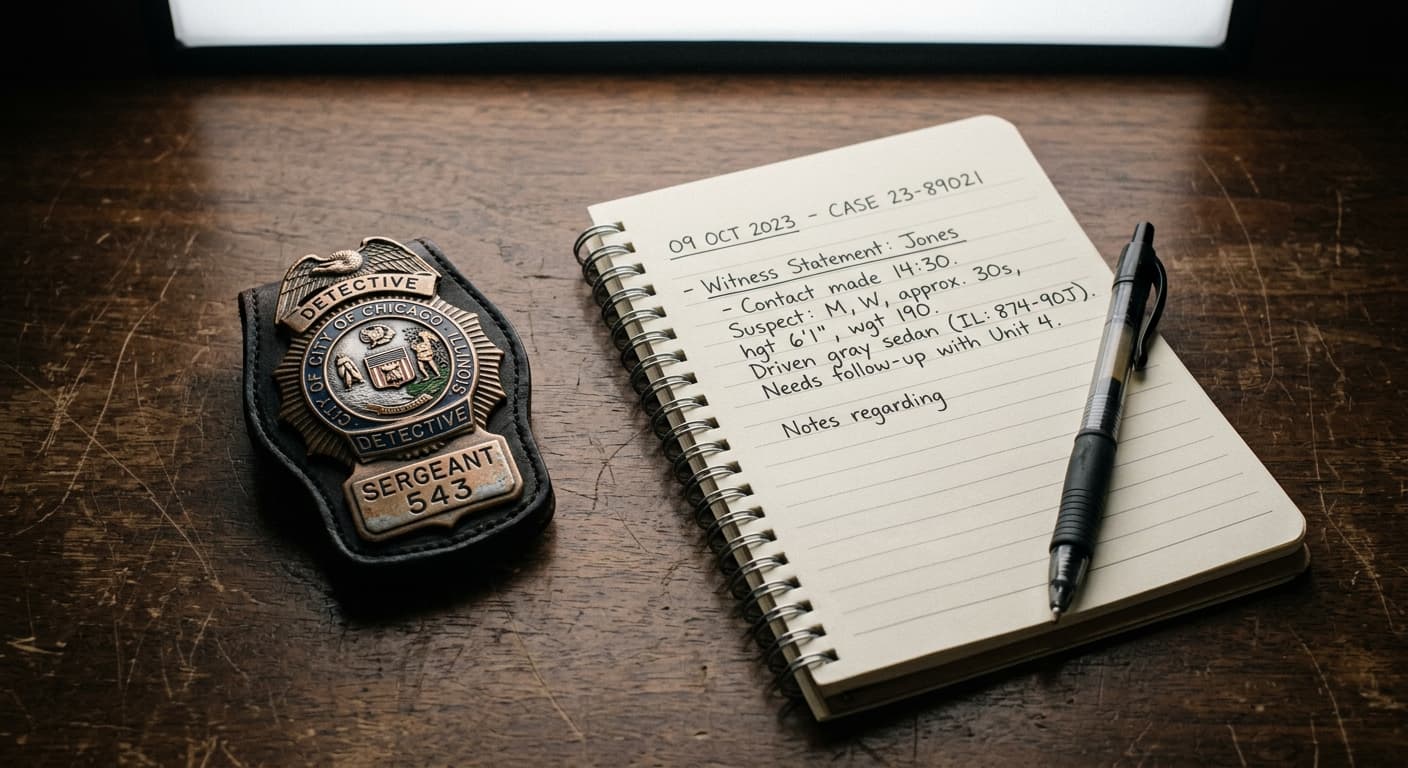
Wisconsin does not require police departments to use body cameras, but Wis. Stat. § 165.87 sets rules for any agency that does, including a 120-day retention floor and, since 2024, fees a requester may owe before receiving footage.
This guide is part of our Police Bodycam Laws by State series.
Jurisdiction scope: This article addresses Wisconsin law governing police body cameras: the Wis. Stat. § 165.87 policy and retention framework, the open-records access rules in § 19.35, and the fee and penalty provisions 2023 Wisconsin Act 253 added in 2024. It does not address a civilian's right to record law enforcement, which is covered separately in our guide to recording laws.
Does Wisconsin require police to wear body cameras?
No statute in Wisconsin requires a law enforcement agency to issue body cameras to its officers. Adoption is a local decision made by each police department, sheriff's office, or the Wisconsin State Patrol. Once an agency decides to use cameras, though, it is not operating in a vacuum. Wis. Stat. § 165.87, created by 2019 Wisconsin Act 108 and signed by Governor Tony Evers on February 28, 2020, effective March 1, 2020, and later amended by 2021 Wisconsin Act 240, requires that agency to adopt a written policy covering which officers wear cameras, when recording is required, and how data is stored, and to train every officer and staff member who uses, maintains, or releases the footage. The statute does not tell an agency whether to buy cameras in the first place; it regulates the agency once it does, and agencies must periodically review their own compliance with both the statute and their internal policy.

How long must Wisconsin agencies keep bodycam footage?
Wisconsin sets a tiered retention floor rather than a single fixed number. Under § 165.87(2)(a), all data recorded by a body camera worn by a law enforcement officer must be retained for a minimum of 120 days from the date of recording. That floor rises automatically for higher-stakes footage: recordings documenting a death, a physical injury, a custodial arrest, a search conducted during an authorized temporary questioning, or an officer's use of force must be retained until the investigation, case, or complaint reaches final disposition, including any appeal. A law enforcement officer or agency, a board of police and fire commissioners, a prosecutor, a defendant, or a court can also direct an agency in writing to preserve a recording with evidentiary value in a prosecution beyond the standard period, provided the request is made within 120 days of the recording, and data used in a proceeding cannot be destroyed until that proceeding, including appeals, concludes.
Is Wisconsin bodycam footage a public record?
Generally yes, subject to a privacy-balancing analysis Wisconsin applies to other sensitive open records. Body camera data is subject to Wisconsin's Public Records Law, Wis. Stat. § 19.35, and § 165.87(3) directs the custodial agency, meaning the recording agency itself and not any other authority, to apply that law's presumption of access while weighing specific privacy interests. Footage of a victim of a sensitive or violent crime, of a minor, or of someone in a place where they had a reasonable expectation of privacy carries a presumption favoring redaction: an agency may pixelate or otherwise obscure that person's face and identifying details unless the public interest in unredacted access is great enough to outweigh the privacy interest. A requester who disputes an agency's redaction decision or denial can pursue the remedies available under § 19.37, including a mandamus action in circuit court.
What does Wisconsin's 2024 body camera fee law change?
2023 Wisconsin Act 253, signed March 29, 2024, added new financial conditions to Wisconsin body camera requests by amending § 19.35(3) to create par. (h). Two changes matter most for a requester. First, an agency may now charge for the actual, necessary, and direct cost of redacting, pixelating, or otherwise editing video or audio before release, a fee category Wisconsin's open records law had not previously allowed for any type of record. Second, an individual requester can escape that fee by certifying in writing that the footage will not be used for financial gain, and § 19.35(3)(h)3.a. attaches a flat $10,000 forfeiture to each false certification.
Read that penalty precisely, because it is often described more broadly than the statute is written. The forfeiture reaches only an individual who provides a false certification. A requester who simply declines to certify commits no violation and owes no forfeiture: declining means only that the fee exemption does not apply, so the agency may charge the redaction fee under subd. 2. The statute also provides that an award of damages in a civil action does not count as financial gain.
Four further limits in par. (h) change the practical answer more often than the certification does:
- No fee at all for officer-involved shooting footage. Under subd. 5., an authority may not impose the redaction fee when the event in the requested records is a shooting involving a law enforcement officer.
- No fee for people connected to the incident. Under subd. 4., the fee cannot be charged to an individual directly involved in the recorded event, that individual's attorney or other authorized representative, or that individual's parent or guardian if the individual is under 18. No financial-gain certification is required from them.
- The certification exemption is capped at 10 requests. Under subd. 3.b., the no-fee path is available only if the same requester has not made more than 10 requests to that authority for audio or video records during the calendar year, counting the current request but excluding requests covered by subd. 4. or 5. An honest certifier can still be charged on the eleventh request.
- Rate and estimate limits. Subd. 6. requires any staff-time charge to be based on the pay rate of the authority's lowest paid employee capable of performing the task, and subd. 7. requires the authority to give the requester a written estimate of the fee before filling the request.
The Wisconsin Freedom of Information Council, the Wisconsin Newspaper Association, and the ACLU of Wisconsin opposed the bill, and the ACLU warned it could let agencies release only footage favorable to police while pricing watchdogs out of the footage they need to check that account. In one concrete illustration, the University of Wisconsin-Madison Police Department charged a Tone Madison freelance reporter redaction fees, and threatened a $10,000 forfeiture for false financial-gain certification, after a May 2024 records request for body camera footage of the department's May 1, 2024 shutdown of a student protest encampment, invoking the new law's fee authority.
| Question | Wisconsin rule |
|---|---|
| Statewide camera mandate | No |
| Governing statute | Wis. Stat. § 165.87 (created by 2019 Wisconsin Act 108; amended by 2021 Wisconsin Act 240) |
| Standard retention floor | 120 days from recording (§ 165.87(2)(a)) |
| Extended retention trigger | Death, injury, custodial arrest, or use of force: kept until final disposition |
| Public access | Wis. Stat. § 19.35, with privacy-balancing redaction under § 165.87(3) |
| Redaction fees and financial-gain penalty | Allowed since 2023 Wisconsin Act 253 (signed March 29, 2024); $10,000 forfeiture only for a false financial-gain certification |
| When no redaction fee may be charged | Officer-involved shooting footage (§ 19.35(3)(h)5.); requests by the person involved, their attorney or authorized representative, or a minor's parent or guardian (subd. 4.); a truthful non-financial-gain certification, up to 10 requests per authority per calendar year (subd. 3.) |
Why Wisconsin added redaction fees and a financial-gain rule
Supporters of Act 253 pointed to the cost and staff time agencies spend blurring faces, license plates, and other identifying details before releasing video, particularly for requesters who republish raw footage for profit rather than for accountability reporting. Wisconsin law enforcement groups backed the change, arguing departments should not have to absorb redaction costs for commercial users of their footage. Transparency advocates countered that the same fee structure falls on local journalists and civil liberties groups doing accountability reporting, not just for-profit video aggregators, and that a flat $10,000 forfeiture for a false certification creates a chilling effect disproportionate to the conduct it targets. Both sides agree the law changed the economics of requesting Wisconsin bodycam video for the first time since § 165.87 took effect in 2020.
Is it illegal to record police in Wisconsin?
That is a separate question from the one this page addresses. Wisconsin generally recognizes a person's right to record an on-duty officer performing public duties in a public place. For a full explanation of that right and how it differs from the rules on police-generated bodycam footage discussed here, see Is It Illegal to Record Someone?
More Wisconsin Laws
Frequently Asked Questions
Does Wisconsin require police to wear body cameras?
No. Wisconsin has no statewide mandate. Once an agency chooses to use cameras, Wis. Stat. § 165.87 governs its policy, training, and retention obligations.
How long must Wisconsin police keep bodycam video?
At least 120 days from the date of recording under § 165.87(2)(a). Footage tied to a death, injury, custodial arrest, or use of force must be kept until the case reaches final disposition.
Can the public get a copy of Wisconsin bodycam footage?
Generally yes, under the state's open records law, Wis. Stat. § 19.35, though § 165.87(3) allows redaction to protect minors, sensitive-crime victims, and people recorded in a private place.
What is Wisconsin's 2024 body camera fee law?
2023 Wisconsin Act 253, signed March 29, 2024, amended § 19.35(3) by creating par. (h). It lets agencies charge for the actual cost of redacting footage and imposes a $10,000 forfeiture on a requester who falsely certifies the footage will not be used for financial gain. Several categories of request, including footage of an officer-involved shooting, cannot be charged the fee at all.
Can I be fined for requesting Wisconsin bodycam footage?
Only if you falsely certify that you will not use the footage for financial gain. The $10,000 forfeiture under § 19.35(3)(h)3.a. applies to a false certification and nothing else. Declining to certify is not a violation and carries no penalty; it means only that the agency may charge you the redaction fee.
Are people involved in the incident exempt from Wisconsin's bodycam fees?
Yes. Under § 19.35(3)(h)4. an authority may not impose the redaction fee on an individual directly involved in the recorded event, that individual's attorney or other authorized representative, or that individual's parent or guardian if the individual is under 18. They do not need to file a financial-gain certification at all.
Can Wisconsin charge a redaction fee for police shooting video?
No. Under § 19.35(3)(h)5. an authority may not impose the redaction fee when the event in the requested records is a shooting involving a law enforcement officer.
How many free bodycam requests can I make in Wisconsin?
The financial-gain certification waives the redaction fee only while you have not made more than 10 requests for audio or video records to that same authority in the calendar year, under § 19.35(3)(h)3.b. Requests covered by the officer-involved-shooting or directly-involved-person exceptions do not count toward that total.
Is it illegal to record on-duty police in Wisconsin?
No, recording an on-duty officer performing public duties in a public place is generally protected. That is a separate question from public access to police-recorded bodycam footage covered on this page.
Updates
Corrected the Act 253 fee section: the $10,000 forfeiture applies only to a false financial-gain certification, not to declining to certify, and added the statute's limits on when no redaction fee may be charged, including officer-involved shooting footage and the 10-request cap on the certification exemption.
Fixed a misdated anecdote: the University of Wisconsin-Madison Police Department's redaction-fee episode involving a Tone Madison reporter occurred in May-June 2024 (tied to a May 1, 2024 protest-encampment shutdown), not 2025 as the page previously stated.
Independently fact-checked against the cited primary sources; governing law re-checked for recent changes
Corrected who can direct extended retention of Wisconsin bodycam footage under Wis. Stat. section 165.87(2)(c): the statute names a closed list (a law enforcement officer or agency, a board of police and fire commissioners, a prosecutor, a defendant, or a court), not a general 'person with a legitimate interest.'
Governing law re-checked for recent changes
Reviewed and approved by an editor
The Law Behind This Article
This article rests on the statutory provisions below, held in our own legal record and retrieved from the official source. Tap a section to read the operative text.
Wisconsin Statutes, Chapter 165: Department Of Justice
§ 165.87Body cameras and law enforcement.In forcecited in 8 of our articles
(1) If a law enforcement agency uses a body camera on a law enforcement officer, the law enforcement agency shall do all of the following: (a) Administer a written policy regarding all of the following: 1. The use, maintenance, and storage of body cameras and data recorded by the body cameras. 2. Any limitations the law enforcement agency imposes on which law enforcement officers may wear a body camera. 3. Any limitations the law enforcement agency imposes on situations, persons, or encounters that may be recorded by a body camera. (b) Train all law enforcement officers wearing a body camera on the policy under par. (a) and on the requirements under sub. (2). (c) Train all employees that use, maintain, store, or release data from a body camera on the policy under par. (a) and on the requirements under subs. (2) and (3). (d) Periodically review practices regarding the body cameras and data from body cameras to ensure compliance with the policy under par. (a) and the requirements under subs. (2) and (3). (e) If the law enforcement agency maintains an Internet site or has an Internet site maintained on its behalf, make the policy under par.
Official text (excerpt) · last checked 2026-08-31 · Read the full text in our law library · Verify at docs.legis.wisconsin.gov
Cited in 1 court opinions in our collectionLatest citing opinion in our collection: 2022
Opinions citing this section in our collection:
- Pressley v. City of South Milwaukee (District Court, E.D. Wisconsin 2022)“…3. The plaintiff argues that the defendants have relied on Wis. Stat. §165.87(3)(c) to avoid giving him the body came…”
Identified automatically from the court opinions citing this section — not a ranking of which case controls.
Also relied on in: Wisconsin Recording Laws (2026): One-Party Consent Rules, Wisconsin Laws on Recording Police: Your Rights and Limitations (2026), Wisconsin Laws on Recording in Public: Filming, Photography, and Privacy (2026)
Wisconsin Statutes, Chapter 19: General Duties Of Public Officials
§ 19.35Access to records; fees.In forcecited in 5 of our articles
(1) Right to inspection. (a) Except as otherwise provided by law, any requester has a right to inspect any record. Substantive common law principles construing the right to inspect, copy or receive copies of records shall remain in effect. The exemptions to the requirement of a governmental body to meet in open session under s. 19.85 are indicative of public policy, but may be used as grounds for denying public access to a record only if the authority or legal custodian under s. 19.33 makes a specific demonstration that there is a need to restrict public access at the time that the request to inspect or copy the record is made. (am) In addition to any right under par. (a), any requester who is an individual or person authorized by the individual has a right to inspect any personally identifiable information pertaining to the individual in a record containing personally identifiable information that is maintained by an authority and to make or receive a copy of any such information. The right to inspect or copy information in a record under this paragraph does not apply to any of the following: 1.
Official text (excerpt) · last checked 2026-09-02 · Read the full text in our law library · Verify at docs.legis.wisconsin.gov
Also relied on in: Wisconsin Police Report: How to Get a Crash Report from crashreports.wi.gov, an Incident Report, or Body Camera Video, Wisconsin Public Records Law: No Fixed Deadline, Real Penalties (2026), Are Autopsy Reports Public in Wisconsin? (2026)
Search our full record of US law — 2.1 million sections, every state + federal →
Sources and References
- Wis. Stat. § 165.87, law enforcement agencies; body cameras(docs.legis.wisconsin.gov).gov
- 2023 Wisconsin Act 253, relating to fees for redacting certain records of law enforcement agencies and providing a penalty(docs.legis.wisconsin.gov).gov
- Wis. Stat. § 19.35, authority to inspect and copy public records(docs.legis.wisconsin.gov).gov
- Wisconsin Watch, Here's how to request police video footage in Wisconsin(wisconsinwatch.org)
- Tone Madison, A new Wisconsin law undermines the transparency pitch for police body cameras(tonemadison.com)
- Wisconsin Professional Police Association, New Law for Body-Worn Cameras(wppa.com)
- Wis. Stat. § 19.35(3)(h), redaction fees for records containing audio or video content(docs.legis.wisconsin.gov)
- 2023 Wisconsin Act 253, enacted March 29, 2024, creating Wis. Stat. § 19.35(3)(h)(docs.legis.wisconsin.gov)