
West Virginia
West Virginia Police Body Camera Laws: FOIA & Public Access
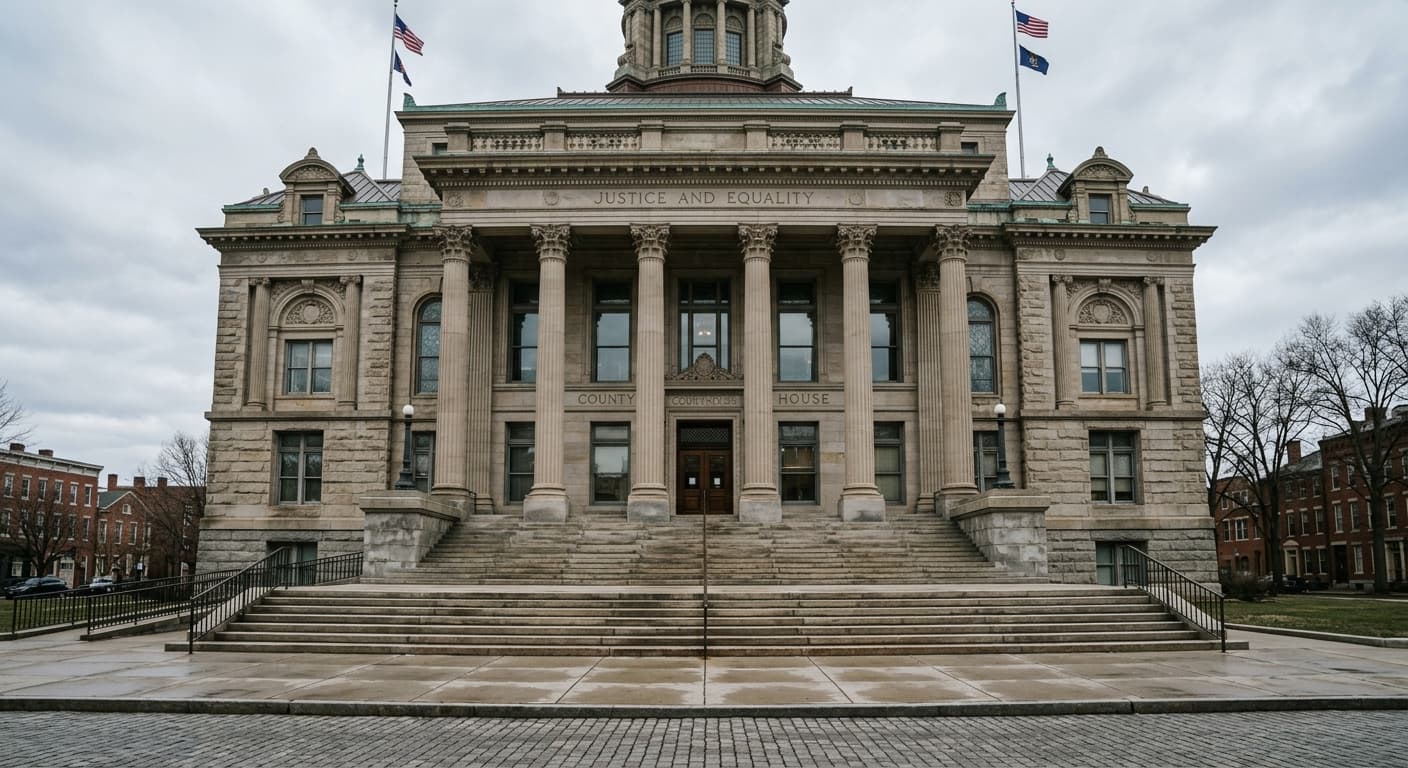
West Virginia has no statute requiring police to wear body cameras or governing when the public can get a copy of footage. Whether an agency uses cameras, and how it responds to a records request for them, runs through the state's general Freedom of Information Act.
This guide is part of our Police Bodycam Laws by State series.
Jurisdiction scope: This article addresses West Virginia law governing police body cameras: the absence of a body-camera-specific statute, the West Virginia Freedom of Information Act framework that governs footage requests, and how that framework has played out in a real case. It does not address a civilian's right to record law enforcement, which is covered separately in our guide to recording laws.
Does West Virginia require police to wear body cameras?
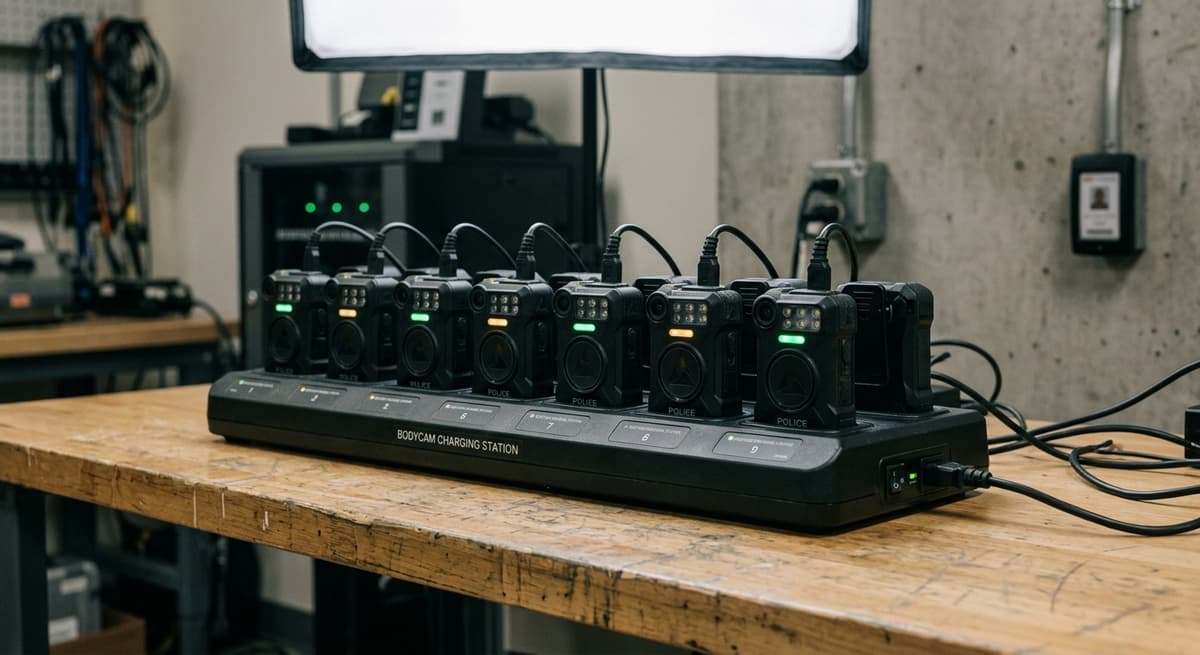
No. West Virginia has no statute requiring any law enforcement agency to equip its officers with body cameras, and no statute setting statewide rules for when a camera must be recording. Adoption, funding, and activation policy are decided by each city, county, or state agency on its own. The West Virginia State Police, the state's largest law enforcement agency, has expanded body camera use across its detachments as a matter of internal policy, not a legislative mandate. Municipal departments have moved at different speeds: Charleston's police department used grant funding to add roughly 90 body cameras and later authorized a contract extension with Motorola Solutions for up to 180 cameras running through 2028. Neither West Virginia's 2023, 2024, 2025, nor 2026 regular legislative sessions produced a bill requiring statewide bodycam adoption. The closest recent legislative activity, a 2025 measure known as Senate Bill 688, addressed law enforcement use of facial recognition and artificial intelligence surveillance tools, not body-worn cameras specifically.
Is West Virginia bodycam footage a public record?
Whether a member of the public can obtain body camera footage is not addressed by a bodycam-specific statute. It runs through the West Virginia Freedom of Information Act (FOIA), W. Va. Code § 29B-1-1 et seq. Under § 29B-1-1, public records are presumed open unless a specific statutory exemption applies, and West Virginia courts have held that FOIA's disclosure provisions are to be liberally construed while its exemptions are construed narrowly. Video captured by a police department is a public record for FOIA purposes, but agencies routinely invoke the law-enforcement investigatory-records exemption at W. Va. Code § 29B-1-4(a)(4), which lets a custodian withhold "records of law-enforcement agencies that deal with the detection and investigation of crime" along with internal law-enforcement records maintained for internal use. That exemption is not automatic or unlimited in theory, but the statute itself sets no clock for when investigatory footage becomes disclosable, unlike some other states' bodycam-specific laws.
How do you request bodycam footage under West Virginia's FOIA?
A written request goes to the custodian of the agency that holds the recording, typically the department's own records officer. Under W. Va. Code § 29B-1-3(d), the custodian must respond as soon as practicable, but no later than five days, excluding Saturdays, Sundays, and legal holidays, either producing the record or stating in writing the specific exemption relied on to deny it. Copying fees are limited to the agency's actual reproduction cost under § 29B-1-3(e); that subsection does not let a custodian bill a requester for staff search time or labor spent locating the footage. A requester whose FOIA request is denied can pursue injunctive or declaratory relief in the circuit court of the county where the record is kept, under W. Va. Code § 29B-1-5, and a court can order production of improperly withheld records.
| Question | West Virginia rule |
|---|---|
| Statewide camera mandate | No |
| Governing access statute | General FOIA, W. Va. Code § 29B-1-1 et seq. (no bodycam-specific law) |
| Standard response deadline | 5 days, excluding weekends and legal holidays (§ 29B-1-3(d)) |
| Most-used withholding ground | Law-enforcement investigatory-records exemption (§ 29B-1-4(a)(4)) |
| Retention period | Set by each agency; no statewide statutory schedule |
| Court remedy for denial | Circuit court injunctive or declaratory relief (§ 29B-1-5) |
Edmond Exline and the limits of West Virginia's FOIA exemption
On February 12, 2023, West Virginia State Police Trooper Thomas Ellis responded to a report of an intoxicated man walking along Interstate 81 in Martinsburg. Ellis drew his weapon on 45-year-old Edmond Exline without apparent justification, then pursued him across the interstate and tased him three times. Backup troopers Abraham Bean and Brandon Mason arrived believing, based on unclear radio traffic, that Ellis had been shot. That misunderstanding led them to strike Exline with a flashlight and deliver additional compliance strikes. Exline died at the scene; an autopsy attributed his death to multiple blunt force injuries, multiple taser discharges, psychiatric illness with agitation, and heart disease.
Body camera footage existed from both Ellis's and Bean's cameras, but initial FOIA requests for the video were denied while the case remained under investigation, the kind of denial § 29B-1-4(a)(4) is commonly used to support. The footage stayed out of public view for roughly a year and a half. It surfaced only in July 2024, after attorney John-Mark Atkinson, representing Exline's estate, released it following a $1 million settlement of the family's wrongful-death and excessive-force lawsuit against the State Police. An internal State Police investigation later sustained findings against Ellis for unnecessary force and interfering with citizens' rights, while complaints against Bean and Mason were not sustained given their belief that Ellis had been shot. The FBI and a Berkeley County grand jury separately declined to bring criminal charges. The case illustrates how West Virginia's investigatory-records exemption can keep bodycam footage confidential for well over a year, with civil litigation, rather than the FOIA request itself, ultimately producing the release.
Is it illegal to record police in West Virginia?
That is a separate question from the one this page addresses. West Virginia generally recognizes a person's right to record an on-duty officer performing public duties in a public place. For a full explanation of that right and how it differs from the rules on police-generated bodycam footage discussed here, see Is It Illegal to Record Someone?
More West Virginia Laws
Frequently Asked Questions
Does West Virginia require police officers to wear body cameras?
No. West Virginia has no statute mandating body cameras for any law enforcement agency. Adoption and activation rules are set locally by each department, and no bill enacted through the 2026 legislative session has changed that.
Is police bodycam footage a public record in West Virginia?
It can be, but there is no bodycam-specific access statute. Requests run through the general Freedom of Information Act, W. Va. Code § 29B-1-1 et seq., and agencies often invoke the law-enforcement investigatory-records exemption while a case is open.
How long does a West Virginia agency have to respond to a FOIA request for bodycam footage?
Generally five days, excluding Saturdays, Sundays, and legal holidays, under W. Va. Code § 29B-1-3(d).
Can West Virginia police withhold bodycam footage during an investigation?
Often yes. W. Va. Code § 29B-1-4(a)(4) lets a custodian withhold records tied to a law-enforcement investigation, as happened with footage of Edmond Exline's 2023 death, which was not released until after a 2024 civil settlement.
What can I do if a West Virginia agency denies my bodycam footage request?
A requester can seek injunctive or declaratory relief in circuit court under W. Va. Code § 29B-1-5, which can order production of improperly withheld records.
Does West Virginia set a specific body camera retention period?
Not by statute. West Virginia has no statewide law setting a minimum retention period for bodycam video; individual agencies, including the State Police, set their own schedules.
Is it illegal to record on-duty police in West Virginia?
No, recording an on-duty officer performing public duties in a public place is generally protected. That is a separate question from public access to police-recorded bodycam footage covered on this page.
Updates
Independently fact-checked against the cited primary sources; governing law re-checked for recent changes
Corrected the pinpoint citation for West Virginia's 5-day FOIA response deadline (from subsection (a), the general right-to-inspect clause, to subsection (d), where the deadline is actually set) and the actual-cost fee cap (to subsection (e)) across all four places this appeared on the page.
Governing law re-checked for recent changes
Reviewed and approved by an editor
Sources and References
- W. Va. Code § 29B-1-1, West Virginia Freedom of Information Act, declaration of policy(code.wvlegislature.gov).gov
- W. Va. Code § 29B-1-4, exemptions from disclosure, including the law-enforcement investigatory records exemption(code.wvlegislature.gov).gov
- W. Va. Code § 29B-1-3, procedure for requesting records, response deadline and fees(code.wvlegislature.gov).gov
- W. Va. Code § 29B-1-5, court remedies for denial of inspection(code.wvlegislature.gov).gov
- Reporters Committee for Freedom of the Press, Open Government Guide: West Virginia(rcfp.org)
- WCHS-TV, Body cam footage released after man dies in W.Va. State Police custody along I-81(wchstv.com)
- WCHS-TV, Internal report cites trooper for unnecessary force in man's death on I-81 in Martinsburg(wchstv.com)