
Virginia
Virginia Police Body Camera Laws: Mandate & FOIA Access
Independently fact-checked against primary sources (last audited August 20, 2026). · Reviewed by the RecordingLaw editorial team. · Law checked current as of August 20, 2026. · 4 primary sources cited on this page. How we verify our legal content
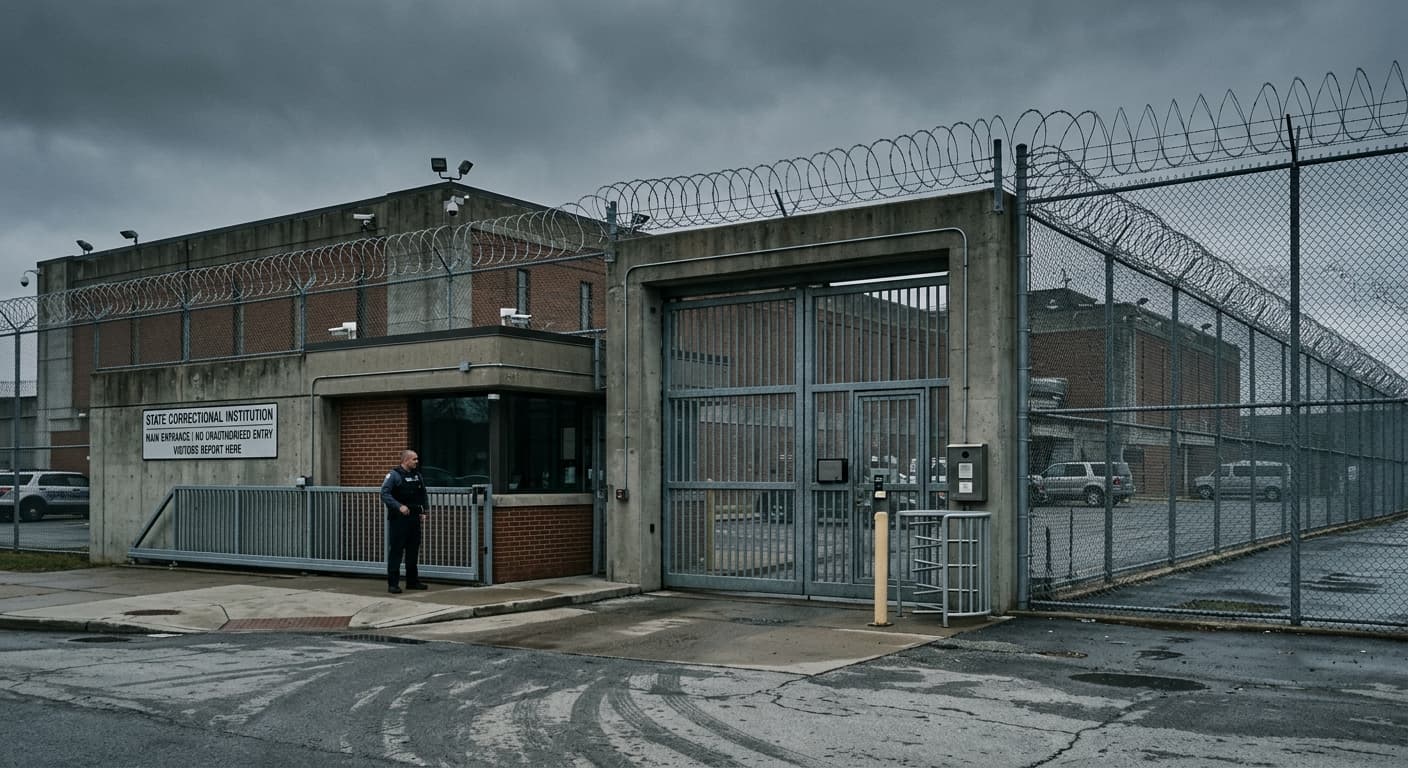
Virginia has no law requiring any police department to use body cameras. Deployment is entirely local and optional, though agencies that do use them must adopt a written policy under Va. Code § 15.2-1723.1, and footage access runs through Virginia's general public-records law, not a bodycam-specific statute.
This guide is part of our Police Bodycam Laws by State series.
Jurisdiction scope: This article addresses Virginia law governing police body-worn cameras: the policy-adoption requirement under Va. Code § 15.2-1723.1 and public access to footage under the general Virginia Freedom of Information Act. It does not address a bystander's right to record on-duty police, a different legal question covered in our guide to recording laws.
Does Virginia require police departments to use body cameras?
No. Virginia has never enacted a statewide body-camera mandate. Va. Code § 15.2-1723.1, enacted in 2020, regulates agencies that choose to use body-worn cameras; it does not require any of them to. Local governing bodies decide independently whether to fund a body-camera program for their police department or sheriff's office, and Virginia's local police departments and sheriffs' offices have adopted them unevenly, with coverage ranging from full deployment in some localities to none at all in others, and no verified statewide count of how many have adopted cameras. The gap is starkest at the state level. The Virginia State Police, the commonwealth's largest law-enforcement agency and the primary patrol force on Virginia's interstates and rural roads, operated without body cameras for years, citing the cost of equipping thousands of troopers along with the data-storage infrastructure a statewide program requires, according to ProgressVA.
What must a Virginia agency do before deploying body cameras?
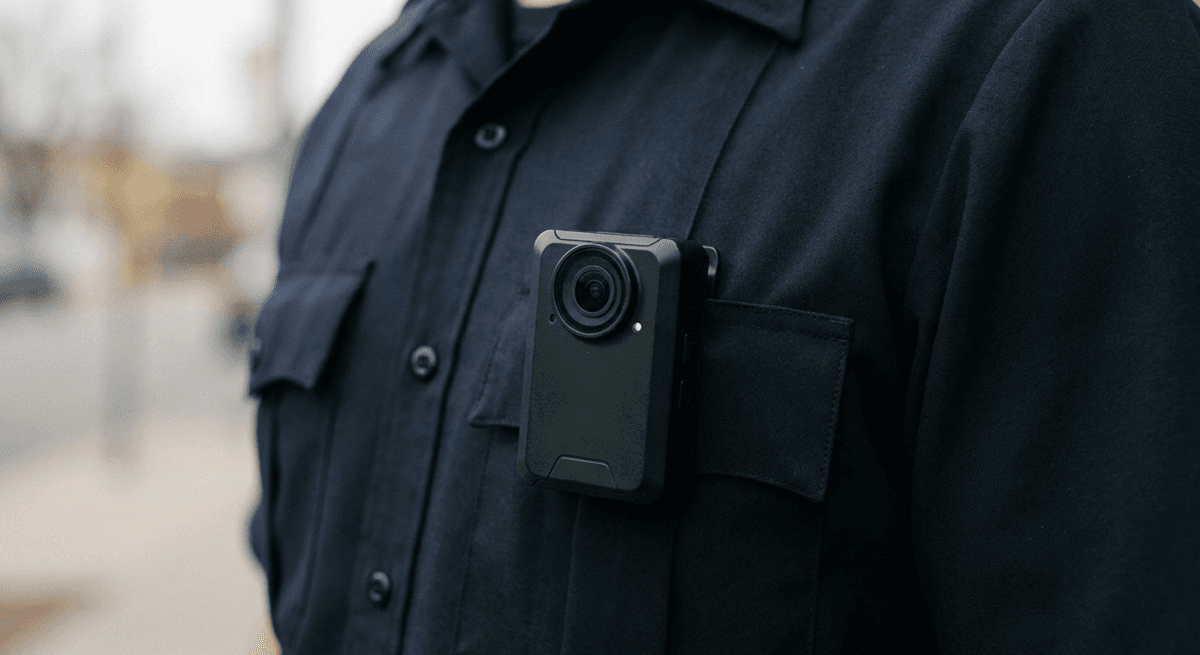
Under Va. Code § 15.2-1723.1, a Virginia law-enforcement agency with criminal or regulatory jurisdiction cannot purchase or deploy a body-worn camera system until it adopts a written policy governing its operation. That policy must follow identified best practices, remain consistent with Virginia law, and use the guidance in the model policy maintained by the Department of Criminal Justice Services (DCJS). Critically, the statute requires the agency to make its draft policy available for public comment and review before final adoption, giving residents a chance to weigh in on activation, retention, and access rules before a program launches, according to DCJS's model policy. The DCJS model itself is guidance rather than a mandatory template, so agencies are not required to adopt its language word for word, and policies vary from one Virginia locality to the next even though every agency's policy traces back to the same state guidance document.
Why doesn't Virginia State Police have body cameras yet?
Cost, primarily. A 2024 budget amendment sponsored by Delegate Lashrecse Aird would have required body cameras for all Virginia State Police officers, funded at roughly $48.1 million a year plus nine new staff positions, but it was reduced during Senate Finance Committee negotiations to a mere feasibility study, according to ProgressVA. Later that year, a separate and smaller budget item, Item 417 #1s of the 2024 Appropriation Act, allocated about $6.2 million in general funds for fiscal year 2025 to provide an estimated 1,200 body-worn cameras to Virginia State Police officers, according to Virginia's legislative budget system. That figure covers a meaningful share of the agency's sworn force, but well short of full deployment, so whether every trooper wears a camera continues to depend on future budget cycles rather than a statutory requirement.
How can the public get Virginia bodycam footage?
Virginia has no statute written specifically for body-camera footage, so requests are governed by the general Virginia Freedom of Information Act (VFOIA). Two sections do the work, and they point in different directions depending on who is asking.
The first is Va. Code § 2.2-3706. Subsection B(1) lets a public body engaged in criminal law-enforcement activity withhold "criminal investigative files," defined broadly to include photographs, evidence, reports, and other material relating to a criminal investigation or prosecution. Because most bodycam footage is captured during, or immediately connected to, some form of law-enforcement encounter, agencies routinely classify it as an exempt investigative file rather than releasing it as a matter of course. But that discretion is not unlimited on its face: the exemption reaches only files "not required to be disclosed in accordance with § 2.2-3706.1."
That cross-reference is the second section, and it is the one most readers looking for footage of their own case need. Va. Code § 2.2-3706.1 splits criminal investigative files by whether the investigation is still ongoing. Files from an ongoing investigation are outside mandatory disclosure and may be released only in the custodian's discretion. Files from an investigation or proceeding that is not ongoing are also outside general mandatory disclosure, but subsection D provides that such records "shall be disclosed, by request," to a defined list of people:
- the victim;
- the immediate family members of a deceased victim, provided the family member requesting is not a suspect or person of interest;
- the parent or guardian of a minor victim, on the same condition;
- an attorney representing a petitioner for a writ of habeas corpus or a writ of actual innocence; and
- for on-site inspection only, an attorney considering representation in a post-conviction or pardon matter, an attorney who provides a sworn declaration that the records are material to a contemplated civil or criminal action, and a person proceeding pro se on a habeas or actual-innocence petition.
Subsection E is the limit on all of that. It withholds this access where disclosure would interfere with an ongoing investigation, deprive someone of a fair trial, constitute an unwarranted invasion of privacy, reveal a confidential source or an investigative technique, or endanger anyone's safety.
The practical upshot is a split. For the general public and for the press, Virginia grants no affirmative right to bodycam footage; release is discretionary, and nothing in VFOIA compels it the way Colorado's or Illinois's dedicated bodycam statutes do. For a victim, a deceased victim's immediate family, a minor victim's parent or guardian, or one of the listed attorneys, a request for a closed case is not discretionary at all. It is a mandatory disclosure the agency must honor unless a subsection E exception applies. Whether a particular requester counts as "the victim" in a given file depends on how the investigation itself is framed, which is worth confirming with the agency's FOIA officer or with counsel before assuming the answer. VFOIA separately compels disclosure of certain baseline facts regardless of who asks, such as adult arrestee intake photographs and the identity of an arrested person.
Ward v. Chesterfield County: how the exemption plays out
Virginia's general FOIA exemption was tested directly when a requester sought bodycam footage of a routine traffic stop from the Chesterfield County Police Department and was denied. The requester filed a petition for a writ of mandamus in the Chesterfield County General District Court, arguing the footage should be public. The court disagreed, holding that the recording qualified as an exempt criminal investigative file because the traffic stop itself, built on reasonable suspicion, constituted a "concerted effort... to ascertain facts," the standard the court used to define an investigation, according to Reason. The judge acknowledged the tension this creates for transparency but declined to narrow the exemption from the bench, observing that the exemption language predated the current national conversation about police accountability and that deciding whether to exempt bodycam video from VFOIA was a call for the General Assembly, not the courts.
Two limits on that ruling matter, and they are easy to miss. First, a Virginia general district court is a court not of record under Va. Code § 16.1-69.5, and its judgments are appealable de novo to circuit court under Va. Code § 16.1-136. The decision therefore binds no other Virginia court and carries no precedential weight; it is one trial judge's reading, not settled state law. Second, it was decided in 2018, three years before the General Assembly restructured this corner of VFOIA. Chapter 483 of the 2021 Special Session created § 2.2-3706.1, moved the ongoing versus non-ongoing treatment of criminal investigative files into it, and added the mandatory closed-case disclosures described above. The ruling still illustrates how broadly Virginia agencies invoke the investigative-file exemption against a general public requester, but it was decided under a statutory structure that no longer exists in the same form, and it says nothing about the mandatory pathway a victim or a deceased victim's family now has.
| Question | Virginia's answer |
|---|---|
| Statewide bodycam mandate? | No; Va. Code § 15.2-1723.1 regulates only agencies that opt in |
| Policy required before deployment? | Yes, consistent with the DCJS model policy, posted for public comment |
| Bodycam-specific access statute? | No; governed by VFOIA's general investigative-file provisions at §§ 2.2-3706 and 2.2-3706.1 |
| Default access outcome, general public | Discretionary; agencies may withhold footage tied to an investigation |
| Access for a victim or deceased victim's family | Mandatory on request once the investigation is no longer ongoing, per § 2.2-3706.1(D), subject to the subsection E exceptions |
| Virginia State Police coverage | Historically none; roughly 1,200 cameras funded for fiscal year 2025 |
| Local adoption rate | Uneven across Virginia's local police departments and sheriffs' offices; no verified statewide figure |
Is a civilian allowed to record the police in Virginia?
That is the reverse question, and Virginia treats it differently than it treats access to police-recorded footage. Recording an on-duty officer performing public duties in a public place is generally understood to be protected activity, and the Fourth Circuit, which includes Virginia, is among the federal courts of appeals that have recognized this right. For the full analysis, see Is It Illegal to Record Someone?
More Virginia Laws
Frequently Asked Questions
Does Virginia law require police to wear body cameras?
No statute requires it. Va. Code § 15.2-1723.1 only governs agencies that voluntarily choose to deploy a body-worn camera system; it does not create a mandate.
Does Virginia State Police use body cameras?
Historically no. The 2024 budget funded about 1,200 cameras for Virginia State Police troopers starting fiscal year 2025, but that covers only part of the force, and there is no legal requirement that every trooper be equipped.
Can I get a copy of Virginia police bodycam footage through a FOIA request?
It depends on who you are. A general public or press requester has no right to the footage: agencies may withhold it as an exempt criminal investigative file under Va. Code § 2.2-3706(B)(1), and a Chesterfield County general district court upheld that classification even for a routine traffic stop in Ward v. Chesterfield County. But if the investigation is no longer ongoing and you fall within the list in Va. Code § 2.2-3706.1(D), disclosure is mandatory rather than discretionary.
I am a crime victim, or the family of a deceased victim. Can I get the footage?
In many cases yes. Va. Code § 2.2-3706.1(D) provides that criminal investigative files from an investigation or proceeding that is not ongoing shall be disclosed, by request, to the victim, to the immediate family members of a deceased victim who are not suspects or persons of interest, to the parent or guardian of a minor victim on the same condition, and to certain attorneys. Subsection E allows the agency to withhold anyway where release would interfere with an ongoing investigation, deprive someone of a fair trial, invade privacy, reveal a confidential source or investigative technique, or endanger safety. Whether you count as the victim in a specific file turns on how that investigation is framed, so confirm it with the agency's FOIA officer or with counsel.
What was the Ward v. Chesterfield County case about?
A 2018 Chesterfield County General District Court case in which the court held that bodycam footage of a traffic stop was an exempt criminal investigative file under VFOIA, with the judge stating that changing that result was a legislative decision. A general district court is a court not of record under Va. Code § 16.1-69.5 and its judgments are appealable de novo, so the ruling binds no other Virginia court. It also predates the 2021 Special Session restructuring that created Va. Code § 2.2-3706.1 and its mandatory closed-case disclosures.
Do Virginia police departments have to adopt a body camera policy?
Only if they choose to deploy cameras at all. Once they do, Va. Code § 15.2-1723.1 requires a written policy consistent with the DCJS model policy, posted for public comment before adoption.
How many Virginia police departments have body cameras?
There is no verified statewide count. Adoption is decided locality by locality across Virginia's police departments and sheriffs' offices, so coverage ranges from full deployment in some places to none in others.
Is it legal to record a Virginia police officer?
Yes, generally. That is a separate right from access to police-recorded bodycam footage. See our guide to Is It Illegal to Record Someone? for details.
Updates
Corrected the FOIA section: Virginia law gives the general public no right to bodycam footage, but Va. Code § 2.2-3706.1(D) requires agencies to release closed-case investigative files on request to victims, a deceased victim’s immediate family, a minor victim’s parent or guardian, and certain attorneys; also flagged that the Ward v. Chesterfield County ruling is non-precedential and predates the 2021 rewrite, and removed an unsourced agency-count figure.
Removed an unverifiable statistic (that about a third of Virginia's roughly 370 police and sheriff's departments had body cameras as of late 2024) that was not supported by its cited source; the page now states plainly that no verified statewide adoption count exists.
Independently fact-checked against the cited primary sources; governing law re-checked for recent changes
Governing law re-checked for recent changes
Reviewed and approved by an editor
The Law Behind This Article
This article rests on the statutory provisions below, held in our own legal record and retrieved from the official source. Tap a section to read the operative text.
Code of Virginia, Title 15.2: Counties, Cities and Towns
§ 15.2-1723.1Body-worn camera systemIn forcecited in 3 of our articles
A. For purposes of this section, "body-worn camera system" means an electronic system for creating, generating, sending, receiving, storing, displaying, and processing audiovisual recordings, including cameras or other devices capable of creating such recordings, that may be worn about the person. B. No law-enforcement agency having jurisdiction over criminal law enforcement or regulatory violations shall purchase or deploy a body-worn camera system unless such agency has adopted and established a written policy for the operation of a body-worn camera system. Such policy shall follow identified best practices and be consistent with Virginia law and regulations, using as guidance the model policy established by the Department of Criminal Justice Services. Prior to the adoption of a written policy for the operation of a body-worn camera system, the agency shall make the policy available for public comment and review.
Official text (excerpt) · last checked 2026-08-31 · Read the full text in our law library · Verify at law.lis.virginia.gov
Also relied on in: Virginia Recording Laws (2026): One-Party Consent Rules, Virginia Police Report: How to Get a Crash Report from DMV, an Incident Report, or Body Camera Footage
Code of Virginia, Title 2.2: Administration of Government
§ 2.2-3706Disclosure of law-enforcement and criminal records; limitationsIn forcecited in 2 of our articles
A. Records required to be released. All public bodies engaged in criminal law-enforcement activities shall provide the following records when requested in accordance with the provisions of this chapter: 1. Adult arrestee photographs taken during the initial intake following the arrest and as part of the routine booking procedure, except when necessary to avoid jeopardizing an investigation in felony cases until such time as the release of the photograph will no longer jeopardize the investigation; 2. Information relative to the identity of any individual, other than a juvenile, who is arrested and charged, and the status of the charge or arrest; and 3. Records of completed unattended death investigations to the parent or spouse of the decedent or, if there is no living parent or spouse, to the most immediate family member of the decedent, provided the person is not a person of interest or a suspect.
Official text (excerpt) · last checked 2026-09-02 · Read the full text in our law library · Verify at law.lis.virginia.gov
Cited in 2 court opinions in our collectionLatest citing opinion in our collection: 2016
Opinions citing this section in our collection:
- Detroit Free Press Inc. v. United States Department of Justice (Court of Appeals for the Sixth Circuit 2016, 829 F.3d 478)“…s taken in conjunction with an arrest” are public records); Va. Code Ann. § 2.2-3706(A)(1)(b) (ordering release of “[a]dult…”
Identified automatically from the court opinions citing this section — not a ranking of which case controls.
§ 2.2-3706.1Disclosure of law-enforcement records; criminal incident information and certain criminal investigative files; limitationsIn forcecited in 6 of our articles
A. For purposes of this section: "Criminal investigative files" means any documents and information, including complaints, court orders, memoranda, notes, diagrams, maps, photographs, correspondence, reports, witness statements, and evidence, relating to a criminal investigation or prosecution, other than criminal incident information subject to disclosure in accordance with subsection B. "Family representative" means the decedent's personal representative or, if no personal representative as set forth in § 64.2-100 has qualified, the decedent's next of kin in order of intestate succession as set forth in § 64.2-200. "Immediate family members" means the decedent's family representative, spouse, child, sibling, parent, grandparent, or grandchild. "Immediate family members" include a stepparent, stepchild, stepsibling, and adoptive relationships. "Ongoing" refers to a case in which the prosecution has not been finally adjudicated, the investigation continues to gather evidence for a possible future criminal case, and such case would be jeopardized by the premature release of evidence. B.
Official text (excerpt) · last checked 2026-07-29 · Read the full text in our law library · Verify at law.lis.virginia.gov
Also relied on in: Virginia Laws on Recording Police: Your Rights and Limitations, Virginia Freedom of Information Act: Who Can Request and How (2026), Virginia Video Recording Laws: Surveillance Rules and Privacy Limits
Code of Virginia, Title 16.1: Courts Not of Record
§ 16.1-136How appeal triedIn force
Any appeal taken under the provisions of this chapter shall be heard de novo in the appellate court and shall be tried without formal pleadings in writing; and, except in the case of an appeal from any order or judgment of a court not of record forfeiting any recognizance or revoking any suspension of sentence, the accused shall be entitled to trial by a jury in the same manner as if he had been indicted for the offense in the circuit court.
Official text (excerpt) · last checked 2026-07-29 · Read the full text in our law library · Verify at law.lis.virginia.gov
Cited in 2 court opinions in our collectionLatest citing opinion in our collection: 2023
Opinions citing this section in our collection:
- Mogensen v. Welch (District Court, W.D. Virginia 2023)“…t, Va. Code § 16.1-132, and that appeal is heard de novo.5 Va. Code § 16.1-136. See Kenyon v. Commonwealth, 561 S.E.2…”
- Kandise Lucas v. Henrico County (Court of Appeals for the Fourth Circuit 2019)“…ch appeals “shall be heard de novo in the appellate court.” Va. Code Ann. § 16.1-136 (2015). “A de novo hearing means a tria…”
Identified automatically from the court opinions citing this section — not a ranking of which case controls.
§ 16.1-69.5Meaning of certain termsIn force
Unless the context should otherwise require, the terms set out in this section shall be construed as follows: (a) "Courts not of record" shall mean all courts in the Commonwealth below the jurisdictional level of the circuit courts including general district courts and juvenile and domestic relations district courts; (b) "General district courts" shall mean all courts not of record, except juvenile and domestic relations district courts in counties and cities heretofore designated as county and municipal courts; (c) "Juvenile and domestic relations district courts" shall mean all courts in counties and cities heretofore designated as juvenile and domestic relations courts or regional juvenile and domestic relations courts; (d) "District courts" shall mean general district courts and juvenile and domestic relations district courts; (e) "County courts" and "municipal courts" shall be deemed to refer to general district courts; (f) "Juvenile and domestic relations courts" and "regional juvenile and domestic relations courts" shall be deemed to refer to juvenile and domestic relations district courts; and (g) "Chief judge" shall mean that judge so designated for a term to…
Official text (excerpt) · last checked 2026-07-29 · Read the full text in our law library · Verify at law.lis.virginia.gov
Cited in 5 court opinions in our collectionLatest citing opinion in our collection: 2012
Opinions citing this section in our collection:
- In re Seaton (United States Bankruptcy Court, E.D. Virginia 2011, 462 B.R. 582)“…parties as to what was said at the Continued Hearing. See Va.Code Ann. § 16.1-69.5 (2011) (defining "Courts not of record”…”
- Air Power, Inc. v. The United States of America (Court of Appeals for the Fourth Circuit 1984, 741 F.2d 53)“…at its general district courts were “courts not of record.” Va.Code § 16.1-69.5 (1972). 2 The majority’s o…”
- Webb v. Isaacson (In re Isaacson) (United States Bankruptcy Court, E.D. Virginia 2012, 478 B.R. 763)“…might be binding on Mr. Isaacson in this proceeding. See Va.Code Ann. § 16.1-69.5 (defining "Courts not of record” to inc…”
Identified automatically from the court opinions citing this section — not a ranking of which case controls.
Search our full record of US law — 2.1 million sections, every state + federal →
Sources and References
- Va. Code § 15.2-1723.1, body-worn camera system, written policy requirement before deployment(law.lis.virginia.gov).gov
- Va. Code § 2.2-3706, disclosure of law-enforcement and criminal records; limitations, criminal investigative file exemption(law.lis.virginia.gov).gov
- Virginia General Assembly, Item 417 #1s, 2024 Appropriation Act amendment funding Virginia State Police body-worn cameras(budget.lis.virginia.gov).gov
- ProgressVA, Virginia's Largest Police Force Will Operate Without Body-Worn Cameras For Another Year(progressva.org)
- Reason, We Sent an Intern to Virginia to Get Police Body Cam Footage. It Didn't Work. (Ward v. Chesterfield County)(reason.com)
- Virginia Department of Criminal Justice Services, Body Worn Camera Model Policy(dcjs.virginia.gov).gov
- Va. Code § 2.2-3706.1, criminal investigative files; subsection D mandatory disclosure to victims, deceased victims’ immediate family, minor victims’ parents and certain attorneys once an investigation is no longer ongoing; subsection E exceptions(law.lis.virginia.gov)
- Va. Code § 16.1-69.5, definitions; district courts are courts not of record(law.lis.virginia.gov)
- Va. Code § 16.1-136, appeal from a district court shall be heard de novo in the appellate court(law.lis.virginia.gov)