
Rhode Island
Rhode Island Police Body Camera Laws: Access & § 42-161
Independently fact-checked against primary sources (last audited August 20, 2026). · Reviewed by the RecordingLaw editorial team. · Law checked current as of August 20, 2026. · 5 primary sources cited on this page. How we verify our legal content
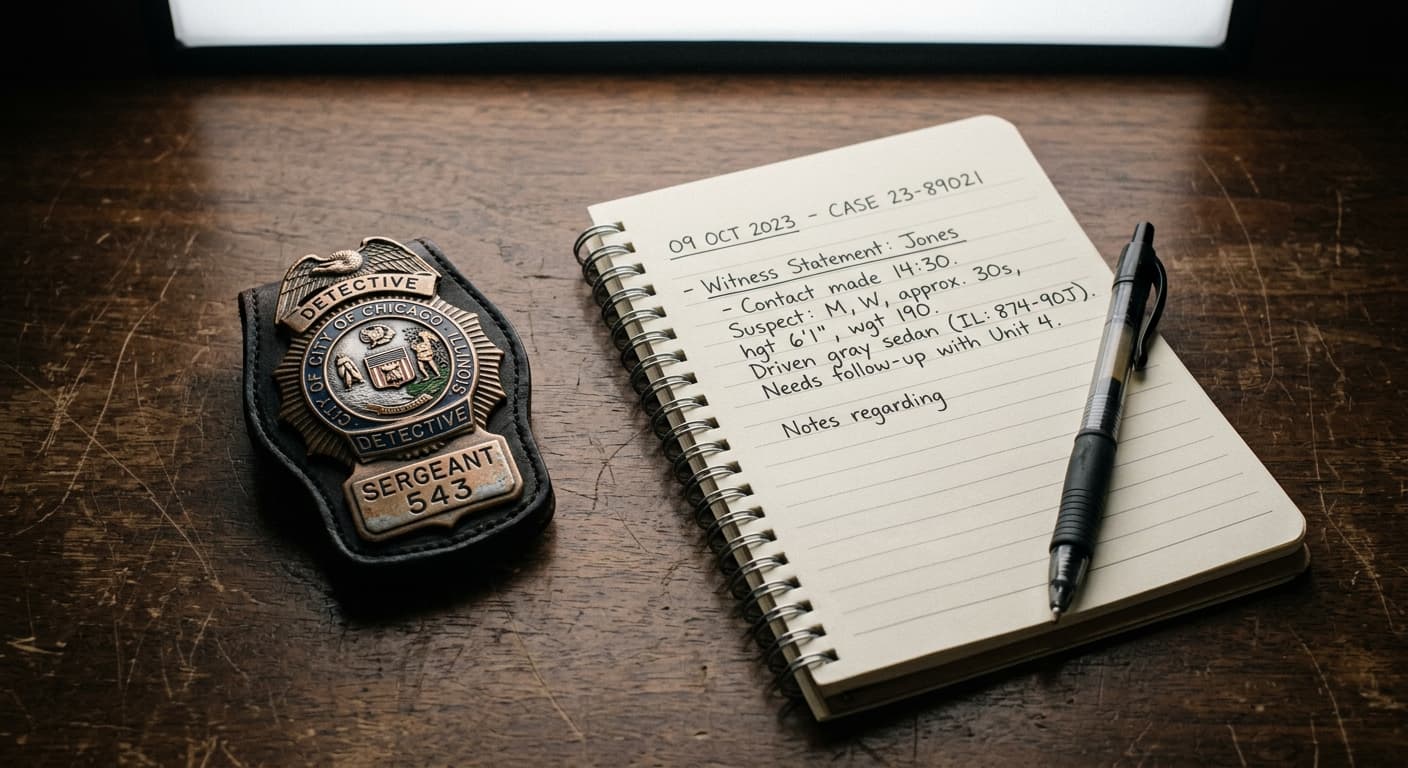
Rhode Island does not require every police department to buy body cameras, but agencies that use them must follow statewide rules under R.I. Gen. Laws Chapter 42-161. Unlike most states in this series, footage is presumptively a public record under the Access to Public Records Act, though agencies retain wide discretion over redaction.
This guide is part of our Police Bodycam Laws by State series.
Jurisdiction scope: This article addresses Rhode Island law governing police body cameras: the state's grant-based (not mandatory) adoption model under R.I. Gen. Laws Chapter 42-161, and public access to footage under the Access to Public Records Act. It does not address a civilian's right to record law enforcement, which is covered separately in our guide to recording laws.
Does Rhode Island require police to wear body cameras?
Not as a blanket statewide mandate. R.I. Gen. Laws § 42-161-3, enacted in 2021 (P.L. 2021, ch. 229, effective July 8, 2021), authorizes the director of the department of public safety to award grants that help police departments buy body-worn cameras. Adoption is tied to that funding, not to a standalone requirement that every agency in the state carry cameras regardless of budget.
The funding side of the chapter came with an expiration date built in. Section 42-161-2 defines the "state-supported implementation period" as a period of five years beginning on July 1, 2021 and ending on June 30, 2026, and § 42-161-3(f) provides that no money appropriated in the state budget "shall be awarded for Rhode Island police department body-worn camera expenses incurred before or after the state-supported implementation period." The published chapter still carries that June 30, 2026 end date and lists no amending public law beyond the 2021 enactment, so the grant program described here reflects a window that has since closed. Departments and residents checking on money available now should confirm the current position with the Department of Public Safety and the current state budget rather than assuming the 2021 program is still funding purchases.
What the law does require is uniformity once a department is in: to receive grant funds, a police chief must certify that the department has adopted the statewide policy developed under § 42-161-4. The attorney general and public safety director, in consultation with the Rhode Island Police Chiefs' Association, were directed to create that policy through formal rulemaking, including a public hearing. The result is Attorney General regulation 110-RICR-10-00-2, which sets rules for equipment use and security, activation and deactivation, notifying the public that recording is occurring, retention, and access.

How long does Rhode Island keep bodycam footage?
Retention runs on the Rhode Island Records Retention Schedule LG6.3.6, covering body camera and dash camera recordings, rather than a day-count written directly into the statute. Under 110-RICR-10-00-2, the chief of police, an internal affairs supervisor, or legal counsel can order a specific recording archived beyond the standard schedule, which in practice happens for footage tied to a complaint, a use-of-force incident, or pending litigation.
Is Rhode Island bodycam footage a public record?
Yes, presumptively. Rhode Island's Access to Public Records Act, R.I. Gen. Laws Chapter 38-2, makes records kept by a public body open to inspection and copying by any person, and body camera footage is not carved out as a separate closed category. Under § 38-2-3, an agency must permit inspection or copying within 10 business days of a request, with an extension to as much as 30 business days if the agency shows the request involves a large volume of records or otherwise creates an undue burden.
That general openness is narrowed in practice by APRA's own privacy exemption and by 110-RICR-10-00-2, which directs departments to redact footage where release would be an unwarranted invasion of privacy, reveal a confidential source or investigative technique, or violate a court order. Pending-case releases are also expected to carry a disclaimer noting the footage reflects only one perspective and that the person recorded is presumed innocent.
| Question | Rhode Island rule |
|---|---|
| Statewide equipment mandate | No; grant-funded adoption under § 42-161-3 |
| State grant funding window | July 1, 2021 through June 30, 2026 (§ 42-161-2; § 42-161-3(f)) |
| Default public-records status | Presumptively public under APRA, Chapter 38-2 |
| Standard response deadline | 10 business days, extendable to 30 |
| Deadly-force release benchmark | "Substantial completion," expected within 30 days (guidance, not a statutory deadline) |
| Redaction | Required where disclosure invades privacy or harms an investigation |
When must a Rhode Island officer's camera be recording?
Activation and deactivation procedures are set at the department level within the framework of 110-RICR-10-00-2 rather than spelled out as a single statewide rule in the statute itself. The regulation requires each adopting agency's policy to address when cameras must be turned on, how officers notify people they are being recorded, and how the agency secures footage once captured. Because the underlying requirement traces to a grant-conditioned policy rather than a uniform criminal statute, the specific activation triggers can vary somewhat by department, and a resident who wants a particular agency's exact activation policy should check with that department directly.
A real example: the Brown University shooting bodycam release
On December 13, 2025, a shooting inside the Barus & Holley building on the Brown University campus in Providence left two people dead and nine others injured. In February 2026, following public records requests, the city of Providence released roughly 20 minutes of body-worn camera footage from Providence Police Lt. Patrick Potter, showing the initial law enforcement response, along with incident reports and other records.
The footage was heavily redacted, with long stretches blacked out or with audio muted, and Providence Mayor Brett Smiley stated the release reflected the city's obligation to "remain fully transparent, accountable and compliant with the state's Access to Public Records Act," while also citing the risk that fuller footage would be "harmful and traumatizing" to victims, families, and neighbors. City officials confirmed additional body camera footage from the incident exists but said they did not intend to release it. The episode illustrates how Rhode Island's presumptive-openness default still leaves an agency substantial discretion over how much footage to release and how heavily to redact it.
Is it illegal to record police in Rhode Island?
That is a separate question from the one this page addresses. Rhode Island generally recognizes a person's right to record an on-duty officer performing public duties in a public place, and consent rules that apply to recording private conversations do not block an officer's own on-duty camera or a bystander's recording of a public police encounter. For a full explanation of that right, see Is It Illegal to Record Someone?
More Rhode Island Laws
Frequently Asked Questions
Does every Rhode Island police department have body cameras?
Not necessarily. Rhode Island has no law forcing every department to buy cameras. R.I. Gen. Laws § 42-161-3 funded adoption through state grants awarded by the director of the department of public safety, and a department that takes that funding must follow the statewide policy in § 42-161-4. The statute's state-supported implementation period ran from July 1, 2021 through June 30, 2026.
Is Rhode Island's police body camera grant program still funded?
The statute set a fixed window. § 42-161-2 defines the state-supported implementation period as five years beginning July 1, 2021 and ending June 30, 2026, and § 42-161-3(f) bars state budget money from being awarded for body-worn camera expenses incurred before or after that period. The published chapter still carries that end date, so check with the Department of Public Safety and the current state budget before assuming grant money is available.
Is police bodycam footage a public record in Rhode Island?
Yes, presumptively. Rhode Island's Access to Public Records Act, R.I. Gen. Laws Chapter 38-2, treats agency records, including body camera footage, as open to inspection, subject to APRA's privacy and investigation-related exemptions.
How long does a Rhode Island agency have to respond to a bodycam records request?
10 business days under § 38-2-3, extendable up to 30 business days if the agency shows the request involves a large volume of records or would otherwise create an undue burden.
How fast must Rhode Island release bodycam footage of a police shooting?
Attorney general guidance under 110-RICR-10-00-2 treats 'substantial completion' of the AG's deadly force investigation, expected within about 30 days, as the release benchmark. That figure is guidance, not a binding statutory deadline; a 2025 bill to make a hard 30-day deadline mandatory stalled in the General Assembly.
Can a Rhode Island agency redact or withhold parts of bodycam video?
Yes. Even though footage is presumptively public, APRA's privacy exemption and the attorney general's body-worn camera rule direct agencies to redact material that would be an unwarranted invasion of privacy, reveal confidential investigative techniques, or violate a court order.
What happened with bodycam footage from the Brown University shooting?
Providence released about 20 minutes of heavily redacted body camera footage from the December 13, 2025 shooting in February 2026, while confirming additional footage exists that it did not plan to release, citing both APRA compliance and concern for victims and families.
Is it illegal to record on-duty police in Rhode Island?
No, recording an on-duty officer performing public duties in a public place is generally protected. That is a separate question from public access to police-recorded bodycam footage covered on this page.
Updates
Corrected the description of Rhode Island’s body-worn camera grant program: the state-supported implementation period under R.I. Gen. Laws § 42-161-2 ran from July 1, 2021 to June 30, 2026 and § 42-161-3(f) bars awards for expenses outside it, and the grants are awarded by the director of the department of public safety rather than jointly administered with the attorney general.
Independently fact-checked against the cited primary sources; governing law re-checked for recent changes
Governing law re-checked for recent changes
Reviewed and approved by an editor
The Law Behind This Article
This article rests on the statutory provisions below, held in our own legal record and retrieved from the official source. Tap a section to read the operative text.
Rhode Island General Laws, Title 42: State Affairs and Government, Chapter 42-161: Statewide Body-Worn Camera Program
§ 42-161-3Powers of attorney general and department of public safety — Establishment of grant programIn force
(a) The director of the department of public safety is hereby authorized, within available funds, to award grants and other forms of funding to facilitate the adoption of body-worn cameras by Rhode Island police departments. The director of the department of public safety may also coordinate state applications for federal funds available for body-worn camera adoption. (b) The director of the department of public safety may, in coordination with the department of administration, facilitate body-worn camera procurement by Rhode Island police departments through state master price agreement contracts in accordance with § 37-2-56. (c) The attorney general and the director of the department of public safety, in consultation with the Rhode Island police chiefs’ association, are responsible for developing statewide policies, procedures, and guidelines for the use and operation of body-worn cameras.
Official text (excerpt) · last checked 2026-08-31 · Read the full text in our law library · Verify at webserver.rilegislature.gov
§ 42-161-4Rules and regulations — Statewide policies, procedures, and guidelines for the use and operation of body-worn camerasIn forcecited in 2 of our articles
(a) The director of the department of public safety in consultation with the attorney general shall promulgate rules and regulations, pursuant to chapter 35 of this title, to develop the criteria and manner in which funds are awarded to Rhode Island police departments under this chapter. (b) The attorney general and the director of the department of public safety, in consultation with the Rhode Island police chiefs’ association, shall promulgate rules and regulations, pursuant to chapter 35 of this title, after holding a public hearing, to create a policy for the use and operation of body-worn cameras. This policy shall address at a minimum, but not be limited to: (1) Proper use of equipment; (2) Data and equipment security; (3) Activation and deactivation of cameras; (4) Notification to the public of recording; (5) Records retention procedures and timelines; (6) Access to data by law enforcement and the public; (7) Privacy protections, including redaction procedures; and (8) Compliance monitoring.
Official text (excerpt) · last checked 2026-07-30 · Read the full text in our law library · Verify at webserver.rilegislature.gov
Also relied on in: Rhode Island Police Reports: How to Get a Crash or Incident Report
§ 42-161-2DefinitionsIn force
As used in this chapter: (1) “Attorney general” means the attorney general of the state of Rhode Island, or designee. (2) “Body-worn camera” means a video and audio recording device that is carried by, or worn on the body of, a law enforcement officer and that is capable of recording the actions and interactions of the officer and the public. (3) “Director of the department of public safety” means the director of public safety appointed by the governor pursuant to § 42-7.3-5, or designee. (4) “Public safety grant administration office” means the public safety grant administration office as defined in chapter 26 of this title. (5) “State-supported implementation period” means a period of five (5) years beginning on July 1, 2021, and ending on June 30, 2026.
Official text (excerpt) · last checked 2026-07-30 · Read the full text in our law library · Verify at webserver.rilegislature.gov
Rhode Island General Laws, Title 38: Public Records, Chapter 38-2: Access to Public Records
§ 38-2-3Right to inspect and copy records — Duty to maintain minutes of meetings — Procedures for accessIn forcecited in 3 of our articles
(a) Except as provided in § 38-2-2(4), all records maintained or kept on file by any public body, whether or not those records are required by any law or by any rule or regulation, shall be public records and every person or entity shall have the right to inspect and/or copy those records at such reasonable time as may be determined by the custodian thereof. (b) Any reasonably segregable portion of a public record excluded by § 38-2-2(4) shall be available for public inspection after the deletion of the information which is the basis of the exclusion. If an entire document or record is deemed non-public, the public body shall state in writing that no portion of the document or record contains reasonable segregable information that is releasable. (c) Each public body shall make, keep, and maintain written or recorded minutes of all meetings. (d) Each public body shall establish written procedures regarding access to public records but shall not require written requests for public information available pursuant to § 42-35-2 or for other documents prepared for or readily available to the public.
Official text (excerpt) · last checked 2026-09-02 · Read the full text in our law library · Verify at webserver.rilegislature.gov
Cited in 1 court opinions in our collectionLatest citing opinion in our collection: 2002
Opinions citing this section in our collection:
- Hatch v. Town of Middletown (Court of Appeals for the First Circuit 2002, 311 F.3d 83)“…ay be determined by the custodian thereof." R.I. Gen. Laws § 38-2-3(a). Hence, sections 38-2- 2…”
Identified automatically from the court opinions citing this section — not a ranking of which case controls.
Also relied on in: Rhode Island Access to Public Records Act (APRA): How to Request Records
Search our full record of US law — 2.1 million sections, every state + federal →
Sources and References
- R.I. Gen. Laws § 42-161-3, powers of attorney general and department of public safety; establishment of grant program for body-worn cameras(webserver.rilegislature.gov).gov
- R.I. Gen. Laws § 42-161-4, rules and regulations; statewide policies, procedures, and guidelines for the use and operation of body-worn cameras(webserver.rilegislature.gov).gov
- R.I. Gen. Laws § 38-2-3, right to inspect and copy records; procedures for access, under the Access to Public Records Act(webserver.rilegislature.gov).gov
- 110-RICR-10-00-2, Rhode Island Attorney General body-worn camera regulation(rules.sos.ri.gov).gov
- Rhode Island Current, "Police body cameras are supposed to shed light. R.I. rules let officers keep footage in the dark," on the 30-day release benchmark and the stalled 2025 APRA reform(rhodeislandcurrent.com)
- City of Providence, body-worn camera footage release from the Brown University shooting response(providenceri.gov).gov
- Police1, "R.I. police release BWC footage from Brown University shooting that killed 2 students"(police1.com)
- R.I. Gen. Laws § 42-161-2, definitions, including the "state-supported implementation period" of July 1, 2021 through June 30, 2026(webserver.rilegislature.gov)