
New York
New York Police Body Camera Laws: State Police & NYPD
Independently fact-checked against primary sources (last audited August 20, 2026). · Reviewed by the RecordingLaw editorial team. · Law checked current as of August 20, 2026. · 5 primary sources cited on this page. How we verify our legal content

New York has no statewide law requiring local police departments to use body cameras; only the State Police must, under Executive Law Section 234. The NYPD, the nation's largest department, sets its own rules through Patrol Guide 212-123 and now must release critical-incident footage within 30 days.
This guide is part of our Police Bodycam Laws by State series.
Jurisdiction scope: This article addresses New York law on police body-worn cameras at two levels: the narrow statewide mandate for the New York State Police under Executive Law Section 234, and the New York City Police Department's own body-worn camera program under Patrol Guide 212-123, together with public access through New York's Freedom of Information Law. It does not address a civilian's right to record law enforcement, a separate and already-settled question covered in our recording-law guide below.
Does New York require police to wear body cameras statewide?
Only in a narrow sense. New York has no general statute requiring every municipal or county police department to equip officers with body cameras. The one statewide mandate applies to the Division of State Police: Executive Law Section 234, signed by Governor Andrew Cuomo in June 2020 alongside the law creating the state's Law Enforcement Misconduct Investigative Office, requires the Division to distribute cameras for continuous wear by state troopers on patrol. The mandate did not take effect on signing. The enacting bill, Chapter 105 of the Laws of 2020, was signed on June 16, 2020 and provides that it takes effect on the first of April next succeeding the date it became law, which made the trooper camera requirement operative on April 1, 2021. Outside the State Police, whether a New York police department uses body cameras, and on what terms, is a matter of local policy, not state law. Hundreds of local departments across New York have adopted cameras voluntarily or under federal grant conditions, but the state legislature has repeatedly introduced, and not yet passed, bills that would extend a body camera mandate to every local agency.
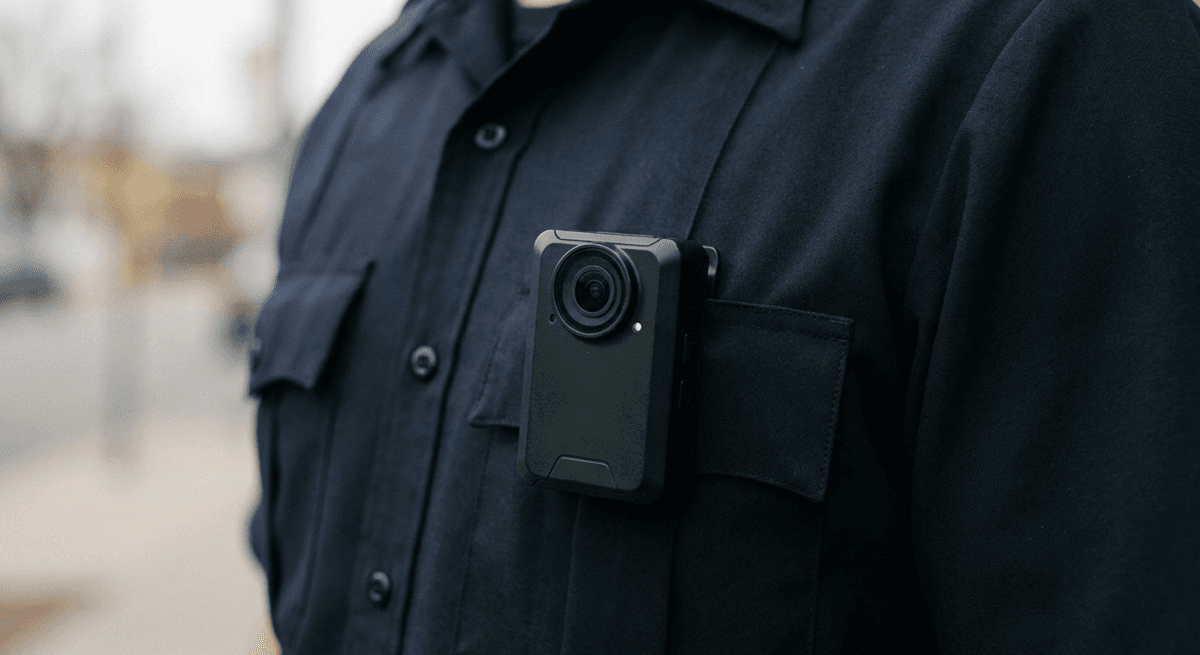
NYPD's body camera program: the largest in the country
Because New York has no statewide local mandate, the practical starting point for most New Yorkers is New York City Police Department policy, not state law. The NYPD operates the largest body-worn camera program in the United States, with cameras issued to more than 29,500 officers as of 2026.
That program did not begin as a departmental choice. It began as a federal court-ordered remedy. In its August 12, 2013 liability ruling in Floyd v. City of New York, the U.S. District Court for the Southern District of New York held the City liable for violating the Fourth and Fourteenth Amendment rights of people subjected to NYPD stops and frisks, and said it would order, in a separate opinion, remedies including "a trial program requiring the use of body-worn cameras in one precinct per borough" and the appointment of an independent monitor. The court later modified its remedial order as the program developed: a December 8, 2015 order revising the remedial order approved a randomized design for the pilot and anticipated that roughly 1,000 officers would be equipped with cameras. The department later expanded well beyond those pilot precincts to its full patrol force.
Day-to-day rules are now set out in NYPD Patrol Guide Procedure 212-123, "Use of Body-Worn Cameras", rather than in a state statute, which means the department can revise its own activation, retention, and release rules through internal policy and mayoral or Police Commissioner directives without a legislative vote. That structure let New York City update its release policy quickly in 2026, described below, but it also means the rules that apply to an NYPD encounter can differ from what a smaller upstate department does under its own separate policy. It is not unlimited discretion, though. The Floyd remedial order and the continuing federal monitorship remain the legal foundation of the program's existence and a live constraint on changes that touch the recording of stops and frisks.
| Agency | Governing rule | Basis |
|---|---|---|
| New York State Police | Statewide camera mandate for troopers on patrol | Executive Law Section 234, effective April 1, 2021 |
| NYPD | Departmental camera program and activation rules | Patrol Guide Procedure 212-123; program originated under the Floyd v. City of New York remedial order |
| Other local departments | Local policy choice; no statewide mandate | Agency discretion |
When must an NYPD officer's camera be recording?
Patrol Guide 212-123 requires an officer to activate the body-worn camera before engaging in a Level 1, 2, or 3 encounter with a civilian, before making an arrest, before responding to a call for service, and before beginning any self-initiated investigative or enforcement action. The camera must also be activated before an officer engages in, or assists with, a potential crime-in-progress assignment, including a shots-fired call or any incident involving a weapon, and before entering a privately owned building. Once activated, the procedure prohibits deactivating the camera until the investigative, enforcement, or other police action is concluded. Because these are internal department rules rather than a codified statute, the New York Attorney General and outside oversight bodies, including the Civilian Complaint Review Board, rely on Patrol Guide 212-123's text, not a state law, when evaluating whether an officer's non-activation violated policy.
Can the public get a copy of New York bodycam footage?
New York has no bodycam-specific access statute at the state or city level; requests run through the state's general Freedom of Information Law (FOIL), codified in Public Officers Law Article 6. Access improved substantially in 2020 for two related reasons. First, the Legislature repealed Civil Rights Law Section 50-a, which had long shielded police personnel records, including disciplinary files, from FOIL disclosure. Second, and specific to bodycam footage, the Appellate Division, First Department had already held in Matter of Patrolmen's Benevolent Association v. de Blasio (2019) that body-worn camera video was not a "personnel record" covered by Section 50-a's confidentiality rule, reasoning that the footage serves transparency and accountability, not personnel management. Together, these two developments mean a FOIL request for NYPD or State Police bodycam footage is evaluated under FOIL's general exemptions, such as those for unwarranted invasions of privacy or interference with an active investigation, rather than a police-specific secrecy statute.
NYPD's 30-day release policy, and how it holds up in practice
In March 2026, Mayor Zohran Mamdani and Police Commissioner Jessica Tisch formally codified a requirement that the NYPD release body-worn camera footage within 30 calendar days of a critical incident, defined as an officer-involved shooting that strikes a member of the public, or a use of force resulting in serious injury or death. The Commissioner retains discretion to release footage earlier when doing so serves public safety. The policy builds on a practice New York City first announced in 2020, when Mayor Bill de Blasio directed the NYPD to post footage of significant force incidents online. In practice, compliance with the broader FOIL process has lagged well behind that 30-day standard. A 2025 audit by the New York City Comptroller found the NYPD averaged 133 business days to grant or deny FOIL requests for bodycam footage, missed the city's standard 25-business-day response window on 85 percent of the 5,427 requests reviewed, and reversed its own initial denial in 344 of 355 appeals, a 97 percent reversal rate the Comptroller's office cited as evidence that first-line denials were often unjustified.
The Daniel Prude case: why disclosure timing became a statewide issue
New York's push toward faster, more reliable bodycam disclosure traces in part to Rochester's handling of Daniel Prude's death. Prude, a Black man in mental health crisis, died in March 2020 after Rochester police restrained him on the ground; body camera footage of the encounter existed from the start, but city officials did not release it publicly until roughly five months later, after his family obtained it independently. An internal review found that city officials had knowingly withheld information about the encounter during that gap.
The sequence matters for understanding what the case did and did not change. New York's June 2020 police-accountability package was already law by the time the Prude footage became public that summer: the repeal of Civil Rights Law Section 50-a was signed on June 12, 2020 and took effect immediately, and the Executive Law Section 234 State Police camera mandate was signed on June 16, 2020. The delayed disclosure in Rochester therefore did not produce those two statutes. It became a statewide flashpoint over a question neither of them answered, which is how quickly an agency that holds body camera footage of a death must actually put it in front of the public.
Is a civilian allowed to record the police in New York?
That is a separate legal question from the one this page addresses. New York generally allows a person to record an on-duty officer performing public duties in a public place. For the full explanation of that right and how it differs from the rules on police-generated bodycam footage described above, see Is It Illegal to Record Someone?
More New York Laws
Frequently Asked Questions
Does New York require all police departments to use body cameras?
No. The only statewide mandate applies to the New York State Police, under Executive Law Section 234, which took effect April 1, 2021. Individual local departments, including the NYPD, decide whether and how to use body cameras through their own policies.
Does the NYPD require officers to wear body cameras?
Yes, as a matter of department policy. The NYPD equips more than 29,500 officers with cameras and governs their use through Patrol Guide Procedure 212-123, not a state statute. The program began as a remedy ordered by a federal court in the stop-and-frisk case Floyd v. City of New York and was developed under a court-appointed monitor.
When must an NYPD officer turn on a body camera?
Before a Level 1, 2, or 3 encounter, an arrest, a call for service, a self-initiated investigative or enforcement action, a potential crime-in-progress assignment, or entering a privately owned building, and the camera must stay on until the police action concludes.
How can I get a copy of NYPD bodycam footage?
File a request under New York's Freedom of Information Law (FOIL). Since the 2020 repeal of Civil Rights Law Section 50-a, bodycam footage is treated as a FOIL-accessible record rather than a shielded personnel file, though standard FOIL exemptions can still apply.
How long does the NYPD have to release bodycam footage of a shooting?
Under a policy the NYPD codified in March 2026, footage of an officer-involved shooting that strikes a person, or a use of force causing serious injury or death, must be released within 30 days. A 2025 city audit found actual FOIL response times for bodycam requests averaged far longer, about 133 business days.
Why did New York repeal Civil Rights Law 50-a?
The Legislature repealed the law in June 2020, in the wake of nationwide protests over policing, to remove the confidentiality shield that had covered police, fire, and corrections personnel records, including disciplinary files, from public-records requests.
What was the Daniel Prude case's effect on New York bodycam policy?
Rochester's roughly five-month delay in releasing body camera footage from Daniel Prude's fatal 2020 encounter with police became a statewide flashpoint over disclosure timing. It did not produce New York's June 2020 police-accountability laws, which were signed before the footage became public. Its lasting effect was on the continuing debate over how quickly agencies must release footage of a death.
Is New York's bodycam policy the same as the right to record police?
No. This page covers the public's access to police-generated footage. A civilian's right to record an on-duty officer in New York is a separate legal question.
Updates
Corrected the description of the August 12, 2013 Floyd v. City of New York ruling: it was the liability decision, which announced that remedies including a body-camera trial and an independent monitor would be ordered in a separate opinion.
Corrected the effective date of the New York State Police body camera mandate to April 1, 2021 (the law was signed in June 2020), added the federal court order in Floyd v. City of New York as the origin of the NYPD body-worn camera program, and fixed the chronology of the Daniel Prude case against the June 2020 police-accountability laws.
Independently fact-checked against the cited primary sources; governing law re-checked for recent changes
Governing law re-checked for recent changes
Reviewed and approved by an editor
The Law Behind This Article
This article rests on the statutory provisions below, held in our own legal record and retrieved from the official source. Tap a section to read the operative text.
New York Executive Law
§ 234New York state police body-worn cameras programIn forcecited in 4 of our articles
New York state police body-worn cameras program. 1. There is hereby created within the division of state police a New York state police body-worn cameras program. The purpose of the program is to increase accountability and evidence for law enforcement and the residents of the state by providing body-worn cameras to all state police officers while on patrol. 2. The division of state police shall provide body-worn cameras, to be worn by officers at all times, while on patrol. Such cameras shall record: (a) immediately before an officer exits a patrol vehicle to interact with a person or situation, even if there is a dash camera inside such vehicle which might also be recording the interaction; (b) all uses of force, including any physical aggression and use of a non-lethal or lethal weapon; (c) all arrests and summonses; (d) all interactions with people suspected of criminal activity; (e) all searches of persons and property; (f) any call to a crime in progress; (g) investigative actions where there are interactions with members of the public; (h) any interaction with an emotionally disturbed person; and (i) any instances where officers feel any imminent danger or the…
Official text (excerpt) · last checked 2026-08-31 · Read the full text in our law library · Verify at legislation.nysenate.gov
Cited in 1 court opinions in our collectionLatest citing opinion in our collection: 2024
Opinions citing this section in our collection:
- Matter of N.J. (S.H) (New York Family Court, Kings County 2024, 2024 NY Slip Op 24318)“…ways related to criminal investigation and arrest. See 22 NY Executive Law §234. [FN3] In Matter of Patrolmen's…”
Identified automatically from the court opinions citing this section — not a ranking of which case controls.
Also relied on in: New York Laws on Recording Police: Your Rights and Limits, New York Recording Laws (2026): One-Party Consent Rules, New York Police Reports: How to Get a Crash Report, Incident Report, or Bodycam Video
Search our full record of US law — 2.1 million sections, every state + federal →
Sources and References
- New York Executive Law Section 234, New York State Police Body-Worn Cameras Program(nysenate.gov).gov
- NYPD Patrol Guide Procedure 212-123, Use of Body-Worn Cameras(nyc.gov).gov
- NYPD Does Not Comply with FOIL Obligations for Body Worn Camera Footage, NYC Comptroller Audit Finds(comptroller.nyc.gov).gov
- Mayor Mamdani and Commissioner Tisch Announce Codification of Body-Worn Camera Policy, NYC Mayor's Office(nyc.gov).gov
- Governor Cuomo Signs Legislation Requiring New York State Police Officers to Wear Body Cameras and Creating the Law Enforcement Misconduct Investigative Office(governor.ny.gov).gov
- Court rules in favor of public access to NYPD bodycam footage (Matter of Patrolmen's Benevolent Association v. de Blasio), Reporters Committee for Freedom of the Press(rcfp.org)
- Daniel Prude: Rochester officials intentionally delayed the release of body cam video, CNN(cnn.com)
- New York Senate Bill S8493 (Chapter 105 of the Laws of 2020), enacting Executive Law Section 234; signed June 16, 2020, effective April 1, 2021(nysenate.gov)
- Floyd v. City of New York, Remedies Opinion (S.D.N.Y. Aug. 12, 2013), ordering the NYPD body-worn camera pilot program and appointing an independent monitor(courtlistener.com)
- New York Senate Bill S8496 (Chapter 96 of the Laws of 2020), repealing Civil Rights Law Section 50-a; signed June 12, 2020, effective immediately(nysenate.gov)