
New Jersey
New Jersey Police Body Camera Laws: Mandate & Access
Independently fact-checked against primary sources (last audited August 20, 2026). · Reviewed by the RecordingLaw editorial team. · Law checked current as of August 20, 2026. · 5 primary sources cited on this page. How we verify our legal content
New Jersey requires nearly every uniformed patrol officer to wear a body camera under N.J.S.A. 40A:14-118.3, and a companion 2020 law, N.J.S.A. 40A:14-118.5, sets when the camera must be recording, how long the footage is kept, and which recordings the public may inspect. Retention drives access in New Jersey: footage held only for the 180-day minimum is exempt from public inspection, while footage that qualifies for a longer statutory period is generally disclosable.
This guide is part of our Police Bodycam Laws by State series.
Jurisdiction scope: This article addresses New Jersey state law on police body-worn cameras: the statewide mandate under N.J.S.A. 40A:14-118.3, the activation, retention, review, and public-inspection rules under N.J.S.A. 40A:14-118.5, Attorney General Directive 2022-1, and how those rules interact with the Open Public Records Act. It does not address a civilian's right to record law enforcement, a separate and already-settled question covered in our recording-law guide below.
Does New Jersey require police to wear body cameras?
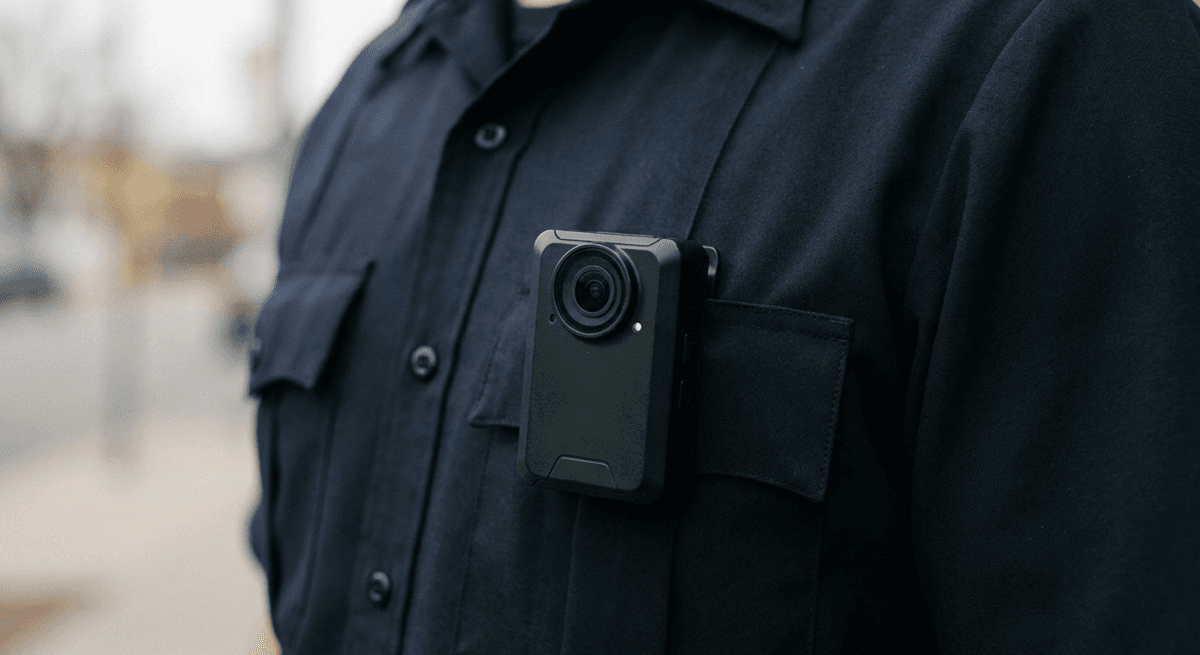
Yes. Since June 1, 2021, N.J.S.A. 40A:14-118.3 has required every uniformed State, county, and municipal patrol law enforcement officer in New Jersey to wear a body worn camera that electronically records audio and video while performing official duties. The requirement traces to P.L. 2020, c. 128, which Governor Phil Murphy signed on November 24, 2020, according to the New Jersey Legislature's official bill text, making New Jersey one of the earlier states to mandate cameras statewide rather than leave the decision to individual departments.
Section 118.3 defines "body worn camera" plainly, as a mobile video recording system worn by a law enforcement officer, with no exceptions written into the definition itself. What that section does carve out is the duty to wear one. It lists eight circumstances in which the requirement does not apply, including while engaging in an undercover assignment, when assigned to non-uniformed duties, while serving in an administrative position, while meeting with a confidential informant, while engaging in union representation, and when directed otherwise by a superior officer or by Attorney General guidelines. The two definitional carve-outs sometimes attributed to this section, for a device worn during an undercover assignment and a device used during a custodial interrogation at a place of detention under Rule 3:17, actually appear in the companion statute, N.J.S.A. 40A:14-118.5(a), enacted by P.L. 2020, c. 129.
In 2021 and 2022, Attorney General Directive 2021-5 and its successor, Directive 2022-1, broadened the practical reach of the mandate by requiring a wider range of officers, including those on tactical teams, canine units, and proactive enforcement assignments, to wear cameras even when they are not in a traditional patrol role, according to the New Jersey Attorney General's Body Worn Camera Policy.
When must an officer's camera be recording?
New Jersey law sets specific activation triggers rather than leaving the decision to an officer's discretion. Under N.J.S.A. 40A:14-118.5(c)(1), the video and audio recording functions must be activated whenever the officer is responding to a call for service or at the initiation of any other law enforcement or investigative encounter between an officer and a member of the public. If an immediate threat to the officer's life or safety makes activation impossible or dangerous, the same paragraph requires the officer to activate the camera at the first reasonable opportunity to do so, and the camera must remain activated until the encounter has fully concluded and the officer leaves the scene.
The statute also sets limits in the other direction. Subsection (c)(2) allows deactivation in narrow situations, such as when a civilian who will not otherwise cooperate asks for it, or when a prosecutor authorizes it for good cause. Subsections (c)(3) through (c)(5) direct an officer not to record, absent an active investigation, emergency, or anticipated use of force, while in a school or youth facility, in a patient care area, in a place of worship, or in a courtroom during proceedings. The Attorney General's Body Worn Camera Policy applies the activation rule to specific situations, including traffic stops, frisks, searches, arrests, and witness interviews. For incidents involving deadly force, if the camera is deactivated for a safety reason mid-encounter, the officer must reactivate it as soon as it is safe and practical to do so.
How long must New Jersey agencies keep bodycam footage?
New Jersey sets a retention floor, not a ceiling, and the statute itself, not agency policy, supplies most of the extensions. N.J.S.A. 40A:14-118.5(j) requires a body worn camera recording to be retained for not less than 180 days from the date it was recorded, subject to the additional retention periods listed below. Every New Jersey law enforcement agency must also adopt and follow a written retention policy under subsection (i), and agencies are free to keep footage longer than the statutory minimum. These periods matter beyond record-keeping: as explained in the next section, which retention period applies is what determines whether the footage is open to public inspection at all.
| Situation | Minimum retention | Citation |
|---|---|---|
| Standard encounter, no complaint or other trigger | 180 days | N.J.S.A. 40A:14-118.5(j) |
| A subject of the recording files a complaint about the encounter | 3 years, automatically | N.J.S.A. 40A:14-118.5(j)(1) |
| The recording officer, a subject officer, or a supervisor requests it, asserting evidentiary or exculpatory value | 3 years | N.J.S.A. 40A:14-118.5(j)(2)(a) to (c) |
| A member of the public who is a subject, a parent or legal guardian of a minor subject, or a deceased subject's next of kin or designee requests it | 3 years | N.J.S.A. 40A:14-118.5(j)(2)(e) to (g) |
| Footage pertains to a criminal investigation, or records information that may be subject to discovery in a prosecution | Treated as evidence and kept for the criminal evidence retention period | N.J.S.A. 40A:14-118.5(j)(3)(a) |
| Footage records an arrest that did not lead to an ongoing prosecution, or records a use of police force | Until the civil statute of limitations for suing the officer or agency expires | N.J.S.A. 40A:14-118.5(j)(3)(b) |
| Footage is the subject of an internal affairs complaint | Until the internal affairs investigation and any resulting administrative action are finally resolved | N.J.S.A. 40A:14-118.5(j)(3)(c) |
One retention route is deliberately walled off from evidentiary use: footage kept past 180 days solely because an officer asked to retain it for police training is not admissible in any criminal, civil, or administrative proceeding, under N.J.S.A. 40A:14-118.5(m).
Can the public get a copy of New Jersey bodycam footage?
New Jersey does have a bodycam-specific public inspection rule, and it is the starting point for any request. Requests are still submitted under the state's Open Public Records Act (OPRA), according to the Government Records Council's official text of OPRA, but N.J.S.A. 40A:14-118.5(l) governs which recordings are exempt.
Subsection (l) opens with a notwithstanding clause: notwithstanding that a criminal investigatory record does not constitute a government record under OPRA, only the following body worn camera recordings shall be exempt from public inspection. It then lists four categories. The first, and by far the most common, is footage not subject to any minimum three-year retention period or additional retention requirement under subsection (j). The other three cover footage held for three years where the person who triggered the longer period asks that it not be released, and footage held for three years solely at the request of an officer, supervisor, or for training.
The practical consequence runs opposite to the usual OPRA presumption. In Geronimo v. New Jersey State Police, GRC Complaint No. 2023-264, the Government Records Council held in a final decision on June 24, 2025 that body worn camera footage subject only to the 180-day minimum retention period is exempt from disclosure under N.J.S.A. 40A:14-118.5(l)(1), an exemption recognizable under OPRA through N.J.S.A. 47:1A-9(a), because the body worn camera law expressly ties retention to disclosure as a threshold consideration, according to the Council's final decision. Routine footage is the ordinary case, so for most requests the first question is not which OPRA exemption applies but whether the recording qualifies for a retention period longer than 180 days.
There is a second, more direct route for people who were actually filmed. Under N.J.S.A. 40A:14-118.5(k), a member of the public who is a subject of the recording, a parent or legal guardian of a minor subject, or a deceased subject's next of kin or legally authorized designee must be permitted to review the recording, in accordance with OPRA, in order to decide whether to request a three-year retention period. This is a review right, not a general right to a copy: the state Supreme Court read it as granting review during a specific window and for that specific purpose, so a subject who has already requested the three-year period no longer has a subsection (k) claim to view the footage.
OPRA's own exemptions still matter where they are not displaced. The ongoing investigation exemption under N.J.S.A. 47:1A-3(a) is temporary: the agency must show that releasing the record while the investigation continues would be inimical to the public interest, and the record becomes accessible once the investigation ends. The broader criminal investigatory records exemption is more durable for police records generally, but its application to body worn camera footage is unsettled rather than automatic, because subsection (l)'s notwithstanding clause addresses that exemption head-on. The state Supreme Court examined the question in Fuster and did not resolve it, so an agency denying a bodycam request on that ground is relying on an open question, not a settled rule.
Fuster v. Township of Chatham: the state Supreme Court expands access
New Jersey's framework for bodycam footage was tested directly in Fuster v. Township of Chatham. In May 2022, Antonio Fuster went to the Chatham Township Police Department to report that his special-needs child had accused an adult relative of sexual misconduct; an officer's body camera recorded the interview. When Fuster later sought a copy through OPRA to support a possible internal affairs complaint, the department denied the request, and the trial court and Appellate Division agreed that the footage was exempt because it concerned an individual who was not arrested or charged. On January 21, 2025, the New Jersey Supreme Court reversed and ordered the footage released.
The decision has three parts worth separating. First, on the review right, the Court held that Fuster was a subject of the recording and that the defendants erred in refusing to permit him to review the video to determine whether to request a three-year retention period under subsection (k). It also held that the right had run its course on these facts, because Fuster had gone ahead and requested the three-year period anyway, and because his co-plaintiff was neither a subject of the video nor one of the other persons subsection (k) covers.
Second, on subsection (l), the Court noted that the word only in that provision most naturally suggests the four listed categories are the sole and exclusive recordings exempt from public inspection, but pointed to the Legislature's repeated references to OPRA elsewhere in the law as cutting the other way. It expressly declined to decide whether subsection (l) abrogates OPRA's exemptions, because it could resolve the case without reaching the question. That issue remains open.
Third, on the ground the lower courts had relied on, the Court held that OPRA contains no explicit exemption protecting law enforcement records about an uncharged individual, and that before OPRA was enacted no New Jersey case law had established an automatic grant of confidentiality for such records. That holding narrows the grounds agencies can use to deny bodycam requests involving people who were not charged with a crime.
What happens if an officer fails to activate the camera, or tampers with it?
New Jersey backs its activation and retention rules with real consequences, not just a policy preference. Under N.J.S.A. 40A:14-118.5(q), an officer, employee, or agent who fails to follow the recording or retention requirements, or who intentionally interferes with a camera's ability to accurately capture audio or video, is subject to discipline. Beyond discipline, the law creates two rebuttable presumptions tied to lost or missing footage: in a criminal case, a defendant who reasonably asserts that exculpatory evidence was destroyed or not captured benefits from a presumption that it was; in a civil case against a government entity or officer for police misconduct, a plaintiff gets the same presumption in their favor. Any recording made in violation of the law must be destroyed immediately and is inadmissible in any criminal, civil, or administrative proceeding.
Is a civilian allowed to record the police in New Jersey?
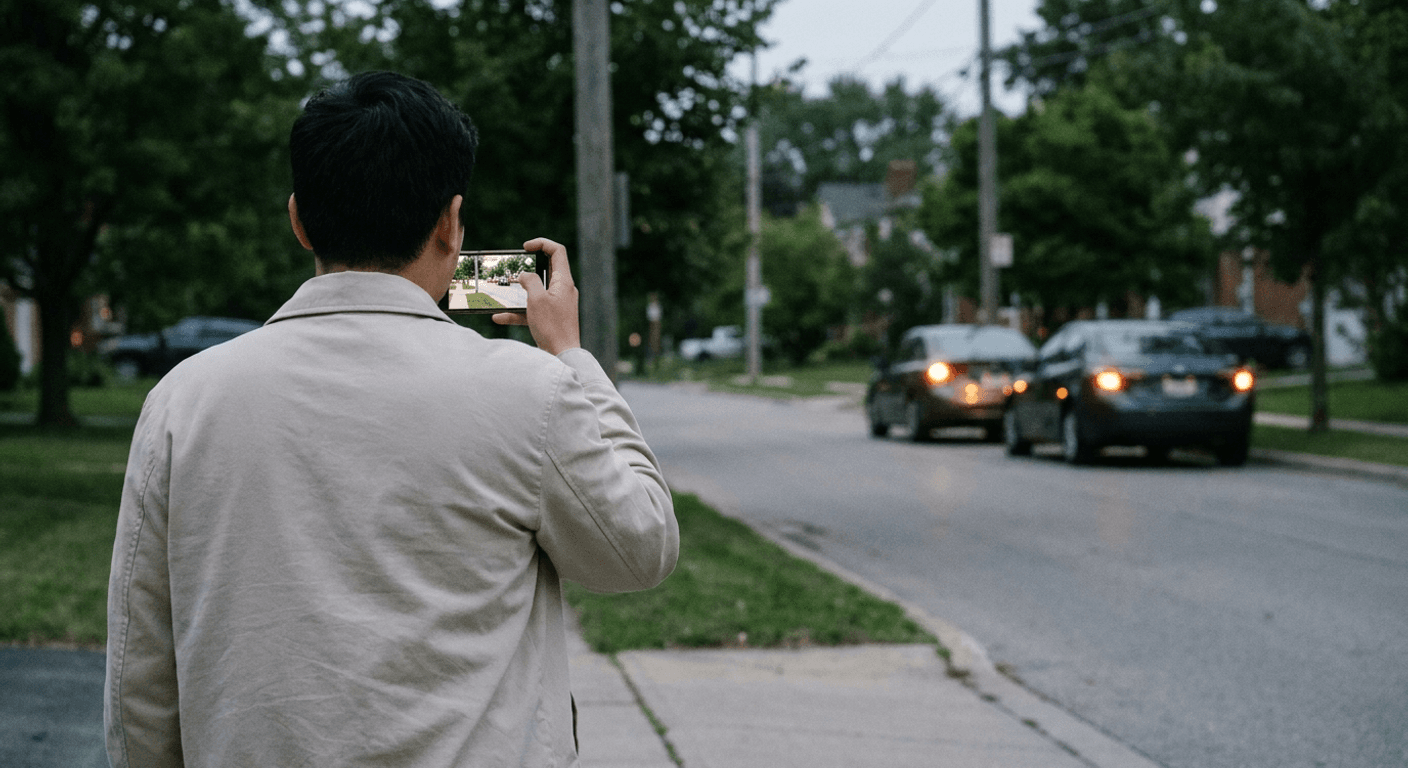
That is a separate legal question from the one this page addresses. New Jersey generally allows a person to record an on-duty officer performing public duties in a public place, under the state's one-party consent wiretap law and well-established First Amendment principles. For the full explanation of that right and how it differs from the rules on police-generated bodycam footage described above, see Is It Illegal to Record Someone?
More New Jersey Laws
Frequently Asked Questions
Does New Jersey require every police officer to wear a body camera?
New Jersey requires every uniformed State, county, and municipal patrol officer to wear one, under N.J.S.A. 40A:14-118.3, effective June 1, 2021. That section also lists eight exceptions to the duty to wear a camera, including undercover assignments, non-uniformed and administrative duty, and meetings with a confidential informant. Attorney General directives extend the practical requirement to additional roles, including tactical teams and canine units.
How long does a New Jersey police department have to keep bodycam footage?
At least 180 days from the date of the recording under N.J.S.A. 40A:14-118.5(j). The statute extends that to at least three years in several situations, including when a subject of the recording files a complaint, when the recording officer, a subject officer, a supervisor, or a member of the public who is a subject requests the longer period, and when the footage records an arrest that led to no prosecution or a use of police force. Footage tied to a criminal investigation is kept as evidence, and footage subject to an internal affairs complaint is kept until that matter is resolved.
How can I get a copy of New Jersey police bodycam footage?
Submit a request under the Open Public Records Act (OPRA) to the agency that made the recording. Whether the agency must release it turns first on retention: under N.J.S.A. 40A:14-118.5(l)(1), footage kept only for the 180-day minimum is exempt from public inspection. If you were filmed, N.J.S.A. 40A:14-118.5(k) separately entitles you, or a parent or guardian of a minor subject, or a deceased subject's next of kin or designee, to review the recording in accordance with OPRA in order to decide whether to request a three-year retention period. Requesting that longer period can also change whether the footage is publicly accessible.
Is New Jersey bodycam footage a public record by default?
Not routine footage. N.J.S.A. 40A:14-118.5(l)(1) exempts from public inspection any recording that is not subject to a three-year retention period or another additional retention requirement under subsection (j). In Geronimo v. New Jersey State Police, GRC Complaint No. 2023-264, the Government Records Council confirmed on June 24, 2025 that footage held only for the 180-day minimum was properly withheld on that basis.
What did the New Jersey Supreme Court decide in Fuster v. Township of Chatham?
On January 21, 2025, the Court held that OPRA contains no blanket exemption shielding body camera footage of a person who was interviewed by police but not arrested or charged, and ordered the Chatham Township Police Department to release the recording it had withheld. It also held that the department erred in refusing to let Fuster review the video to decide whether to request a three-year retention period, and it expressly declined to decide whether N.J.S.A. 40A:14-118.5(l) displaces OPRA's own exemptions for body camera footage.
What happens if a New Jersey officer does not turn on the body camera?
The officer is subject to discipline, and New Jersey law creates a rebuttable presumption, in both criminal and civil proceedings, that the missing footage would have supported the other side, whether that is a criminal defendant or a civil plaintiff alleging police misconduct.
Can a New Jersey police department withhold bodycam footage of an active investigation?
Yes, temporarily. The ongoing-investigation exemption under N.J.S.A. 47:1A-3(a) allows an agency to withhold footage while a case remains open, and the exemption ends once the investigation concludes. Whether the separate criminal investigatory records exemption applies to body camera footage at all is unsettled, because N.J.S.A. 40A:14-118.5(l) opens by addressing that exemption directly and the state Supreme Court in Fuster declined to resolve the question.
Is New Jersey's body camera law the same as the right to record police?
No. This page covers the public's access to police-generated footage. A civilian's right to record an on-duty officer is a separate legal question governed by New Jersey's wiretap consent law and the First Amendment.
Updates
Corrected the statutory citations on this page: the camera activation rule and the definitional carve-outs are in N.J.S.A. 40A:14-118.5, not 40A:14-118.3, and New Jersey does have a bodycam-specific access rule, under which footage kept only for the 180-day minimum is exempt from public inspection; added the subject review right under subsection (k), the full statutory retention schedule, and the Government Records Council decision in Geronimo.
Independently fact-checked against the cited primary sources; governing law re-checked for recent changes
Reviewed and approved by an editor
The Law Behind This Article
This article rests on the statutory provisions below, held in our own legal record and retrieved from the official source. Tap a section to read the operative text.
New Jersey Statutes (Unannotated)
§ 40A:14-118.5Body worn cameras, recordings, regulations concerning usage; terms defined.In forcecited in 4 of our articles
1. a. For the purposes of this section: "Body worn camera" means a mobile audio and video recording system worn by a law enforcement officer, but shall not include a recording device worn by a law enforcement officer while engaging in an undercover assignment or a recording device used during a custodial interrogation conducted in a place of detention in compliance with Rule 3:17 of the Rules Governing the Courts of the State of New Jersey. "Constructive authority" means the use of the law enforcement officer's authority to exert control over a person, directed against a person who is subject to an investigative detention or arrest or against any person if the officer has un-holstered a firearm or a conducted energy device. "Force" shall include physical, mechanical, enhanced mechanical, and deadly force. "Law enforcement officer" means a person whose public duties include the power to act as an officer for the detection, apprehension, arrest, and conviction of offenders against the laws of this State. This term shall not include a correctional police officer.
Official text (excerpt) · last checked 2026-08-01 · Read the full text in our law library · Verify at lis.njleg.state.nj.us
Cited in 13 court opinions in our collectionLatest citing opinion in our collection: 2026
In the courts (editorial summary, independently checked):Antonio Fuster v. Township of Chatham (2025) held subsection (k) did not entitle these requesters to review the footage, but ordered the body worn camera video released because no OPRA exemption applied. State v. Seligman (2025) held the subsection (q) presumption did not reach a search predating the law's June 2021 effective date.
Opinions citing this section in our collection:
- Antonio Fuster v. Township of Chatham (Supreme Court of New Jersey 2025)✓A father who reported his child's abuse allegation sought the body worn camera video of his own police interview; the court held subsection (k) no longer helped him once he had requested three-year retention, but ordered release since no OPRA exemption covered the video.
- State of New Jersey v. Yonathan Z. Seligman (New Jersey Superior Court Appellate Division 2025)✓Officers executing a 2021 drug warrant did not timely activate their body cameras; the court held subsection (q)'s rebuttable presumption did not apply because the statute took effect after the search, and refused to make a directive violation trigger automatic suppression.
- State of New Jersey v. Kevin B. Boone (New Jersey Superior Court Appellate Division 2024)✓Challenging a pretextual car stop and the warrantless search that followed, the defendant sought suppression; the court noted in a footnote that the rebuttable presumption of N.J.S.A. 40A:14-118.5 took effect after the stop and so did not apply at the suppression hearing.
Identified automatically from the court opinions citing this section — not a ranking of which case controls.
Also relied on in: New Jersey Police Reports: How to Get a Crash Report, Incident Report, or Bodycam Video, How to Request Body Cam Footage: State Laws and the Request Process, New Jersey Recording Laws (2026): One-Party Consent Rules
Search our full record of US law — 2.1 million sections, every state + federal →
Sources and References
- N.J.S.A. 40A:14-118.3, requiring uniformed patrol officers to wear body worn cameras, enacted by P.L. 2020, c. 128, official New Jersey Legislature bill text(pub.njleg.gov).gov
- New Jersey Attorney General Law Enforcement Directive No. 2022-1, Body Worn Camera Policy (activation, retention, and disciplinary provisions)(nj.gov).gov
- New Jersey Open Public Records Act (OPRA), P.L. 2001, c. 404, as amended, official readable text via the Government Records Council(nj.gov).gov
- Fuster v. Township of Chatham, New Jersey Supreme Court opinion (Jan. 21, 2025), holding OPRA contains no blanket exemption for body camera footage of an uncharged individual(njcourts.gov).gov
- Office of the Governor, Governor Murphy and Attorney General Grewal Release Recommendations of Interagency Working Group on Body Worn Cameras(nj.gov).gov
- N.J. Supreme Court expands access to police body camera footage, New Jersey Monitor(newjerseymonitor.com)
- N.J.S.A. 40A:14-118.5, New Jersey Body Worn Camera Law, enacted by P.L. 2020, c. 129 (A4312, first reprint as enacted), official legislative history and enacted text compiled by the New Jersey State Law Library(repo.njstatelib.org)
- Geronimo v. New Jersey State Police, GRC Complaint No. 2023-264, Government Records Council final decision (June 24, 2025), holding body worn camera footage subject only to the 180-day minimum retention period is exempt from disclosure under N.J.S.A. 40A:14-118.5(l)(1)(nj.gov)