
Michigan
Michigan Police Bodycam Laws: Retention & Public Records
Independently fact-checked against primary sources (last audited August 20, 2026). · Reviewed by the RecordingLaw editorial team. · Law checked current as of August 20, 2026. · 5 primary sources cited on this page. How we verify our legal content

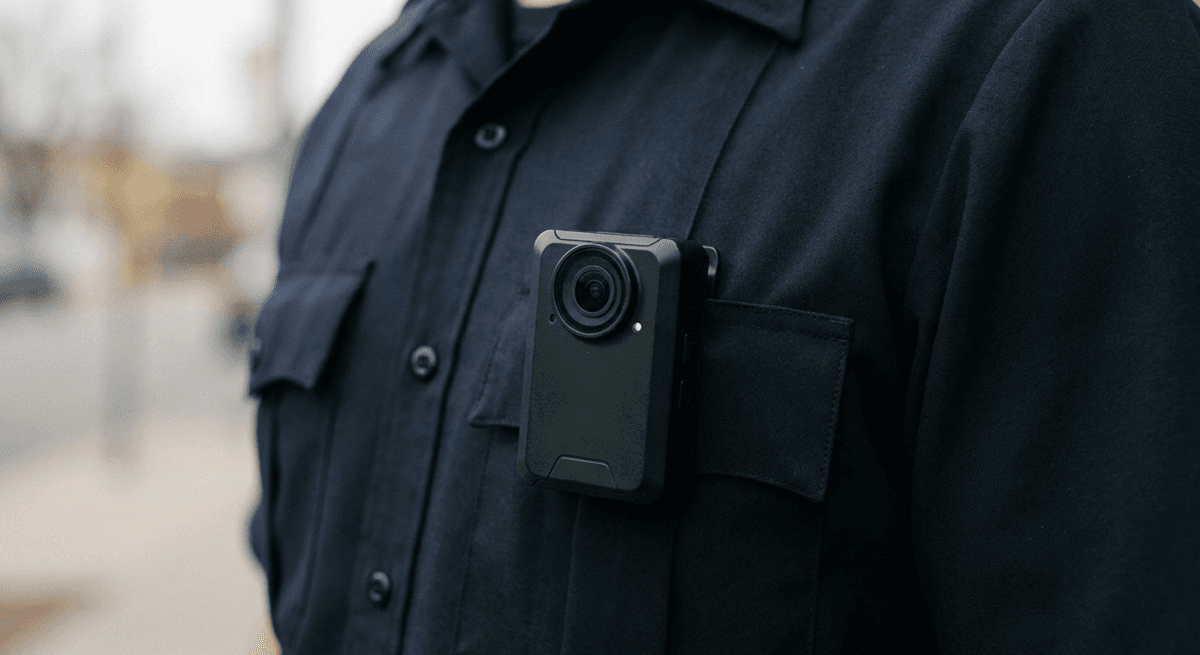
Michigan has no statute requiring police departments to use body cameras, but any agency that does must follow the Law Enforcement Body-Worn Camera Privacy Act, MCL 780.311 to 780.318, which sets a 30-day minimum retention period for evidentiary recordings and layers specific access rules on top of the state's Freedom of Information Act.
This guide is part of our Police Bodycam Laws by State series. It covers Michigan's retention rule, how public records requests for footage work, and what happens when a camera stops recording before a critical moment.
Jurisdiction scope: This article addresses Michigan law governing police-worn body cameras under the Law Enforcement Body-Worn Camera Privacy Act, MCL 780.311 to 780.318, and its interaction with the Michigan Freedom of Information Act. It does not address whether a civilian may record an on-duty officer, which is a separate question covered in our guide on recording someone without consent.
Does Michigan Require Police to Wear Body Cameras?
No. Michigan has no law compelling police departments, sheriffs' offices, or the Michigan State Police to equip officers with body cameras. Adoption is a local policy and budget decision. What the state does regulate is what happens once an agency chooses to use them: since Act 85 of 2017 took effect, MCL 780.318 has required any Michigan law enforcement agency that uses body-worn cameras to adopt a written policy addressing use, storage, and access before deploying them.
The Michigan State Police provide a useful example of how adoption plays out without a mandate. MSP began rolling out cameras to road patrol troopers starting in early 2022 and had equipped roughly 1,700 troopers statewide by the end of that year, a decision driven by department policy and funding rather than a statutory command. Smaller municipal departments and county sheriffs across Michigan have adopted bodycams on a similarly uneven timeline, and pending legislation that would create a statewide mandate for certain officers has been introduced in the Legislature but has not passed as of this writing.
How Long Must Michigan Agencies Retain Bodycam Footage?
MCL 780.316(1) sets Michigan's retention floor at 30 days from the date a recording is made, but that floor reaches only an evidentiary audio and video recording. MCL 780.312(b) defines that term as a recording of an incident or encounter, including a crime, arrest, citation, search, use of force incident, or confrontational encounter with a citizen, that may be materially useful for investigative or prosecutorial purposes. Routine patrol footage that captures none of those things falls outside the definition, so the Act imposes no minimum retention period on it and the agency's own written policy under MCL 780.318 controls how long it is kept. Anyone trying to preserve ordinary, non-evidentiary video should act on that assumption rather than relying on a 30-day statutory cushion.
For recordings the floor does reach, that 30-day baseline extends automatically in two situations, and both extensions are drafted more broadly than the floor itself: subsections (2) and (3) speak to audio and video recordings generally, without the evidentiary qualifier. First, if a recording becomes the subject of an ongoing criminal investigation, an ongoing internal investigation, a criminal prosecution, or a civil action, the agency must retain it until that investigation or proceeding is complete, however long that takes. Second, if a recording is relevant to a formal complaint filed against a law enforcement officer or agency, MCL 780.316(3) requires retention for at least 3 years from the date of the recording.
The statute also addresses what happens when footage goes missing after the retention period lapses, or is lost to a technical failure or human error: it does not, by itself, create a legal presumption in favor of either the prosecution or the defense in a resulting criminal or civil case. That detail matters in practice, since it means a missing recording does not automatically help or hurt either side in court; the significance of a gap in the footage still has to be argued on the facts of the individual case.
| Michigan bodycam fact | Rule |
|---|---|
| Statewide mandate | None; local-agency discretionary |
| Governing statute | Law Enforcement Body-Worn Camera Privacy Act, MCL 780.311-780.318 |
| Standard retention | 30 days minimum for evidentiary recordings (MCL 780.316(1)); no statutory floor for non-evidentiary footage |
| Ongoing investigation or civil action | Retained until concluded |
| Formal complaint against an officer | Retained at least 3 years |
| Default public-records status | Subject to general Michigan FOIA, with an investigation-related exemption resting on seven statutory grounds |
Can the Public Get a Copy of Bodycam Footage in Michigan?
Michigan does not declare bodycam footage categorically open or categorically closed. Instead, MCL 780.315(1) carves out a time-limited exemption from the Michigan Freedom of Information Act: a recording retained in connection with an ongoing criminal investigation or an ongoing internal investigation is not a public record, but only to the extent that disclosure would do one of seven enumerated things. Those are interfering with law enforcement proceedings; depriving a person of the right to a fair trial or impartial adjudication; constituting an unwarranted invasion of personal privacy; disclosing the identity of a confidential source, or confidential information furnished only by such a source in a criminal investigation; disclosing law enforcement investigative techniques or procedures; endangering the life or physical safety of law enforcement personnel; or disclosing information regarding a crime victim in violation of enumerated sections of the William Van Regenmorter crime victim's rights act.
The exemption is time-limited, since it runs only while an investigation is ongoing, but the grounds themselves are not narrow. The first, interference with law enforcement proceedings, is broad enough that agencies commonly rely on it to withhold footage for the life of an investigation. Two of the grounds are meanwhile narrower than they may sound: the sixth protects law enforcement personnel specifically rather than the public at large, and the seventh is keyed to particular sections of the crime victim's rights act rather than to victim or witness information generally. A separate provision of the general FOIA statute, MCL 15.243(1)(v), lets an agency withhold footage connected to a civil action where the person requesting it and the agency are both parties to that lawsuit, and MCL 780.315(2) cross-references that provision directly.
Once an investigation closes, or where no investigation-related exemption applies in the first place, a bodycam recording is treated like any other public record and is subject to a standard Michigan FOIA request submitted to the agency's FOIA coordinator. The Michigan State Police, for example, process bodycam and dashcam requests through its Records Resource Section using the same FOIA intake process used for incident reports and other records.
What Happens When a Camera Doesn't Capture the Critical Moment?
Michigan's statute does not set a specific disciplinary consequence for an officer whose camera fails to activate, and that gap became a matter of public scrutiny after the April 4, 2022, death of Patrick Lyoya, a 26-year-old motorist who was fatally shot by a Grand Rapids police officer following a traffic stop and struggle. The officer's body camera stopped recording shortly before the fatal shot; Grand Rapids Police Chief Eric Winstrom told reporters he believed the camera's three-second deactivation button was pressed inadvertently during the physical struggle rather than deliberately by the officer. The department released the bodycam video, along with dashcam, doorbell, and cell phone footage, nine days later, on April 13, 2022, following public pressure and community protests, and Michigan State Police and the Kent County Prosecutor's Office separately investigated the shooting.
The episode illustrates a structural point about Michigan's law: MCL 780.316 governs how long footage must be kept once it exists, but neither that section nor MCL 780.315 imposes a specific statutory activation requirement or penalty for a camera that stops recording during an encounter. Any activation and discipline requirements come from the individual department's own written policy under MCL 780.318, not from a uniform statewide rule.
Recording Police Versus Police Recording You
This guide addresses the opposite question from most of the recording-law content on this site: what happens when police record you, not whether you can record police. Michigan is a one-party consent state for recording conversations, and that rule governs civilians, not an officer's on-duty bodycam. For the separate question of whether you can legally record someone, including police, see our guide on whether it's illegal to record someone without their consent.
More Michigan Laws
Frequently Asked Questions
Are Michigan police required to wear body cameras?
No. Michigan has no statute mandating body cameras for any police department, including the Michigan State Police. Any agency that chooses to use them must adopt a written policy under MCL 780.318.
How long must Michigan police keep bodycam footage?
MCL 780.316(1) requires a minimum of 30 days for an evidentiary recording, meaning footage of a crime, arrest, citation, search, use of force incident, or confrontational encounter that may be materially useful for investigative or prosecutorial purposes. Routine footage outside that definition has no statutory floor. Retention extends until an ongoing criminal investigation, prosecution, or civil action concludes, and to at least 3 years if the footage is relevant to a formal complaint against an officer.
Can the public request Michigan police bodycam video?
Yes, through the Michigan Freedom of Information Act. MCL 780.315 exempts footage only while it is part of an ongoing criminal or internal investigation, and then only to the extent disclosure would do one of seven listed things, such as interfering with law enforcement proceedings, denying someone a fair trial, invading personal privacy, revealing a confidential source or investigative technique, endangering the life or physical safety of law enforcement personnel, or disclosing protected crime-victim information. Outside that window, standard FOIA rules apply.
What happened with the bodycam footage in the Patrick Lyoya shooting?
Grand Rapids officer's body camera stopped recording shortly before the April 4, 2022, fatal shooting of Patrick Lyoya. The department released the available bodycam, dashcam, and other video nine days later, on April 13, 2022, after public pressure.
Does a missing bodycam recording help a defendant in a Michigan criminal case?
Not automatically. MCL 780.316 specifies that a recording lost after the retention period expires, or lost to technical or human error, does not by itself create a legal presumption favoring either side; its significance is argued on the facts of the individual case.
Do Michigan police need consent before recording with a body camera?
No. Michigan is a one-party consent state for recording conversations generally, but that rule addresses civilians recording each other. An on-duty officer does not need a subject's consent to activate a body camera while performing official duties.
Updates
Corrected Michigan's bodycam rules: the MCL 780.316 30-day retention floor applies only to evidentiary recordings as defined in MCL 780.312(b), and the MCL 780.315 FOIA exemption rests on all seven statutory grounds, two of which the page had stated more broadly than the statute does.
Independently fact-checked against the cited primary sources; governing law re-checked for recent changes
Corrected the citation for Michigan's written body-worn-camera-policy requirement to MCL 780.318 across four restatements of the claim (it was mistakenly attributed to MCL 780.313, which covers crime-victim disclosure protections and a private-place public-records exemption, not policy adoption).
Governing law re-checked for recent changes
Reviewed and approved by an editor
The Law Behind This Article
This article rests on the statutory provisions below, held in our own legal record and retrieved from the official source. Tap a section to read the operative text.
Michigan Compiled Laws
§ 780.316Audio and video recording recorded by body-worn camera; retention by law enforcement agency; duration; presumptionIn force
(1) Except as provided in subsections (2) and (3), a law enforcement agency shall retain an evidentiary audio and video recording recorded by a body-worn camera for not less than 30 days from the date the recording is made. (2) A law enforcement agency shall retain audio and video recordings that are the subject of an ongoing criminal or internal investigation, or an ongoing criminal prosecution or civil action, until the completion of the ongoing investigation or legal proceeding. (3) A law enforcement agency shall retain audio and video recorded by a body-worn camera for not less than 3 years after the date the recording is made if the recording is relevant to a formal complaint against a law enforcement officer or agency.
Official text (excerpt) · last checked 2026-08-31 · Read the full text in our law library · Verify at legislature.mi.gov
Cited in 3 court opinions in our collectionLatest citing opinion in our collection: 2025
Opinions citing this section in our collection:
- People of Michigan v. Mohammed Mohammed-Sa Al-Kuhali (Michigan Court of Appeals 2025)“…it court opined that the WPD’s policy “flies in the face of MCL 780.316(2),” which requires law enforcement age…”
- People of Michigan v. Davonte Fluellen (Michigan Court of Appeals 2024)“…was necessarily done in bad faith because doing so violated MCL 780.316(2). MCL 780.316(2) states, “A law enfor…”
- People of Michigan v. Juan Carlos Rodriguez (Michigan Court of Appeals 2025)“…e police department’s failure to preserve evidence violated MCL 780.316(2) of the Law Enforcement Body-Worn Cam…”
Identified automatically from the court opinions citing this section — not a ranking of which case controls.
§ 780.315Audio or video recording from body-worn camera; retention by law enforcement agency; disclosure as public record; limitationIn force
(1) An audio or video recording from a body-worn camera that is retained by a law enforcement agency in connection with an ongoing criminal investigation or an ongoing internal investigation is not a public record and is exempt from disclosure under the freedom of information act, 1976 PA 442, MCL 15.231 to 15.246, but only to the extent that disclosure as a public record would do any of the following: (a) Interfere with law enforcement proceedings. (b) Deprive a person of the right to a fair trial or impartial adjudication. (c) Constitute an unwarranted invasion of personal privacy. (d) Disclose the identity of a confidential source or, if the record is compiled by a law enforcement agency in the course of a criminal investigation, disclose confidential information furnished only by a confidential source. (e) Disclose law enforcement investigative techniques or procedures. (f) Endanger the life or physical safety of law enforcement personnel.
Official text (excerpt) · last checked 2026-07-30 · Read the full text in our law library · Verify at legislature.mi.gov
§ 780.318Use, maintenance, and disclosure of audio and video recordings recorded by body-worn cameras; written policyIn force
A law enforcement agency that utilizes body-worn cameras shall develop a written policy regarding the use of the body-worn cameras by its law enforcement officers and the maintenance and disclosure of audio and video recordings recorded by body-worn cameras that complies with the requirements of this act.
Official text (excerpt) · last checked 2026-07-30 · Read the full text in our law library · Verify at legislature.mi.gov
§ 780.312DefinitionsIn force
As used in this act: (a) "Body-worn camera" means a device that is worn by a law enforcement officer that electronically records audio and video of his or her activities. (b) "Evidentiary audio and video recording" means an audio and video recording of an incident or encounter recorded by a body-worn camera, including a crime, arrest, citation, search, use of force incident, or confrontational encounter with a citizen, that may be materially useful for investigative or prosecutorial purposes, including for a criminal and internal investigation. (c) "Private place" means a place where an individual may reasonably expect to be safe from casual or hostile intrusion or surveillance but does not include a place to which the public or a substantial group of the public has access.
Official text (excerpt) · last checked 2026-07-30 · Read the full text in our law library · Verify at legislature.mi.gov
§ 780.311Short titleIn forcecited in 4 of our articles
This act shall be known and may be cited as the "law enforcement body-worn camera privacy act".
Official text (excerpt) · last checked 2026-07-30 · Read the full text in our law library · Verify at legislature.mi.gov
Cited in 1 court opinions in our collectionLatest citing opinion in our collection: 2025
Opinions citing this section in our collection:
- People of Michigan v. Juan Carlos Rodriguez (Michigan Court of Appeals 2025)“…316(2) of the Law Enforcement Body-Worn Camera Privacy Act, MCL 780.311 et seq., which provides that “[a] law e…”
Identified automatically from the court opinions citing this section — not a ranking of which case controls.
Also relied on in: Michigan Laws on Recording Police: Your Rights and Legal Limits (2026), How to Get a Police Report in Michigan (2026 Guide)
§ 15.243Exemptions from disclosure; public body as school district, intermediate school district, or public school academy; withholding of information required by law or in possession of executive officeIn forcecited in 8 of our articles
(1) A public body may exempt from disclosure as a public record under this act any of the following: (a) Information of a personal nature if public disclosure of the information would constitute a clearly unwarranted invasion of an individual's privacy. (b) Investigating records compiled for law enforcement purposes, but only to the extent that disclosure as a public record would do any of the following: (i) Interfere with law enforcement proceedings. (ii) Deprive a person of the right to a fair trial or impartial administrative adjudication. (iii) Constitute an unwarranted invasion of personal privacy. (iv) Disclose the identity of a confidential source, or if the record is compiled by a law enforcement agency in the course of a criminal investigation, disclose confidential information furnished only by a confidential source. (v) Disclose law enforcement investigative techniques or procedures. (vi) Endanger the life or physical safety of law enforcement personnel. (vii) Disclose the identity of a party who, as described in subdivision (cc), proceeds anonymously in a civil action in which the party alleges that the party was the victim of sexual misconduct.
Official text (excerpt) · last checked 2026-07-30 · Read the full text in our law library · Verify at legislature.mi.gov
Cited in 203 court opinions in our collectionLatest citing opinion in our collection: 2026
Opinions citing this section in our collection:
- Booth Newspapers, Inc v. University of Michigan Board of Regents (Michigan Supreme Court 1993, 444 Mich. 211)“…nces in which public records may be exempt from disclosure. MCL 15.243; MSA 4.1801(13). These exemptions must…”
- Herald Co. v. City of Bay City (Michigan Supreme Court 2000, 463 Mich. 111)“…a clearly unwarranted invasion of an individual's privacy. [MCL 15.243(1); MSA 4.1801(13)(1).] The trial cou…”
- Coblentz v. City of Novi (Michigan Supreme Court 2006, 475 Mich. 558)“…ems were not exempt because defendant failed to comply with MCL 15.243(1)(f)(iii). Finally, the Court of Appea…”
Identified automatically from the court opinions citing this section — not a ranking of which case controls.
Also relied on in: Michigan Data Privacy Laws: Consumer Rights & Protections (2026), Police Reports by State: How to Get a Copy, What They Cost, and What's Public, Are Autopsy Reports Public in Michigan? (2026 Guide)
Explore the law
The laws cited above reference these related sections in their own text:
- Michigan Compiled Laws § 15.231 — Short title; public policy view in our statute record · read at the official source
- Michigan Compiled Laws § 750.145c — Definitions; child sexually abusive activity or material; penalties; possession of child sexually abusive material; expert testimony; defenses; acts of commercial film or photographic print processor; report to law enforcement agency by computer technician; reasonable availability of evidence to defendant; applicability and uniformity of section; enactment or enforcement of ordinance, rule, or regulation prohibited view in our statute record · read at the official source
- Michigan Compiled Laws § 750.520b — Criminal sexual conduct in the first degree; circumstances; felony; consecutive terms view in our statute record · read at the official source
- Michigan Compiled Laws § 750.520c — Criminal sexual conduct in the second degree; felony view in our statute record · read at the official source
- Michigan Compiled Laws § 750.520d — Criminal sexual conduct in the third degree; felony view in our statute record · read at the official source
- Michigan Compiled Laws § 750.520e — Criminal sexual conduct in the fourth degree; misdemeanor view in our statute record · read at the official source
Related law for further reading — not part of this article’s citations.
Search our full record of US law — 2.1 million sections, every state + federal →
Sources and References
- Law Enforcement Body-Worn Camera Privacy Act, MCL 780.311-780.318 (Act 85 of 2017)(legislature.mi.gov).gov
- MCL 780.315 (FOIA exemption for recordings tied to an ongoing investigation)(legislature.mi.gov).gov
- MCL 780.316 (retention of body-worn camera recordings; 30 day minimum; 3 year formal complaint rule)(legislature.mi.gov).gov
- MCL 15.243 (Michigan Freedom of Information Act exemptions, incl. civil-action records)(legislature.mi.gov).gov
- Michigan State Police Freedom of Information Act (FOIA) request process(michigan.gov).gov
- "Grand Rapids Police release video of officer shooting, killing Patrick Lyoya," Bridge Michigan(bridgemi.com)
- MCL 780.312 (definitions; "evidentiary audio and video recording" at subsection (b))(legislature.mi.gov)