
Maine
Maine Police Bodycam Laws (2026): No Mandate & Records Access
Independently fact-checked against primary sources (last audited August 20, 2026). · Reviewed by the RecordingLaw editorial team. · Law checked current as of August 20, 2026. · 5 primary sources cited on this page. How we verify our legal content
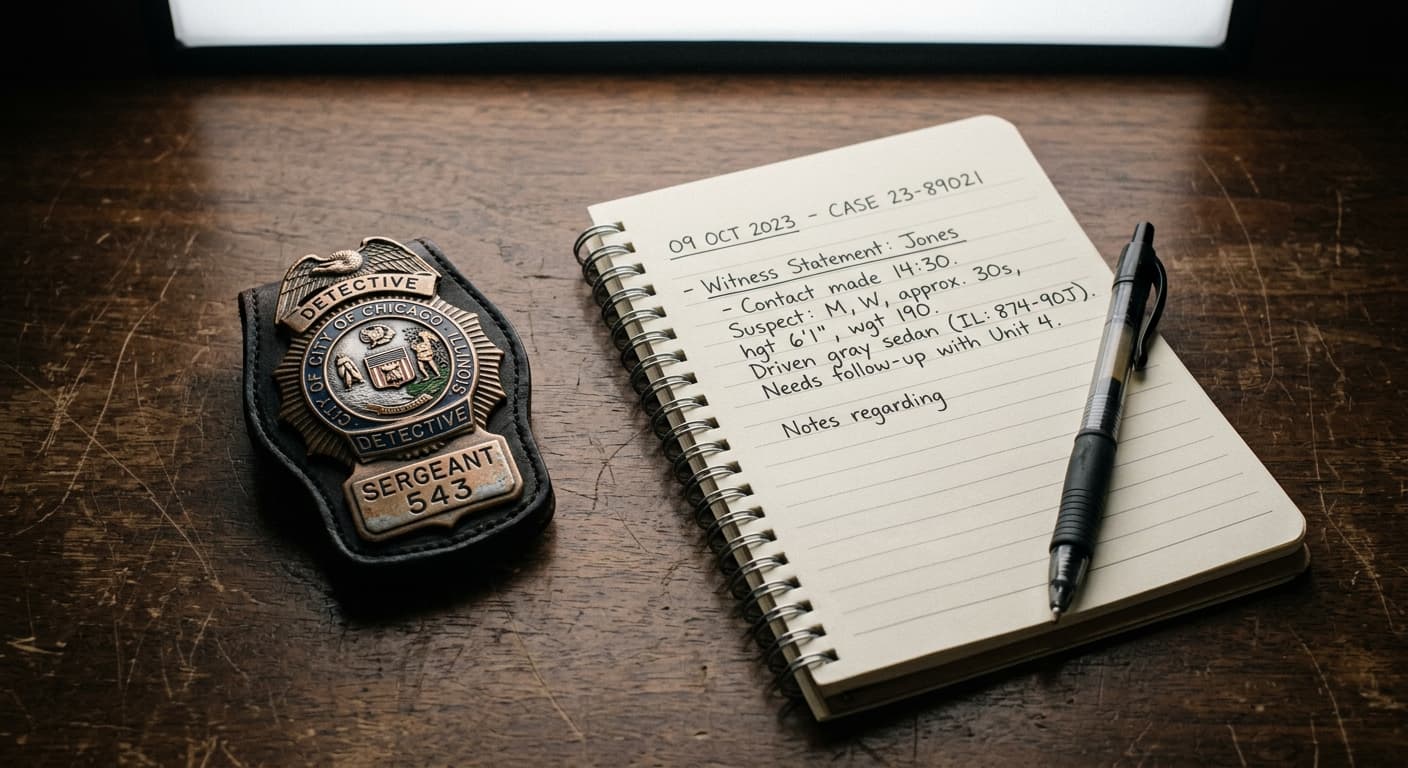
Maine has no statute requiring any law enforcement agency to use body cameras. A 2019 bill to mandate them died in the Legislature, so adoption, activation rules, and retention are left entirely to each department's own policy, while footage access runs through Maine's Freedom of Access Act.
Jurisdiction scope: This article addresses Maine law governing police body cameras, specifically the absence of a statewide use mandate, and general public-records access under Maine's Freedom of Access Act (1 M.R.S. § 401 et seq., with the operative right of inspection at § 408-A) and the intelligence and investigative record information exemption (16 M.R.S. § 804). It does not address whether a civilian may record a Maine police officer, a different, already-settled question under Maine's one-party consent law; see Is It Illegal to Record Someone?. For other states, see the Police Bodycam Laws hub.
Does Maine require police departments to use body cameras?
No. Unlike roughly eight other states, Maine has never enacted a law requiring law enforcement agencies to equip officers with body-worn cameras. The closest the Legislature came was LD 636 (129th Legislature, 2019), An Act To Require Law Enforcement Officers To Wear Body Cameras, which would have required every Maine agency to equip its officers with body cameras recording during law-enforcement encounters starting January 1, 2021.
Lawmakers did not pass that mandate. There was no separate companion bill: LD 636 itself was amended, by Committee Amendment C-A (S-236), from an equipment mandate into a resolve that would have established a nine-member work group chaired by the Attorney General to study body-camera best practices and report back by March 1, 2020. That amended resolve was never enacted either. The official bill history records LD 636's final disposition as "Died Upon Conclusion of the 129th Legislature, Nov 16, 2020," so neither the equipment mandate nor the work group ever became law, and no work group was ever convened. No later bill has revived a statewide equipment requirement, so whether a given Maine department uses body cameras, and on what terms, remains a local budget and policy decision.

How common are body cameras among Maine police without a mandate?
Adoption has grown substantially even without a law requiring it. A 2024 study by the Maine Statistical Analysis Center, working with the Maine Attorney General's Office, surveyed law enforcement agencies statewide and found about 70% were already using body-worn cameras, another 21% were considering adopting them, and only 8% had neither used nor planned to use them.
Cost was the recurring obstacle agencies without cameras cited. Nearly two-thirds of departments that had adopted the technology reported annual costs of $10,000 or less, but smaller and rural departments described upfront and ongoing storage costs as a real barrier without state funding attached to a mandate. The same report recommended against imposing a statewide requirement, warning that an unfunded mandate would be too burdensome, and urged the state instead to address inconsistent retention and release practices from one department to the next.
How long do Maine police departments keep body-camera footage?
There is no statewide answer. Because Maine has no bodycam statute, retention periods are set individually by each law enforcement agency's own policy rather than by a day-count fixed in state law. The 2024 Maine Statistical Analysis Center report specifically flagged this as a gap, noting a lack of consistency and clarity regarding how long videos should be retained and when and how they should be released from one department to the next. A person who wants to know how long footage from a specific stop or incident will be kept needs to ask that department directly, since Maine's public-safety statutes do not answer the question the way they do in states with a dedicated body-camera law.
Can the public get a copy of body-camera footage in Maine?
Yes, but through Maine's general public-records law rather than a camera-specific statute. The Maine Freedom of Access Act (1 M.R.S. § 401 et seq.) presumes government records, including police video, are public unless a specific exemption applies. The section doing that work is 1 M.R.S. § 408-A, which provides that, except as otherwise provided by statute, a person has the right to inspect and copy any public record within a reasonable time of asking; § 401 is the act's declaration of policy and rules of construction rather than the operative grant. Two exemptions do most of the work in practice.
First, footage reviewed as part of an officer's personnel file, for example when a department examines a recording to decide whether an officer violated policy, can be withheld under FOAA's personnel-records exemption. Second, footage that is part of an open criminal investigation can be withheld as intelligence and investigative record information under 16 M.R.S. § 804, which lets a criminal justice agency decline to disclose an investigative record where release carries a reasonable possibility of specified harms, such as interfering with a prosecution, endangering a witness, or revealing an investigative technique. Once an investigation closes, that basis for withholding weakens, though a custodian may still redact portions on privacy grounds.
A requester who disputes an agency's denial can contact the Public Access Ombudsman within the Maine Attorney General's office, created under 5 M.R.S. § 200-I, which issues advisory opinions on freedom-of-access disputes, though its recommendations are not binding on the agency.
Has the absence of a bodycam law mattered in a real case?
In May 2017, York County Sheriff's deputies shot and killed Chad Dionne at his home in Arundel after, according to investigators, he pointed a gun at them; the Maine Attorney General's Office found the shooting legally justified. At the time, York County's deputies carried neither body cameras nor dashboard cameras, so no video existed to show what happened during the encounter. Dionne's mother, Brenda Dionne, later became a public advocate for statewide body-camera adoption, telling a Portland television station that the family had only the investigators' report and "nobody to tell us the other side of the story." The York County Sheriff's Office has since added dash cameras and has said it plans to add body cameras once funding allows, illustrating how, without a state mandate or dedicated funding stream, adoption in Maine still depends on individual county budgets years after the technology became common elsewhere.
Separately, Maine's exemption-heavy FOAA has drawn its own criticism. After Portland police declined to release 2017 dashcam video from a police shooting, First Amendment attorney Sigmund Schutz observed that Maine's public-records law had, in his words, "turned into Swiss cheese," with broad, overlapping exemptions that let agencies interpret close cases toward nondisclosure.
This article provides general legal information about Maine's approach to police body cameras and public-records law. It is not legal advice. Maine law was reviewed as of July 2026, and legislative activity on this topic continues; consult a Maine-licensed attorney or the Public Access Ombudsman for guidance on a specific request.
More Maine Laws
Frequently Asked Questions
Does Maine require police to wear body cameras?
No. Maine has no statewide statute mandating body-camera use. A 2019 bill, LD 636, would have required every agency to equip officers by January 1, 2021, but it died when the 129th Legislature adjourned on November 16, 2020.
What happened to Maine's 2019 body camera mandate bill?
LD 636 started as a body-camera equipment mandate and was amended into a resolve that would have created a work group to study best practices. Neither version was enacted. The official bill history records LD 636 as having died upon conclusion of the 129th Legislature on November 16, 2020, and no later bill has revived it.
How many Maine police departments actually use body cameras?
About 70% of agencies that responded to a 2024 Maine Statistical Analysis Center and Attorney General's Office survey reported using body-worn cameras, with another 21% considering adoption. Cost remains the most commonly cited barrier for agencies that have not adopted the technology.
How long do Maine police keep body camera footage?
There is no statewide retention period fixed in Maine law. Each department sets its own retention schedule, and a 2024 state-commissioned report found meaningful inconsistency between agencies.
How can I request police body-camera footage in Maine?
Submit a request under the Maine Freedom of Access Act to the agency that made the recording. If the agency denies the request, you can raise the dispute with the Public Access Ombudsman in the Maine Attorney General's office for a non-binding advisory opinion, or pursue the matter in court.
Can Maine police withhold body-camera footage from a shooting?
Often, at least temporarily. Footage tied to an open investigation can be withheld as intelligence and investigative record information under 16 M.R.S. § 804 if release would interfere with the investigation or create another specified harm. That basis for withholding weakens once the investigation closes.
Do Maine officers need my consent to record me with a body camera?
No. Maine is a one-party consent state, and an on-duty officer needs no one's permission to record a member of the public during a law-enforcement encounter. For the separate question of whether civilians may record police, see Is It Illegal to Record Someone?.
Updates
Corrected the account of LD 636: the 2019 body-camera mandate was itself amended into a study resolve that also died unenacted on November 16, 2020, so no work group was ever established, and added the operative Freedom of Access Act section, 1 M.R.S. § 408-A.
Independently fact-checked against the cited primary sources; governing law re-checked for recent changes
Governing law re-checked for recent changes
Reviewed and approved by an editor
The Law Behind This Article
This article rests on the statutory provisions below, held in our own legal record and retrieved from the official source. Tap a section to read the operative text.
Maine Revised Statutes, Title 1: GENERAL PROVISIONS, Chapter 13: PUBLIC RECORDS AND PROCEEDINGS
§ 408-APublic records available for inspection and copyingIn forcecited in 3 of our articles
Except as otherwise provided by statute, a person has the right to inspect and copy any public record in accordance with this section within a reasonable time of making the request to inspect or copy the public record. [PL 2011, c. 662, §5 (NEW).] 1. Inspect. A person may inspect any public record during reasonable office hours. An agency or official may not charge a fee for inspection unless the public record cannot be inspected without being converted or compiled, in which case the agency or official may charge a fee as provided in subsection 8. 2. Copy. A person may copy a public record in the office of the agency or official having custody of the public record during reasonable office hours or may request that the agency or official having custody of the record provide a copy. The agency or official may charge a fee for copies as provided in subsection 8. A. A request need not be made in person or in writing. [PL 2011, c. 662, §5 (NEW).] B. The agency or official shall mail the copy upon request. [PL 2011, c. 662, §5 (NEW).] 3. Acknowledgment; clarification; time estimate; cost estimate.
Official text (excerpt) · last checked 2026-09-02 · Read the full text in our law library · Verify at legislature.maine.gov
Cited in 38 court opinions in our collectionLatest citing opinion in our collection: 2024
In the courts (editorial summary, independently checked):Maine courts apply section 408-A with the burden on the agency to justify a denial. MaineToday Media, Inc. v. State of Maine (2013) ordered redacted E-9-1-1 transcripts released for want of particularized harm; Dubois v. Department of Environmental Protection (2017) affirmed a work product denial but vacated an informant identity denial.
Opinions citing this section in our collection:
- Marcel Dubois v. Department of Environmental Protection (Supreme Judicial Court of Maine 2017, 2017 ME 224)✓Requesters sought environmental agency records about a composting facility; applying the Section 408-A inspection right, the court upheld withholding under work product privilege but vacated as to complainant identities, where the record did not establish the informant privilege.
- Marcel Dubois v. Office of the Attorney General (Supreme Judicial Court of Maine 2018, 2018 ME 67)✓A company sought draft agency letters and interagency emails under the Section 408-A(1) inspection right; the court held both sets were attorney work product outside the definition of public records, so the Attorney General had just and proper cause to withhold them.
- Dubois v. Office of the Attorney Gen. (Supreme Judicial Court of Maine 2018, 185 A.3d 734)“…rom Sol Fedder as representative of Dubois Livestock. See 1 M.R.S. § 408-A. The request sought drafts of the Janua…”
Identified automatically from the court opinions citing this section — not a ranking of which case controls.
Also relied on in: Maine Freedom of Access Act: Deadlines, Fees, Waivers, and How to Appeal, How to Get a Police Report in Maine (2026 Guide)
§ 402DefinitionsIn forcecited in 4 of our articles
1. Conditional approval. Approval of an application or granting of a license, certificate or any other type of permit upon conditions not otherwise specifically required by the statute, ordinance or regulation pursuant to which the approval or granting is issued. 1-A. Legislative subcommittee. "Legislative subcommittee" means 3 or more Legislators from a legislative committee appointed for the purpose of conducting legislative business on behalf of the committee. 2. Public proceedings. The term "public proceedings" as used in this subchapter means the transactions of any functions affecting any or all citizens of the State by any of the following: A. The Legislature of Maine and its committees and subcommittees; [PL 1975, c. 758 (NEW).] B. Any board or commission of any state agency or authority, the Board of Trustees of the University of Maine System and any of its committees and subcommittees, the Board of Trustees of the Maine Maritime Academy and any of its committees and subcommittees, the Board of Trustees of the Maine Community College System and any of its committees and subcommittees; [PL 1989, c. 878, Pt. A, §1 (RPR); PL 2003, c. 20, Pt. OO, §2 (AMD); PL 2003, c.
Official text (excerpt) · last checked 2026-07-30 · Read the full text in our law library · Verify at legislature.maine.gov
Cited in 95 court opinions in our collectionLatest citing opinion in our collection: 2024
Opinions citing this section in our collection:
- Town of Burlington v. Hospital Administrative District No. 1 (Supreme Judicial Court of Maine 2001, 769 A.2d 857)“…the records are "trade secrets" exempted from disclosure by 1 M.R.S.A. § 402(3)(B) (Supp.2000). Furthermore, the cou…”
- MaineToday Media, Inc. v. State of Maine (Supreme Judicial Court of Maine 2013, 82 A.3d 104)“…that fall within any one of nineteen categories set out in 1 M.R.S. § 402(3)(A)-(R). See S. Portland Police Patr…”
- Great Northern Paper, Inc. v. Penobscot Nation (Supreme Judicial Court of Maine 2001, 770 A.2d 574)“…e “public records” provisions of the Freedom of Access Act, 1 M.R.S.A. § 402(3) (1989 & Supp. 2000), and in accordan…”
Identified automatically from the court opinions citing this section — not a ranking of which case controls.
Also relied on in: Maine Laws on Recording Police: Your Rights and Limits (2026), Maine Recording Laws (2026): One-Party Consent, § 710 and § 511
§ 401Declaration of public policy; rules of constructionIn force
The Legislature finds and declares that public proceedings exist to aid in the conduct of the people's business. It is the intent of the Legislature that their actions be taken openly and that the records of their actions be open to public inspection and their deliberations be conducted openly. It is further the intent of the Legislature that clandestine meetings, conferences or meetings held on private property without proper notice and ample opportunity for attendance by the public not be used to defeat the purposes of this subchapter. [PL 1975, c. 758 (RPR).] This subchapter does not prohibit communications outside of public proceedings between members of a public body unless those communications are used to defeat the purposes of this subchapter. [PL 2011, c. 320, Pt. B, §1 (NEW).] This subchapter shall be liberally construed and applied to promote its underlying purposes and policies as contained in the declaration of legislative intent. [PL 1975, c. 758 (RPR).]
Official text (excerpt) · last checked 2026-07-30 · Read the full text in our law library · Verify at legislature.maine.gov
Cited in 112 court opinions in our collectionLatest citing opinion in our collection: 2024
Opinions citing this section in our collection:
- Lewiston Daily Sun v. School Administrative District No. 43 (Supreme Judicial Court of Maine 1999, 738 A.2d 1239)“…J. ) finding no violation of Maine's Freedom of Access Act, 1 M.R.S.A. §§ 401-410 (1989 & Supp.1998). The Sun contend…”
- MaineToday Media, Inc. v. State of Maine (Supreme Judicial Court of Maine 2013, 82 A.3d 104)“…nspection and [public] deliberations be conducted openly.” 1 M.R.S. § 401; see Citizens Commc’ns Co. v. Att’y Ge…”
- Great Northern Paper, Inc. v. Penobscot Nation (Supreme Judicial Court of Maine 2001, 770 A.2d 574)“…uires us to decide whether the Maine Freedom of Access Act, 1 M.R.S.A. §§ 401-410 (1989 & Supp. 2000), which is ordin…”
Identified automatically from the court opinions citing this section — not a ranking of which case controls.
Maine Revised Statutes, Title 16: COURT PROCEDURE -- EVIDENCE, Chapter 9: INTELLIGENCE AND INVESTIGATIVE RECORD INFORMATION ACT
§ 804Limitation on dissemination of intelligence and investigative record informationIn forcecited in 3 of our articles
Except as provided in sections 805‑A and 806, a record that is or contains intelligence and investigative record information is confidential and may not be disseminated by a Maine criminal justice agency to any person or public or private entity if there is a reasonable possibility that public release or inspection of the record would: [PL 2023, c. 235, §1 (AMD).] 1. Interfere with criminal law enforcement proceedings. Interfere with law enforcement proceedings relating to crimes; 2. Result in dissemination of prejudicial information. Result in public dissemination of prejudicial information concerning an accused person or concerning the prosecution's evidence that will interfere with the ability of a court to impanel an impartial jury; 3. Constitute an invasion of privacy. Constitute an unwarranted invasion of personal privacy; 4. Disclose confidential source. Disclose the identity of a confidential source; 5. Disclose confidential information. Disclose confidential information furnished only by a confidential source; 6. Disclose trade secrets or other confidential commercial or financial information.
Official text (excerpt) · last checked 2026-07-30 · Read the full text in our law library · Verify at legislature.maine.gov
Cited in 10 court opinions in our collectionLatest citing opinion in our collection: 2024
Opinions citing this section in our collection:
- Marcel Dubois v. Department of Environmental Protection (Supreme Judicial Court of Maine 2017, 2017 ME 224)“…d]isclose the identity of a confidential source.”5 16 M.R.S. § 804(4) (2016). [¶21] The stat…”
- Philip M. Bowler Sr. v. State of Maine (Supreme Judicial Court of Maine 2014, 108 A.3d 1257)“…cord is confidential if public release would 4 See 16 M.R.S. § 804 (2014). 10 “[d]isclose information de…”
- Keegan J. Fairfield v. Maine State Police (Supreme Judicial Court of Maine 2023, 288 A.3d 1220)“…record would result in an unwarranted invasion of privacy. 16 M.R.S. § 804(3). In Blethen Maine Newspapers, Inc.,…”
Identified automatically from the court opinions citing this section — not a ranking of which case controls.
Also relied on in: Are Autopsy Reports Public in Maine? (2026 Guide)
Maine Revised Statutes, Title 5: ADMINISTRATIVE PROCEDURES AND SERVICES, Part 1: STATE DEPARTMENTS, Chapter 9: ATTORNEY GENERAL
§ 200-IPublic Access Division; Public Access OmbudsmanIn force
1. Public Access Division; Public Access Ombudsman. There is created within the Department of the Attorney General the Public Access Division to assist in compliance with the State's freedom of access laws, Title 1, chapter 13. The Attorney General shall appoint the Public Access Ombudsman, referred to in this section as "the ombudsman," to administer the division. 2. Duties. The ombudsman shall: A. Prepare and make available interpretive and educational materials and programs concerning the State's freedom of access laws in cooperation with the Right To Know Advisory Committee established in Title 1, section 411; [PL 2007, c. 603, §1 (NEW).] B. Respond to informal inquiries made by the public and public agencies and officials concerning the State's freedom of access laws; [PL 2007, c. 603, §1 (NEW).] C. Respond to and work to resolve complaints made by the public and public agencies and officials concerning the State's freedom of access laws; [PL 2007, c. 603, §1 (NEW).] D. Furnish, upon request, advisory opinions regarding the interpretation of and compliance with the State's freedom of access laws to any person or public agency or official in an expeditious manner.
Official text (excerpt) · last checked 2026-07-30 · Read the full text in our law library · Verify at legislature.maine.gov
Search our full record of US law — 2.1 million sections, every state + federal →
Sources and References
- Maine LD 636 (129th Legislature, 2019), An Act To Require Law Enforcement Officers To Wear Body Cameras (bill text; the equipment mandate died November 16, 2020 when the 129th Legislature adjourned)(legislature.maine.gov).gov
- Maine LD 636, SP 198, Text and Status, 129th Legislature (official bill history and disposition)(legislature.maine.gov).gov
- 1 M.R.S. § 402 (Maine Freedom of Access Act; definitions and public-records exemptions)(legislature.maine.gov).gov
- 16 M.R.S. § 804 (Limitation on dissemination of intelligence and investigative record information)(legislature.maine.gov).gov
- 5 M.R.S. § 200-I (Public Access Division; Public Access Ombudsman)(legislature.maine.gov).gov
- Maine Statistical Analysis Center and Maine Attorney General's Office, "Body-Worn Cameras and Law Enforcement in Maine" (2024 report on adoption rates and legislative gaps)(mainesac.org)
- WGME (CBS13), "Maine mom wants more body cameras after police shot her son" (Chad Dionne, York County, 2017)(wgme.com)
- 1 M.R.S. § 408-A (Public records available for inspection and copying; the operative FOAA right to inspect and copy a public record)(legislature.maine.gov)
- Maine LD 636, SP 198, item 2 (129th Legislature), Resolve, To Establish the Work Group To Study the Use of Body Cameras by Law Enforcement Officers (the amended, unenacted version of LD 636)(legislature.maine.gov)