
Louisiana
Louisiana Police Bodycam Laws (2026): Retention & Records
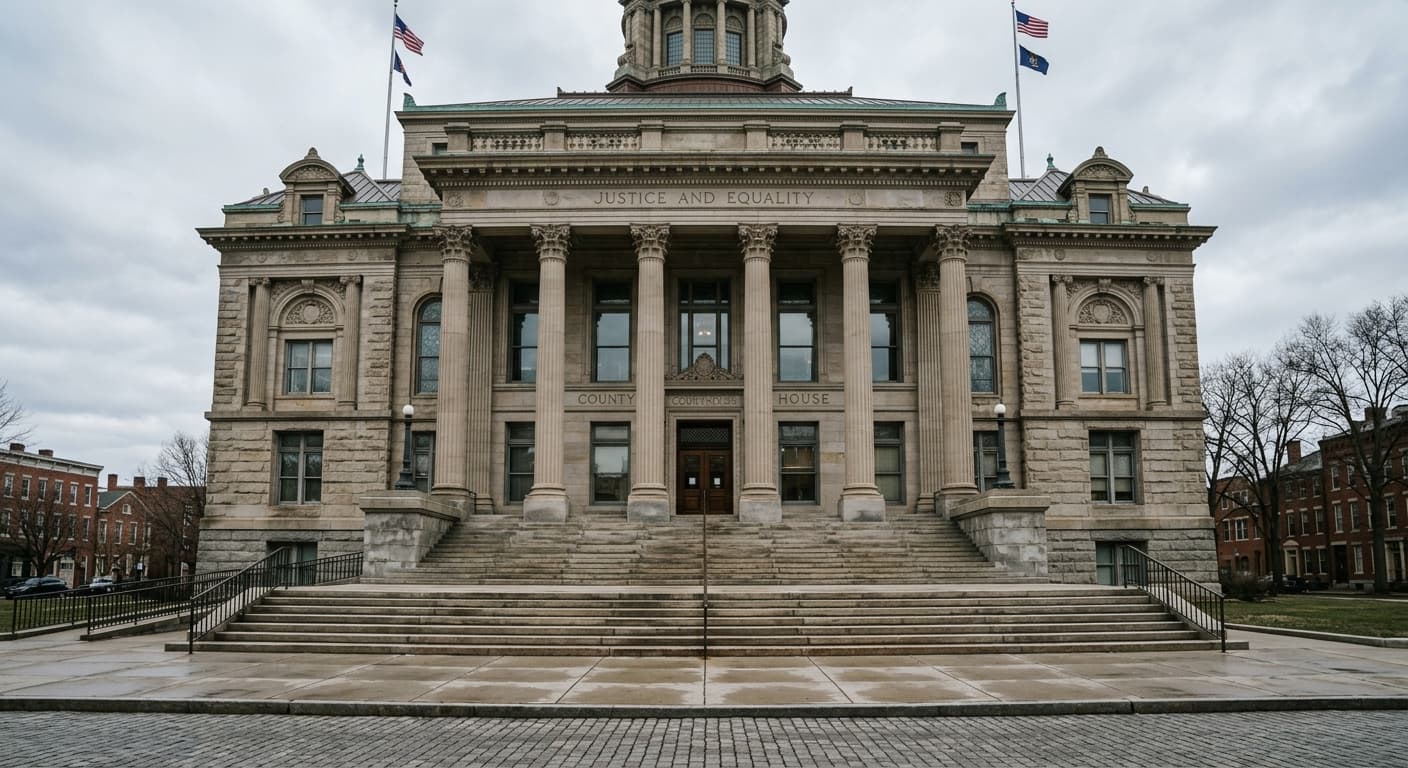
Louisiana does not require police agencies to equip officers with body cameras. Agencies that choose to use them must adopt a written activation and deactivation policy under La. R.S. 40:2551, but no statute fixes how long footage must be kept, and public access runs through Louisiana's general Public Records Law rather than a bodycam-specific access statute.
Jurisdiction scope: This article addresses Louisiana law governing police body-worn cameras, including La. R.S. 40:2551 (activation and deactivation policy) and La. R.S. 44:3 and 44:35 (public-records access), current as of the Louisiana Revised Statutes as published by the Louisiana State Legislature. It does not address whether civilians may record police officers in Louisiana, a different question governed by Louisiana's one-party consent wiretap law; see Is It Illegal to Record Someone?. For the state-by-state landscape, see the Police Bodycam Laws hub.
Does Louisiana require police departments to use body cameras?
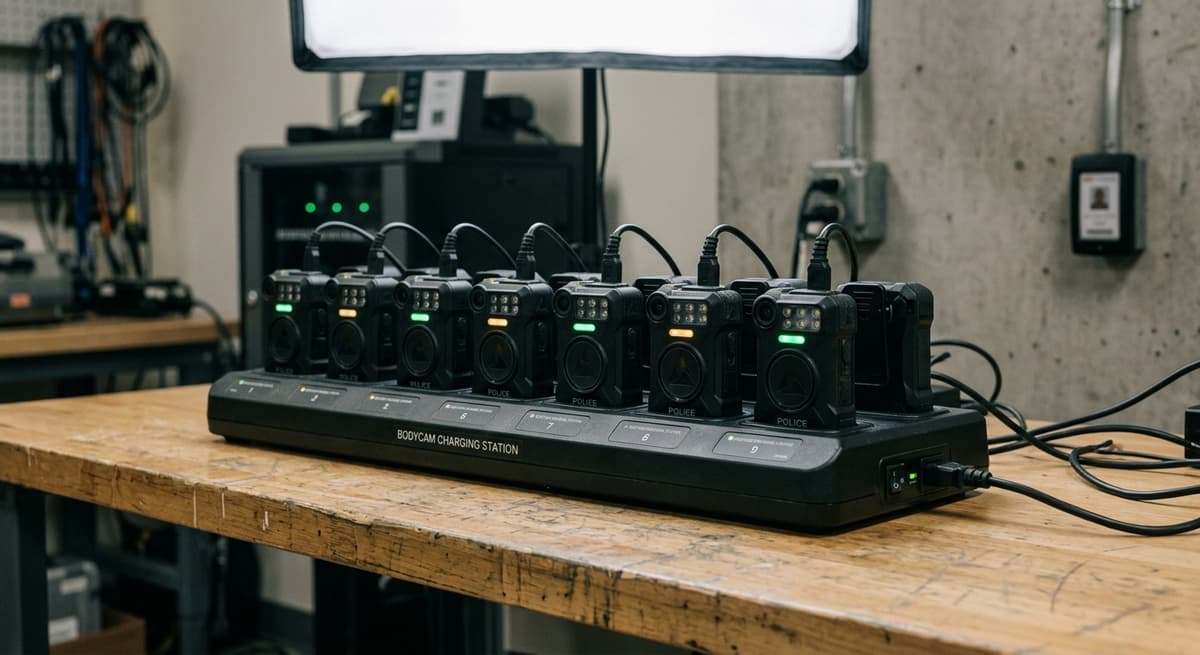
No. Louisiana has not enacted a statewide mandate ordering every law enforcement agency to purchase and deploy body-worn cameras, unlike roughly eight other states, including Maryland and South Carolina, that require it by law. Louisiana's legislature instead spent 2015 through 2017 studying the issue through a series of task forces, including House Concurrent Resolution 180 (2015) and House Concurrent Resolution 59 (2016), before settling on the narrower approach codified at La. R.S. 40:2551: if an agency uses body-worn cameras, it must have a written activation and deactivation policy in place, a requirement that took effect January 1, 2022. Whether to buy the cameras at all remains a local decision.
In practice, adoption is widespread even without a statewide mandate. The Louisiana State Police, the New Orleans Police Department (whose program expanded significantly under a 2013 to 2025 federal consent decree), the Baton Rouge Police Department, and many parish sheriff's offices all use body cameras under locally written policies.
What must a Louisiana agency's body-camera policy cover?
La. R.S. 40:2551, enacted by Acts 2021, No. 430, required any Louisiana law enforcement agency using body-worn cameras to adopt, no later than January 1, 2022, a policy regarding the activation and deactivation of those cameras by the officer. Unlike several other states' bodycam statutes, Louisiana's law does not itself list the specific triggers, such as traffic stops, use of force, or warrant service, that must start a recording, nor does it prescribe when an officer may lawfully turn a camera off. Those operational details are left to each agency's own written policy, which is one reason practice can vary meaningfully between a large agency like Louisiana State Police and a small municipal department.
The statute also does not require an officer to notify a person that they are being recorded. That follows from Louisiana's one-party consent wiretap law, under which an on-duty officer needs no one's permission to record a member of the public in the course of the officer's duties.
How long must Louisiana agencies keep body-camera footage?
No Louisiana statute sets a fixed, statewide minimum or maximum retention period for body-worn camera recordings. La. R.S. 40:2551 addresses only the activation and deactivation policy; it does not reach storage duration. How long a department keeps routine footage, and how much longer it keeps footage tied to an arrest, a use of force, or a citizen complaint, is set by that department's own records-retention schedule rather than by a day-count written into state law. That is a real gap compared with roughly two dozen other states in this cluster where a minimum number of days is written directly into a bodycam statute.
Practices differ accordingly. The Evangeline Parish Sheriff's Office policy, for example, calls for footage to be downloaded from the camera into agency storage within 48 to 72 hours of an officer's shift, with retention beyond that point governed by the department's own schedule. A reader who needs the exact retention period for a specific incident should ask the recording agency for its current written body-worn camera policy, since the Revised Statutes do not supply that number.
Can the public get a copy of Louisiana body-camera footage?
Access to Louisiana body-camera footage runs through the state's general Public Records Law, La. R.S. 44:1 et seq., not a dedicated bodycam-access statute. La. R.S. 44:3(I) requires that a request for body-worn camera video be incident specific, meaning it must include reasonable detail such as the date, time, location, or persons involved; a custodian may reject a vague or open-ended request. Separately, La. R.S. 44:3(A)(8) lets the custodian withhold video or audio found to violate a depicted person's reasonable expectation of privacy. Once a custodian makes that finding, the recording can be released only pursuant to a determination and order from a court of competent jurisdiction under La. R.S. 44:35, the same provision that lets a requester who has been denied file for a writ of mandamus.
Courts hearing a R.S. 44:35 case award attorney's fees to a prevailing requester and can award actual damages if the custodian arbitrarily or capriciously withheld the record. A separate civil penalty of up to $100 a day applies only if the custodian unreasonably or arbitrarily failed to respond to the request as required by R.S. 44:32; the requester otherwise bears its own costs while the case is pending.
What happens when a Louisiana agency denies a bodycam request?
In 2019, The Advocate sued the Louisiana State Police after LSP denied the newspaper's public-records request for dashcam and body-camera video of a traffic stop involving an off-duty New Orleans police sergeant. Nineteenth Judicial District Court Judge William Morvant ordered LSP to release the footage, with the officer's driver's license number and license plate redacted; the newspaper's attorney described it as the first Louisiana body-camera dispute that did not involve an active criminal investigation.
LSP's initial denial, and the litigation it took to overturn it, illustrate how the reasonable-expectation-of-privacy standard in La. R.S. 44:3(A)(8) functions in practice. The custodian's initial call is not the final word, but a requester who disagrees generally has to go to court, at its own expense, to test that call under La. R.S. 44:35.
This article provides general legal information about Louisiana's police body-camera statutes and public-records law. It is not legal advice. Louisiana law was reviewed as of July 2026; consult a Louisiana-licensed attorney or file a public-records request directly with the agency that holds the footage for guidance on a specific case.
More Louisiana Laws
Frequently Asked Questions
Does Louisiana law require every police department to use body cameras?
No. Louisiana has no statewide statute mandating body-camera use. La. R.S. 40:2551 only requires that an agency choosing to use body-worn cameras adopt a written activation and deactivation policy by January 1, 2022. Whether to buy and deploy the cameras at all remains a local decision for each parish or municipal agency.
What Louisiana law governs body-worn camera policies?
La. R.S. 40:2551 requires any law enforcement agency that uses body-worn cameras to have a written policy on when officers must activate and deactivate them, effective January 1, 2022 under Acts 2021, No. 430. Public access to the resulting footage is governed separately, by La. R.S. 44:3 and 44:35.
How long does a Louisiana police department have to keep body-camera footage?
There is no fixed statewide number. Louisiana law does not set a retention period for body-worn camera recordings; each agency's own written policy sets its retention schedule, and schedules vary between departments.
How do I request body-camera footage of a specific incident in Louisiana?
Submit a public-records request to the agency that made the recording under La. R.S. 44:1 et seq. The request must be incident specific under La. R.S. 44:3(I), meaning it should identify the date, time, location, or persons involved rather than asking broadly for all footage.
Can Louisiana police deny my request for body-camera footage?
Yes, in limited circumstances. A custodian may withhold footage under La. R.S. 44:3(A)(8) if release would violate a depicted person's reasonable expectation of privacy; disclosure then requires a court order under La. R.S. 44:35. A requester who believes a denial was wrong can file for a writ of mandamus under that same section.
Do Louisiana police need my consent to record me with a body camera?
No. Louisiana is a one-party consent state, and an on-duty officer recording a member of the public in the course of official duties needs no one's permission. For more on the separate question of civilians recording police, see Is It Illegal to Record Someone?.
Did a Louisiana court ever order police to release body-camera footage?
Yes. In 2019, a state judge ordered the Louisiana State Police to release dashcam and body-camera video of a traffic stop after The Advocate sued under the state's public-records law, in what was reported as the first such Louisiana case not tied to an active criminal investigation.
Updates
Independently fact-checked against the cited primary sources; governing law re-checked for recent changes
Corrected the R.S. 44:35 penalty description: the $100/day civil penalty applies only when a custodian unreasonably or arbitrarily fails to respond to a request under R.S. 44:32, not to a general finding that a denial was arbitrary or capricious (that finding instead supports an award of actual damages).
Governing law re-checked for recent changes
Reviewed and approved by an editor
The Law Behind This Article
This article rests on 4 statutory provisions held in our own legal record, each retrieved from the official source. Tap a section to read the operative text.
Louisiana Revised Statutes
§ 40:2551Use of body-worn camerasIn forcecited in 3 of our articles
No later than January 1, 2022, any law enforcement agency that utilizes body-worn cameras shall adopt a policy regarding the activation and deactivation of such cameras by the officer.
Official text (excerpt) · as of 2026-07-29 · Read the full section at legis.la.gov
Also relied on in: Louisiana Recording Laws (2026): One-Party Consent Rules
§ 44:1General definitionsIn forcecited in 5 of our articles
A.(1) As used in this Chapter, the phrase "public body" means any branch, department, office, agency, board, commission, district, governing authority, political subdivision, or any committee, subcommittee, advisory board, or task force thereof, any other instrumentality of state, parish, or municipal government, including a public or quasi-public nonprofit corporation designated as an entity to perform a governmental or proprietary function, or an affiliate of a housing authority.
Official text (excerpt) · as of 2026-07-29 · Read the full section at legis.la.gov
Cited in 222 court opinionsMost recently applied by a court: 2026
Leading cases: Landis v. Moreau (Supreme Court of Louisiana 2001, 779 So. 2d 691) · Capital City Press v. Metro. Council (Supreme Court of Louisiana 1997, 696 So. 2d 562) · In Re Matter Under Investigation (Supreme Court of Louisiana 2009, 15 So. 3d 972)
Identified automatically from the court opinions citing this section — not a ranking of which case controls.
Also relied on in: Louisiana Laws on Recording Police: Your Rights and the Buffer Zone Law
§ 44:3Records of prosecutive, investigative, and law enforcement agencies and communications districtsIn forcecited in 9 of our articles
A. Nothing in this Chapter shall be construed to require disclosures of records, or the information contained therein, held by the offices of the attorney general, district attorneys, sheriffs, police departments, Department of Public Safety and Corrections, Department of Wildlife and Fisheries, marshals, investigators, public health investigators, correctional agencies, communications districts, intelligence agencies, Council on Peace Officer Standards and Training, Louisiana Commission on Law Enforcement and Administration of Criminal Justice, or publicly owned water districts of the state, which records are: (1) Records pertaining to pending criminal litigation or any criminal litigation which can be reasonably anticipated, until such litigation has been finally adjudicated or otherwise settled, except as otherwise provided in Subsection F of this Section; or (2) Records containing the identity of a confidential source of information or records which would tend to reveal the identity of a confidential source of information; or (3) Records containing security procedures, investigative training information or aids, investigative techniques, investigative technical equipment or…
Official text (excerpt) · as of 2026-07-29 · Read the full section at legis.la.gov
Cited in 104 court opinionsMost recently applied by a court: 2025
Leading cases: In Re Matter Under Investigation (Supreme Court of Louisiana 2009, 15 So. 3d 972) · Cormier v. PUBLIC RECORDS REQUEST OF GIULIO (Supreme Court of Louisiana 1989, 553 So. 2d 806) · Innocence Project New Orleans v. New Orleans Police Department (Louisiana Court of Appeal 2013, 2013 La.App. 4 Cir. 0921)
Identified automatically from the court opinions citing this section — not a ranking of which case controls.
Also relied on in: Louisiana Video Recording Laws: Surveillance Rules and Privacy Limits, Louisiana Public Records Law: Deadlines, Fees, and How to File a Request, How to Get a Police Report in Louisiana (2026 Guide)
§ 44:35EnforcementIn forcecited in 2 of our articles
A. Any person who has been denied the right to inspect, copy, reproduce, or obtain a copy or reproduction of a record under the provisions of this Chapter, either by a determination of the custodian or by the passage of five days, exclusive of Saturdays, Sundays, and legal public holidays, from the date of his in-person, written, or electronic request without receiving a determination in writing by the custodian or an estimate of the time reasonably necessary for collection, segregation, redaction, examination, or review of a records request, may institute proceedings for the issuance of a writ of mandamus, injunctive or declaratory relief, together with attorney fees, costs and damages as provided for by this Section, in the district court for the parish in which the office of the custodian is located. B. In any suit filed under Subsection A above, the court has jurisdiction to enjoin the custodian from withholding records or to issue a writ of mandamus ordering the production of any records improperly withheld from the person seeking disclosure. The court shall determine the matter de novo and the burden is on the custodian to sustain his action.
Official text (excerpt) · as of 2026-07-29 · Read the full section at legis.la.gov
Cited in 141 court opinionsMost recently applied by a court: 2026
Leading cases: Landis v. Moreau (Supreme Court of Louisiana 2001, 779 So. 2d 691) · Capital City Press v. Metro. Council (Supreme Court of Louisiana 1997, 696 So. 2d 562) · Elliott v. District Attorney of Baton Rouge (Louisiana Court of Appeal 1995, 95 La.App. 1 Cir. 1804)
Identified automatically from the court opinions citing this section — not a ranking of which case controls.
Search our full record of US law — 2.1 million sections, every state + federal →
Sources and References
- La. R.S. 40:2551 (Use of body-worn cameras; activation and deactivation policy required by January 1, 2022, Acts 2021, No. 430)(legis.la.gov).gov
- La. R.S. 44:3 (Records of prosecutive, investigative, and law enforcement agencies; body-worn camera privacy exemption at (A)(8), incident-specific request requirement at (I), court-order pathway cross-referencing R.S. 44:35)(legis.la.gov).gov
- National Conference of State Legislatures, Body-Worn Camera Laws Database (Louisiana is not among the states with a statewide use mandate)(ncsl.org)
- MuckRock, "Louisiana judge grants access to state police body-camera footage" (2019 Advocate v. Louisiana State Police case)(muckrock.com)
- U.S. Department of Justice, Office of Public Affairs, "Federal Court Terminates Consent Decree Regarding the New Orleans Police Department After Successful Reforms"(justice.gov).gov