
Hawaii
Hawaii Police Bodycam Laws: Public Records & Retention Rules
Independently fact-checked against primary sources (last audited August 20, 2026). · Reviewed by the RecordingLaw editorial team. · Law checked current as of August 20, 2026. · 3 primary sources cited on this page. How we verify our legal content
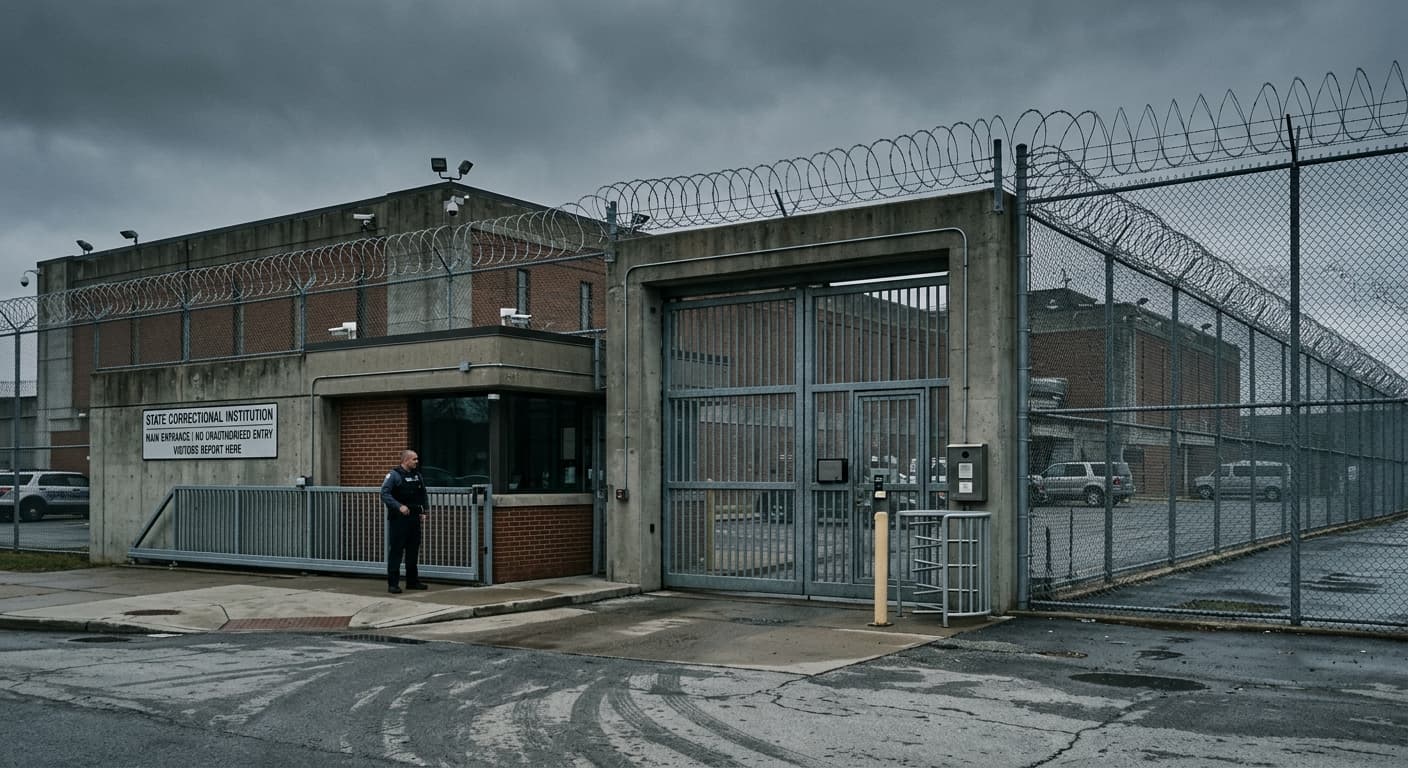
Hawaii has no statute generally requiring police to wear body cameras, yet all four county police departments adopted them anyway between 2015 and 2020 through local policy. Access to footage runs through Hawaii's general public-records law, not a bodycam-specific statute, and the state's first statutory camera duty, an activation requirement during vehicular pursuits, does not take effect until January 1, 2027.
This page covers whether Hawaii police must use body cameras, how long footage is kept, and how the public can request a copy. It does not cover whether a civilian may record an on-duty Hawaii officer, a separate and well-settled question addressed on Recording Law's guide to recording police.
Does Hawaii require police to wear body cameras?
Not as a general matter. Hawaii has never enacted a law requiring its police departments to equip their officers with body cameras. A 2015 bill in the state legislature would have mandated statewide adoption, but budget concerns and privacy objections kept it from passing, and Hawaii has operated without a general body-camera statute ever since. Hawaii's four police departments are county agencies, and no state law directs them toward a uniform body-camera policy. The state does have a Law Enforcement Standards Board, established in 2018 within the Department of the Attorney General for administrative purposes under HRS Chapter 139, but its statutory duties run to setting minimum employment standards, certifying and decertifying officers, and setting training curriculum, along with authority to review and recommend statewide law enforcement policies rather than to impose a camera program on the counties.
That picture changes at the margins in 2027. Act 210 of the 2025 session added HRS § 139-13, Hawaii's vehicular-pursuit statute, and it carries the first body-worn-camera duty written into Hawaii law. Beginning January 1, 2027, an officer who initiates a pursuit "shall immediately activate all emergency warning lights, siren, headlights, motor vehicle recorder, and body-worn camera," under § 139-13(b)(5). From the same date, every law enforcement agency must file an annual report of its pursuits with the Department of the Attorney General stating, among other things, whether "a body-worn camera was worn and active for the duration of the pursuit," under § 139-13(f)(5), and the Attorney General must publish that data on its website in machine-readable form. This is an activation-and-reporting requirement confined to vehicular pursuits, not a general mandate that Hawaii officers wear cameras, and it is prospective: none of it binds an agency before January 1, 2027.
Despite the absence of a general mandate, every county adopted body cameras anyway, through each department's own internal policy rather than legislation: Kauai Police Department in 2015, Maui Police Department in 2017, Honolulu Police Department beginning in 2018, and the Hawaii Police Department, covering Hawaii County (the Big Island), in November 2020. Because each program grew out of local policy rather than a shared statute, activation rules, which units carry cameras, and retention periods differ somewhat from island to island.

Is body camera footage a public record in Hawaii?
Hawaii has no statute written specifically for body camera video. A request for footage instead goes through the state's general public-records law, the Uniform Information Practices Act (UIPA), codified at HRS Chapter 92F. The UIPA starts from a presumption of openness: HRS § 92F-11(a) provides that all government records are open to public inspection unless access is restricted or closed by law, and § 92F-11(b) requires each agency, except as provided in § 92F-13, to make government records available for inspection and copying on request during regular business hours.
For law enforcement records, two exceptions come up most often, and both sit in the same exceptions section. HRS § 92F-13(1) lets an agency withhold information whose disclosure would be a clearly unwarranted invasion of personal privacy. A separate paragraph of that same section, HRS § 92F-13(3), covers records that by their nature must be confidential in order for the government to avoid the frustration of a legitimate government function, which Hawaii's Office of Information Practices (OIP) has applied to active criminal investigations in past guidance. Because Hawaii lacks a bodycam-specific statute, whether a particular recording is released turns on how these general exceptions apply to that footage, not on a bright-line rule tied to where the camera was pointed.
How has Hawaii's public records office actually handled bodycam requests?
The clearest guidance on how Hawaii treats body camera video comes from OIP, the state office that administers and interprets the UIPA, rather than from the legislature. In a December 22, 2021 opinion, Op. Ltr. No. F22-01, OIP reviewed a request to the Kauai Police Department for body-worn camera recordings tied to a police report and an administrative complaint the requester had filed against five officers.
POLICE-K may deny Part III access under section 92F-22(1)(A), HRS, and Part II access under section 92F-13(1), HRS, to only the portions of BWC recordings of statements by witnesses that would identify those witnesses, to avoid a clearly unwarranted invasion of the witnesses' personal privacy. In this case, however, most of the recordings may be withheld to protect the witnesses' privacy. (Office of Information Practices, Op. Ltr. No. F22-01, Dec. 22, 2021, Brief Answer 3)
Two features of that opinion matter to anyone reading it as precedent. First, it arose from a request made under Part III of the UIPA, meaning the requester was seeking a record about himself, which is why the analysis runs through HRS § 92F-22(1)(A) alongside the Part II privacy exception. A member of the public asking for footage of someone else is in a different posture. Second, the outcome on these facts favored the department: OIP found that withholding practically the entire recordings was warranted to protect the witnesses' identities, because the requester could readily have determined who they were from their faces, voices, clothing, and surroundings.
OIP was nonetheless explicit that the conclusion should not be read to allow wholesale withholding of body camera recordings in every situation. Whether, and to what extent, a recording may be withheld has to be determined case by case, and OIP noted that the public interest can be far higher in other kinds of footage, such as recordings of officer shootings resulting in death or incidents involving high-ranking officials, than it was in the witness statements at issue there.
How long does Hawaii police keep body camera footage?
Because no Hawaii statute sets a retention period for body camera video, each county department's own written policy controls. Honolulu Police Department's policy, for example, sets a baseline retention period of 13 months from the date of recording for routine footage. That period extends substantially, to a minimum of 3 years, for recordings documenting a use of force or a citizen complaint against an officer, and footage with evidentiary value in a pending criminal or civil case is held for the applicable statute of limitations or until the case concludes, whichever is shorter.
Because retention is set by department policy rather than state law, Kauai, Maui, and Hawaii County's schedules are not guaranteed to match Honolulu's exactly. A records requester dealing with a non-Honolulu department should confirm the specific retention period, and the department's video-request process, directly with that department.
How fast can you actually get footage in Hawaii?
A formal legal right to request footage does not always translate into a fast, or even eventual, release. A Honolulu Civil Beat investigation published in August 2024 found that HPD had released body camera footage publicly in only 3 of 22 deadly police encounters since 2018, about 14% of cases. HPD attributed part of the gap to camera coverage itself: roughly 600 of the department's approximately 1,800 officers, largely those in administrative, specialized, or plainclothes roles, are not issued body cameras at all, and the investigation identified at least 7 deadly encounters involving officers who had no camera to activate in the first place. HPD also told reporters that footage is withheld when release would hamper an active investigation or the prosecution of a case, echoing the investigation-based exception that applies under the general UIPA analysis above.
Non-activation by camera-equipped officers is not without consequence at HPD. In one recent year covered by the same investigation, the department disciplined six officers, with four additional cases pending in arbitration, for failing to activate their cameras during an encounter.
A real case: the Wai'anae shooting
Body camera footage's evidentiary role showed clearly in the August 14, 2024 shooting of 60-year-old Alston Awong in Wai'anae, on Oahu. Awong assaulted his girlfriend, threatened neighbors with a rifle, and fired a stolen handgun into a home where several people, including two children, were sheltering, before an HPD officer arrived and shot him. Released body camera footage showed Awong standing in a doorway holding a gun and turning toward the officer after being ordered to drop it.
Honolulu Prosecuting Attorney Steve Alm reviewed the footage along with other evidence and, in August 2025, announced no charges would be filed against the officer, concluding the shooting was legally justified and describing the encounter as consistent with what he called "suicide by cop." The case shows how, once a Hawaii agency chooses to record and release footage, that footage can resolve an accountability question fairly directly, in contrast to the encounters in HPD's own data that were never recorded, or recorded but never released, at all.
For how other states handle bodycam mandates and public access, see Recording Law's Police Bodycam Laws hub.
This article provides general legal information about Hawaii's body camera policies and public-records rules as of mid-2026. It is not legal advice. For help with a specific records request, consult a Hawaii attorney or the relevant county police department's records division.
More Hawaii Laws
Frequently Asked Questions
Does Hawaii require police officers to wear body cameras?
Not as a general matter. Hawaii has no statute mandating body cameras, and a 2015 bill to require statewide adoption failed. All four county police departments use them anyway, through their own internal policies rather than state law. One narrow statutory duty takes effect January 1, 2027: HRS section 139-13 requires an officer who initiates a vehicular pursuit to immediately activate a body-worn camera, along with emergency lights, siren, headlights, and the motor vehicle recorder.
Which Hawaii police departments use body cameras?
All four county departments: Kauai Police Department (adopted 2015), Maui Police Department (2017), Honolulu Police Department (beginning 2018), and Hawaii Police Department on Hawaii County (November 2020).
How do I request police body camera footage in Hawaii?
Submit a request to the relevant county police department under Hawaii's Uniform Information Practices Act, HRS Chapter 92F. There is no bodycam-specific request form or access statute; the department evaluates the request under the UIPA's general disclosure and privacy exceptions.
Can Hawaii police withhold body camera footage?
Yes, and the analysis is portion-by-portion rather than all-or-nothing. Hawaii's Office of Information Practices has said an agency may withhold the parts of a recording covered by an exception, most commonly information that would identify a witness, and that wholesale withholding of entire recordings is not permitted as a matter of course. In the 2021 F22-01 opinion itself, however, OIP found that most of the footage could be withheld because the witnesses were easily identifiable from the video, so a case-by-case review can still end with little or nothing released.
Does Hawaii have a body camera law taking effect in 2027?
Yes, a narrow one. HRS section 139-13, added by Act 210 of 2025, provides that beginning January 1, 2027, an officer initiating a vehicular pursuit must immediately activate all emergency warning lights, siren, headlights, motor vehicle recorder, and body-worn camera. Each law enforcement agency must also report annually to the Attorney General whether a body-worn camera was worn and active for the duration of each pursuit, and the Attorney General must publish that data. It applies only to pursuits and does not require officers to wear cameras generally.
How long does Honolulu Police Department keep body camera footage?
HPD's policy sets a 13-month baseline retention period, extending to a minimum of 3 years for footage documenting a use of force or a citizen complaint, and longer when footage is needed as evidence in a pending case.
Are all Honolulu police officers equipped with body cameras?
No. Roughly 600 of HPD's approximately 1,800 officers, mostly in administrative, specialized, or plainclothes assignments, are not issued body cameras, according to a 2024 Honolulu Civil Beat investigation.
What happened in the Wai'anae police shooting?
In August 2024, an HPD officer fatally shot Alston Awong in Wai'anae after Awong, who had assaulted his girlfriend and fired a gun into an occupied home, turned toward the officer while holding a weapon and ignored commands to drop it. Body camera footage was released, and prosecutors ruled the shooting justified in August 2025.
Updates
Corrected the claim that Hawaii has no statewide law enforcement standards board (one has existed since 2018 under HRS chapter 139), added the body-worn-camera activation and reporting duty that HRS section 139-13 imposes for vehicular pursuits beginning January 1, 2027, restored the omitted qualifying sentence of the OIP F22-01 conclusion, and cited HRS section 92F-11 for the UIPA's presumption of openness.
Independently fact-checked against the cited primary sources; governing law re-checked for recent changes
Reviewed and approved by an editor
The Law Behind This Article
This article rests on the statutory provisions below, held in our own legal record and retrieved from the official source. Tap a section to read the operative text.
Hawaii Revised Statutes, Chapter 92F: UNIFORM INFORMATION PRACTICES ACT (MODIFIED)
§ 92F-11Affirmative agency disclosure responsibilitiesIn forcecited in 3 of our articles
(a) All government records are open to public inspection unless access is restricted or closed by law. (b) Except as provided in section 92F-13, each agency upon request by any person shall make government records available for inspection and copying during regular business hours. (c) Unless the information is readily retrievable by the agency in the form in which it is requested, an agency shall not be required to prepare a compilation or summary of its records. (d) Each agency shall assure reasonable access to facilities for duplicating records and for making memoranda or abstracts. (e) The office of information practices may adopt rules, pursuant to chapter 91, to protect agency records from theft, loss, defacement, alteration, or deterioration and to prevent manifestly excessive interference with the discharge of agencies' other lawful responsibilities and functions. [L 1988, c 262, pt of §1; am L 2010, c 100, §§1, 3; am L 2017, c 165, §1]
Official text (excerpt) · last checked 2026-09-03 · Read the full text in our law library · Verify at capitol.hawaii.gov
Also relied on in: Hawaii Public Records Laws: The UIPA (HRS Chapter 92F) Explained, Are Autopsy Reports Public in Hawaii? (2026 Guide)
§ 92F-13Government records; exceptions to general ruleIn forcecited in 5 of our articles
This part shall not require disclosure of: (1) Government records which, if disclosed, would constitute a clearly unwarranted invasion of personal privacy; (2) Government records pertaining to the prosecution or defense of any judicial or quasi-judicial action to which the State or any county is or may be a party, to the extent that such records would not be discoverable; (3) Government records that, by their nature, must be confidential in order for the government to avoid the frustration of a legitimate government function; (4) Government records which, pursuant to state or federal law including an order of any state or federal court, are protected from disclosure; and (5) Inchoate and draft working papers of legislative committees including budget worksheets and unfiled committee reports; work product; records or transcripts of an investigating committee of the legislature which are closed by rules adopted pursuant to section 21-4 and the personal files of members of the legislature. [L 1988, c 262, pt of §1; am L 1993, c 250, §1]
Official text (excerpt) · last checked 2026-07-30 · Read the full text in our law library · Verify at capitol.hawaii.gov
Cited in 20 court opinions in our collectionLatest citing opinion in our collection: 2025
Opinions citing this section in our collection:
- Kaapu v. Aloha Tower Development Corp. (Hawaii Supreme Court 1993, 74 Haw. 365)“…y remain confidential under the ‘frustration exemption’ in [HRS § 92F-13(3) (Supp. 1992)] 10 until…”
- Peer News LLC v. City and County of Honolulu. (Hawaii Supreme Court 2016, 138 Haw. 53)“…s entirety. To justify its denial, HPD cited to HRS § 92F-13(1)3 and HRS § 92F- 14,4 and stated tha…”
- Civil Beat Law Center for the Public Interest, Inc. v. City and County of Honolulu (Hawaii Supreme Court 2019, 144 Haw. 466)“…clearly unwarranted invasion of personal privacy.” HRS § 92F-13(1). In Peer News LLC v. City & Co…”
Identified automatically from the court opinions citing this section — not a ranking of which case controls.
Also relied on in: Hawaii Recording Laws (2026): Hybrid Consent State Rules, Hawaii Police Reports: How to Get a Copy From HPD or County Police, Hawaii Data Privacy Laws: Constitutional Privacy & Consumer Rights (2026)
§ 92F-22Exemptions and limitations on individual accessIn forcecited in 3 of our articles
An agency is not required by this part to grant an individual access to personal records, or information in such records: (1) Maintained by an agency that performs as its or as a principal function any activity pertaining to the prevention, control, or reduction of crime, and which consist of: (A) Information or reports prepared or compiled for the purpose of criminal intelligence or of a criminal investigation, including reports of informers, witnesses, and investigators; or (B) Reports prepared or compiled at any stage of the process of enforcement of the criminal laws from arrest or indictment through confinement, correctional supervision, and release from supervision. (2) The disclosure of which would reveal the identity of a source who furnished information to the agency under an express or implied promise of confidentiality.
Official text (excerpt) · last checked 2026-07-30 · Read the full text in our law library · Verify at capitol.hawaii.gov
Hawaii Revised Statutes, Chapter 139: LAW ENFORCEMENT STANDARDS
§ 139-13Vehicular pursuitIn force
(a) Beginning January 1, 2027, no law enforcement officer shall engage in a vehicular pursuit unless: (1) The law enforcement officer has a reasonable suspicion to believe that a person in the vehicle to be pursued is attempting to commit, has committed, or is committing one or more of the following: (A) A felony offense under chapter 707 or 708 that involves physical injury to the person or another, or the threat, or significant risk, of physical injury to a person or another; (B) The offense of kidnapping, unlawful imprisonment in the first or second degree, or custodial interference in the first or second degree under part IV of chapter 707; (C) The offense of robbery in the first or second degree under part V of chapter 708; (D) A sexual offense under part V of chapter 707; (E) Assault in the first degree under section 707-710 or assault in the second degree under section 707-711 by a person operating a vehicle: (i) In a reckless manner; or (ii) Without regard for the safety of others; (F) The offense of abuse of family or household members under section 709-906; (G) The offense of escape in the first degree under section 710-1020; (H) The offense of escape in the…
Official text (excerpt) · last checked 2026-07-30 · Read the full text in our law library · Verify at capitol.hawaii.gov
§ 139-2Law enforcement standards board; establishmentIn force
(a) There shall be established the law enforcement standards board within the department of the attorney general for administrative purposes only. The purpose of the board shall be to provide programs and standards for training and certification of law enforcement officers. The law enforcement standards board shall consist of the following voting members: eight ex officio individuals or their designees, five law enforcement officers, four members of the public, and one member selected by the union representing police officers in the State; provided that: (1) The eight ex officio members of the board shall consist of the: (A) Attorney general or the attorney general's designee; (B) Director of law enforcement or the director's designee; (C) Chairperson of the board of land and natural resources or the chairperson's designee; (D) Director of taxation or the director's designee; and (E) Chiefs of police of the four counties or the designees of each of the chiefs of police; (2) The five law enforcement officers shall be persons other than the chiefs of police or designees described in paragraph (1)(E) and shall consist of: (A) One county law enforcement officer from each of…
Official text (excerpt) · last checked 2026-07-30 · Read the full text in our law library · Verify at capitol.hawaii.gov
§ 139-3Powers and duties of the boardIn force
The board shall: (1) Adopt rules in accordance with chapter 91 to implement this chapter; (2) Establish minimum standards for employment as a law enforcement officer and to certify persons to be qualified as law enforcement officers; (3) Establish criteria and standards in which a person who has been denied certification, whose certification has been revoked by the board, or whose certification has lapsed may reapply for certification; (4) Establish minimum criminal justice curriculum requirements for basic, specialized, and in-service courses and programs for schools operated by or for the State or a county for the specific purpose of training law enforcement officers; (5) Consult and cooperate with the counties, agencies of the State, other governmental agencies, universities, colleges, and other institutions concerning the development of law enforcement officer training schools and programs of criminal justice instruction; (6) Employ an administrator, without regard to chapter 76, and other persons necessary to carry out its duties under this chapter; (7) Investigate when there is reason to believe that a law enforcement officer does not meet the minimum standards for…
Official text (excerpt) · last checked 2026-07-30 · Read the full text in our law library · Verify at capitol.hawaii.gov
Search our full record of US law — 2.1 million sections, every state + federal →
Sources and References
- Hawaii Office of Information Practices, Op. Ltr. No. F22-01 (Dec. 22, 2021)(ags.hawaii.gov).gov
- Hawaii Office of Information Practices, "Uniform Information Practices Act (UIPA)"(ags.hawaii.gov).gov
- Honolulu Police Department, "Body-Worn Cameras" policy(honolulupd.org).gov
- Honolulu Civil Beat, "HPD Releases Body Camera Footage In Only A Fraction Of Deadly Encounters"(civilbeat.org)
- Honolulu Civil Beat, "No Charges Against Officers In 2024 Waiʻianae Police Shooting"(civilbeat.org)
- Hawaii Revised Statutes § 92F-11, Affirmative agency disclosure responsibilities(capitol.hawaii.gov)
- Hawaii Revised Statutes § 92F-13, Government records; exceptions to general rule(capitol.hawaii.gov)
- Hawaii Revised Statutes § 139-13, Vehicular pursuit (Act 210, Session Laws of Hawaii 2025)(capitol.hawaii.gov)
- Hawaii Revised Statutes § 139-2, Law enforcement standards board; establishment(capitol.hawaii.gov)
- Hawaii Revised Statutes § 139-3, Powers and duties of the board(capitol.hawaii.gov)
- Hawaii Office of Information Practices, Op. Ltr. No. F22-01 (Dec. 22, 2021), full text (PDF)(ags.hawaii.gov)